
Lawn Mower Comparison Guide 2025: Which Type is Best for You?
Look, I’m just going to be straight with you about lawn mower comparison shopping – it’s a total nightmare if you don’t know what you’re looking at. I remember my first day working at the equipment dealer fifteen years ago, staring at this massive showroom floor packed with mowers, and thinking, “How the heck does anyone choose?” Now, after testing literally hundreds of models and helping thousands of people pick the right one, I can tell you it’s way simpler than it looks once somebody breaks it down properly. If you need a step-by-step framework for choosing the right lawn mower for your yard, I’ve got a complete guide that walks you through every decision point.
Table of Contents
▼- Understanding Lawn Mower Types: Complete Comparison Framework
- Push Mower Comparison: Manual, Self-Propelled & Electric
- Riding Lawn Mower Comparison: Tractors vs Zero Turns
- Electric vs Gas Lawn Mower Comparison
- Honda Lawn Mower Comparison: Model Guide & Rankings
- Lawn Mower Engine Comparison: Power & Reliability
- Commercial Mower Comparison: Professional Equipment Guide
- Price Comparison: Finding the Best Value
- Conclusion: Making Your Perfect Match
The lawn mower industry has evolved dramatically since the first models appeared in the 1830s, and today’s options would blow those early inventors’ minds.
The problem isn’t that there are too many options. The real problem is nobody explains what actually matters for YOUR yard versus what’s just marketing nonsense. I’ve seen people drop two grand on a zero-turn for their tiny city lot because the salesman made it sound amazing. I’ve also watched homeowners struggle for years with a cheap push mower on three acres because they were trying to save money.
This guide is everything I wish someone had told me when I started. We’re going to look at every major type of mower out there, and I’m going to tell you exactly what works, what doesn’t, and why. No fluff, no corporate talking points – just real experience from someone who’s broken down, fixed, and tested more mowers than I can count. By the time we’re done, you’ll know exactly what belongs in your garage.
Understanding Lawn Mower Types: Complete Comparison Framework
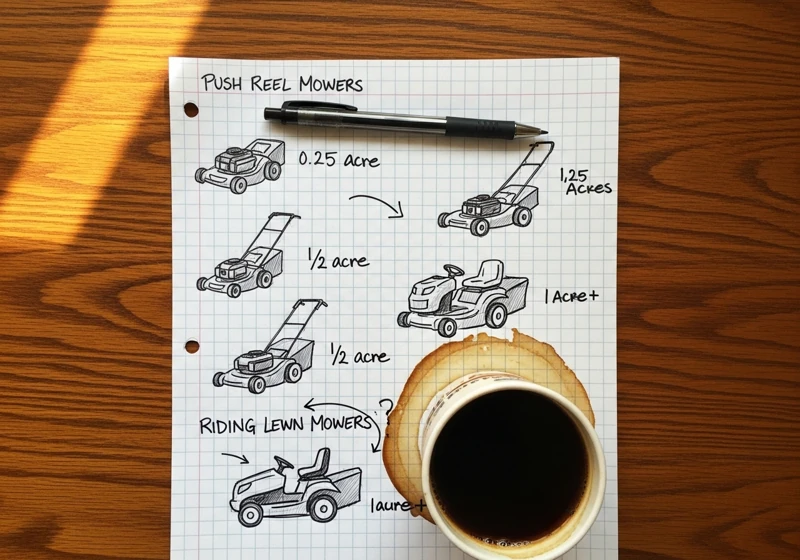
Before jumping into the lawn mower types comparison details, we need to establish some basic categories. Think of it like shopping for a vehicle – you wouldn’t compare a Corvette to an F-150 using the same checklist, right? Same deal with mowers. For a deeper dive into each category, check out our comprehensive guide on types of lawn mowers.
There are basically five main types, and each one exists for specific reasons:
Manual reel mowers are the old-school push types where you provide all the power. The blades spin because you’re pushing them forward. These are fantastic for tiny yards – we’re talking under 1,000 square feet – especially if it’s flat and you keep up with it. I actually use one around my vegetable garden beds because the cut quality beats everything else. But try using one on thick spring grass and you’ll understand why gas mowers were invented. If you’re curious about how reel mowers compare to rotary models, I’ve got a detailed breakdown of the pros and cons.
Gas walk-behinds are what most people picture when they think “lawn mower.” You’re either pushing it yourself or it’s got self-propulsion to help you out. These handle anywhere from 1,000 square feet up to maybe 15,000 if you’re in decent shape. I’ve used these my entire career, and there’s a reason they’re everywhere – they just work. My personal Honda HRX217 falls in this category, and honestly, I’d marry that mower if I could.
Electric walk-behinds used to be kind of a joke. Ten years ago, they were basically expensive toys. But battery tech has gotten so much better that now they’re legitimate competition for gas mowers. They’re perfect for anything under half an acre, maybe three-quarters if you’ve got extra batteries. The corded ones are still around, too, but managing that extension cord is like a part-time job.
Riding tractors look like mini farm tractors, and they’re built for half an acre up to about two acres. You sit on them, steer with a wheel, and they’re comfortable for longer mowing sessions. Plus, you can hook up all kinds of attachments – baggers, trailers, even snow plows in the winter. They’re the Swiss Army knife of lawn equipment.
Zero-turn mowers are the speed demons. They’ve got these two lap bars instead of a steering wheel, and once you figure them out (takes maybe ten minutes), you can literally spin in circles. They’re killer for anything over an acre, and they’ll cut your mowing time almost in half compared to a regular riding tractor. I’ve timed it myself multiple times.
The biggest mistake people make in any lawn mower comparison is ignoring their actual yard situation. I had this customer last year who bought a commercial-grade walk-behind for his two-acre property because it was “tougher.” Dude spent half his summer sweating and hating life. He finally traded up to a zero-turn and practically hugged me when he realized what he’d been missing.
Push Mower Comparison: Manual, Self-Propelled & Electric
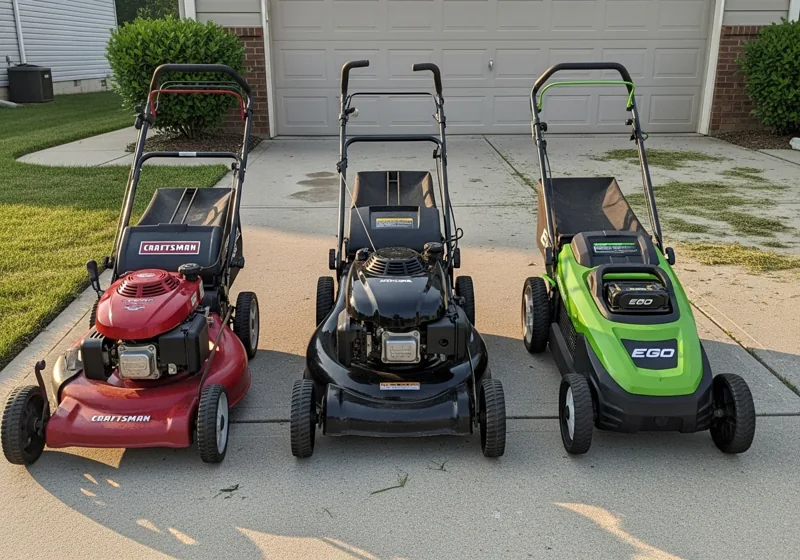
Let’s dig into the push mower comparison since this is where most homeowners start looking. I probably answer questions about push mowers five times a day at the garden center during spring. If you’re ready to buy, check out our guide to the best push mowers of 2025, where I’ve tested and ranked the top models.
Manual reel mowers are having this weird comeback. You can grab a decent one for anywhere from eighty bucks to maybe three hundred. They need zero gas, zero electricity, and the workout you get is pretty solid. I tested this Fiskars model last summer and was genuinely impressed – the cut was cleaner than my gas mower. The problem is, you need to mow more often because they choke on tall grass. And forget about bumpy yards. If you’ve got less than 1,000 square feet of nice flat lawn that you keep maintained, these are actually pretty sweet.
Basic gas push mowers (the ones without self-propulsion) run about $200-400 for something decent. The engine spins the blade, but you’re doing all the pushing. Brands like Craftsman and Yard Machines make a bunch of these. Can I be honest? Unless you’re young and fit with a postage-stamp yard, skip these. I’ve repaired so many of these that sit unused in garages because people underestimated how exhausting they are. Spend the extra hundred bucks for self-propulsion. Your back will thank you.
Self-propelled gas models are where things get real. You’re looking at $300-600, and this is what I recommend to probably 80% of my customers. The transmission drives the wheels forward while you just guide it. The difference is massive – we’re talking 70% less effort. My Honda HRX217 has variable speed control, so I can match whatever pace feels comfortable. Front-wheel drive models turn more easily around trees and flowerbeds; rear-wheel drive handles hills better.
Corded electric push mowers cost $150-300, and they’re fine if you’ve got a small yard close to your house. But that cord… man, that cord. You’re constantly managing it, wrapping it around obstacles, and inevitably, you’ll run over it. I’ve seen customers cut their cord three times in one season. The mowers themselves are great – lightweight, zero maintenance, quiet. But that cord situation is a daily headache. If you’re torn between corded and cordless electric mowers, I’ve done a detailed comparison of both.
Battery push mowers have become my go-to recommendation for most people with under half an acre. Good ones from EGO, Greenworks, or Ryobi cost $350-600. Modern batteries give you 45 minutes to an hour of runtime, which handles most residential properties easily. I spent all last season testing the EGO LM2142SP, and it performed just as well as gas mowers while eliminating all the maintenance garbage – no oil changes, no spark plugs, no winterizing fuel systems. The smart move is buying into a battery system where the same battery runs multiple tools. For my complete testing results and recommendations, see our best cordless lawn mower guide.
Here’s my take after years of selling and using these things: get self-propulsion, whether you go gas or battery. The upfront cost difference is small, but the difference in how much you’ll actually use the mower is huge. I’ve seen too many people buy cheap push mowers, hate using them, and let their lawns turn into jungles.
Riding Lawn Mower Comparison: Tractors vs Zero Turns
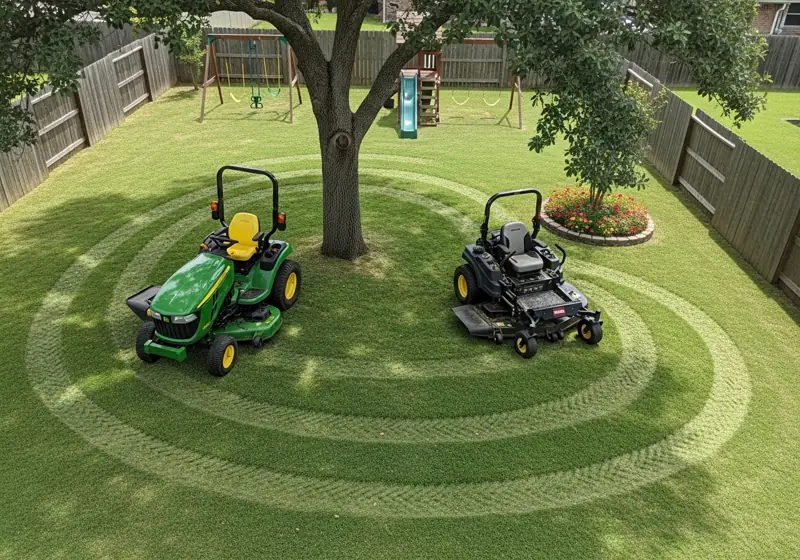
When we talk riding lawn mower comparison, we’re usually dealing with people who have an acre or more. This is where you’re dropping serious money, so getting it wrong really stings. I’ve tested every major model and compiled my findings in our best riding lawn mower guide if you want the full rankings.
Lawn tractors run anywhere from $1,500 to $3,500 for residential models. They’ve got a steering wheel, engine in front, and they operate exactly like you’d expect. John Deere, Cub Cadet, and Husqvarna pretty much own this space. The big selling point is versatility – you can attach baggers, mulch kits, trailers, snow blades, even tillers. There’s a community garden near me that uses a Cub Cadet XT1 for everything from mowing paths to hauling compost around.
But here’s the catch – turning radius. These things need 12-16 feet to make a full turn, which means you’re doing a lot of backing up and repositioning around trees and landscaping. My buddy has two acres with lots of mature trees, and he spends an extra twenty minutes every mowing session with the string trimmer, cleaning up what the tractor couldn’t reach. Deck sizes go from 42 to 54 inches typically, and the cut quality is solid as long as you keep the blades sharp.
Zero-turn mowers cost $2,500 to $8,000 and up for residential models, though prices have dropped a lot in the past five years. Instead of a steering wheel, you’ve got these two lap bars – push both forward to go straight, pull one back to turn. Feels completely weird for about ten minutes, then suddenly it clicks and you’re zipping around like a pro. The zero turn mower comparison advantage is nuts: you can literally spin 360 degrees without moving forward or backward.
I tested this myself on a client’s property last summer. Timed the whole thing. Their old lawn tractor took 78 minutes. The zero-turn I brought over did it in 47 minutes. That’s forty percent faster, and we’re talking about that time savings every single week for years. Toro, Ariens, and Cub Cadet make solid residential zero-turns. If you’re going commercial, Scag, Exmark, and Hustler are what the pros use.
Downsides exist, though. You WILL mess up the first few times – make some weird turns, maybe tear up a little grass. It’s part of learning. They also don’t accept as many attachments as tractors, and if you’ve got steep slopes, you need to be careful because zero-turns can slide sideways if you’re not paying attention. Maintenance is more intensive too – figure an hour every 50 hours keeping everything greased and adjusted. For specific guidance on zero-turn blade maintenance and sharpening, I’ve got a dedicated guide.
My honest recommendation based on hundreds of customer situations: get 1-2 acres with not too many obstacles. A lawn tractor gives you better value. Got 2+ acres or a yard that’s like an obstacle course with trees, flowerbeds, and random landscaping? Zero-turn will literally change your weekend life. The time you save adds up fast enough that the higher price pays for itself within a couple of seasons.
Electric vs Gas Lawn Mower Comparison
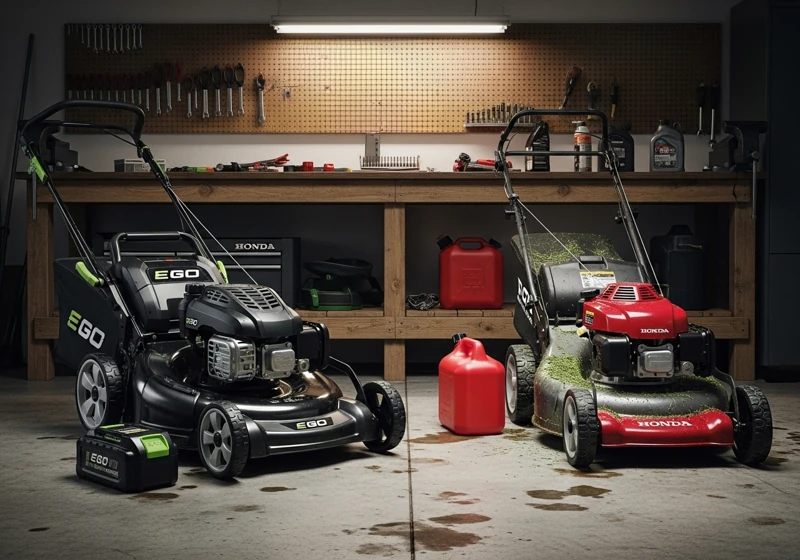
The whole electric lawn mower comparison conversation has totally flipped in the past five years. I used to automatically steer people toward gas. Now? Battery technology has genuinely gotten good enough that it’s a real conversation. For brand-specific comparisons, check out gas vs. electric lawn mower brands to see which manufacturers win in each category.
Power and performance – gas engines put out 140-190cc in walk-behinds, and that power stays consistent no matter what you’re cutting. Electric motors get rated in volts (40V, 60V, 80V typically), and from what I’ve tested, anything 60V or higher matches gas in normal grass. I ran the EGO 56V system next to my Honda gas mower all summer, and in regular conditions, I couldn’t tell the difference. Now, if you’re cutting tall wet spring grass or really thick patches, gas still edges ahead. But day-to-day? They’re basically even. The improvements in battery-powered electric mowers over the past few years have been genuinely impressive.
Runtime – gas mowers run until you’re out of fuel, usually 60-90 minutes per tank. Battery mowers give you 30-60 minutes, depending on conditions. My 0.75-acre property uses exactly one 7.5Ah battery with about 10% left when I’m done. The key question is yard size. Under half an acre, one battery is plenty. Over that, you either need a backup battery or you’re splitting the job across two days.
Maintenance is where electric mowers destroy gas. I spend 3-4 hours every year maintaining my Honda HRX217 – oil changes, air filters, spark plugs, carburetor cleaning, fuel stabilization for winter. My electric test units? Sharpen the blade twice a year and occasionally clean the deck. That’s literally it. No other maintenance exists. For detailed procedures on electric lawn mower maintenance, I’ve got step-by-step guides for both cordless and corded models.
Starting and operation – gas mowers usually start first or second pull if you maintain them properly, but I’ve diagnosed thousands of no-start problems over the years. Old fuel, cold weather, basic neglect – stuff happens. Electric mowers? Push button, starts immediately, every single time. They’re also way quieter. Like 60-75 decibels versus 90-100 for gas. I can mow at seven in the morning on Saturday without my neighbors giving me death stares.
Cost breakdown – decent gas walk-behinds run $300-600 upfront, plus maybe $50-75 yearly in fuel and maintenance. Battery mowers cost $400-700 initially with basically zero ongoing costs except electricity (about five to eight bucks per season). Run the math over five years, and the total cost ends up nearly identical. For riding equipment, though, gas still wins on value. Battery riding mowers are $4,000-6,000 with limited runtime versus $2,500-3,500 for gas riders.
Environmental stuff – gas mowers produce emissions equal to driving a modern car about 100 miles for every hour you mow. If that matters to you, electric wins easily. My state actually offers rebates now for switching to electric lawn equipment – saved me sixty bucks on my last purchase. I’ve written extensively about the environmental impact of lawn mowers and why eco-friendly options are becoming more popular.
Current recommendation: walk-behind mowers for yards under an acre, go battery if your budget allows it. Larger properties and riding equipment, gas is still the practical choice. The performance gap has shrunk dramatically, and the convenience factor of electric vehicles is tough to overstate.
Modern lithium-ion batteries give you 45 minutes to an hour of runtime, which handles most residential properties easily.
Honda Lawn Mower Comparison: Model Guide & Rankings
Any Honda lawn mower comparison requires full honesty upfront – Honda makes some of the best residential mowers you can buy, but they’re expensive. I’ve tested dozens of Honda models, so here’s the real story on their lineup.
Honda HRX Series is their high-end residential line. The HRX217 I personally own costs $700-900, depending on features. This is Honda’s flagship with their 190cc GCV190 engine, twin-blade MicroCut system, and this Versamow thing that lets you choose between bagging, mulching, or rear discharge. Build quality beats everything else at this price point. Mine’s three years old with literally zero problems beyond basic maintenance. That Clip Director knob actually gets used every week – it’s not just a gimmick feature.
The HRX217HZA adds electric start and Honda’s Auto Choke system, which eliminates the primer bulb and makes starting totally effortless. Worth the extra hundred bucks if you can swing it. These mowers typically last 10-15 years with decent care, compared to 5-8 years for budget brands.
Honda HRN Series is their mid-range residential line. Models like the HRN216 cost $450-600 and use Honda’s reliable 160cc engine. You lose the twin-blade system and fancy features, but you get Honda’s legendary engine reliability. This is the entry point for Honda quality. I recommend these for people who want Honda dependability but don’t need all the bells and whistles.
Honda HRC Series is commercial-grade. The HRC216HXA runs $1,300-1,500, and it’s built for daily commercial use. Unless you’re a professional landscaper or have extremely demanding property conditions, this is overkill for residential use. But if you’ve got acreage with tough conditions – steep slopes, thick grass types, constant obstacles – the durability actually justifies the cost.
Honda versus competition – customers ask me constantly if Honda mowers are worth the extra cost. Here’s my honest answer: it depends on your situation. A Toro Recycler or Craftsman M250 costs $300-400 and delivers maybe 80-85% of Honda’s performance. For people on tight budgets or who might move in a few years, those are a better value.
But Honda’s engine reliability is significantly better, resale value is way higher (Honda mowers hold 60-70% of value after five years versus 40-50% for competitors), and build quality means lower long-term costs. I’ve repaired hundreds of mowers, and Honda owners visit my shop way less frequently than people with budget brands.
For the Honda push mower comparison specifically, their self-propelled models have the smoothest transmission engagement I’ve tested. That Smart Drive system on HRX models adjusts speed based on how hard you’re gripping – sounds gimmicky but actually works really well once you get used to it.
My recommendation breakdown: if budget allows, get the HRX217VKA around $750 – best balance of features and value. If you’re stretching the budget, the HRN216VKA, around $500, gives you Honda reliability without premium features. If the budget is tight, honestly, a Toro or Craftsman provides better value than Honda’s cheapest options.
Lawn Mower Engine Comparison: Power & Reliability
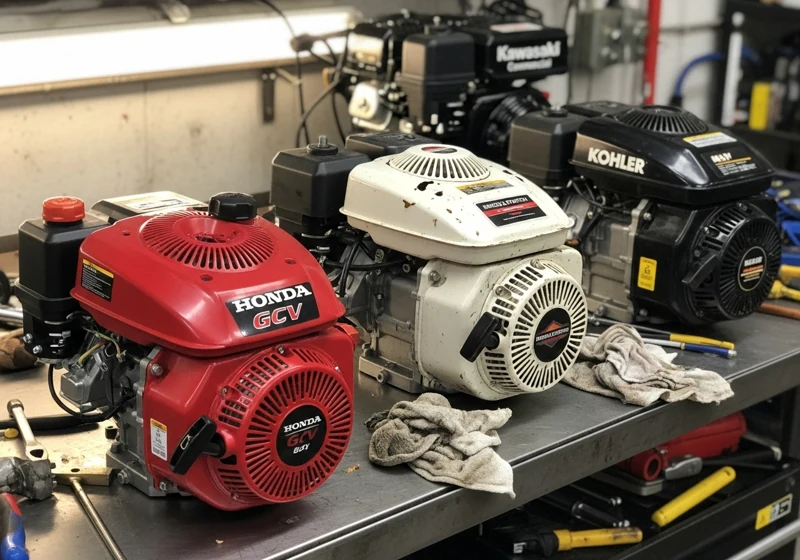
Let’s talk lawn mower engine comparison based on actual performance and longevity, not the technical specifications manufacturers love throwing around. I’ve rebuilt hundreds of small engines, and certain patterns become really obvious after a while. For a comprehensive deep-dive into lawn mower engines and their maintenance requirements, check out my complete guide.
Honda GCV engines dominate premium residential mowers for good reason. The GCV160 (160cc) and GCV190 (190cc) offer exceptional fuel efficiency, easy starting, and legitimately last 1,000+ hours with proper maintenance. I’ve personally seen GCV190 engines with over twelve years and 800+ hours still running perfectly. The overhead cam design runs quieter and smoother than competitors. Expect to pay $50-100 more for a mower with a Honda engine, but the reliability justifies it.
Briggs & Stratton engines power most mid-range mowers from brands like Craftsman, Snapper, and Troy-Bilt. Their 140cc to 190cc engines offer solid performance at competitive prices. The newer EXi series engines (no oil changes needed, just top off) have improved significantly. But I’ve noticed more carburetor issues with Briggs engines compared to Honda, typically around the 300-400 hour mark. Still, for $200-300 less than Honda-powered alternatives, they represent decent value for average homeowners.
Kohler engines show up on many Cub Cadet and Toro models. Kohler engines split the difference between Honda and Briggs in both price and reliability. Their 7000 Series (149cc-196cc) engines are solid workhorses for residential use. I particularly like their engines on self-propelled mowers – power delivery feels smoother than Briggs. Expect 600-800-hour lifespans with routine maintenance.
Kawasaki engines dominate commercial and premium residential equipment. Their FX and FR series engines power most commercial zero-turns and high-end lawn tractors. These are bulletproof engines designed for 2,000+ hours of operation. The added cost ($300-500 more than comparable residential engines) only makes sense for commercial users or homeowners with 3+ acres of challenging terrain.
Kohler versus Kawasaki on riders – in the riding lawn mower comparison space, engine choice significantly impacts long-term satisfaction. Entry-level tractors use single-cylinder engines (Briggs Intek, Kohler Courage) that work fine for 1-2 acre properties. Mid-range tractors feature twin-cylinder engines (Kohler 7000 Series, Kawasaki FR Series) that run smoother and last longer. Premium and commercial units use commercial-grade twins (Kohler Command Pro, Kawasaki FX) built for daily use.
Here’s what I learned running a service department: engine problems usually stem from poor maintenance rather than manufacturing defects. But Honda engines tolerate neglect way better than competitors. I’ve seen Honda engines run for years with dirty air filters and old oil, while Briggs engines in the same conditions fail much sooner. If you’re experiencing issues, my lawn mower troubleshooting guide covers the most common engine problems and fixes.
Electric motor situation – battery mowers use brushless motors rated by voltage (40V-80V) instead of displacement. Higher voltage generally means more power, but motor quality varies a lot between brands. EGO’s 56V motors and Ryobi’s 40V brushless motors have proven most reliable in my testing. Unlike gas engines, where more displacement almost always means more power, electric motor efficiency matters as much as voltage. A well-designed 56V system can outperform a poorly designed 80V system.
For residential walk-behinds, any engine from reputable manufacturers (Honda, Briggs, Kohler, Kawasaki) provides adequate power. Reliability and longevity differences become way more significant with larger displacement engines on riding equipment.
Power and performance – gas engines put out 140-190cc in walk-behinds using internal combustion engine technology, and that power stays consistent no matter what you’re cutting.
Commercial Mower Comparison: Professional Equipment Guide
The commercial mower comparison category needs different evaluation criteria than residential stuff. I work with several landscaping companies, and professional equipment has to handle 30-40 hours weekly of demanding use. Here’s what separates true commercial mowers from residential units. For detailed reviews and rankings, see our best commercial lawn mower guide.
Commercial walk-behinds typically cost $1,000-3,000 and feature commercial engines (Honda GX, Kawasaki FJ), heavy-duty transmissions, and reinforced decks. Brands like Exmark, Scag, and Toro Commercial dominate. Key differences from residential mowers include thicker deck steel (10-gauge versus 16-gauge), sealed bearings throughout, and transmission options like hydrostatic or gear-driven systems.
I helped a landscaping company compare walk-behinds last spring. They tested Exmark Commercial 30 against Honda HRC216 and Toro TimeMaster. The Exmark’s hydrostatic transmission provided infinitely variable speed control, critical when mowing around sensitive landscaping. After 100 hours of use, the Exmark showed zero wear while the residential alternatives needed minor adjustments. For professional use, commercial walk-behinds pay for themselves through reduced downtime and repairs.
Commercial zero-turns – this is where zero turn mower comparison gets serious. Entry commercial zero-turns start around $5,000, with premium models exceeding $15,000. Brands separate into clear tiers:
Entry commercial ($5,000-7,000) includes Cub Cadet Pro Z, Toro TimeCutter MyRide, Husqvarna MZ series. These bridges residential and commercial use, suitable for property management or homeowners with 3-5 acres. They feature commercial engines but lighter frames and smaller fuel tanks.
Mid-grade commercial ($7,000-10,000) includes Scag Liberty Z, Exmark Quest, Toro Z Master 3000. Built for daily commercial use, these handle 20-30 hours weekly. Heavier frames, larger fuel tanks (6-8 gallons), and commercial hydrostatic transmissions. Most landscaping companies operating 3-4 crews choose this category.
Premium commercial ($10,000-15,000+) includes Scag Turf Tiger, Exmark Lazer Z, Hustler Super Z. Designed for 40+ hours weekly in demanding conditions. Features include fabricated decks (welded construction versus stamped steel), suspension seats, advanced hydraulics, extreme durability. These are investments for serious commercial operations.
Deck size matters – commercial mowers offer 48-inch to 72-inch cutting widths. Bigger isn’t automatically better though. A 72-inch deck requires 8-foot gates and open spaces to maneuver. Most commercial operators run 52-60 inch decks as the sweet spot between productivity and maneuverability.
Maintenance reality – commercial mowers require significantly more maintenance than residential equipment. Figure 1 hour of maintenance for every 20-25 hours of operation, including greasing fittings, checking hydraulic fluid, inspecting belts, and cleaning air filters. But they’re designed for this – components are accessible and parts availability is excellent.
ROI math – here’s what I walk commercial clients through. A mid-grade commercial zero-turn at $8,000 should last 2,000-2,500 hours with proper maintenance. If you’re mowing 25 hours weekly, that’s 3-4 years of service. Residential equipment under the same workload fails within 1-2 years. The upfront cost difference pays for itself through longevity and reduced downtime.
Residential versus commercial for large properties – homeowners with 3+ acres often ask if commercial equipment makes sense. My answer depends on priorities. If you want the absolute best performance and don’t mind maintenance requirements, entry commercial mowers work beautifully. But premium residential equipment like Cub Cadet Ultima or Toro TimeCutter series offers 80-90% of commercial performance with easier maintenance and lower cost.
The clearest indicator that you need commercial equipment is if you’re mowing more than 10 hours weekly. At that workload, residential equipment becomes a liability through frequent repairs and shortened lifespan.
Price Comparison: Finding the Best Value
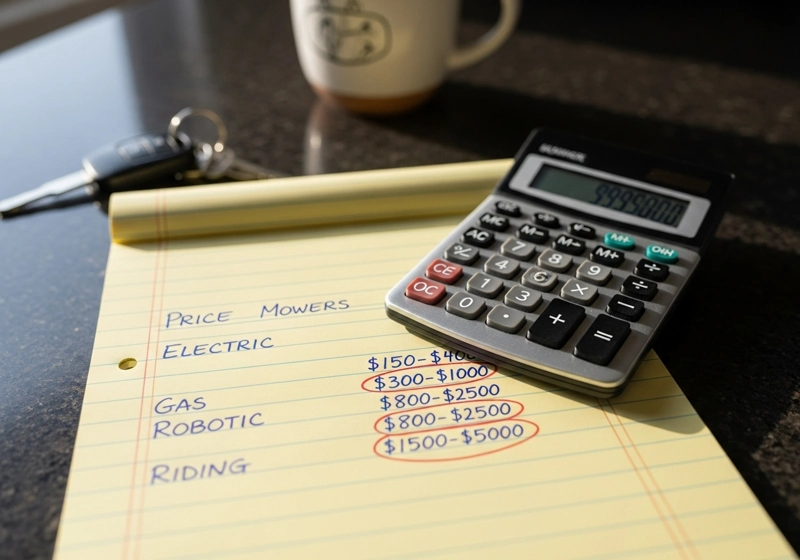
Let’s tackle zero turn mower price comparison and broader pricing analysis across all categories. After helping thousands of customers navigate purchase decisions, I’ve developed a pretty clear framework for evaluating value versus cost.
Walk-behind pricing tiers:
Budget tier ($150-300) includes basic push mowers and entry self-propelled models from brands like Murray, Yard Machines, Craftsman. These work okay for small yards and limited use, but expect 3-5 year lifespans. Best for renters or people planning to move soon. Real value is questionable, though – spending an extra $100-150 typically provides dramatically better quality.
Mid-range tier ($300-600) is where I recommend most people focus. Includes quality self-propelled gas mowers (Toro Recycler, Honda HRN series, Craftsman M310) and premium battery mowers (EGO, Ryobi, Greenworks). These provide 8-12-year lifespans with proper maintenance. Cost per year drops to $30-50 when you factor in longevity. If you’re choosing based on budget and yard size, check out my guide on choosing lawn mower brands by yard size and budget.
Premium tier ($600-1,000) includes flagship models like Honda HRX, Toro Super Recycler, and top battery systems. You’re paying for maximum durability, premium features, and best-in-class performance. For serious homeowners who maintain their own equipment and plan to stay in their home long-term, the investment makes sense. Cost per year over 12-15 years is actually lower than mid-range options despite a higher upfront cost.
Riding mower pricing:
Entry riders ($1,500-2,500) – brands like Craftsman T-Series, Troy-Bilt Pony, entry Cub Cadet models. These work adequately for 1-2 acres of simple, flat terrain. Single-cylinder engines and lighter construction limit longevity to 500-800 hours. If your property is basic and your budget is tight, these provide acceptable value.
Mid-range riders ($2,500-4,000) – this category includes most homeowner purchases. Models like Cub Cadet XT1/XT2, John Deere E-Series, Husqvarna YTH, and entry-level zero-turns. Twin-cylinder engines, better transmissions, heavier construction. Expect 1,000-1,500-hour lifespans. Best value for most homeowners with 1-3 acres.
Premium residential ($4,000-7,000) – premium tractors and residential zero-turns with commercial-grade components. Brands like Cub Cadet Ultima, Toro TimeCutter MyRide, John Deere X-Series. Built for 1,500-2,000 hours. Makes sense for properties over 2 acres or challenging terrain.
Commercial grade ($7,000-15,000+) – covered these earlier, but unless you’re mowing professionally or have 5+ acres, the additional cost rarely justifies itself for residential use.
Total ownership cost – here’s the framework I teach customers. Don’t just compare purchase prices – calculate total five-year cost:
Walk-behind gas: $500 purchase + ($75 maintenance × 5 years) = $875 total, or $175/year. Walk-behind battery: $650 purchase + ($10 electricity × 5 years) = $700 total, or $140/year
Entry rider: $2,000 purchase + ($150 maintenance × 5 years) = $2,750 total, or $550/year. Mid-range zero-turn: $4,500 purchase + ($200 maintenance × 5 years) = $5,500 total, or $1,100/year
When you factor in time savings, the zero-turn’s higher cost becomes more justified. If you’re spending 2 hours weekly with a riding tractor versus 1 hour with a zero-turn, that’s 50 hours saved annually. Your time has value.
Timing your purchase – I learned this while working at a garden center. Timing significantly impacts cost. Late summer and fall (August through October) offer deepest discounts, typically 20-30% off. Spring is the worst time to buy due to high demand. If you can plan, purchasing off-season saves hundreds of dollars.
Financing considerations – many retailers offer 0% financing for 12-24 months on lawn equipment. If you’re disciplined about payments, this can make sense for expensive riding mowers. But I’ve seen customers over-extend themselves buying equipment beyond their needs because financing made it “affordable.” Don’t let financing push you into a more expensive category than necessary.
Warranty value – premium brands typically offer 3-5 year warranties versus 2 years for budget options. Honda offers 3-year residential warranties. Commercial equipment often includes 2-3 year commercial warranties. Extended warranties rarely provide good value – they’re profit centers for retailers. Self-insure by choosing quality equipment and maintaining it properly. Speaking of maintenance, knowing where to find quality lawn mower parts (OEM vs aftermarket) can save you money over the mower’s lifetime.
My value recommendation: for walk-behinds, the $400-600 range offers the best balance of quality and cost. For riding equipment, mid-range models ($2,500-4,000) provide the best value for most homeowners. Premium equipment makes sense if you’re a serious enthusiast who values performance and plans long-term ownership. For brand-specific reviews and comparisons, check out our guide to the best lawn mower brands.
Conclusion: Making Your Perfect Match
After walking through this comprehensive lawn mower comparison, you’re equipped with the knowledge to make a confident decision. Remember, there’s no universally “best” mower – only the best mower for your specific situation.
Start by honestly assessing your property size, terrain challenges, and obstacles. Then consider your physical capabilities, available time, and budget. Match these factors against the mower categories we discussed, and your ideal option will become clear.
Here’s the thing most people don’t realize – the right mower transforms lawn care from a dreaded chore into a manageable task you might even enjoy. I’ve watched countless homeowners go from avoiding their lawns to taking pride in them simply because they upgraded to appropriate equipment.
Don’t rush this decision. The mower you choose will be your weekly companion for 5-15 years, depending on the model. Read expert mower reviews, test drive options at local dealers if possible, and remember that spending an extra $100-200 for quality equipment pays dividends through reliability and satisfaction.
Whether you choose a simple push mower or a premium zero-turn, maintain it properly, and it will serve you well. For year-round care tips, don’t miss our seasonal lawn care guide that covers everything from spring prep to winterization. If you’re still unsure after reading this guide, visit your local equipment dealer. Good dealers love helping customers find their perfect match, just like I’ve been doing for 15 years.
Now get out there and find that perfect mower. Your lawn is waiting, and with the right equipment, you’ll be amazed at how much more manageable and enjoyable lawn care becomes. And remember – proper lawn mower maintenance is what keeps your investment running strong for years. Trust me on this one.
Great question – I answer this probably five times a day during mowing season. Here’s my rule of thumb after 15 years: Under 5,000 square feet (about 1/8 acre), use a quality push mower, gas or battery; between 5,000-20,000 square feet (1/8 to 1/2 acre), self-propelled walk-behind works perfectly; between 20,000-43,000 square feet (1/2 to 1 acre), either a high-quality walk-behind or entry riding mower makes sense depending on your physical ability and terrain; and over 1 acre, invest in a riding mower or zero-turn to save your back and time. But terrain matters as much as size – I’ve got a client with half an acre on a steep slope who needs a zero-turn for safety and maneuverability, while another client with 1.5 flat acres happily uses a walk-behind because he enjoys the exercise, and lots of trees and landscaping make zero-turns more valuable even on smaller properties.
The electric lawn mower comparison has changed completely in recent years – modern battery mowers from brands like EGO and Ryobi match gas mower performance in typical conditions for yards under half an acre, they start instantly, run quietly (you can mow early morning without disturbing neighbors), and require virtually zero maintenance with no oil changes, spark plugs, or winterization. Gas mowers still have advantages in specific situations like better performance for tall wet grass, unlimited runtime with refueling, better value for larger properties, and more power options across price ranges, so for walk-behinds and properties under one acre, I now recommend battery first unless you have specific reasons to choose gas, but for riding mowers and larger properties, gas remains the practical choice due to runtime and cost.
This is probably the question I get most when doing Honda lawn mower comparison – honest answer is it depends on your priorities and timeline because Honda mowers cost $150-300 more than comparable alternatives but offer superior engine reliability, better resale value (60-70% retained value after five years versus 40-50% for competitors), and exceptional build quality. If you’re on a tight budget or may move within a few years, brands like Toro or Craftsman provide 80-85% of Honda’s performance at significantly lower cost, but if you plan long-term ownership and value reliability, Honda’s lower maintenance costs and longer lifespan (10-15 years versus 5-8 years for budget brands) make them worthwhile – I personally use a Honda HRX217 and have had zero issues in three years beyond routine maintenance, and the sweet spot is Honda’s mid-range models like the HRN216 (around $500) which give you Honda reliability without paying for premium features you may not need.
The riding lawn mower comparison between tractors and zero-turns comes down to three main factors: turning radius, speed, and versatility. Traditional lawn tractors use steering wheels and require 12-16-foot turning circles, while zero-turn mowers use lap bars and can literally spin in place, and this maneuverability cuts mowing time by 30-40% on properties with obstacles. Zero-turns also mow faster at typically 6-8 mph versus 4-6 mph for tractors – on my test property (1.5 acres), a zero-turn completes the job in 45-50 minutes versus 75-80 minutes with a tractor, but lawn tractors accept more attachments (baggers, carts, snow blades) and handle slopes better. My recommendation is to choose a lawn tractor if you have 1-2 acres with minimal obstacles, want versatility with attachments, or have steep slopes, but choose a zero-turn if you have 2+ acres, lots of landscaping to navigate around, or value time savings above versatility – there’s a learning curve with zero-turns (expect some turf damage initially), but most people adapt within an hour.
One acre sits right in the transition zone where either option can work, and this is where I really dig into personal factors beyond just property size – can you physically handle 60-90 minutes of walking and pushing weekly, do you have significant obstacles that would make turning a riding mower frustrating, and what’s your budget? A quality self-propelled walk-behind mower costs $400-600 and can handle one acre, taking about 90 minutes per session, providing good exercise with a lower upfront cost. In contrast, an entry-level riding mower costs $1,800-2,500 and cuts that time to 40-50 minutes. Here’s what I tell customers: if you’re under 50, reasonably fit, and have relatively open property, a walk-behind saves money and provides exercise, but if you’re over 50, have physical limitations, a property with lots of obstacles, or significantly value time savings, the riding mower investment makes sense – there’s no wrong answer because I know homeowners happy with both choices on similar-sized properties, and the key is being honest about your priorities and physical capabilities.
