
Best Lawn Mower Brands: Reviews and Comparisons
Picture this: You’re standing in the lawn mower aisle at your local home improvement store, completely overwhelmed by the sea of bright colors and bold brand names staring back at you. Honda, Toro, Craftsman, EGO – they all claim to be the best. Sound familiar? Trust me, I’ve been there, and in my 15 years helping homeowners choose the right lawn mower, this is the most common frustration I hear.
Table of Contents
▼- Understanding Lawn Mower Brand Categories
- The Premium Powerhouses: Honda and Toro
- Honda: The Reliability Champion
- Toro: The Innovation Leader
- The Value Champions: Craftsman and Troy-Bilt
- Craftsman: The Comeback Kid
- Troy-Bilt: The Reliable Workhorse
- The Electric Revolution: EGO and Greenworks
- EGO: The Battery Technology Leader
- Greenworks: The Budget Electric Choice
- Traditional Stalwarts: Husqvarna, Snapper, and Cub Cadet
- Husqvarna: The Professional Heritage
- Snapper: The Unique Alternative
- Cub Cadet: The Residential Specialist
- Emerging and Specialty Brands
- Ryobi: The Tool System Integration
- Ariens: The Northern Specialist
- Bad Boy Mowers: The American Alternative
- Top-Rated Lawn Mower Brands by Category
- Top-Rated Lawn Mower Brands by Category
- For Unmatched Reliability and Durability: Honda
- For Innovation and Premium Features: Toro
- For The Best Electric Performance: EGO
- For Solid Value and Dependability: Craftsman
- How to Choose the Right Brand for Your Specific Needs
- Step 1: Honest Need Assessment
- Step 2: Realistic Budget Planning
- Step 3: Feature Prioritization
- Step 4: Long-term Perspective
- My Brand Recommendations by Specific Situation
- Best Overall Value: Toro Recycler Series
- Most Reliable Long-term: Honda HRX Series
- Best Electric Performance: EGO Power+ LM2142SP
- Best Budget Gas Option: Craftsman M275
- Best Budget Electric: Greenworks 40V Series
- Best for Large Properties: Honda HRX217 or Toro TimeMaster 30″
- Best for Challenging Terrain: Husqvarna All-Wheel Drive
- Best for Minimal Maintenance: EGO or Greenworks Electric
- What to Avoid: Common Brand Selection Mistakes
- Ultra-Cheap Store Brands
- Overpowered Equipment for Small Yards
- First-Year Model Releases
- Brands Without Local Support
- Ignoring Total Cost of Ownership
- Seasonal Considerations for Brand Selection
- Spring Purchase Timing
- Summer Reality Check
- Fall Opportunities
- Winter Planning
- The Future of Lawn Mower Brands
- Electric Dominance
- Smart Technology Integration
- Sustainability Focus
- Making Your Final Decision
Here’s the thing most people don’t realize: there isn’t one “best lawn mower brand” for everyone. What works perfectly for your neighbor’s quarter-acre lot might be overkill (or underpowered) for your situation. After personally testing over 200 mower models and helping thousands of customers make this decision, I’ve learned that the best brand is the one that matches your specific needs, budget, and lawn conditions.
In this comprehensive guide, I’ll break down the top lawn mower brands based on real-world performance, not just marketing promises. You’ll discover which brands excel in different categories, what to expect from each price range, and most importantly, how to choose the right brand for your unique situation. Let me share what I’ve learned from years of repairing, testing, and recommending these machines.
Understanding Lawn Mower Brand Categories
Before we dive into specific brands, let me explain how I categorize lawn mower manufacturers. In my experience, brands typically fall into four distinct categories, each serving different customer needs and budgets.
Premium Traditional Brands focus on gas-powered reliability and time-tested engineering. These companies have decades of experience and build mowers that last 15+ years with proper maintenance. You’ll pay more upfront, but the long-term value is exceptional.
Value-Oriented Brands offer solid performance at competitive prices. They might not have all the premium features, but they get the job done reliably without breaking the bank. These are perfect for homeowners who want quality without the premium price tag.
Electric Innovation Leaders specialize in battery technology and represent the future of lawn care. They’re typically newer companies that focus exclusively on electric power, pushing the boundaries of what cordless mowers can achieve.
Specialty and Commercial Brands serve specific niches – whether that’s robotic mowing, zero-turn residential units, or commercial-grade durability. These brands excel in particular applications but might not be ideal for typical suburban lawns.
The Premium Powerhouses: Honda and Toro
Honda: The Reliability Champion
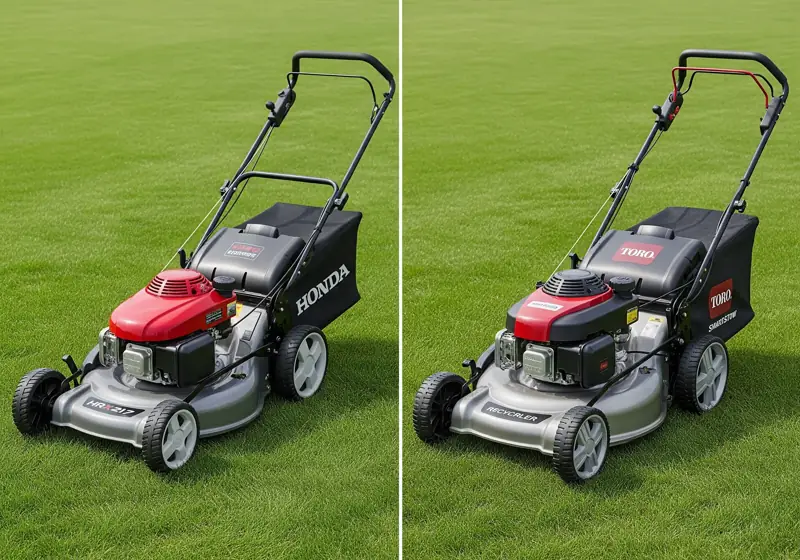
Let me be honest with you – Honda has earned its reputation as the gold standard in lawn mower engines, and for good reason. I currently use a Honda HRX217 on my 0.75-acre lot, and it’s been bulletproof for six years running. when customers ask me what I use, that usually settles the reliability question pretty quickly.
What Makes Honda Special:
Honda’s engineering philosophy focuses on long-term durability over flashy features. Their GCV series engines are incredibly reliable – I’ve seen 15-year-old Honda mowers still running strong with nothing more than basic maintenance. The company’s automotive experience translates directly to their small engines, resulting in superior metallurgy and tighter manufacturing tolerances.
The self-propelled systems deserve special mention. Honda’s Variable Speed Smart Drive system is smooth and intuitive – no jerky starts or stops that plague cheaper alternatives. The transmission uses a combination of gears and belts that’s both durable and easy to service when needed.
Build quality extends beyond the engine. Most Honda mowers feature solid steel decks that resist rust and damage better than aluminum alternatives. The handle controls are well-positioned and built to last, and the overall fit and finish feel substantial without being unnecessarily heavy.
Honda’s Weak Spots:
Here’s what I tell customers about Honda’s limitations: they’re expensive upfront, and replacement parts cost more than other brands. A genuine Honda blade costs nearly twice what you’d pay for a Craftsman equivalent. Also, their electric lineup is limited compared to newer companies focusing solely on battery power.
Honda mowers also tend to be heavier than comparable models from other brands. If you have mobility issues or need to navigate stairs, this extra weight becomes noticeable. Additionally, Honda’s feature set can seem conservative compared to brands that add more bells and whistles.
Best Honda Models in Detail:
The HRX217 remains my top overall recommendation. The 190cc engine provides plenty of power for thick grass, and the Versamow System lets you switch between bagging, mulching, and side discharge without tools. The clip director adjusts mulch vs. bag ratios on the fly – incredibly useful for seasonal conditions.
The HRN216 offers Honda reliability at a more accessible price point. It uses a lighter aluminum deck and simpler transmission, but the engine quality remains excellent. Perfect for homeowners who want Honda durability without premium features.
For serious enthusiasts, the HRC216 brings commercial-grade quality to residential use. The heavy-duty transmission and steel deck handle the toughest conditions, though the price reflects this capability.
Toro: The Innovation Leader
Toro has been my go-to recommendation for customers who want premium features without paying Honda prices. They’ve consistently pushed innovation in the mower industry, and their Personal Pace self-propelled system is genuinely brilliant – it’s the kind of feature that makes you wonder why other companies haven’t copied it yet.
Toro’s Strengths in Detail:
The Personal Pace technology deserves its explanation. Instead of fixed speed settings, the mower matches your natural walking pace automatically. Speed up, and it speeds up. Slow down for tight corners, and it slows down with you. After using conventional self-propelled mowers for years, this system feels almost telepathic.
Toro’s Recycler cutting system represents one of the best mulching technologies I’ve tested. The specially designed blade and deck geometry create a vortex that cuts grass clippings multiple times before depositing them back into the lawn. This works in real-world conditions, unlike some mulching systems that just chop grass once and hope for the best.
The SmartStow technology addresses a real problem for suburban homeowners. Fold the handle down, and the mower stores vertically against a wall. This saves tremendous garage space and prevents oil leaks from tipping the mower on its side.
Where Toro Falls Short:
In my experience, Toro’s engines (usually Briggs & Stratton) don’t quite match Honda’s longevity. They’re reliable for 8-12 years with proper maintenance, but Honda engines routinely exceed 15 years. Also, some of Toro’s plastic components feel less robust than I’d like at this price point.
Toro’s premium pricing can approach Honda levels without delivering quite the same long-term durability. You’re paying for innovation and features, which is great if you’ll use them, but might not represent the best value for basic mowing needs.
Top Toro Picks with Analysis:
The Recycler 22″ SmartStow hits the sweet spot of features, performance, and price. The 163cc Briggs & Stratton engine provides adequate power, Personal Pace makes operation effortless, and SmartStow solves storage problems. It’s my most frequent recommendation for medium-sized suburban lots.
The TimeMaster 30″ cuts mowing time nearly in half for larger yards. The wide cutting deck and powerful engine handle thick grass well, though the machine requires more storage space and costs significantly more than standard 22″ models.
For customers who want commercial durability, the Super Recycler brings heavy-duty construction and a Kohler engine to residential applications. It’s overkill for most homeowners but perfect for those with challenging conditions or large properties.
The Value Champions: Craftsman and Troy-Bilt
Craftsman: The Comeback Kid
Craftsman has had quite a journey – from Sears ownership to Stanley Black & Decker, and now they’re making some of the best value mowers on the market. I’ve been genuinely impressed with their recent improvements, especially considering their troubled period during the Sears bankruptcy.
Why Craftsman Works Now:
The new Craftsman focuses on aggressive pricing without sacrificing essential features. You get more features per dollar than most competitors, including self-propelled drive systems, multiple cutting heights, and decent build quality at price points that undercut premium brands by 30-40%.
Their engine selection has improved dramatically. Working with Briggs & Stratton and Honda, current Craftsman mowers start reliably and provide consistent power. The days of finicky Craftsman engines are largely behind us.
Parts availability remains excellent. Most hardware stores stock common Craftsman parts, and online availability is comprehensive. This matters more than people realize – being able to get a replacement blade or air filter locally saves time and money.
Craftsman’s Current Limitations:
The build quality varies significantly across their lineup. Their budget models feel budget–thinner decks, cheaper wheels, and less refined controls. However, the mid-range and premium options compete well with pricier brands.
Craftsman’s dealer network isn’t as robust as Honda’s or Toro’s. While parts are available, finding qualified service can be challenging in some areas. This matters less if you’re comfortable with basic maintenance, but it’s worth considering for less mechanically inclined homeowners.
Recommended Craftsman Models:
The M275 represents exceptional value in self-propelled mowers. The 163cc Briggs & Stratton engine provides reliable power, the rear-wheel drive system handles slopes well, and the overall construction feels solid for the price point.
The M115 offers honest basic mowing capability. It’s a simple push mower without frills, but the engine starts easily, and the cutting quality is surprisingly good for such an affordable machine.
For riding mowers, the T110 delivers impressive value. The single-cylinder engine provides adequate power for most residential applications, and the cutting deck delivers even results across various grass types.
Troy-Bilt: The Reliable Workhorse
Troy-Bilt might not win any beauty contests, but these mowers work hard and last longer than you’d expect for the price. I often recommend them to customers who prioritize function over flash and want something that’ll keep running year after year without fuss.
Troy-Bilt’s Practical Appeal:
These mowers are built tough for regular use. The engineering focuses on durability rather than advanced features. Decks are substantial, engines are proven designs, and the overall construction emphasizes longevity over lightweight operation.
The simple design philosophy means fewer complex parts that can break. Troy-Bilt doesn’t chase the latest trends – they stick with proven technologies that work reliably in real-world conditions.
Service network support is solid in most areas. Troy-Bilt has been around long enough to establish good dealer relationships, and its parts distribution is reliable.
Troy-Bilt Considerations:
The aesthetic design feels dated compared to sleeker modern alternatives. If curb appeal matters to you, Troy-Bilt’s utilitarian appearance might be off-putting.
Feature sets tend to be basic. You won’t find innovative transmission systems or cutting-edge mulching technology. Troy-Bilt focuses on core functionality rather than advanced capabilities.
Best Troy-Bilt Options:
The TB330 self-propelled mower offers reliable rear-wheel drive and a proven engine at a competitive price. It’s not fancy, but it gets the job done consistently.
Their TB110 push mower represents one of the best values in basic lawn care. Simple, reliable, and affordable – perfect for small yards or budget-conscious buyers.
The Electric Revolution: EGO and Greenworks
EGO: The Battery Technology Leader
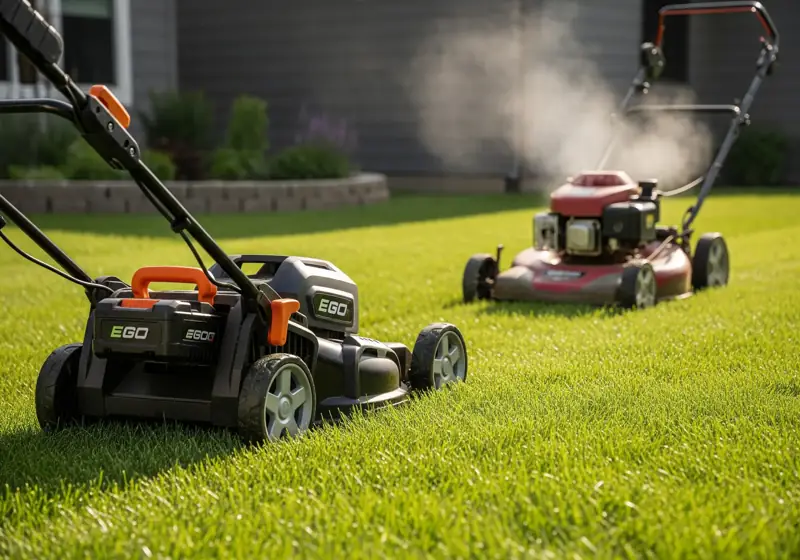
Here’s what I tell customers about EGO: they’ve cracked the code on battery-powered lawn care. Their 56-volt platform delivers gas-like performance with electric convenience, and after testing their mowers extensively, I’m genuinely impressed with what they’ve achieved.
EGO’s Technological Advantages:
The power delivery rivals gas engines for cutting performance. EGO’s motors provide consistent torque regardless of grass thickness or engine RPM. This translates to cleaner cuts and better mulching performance than many gas alternatives.
Battery life has reached practical levels. With their larger battery packs, you can easily mow 60+ minutes on a single charge. For most suburban lots, that’s enough for the entire lawn plus trimming duties.
Fast charging capabilities address range anxiety. Their rapid charger returns batteries to 80% capacity in about 30 minutes. Even if you run out of power mid-mow, a quick break gets you back to work.
The platform compatibility is brilliant. One battery system powers their entire lineup – mowers, trimmers, blowers, chainsaws, and more. Once you invest in EGO batteries, expanding your tool collection becomes very affordable.
EGO’s Practical Limitations:
Premium pricing puts EGO mowers significantly above gas alternatives. You’re paying for cutting-edge technology, but the initial investment can be substantial.
The service network is still developing. While EGO products are generally reliable, finding qualified repair services can be challenging compared to established gas mower brands.
Battery replacement costs loom as a future consideration. After 5-7 years, battery capacity will decline, and replacement costs can approach $200-400, depending on the pack size.
Best EGO Options Analyzed:
The LM2142SP self-propelled model delivers impressive power and runtime. The variable speed drive system works well, and the cutting quality rivals premium gas mowers. It’s my top recommendation for homeowners ready to embrace electric mowing.
The LM2101 provides excellent performance for smaller yards. Lighter weight makes it easy to maneuver, and the power is more than adequate for typical suburban grass conditions.
The LM2135SP strikes the best balance of features and price in EGO’s lineup. Sufficient power for most conditions, reasonable runtime, and a price point that doesn’t require a second mortgage.
Greenworks: The Budget Electric Choice
Greenworks offers the most affordable entry into quality electric mowing. While not as powerful as EGO, they’re perfect for smaller yards and budget-conscious buyers who want to experience electric lawn care without a major investment.
Greenworks Benefits in Practice:
The affordability factor cannot be overstated. Greenworks mowers typically cost half what you’d pay for premium electric brands, making them accessible to homeowners who couldn’t otherwise afford battery-powered equipment.
Quiet operation is a genuine advantage. Early morning or evening mowing becomes possible without disturbing neighbors. This flexibility is particularly valuable for busy homeowners with limited weekend time.
Maintenance requirements are minimal. No oil changes, spark plug replacements, or air filter cleaning. Basic blade sharpening and occasional cleaning represent the extent of required upkeep.
Lightweight construction makes these mowers easy to maneuver and store. Even their self-propelled models weigh significantly less than gas equivalents.
Greenworks Realistic Limitations:
Power output is noticeably lower than premium brands. Thick grass or overgrown conditions can overwhelm smaller Greenworks mowers. They work best with regular mowing schedules and reasonable grass heights.
Battery life is more limited than EGO alternatives. Plan on 30-45 minutes of runtime, depending on grass conditions and mower model.
Build quality reflects the budget pricing. Decks are thinner, wheels are smaller, and overall construction feels less substantial than premium alternatives.
Traditional Stalwarts: Husqvarna, Snapper, and Cub Cadet
Husqvarna: The Professional Heritage
Husqvarna brings serious outdoor power equipment experience to residential lawn care. Their professional forestry and commercial landscaping background translates to robust construction and powerful performance.
Husqvarna’s Professional DNA:
The engineering emphasizes durability and power over convenience features. Husqvarna mowers handle tough conditions that might overwhelm consumer-grade alternatives.
Their Automower robotic systems represent genuine innovation in automated lawn care. While expensive, these systems work remarkably well for homeowners willing to invest in fully automated mowing.
Commercial-grade components appear throughout their residential lineup. Bearings, belts, and deck construction often exceed what’s necessary for typical homeowner use.
Husqvarna Considerations:
Pricing reflects the professional heritage. Even entry-level Husqvarna mowers cost more than comparable models from value brands.
The feature set can feel sparse compared to innovation-focused competitors. Husqvarna prioritizes core functionality over convenience features.
Husqvarna Highlights:
Their HU800AWDH all-wheel-drive mower handles slopes and difficult terrain better than conventional rear-wheel-drive alternatives.
The Automower 430XH robotic mower manages complex lawns up to 0.8 acres with impressive reliability.
Snapper: The Unique Alternative
Snapper builds distinctive mowers that develop loyal followings among customers with specific needs. Their rear-engine riders and unique cutting systems serve niches that mainstream brands often overlook.
Snapper’s Distinctive Approach:
Rear-engine riding mowers provide better visibility and maneuverability than traditional front-engine designs. The cutting deck extends in front of the operator, making it easier to trim around obstacles.
Their Hi-Vac cutting system creates superior suction for bagging applications. Customers with heavy leaf loads or grass collection needs often prefer Snapper’s approach.
Build quality emphasizes longevity. Snapper mowers might not have the latest features, but they’re built to last for decades with proper maintenance.
Snapper Limitations:
Limited model selection means fewer options for specific needs. You either fit Snapper’s approach or you don’t.
Pricing can be higher than expected for the feature set. You’re paying for specialized engineering rather than mass-market efficiency.
Cub Cadet: The Residential Specialist
Cub Cadet focuses specifically on residential outdoor power equipment, bringing targeted solutions for suburban homeowners.
Cub Cadet’s Residential Focus:
The model lineup addresses common homeowner needs without commercial overkill. Features like comfortable seating, easy controls, and residential-appropriate sizing pervade their designs.
Their XT Enduro series riding mowers deliver solid performance at competitive prices. Build quality exceeds basic box store alternatives without reaching commercial price levels.
Cub Cadet Considerations:
Brand recognition lags behind more established names. This can affect resale values and parts availability in some regions.
Innovation tends to be incremental rather than groundbreaking. Cub Cadet follows trends rather than setting them.
Emerging and Specialty Brands
Ryobi: The Tool System Integration
Ryobi’s 40V battery platform extends to lawn mowers, providing integration with their extensive tool lineup. While not as powerful as dedicated electric mower brands, the system compatibility appeals to existing Ryobi tool users.
Ariens: The Northern Specialist
Ariens brings snow blower expertise to lawn mowers, creating robust machines that handle challenging conditions well. Their focus on durability and serviceability appeals to northern climate homeowners.
Bad Boy Mowers: The American Alternative
Bad Boy focuses on zero-turn mowers with distinctive styling and robust construction. While primarily commercial-focused, their residential models offer unique alternatives to mainstream brands.
Top-Rated Lawn Mower Brands by Category
Now that you have a clear understanding of the different brand types, let’s get down to the brass tacks. I’ve broken down my top recommendations into specific categories based on what they do best. Think of this as my cheat sheet for finding the perfect brand for your situation.
Top-Rated Lawn Mower Brands by Category
After years of testing and countless hours in my shop, I’ve seen which brands consistently deliver on their promises. While there’s no single perfect brand for everyone, here are the ones that lead the pack in their respective fields.
For Unmatched Reliability and Durability: Honda
If you want a gas mower that’s built like a tank and will last you for 15+ years with proper care, Honda is the undisputed king. Their engines are the gold standard in the industry, and their engineering is a testament to long-term value. While the upfront cost is higher, I’ve seen these machines run for decades.
For Innovation and Premium Features: Toro
Toro is my go-to recommendation for the homeowner who wants all the bells and whistles without sacrificing performance. Their Personal Pace self-propelled system is pure genius, and their mulching decks are some of the best I’ve ever seen. You’re buying into a brand that constantly looks for ways to make mowing easier and more efficient.
For The Best Electric Performance: EGO
If you’re ready to ditch gas and oil, EGO is the leader of the electric revolution. Their 56-volt platform delivers power that truly rivals gas mowers, and their battery system is a game-changer. They’ve solved the problems of battery life and charging time, making electric mowing a viable, no-compromise solution for most suburban yards.
For Solid Value and Dependability: Craftsman
Craftsman has earned its reputation back by offering reliable mowers at a price that won’t empty your wallet. You get more features for your money than with most competitors, and the brand is widely available, which is a huge plus for finding parts or getting service. It’s the perfect choice for someone who needs a dependable machine without the premium price tag.
How to Choose the Right Brand for Your Specific Needs
After helping thousands of customers make this decision, here’s my proven process for matching brands to individual situations:
Step 1: Honest Need Assessment
Start with your actual lawn conditions, not your aspirations. Measure your yard size accurately – most homeowners overestimate by 20-30%. Consider your terrain honestly. Slopes, obstacles, and grass types all influence brand selection.
Physical capabilities matter more than people admit. If you have back problems, the weight difference between Honda and Greenworks becomes significant. If you’re not mechanically inclined, electric brands might suit you better than gas alternatives, which require more maintenance.
Storage limitations are real constraints. Measure your garage space before falling in love with a particular model. SmartStow technology or compact electric mowers might be necessities rather than conveniences.
Step 2: Realistic Budget Planning
Consider the total cost of ownership, not just purchase price. A $300 Craftsman might cost $150 per year in maintenance and repairs, while a $600 Honda might average $50 annually. Over 10 years, the Honda costs less.
Factor in your time value. If you’re comfortable performing maintenance, gas mowers represent good value. If you prefer to minimize upkeep, electric alternatives might justify their higher initial cost.
Don’t forget about accessories and consumables. Some brands require proprietary parts that cost more than generic alternatives.
Step 3: Feature Prioritization
List features in order of actual importance to your situation. Self-propelled drive is essential for hills but unnecessary for flat terrain. Mulching capability matters if you prefer not to bag clippings. An electric start is valuable if you struggle with pull cords.
Avoid paying for features you won’t use. A 30″ cutting deck saves time on large lots but creates storage problems for small garages. Variable speed control is useful for changing conditions, but unnecessary for straightforward mowing.
Step 4: Long-term Perspective
Consider how your needs might change. Young families often expand lawn size as children grow. Aging homeowners might prefer electric convenience over gas power. Plan for reasonable evolution rather than extreme changes.
Think about resale implications. Honda and Toro mowers retain value better than budget alternatives. If you move frequently, brand reputation affects your ability to sell used equipment.
My Brand Recommendations by Specific Situation
Best Overall Value: Toro Recycler Series
The Toro Recycler delivers premium features at reasonable prices. Personal Pace technology, effective mulching, and solid build quality justify the moderate premium over value brands. Most suburban homeowners will be happy with this choice.
Most Reliable Long-term: Honda HRX Series
For customers prioritizing longevity over initial cost, Honda remains unmatched. Plan on 15+ years of reliable service with basic maintenance. The higher purchase price amortizes over the extended lifespan.
Best Electric Performance: EGO Power+ LM2142SP
EGO has mastered battery-powered mowing. Power delivery matches gas alternatives, runtime is adequate for most applications, and the overall experience feels refined rather than compromised.
Best Budget Gas Option: Craftsman M275
Craftsman’s resurgence shows in models like the M275. Self-propelled convenience, reliable starting, and decent build quality at a price that won’t strain most budgets.
Best Budget Electric: Greenworks 40V Series
For homeowners wanting to try electric mowing without major investment, Greenworks provides honest performance at accessible prices. Perfect for smaller yards and regular mowing schedules.
Best for Large Properties: Honda HRX217 or Toro TimeMaster 30″
Large lots require either exceptional durability (Honda) or increased cutting width (Toro TimeMaster). Both approaches work well for different customer preferences.
Best for Challenging Terrain: Husqvarna All-Wheel Drive
Slopes, uneven ground, and difficult conditions favor Husqvarna’s professional-grade construction and all-wheel-drive capability.
Best for Minimal Maintenance: EGO or Greenworks Electric
Electric mowers eliminate most maintenance requirements. If you prefer to focus on lawn care rather than equipment upkeep, battery power makes sense.
What to Avoid: Common Brand Selection Mistakes
In my 15 years of helping customers, I’ve learned to steer people away from certain predictable pitfalls:
Ultra-Cheap Store Brands
Generic mowers sold exclusively through big box stores often lack adequate parts support and service networks. The initial savings disappear quickly when you can’t get replacement parts or qualified repairs.
Overpowered Equipment for Small Yards
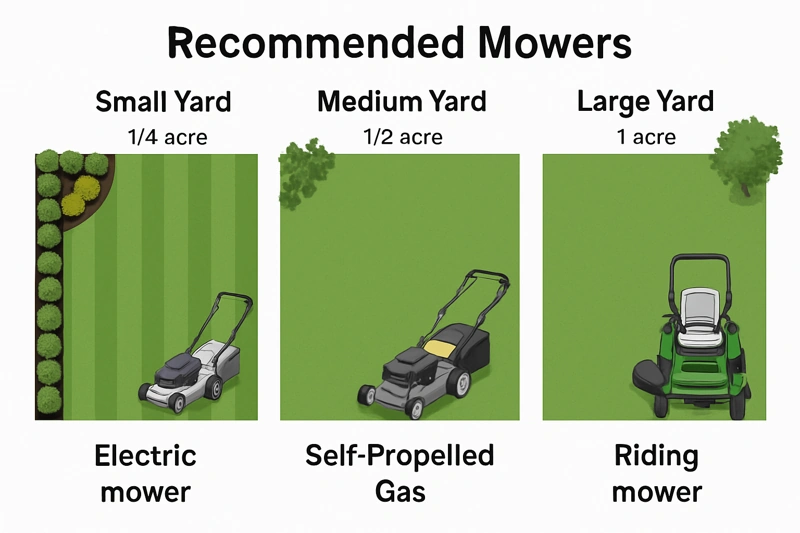
A 30″ zero-turn mower might seem fun, but it’s impractical for a quarter-acre lot with flower beds. You’ll pay for a capability you can’t use while creating storage and maneuverability problems.
First-Year Model Releases
Let other customers work out the inevitable bugs in new model introductions. Second-year production typically resolves initial issues and often comes with better pricing.
Brands Without Local Support
Even reliable mowers eventually need parts or service. Choosing brands without local dealer support creates long-term problems that outweigh short-term savings.
Ignoring Total Cost of Ownership
The cheapest purchase price rarely represents the best value. Factor in maintenance costs, parts availability, fuel efficiency, and expected lifespan when comparing alternatives.
Seasonal Considerations for Brand Selection
Spring Purchase Timing
Late winter and early spring offer the best selection and competitive pricing. Dealers are motivated to move inventory, and manufacturers often provide incentives. This timing also ensures you’ll have your mower ready for the growing season.
Summer Reality Check
Buying mowers during peak season limits selection and eliminates negotiating leverage. However, you can often find good deals on display models or last year’s inventory if you’re flexible about specific features.
Fall Opportunities
End-of-season sales provide excellent opportunities for patient buyers. Dealers want to clear inventory before winter, and next year’s models aren’t significantly different for most brands.
Winter Planning
Use the off-season to research thoroughly without purchase pressure. Read reviews, visit dealers, and plan your purchase strategy for spring availability.
The Future of Lawn Mower Brands
The industry is evolving rapidly, and understanding current trends helps predict which brands will thrive long-term.
Electric Dominance
Battery technology continues to improve while costs decrease. Brands like EGO that focus exclusively on electric power are positioned well for future market shifts. Traditional gas mower manufacturers are scrambling to develop competitive electric alternatives.
Smart Technology Integration
Robotic mowing, smartphone apps, and GPS tracking represent the next frontier. Brands investing in these technologies now will likely lead future market development.
Sustainability Focus
Environmental concerns are driving both regulatory changes and consumer preferences toward cleaner alternatives. Brands emphasizing electric power and sustainable manufacturing practices align with long-term market trends.
Making Your Final Decision
After processing all this information, the decision process becomes clearer. Start with your honest needs assessment, establish a realistic budget including long-term costs, and prioritize features that matter for your specific situation.
Don’t let perfect be the enemy of good. Any mower from the brands I’ve discussed will serve you well if matched appropriately to your needs. The key is avoiding common mistakes rather than finding the theoretically perfect solution.
Remember what I learned the hard way in my twenties – buying the cheapest option usually costs more in the long run. Invest in a quality brand that fits your needs, maintain it properly, and you’ll have years of reliable service and a lawn that makes the neighbors jealous.
Here’s what I tell every customer: take your time with this decision. Visit dealers, ask questions, and don’t let anyone pressure you into more mower than you need. Your future self (and your lawn) will thank you for choosing the right brand from the start.
The perfect lawn mower brand for you is out there. Use this guide as your roadmap, trust your instincts, and remember that even the best mower is only as good as the person operating it. Focus on finding the right match, and you’ll be rewarded with years of reliable performance and lawn care satisfaction.
Yes, it is often worth the investment. While expensive mowers have a higher initial cost, they tend to offer better long-term value due to superior durability, reliability, and lower annual maintenance costs. Brands like Honda offer long-term reliability and a lifespan of 15+ years, which often makes them more cost-effective over time compared to cheaper models that require frequent repairs or replacement.
To choose the right lawn mower, you should first conduct an honest needs assessment. Consider your yard size, terrain (slopes, obstacles), and personal physical capabilities. Then, set a realistic budget that accounts for the total cost of ownership, not just the purchase price. Finally, prioritize features that are essential for your situation, such as a self-propelled drive for hills or mulching capability for grass clippings.
According to the article, the choice depends on your priorities. Toro is recommended as a value champion that offers premium, innovative features like the Personal Pace self-propelled system and SmartStow technology at a competitive price. Troy-Bilt is described as a reliable workhorse, prioritizing simple, tough, and durable construction over advanced features, making it a solid choice if you prefer function over flash.
The article identifies EGO Power+ as the leader in battery technology and the best electric performance overall. Its 56-volt platform delivers power comparable to gas mowers, with a long runtime and fast-charging capabilities. For budget-conscious buyers, Greenworks is recommended as the best affordable electric option.
Based on the article, Honda is considered the most reliable self-propelled brand. Its self-propelled systems are described as smooth and intuitive, and its GCV series engines are known for their exceptional durability and longevity, often lasting 15 or more years with proper maintenance.
