
Briggs and Stratton Engine Guide: Models & Maintenance 2025
So you want to know about Briggs and Stratton lawn mower engine briggs and stratton lawn mower engine, huh? Well, you’ve come to the right place. I’ve been working on these engines for over 15 years now, and if there’s one brand I know inside and out, it’s Briggs. Started fixing them in my garage back in 2009, and these days I probably service more Briggs engines in a month than most people see in a lifetime.
Table of Contents
▼- Understanding Briggs and Stratton Engine History & Reputation
- Briggs and Stratton Engine Models: Complete Series Breakdown
- 550 Series: Entry-Level Reliability
- 625 Series: The Sweet Spot
- 725 EXi Series: Modern Innovation
- 850 Professional Series: Commercial-Grade Power
- Vanguard Series: The Top of the Line
- Briggs and Stratton Zero Turn Applications: Growing Market
- Why Zero Turn Mowers Love Briggs Engines
- Popular Briggs Zero Turn Engine Models
- Zero Turn Maintenance Considerations
- Choosing the Right Briggs Engine for Your Zero Turn
- Briggs and Stratton Engines Across Mower Types
- Push Mower Applications
- Riding Mower Applications
- Wide-Area and Commercial Applications
- Essential Maintenance Guide for Briggs and Stratton Engines
- Pre-Season Preparation
- During-Season Maintenance
- End-of-Season Service
- Annual Deep Maintenance
- Troubleshooting Common Briggs and Stratton Engine Problems
- Engine Won’t Start
- Runs Rough or Surges
- Overheating Issues
- Hard Starting When Warm
- When to Call a Professional
Here’s the thing – Briggs and Stratton lawn mower motors have been the backbone of American lawn care for over a century. They’re not the fanciest engines out there, and they’re definitely not trying to win any beauty contests, but they’re the workhorse that just keeps showing up season after season. That’s exactly why I recommend them to most homeowners who walk into my shop looking for reliable, fixable power.
Last weekend, my neighbor Dave asked me which engine brand he should look for in his next mower. “Honda or Briggs?” he asked. I told him what I tell everyone – if you want something that’ll run forever and you can fix with basic tools when something eventually goes wrong, Briggs is your answer. If you want Swiss watch precision and don’t mind paying for it, go to Honda. For most folks, mowing suburban lawns? Briggs & Stratton engines for lawn mowers make the most sense.
In this guide, I’ll walk you through everything you need to know about Briggs & Stratton lawn mower engines – from understanding their different model series to keeping them running smoothly for decades. This builds on our complete guide to lawn mower engine types, but focuses specifically on everything Briggs and Stratton. No technical mumbo-jumbo, just straight talk from someone who’s fixed thousands of these things.
Understanding Briggs and Stratton Engine History & Reputation
Let me tell you about why Briggs matters in the lawn care world. This company’s been making engines since 1908 – yeah, 1908. That’s before World War I, before sliced bread was invented, back when your great-great-grandparents were probably riding horses to work.
Stephen Foster Briggs and Harold M. Stratton started out making automobiles in Milwaukee, Wisconsin. That didn’t exactly work out, but they figured out pretty quickly that America needed reliable small engines. By the 1920s, they were cranking out engines for everything from washing machines to garden tractors. Smart move, guys.
What really put Briggs on the map was their focus on making engines that regular people could actually maintain. While other manufacturers were building complicated, expensive motors that needed specialists to fix, Briggs kept things simple and repairable. That philosophy is still baked into every Briggs & Stratton lawn mower engine they make today.
I’ve worked on engines from the 1970s that still run. Not beautifully, mind you, but they run. That’s the Briggs reputation right there – built to last and built to be fixed when they don’t.
Today, Briggs is America’s largest producer of small engines. They’ve got manufacturing facilities across the country and a parts distribution network that means you can find what you need at just about any hardware store or dealer. That matters way more than most people realize. When your mower breaks on Saturday morning and you need a part, good luck finding obscure brand components. Briggs parts? They’re everywhere. Curious how Briggs compares to other top lawn mower brands? We’ve got a detailed breakdown.
The company’s been through some rough patches financially in recent years, but its engines are still being made and supported. They’ve focused on innovation where it matters – easier starting, better fuel efficiency, and cleaner emissions without sacrificing the simplicity that made them famous.
Briggs and Stratton Engine Models: Complete Series Breakdown
Alright, let’s talk about the different Briggs and Stratton lawn mower motor series you’ll actually encounter. Briggs has a ton of different models, and honestly, it can get confusing fast. I’m gonna break this down by what you actually need to know, not just throw a bunch of model numbers at you.
550 Series: Entry-Level Reliability
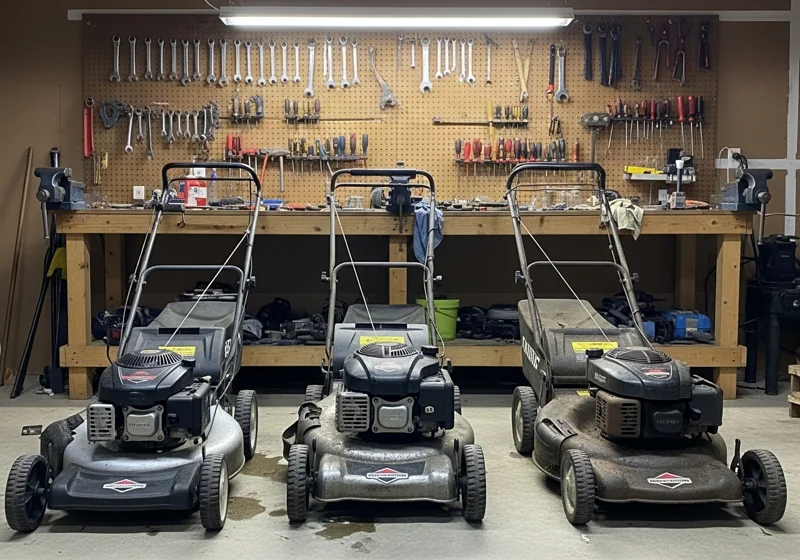
The 550 Series is your basic, no-frills Briggs & Stratton engine lawn mower power. We’re talking 140cc displacement, side-valve design, and all the fundamentals done right without any fancy bells and whistles.
I put these in budget-friendly push mowers all the time. They’re not gonna win any performance awards, but for a quarter-acre suburban lot with flat terrain, they’ll do the job just fine. Easy to work on, parts are dirt cheap, and they start reliably if you treat them halfway decent.
The downside? They’re not super fuel-efficient, and they’re a bit louder than more modern designs. But for the price point, they’re hard to beat.
625 Series: The Sweet Spot
Now we’re talking. The 625 Series bumps up to around 150-160cc and introduces overhead valve technology. That’s a game-changer for efficiency and power delivery.
This is probably the most common Briggs and Stratton push mower engine series I see in my shop. They’re in everything from basic Craftsman mowers to mid-range Toro models. The overhead valve design means better fuel economy, cleaner burning, and more consistent power compared to the older side-valve engines.
These engines typically feature ReadyStart technology, which means no priming, no choking – just pull and go. As someone who’s pulled approximately 10,000 starter cords in his career, I appreciate anything that makes starting easier.
Maintenance is straightforward, and the parts availability is excellent. If you’re shopping for a new push mower, getting one with a 625 Series engine is a smart move.
725 EXi Series: Modern Innovation
The 725 EXi is where Briggs really stepped up their game. We’re looking at 163cc with electronic fuel injection – yeah, EFI on a push mower engine. Ten years ago, I would’ve told you that was overkill. Today? It’s actually pretty slick.
Just Checking technology means this Briggs & Stratton lawn mower motor monitors itself and alerts you when maintenance is due. The EFI system delivers precise fuel metering, which translates to better fuel economy and consistent power regardless of conditions. Staying on top of lawn mower maintenance and troubleshooting is critical for any engine, and this technology makes it easier than ever.
I’ve installed dozens of these in customer mowers over the past few years, and the failure rate is stupid low. They start easier than just about anything else on the market, run cleaner, and use noticeably less fuel than carbureted engines.
The catch? They’re more expensive upfront, and if something electronic goes wrong, you’re probably bringing it to a shop rather than fixing it in your garage. But for most homeowners who just want their mower to work without hassle, the 725 EXi is worth the extra money.
850 Professional Series: Commercial-Grade Power
Step up to the 850 Series and you’re entering commercial territory. These twin-cylinder engines put out serious power – we’re talking 18-27 horsepower depending on the specific model.
The build quality here is noticeably different. Cast iron cylinder sleeves, heavy-duty bearings, massive air filtration systems, and cooling capacity that could handle the Sahara Desert. These Briggs and Stratton lawn mower engines are designed for landscapers running equipment 8-10 hours a day, not weekend warriors.
I see these mostly in commercial walk-behinds and larger residential zero-turn mowers. The twin-cylinder design delivers smooth, consistent power and way less vibration than single-cylinder engines. Your back will notice the difference after a few hours of mowing.
Maintenance requirements are stricter on these engines. They need more frequent oil changes, air filter checks, and attention to detail. But treat them right, and they’ll run thousands of hours without major issues.
Vanguard Series: The Top of the Line
Vanguard engines are Briggs’ premium line, and honestly, they compete head-to-head with anything else on the market. These are the engines you’ll find on high-end commercial equipment where failure simply isn’t an option.
We’re talking about sophisticated fuel injection, commercial-grade construction throughout, and engineering that prioritizes longevity over everything else. V-twin designs range from 400cc all the way up to 900cc+ monsters that put out over 30 horsepower.
The Vanguard line includes features you’d expect in automotive engines – pressurized lubrication systems, advanced cooling, and electronic management systems. These Briggs & Stratton engines for lawn mowers are designed to run 3,000+ hours between major services.
For residential users, Vanguard is probably overkill unless you’re mowing multiple acres or have serious terrain challenges. But if you’re buying commercial equipment or want the absolute best Briggs has to offer, Vanguard delivers.
Briggs and Stratton Zero Turn Applications: Growing Market
Let’s talk about the elephant in the lawn – Briggs and Stratton zero turn applications are absolutely exploding right now. I’ve seen more interest in zero-turn mowers in the past two years than in the previous ten combined. Homeowners are realizing what commercial guys have known forever – zero-turns are faster, more efficient, and way more fun to operate than traditional riding mowers. If you’re shopping for a zero-turn, check out our guide on choosing the best zero turn mower for your property.
Why Zero Turn Mowers Love Briggs Engines
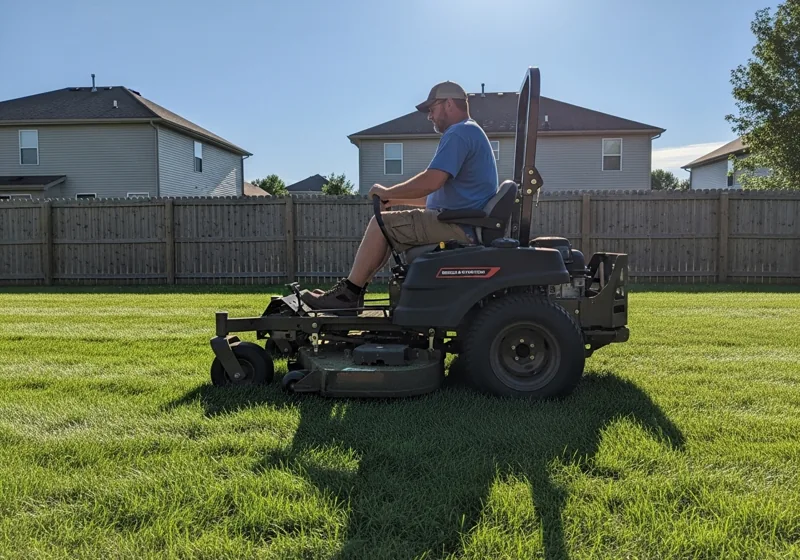
Briggs & Stratton zero turn mowers need engines that can handle some serious demands. You’re asking the engine to maintain consistent power while making rapid directional changes, operating at higher ground speeds, and often running for extended periods.
The twin-cylinder engines Briggs produces are perfect for this application. The balanced power delivery means smooth operation even when you’re whipping around trees and making tight turns. Single-cylinder engines create too much vibration and uneven power pulses for comfortable zero-turn operation.
I’ve worked on zero turn Briggs and Stratton setups ranging from small residential units to massive commercial rigs. The engines that work best typically fall in the 18-27 horsepower range for residential use, while commercial applications often need 27 HP or more.
Popular Briggs Zero Turn Engine Models
For residential Briggs and Stratton zero turn mower applications, the Professional Series engines are the go-to choice. The 724cc and 810cc twin-cylinder engines deliver plenty of power for decks up to 54 inches wide.
These engines come with features specifically beneficial for zero-turn applications. Dual ball bearing support on the crankshaft handles the stress of rapid direction changes. Oversized air filtration systems deal with the dust and debris you kick up at higher speeds. Heavy-duty cooling fins manage the heat from extended operation.
The Vanguard series is where you go when you’re serious about zero-turn performance. Briggs makes several Briggs & Stratton zero turn mowers engines in the Vanguard line specifically optimized for zero-turn applications. We’re talking fuel injection, commercial-grade construction, and power outputs that rival small car engines.
Zero Turn Maintenance Considerations
Briggs and Stratton zero turn engines need more frequent maintenance than your average push mower. The higher operating hours, increased loads, and tougher conditions mean you need to stay on top of service.
Oil changes should happen every 50 hours or once a season for residential use. Commercial operators should be changing oil every 25-35 hours, depending on conditions. I’m not joking around here – zero-turn engines work hard, and oil is what keeps them alive.
Air filter maintenance is critical on zero-turn applications. You’re moving fast, kicking up more dust and debris than a slow-moving riding mower. Check your air filter every 10-15 hours of operation, and don’t try to stretch a dirty filter. The few bucks you save aren’t worth the engine damage. Your zero-turn mower blades also need special attention – proper blade selection and maintenance directly impacts engine performance.
The hour meter on your zero-turn isn’t just decoration – it’s your maintenance bible. Keep track of hours religiously, and follow the service schedule in your owner’s manual. Every manufacturer puts those schedules in there for a reason.
Choosing the Right Briggs Engine for Your Zero Turn
If you’re shopping for a new Briggs and Stratton zero turn mower, here’s my honest advice on engine selection based on your situation.
For yards up to 2 acres with relatively flat terrain, an 18-22 HP engine will handle it just fine. You don’t need a massive engine to mow residential lawns efficiently. Focus on getting a quality twin-cylinder engine rather than maxing out on horsepower.
Properties between 2-5 acres or with significant hills need 22-25 HP minimum. The extra power helps maintain blade speed on slopes and gives you enough reserve to handle thick grass or wet conditions without bogging down.
Anything over 5 acres or commercial applications should be looking at 25+ HP engines, preferably from the Vanguard line. You’re putting serious hours on the engine, and you need commercial-grade durability.
Don’t get sucked into the horsepower arms race. A well-maintained 22 HP engine will outperform a neglected 27 HP engine every single time. Focus on getting an engine from a solid series (Professional or Vanguard), and then actually maintain it properly.
Briggs and Stratton Engines Across Mower Types
Let’s break down how Briggs and Stratton lawn mower engines perform across different equipment types. Each application has specific demands, and understanding what works best for what you’re doing matters.
Push Mower Applications
Briggs and Stratton push mower engines are probably what most homeowners interact with most often. These range from basic 140cc side-valve engines in budget mowers up to sophisticated 190cc overhead valve engines in premium models. Need help choosing the right push mower for your yard? We’ve tested and reviewed all the top models.
For flat yards under a quarter acre, even the basic 550 Series will get the job done. I wouldn’t call it exciting, but it’ll cut grass. The engine doesn’t have much power reserve, so if you let your grass get tall or try to mow wet, you’re gonna have a bad time.
Step up to the 625 Series for yards between a quarter and a half acre. The overhead valve design delivers better power and efficiency, making the mowing experience less of a workout. These engines handle taller grass better and maintain blade speed more consistently.
The 725 EXi Series is what I’d recommend for anyone who wants the best push mower experience possible. The electronic fuel injection means consistent power, excellent fuel economy, and a starting system that works every single time. For folks who just want to mow without thinking about their equipment, this is the sweet spot.
One thing people don’t think about enough – self-propelled mowers need more power than basic push models. The transmission eats up some of the engine’s output, so getting adequate displacement matters more when you’re not pushing the mower yourself.
Riding Mower Applications
Briggs and Stratton ride on mower engines are where things get more interesting. We’re typically looking at single-cylinder engines from 13-22 HP or twin-cylinder engines from 18-27 HP. Shopping for a riding mower? Our riding mower buying guide covers everything from budget models to premium options.
Single-cylinder engines are fine for basic riders on small properties. They’re cheaper, simpler, and easier to maintain. The downside is vibration – after an hour on a single-cylinder rider, you’ll feel it in your back and hands. They also deliver less smooth power, which you notice when climbing hills or cutting thick grass.
Twin-cylinder engines are worth the extra money if you’re mowing more than an acre or have any significant terrain challenges. The balanced design means way less vibration, smoother power delivery, and better performance under load. It’s the difference between a rough work truck and a comfortable sedan. While we’re focused on Briggs here, John Deere riding mowers often use competing engines – worth comparing if you’re deciding between brands.
For Briggs and Stratton ride on mower applications, I generally recommend at least 15 HP for flat yards under 2 acres, 18-20 HP for 2-3 acres or moderate hills, and 22+ HP for anything larger or with serious terrain challenges.
Automatic transmissions need more power than manual transmissions, just like cars. If you’re shopping for a riding mower with hydrostatic transmission (which I strongly recommend), make sure the engine has enough power to handle the transmission load plus cutting.
Wide-Area and Commercial Applications
When you get into commercial territory with Briggs & Stratton lawn mower engines, we’re exclusively talking about twin-cylinder engines from the Professional and Vanguard series. Shopping for commercial lawn mowing equipment? We’ve got a complete guide to professional-grade options.
Wide-area walk-behinds typically run 10-15 HP Vanguard engines. These machines have 32-48 inch cutting decks and are designed for commercial operators who need to cover ground efficiently on foot.
Commercial stand-on mowers and larger zero-turns run 18-35 HP engines, depending on deck size and application. Landscapers running these machines 8-10 hours daily need bulletproof reliability, which is exactly what the Vanguard line delivers.
The hour meters on commercial equipment rack up fast. It’s not uncommon to see 500+ hours in a single season. That’s why commercial engines have oversized oil sumps, heavy-duty air filtration, and construction that’s built for punishment.
If you’re buying commercial equipment, don’t cheap out on the engine. The difference between a Professional Series engine and a Vanguard might be a few hundred bucks, but that investment pays for itself in reliability and longevity. I’ve seen Vanguard engines run 3,000+ hours with nothing more than regular maintenance.
Essential Maintenance Guide for Briggs and Stratton Engines
Alright, let’s talk about keeping your Briggs and Stratton lawn mower motor running like it should. This is where most people either save themselves thousands of dollars or end up buying a new mower way sooner than they should have to.
Pre-Season Preparation
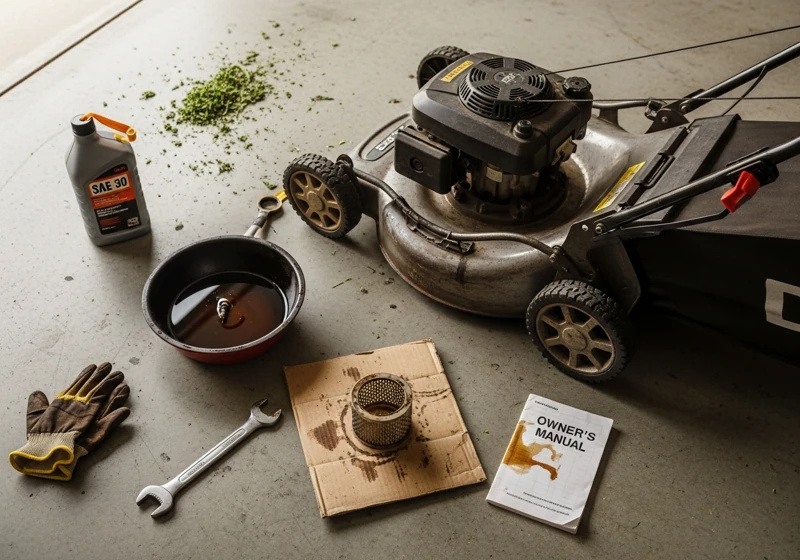
Before you fire up that Briggs & Stratton lawn mower engine for the first time each spring, give it some attention. This 20-minute investment prevents a season of headaches.
Start with an oil change. I don’t care if you changed it before storage – do it again now. Oil breaks down over time, even when the engine isn’t running. Fresh oil at the start of the season gives your engine the best possible start. Need help with changing your mower’s oil? Our step-by-step guide makes it easy.
Use SAE 30-weight oil for most applications. If you’re in a colder climate and mow early or late in the season, 10W-30 works better. Don’t overthink the oil brand – any major brand that meets the specs in your manual will work fine. I use whatever’s on sale at the auto parts store.
Check the spark plug next. If it’s black, crusty, or has been in there more than two seasons, just replace it. Spark plugs are cheap insurance against hard starting. Gap new plugs to spec – usually 0.030 inches for most Briggs and Stratton lawn mower engines, but check your manual.
The air filter deserves serious attention. If it looks like it survived a dust storm, replace it. Paper filters can’t be cleaned effectively – if they’re dirty, they’re done. Foam filters can be washed with soap and water, dried completely, and then lightly oiled before reinstalling.
Fresh fuel is absolutely critical. If you’re not 100% sure about the gas in your tank, dump it out and start over. Add fuel stabilizer to fresh gas, even if you’re planning to use the mower regularly. Modern ethanol fuel goes bad faster than most people realize.
During-Season Maintenance
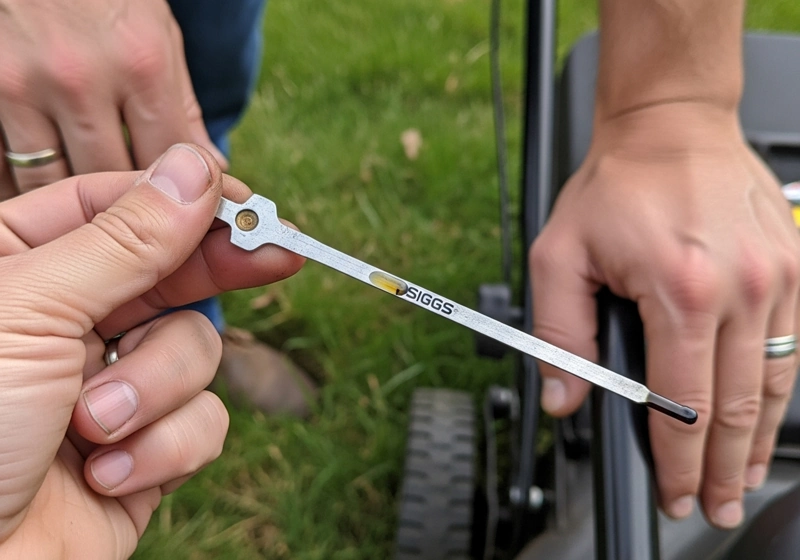
Check your oil level before every use. I know that sounds obsessive, but Briggs & Stratton lawn mower motors don’t have oil pressure gauges. The dipstick is your only warning system, and by the time the engine starts making noise from low oil, damage is already happening.
Don’t overfill the oil either. Too much oil causes its own problems – foaming, pressure buildup, and leaking past seals. Fill to the full mark on the dipstick, not above it.
Inspect the air filter every month during mowing season. If you’re mowing in dusty conditions or cutting dry grass, check it more often. A partially dirty filter can be cleaned and reused, but don’t try to nurse a filter that’s seen better days. False economy.
Keep those cooling fins clean. Grass clippings and debris love to pack into the fins on the engine shroud, blocking airflow and causing overheating. I use a leaf blower to clean mine every few weeks – it takes about three minutes and prevents expensive overheating damage.
The blade needs attention, too. A sharp blade makes the engine’s job easier and gives you a cleaner cut. I sharpen mine at least twice a season, more if I hit rocks or roots. Learn how to sharpen your mower blade properly for professional results. Dull blades make the engine work harder, use more fuel, and give you a ragged, unhealthy cut.
End-of-Season Service
This is when I do the heavy lifting on Briggs and Stratton lawn mower engines. Set aside an afternoon in late fall to properly prepare your engine for winter storage. Our winterization guide walks you through protecting every system on your mower.
Oil change time – get all that dirty oil out of there. Used oil has acids and contaminants that can corrode internal parts during storage. Run the engine for a few minutes first to warm up the oil, making it drain more completely.
While the oil’s draining, pull the spark plug and inspect it. If you didn’t replace it in spring, do it now. If it’s less than a season old and looks decent, clean it up and gap it properly before reinstalling.
Clean or replace the air filter one last time before storage. You don’t want moisture and debris getting into your engine while it sits all winter.
Here’s where I disagree with a lot of people – I store my engines with a full tank of treated fuel, not empty. Add quality fuel stabilizer according to the instructions, fill the tank to minimize condensation space, then run the engine for 10-15 minutes to get treated fuel throughout the entire fuel system.
Disconnect the spark plug wire for safety during storage, and store the mower in a dry location if possible. Damp storage environments cause rust and corrosion even on the best engines.
Annual Deep Maintenance
Once a year – usually during end-of-season service – I go deeper on Briggs & Stratton engines for lawn mowers.
Replace the fuel filter if your engine has an in-line filter. These get dirty over time and restrict fuel flow. They’re cheap and easy to change.
Inspect all fuel lines for cracks, hardening, or deterioration. Fuel lines don’t last forever, and a cracked line can cause hard starting or dangerous fuel leaks. When you need replacements, our lawn mower parts guide shows you where to find quality components at fair prices.
Check all nuts and bolts on the engine. Vibration works fasteners loose over time. I go around the engine with appropriate wrenches and snug everything up to proper torque.
If the engine’s been running rough, surging, or hard to start, this is when I clean the carburetor. It’s not rocket science, but it requires patience and basic mechanical ability. If you’re not comfortable taking things apart, this is a good job for a shop visit.
Inspect all safety systems – dead man switches, blade engagement controls, parking brakes. These need to work properly, or someone could get seriously hurt. Don’t ignore safety equipment.
Troubleshooting Common Briggs and Stratton Engine Problems
After 15 years of service calls, I can diagnose most Briggs and Stratton lawn mower engine problems within a few minutes. For issues across all engine brands, check our complete troubleshooting guide. Here’s my systematic approach to the most common Briggs-specific issues.
Engine Won’t Start
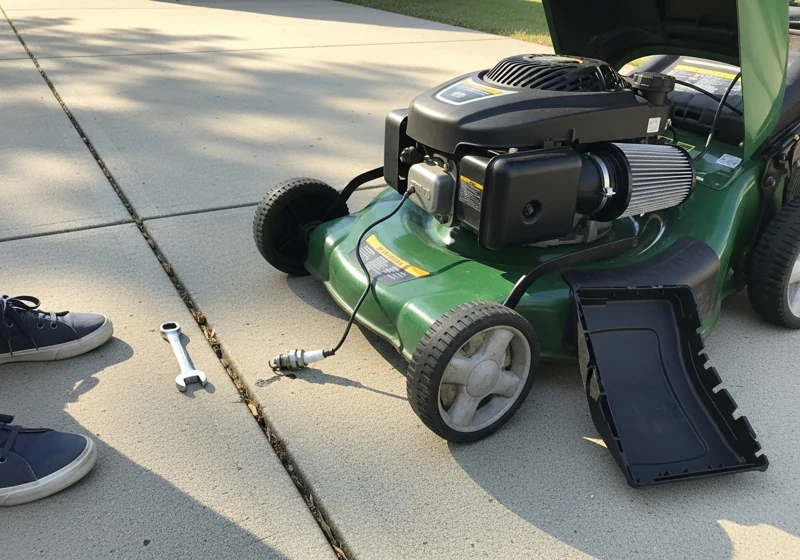
This is the number one complaint I hear. “Mike, it won’t start!” Okay, let’s work through this logically.
First, check fuel. Sounds obvious, but I’ve made dozens of service calls where the tank was empty or nearly empty. Fresh fuel matters too – if that gas has been sitting since last season, it’s probably varnished and worthless. Drain old fuel and refill with fresh gas mixed with stabilizer.
No spark is the next culprit. Pull the spark plug, ground it against the engine block, and have someone pull the starter cord. You should see a strong blue spark. No spark usually means a dead plug, loose wire, or fried ignition module.
Replace the spark plug even if it looks okay – they’re cheap enough that it’s worth eliminating the variable. Make sure the wire is pushed on firmly. If you still have no spark after a new plug, the ignition module is probably toast.
Air system problems can prevent starting, too. A completely clogged air filter essentially suffocates the engine. Remove the air filter and try starting. If it fires up, you found your problem.
Check the safety interlocks. Modern Briggs & Stratton lawn mower engines have multiple safety switches that prevent starting if conditions aren’t right. The blade engagement must be disengaged, the parking brake set (on riders), and the operator presence switch activated. These systems fail sometimes, preventing an otherwise good engine from starting.
Runs Rough or Surges
Rough running, surging RPMs, or inconsistent power almost always point to fuel or air system issues on Briggs and Stratton lawn mower motors.
Surging – where the engine speeds up and slows down rhythmically – indicates a lean fuel mixture. This usually means a partially clogged carburetor jet, a dirty air filter, or an air leak in the intake system.
Start by replacing the air filter. If that doesn’t solve it, the carburetor probably needs cleaning. The tiny passages inside get clogged with varnish from old gas, restricting fuel flow. Carburetor cleaner and careful disassembly usually fix this, but if you’re not comfortable working on carburetors, take it to a shop.
Air leaks between the carburetor and engine will cause rough running, too. Check the mounting gasket and make sure all fasteners are tight. A leak here allows unmeasured air into the engine, leaning out the fuel mixture.
Black smoke indicates a rich mixture – too much fuel, not enough air. Check for a dirty air filter first. If the filter’s clean, the carburetor is probably delivering too much fuel, either from a stuck float or wrong adjustment.
Blue smoke means oil’s burning. This usually indicates worn piston rings, damaged valve guides, or someone overfilled the crankcase. None of these are cheap fixes. If your Briggs and Stratton lawn mower engine is burning oil, it’s time for a professional diagnosis.
Overheating Issues
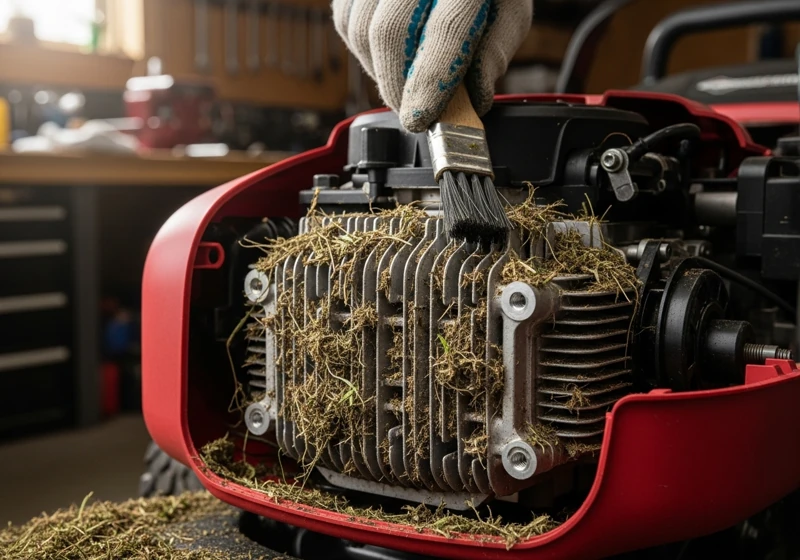
Briggs & Stratton lawn mower engines run hot by design, but they can definitely overheat. The most common cause is simple – blocked cooling fins.
Grass clippings, leaves, and dirt pack into the cooling fins and under the engine shroud, blocking airflow. The engine then can’t dissipate heat effectively. I’ve seen engines so packed with debris you couldn’t see the fins anymore.
Remove the engine shroud (usually just a few bolts) and clean everything thoroughly. Use a leaf blower, compressed air, or even a screwdriver to dislodge packed material. This simple maintenance prevents expensive overheating damage.
Low oil causes overheating, too. Oil doesn’t just lubricate – it carries heat away from hot internal components. Let oil get low, and temperatures spike in critical areas. Always keep oil at the proper level.
Dull blades make the engine work harder and generate more heat. The engine has to turn a dull blade through grass that should be cut cleanly, not torn. Keep your blade sharp.
Operating in extremely hot conditions or cutting very thick grass puts extra strain on the engine. If you’re mowing in 95-degree heat through knee-high grass, your engine’s gonna run hotter than normal. Take breaks, let it cool down, and don’t push so hard.
Hard Starting When Warm
If your Briggs and Stratton lawn mower motor starts fine cold but won’t restart after warming up, that’s a specific problem with a few likely causes.
Vapor lock can happen when fuel heats up and forms vapor bubbles in the fuel line or carburetor. The fuel pump (or gravity feed) can’t move vapor effectively, starving the engine. This is more common with ethanol fuel and aftermarket fuel lines that aren’t vapor-resistant.
A weak ignition coil often works fine cold but fails when hot. As the coil heats up, internal resistance increases until it can’t generate an adequate spark. Testing requires a spark tester and patience, but replacing the coil usually solves this problem.
Automatic choke systems sometimes malfunction when hot. The thermostat-controlled choke might not open fully when the engine is warm, flooding the engine. If you can start the mower with the choke manually open, this is probably your issue.
When to Call a Professional
Some problems aren’t worth tackling yourself. Internal engine noises like knocking, clattering, or grinding usually indicate major damage – a bent crankshaft, a failed bearing, or internal component failure.
If you’ve worked through basic troubleshooting and the engine still won’t cooperate, professional diagnosis might save you time and money. A good shop can test compression, check timing, and use diagnostic tools that most homeowners don’t own.
When repair costs approach 60% of replacement cost, it’s usually time to consider a new engine or complete mower. I hate telling customers this, but sometimes the math just doesn’t work in favor of repair.
That said, most Briggs and Stratton lawn mower engine problems are simple fixes. Dirty carburetors, fouled spark plugs, and clogged air filters probably account for 80% of the issues I see. Learn to handle these basic repairs yourself, and you’ll save hundreds of dollars over the life of your equipment.
Taking care of your Briggs and Stratton engine means it’ll take care of you for years. Regular maintenance, fresh fuel, and clean filters are 90% of the battle. Pair good engine care with a solid seasonal lawn care routine, and you’ll have a lawn that makes your neighbors jealous. Ready to buy? Our guide on choosing the right mower for your yard size helps you match the perfect Briggs engine to your property.
Briggs and Stratton lawn mower engines earn their reliability reputation through simple, proven engineering and parts availability. They design engines that regular people can maintain with basic tools, not complicated systems requiring specialists. The cast iron cylinder sleeves, quality bearings, and straightforward carburetor designs mean fewer failure points. Plus, with over 100 years of manufacturing experience, they’ve figured out what works. The parts distribution network means you can find components anywhere, which matters when something breaks.
Change oil every 25-50 hours of operation or once per season, whichever comes first. New Briggs & Stratton lawn mower motors need their first oil change after just 5 hours of break-in operation, then every 25 hours during the first season. After break-in, you can extend to 50-hour intervals if you’re using synthetic oil and operating in clean conditions. For most homeowners, mowing weekly during the season translates to an oil change in spring and another in fall. Commercial operators running equipment daily should change oil every 25-35 hours.
Absolutely – Briggs and Stratton zero turn engines excel in zero-turn applications, especially the Professional Series and Vanguard engines. The twin-cylinder designs deliver smooth, balanced power that handles the rapid direction changes and high operating speeds zero-turns demand. Residential zero-turns with 18-22 HP Briggs & Stratton zero turn mowers engines provide excellent performance for properties up to 3-4 acres. Commercial operations benefit from 25+ HP Vanguard engines built for thousands of hours of hard service. The key is matching engine size to your deck width and property size.
Commercial Briggs and Stratton lawn mower engines feature heavier-duty construction throughout – cast iron cylinder sleeves instead of aluminum, oversized bearings, commercial-grade air filtration, and enhanced cooling systems. Residential engines like the 550 and 625 series prioritize cost-effectiveness and ease of use, while commercial Professional and Vanguard engines focus on durability and longevity under extended daily use. Commercial engines handle higher operating hours (3,000+ hours vs 500-1,000 hours for residential), run cooler under sustained loads, and feature better filtration for dusty conditions. They cost more initially but deliver professional-grade reliability.
With proper maintenance, residential Briggs and Stratton lawn mower engines easily run 10-15 years or 500-1,000 hours before major service is needed. I regularly see 20+ year-old engines still running in homeowner mowers. Commercial Vanguard engines are designed for 3,000-5,000 hours of professional use. The key factors affecting longevity are maintenance quality (regular oil changes matter most), operating conditions, and how hard you run the engine. Engines that receive fresh oil, clean air filters, and aren’t operated in extreme conditions last significantly longer than neglected engines. A well-maintained Briggs & Stratton engine lawn mower can outlast several mower decks.
