
Fall Lawn Care: Mowing Height, Leaves & Winter Prep
Look, fall lawn care is where most people completely screw up their entire year of lawn work, and I’m not even exaggerating here. After 15 years in this business, I’ve watched the same pattern play out literally hundreds of times.
Table of Contents
▼- Fall Lawn Seeding: Complete Guide to Planting Fall Grass Seed
- Why Fall Seeding Actually Works
- Getting the Timing Right
- Actually Doing the Seeding
- Mistakes I See All the Time
- Fall Aeration: When and Why to Aerate Your Lawn in Fall
- Why Fall Beats Spring for Aeration
- When to Schedule It
- How to Do It Right
- What to Do Right After
- Signs You Really Need Aeration
- Proper Mowing Height and Frequency for Fall Lawn Care
- Adjusting Height Through Fall
- Why That Final Height Matters
- How Often to Mow
- Equipment Stuff to Remember
- Dealing with Leaves While Mowing
- Fall Fertilizer Application: Best Time and Products
- Why Fall Fertilization Matters So Much
- When to Actually Apply It
- Picking the Right Product
- How to Apply It
- Different Grass Types
- Fall Grass Treatment: Disease Prevention and Weed Control
- Common Fall Diseases
- Weed Control in Fall
- Dealing with Grubs
- Pre-Emergent for Winter Weeds
- Leaf Management: Raking, Mulching & Removal Strategies
- The Leaf Problem
- Mulching with Your Mower
- When You Need to Rake
- Using a Leaf Blower
- Making Leaf Compost
- Fall Cleanup Services vs DIY: What’s Worth the Investment?
- What Professional Services Usually Include
- What DIY Actually Costs
- Time Investment Reality Check
- When to Hire Professionals
- When DIY Makes Sense
- The Hybrid Approach
- Winter Preparation: Final Fall Yard Maintenance Checklist
- Equipment Winterization
- Final Fertilizer Application
- Last Mowing and Cleanup
- Winterizing Irrigation
- Planning Ahead
- Protecting High-Traffic Areas
- Final Thoughts: Your Fall Lawn Care Success Plan
What happens is everybody goes crazy with lawn maintenance all spring and summer. Then September rolls around, they’re tired, maybe the kids are back in school, football season starts, and suddenly the lawn becomes this afterthought. Mower gets put away early. Leaves pile up for weeks. And everyone just assumes “well, lawn season’s done.”
Meanwhile, their grass is sitting there ready to do the most important growing of the entire year, and nobody’s paying attention.
In my third year running my business, I had this customer, a nice guy, really frustrated with his lawn. Things looked terrible. Thin everywhere, weeds taking over, just sad. He was convinced it was hopeless, that he’d need to rip everything out and start over. I talked him into letting me handle one proper fall lawn care program. Just one season. Aeration, aggressive overseeding, the right fertilizer at the right time, and proper leaf management.
Next April? His neighbors were literally stopping him in the driveway, asking what fancy service he had hired. That’s what getting fall right can do.
So this guide is going to walk you through everything that actually matters for fall lawn care. We’re talking mowing techniques that change through the season, this massive opportunity with planting fall grass seed that’s exploding right now (interest is up 900% for really good reasons), when you need to do fall aeration, how to handle leaves without killing your grass, and exactly how to prep things for winter so spring becomes way easier. This fall care is part of our comprehensive seasonal lawn care guide that covers your entire year-round maintenance schedule.
Fall Lawn Seeding: Complete Guide to Planting Fall Grass Seed
The whole planting fall grass seed thing has absolutely blown up lately, and it’s not some random trend. Homeowners are finally figuring out what pros have known forever – spring is actually the wrong time to fix a damaged lawn. Fall is when the magic happens.
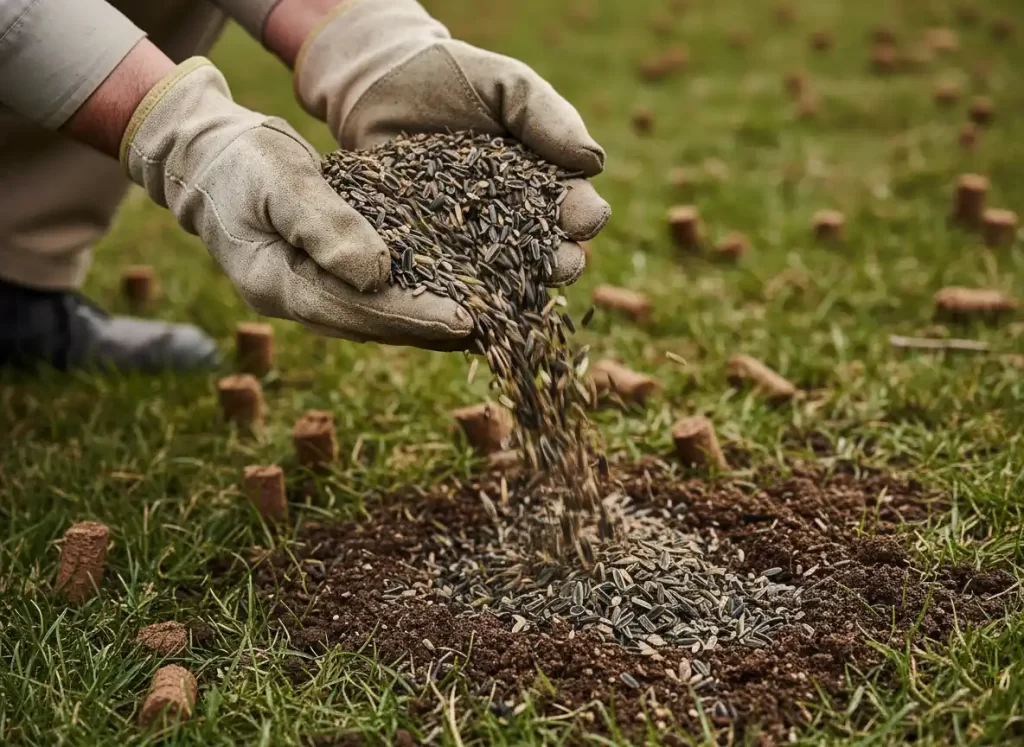
Why Fall Seeding Actually Works
Fall lawn seeding works better than any other time of year for cool-season grasses, and once you understand why, it seems obvious. Your soil temperature is sitting right in that sweet spot – 50 to 65 degrees. The air’s cooling down nicely, but the ground is still warm from summer. It’s like nature designed this window specifically for grass.
Weeds aren’t competing because crabgrass and all those annual weeds are dying, not germinating. The naturally cool, moist conditions mean your seeds won’t dry out before they germinate. And here’s the real kicker – grass has all fall, all winter, and into spring to build deep root systems before it has to deal with summer stress.
Compare that to spring seeding. You seed in April, maybe early May. That grass gets what, 8 to 10 weeks to establish before it’s facing 90-degree heat and drought? Fall overseeding grass gets 6 to 9 months to develop roots before its first summer. The difference in survival rate is night and day.
Getting the Timing Right
Timing matters more than anything else for successful overseeding a lawn in the fall. You’re shooting for about 6 to 8 weeks before your first expected hard freeze. Up here in northern climates – zones 3 through 6 – that’s typically early to mid-September. Further south in the transition zones, you can push into late September or even early October.
Here’s my simple rule: when soil temperature hits that 50 to 65 degree range and you’ve got at least 45 days before freeze, you’re good to go. I use a cheap soil thermometer from the garden center. Stick it 2 to 3 inches deep in the morning, check it three days in a row. When it’s consistently in that range, it’s time for fall lawn seeding.
Don’t wait around thinking you’ve got all the time in the world. I’ve seen people try to seed in late October up here, and the grass barely germinates before the hard freeze hits. Then spring comes, and they’re confused why nothing’s there.
Actually Doing the Seeding
Getting the Seedbed Ready
First thing, mow your existing grass shorter than normal. Down to about 2 to 2.5 inches. This lets the new seed actually reach the soil instead of getting caught in tall grass blades. Then rake hard to remove thatch and rough up the soil surface. Seeds need soil contact, not grass contact.
If you’re doing fall aeration – which you absolutely should be – aerate first, then seed right after. Those fresh aeration holes are perfect little pockets for seeds. The combination works way better than either one alone.
Picking and Applying Seed
Choose quality seed that matches what you already have growing. For cool-season lawns, I usually go with a blend – Kentucky bluegrass, perennial ryegrass, fine fescue. The blend gives you the best characteristics of each type.
Use a broadcast spreader for even coverage. Apply at whatever rate the bag recommends, usually 5 to 8 pounds per 1,000 square feet for overseeding a lawn in the fall. For bare spots, you can go heavier. Maybe 10 to 12 pounds per 1,000 square feet.
After You Seed
This is where most fall lawn seeding attempts completely fail. You have to keep those seeds consistently moist for 2 to 3 weeks. That means light watering once or twice daily if it’s not raining. You’re not trying to soak the soil deep. You’re keeping the surface moist so seeds don’t dry out before germination.
Once grass germinates and hits about 2 inches tall, back off to deeper, less frequent watering. Now you’re training those new roots to grow deep, searching for moisture. The EPA’s WaterSense program recommends early morning watering to minimize evaporation and reduce disease risk while conserving water.
Mistakes I See All the Time
Don’t fertilize heavily right when you seed. A light starter fertilizer is fine, but hold off on heavy nitrogen until the grass is established and you’ve mowed it twice. Too much nitrogen burns those delicate new seedlings.
Don’t let leaves pile up on newly seeded areas. A thin layer is fine. Thick leaf mats will smother germinating grass. I’ve seen entire seeding projects fail because people ignored leaves for three weeks in October.
And don’t stop mowing your existing grass just because you seeded. Once new grass reaches 3 to 3.5 inches, mow it along with everything else. Mowing actually encourages the grass to spread out and get thicker.
Fall Aeration: When and Why to Aerate Your Lawn in Fall
Fall aeration is probably the single most impactful thing you can do for your lawn. I genuinely mean that. I’ve seen lawns completely transform in one season purely from proper aeration combined with good fall lawn care.
Why Fall Beats Spring for Aeration
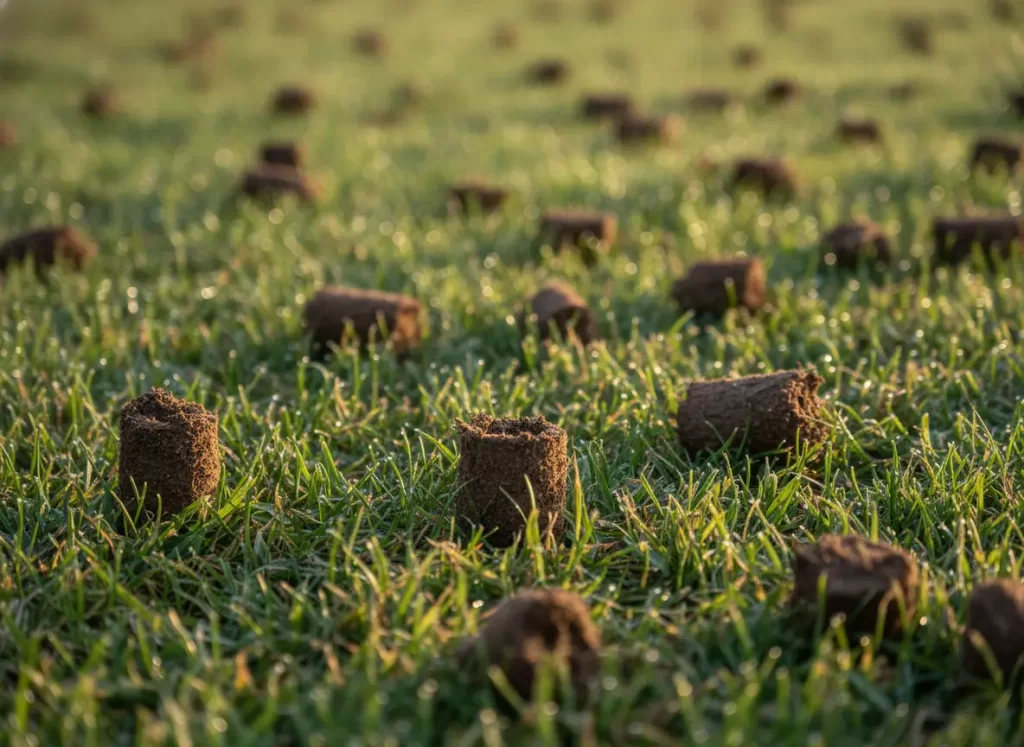
Aerating lawn in fall is legitimately better than spring aeration for cool-season grasses. When you aerate in the fall, you immediately follow with fall lawn seeding, and grass has all that time to recover and thrive before winter. The soil is usually drier in fall, which means the aerator pulls better plugs instead of just punching holes in spring mud.
Plus, fall’s cooler temperatures and more consistent moisture create perfect conditions for root growth into those fresh aeration holes. Spring aeration works, don’t get me wrong. But you miss the opportunity to capitalize on fall’s ideal growing conditions.
When to Schedule It
The best timing for fall aeration is early to mid-September in most northern climates. Basically the same window as fall lawn seeding. You want soil that’s moist enough to allow good plug extraction but not waterlogged. If you can easily push a screwdriver 6 inches into the soil, the moisture is probably right.
I personally aerate in early September, immediately overseed, then apply fall fertilizer for lawn about two weeks later, once the grass starts germinating. That sequence has given me consistently excellent results year after year.
How to Do It Right
You need a core aerator. The kind that actually pulls plugs of soil out, not those spike aerators that just punch holes and actually compact soil around the hole. You can rent a good core aerator from any equipment rental place for about $80 to $100 for four hours.
Make at least two passes over your lawn in different directions. One pass isn’t enough, especially if your soil is seriously compacted. I do one pass north-south, then another east-west. You’re shooting for 20 to 40 holes per square foot.
The plugs look absolutely terrible for about a week. They’re sitting there all over your lawn like someone went crazy with a hole puncher. Don’t rake them up. Let them break down naturally. Takes about two weeks, and they return valuable soil to the surface.
What to Do Right After
This is your perfect window for multiple fall lawn care tasks. Overseed immediately after aerating lawn in fall while those holes are still fresh and open. Apply starter fertilizer if you’re seeding, or your regular fall fertilizer for lawn if you’re not.
If you have drainage problems or want to improve soil structure, this is also your chance to topdress with compost. Spread about 1/4 to 1/2 inch of quality compost and work it into the aeration holes with a rake.
Signs You Really Need Aeration
Water pools on the surface instead of soaking in? That’s compaction. Grass looks thin and weak despite proper fertilizing and watering. Also compaction. You have heavy clay soil that turns into concrete when it dries? Definitely needs fall aeration.
If kids or pets use your lawn heavily, or if you’ve got regular foot traffic, you probably need annual aeration. My lawn gets aerated every single fall because my Ohio clay soil wants to become brick, and we’ve got Max the golden retriever doing zoomies twice daily.
Proper Mowing Height and Frequency for Fall Lawn Care
Mowing in the fall requires a completely different approach than summer mowing, and this is where I see people make really consequential mistakes with fall lawn care.
Adjusting Height Through Fall
Start fall with your mower deck at that solid 3 to 3.5 inches you’ve been using all summer. As temperatures drop and grass growth slows, gradually lower your cutting height over several weeks. By your final cut before winter, you want to be at about 2 to 2.5 inches for cool-season grasses.
This gradual reduction matters. Don’t go from 3.5 inches to 2 inches in one cut. That shocks the grass and can actually promote disease. I usually lose about a quarter inch every two weeks through October and early November.
Why That Final Height Matters
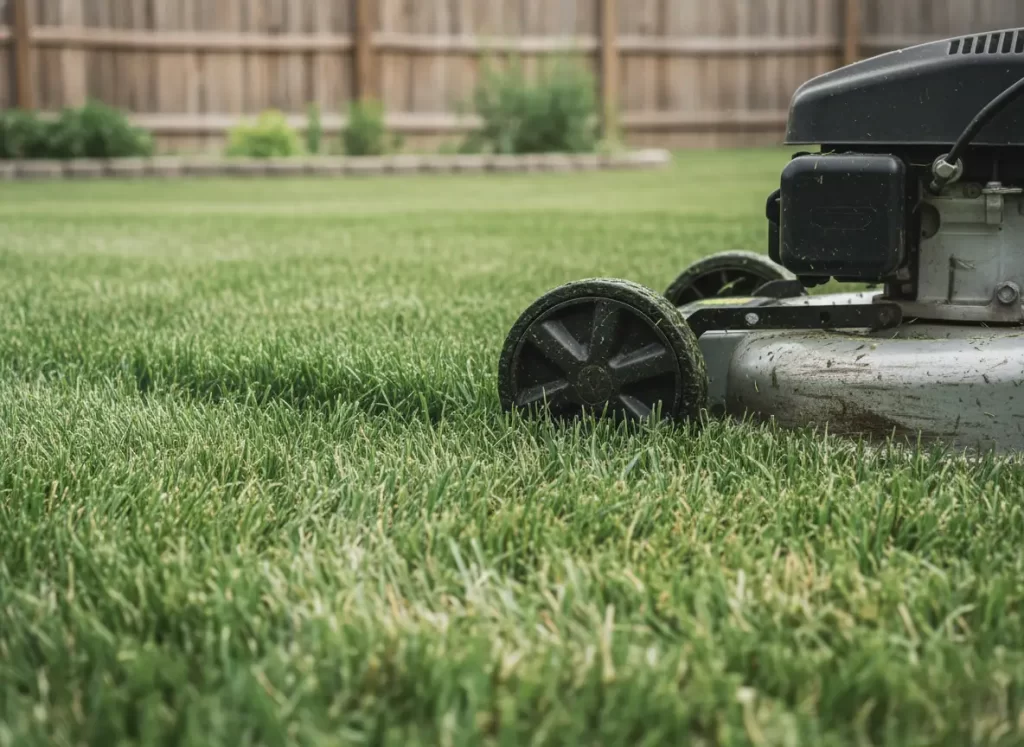
That last cutting lawn in fall before winter should leave the grass at 2 to 2.5 inches. Grass that’s too tall going into winter can mat down under snow, creating perfect conditions for snow mold and other fungal diseases. I’ve seen entire sections of lawn destroyed by snow mold because someone left the grass at 4 inches going into winter.
But grass that’s too short – like under 2 inches – is vulnerable to winter damage and temperature stress. You need enough blade length to photosynthesize during those occasional warm winter days, but not so much that it mats down.
How Often to Mow
Continue fall lawn mowing as long as the grass is actively growing. That’s usually well into October in most climates, sometimes even early November during warm falls. The general rule is to mow when the grass reaches about one-third taller than your target height.
Early fall, when growth is still aggressive, that might mean mowing weekly. By late October, you might be stretching to every 10 to 14 days. Some years, I’m still mowing the first week of November up here. Other years, I’m done by Halloween. Let the grass tell you when it’s time.
Equipment Stuff to Remember
Keep your blade legitimately sharp throughout the fall. Dull blades tear grass instead of cutting cleanly, and those ragged edges turn brown really quickly in cool fall weather. I sharpen my blade every 4 to 6 weeks during active mowing. If you’ve never sharpened a blade before, check out our step-by-step lawn mower blade sharpening guide that walks you through the entire process safely.
Also, make sure your mower is running properly. Fall grass is often damp from morning dew or light rain, and a struggling mower will constantly clog, trying to cut wet grass. Change your oil, clean or replace the air filter, and make sure everything’s running smoothly. If you’re in the market for a new mower that handles fall conditions better, check out our best push mower guide for top-performing models. If your mower is acting up before fall season, our complete troubleshooting guide covers the most common starting and performance issues.
Dealing with Leaves While Mowing
Fall’s demanding schedule of frequent mowing, leaf mulching, and variable grass conditions means having the right mower matters more than ever. If you’re questioning whether your current mower is up for the task, our comprehensive lawn mower comparison guide helps you determine which mower type handles fall maintenance most efficiently for your specific yard size and terrain.
If you’ve got a light layer of leaves on the lawn, just mulch them with your regular mower during regular fall lawn mowing. Use a mulching blade if you have one, and make multiple passes if necessary to really shred leaves fine. That thin layer of shredded leaves actually returns valuable organic matter to the soil. But thick leaf layers require separate management, which we’ll get into next.
Fall Fertilizer Application: Best Time and Products
Fall fertilizer for lawn application is probably the most important feeding of the entire year. The timing and product selection both matter enormously.
Why Fall Fertilization Matters So Much
When you apply fall fertilizer for lawn, you’re not feeding top growth like spring and summer applications. You’re feeding root development and helping the grass store energy for winter. This late-season feeding produces deeper roots, better winter survival, earlier spring green-up, and improved stress tolerance next summer.
I’ve seen lawns that get nothing but proper fall fertilization outperform lawns that get spring and summer fertilizer but skip fall. That single application has that much impact.
When to Actually Apply It
The best time to fertilize lawn in fall is typically late October through early November in northern climates. Basically, as grass growth is really slowing down, but before the ground freezes hard. In my area, that’s usually the last week of October or the first week of November.
This timing is called “winterizing” fertilization, and it’s different from early fall fertilization. If you’re only doing one fall application, make it this late one. If you’re doing two applications – which is ideal for really beat-up lawns – do one in early September, right after fall aeration and seeding, then the winterizing application in late October.
Picking the Right Product
Look for a fall fertilizer for lawn with higher nitrogen content than you used in summer. Something like a 22-3-14 or 24-0-10 ratio. The elevated nitrogen specifically encourages root growth and energy storage when grass isn’t putting energy into top growth.
Avoid weed-and-feed products for late fall application. Weed control herbicides don’t work well in cool temperatures, and you’ll just be spreading unnecessary chemicals. Save weed control for spring and early fall when it’s actually effective.
I personally use a slow-release granular fertilizer because it feeds steadily over several weeks as soil temperature allows. Water-soluble fertilizers give you a faster response but shorter duration, which doesn’t matter much when grass is going dormant anyway.
How to Apply It
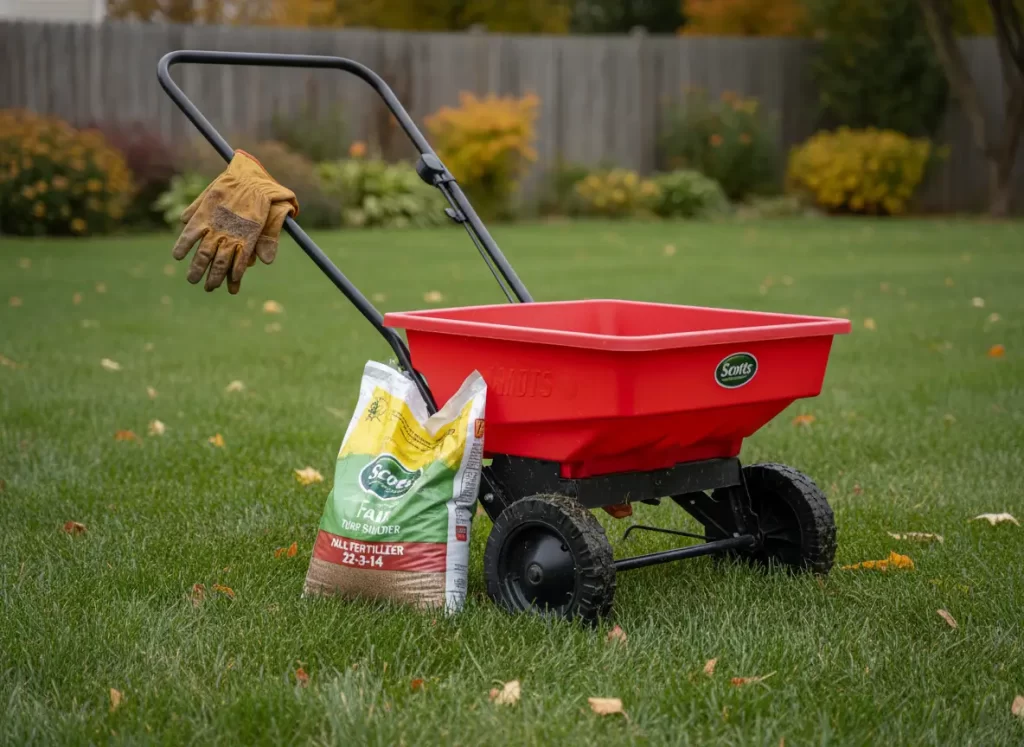
Use a broadcast spreader for even coverage. Calibrate your spreader according to the bag instructions. Application rates usually range from 3 to 5 pounds of product per 1,000 square feet, but this varies by product.
Apply when the grass is dry, but rain is expected within 24 to 48 hours. The rain washes fertilizer off grass blades and into the soil. If no rain is coming, water lightly after application to prevent any potential burn and activate the fertilizer.
Overlap your spreader passes slightly to avoid stripes, and pay extra attention to turns where it’s easy to double-apply or miss spots completely. I’ve seen some truly ridiculous fertilizer burn patterns from sloppy application.
Different Grass Types
Cool-season grasses – Kentucky bluegrass, perennial ryegrass, tall fescue, fine fescue – absolutely need fall fertilizer for lawn and benefit dramatically from late-season feeding. This is their prime growing time for roots.
Warm-season grasses – Bermuda, zoysia, St. Augustine – should NOT be fertilized in fall in most climates. They’re going dormant, and late nitrogen application can actually reduce cold hardiness. If you’ve got warm-season grass, your last feeding should be 6 to 8 weeks before the first expected frost.
Fall Grass Treatment: Disease Prevention and Weed Control
Fall grass treatment involves more than just fertilizer and mowing. You’ve also got disease management and weed control to think about as part of comprehensive fall lawn care.
Common Fall Diseases
Cool, moist fall conditions can create perfect environments for fungal diseases. The big ones to watch for are brown patch, dollar spot, rust, and various leaf spots. Most show up as discolored patches or individual grass blades with unusual coloring.
The best fall grass treatment for disease is, honestly, prevention through proper practices. Avoid watering in the evening when the grass stays wet overnight. Improve air circulation by keeping the grass at the proper height. Clean up leaves promptly so they don’t create damp spots.
If you do get disease problems, fungicide applications might be necessary. But proper lawn hygiene solves maybe 90% of fall disease issues without chemicals. Make sure you’re not over-fertilizing with nitrogen, which makes grass lush and disease-prone.
Weed Control in Fall
Early fall – like early September – is actually excellent for broadleaf weed control as part of your fall yard treatment program. Dandelions, clover, and other broadleaf perennials are actively storing energy in roots for winter, so herbicides applied now get pulled down into root systems.
Use a selective broadleaf herbicide when temperatures are consistently between 50 and 75 degrees. Too cold, and weeds aren’t actively growing enough to absorb herbicide. Apply when no rain is expected for 24 hours and the grass isn’t stressed from drought.
Late fall weed control doesn’t really work. Once we’re into late October and November, weeds are mostly dormant and herbicides aren’t effective. Save your money and focus on other fall lawn care priorities.
Dealing with Grubs
If you had grub damage this past summer, fall is when you need to think about next year’s prevention. Grubs lay eggs in mid to late summer; those eggs hatch in fall, and baby grubs are feeding now before the soil gets too cold.
Fall grass treatment with a product containing chlorantraniliprole or thiamethoxam can knock down current grub populations. But honestly, preventive spring application works better for most situations.
Pre-Emergent for Winter Weeds
In transitional and southern climates, fall is the time for pre-emergent herbicide targeting winter annual weeds like annual bluegrass and henbit. Apply in early fall before soil temperature drops below 70 degrees.
Up north where I am, we don’t worry much about this because winter annual weeds aren’t really a problem. Know your climate and your specific weed issues before applying pre-emergent as part of fall yard maintenance.
Leaf Management: Raking, Mulching & Removal Strategies
Leaf management is probably the most visible and time-consuming part of fall lawn care. How you handle leaves makes a massive difference in spring lawn health.
The Leaf Problem
Thick layers of leaves left sitting on the grass block sunlight and trap moisture against the grass surface. I’ve personally seen entire large sections of lawn completely killed by matted leaves that stayed in place from November through March. The grass underneath literally suffocates and rots.
But here’s what’s interesting – a thin layer of shredded leaves actually benefits your lawn by returning organic matter and nutrients to the soil. The keyword is thin and shredded, not thick and whole.
Mulching with Your Mower
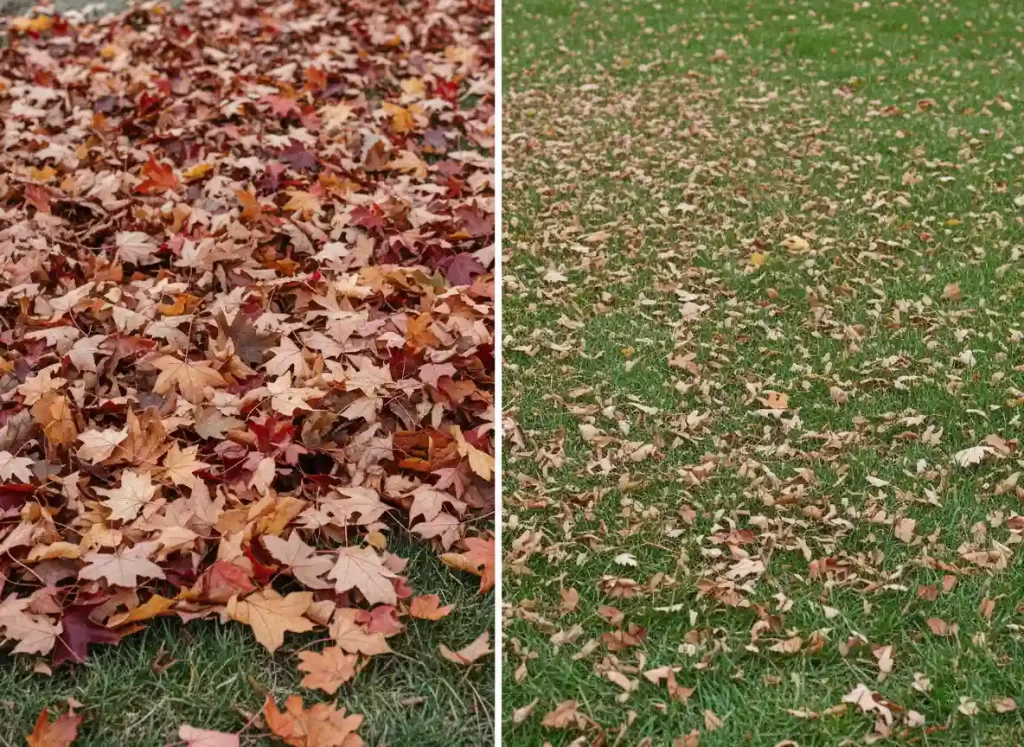
If you’ve got a relatively light leaf load, mulching leaves with your regular mower during fall lawn mowing is honestly the easiest and most beneficial approach. Use a mulching blade if you have one, and make multiple passes if necessary to really shred leaves fine.
The rule is you should still be able to see grass through the shredded leaf layer. If shredded leaves are so thick they hide grass, you’ve got too much to mulch effectively and need to rake or bag some.
Mulched leaves decompose over winter and early spring, feeding soil organisms and returning nutrients. It’s basically free fertilizer and free organic matter, improving soil structure. I mulch leaves probably 60% of the time on my own lawn.
When You Need to Rake
Heavy leaf accumulation requires raking as part of your fall yard maintenance routine. If leaves are several inches thick, or if you’ve got large leaves like maple or oak that mat down easily, you need to rake.
I usually rake every 7 to 10 days through October and early November, whenever accumulation reaches about 2 inches thick. Some years with heavy leaf fall, I’m raking twice a week. It’s tedious but necessary.
Use a quality leaf rake with flexible tines. Cheap rakes break constantly and make the job twice as hard. Work leaves into piles, then either bag them for municipal pickup or move them to compost bins or garden beds.
Using a Leaf Blower
Leaf blowers are fantastic for moving leaves off the grass and onto beds or driveways, where you can collect them more easily. I use my backpack blower to push leaves from lawn areas onto the driveway, then either mulch them with the mower there or rake them into bags.
Don’t blow leaves into natural areas or onto neighbors’ property. That’s terrible etiquette and potentially harmful. Contain your leaves on your property for proper disposal or composting.
Making Leaf Compost
Leaves are genuinely gold for composting and soil improvement. If you’ve got space, create a simple wire bin or wood pallet enclosure and pile shredded leaves there. Mix in some nitrogen source like grass clippings or coffee grounds, keep moderately moist, and you’ll have beautiful leaf compost by next fall.
That leaf compost becomes a perfect topdressing material for fall aeration the following year. The cycle is really satisfying.
Fall Cleanup Services vs DIY: What’s Worth the Investment?
The explosion in searches for fall cleanup services and fall cleanup services near me tells me homeowners are genuinely struggling to keep up with fall lawn care demands. Let’s talk honestly about when professional fall lawn services make sense versus when DIY is better.
What Professional Services Usually Include
Professional fall cleanup services usually bundle multiple tasks. Leaf removal, fall aeration, overseeding a lawn in the fall, fall fertilizer for lawn application, gutter cleaning, bed cleanup, and equipment winterization. Some services offer everything, others let you pick individual tasks.
Pricing varies wildly by region and property size, but expect $200 to $500 for a comprehensive fall cleanup on a typical quarter-acre lot. Fall aeration alone usually runs $75 to $150. Fall lawn seeding service typically adds $150 to $300, depending on the area seeded.
What DIY Actually Costs
If you’re handling fall lawn care yourself, here’s what you’re looking at equipment-wise. Core aerator rental runs about $80 to $100 for four hours. Quality grass seed costs $3 to $8 per pound, and you’ll need 5 to 8 pounds per 1,000 square feet for overseeding a lawn in the fall. Fall fertilizer for lawn runs $30 to $60 per bag, covering 5,000 to 15,000 square feet.
Add a decent rake if you don’t have one – $20 to $40 – and you’re at maybe $200 to $300 in materials for comprehensive DIY fall yard maintenance on a medium-sized lawn. But you’re providing all the labor, which is substantial.
Time Investment Reality Check
Be realistic about time. Aerating lawn in fall takes 2 to 3 hours for a typical quarter-acre lot, including equipment pickup and return. Fall lawn seeding adds another 1 to 2 hours for application and cleanup. Fall fertilizer for lawn application is maybe 30 minutes to an hour.
Leaf raking is the real time killer. Depending on tree coverage, you might spend 3 to 6 hours total across multiple sessions throughout the fall. If you’ve got limited time or physical limitations, professional fall lawn services suddenly look really attractive.
When to Hire Professionals
Hire professional fall cleanup services when you’ve got multiple large trees creating massive leaf volume, physical limitations preventing heavy raking and equipment operation, limited time due to work or family commitments, or equipment needs beyond what makes sense to rent or buy.
Also consider professionals if you’ve got a severely damaged lawn needing fall grass treatment beyond basic overseeding. Maybe disease issues requiring diagnosis, drainage problems, or serious soil amendments. Some problems genuinely need expertise.
When DIY Makes Sense
Handle fall lawn care yourself if you’ve got a relatively small, manageable property, enjoy outdoor work and find it relaxing or satisfying, have weekends available through September and October, and want to learn proper techniques for long-term cost savings.
DIY also makes sense if you’re on a tight budget but can invest time, or if you’ve already got most equipment and just need materials. The learning curve isn’t steep with proper guidance.
The Hybrid Approach
Here’s what I often recommend. Hire fall cleanup services for the heavy, equipment-intensive tasks like fall aeration, then handle the ongoing maintenance yourself. Have professionals aerate and overseed in early September, then you maintain proper watering, apply your own fall fertilizer for lawn in late October, and handle weekly leaf management.
This hybrid approach gets you professional results for the critical tasks while keeping costs reasonable and maintaining your connection to your lawn’s needs.
Winter Preparation: Final Fall Yard Maintenance Checklist
As fall winds down, final fall yard maintenance tasks set you up for successful winter dormancy and easy spring startup. This is where comprehensive fall lawn care really pays dividends.
Equipment Winterization
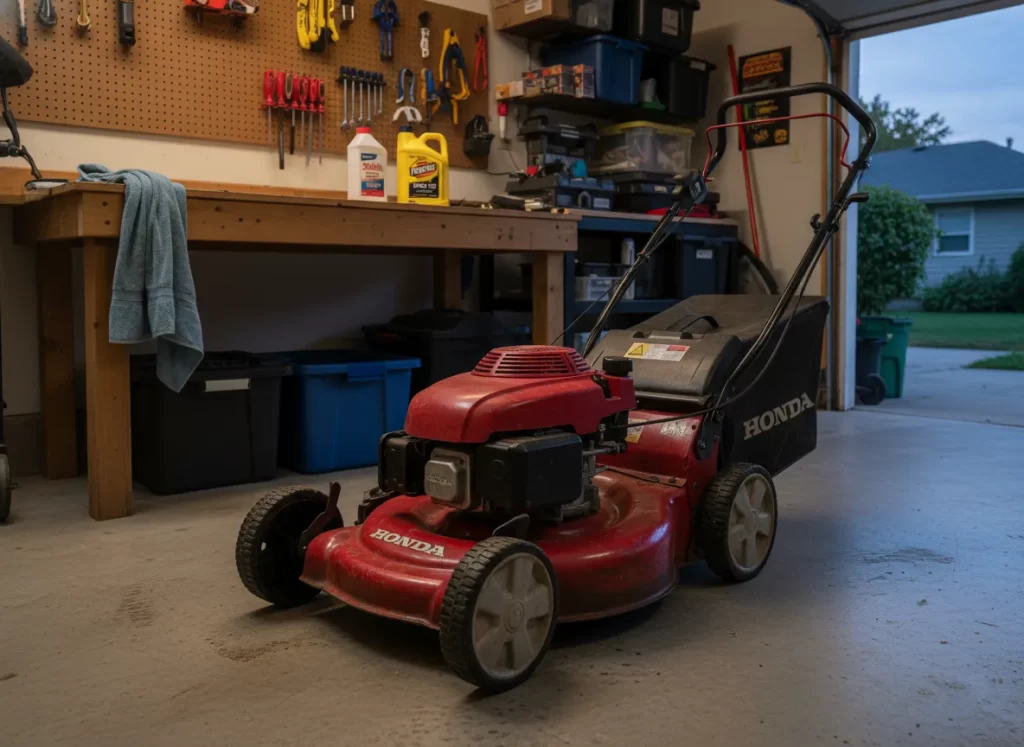
Clean your mower thoroughly. Scrape all grass buildup from under the deck, wipe down the exterior, and clean the air filter. Change the oil if you haven’t already. Fill the gas tank and add fuel stabilizer, or run the tank completely dry, depending on manufacturer recommendations.
Sharpen and oil the mower blade one final time before storage. Clean string trimmers, edgers, and other equipment. Store everything in a dry location where it won’t freeze solid or rust over winter. For complete winterization instructions that protect your investment during storage, follow our detailed lawn mower winterization guide step-by-step. Taking 2 hours now saves you multiple hours of troubleshooting next spring.
Final Fertilizer Application
If you haven’t already applied your winterizing fall fertilizer for lawn, late October through early November is your last reasonable window. After mid-November in most northern climates, the soil is too cold for grass to effectively use nutrients.
This final feeding should be that high-nitrogen formula we discussed earlier, applied when the grass is dry but rain is expected. Don’t skip this application. It’s genuinely one of the most important feedings in your fall lawn care calendar.
Last Mowing and Cleanup
Your final cutting lawn in fall should leave the grass at 2 to 2.5 inches, as we covered earlier. Make sure you remove all leaves and debris from the lawn surface before this last cut. You want the grass going into winter clean, at proper height, and healthy.
Clean out gutters if that’s part of your fall yard maintenance routine. Clogged gutters create ice dams and can dump water onto lawn edges, creating drainage problems and ice damage. It’s technically not lawn care, but it affects lawn health.
Winterizing Irrigation
If you have an irrigation system, it absolutely must be winterized before a hard freeze. Hire a professional to blow out the lines if you’re not comfortable doing this yourself. Frozen water in irrigation lines causes pipe bursts and expensive spring repairs.
Shut off outdoor faucets, drain hoses, and store them. One burst pipe from frozen water causes more damage than an entire season of fall lawn services costs.
Planning Ahead
Use winter downtime to evaluate this year’s fall lawn care performance. What worked well? What needs adjustment? Do you need different equipment? Should you hire fall cleanup services next year instead of doing it yourself?
Get soil tested during winter so you have results ready for spring amendments. Most university extension services process soil tests year-round, and results tell you exactly what your lawn needs for spring amendments. Research any problem areas that struggled this year. Order seed or equipment you’ll need next season while you have time to think clearly without pressure.
Protecting High-Traffic Areas
If you’ve got walking paths across your lawn or areas that get heavy use even in winter, consider temporary path markers or protective measures. Repeatedly walking the same route on frozen grass kills it. I learned this one the hard way.
You might set up alternative paths using pavers or mulch, especially if you’ve got kids or dogs using the yard regularly through winter. Prevention is way easier than spring repair.
Final Thoughts: Your Fall Lawn Care Success Plan
After 15 years helping thousands of homeowners nail their fall lawn care, here’s what I know for certain. The lawns that look incredible next April are the ones where owners got serious about fall yard maintenance between September and November. And when spring arrives, you’ll want to follow our spring lawn care checklist to capitalize on all the work you did in fall.
You just learned everything critical about fall lawn care. The massive opportunity in planting fall grass seed, the transformative power of fall aeration, proper mowing height adjustments, fall fertilizer for lawn timing, disease and weed control, leaf management strategies, and whether fall cleanup services make sense for your situation.
Now here’s the thing. You don’t have to do everything perfectly. You don’t even have to do everything I mentioned. But pick the high-impact tasks that match your lawn’s biggest needs and nail those.
If your lawn is thin, prioritize overseeding a lawn in the fall and aerating lawn in fall. If it’s thick but weak, focus on proper fall fertilizer for lawn application. If leaves are your nightmare, develop a consistent removal strategy. Start where your lawn needs you most.
My lawn isn’t perfect. Max the golden retriever makes sure of that. But following this fall lawn care approach gives me a resilient, healthy lawn that handles whatever stress comes its way and looks great 10 months out of the year.
The window for fall grass treatment and maintenance is closing fast, depending on where you live. If you’re reading this in September or early October, you’re perfectly positioned to nail everything. If it’s later, pick the most critical tasks and commit to doing those excellently.
Your neighbors will be asking for advice come spring. Get started on your fall lawn care program today.
The absolute best time for fall lawn seeding and overseeding a lawn in the fall is early to mid-September in northern climates or late September through early October in transitional zones. You want soil temperature consistently between 50 to 65 degrees and at least 6 to 8 weeks before the first hard freeze. This timing gives the grass maximum establishment time before winter. I’ve seen lawns go from 60% coverage to 95% thick coverage in one fall season using this window for planting fall grass seed. Spring seeding rarely achieves those results because summer stress hits before the grass fully establishes deep roots.
Hire professional fall cleanup services if you’ve got multiple large trees creating massive leaf volume, physical limitations, limited weekend availability, or severely damaged lawns needing expert fall grass treatment. DIY fall lawn care makes more sense for smaller properties where you enjoy outdoor work, have time available through September and October, and want to save $200 to $500 that typical fall lawn services cost. My recommendation? Consider a hybrid approach. Hire professionals for heavy equipment tasks like fall aeration and overseeding a lawn in the fall, then handle ongoing leaf management and fall fertilizer for lawn application yourself. This balances cost savings with professional results for critical tasks.
Start fall lawn mowing at 3 to 3.5 inches in early fall, then gradually reduce height over several weeks as temperatures drop and growth slows. Your final cutting lawn in fall before winter should leave the grass at 2 to 2.5 inches for cool-season grasses. This gradual reduction matters. Don’t drop from 3.5 inches to 2 inches in one cut because that shocks the grass. The proper final height prevents snow mold (which attacks grass over 3 inches under snow) while leaving enough blade length for winter photosynthesis during occasional warm days. I usually lower by quarter-inch increments every two weeks through October, and this approach to fall lawn care mowing has consistently prevented disease while maintaining lawn health through winter.
The best time to fertilize lawn in fall for cool-season grasses is late October through early November for your winterizing application. Basically, as grass growth really slows, but before the ground freezes hard. This late feeding produces deeper roots, better winter survival, and improved spring green-up. If you’re doing two fall fertilizer for lawn applications, apply the first in early September, right after fall aeration and seeding, then the winterizing application in late October. Use high-nitrogen formulas like 22-3-14 or 24-0-10 specifically designed for fall feeding. Warm-season grasses should NOT get fall fertilizer for lawn. Their last feeding should be 6 to 8 weeks before the first frost, or late nitrogen reduces cold hardiness.
Winter preparation during fall yard maintenance includes applying winterizing fall fertilizer for lawn in late October or early November, completing final cutting lawn in fall at 2 to 2.5 inches, removing all leaves and debris from lawn surface, winterizing irrigation systems before hard freeze, cleaning and storing equipment properly with oil changes and fuel stabilization, getting soil tested so results are ready for spring amendments, and protecting high-traffic areas from repeated foot traffic on frozen grass. Also consider marking walking paths to prevent lawn damage through winter. This comprehensive fall lawn care checklist sets you up for a healthy spring green-up and reduces problems when the growing season resumes. The equipment maintenance alone saves hours of frustrating troubleshooting next spring.
Yes, aerating lawn in fall is genuinely better than spring aeration for cool-season grasses for several compelling reasons. Fall aeration lets you immediately follow with fall lawn seeding, and grass has all fall, winter, and spring to establish in those holes before summer stress. Fall soil is usually drier, so aerators pull better plugs instead of punching holes in spring mud. Cool fall temperatures and consistent moisture create ideal conditions for root growth into fresh aeration holes. You also avoid the spring rush for equipment rentals. Spring aeration works fine, but you miss the opportunity to capitalize on fall’s perfect growing conditions and the chance to overseed effectively. I personally aerate lawn in fall every September, immediately overseed, then apply fall fertilizer for lawn two weeks later once the grass germinates. That sequence consistently delivers better results than spring-only aeration.
