
Exmark Quest Zero Turn Review: Small Yard Powerhouse 2025
Look, I’m gonna level with you about the Exmark Quest because I’ve been fixing lawn mowers for ten years now and I’ve seen enough garbage to know when something’s actually worth talking about. Most companies throw together a “residential” mower and slap a fancy name on it, but Exmark did something different here. The Exmark Quest zero turn feels like somebody at Exmark actually asked, “What if we stopped treating homeowners like they don’t deserve good equipment?”
Table of Contents
▼- Exmark Quest Zero Turn: Complete Model Lineup Overview
- Exmark Quest E Series vs S Series: Which Is Right for You?
- Exmark Quest 42 vs Quest 50: Deck Size Comparison
- Performance Testing: Cutting Quality and Maneuverability
- Exmark Quest Pricing Guide: What to Expect in 2025
- Exmark 42 Zero Turn Features and Specifications
- Exmark Quest 50 Mower: Mid-Size Property Performance
- Value Comparison: Exmark Quest vs Competition (Toro, Cub Cadet, Ariens)
Last spring, this woman named Linda walked into my shop. Super nice, but completely set on buying one of those big-name brands everyone’s heard of. Her neighbor had one of those popular zero turn mowers, which looked impressive sitting in the driveway – you know how it goes. She literally spent half an hour showing me pictures on her phone, going on and on about brand recognition and what her husband thought they should buy. When I suggested the Exmark Quest zero turn mower, she actually laughed at me. Not mean or anything, just like I’d lost my mind suggesting some brand she’d barely heard of for her suburban yard.
Two months later, guess who’s standing in my doorway with a tin of cookies? Linda, grinning like she just won the lottery, is telling me she’s done mowing in 45 minutes now instead of spending two solid hours every weekend swearing at her old riding mower. Sometimes the mowers that don’t get famous on Instagram are the ones that actually do the job right.
I’m not gonna sit here and tell you this thing’s revolutionary or whatever buzzword people love throwing around. But if you have a small or medium property and are tired of fighting with equipment that either can’t keep up or costs as much as a decent used car, the Quest lineup is definitely worth looking at. Let’s talk about what these things actually do when you’re not reading marketing material.
Exmark Quest Zero Turn: Complete Model Lineup Overview
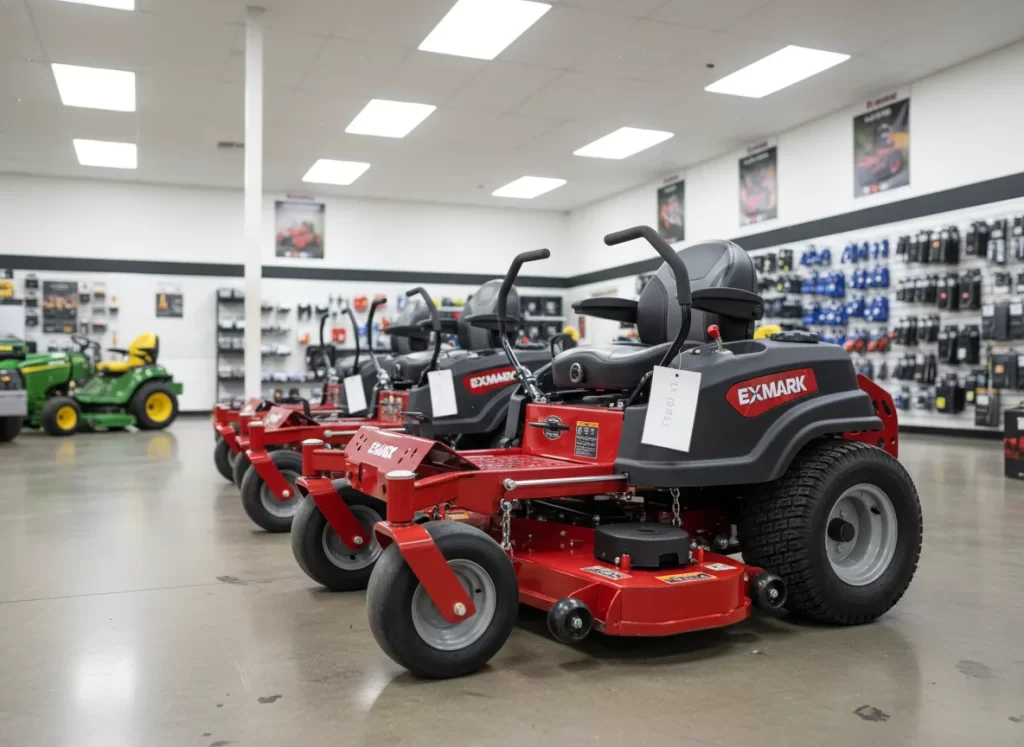
The Exmark Quest lawn mower family doesn’t try to be complicated.. Two series – E and S. Four deck sizes – 34, 42, 50, and 60 inches. Done. No weird model variations that need a decoder ring to figure out what you’re actually buying.
The E Series is where most people jump in. It’s basically Exmark saying, “Here’s our residential option that won’t fall apart after one summer.” The S Series steps it up with tougher components and features that lean more commercial. Both use the same basic philosophy, though – Exmark’s cutting system and build quality that you usually only see on machines costing way more.
Those deck sizes break down pretty logically once you think about it. The 34-inch works for genuinely tight spaces – like when you’re squeezing between trees planted too close together or dealing with gates that barely fit a push mower through. The Exmark Quest 42-inch is where most people land because it handles typical suburban yards up to about two acres without feeling too big or too small. Step up to the Exmark Quest 50-inch and you’re getting serious productivity for larger properties. The 60-inch exists, but unless your backyard is basically a private park, it’s overkill.
What separates Quest from all those residential zero-turns sitting in home improvement store parking lots? The deck construction, plain and simple. Exmark didn’t cut corners here. They’re using their UltraCut design – same deck technology running their commercial equipment. Professional-grade cutting quality without the professional price tag. The fabricated deck means it’ll last way longer than those stamped steel decks that start looking rough after a couple of years, and the blade speed gives you that clean, even cut that makes neighbors think you hired a lawn service.
Controls stay the same across all models – dual lap bars that make sense pretty quickly. Push forward to go forward, pull back for reverse, steer by moving one side faster than the other. My nephew figured it out in like twenty minutes, and he’s seven. No reading manuals, no watching YouTube tutorials to understand basic operation.
Exmark Quest E Series vs S Series: Which Is Right for You?
This is where people get themselves into trouble – either spending money they didn’t need to spend or cheaping out and regretting it later. The gap between Exmark Quest E Series and Exmark Quest S Series actually matters quite a bit.
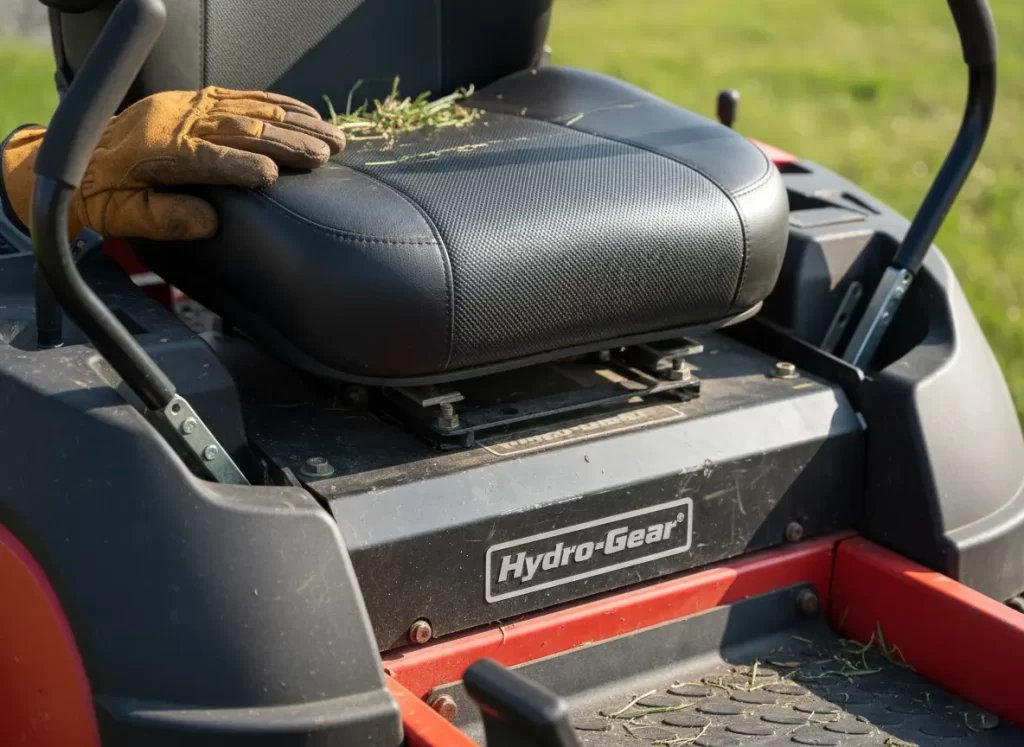
The Exmark Quest E Series zero turn mower is where Exmark starts, but don’t let that fool you into thinking it’s bare-bones. You get a Kawasaki FR series engine – somewhere in the 22-24 HP ballpark, depending on which deck you pick. Hydro-Gear EZT transmissions hold up pretty well in my experience for regular residential use. Plus that UltraCut deck I keep mentioning. The seat’s comfortable enough for your typical weekend mowing, controls feel smooth and responsive, and the whole machine feels more solid than most residential stuff crossing my workbench.
E Series makes sense for properties up to maybe three acres without crazy hills or jungle-thick grass. Mowing once a week during growing season, normal suburban conditions – E Series handles all that without breaking a sweat and doesn’t load you up with expensive features you’ll never actually use.
S Series is a different animal. Those transmissions upgrade to commercial-grade Hydro-Gear 3100 units instead of the EZT setup. Way better for hills, better for tough conditions, way less likely to overheat when you’re pushing hard. Engines step up to beefier Kawasaki commercial-grade options. Seat gets a suspension system that your back notices after you’ve been on it for an hour. Even the frame uses thicker steel with extra reinforcement where stress builds up.
Here’s what I actually tell people standing in my shop: if your property’s got legit slopes, if your grass gets thick enough to bog down regular equipment, if you’re mowing more than three acres consistently, the S Series is worth every extra penny. I’ve fixed enough overheated transmissions on E Series machines that people pushed too hard to know the difference matters. Heat builds, parts wear faster, and suddenly I’m charging you for repairs you could’ve avoided.
S Series holds value better when you sell it too. Three-year-old S Series machines move at 60-70% of the original price in my area. E Series does okay at 50-60%, which isn’t terrible, but there’s definitely a gap there.
But – and this matters – if you’ve got a standard suburban lot with normal grass growing at normal rates, E Series won’t disappoint you. Not everybody needs commercial-grade everything just to mow their lawn.
Exmark Quest 42 vs Quest 50: Deck Size Comparison
Screw this decision up and you’ll be annoyed every single Saturday morning. The Exmark Quest 42 inch and Exmark Quest 50 inch are both popular, but they’re solving totally different problems.
The Exmark Quest 42 handles properties up to two acres while still letting you maneuver around landscaping without wanting to pull your hair out. I’m obsessive about measuring gates now after one customer bought a 50-inch gate that literally would not fit through their backyard access. Had to return the whole thing. So yeah, measure your clearances first. The 42-inch deck weaves through tight spots between houses, around trees, through garden gates that would stop wider decks completely.
Cutting quality stays the same as bigger Quest models. Same UltraCut deck, same blade setup, same results. Ground speed maxes around 6.5 MPH, so you’re moving along nicely without sacrificing precision. For that one to two-acre range with typical landscaping, this deck size just works.
The Exmark Quest 50-inch starts making sense once you hit two acres and climb from there. You’re covering roughly 17% more ground per pass versus the 42-inch. Doesn’t sound huge until you realize that the difference saves real time on bigger properties. The wider deck needs more attention around tight corners – you can’t just wing it like you can with the 42-inch – but covering open ground, you’ll definitely feel the productivity boost.
Engine power goes up to match. The 50-inch usually runs 24-27 HP, depending on the series, giving you enough muscle to handle the heavier deck without slowing down. Blade tip speed stays consistent across sizes, so you’re not sacrificing cut quality for that wider path.
Weight’s a factor if you deal with hills. The 42-inch Quest weighs somewhere around 600-650 pounds, depending on what options it’s got. The 50-inch pushes 700-750. Extra weight helps with traction going uphill, but soft ground in spring or after rain? You’ll notice that difference.
Storage favors the 42-inch when you’re already cramming stuff into a packed garage. The 50-inch needs roughly eight more inches of width. Sounds minor until you’re actually trying to fit it in, and those eight inches mean it fits or it doesn’t.
Performance Testing: Cutting Quality and Maneuverability
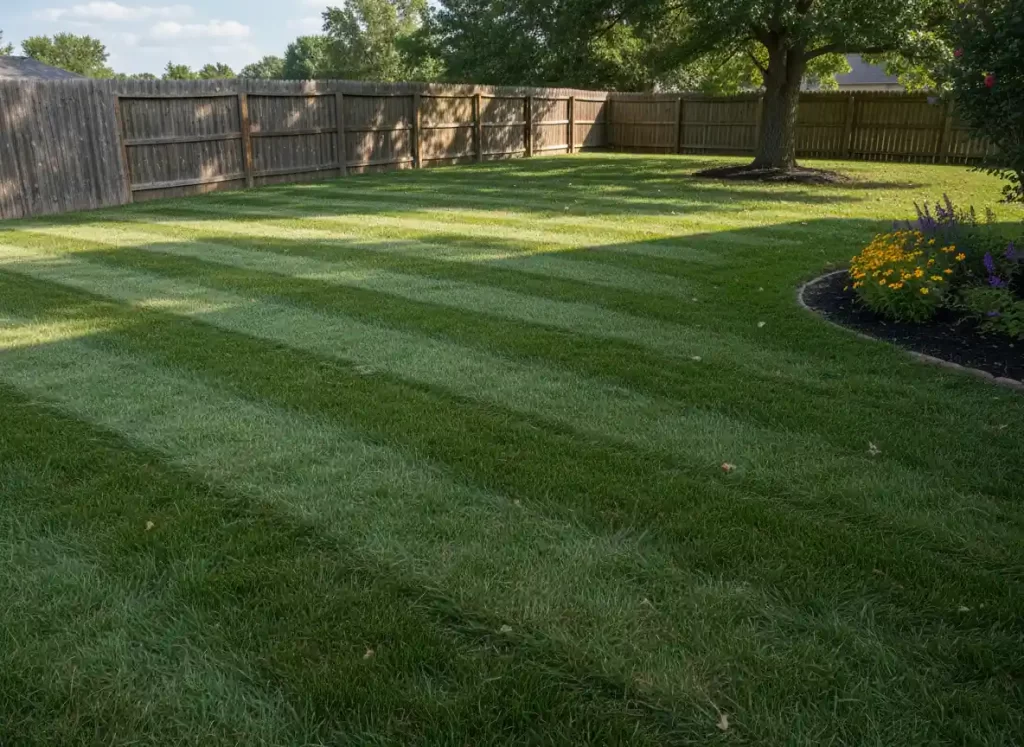
Let me tell you what I’ve actually seen testing these on real properties, not those perfect demo lawns that look like somebody manicures them with nail scissors. The Exmark Quest series cuts way better than I thought it would, and trust me, I’ve been skeptical about marketing claims for ten years straight.
That UltraCut deck manages grass flow really well, even when conditions suck. I’ve run Quest models through overgrown spring grass that clogs cheaper machines instantly, through wet morning grass that usually leaves clumps everywhere, through bone-dry summer grass that scalps easily if your deck’s not dialed in. It handled everything without falling apart on me.
Blade speed runs around 18,000 feet per minute across the board. Fast enough for clean cuts without draining power like crazy. The three-blade setup on larger decks overlaps enough that you won’t see uncut strips between passes. Clippings discharge evenly, spread out nicely without creating windrows that force you over the same ground twice.
Zero-turn maneuverability feels right. Some residential zero turns are so twitchy that newbies feel like they’re trying to parallel park a shopping cart. Others are so sluggish you wonder why you bothered upgrading. Quest sits right in the sweet spot – responsive enough for precise work around flower beds, forgiving enough that first-timers won’t tear up their lawn while learning.
Hills show the difference between the series pretty clearly. E Series handles moderate slopes up to maybe 15 degrees fine. Push steeper than that and you’ll feel those EZT transmissions working harder, plus traction becomes your main issue. S Series with beefier transmissions tackles steeper stuff more confidently, though Exmark still says 20 degrees is the max safe angle.
For smaller yards, it depends on what you call “small.” Properties under half an acre with lots of stuff to navigate around? The Exmark 42 zero turn works efficiently without feeling like a too much mower. If you’re still deciding between mower types for your specific yard size, our guide on choosing the right lawn mower for your yard covers all the options. That zero-turn radius cuts out all the backing up and three-point turns that eat time with regular riders. I’ve watched people with complicated landscaping cut mowing time by 40% just switching to a Quest 42.
Something that really stands out: stability when you’re moving fast. Some residential zero turns feel sketchy once you push past 4 MPH. Quest stays composed at full speed, lets you cover ground quickly between sections without death-gripping the controls.
Exmark Quest Pricing Guide: What to Expect in 2025
Money talk time. What you’ll actually pay for an Exmark Quest for sale in 2025 bounces around depending on your dealer, where you live, and timing, but here’s what I’m consistently seeing.
The Exmark Quest 34 price starts somewhere around $4,200-$4,600, depending on the series and dealer. Real talk, though? The 34-inch is a niche. Works great for tight spaces, but has limited productivity for most yards. Unless your property specifically demands that narrow deck, the 42-inch gives you way better value long-term.
The Exmark Quest 42 runs from $4,800 to $5,800. E Series models usually land between $4,800-$5,200. S Series pushes $5,400-$5,800. That $600-$800 bump for S Series gets you significantly better transmissions and construction that lasts longer – worth thinking about if you’re keeping this thing for years.
The Exmark Quest 50 price spans $5,400 to $6,500. E Series 50-inch starts around $5,400-$5,800, S Series hits $6,000-$6,500. A bigger deck and more powerful engine justify the jump over 42 inches when your property actually needs that productivity.
Quest 60 climbs past $7,000 and starts competing with entry commercial machines. Unless you’re managing serious acreage or running a side lawn business, a 60-inch mower is probably way more mower than makes sense.
Timing matters. Late fall, when dealers clear inventory? I’ve seen Quest models discounted $400-$800 compared to spring. A trade-off is that selection gets picked over as popular stuff sells out.
Financing through dealers usually offers 0% APR promos – typically 12-24 months depending on manufacturer programs. Factor this in if paying cash would hurt. Just don’t stretch payments beyond that promo period unless you’re cool with the interest rates jumping up.
Used Quest models show up sometimes, but hold value pretty solidly. Three-year-old machines in decent shape typically sell for 50-60% of the original price. Quest line’s relatively new, so there aren’t tons of used options floating around yet.
Dealer prep fees add $100-$300 to whatever they quote you – always check whether the advertised price includes setup or charges separately. Good dealers include assembly, oil fill, startup, and showing you the controls. Cheaper dealers skip steps, leaving you dealing with headaches.
Exmark 42 Zero Turn Features and Specifications
Let’s get specific about the Exmark 42 zero turn since it’s the most popular for good reason. Real specs that actually matter, not marketing fluff.
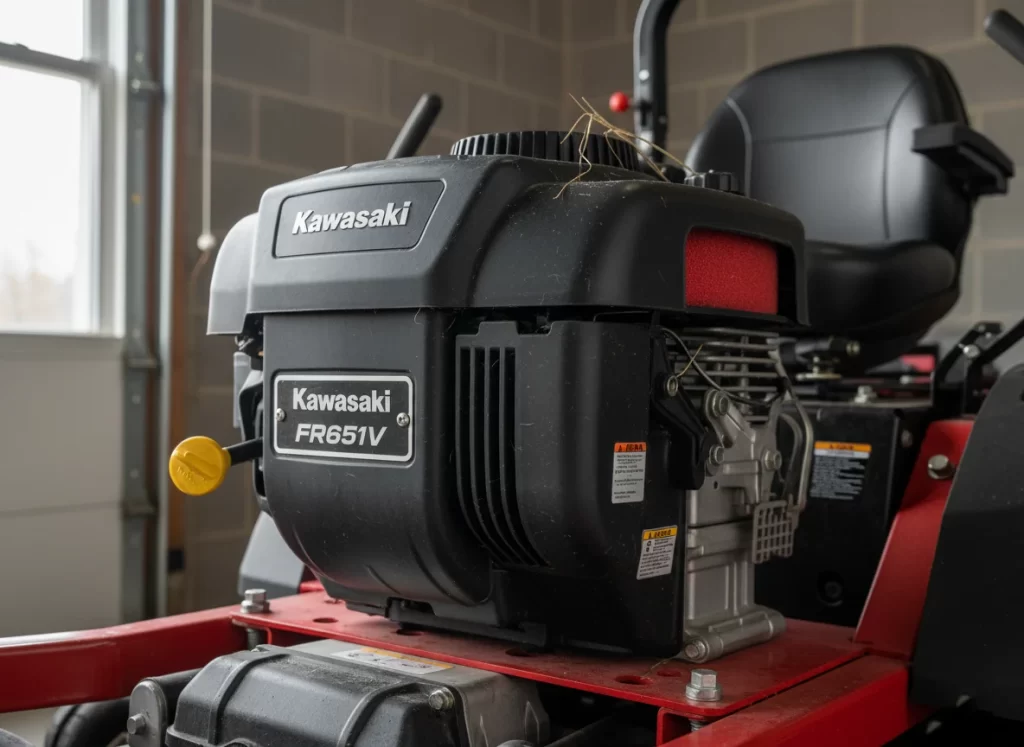
The Exmark E Series 42 runs a Kawasaki FR651V engine (21.5 HP) with Hydro-Gear EZT-2200 transmissions. That Kawasaki engine’s earned my respect over the years of repairs. Reliable, reasonably fuel-efficient, and doesn’t need constant attention beyond regular oil changes. FR series runs cooler than comparable engines, which means fewer heat-related problems down the road.
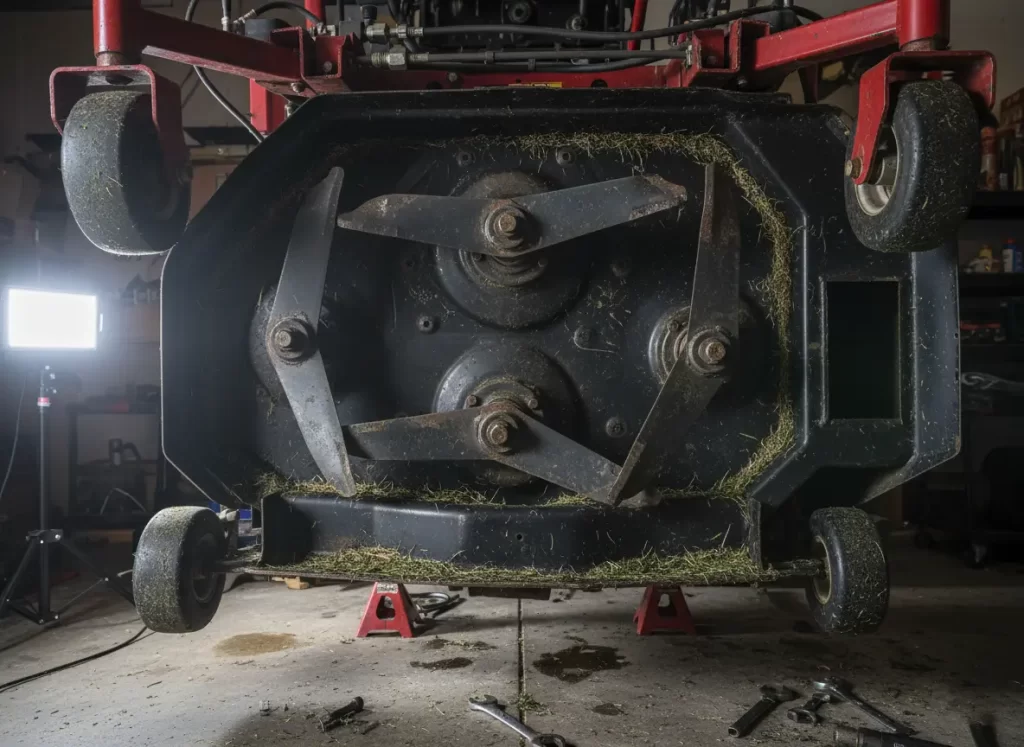
UltraCut Series 3 deck measures 42 inches wide, 3.75 inches deep. Fabricated construction using 10-gauge steel that outlasts stamped decks easily. The inside surface is smooth, which dramatically cuts down grass buildup. Cleaning takes minutes instead of half an hour, scraping crud off.
Cutting height adjusts from 1.5 to 4.5 inches with a foot lever. No tools, no complicated mechanisms that freeze up after a season. Thirteen positions give you precise height control for different grass types and seasons. For comprehensive maintenance tips to keep your zero-turn running smoothly year-round, check out our complete maintenance and troubleshooting guide.
Dual lap bar controls use four inches of travel that feels natural almost immediately. Some manufacturers go too short (needing constant tiny adjustments) or too long (imprecise control). Exmark nailed the balance.
Fuel tank holds 3.5 gallons – good for 90-120 minutes continuous, depending on what you’re cutting and speed. The translucent tank lets you see the fuel level at a glance, preventing running dry mid-lawn.
Seat measures 15 inches wide with medium-density foam. Comfortable enough for typical sessions, nothing fancy though. S Series upgrades to suspension seating that makes a difference in longer sessions, but for properties under 90 minutes to mow, the standard seat is fine.
Front wheels are 11 x 6, rears are 18 x 9.5. Those bigger rear tires give good traction without excessive ground pressure damaging turf. Front casters swivel smoothly without binding issues I’ve hit on budget models.
Ground speed maxes 6.5 MPH forward, 3 MPH reverse. Fast enough for efficiency without feeling scary for new operators. Always follow CPSC safety guidelines when operating zero-turn mowers. Some customers complain about “slow” speeds versus commercial machines, but residential properties rarely benefit from going faster when it costs you control.
Exmark Quest 50 Mower: Mid-Size Property Performance
The Exmark 50 mower setup targets the middle ground between compact efficiency and serious productivity. Managing two to four acres with moderate landscaping? This deck size deserves real attention.
Quest 50 usually pairs with the Kawasaki FR691V engine (23 HP) in E Series or the beefier FR730V (24 HP) in S Series. Extra horsepower matters less for raw cutting and more for keeping blade speed consistent when conditions get tough – thick grass, damp mornings, mulching fall leaves.
50-inch UltraCut deck gives roughly 17% more productivity per pass versus the 42-inch. On three acres translates to saving 25-30 minutes per session. Minutes add up over a season – talking 15-20 hours annually, you’re not spending on the mower.
Weight climbs to about 720-750 pounds depending on configuration and fuel load. Extra mass helps traction on slopes but needs more attention on soft ground. I’ve seen 50-inch models leave ruts in spring when lighter machines wouldn’t, so use judgment after heavy rain or thaw.
A wider deck requires more planning around landscaping. You’ll need to think ahead about turning radius and clearance, where a 42-inch let you be spontaneous. Not a deal-breaker, just learning curve stuff, taking a few sessions to dial in.
Fuel capacity stays 3.5 gallons, adequate runtime for most properties, but requires refueling on bigger jobs. Figure 90-120 minutes cutting time per tank, depending on conditions and speed.
The Exmark Quest 60 comes into play for properties over four acres, but honestly, at that size, you’re approaching commercial territory. 60-inch mows faster, sure, but storage challenges and reduced maneuverability often cancel out productivity gains unless you’re managing really open terrain.
Mid-size property performance with 50-inch consistently impresses. Deck handles transition areas between open space and landscaped sections efficiently, keeping cut quality strong while covering ground quickly. Discharge performance stays solid even at higher speeds – no clumping or uneven distribution forcing second passes.
Value Comparison: Exmark Quest vs Competition (Toro, Cub Cadet, Ariens)
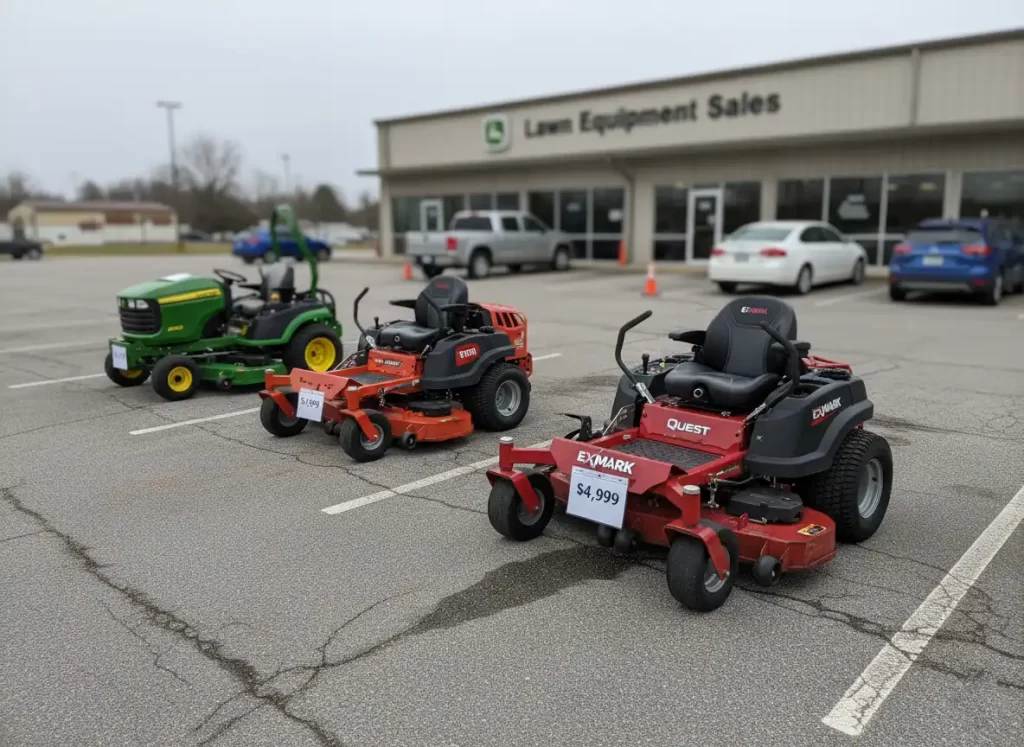
Now it gets fun – how does Exmark Quest actually stack up against established residential zero turns? I’ve sold and fixed all these brands, and the comparison’s messier than “Brand X is best.” For a deeper dive into how different manufacturers compare across the board, see our comprehensive brand comparison guide.
Toro TimeCutter is Quest’s most direct competition. TimeCutter SS4225 (42-inch, 22.5 HP) retails around $4,400-$4,800, a bit less than Quest E Series 42.” Toro’s Smart Speed gives intuitive speed control that new operators really like. TimeCutter offers comfortable seating and solid Toro quality.
Where Quest pulls ahead: deck construction and cutting performance. Fabricated Quest deck outlasts Toro’s stamped construction, UltraCut system handles tough conditions better. Toro’s got a broader dealer network, though, which means easier service access in lots of places. For more insights on how major brands stack up, check out our detailed Honda vs Toro comparison.
Cub Cadet Ultima ZT1 plays in budget-friendly territory. ZT1 42 (42-inch, 22 HP) sells for $3,800-$4,200 – noticeably cheaper than Quest. You get adequate zero-turn performance with lighter parts working fine for occasional use.
Quest justifies premium through better deck quality, stronger transmissions (even E Series EZT units outlast Cub Cadet’s entry transmissions), and longer-term durability. Planning to keep your mower 5+ years, using it regularly? Quest’s higher upfront cost pays off with fewer repairs and better resale.
Ariens IKON-X series targets value-conscious buyers still wanting quality. IKON-X 42 (42-inch, 22 HP) runs $4,000-$4,500. Ariens uses fabricated decks and quality Kohler engines, making this legitimately competitive.
Quest edges ahead in cutting system sophistication and overall finish, but the gap’s not massive. Ariens represents strong value for homeowners caring more about function than brand prestige. If Exmark dealers are sparse in your area or service costs run high, IKON-X deserves a look.
John Deere Z335E commands premium pricing ($5,500-$6,200 for 42-inch) based on brand reputation and dealer network. You get an excellent build and John Deere’s legendary resale. Accel Deep deck performs well in various conditions.
Quest offers comparable performance $600-$800 less, the main trade-off being dealer support. John Deere’s network provides unmatched service access but charges accordingly. Mechanically inclined and comfortable with basic maintenance? Quest delivers similar quality better value.
Overall? Quest hits sweet spot – commercial-grade cutting performance and durability at residential pricing. Paying more than budget options but getting real quality improvements justifying it. Compared to premium brands like John Deere, it saves significant money without major performance compromises.
Alright, bottom line after watching these machines work past few years: Exmark Quest zero turn actually delivers on commercial-grade cutting without commercial pricing. Not perfect – nothing is – but hits that rare spot where quality, performance, and pricing all line up sensibly.
Quest works great for homeowners managing one to four acres wanting professional results without a learning curve and the expense of true commercial equipment. Cutting system quality consistently surprises people positively, controls feel intuitive, and the whole thing suggests you’ll get years of reliable service with proper maintenance.
Worth premium over budget brands? Yeah, if you’re thinking long-term and value your time. Time savings alone pay for the investment – watched people cut mowing time 40% or more just upgrading to Quest from traditional riders.
Should you stretch for the S Series over the E Series? Depends. Managing slopes, cutting thick grass regularly, or keeping the machine beyond five years? S Series upgrades pay off. Typical suburban properties have straightforward conditions? E Series gives everything you actually need.
Measure your gates before buying. Can’t stress enough. Too many people fall for the 50-inch model, then discover it won’t fit through the backyard access. Also, test drive if possible. Ten minutes on the dealer’s demo lot reveals comfort and control differences specs can’t show.
Go reclaim your weekends. Your lawn deserves better than what it’s getting, and honestly, so do you. For additional research-based lawn care guidance, the Penn State Extension offers excellent educational resources.
Yeah, especially the Exmark Quest 42 handles small to medium yards (1-2 acres) really well. 42-inch deck navigates typical suburban landscaping while saving time versus traditional riders. For yards under half an acre with super tight spaces, maybe look at 34-inch, though I still push people toward 42-inch most times. Zero-turn maneuverability cuts out all that backing up and repositioning, wasting time in smaller spaces. Just check gate widths and access points before buying – 42-inch needs about 44 inches clearance, accounting for lap bar extensions.
Exmark Quest S Series upgrades transmissions to commercial-grade Hydro-Gear 3100 units versus E Series’ EZT-2200 models. You also get beefier engines, heavier frame construction, and suspension seating. S Series justifies its $600-$1,000 premium if you’re managing properties over three acres, dealing with significant slopes, or planning long-term ownership where better durability pays off. E Series delivers excellent performance for typical residential use with less demanding conditions. Both series use the same quality UltraCut decks, so cutting performance stays consistent.
Go with Exmark Quest 42 inch for properties up to two acres with moderate landscaping where maneuvering around obstacles matters. Pick Exmark Quest 50 for properties of two to four acres where increased productivity justifies less maneuverability in tight spaces. A 50-inch mower saves roughly 25-30 minutes on three-acre properties but needs more strategic navigation around landscaping. Check storage space and access clearances before choosing a larger deck – that extra eight inches often makes or breaks fitting through gates or into garages. When in doubt, a 42-inch is a safer choice, still delivering major efficiency improvements over traditional riders.
Exmark Quest pricing in 2025 ranges $4,200 to $6,500, depending on deck size and series. 42-inch E Series starts around $4,800-$5,200, while S Series 42 runs $5,400-$5,800. 50-inch E Series ranges $5,400-$5,800, S Series versions reaching $6,000-$6,500. Seasonal promos typically offer $400-$800 discounts in late fall when dealers clear inventory. Always check whether quoted prices include dealer prep and setup – quality dealers include proper assembly and initial startup, adding value beyond base price. Financing options frequently offer 0% APR for 12-24 months through manufacturer programs.
Authorized Exmark dealers are the best bet for Exmark Quest 42 for sale and other models. Check Exmark’s dealer locator on their website to find nearby authorized dealers offering test rides, proper setup, and ongoing service support. Bigger dealers usually stock multiple configurations, and smaller dealers might order specific models. Big-box retailers occasionally carry select Quest models, but typically have limited selection and less specialized service. Skip online marketplaces for new purchases – assembly complexity and dealer support advantages make buying through authorized channels worth it. Used Quest models show up occasionally through dealers taking trade-ins or private sellers, though the relatively recent introduction limits used availability.
Exmark Quest justifies a premium over budget brands through better cutting system quality, stronger durability, and better long-term value. Compared to budget options like entry Cub Cadet models, Quest costs $500-$800 more but delivers commercial-grade cutting performance and components, reducing long-term repair costs. Against premium brands like John Deere, Quest saves $600-$1,000 while offering comparable cutting quality and durability, the main trade-off being dealer network size. Quest represents excellent value for homeowners prioritizing performance and longevity over the lowest initial cost. Planning 5+ years of ownership on a property requiring regular mowing? Quest’s quality justifies middle-market pricing.
