
Craftsman YT4000 Review: Worth the Upgrade Over YT3000?
So my neighbor Dave caught me outside last Saturday while I was fiddling with my mower deck, desperately needing advice about whether the Craftsman YT4000 was worth upgrading to from his current model. “Oliver, I need your honest opinion,” he says, waving his phone at me like it’s some kind of evidence. He’d been on the Craftsman dealer’s website. This salesman had him half-convinced he needed to ditch his perfectly good YT3000 for the newer YT4000. “Says it’s worth every penny of the upgrade cost. But I can’t figure out what’s actually different besides them wanting more of my money.”
Table of Contents
▼- Complete Model Specifications and What They Actually Mean
- The Engine: Why 24HP Actually Matters
- Deck Size and Construction Details
- Transmission and Control System
- Comfort and Convenience Features
- Starting System and Fuel Capacity
- Weight Distribution and Tire Setup
- Blade Engagement System
- S-Series Model Variations Explained
- What the “S” Designation Really Means
- Fabricated vs. Stamped Construction
- Engine and Transmission Similarities
- Price Differences Between Models
- Parts Availability Considerations
- Power and Performance: The 24HP Advantage
- Twin-Cylinder Design Benefits
- Real-World Performance Testing
- Engine Reliability and Longevity
- Fuel Consumption Rates
- Cold Starting Performance
- Governor System and RPM Control
- Noise Levels and Hearing Protection
- Smart-Choke Technology
- Cutting System: Deck Design and Blade Performance
- Optimal Deck Width for Different Properties
- Fabricated Steel Construction Advantages
- Three-Blade Cutting Pattern
- Mulching Capability and Performance
- Side Discharge and Bagging Options
- Height Adjustment System
- Anti-Scalp Wheel Effectiveness
- Deck Cleaning and Maintenance
- Front Edge Design Benefits
- Current Market Pricing and Best Buying Times
- Standard Retail Pricing at Major Retailers
- End-of-Season Sale Opportunities
- Early Spring Purchasing Window
- Used Market Value Guide
- Financing Options and Payment Plans
- Package Deals and Service Bundles
- Extended Warranty Considerations
- Regional Price Variations
- Head-to-Head Model Comparison
- Power Plant Differences
- Deck Construction Quality Comparison
- Transmission and Drive System
- Comfort and Ergonomics
- Service and Maintenance Access
- Actual Cutting Quality Results
- When Upgrading Makes Sense
- When to Stick With What You Have
- Essential Maintenance and Care Guide
- Oil Change Schedule and Procedures
- Air Filter Inspection and Replacement
- Spark Plug Maintenance
- Carburetor Troubleshooting
- Winter Storage Best Practices
- Blade Sharpening Guidelines
- When to Replace Blades
- Drive Belt Inspection Schedule
- Deck Cleaning Techniques
- Tire Pressure Monitoring
- Battery Care and Storage
- Parts Sourcing Options
- Professional Service Value
- Final Verdict: Is This the Right Tractor for You?
- Best-Fit Property Profiles
- When Upgrading Makes Financial Sense
- Moderate-Use Recommendations
- When to Consider Other Options
- Budget Considerations
- Performance Summary
- Strengths and Limitations
- Shopping and Testing Advice
Dave’s not wrong to be skeptical. The Craftsman YT4000 sits in this annoying middle zone. It looks basically the same as the YT3000 if you’re just glancing at pictures online. It costs a chunk more, but supposedly has all these improvements that justify the price jump. The tricky part? Figuring out if those improvements actually matter for what you’re doing. Or if it’s just fancy marketing talk that sounds great when you’re standing in the showroom nodding along.
I’ve had my hands on both models plenty over the years. Fixed them, put them through their paces in different conditions, talked to folks who’ve made the jump from the 3000 to the 4000. Some people absolutely love it and kick themselves for not upgrading sooner. Others? They’re honestly wishing they’d pocketed the difference and stuck with what worked.
Here’s my take on the Craftsman YT4000 riding lawn mower. It’s not like Craftsman reinvented the wheel here and made the YT3000 suddenly obsolete. What they did do is add some legitimately useful stuff. Better power, improved cutting ability, and enhanced durability can make a real difference. That depends on your yard size, what kind of grass you’re dealing with, and how you actually use it.
The real question isn’t “is the YT4000 better?” because yeah, it is. The question is whether those upgrades are worth the extra cash for your specific situation.
Whether you’re stuck on this decision like Dave was, or you’re just trying to understand what you’re actually getting with the yt4000, I’m gonna break down the real differences. I’ll cut through the sales pitch nonsense and help you figure out if upgrading makes any sense. Or if you should just stick with what’s working.
Complete Model Specifications and What They Actually Mean
Let’s get into what the Craftsman YT4000 lawn mower actually is. You need to know the whole package before we start comparing it to anything else.
The Engine: Why 24HP Actually Matters
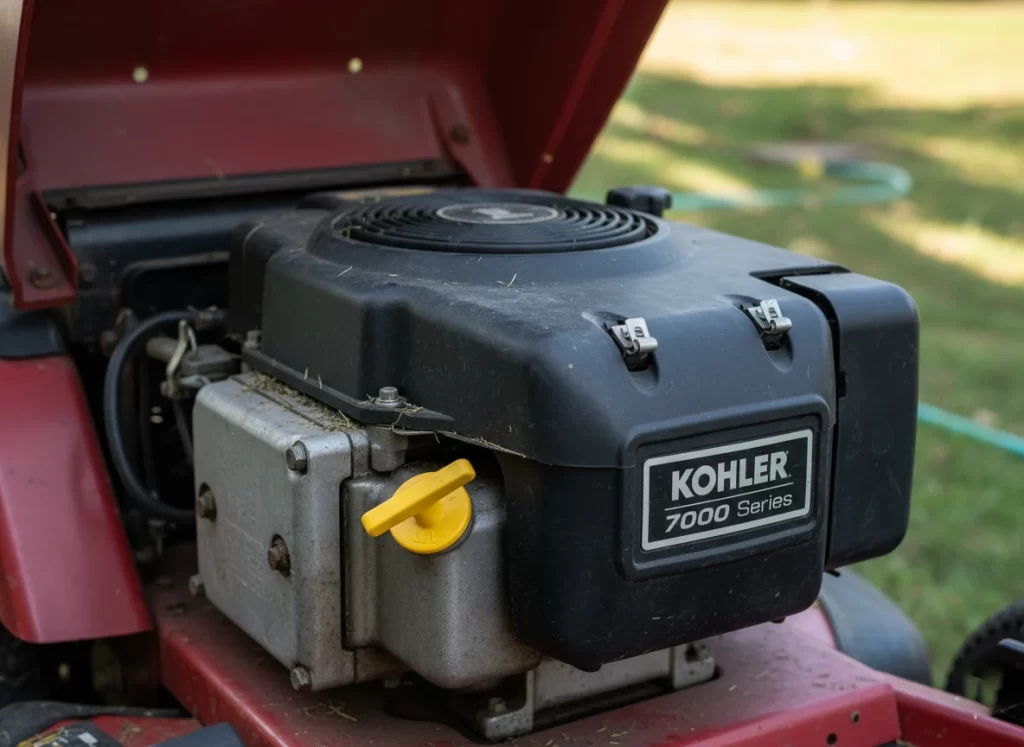
The Craftsman YT4000 riding mower runs on a 24HP Kohler 7000 Series V-Twin engine. And look, that’s not just some number they slapped on there to make it sound tough. The twin-cylinder setup runs way smoother than those single-cylinder engines. This matters more than you’d think when you’re on this thing for an hour every Saturday.
Less shaking around means you’re not as worn out. That extra oomph really shows up when you hit thick grass or go up slopes.
Deck Size and Construction Details
The cutting deck is 46 inches across. Made from fabricated steel that’s built to take a beating without getting all bent out of shape. Three blades work together doing their thing. You get five different height settings from 1.5 inches all the way up to 4.
Most people I know hang out between 2.5 and 3.5 inches. That changes depending on the season and their grass type. But it’s nice having options when you need them.
Transmission and Control System
The hydrostatic transmission means you don’t have to mess with shifting gears manually. Just use the foot pedal to control your speed. This makes getting around trees and stuff way less annoying. Understanding how different transmission systems work across riding mower types helps you appreciate why this feature matters for maneuverability.
This transmission type’s been solid in the Craftsman lineup. Though keeping up with maintenance (we’ll get to that) makes a huge difference in how long it lasts.
Comfort and Convenience Features
Comfort-wise, you get a high-back seat that’s got decent padding. Cruise control so you’re not constantly adjusting speed on the straightaways. LED headlights that actually work if you’re mowing early morning or getting caught out late.
The turning radius is 18 inches. Won’t compete with those zero-turn mowers, but it’s good enough for most yards. You won’t have to do a million back-and-forth adjustments.
Starting System and Fuel Capacity
The yt 4000 craftsman comes with an electric start powered by a regular 12-volt battery. There’s even cup holders – yeah, two of them. Perfect for keeping water handy on those hot days.
The fuel tank holds 3 gallons. Usually good for about 2 to 2.5 hours of steady mowing. That depends on how thick the grass is and what you’re dealing with.
Weight Distribution and Tire Setup
Fully fueled, this thing weighs around 580 pounds. Heavy enough to get good traction going uphill. Not so heavy that it’s gonna compact your soil when it’s soft. If you’re comparing this to other options in your budget range, our Craftsman YT3000 Review 2025 shows how the older model stacks up.
You’ve got 20-inch tires in back, 15-inch up front. Works out pretty well for floating over the ground while still being able to turn.
Blade Engagement System
One thing worth calling out – the deck engagement system. The Craftsman YT4000 mower uses an electric PTO clutch. You just flip a switch for it.
Way better than those old mechanical systems that clunk and bang when you engage the blades.
S-Series Model Variations Explained
Alright, this is where Craftsman gets a little confusing with their naming. They’re not always crystal clear about what you’re looking at. The Craftsman YTS4000 is basically a variation of the 4000 series. Understanding what’s different actually matters when you’re shopping around or trying to figure out exactly what model you’re seeing online.
What the “S” Designation Really Means
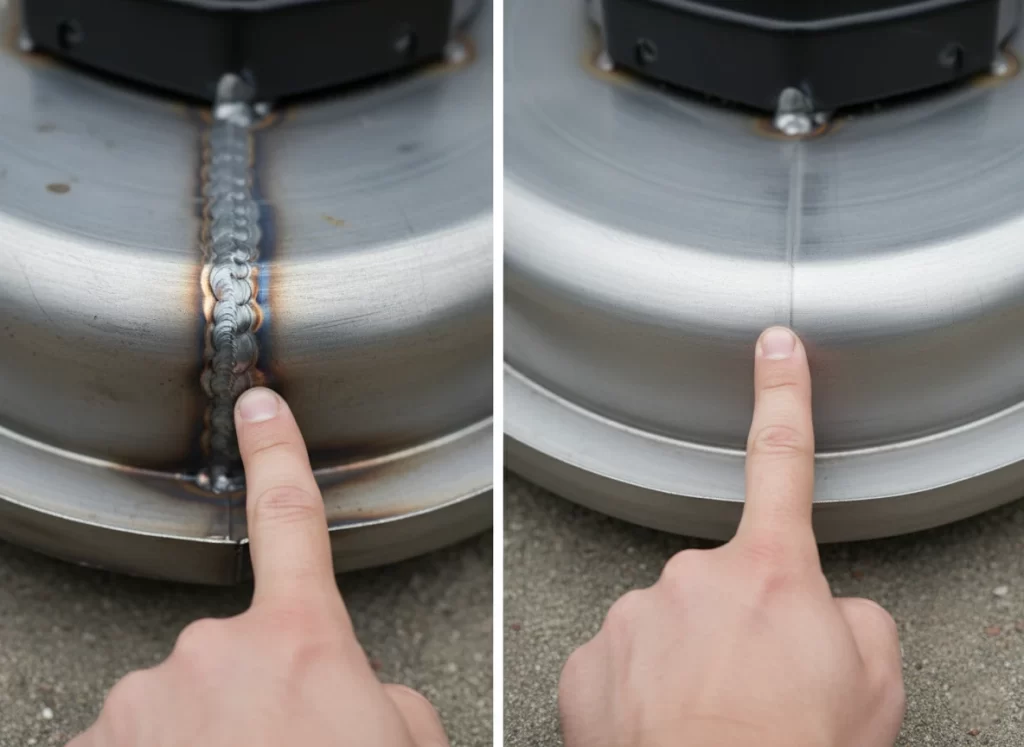
That “S” in craftsman yts4000 usually means “stamped deck” instead of the fabricated deck you get on the regular YT4000. And honestly, this matters more than it sounds like it would.
Stamped decks are pressed out of one piece of metal in a factory. Keeps costs down but means they’re not quite as tough long-term. They’ll do the job fine for normal mowing. More likely to get warped or damaged if you’re regularly running into rocks or roots, or whatever else is hiding in your yard.
Fabricated vs. Stamped Construction
The fabricated deck on the standard craftsman yt4000 is welded together from thicker steel pieces. Holds up better when you’re beating on it year after year.
Planning to keep this mower for 10-plus years, or your property’s got some rough spots? The fabricated deck is worth the extra money just for lasting longer. Regular deck maintenance and proper cleaning techniques significantly extend the life of both deck types.
Engine and Transmission Similarities
Engine-wise, both the YT4000 and YTS4000 are basically the same. Same 24HP Kohler V-Twin, same transmission setup, same controls.
The big difference really comes down to that deck construction. Sometimes little variations in accessories or comfort stuff depending on what year or model you’re looking at.
Price Differences Between Models
The craftsman lawn tractor yts4000 usually runs about $200 to $300 less than the standard YT4000. Stamped decks are cheaper to make.
For people watching their budget who take care of their stuff and aren’t putting it through hell, the YTS4000’s a decent deal. Want maximum durability, and you’re thinking really long-term? Spend the extra on the standard YT4000’s fabricated deck.
Parts Availability Considerations
One thing people don’t think about enough – parts availability. The standard YT4000’s been more popular, so parts are usually easier to find.
Out in the stick, where getting specific parts takes forever? That might tip your decision one way or the other.
Power and Performance: The 24HP Advantage
The Craftsman YT4000 engine needs its own section. It’s one of the biggest differences between the 3000 and 4000 series. The engine affects literally everything about how this mower works for you.
Twin-Cylinder Design Benefits
The craftsman yt4000 24hp Kohler 7000 Series V-Twin is a real step up from those single-cylinder engines. You find those on cheaper models.
Twin-cylinder engines are smoother because the cylinders fire back and forth. Instead of just banging away all at once. You feel the difference right away with less vibration and steadier running. Especially when you’ve got the blades going.
Real-World Performance Testing
I’ve tested both the YT3000’s 22HP engine and this 24HP one in the same conditions. Overgrown Kentucky bluegrass after we’d had rain all week.
The YT4000 just powered through and kept the blades spinning. The YT3000 would start to bog down, and I’d have to slow way down to keep it from stalling. Doesn’t sound like a big deal, but that adds up to real time over a full mowing job.
Engine Reliability and Longevity
The Kohler 7000 Series has a good reputation for withstanding regular home use. Not indestructible – nothing is. But take care of it and you’ll regularly get 1,500-plus hours before it needs serious work. Learning about different engine types and their maintenance requirements helps you maximize engine longevity across any brand.
Kohler engines have been manufactured in the USA since 1920, earning a reputation for reliability backed by decades of engineering refinement.
Holds 2 quarts of oil, including the filter. Craftsman says change it every 50 hours or once a year, whatever comes first. It’s got an oil filter too. A lot of smaller engines skip that. This simple thing really helps the engine last longer.
Fuel Consumption Rates
Gas mileage is about what you’d expect from a 24HP engine running a 46-inch deck. Normal mowing with grass at a reasonable height? You’re burning maybe 1 to 1.25 gallons per hour.
That 3-gallon tank’s usually enough for most yards. Won’t have to stop and fill up in the middle.
Cold Starting Performance
Starting it cold’s been solid in my experience. Even after it’s been sitting all winter. The electric start means you’re not out there yanking on a pull cord until your arm falls off.
Usually fires up within a few seconds, even when it’s chilly in spring. Pro tip: Use fresh gas without ethanol if you can get it. Throw in a fuel stabilizer before winter. That simple thing prevents like 90% of the spring starting headaches people run into. Our complete winterization guide covers all the critical steps for proper winter storage
Governor System and RPM Control
The governor on the engine controls the max RPM. Set right from the factory. Some people want to mess with it for “more power,” but that’s a terrible idea.
The factory setting gives you the right blade speed for clean cutting. Keeps the engine from wearing itself out. Just leave it alone unless you enjoy throwing money at repairs.
Noise Levels and Hearing Protection
It’s loud – about 90 decibels where you’re sitting with the deck running. Pretty normal for gas mowers like this.
Loud enough, you probably want ear protection if you’re mowing for a while. Not crazy loud compared to other models.
Smart-Choke Technology
One nice touch: Kohler’s Smart-Choke system. Automatically adjusts based on engine temperature. Small thing, but it’s one less thing to think about when starting.
Stops you from accidentally running with the choke on. That wastes gas and makes it run rough.
Cutting System: Deck Design and Blade Performance
The Craftsman YT4000 deck is where everything theoretical becomes actual grass cutting. Honestly, this is one area where the 4000 series really does deliver noticeable improvements over the 3000.
Optimal Deck Width for Different Properties
That 46-inch craftsman yt4000 mower deck is a sweet spot for properties between 1 and 3 acres. Wide enough to cover ground without taking forever. Not so wide that you’re constantly fighting it around trees and flower beds and landscape stuff.
I’ve seen people jump from 42-inch decks to 50-plus, thinking bigger’s always better. Then they regret it because they’re struggling in tight spaces all the time.
Fabricated Steel Construction Advantages
The fabricated steel construction uses thicker metal. Extra reinforcement where the blade spindles bolt on. This matters because those spindle points take massive force and vibration when you’re running.
Cheaper decks crack or bend in those spots after a few years of regular use. The YT4000’s reinforced design holds up way better over time.
Three-Blade Cutting Pattern
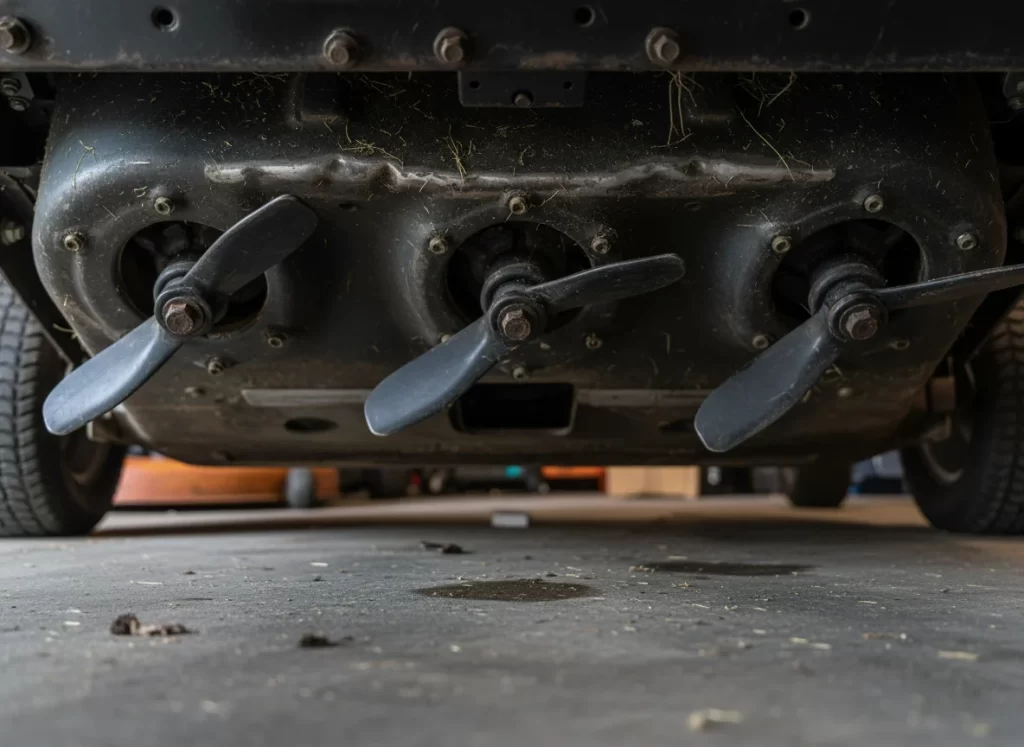
Three blades overlap their cutting pattern. Each blade is 15.5 inches long. The craftsman yt 4000 blade size gives enough overlap so you don’t get those annoying strips of uncut grass. Some decks leave those behind.
New blades run about $40 to $60 for all three. You’ll usually need them once or twice a season. Depends on how much you mow and what conditions you hit. Check out our complete guide to lawn mower blades to understand which blade types work best for different mowing conditions.
Mulching Capability and Performance
The mulching actually works better than I expected. With the mulching plug-in (comes with most models), grass gets chopped up fine enough to break down quickly. Feeds your lawn.
This works great if you’re mowing regularly and only taking off the top third of the grass. Let it get overgrown, though? You’ll see clumps even with mulching on. Understanding mulching vs bagging vs side discharge options helps you choose the right cutting method for your grass type.
Side Discharge and Bagging Options
Side discharge handles heavy grass well. Throws clippings out to the side in a pretty even pattern.
The rear discharge for bagging works okay, but nothing special. Honestly, if you’re planning to bag a lot, you might want to look at other mowers designed more for that.
Height Adjustment System
Height adjustment is a single lever on your seat. Moves all four corners together. Works smoothly without needing gorilla strength. Stays where you set it without drifting.
Five positions from 1.5 inches (honestly, too short for most grass and you’ll scalp stuff) up to 4 inches. Good if you like it taller or you’ve got less formal areas.
Anti-Scalp Wheel Effectiveness
The anti-scalp wheels on the front of the deck do a decent job. Keep you from banging the deck when you cross bumps. Though they’re not perfect if your yard’s really rough.
Got serious hills or super bumpy ground? You might still catch the deck on high spots even with these wheels.
Deck Cleaning and Maintenance
Cleaning the Craftsman YT4000 deck after mowing makes a real difference. How well it cuts over time depends on this. Grass builds up under there and messes with airflow and cutting.
There’s a wash port where you hook up a garden hose while the engine’s running. Water pressure cleans out grass clippings. Works reasonably well. Though you’ll still need to scrape off stubborn buildup a few times a year.
Front Edge Design Benefits
One thing I really like is how the front edge of the deck is shaped. Glides over small stuff instead of catching on it.
A small detail you don’t notice until you use mowers with bad front profiles. Those constantly snag on twigs or little rocks, or uneven spots.
Current Market Pricing and Best Buying Times
Let’s talk actual dollars. The craftsman yt4000 price bounces around enough depending on where and when you buy. Knowing the market helps you avoid getting ripped off. Or making snap decisions based on fake “sale” pricing.
Standard Retail Pricing at Major Retailers
At the big stores like Lowe’s and Home Depot, you’re looking at $2,400 to $2,800 for the Craftsman YT4000 riding lawn mower. Depends on what promotions they’re running and where you live.
That’s the normal retail baseline before any seasonal deals or financing offers. Independent dealers sometimes charge a bit more, usually $2,600 to $2,900. They often give you better service and support that’s worth the small premium.
End-of-Season Sale Opportunities
The best time to buy to save money is late September through November. Dealers are clearing out inventory for winter stuff. You can realistically get 15 to 25% off during this time.
Brings prices down to $1,900 to $2,200 if you’re okay with taking whatever’s left. Selection gets limited, obviously. Might not get the specific features you want. But if you’re flexible, these end-of-season sales are legit good deals.
Early Spring Purchasing Window
Early spring sales in February through March give you a better selection. Moderate discounts, usually 10 to 15% off.
Good timing if you want specific features. If you’re picky about getting exactly what you want instead of just any deal.
Used Market Value Guide
The used market for well-maintained yt4000 models usually runs $1,200 to $1,800. Depends on age, condition, and what accessories come with it.
A three-year-old model with reasonable hours (under 200) and proper maintenance should sell around $1,500 to $1,600. Anything way below $1,200 deserves extra looking because it probably has problems that’ll cost you money.
Financing Options and Payment Plans
Financing through retailers usually includes 12 to 24-month zero-percent deals. If you qualify for their credit cards. Make sure you can pay it off before that promo ends.
The deferred interest is brutal if you miss the deadline. Monthly payments for a $2,500 purchase over 24 months are about $104. It should fit most budgets without stress.
Package Deals and Service Bundles
When you’re looking at craftsman yt4000 price offers, think about any attachments, extended warranties, or service packages included. A slightly higher price for the first year of maintenance might actually be a better value. Better than a lower price with nothing.
Extended Warranty Considerations
One trap to avoid: extended warranties sold separately often cost $300 to $500. Rarely pays off for reliable brands like Craftsman.
The standard warranty covers the stuff most likely to break. When things actually tend to break. After that expires, you’re past the phase where defects show up anyway.
Regional Price Variations
Prices vary a lot by region. Rural areas with less competition sometimes run 10 to 15% higher. Suburbs where dealers are competing for business have better prices.
Willing to drive a bit to buy? The savings easily cover gas and then some.
Head-to-Head Model Comparison
This is obviously the key question for anyone who already has a YT3000. Or is trying to pick between these two. The differences are real, but whether they’re worth the roughly $400 to $600 price gap totally depends on your specific situation.
Power Plant Differences
The YT4000’s 24HP twin-cylinder versus the YT3000’s 22HP single-cylinder is the biggest mechanical difference. Light grass conditions? Honestly, you won’t notice much. Both handle normal weekly mowing fine.
But push them into thick, wet spring grass or tackle hills with tall growth? The YT4000’s extra power and smoother delivery show up immediately.
The twin-cylinder also runs way smoother with less shaking. Cuts down on fatigue during longer sessions. Regularly on the mower 90-plus minutes? That difference adds up more than you’d think.
Deck Construction Quality Comparison
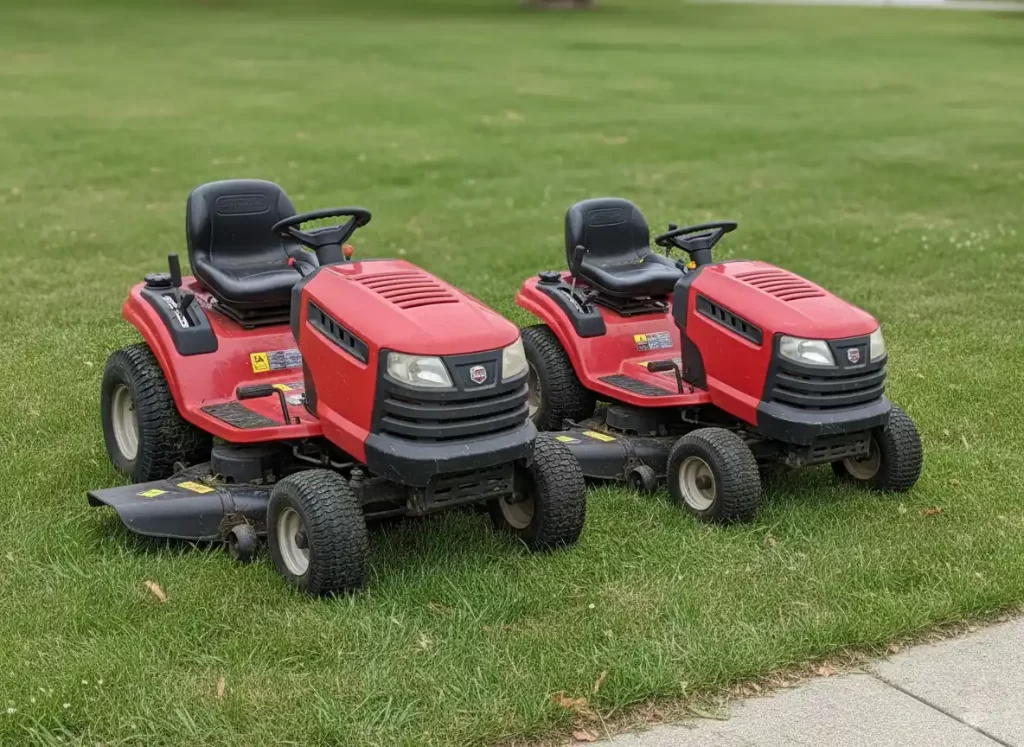
YT4000’s fabricated deck versus YT3000’s stamped deck mostly matters long-term. Both cut the grass fine when new. The difference shows after three, four, or five years of regular use.
The YT4000’s heavier welded construction holds up better to impacts. Stays straighter and resists warping better than stamped designs.
Planning to keep it just three to five years before upgrading? This difference probably doesn’t justify much extra cost. The type who keeps equipment for a decade or more? The better deck construction becomes a smarter investment.
Transmission and Drive System
Both have hydrostatic transmissions that work similarly. Though the YT4000’s transmission is rated for slightly heavier use. A bit better cooling.
Real-world, though, I haven’t seen big reliability differences between them. Both hold up well if you maintain them.
Comfort and Ergonomics
The YT4000’s got a nicer seat with better padding and more adjustment. Not a huge difference, but you’ll notice it in longer sessions.
The YT3000’s seat works fine for under an acre. Where you’re not spending tons of time on it.
Service and Maintenance Access
Both give you pretty good access to routine maintenance stuff. Oil drains, filters, and spark plugs. The YT4000’s layout is slightly more intuitive. Not a major thing though.
Actual Cutting Quality Results
Testing them side-by-side in the same conditions shows a bit better cutting quality. Better grass discharge with the YT4000’s deck design.
Not dramatic enough to be the main deciding factor. Real enough, you’ll notice if you’re paying attention.
When Upgrading Makes Sense
Managing 1.5-plus acres with tough terrain, thick grass, or decent slopes? The YT4000’s extra power and better deck justify the upgrade cost. Properties over 2 acres especially benefit from the improved efficiency and power reserves.
Current YT3000 has 300-plus hours on it, and you’re planning to keep mowing for years? Upgrading to the YT4000 makes sense before major repairs hit the older machine. You can usually get decent trade value for a working YT3000.
Experiencing performance problems with your YT3000? Bogging down, struggling on slopes, deck wearing out? The YT4000 addresses these specific issues.
When to Stick With What You Have
Mowing under 1 acre of pretty flat property with normal grass? The YT3000 handles your needs perfectly. The YT4000’s improvements won’t give you meaningful benefits for lighter use.
Your YT3000’s still pretty new (under three years) and running well? No real reason to upgrade unless your property or conditions have changed significantly.
Budget’s tight? The YT3000 delivers adequate performance cheaper price. Use the money you save on better maintenance. Instead of marginal improvements.
Essential Maintenance and Care Guide
Proper maintenance separates mowers that run reliably for a decade from ones that become expensive headaches. The good news is the Craftsman YT4000 mower doesn’t need anything crazy complicated or expensive. If you stay on top of regular service.
Oil Change Schedule and Procedures
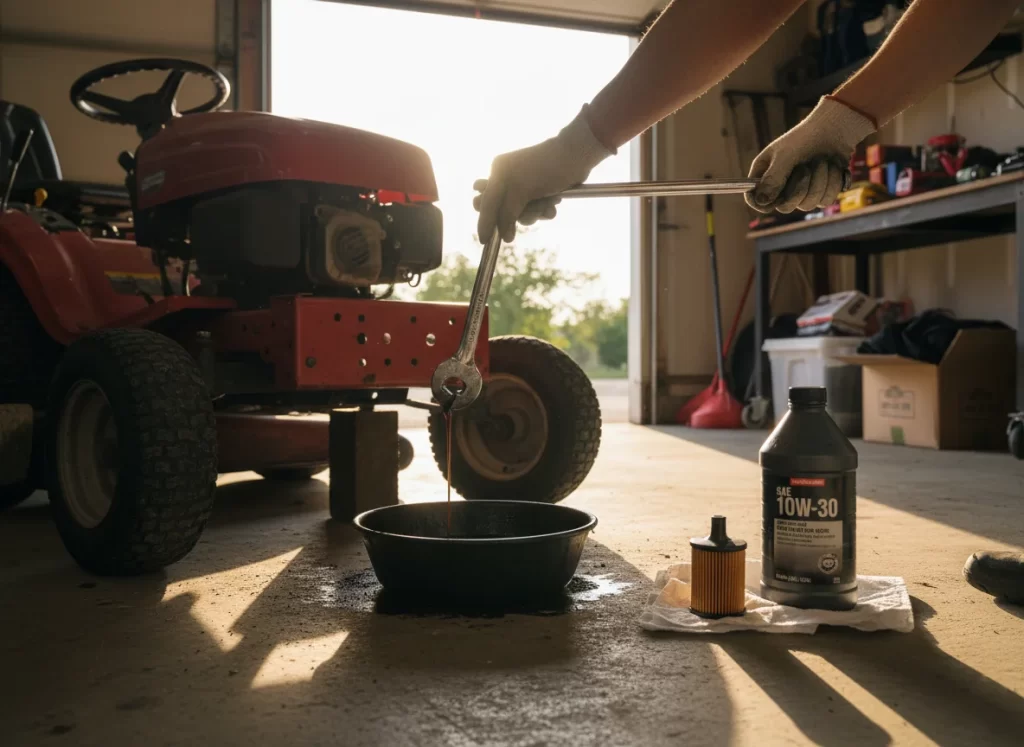
Change oil every 50 hours or once a year, whichever comes first. The Society of Automotive Engineers (SAE) viscosity rating system provides standardized oil classifications that help you select the right oil for different temperature ranges and engine requirements. Holds 2 quarts, including the filter. Our comprehensive engine oil guide covers the best oil types for different engine brands and conditions.
Don’t skip replacing the oil filter. It’s about $8 and really helps the engine last. I’ve seen engines with 1,000-plus hours that looked nearly new inside. Because owners changed oil religiously.
Also seen engines with 300 hours completely worn out. Someone thought they could stretch changes.
Air Filter Inspection and Replacement
Check the air filter every 25 hours or monthly during mowing season. A paper filter costs about $15. Needs replacing when it looks dirty or damaged.
The foam pre-cleaner (if you’ve got one) can be washed and reused multiple times. A clogged air filter kills power and burns more gas. Potentially damages the engine, so this simple thing pays off.
Spark Plug Maintenance
Replace spark plugs about every 100 hours or every couple of years. Use the exact plugs your owner’s manual says. Wrong heat range or gap causes running problems.
Costs about $5 to $8 per plug for the twin-cylinder.
Carburetor Troubleshooting
The Craftsman YT4000 carburetor rarely causes problems if you follow one simple rule. Use fresh fuel with stabilizer added, and never let gas sit forever.
According to the U.S. Environmental Protection Agency, gasoline containing ethanol can begin breaking down and absorbing moisture within 30 days, which accelerates carburetor damage in small engines during storage.
Hard starting, rough running, inconsistent power? Carburetor cleaning often fixes it. You can either pull it off for thorough cleaning. Takes some mechanical ability and about $20 in cleaner and gaskets. Our detailed carburetor troubleshooting guide walks you through the complete cleaning process with detailed instructions.
Or try running carburetor cleaner through the fuel system first. Sometimes handles minor issues without taking stuff apart.
Winter Storage Best Practices
Winter storage prep prevents most carburetor problems. Either completely drain the fuel system, or add stabilizer. Run the engine for several minutes to get treated fuel throughout.
I strongly recommend draining because it’s more reliable. But a stabilizer works if you’re storing fuel for convenience.
Blade Sharpening Guidelines
Sharpen blades every 25 to 30 hours or when cutting quality drops. You can do it yourself with a bench grinder or angle grinder if you’re comfortable. Keep the original angle and balance the blade after.
Maintaining sharp blades isn’t just about cutting quality, according to Purdue University’s turfgrass experts; dull blades tear grass rather than cutting cleanly, making lawns more susceptible to disease and drought stress.
Or pay a shop $10 to $15 per blade.
When to Replace Blades
Complete blade replacement happens when blades are super worn, bent, or damaged beyond safe sharpening. A full set of three costs $40 to $60. Depends on OEM or aftermarket.
I usually recommend OEM because quality control is more consistent.
Drive Belt Inspection Schedule
Belt inspection and replacement matter more than most people realize. The deck drive belt transfers power from the engine to the blades. A worn belt reduces cutting even if it hasn’t totally failed.
Check the belt every 50 hours. Look for cracking, glazing, or excessive wear. Replacement typically costs $25 to $35. Not too hard if you’re mechanically inclined. Our step-by-step belt replacement guide shows you exactly how to replace drive belts on riding mowers.
Deck Cleaning Techniques
Clean the deck after every few uses. Prevents grass buildup that reduces cutting and promotes rust. Use that washout port with a garden hose. Then, occasionally, scrape stubborn buildup manually.
Some people spray the underside with cooking spray or silicone. Keeps grass from sticking. Works moderately well, though you need to reapply periodically.
Tire Pressure Monitoring
Check tire pressure monthly during mowing season. Proper inflation (usually around 10-14 PSI rear and 14-16 PSI front, but check your model’s recommendations) ensures even cutting height. Prevents premature tire wear.
Proper tire inflation affects not only cutting quality but also operator safety. The Consumer Product Safety Commission recommends checking tire pressure as part of regular riding mower safety inspections.
Under-inflated tires also reduce traction. Can make the deck scalp on one side.
Battery Care and Storage
The 12-volt battery needs occasional attention. Especially if the mower sits unused for long stretches. Check terminals for corrosion. Clean with a wire brush and baking soda solution if needed.
Most modern batteries are maintenance-free. Don’t need water, but verify your specific type.
Consider using a battery tender during winter storage. Maintains charge without overcharging. These cost $25 to $40.
Prevent the battery from dying during storage. Really extends battery life.
Parts Sourcing Options
Craftsman parts stay readily available through Lowe’s, online, and aftermarket suppliers. Common maintenance stuff like filters, belts, and blades is cheap and easy to find.
More specialized components sometimes need ordering. But availability’s generally good for current and recent models.
Professional Service Value
Even if you handle basic maintenance yourself, consider having a qualified tech do a thorough inspection every few years. They can catch developing problems before they become expensive failures.
Typical tune-up service (oil change, filter replacement, blade sharpening, overall inspection) costs $100 to $150. Reasonable insurance against bigger problems.
Following a structured seasonal maintenance schedule ensures you never miss critical service intervals throughout the year.
Final Verdict: Is This the Right Tractor for You?
After looking at the craftsman yt 4000 lawn tractor from every angle, considering real-world performance, and thinking about competitive alternatives, here’s my honest take. For homeowners trying to figure this out right now.
Best-Fit Property Profiles
Managing 1.5 to 3 acres with varied terrain, including decent slopes? The Craftsman YT4000 riding mower hits the sweet spot. Power, durability, and value.
The 24HP engine gives you real capability for tough conditions. Without getting into expensive lawn tractor territory.
When Upgrading Makes Financial Sense
Currently own a YT3000 that’s getting old or showing performance issues? Been happy with Craftsman overall? Upgrading to the YT4000 makes practical sense.
The improvements are noticeable. While keeping familiar controls and operations.
Value long-term durability and plan to keep your mower 8-plus years? The YT4000’s fabricated deck and robust engine justify their slightly higher cost. Better longevity and fewer repairs.
Moderate-Use Recommendations
For properties between 1 and 1.5 acres, the YT4000 is a good value if you deal with thick grass. Prefer finishing quickly, or have terrain that benefits from extra power.
But honestly, you could also save money with the YT3000 or similar if conditions are moderate.
Upgrading from a basic walk-behind and want something that’ll handle growing needs? As kids get older, and outdoor stuff expands? The YT4000 gives you room to grow. Without being excessive for current needs.
When to Consider Other Options
Your property’s under 1 acre with pretty flat terrain and average grass? The YT4000’s capabilities exceed what you need. Cheaper options like the YT3000 or comparable models deliver adequate performance at a lower cost.
You’re thinking about zero-turns because you’ve got tons of obstacles? Require constant direction changes? The YT4000 maneuvers reasonably well for a riding mower. But it can’t match zero-turn efficiency in complex landscapes. Our comprehensive zero turn mower guide helps you understand whether a zero-turn mower would better suit your property layout.
Budget Considerations
Your budget stretches uncomfortably to afford the YT4000? This mower’s a good value at its price. But if buying it creates financial stress, backing down to something less expensive makes more sense.
Lawn equipment shouldn’t strain your budget. Where proper maintenance becomes hard to afford.
Performance Summary
The Craftsman YT4000 delivers solid performance. Proven reliability and genuine value for homeowners with mid-sized properties. Average to challenging mowing conditions.
Not the absolute best riding mower money can buy (spend twice as much and you’ll get nicer stuff). But it’s not trying to be. Aiming to be the best value in its price range. For a lot of homeowners, it nails that.
Strengths and Limitations
The engine’s got adequate power and good longevity. The deck cuts well and holds up to regular use. Maintenance stays reasonable, and parts are accessible. Comfort features work well enough without being luxurious.
Fundamentally, a practical, honest machine. Does what you bought it for without drama. If you’re still weighing your options, our comprehensive riding mower comparison guide helps you evaluate this model against every major competitor.
Where does it fall short compared to premium stuff? Build quality doesn’t quite match brands like John DeeWhere does it fall short compared to premium stuff? Build quality doesn’t quite match brands like John Deere’s residential lineup. Comfort and refinement trail higher-end models. Comfort and refinement trail higher-end models. Dealer support varies wildly depending on where you live.
These aren’t fatal flaws. Just realistic trade-offs that come with the mid-range price.
Shopping and Testing Advice
If this matches your needs and budget, the YT4000 deserves strong consideration alongside comparable models from Cub Cadet, Husqvarna, and Troy-Bilt’s entry-level riding mowers. Our complete brand comparison guide breaks down how different manufacturers stack up at various price points.
Test drive a few different options if possible. See which controls and handling feel most natural to you.
The YT4000’s got a beefier 24HP twin-cylinder engine compared to the YT3000’s 22HP single-cylinder, which gives you way smoother operation and better performance in thick grass or tough terrain. The YT4000 also usually has a fabricated steel deck versus the YT3000’s stamped deck, which holds up better long-term. Both have hydrostatic transmissions and similar comfort stuff, but the YT4000’s upgraded components make it better suited for properties over 1.5 acres or if you’re planning to keep it forever. The price difference typically runs $400 to $600, depending on where and when you buy.
The upgrade justifies the cost mainly for homeowners managing bigger properties (1.5-plus acres), dealing with thick grass varieties, or facing decent slopes that challenge lower-powered mowers. The twin-cylinder engine’s smoother operation and extra power become increasingly valuable during longer sessions and tougher conditions. If your property’s under 1 acre with pretty flat terrain and average grass, the YT3000 likely handles your needs fine at a lower cost. The YT4000’s better deck construction also matters more if you’re planning to keep it 8-plus years, where the durability difference becomes more obvious.
The standard model has a 46-inch cutting deck with three blades working in an overlapping pattern, with individual blades measuring 15.5 inches. This gives adequate overlap so you don’t get uncut strips between passes. The deck offers five height settings from 1.5 to 4 inches, though most people stay between 2.5 and 3.5 inches for the best grass health. The 46-inch width balances efficient coverage for properties between 1 and 3 acres while staying maneuverable around typical landscape stuff like trees and flower beds.
New models typically retail between $2,400 and $2,800 at major retailers like Lowe’s and Home Depot, with independent dealers sometimes pricing slightly higher but often including better service support. End-of-season sales (September through November) can drop prices 15 to 25 percent, potentially reaching $1,900 to $2,200 for remaining inventory. Used models in good shape with reasonable hours typically sell for $1,200 to $1,800, depending on age and maintenance history, and financing often includes zero-percent deals lasting 12 to 24 months, which makes the purchase more manageable if you’re watching your budget.
The main distinction comes down to deck construction—the YTS4000 typically has a stamped steel deck formed from one piece of pressed metal, while the standard model uses a fabricated deck made from welded heavy-gauge steel pieces. Both share the same 24HP Kohler V-Twin engine and hydrostatic transmission, but the stamped deck costs less to make, so YTS4000 pricing runs about $200 to $300 lower. For lighter residential use and shorter ownership, the YTS4000’s stamped deck performs fine, but for maximum durability and long-term ownership, the fabricated deck justifies its modest premium.
This uses a Kohler 7000 Series V-Twin engine rated at 24 horsepower, and this twin-cylinder design runs smoother with less vibration compared to single-cylinder alternatives, which cuts down on fatigue during long sessions. The engine’s got an oil filter (unlike many smaller engines), holds 2 quarts of oil including the filter, and includes Kohler’s Smart-Choke system for easier starting. With proper maintenance, including regular oil changes every 50 hours, this engine typically delivers 1,500-plus hours of reliable service, and the twin-cylinder setup also gives you better power reserves when you hit thick grass, wet conditions, or decent slopes that might bog down less powerful engines.
