
Best Lawn Mower Blades 2025: Top Brands & Reviews
Best lawn mower blades make all the difference between a crisp, professional-looking lawn and one that looks like it got attacked with dull scissors. After 10 years of running my repair shop and testing countless blades on everything from push mowers to commercial zero-turns, I’ve learned that the blade underneath your deck matters just as much as the mower itself. This comprehensive guide is part of our lawn mower parts series supporting the pillar article. I’ve seen homeowners struggle with ragged grass edges, constant sharpening, and blades that bend after hitting a single rock. Here’s what I’ve discovered about which best mower blades actually deliver on their promises, and which ones end up back in my shop for early replacement.
Table of Contents
▼- Understanding Lawn Mower Blade Types: Complete Buyer’s Guide
- Blade Type Comparison Table
- Best Mulching Blades: Top Picks for Grass & Leaves
- Top Mulching Blades Comparison
- Best High Lift Mower Blades: Maximum Discharge Performance
- Heavy Duty Lawn Mower Blades: Built for Tough Conditions
- Heavy Duty Blade Performance Comparison
- Best Mower Blades for Zero Turn: Commercial-Grade Performance
- Best Blades for Cub Cadet, Toro & John Deere: Brand-Specific Guide
- Brand-Specific Blade Compatibility Guide
- Best Push Mower Blades: Residential Quality Testing
- High Performance & Quality: Premium Blade Materials Explained
- Blade Material Performance Comparison
- How to Sharpen Lawn Mower Blades: Best Methods & Tools
Understanding Lawn Mower Blade Types: Complete Buyer’s Guide
Picking the right best blade mower setup starts with understanding what each blade type actually does. I explain this to customers all the time in my shop, usually while we’re looking at their worn-out blade and figuring out why their lawn looks terrible.
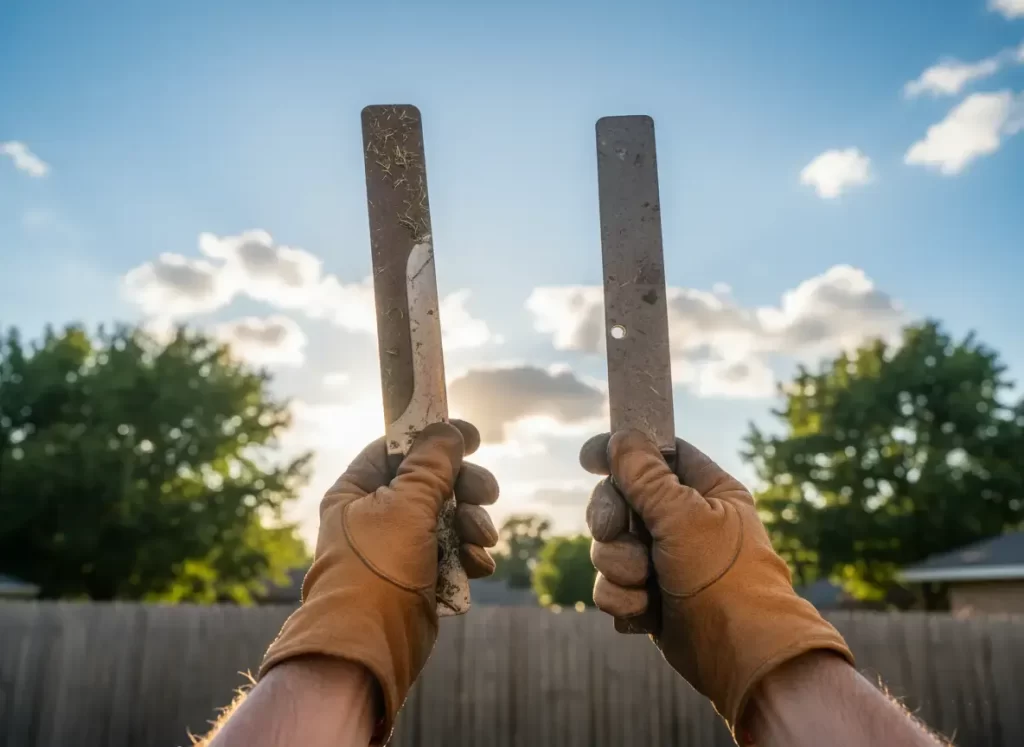
Standard blades are your basic, all-purpose option that comes with most mowers. They lift grass enough for a clean cut and decent discharge. If your lawn’s pretty standard without major challenges, these work fine. They’re the reliable workhorse of the blade world, nothing fancy, but they get the job done.
High-lift blades have taller sail sections (that’s the curved part on the end) that create more suction, pulling grass up aggressively before cutting. They’re fantastic for bagging and shooting clippings far into your discharge chute. The tradeoff? They require more engine power and can stir up dust in dry conditions. One customer switched to high-lift blades on his zero-turn and swore his bagging system worked twice as well. The downside was his smaller engine struggled a bit, but he thought the trade was worth it.
Mulching blades are my favorite for most homeowners. These have extra cutting surfaces and a curved design that keeps clippings under the deck longer, chopping them into tiny pieces. Good lawn mower blades in the mulching category will turn grass clippings into lawn food instead of yard waste. The key is keeping them sharp because they’re doing double the cutting work compared to standard blades.
Low-lift blades are less common, but useful for sandy or dusty conditions where high-lift blades would create a dust storm. They cut close to the deck and discharge gently. I don’t sell many of these, but when someone needs them, nothing else works as well.
Gator-style blades feature aggressive teeth along the cutting edge. They excel at chopping leaves and thick grass, but need frequent sharpening because all those serrations dull faster. I’ve replaced plenty of these in the fall after homeowners mow leaves all season. They’re worth it if you have lots of trees, but be ready to sharpen more often.
Here’s what matters when choosing best lawn blades for your situation. If you’ve got thick grass, you need high-lift or gator blades. Sandy soil? Go low-lift to minimize dust. What you do with clippings matters too. Bagging requires high-lift, mulching needs mulching blades (obviously), and side discharge works with standard or high-lift. Also, consider your mower power. Smaller engines struggle with high-lift blades, so match blade aggression to your engine size, or you’ll be frustrated every time you mow. For a detailed comparison of mulching vs bagging vs side discharge blade types, check our specialized guide that dives deeper into blade geometry and performance.
Blade Type Comparison Table
Blade TypeBest ForPower NeededLifespanPrice RangeCut QualityStandardGeneral mowing, side dischargeLow (10-12 HP)50-75 hours$8-$15GoodHigh-LiftBagging, tall grassHigh (15+ HP)60-80 hours$12-$25Excellent for baggingMulchingReturning nutrients, no baggingMedium (12-15 HP)40-60 hours$10-$25Excellent for fine clippingsGator/ToothedLeaves, thick grassMedium (12-15 HP)30-50 hours$15-$30Excellent for mulchingLow-LiftSandy/dusty conditionsLow (10-12 HP)60-80 hours$10-$18Good for dust control
Best Mulching Blades: Top Picks for Grass & Leaves
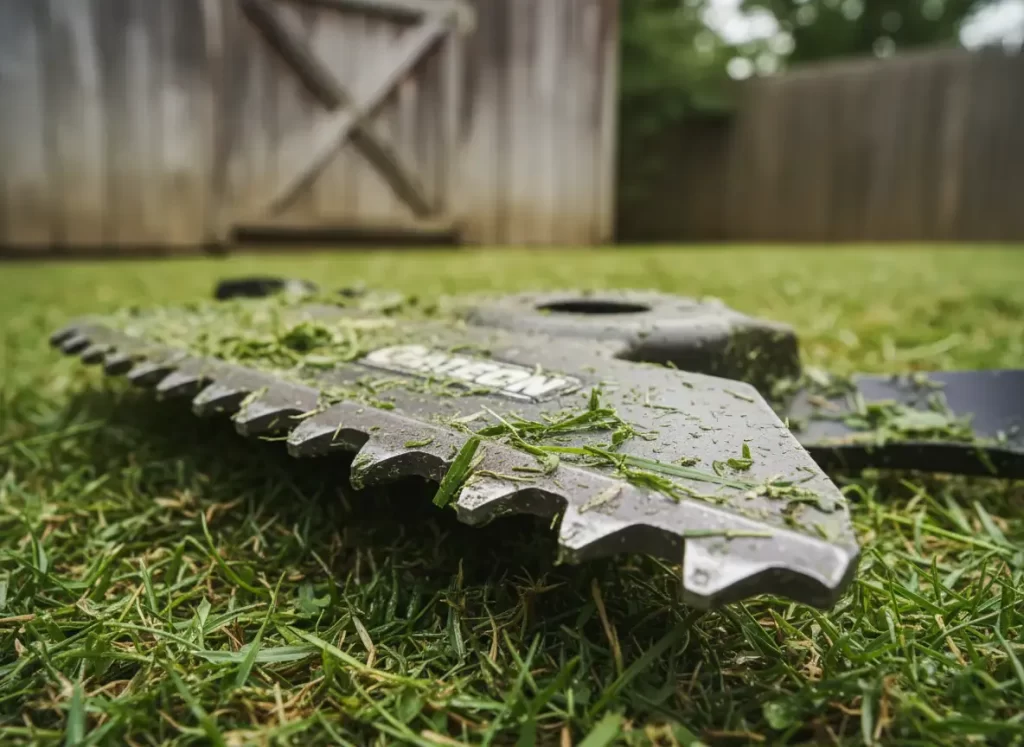
Best mulching blades have been gaining popularity in my shop. Research from university extension services shows that grass clippings can provide up to 25% of your lawn’s annual nitrogen needs when properly mulched. I’ve tested dozens of brands, and some definitely outperform others. If you’re interested in sustainable lawn care practices, our guide on eco-friendly lawn mower maintenance covers additional strategies for environmentally conscious mowing.
Oregon G5 Gator Mulching Blades remain my top recommendation after years of seeing them perform. The fusion of gator teeth and mulching design creates wonderful clippings. I put these on my own mower and rarely see clippings on the lawn surface anymore. They’re compatible with most residential mowers, run about $15-25 per blade, and the tungsten carbide coating keeps them sharper longer. Homeowners report 30-50% longer sharpening intervals compared to standard blades, which is huge if you hate sharpening as much as I do.
The pros are exceptional mulching performance, durable coating, and leaves virtually disappear. The cons? They’re slightly more expensive, and you need to clean them more frequently because they mulch so efficiently. All that chopped grass builds up faster under the deck.
Rotary Corporation MaxPower Mulching Blades offer solid budget performance. At $10-15 per blade, they’re perfect for folks who want mulching capability without premium pricing. I’ve installed hundreds of these on Craftsman and Husqvarna mowers. Speaking of equipment choices, our lawn mower comparison guide helps you understand which mower types work best with different blade configurations. They mulch well in normal conditions but struggle with wet leaves. If you’re just mulching regular grass clippings, these work fine. Try to mulch a yard full of oak leaves in October, and you’ll wish you’d spent more.
Best mulching blades for leaves deserve special mention because fall cleanup is brutal on standard blades. The MaxPower Commercial Mulching Blades feature extra-thick construction (0.250″ versus standard 0.187″) that handles leaf volume without bending. I recommend these to customers with lots of mature trees. They cost $20-30 per blade but survive entire seasons of leaf mulching, where cheaper blades would need replacement. I learned this the hard way with my own yard when I tried using regular blades to mulch leaves one fall. Bent two blades in a month before I wised up.
For serious leaf management, nothing beats Copperhead Mulching Blades with their aggressive tooth pattern. They turn oak leaves into confetti. I’ve seen lawns with 6 inches of leaves reduced to barely visible mulch with two passes. The downside? They’re loud. Really loud. And they’ll wear out faster than smooth-edge mulchers, needing sharpening every 8-10 hours of leaf work. But if you hate raking, they’re worth the noise.
Top Mulching Blades Comparison
Brand/ModelPriceThicknessBest UseSharpening IntervalNoise LevelOregon G5 Gator$15-$250.203"All-purpose mulching30-40 hoursModerateMaxPower Standard$10-$150.187"Light mulching, budget15-20 hoursLowMaxPower Commercial$20-$300.250"Heavy leaves, commercial25-35 hoursModerateCopperhead$22-$320.220"Extreme leaf mulching8-10 hoursHigh
Best High Lift Mower Blades: Maximum Discharge Performance
When you need serious grass evacuation, best high lift mower blades are the answer. These blades create massive airflow under the deck, which is exactly what you want for bagging or when you’re cutting tall, thick grass.
Hi-Lift Blades by Stens have dominated professional landscaper orders in my experience. The 3-inch sail height generates incredible suction. I’ve watched these blades fill bagger systems 25% faster than standard blades on the same mower. They’re made from heat-treated alloy steel and typically last 150-200 hours before needing replacement. At $18-25 per blade, they’re priced right for commercial use. I’ve got landscaping crews who won’t use anything else because the time savings add up fast when you’re bagging all day.
Oregon High-Lift Blades offer another reliable option with slightly less aggressive lift. These work brilliantly on residential zero-turns and riding mowers where you want excellent bagging without maxing out your engine. A customer with a Cub Cadet told me his bagger finally worked properly after switching to these from the factory blades. He’d been cursing his mower for a year, thinking the bagger was defective, but it was just weak blades.
Rotary Hi-Lift Premium Blades target the budget-conscious market at $12-18 per blade. They’re not as robust as Stens, but for homeowners mowing weekly, they deliver solid performance. I’ve noticed they wear faster on commercial equipment where they’re running 6-8 hours daily. If you’re a homeowner who mows once a week, these will serve you fine. Professional crews should spend more on better blades.
Here’s the reality about high lift blade mower setups: they require more horsepower. I’ve seen too many people install high-lift blades on underpowered mowers and wonder why the engine bogs down. Your mower needs at least 15 HP for 42″ decks with high-lift blades, and more for larger decks. I had a customer try running high-lift blades on his 12 HP push mower once. Once. The engine stalled so many times he thought he’d broken something. Switched him back to standard blades, and the mower ran fine again.
Best applications include bagging grass clippings, cutting tall or thick grass before it goes to seed, side-discharging long distances, and spring cleanup when grass grows aggressively. For more on preparing your mower for peak spring performance, see our spring lawn care checklist with detailed maintenance steps. Not ideal for mulching (they discharge too quickly), dusty or sandy conditions (they create dust clouds), smaller engines under 12 HP, or scalping-prone terrain (extra lift can worsen scalping).
Heavy Duty Lawn Mower Blades: Built for Tough Conditions
Heavy duty mower blades changed my mind about blade longevity. Early in my career, I assumed all blades were basically the same steel with different shapes. Then I started seeing commercial landscapers who’d go through standard blades in 40 hours versus heavy duty lawn mower blades lasting 150+ hours. The difference comes down to material quality and heat treatment.
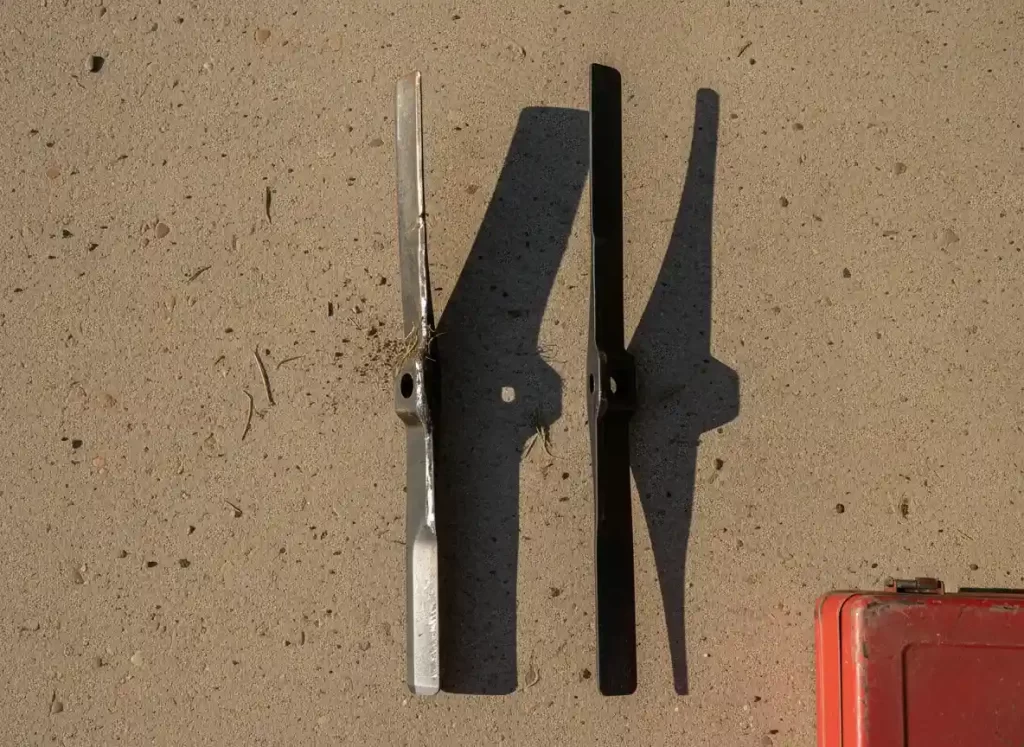
USA Mower Blades Heavy Duty Series represents the gold standard I’ve encountered. These blades use 1095 spring steel with through-hardening, not just edge-hardening like cheap blades. At 0.250″ thickness, they resist bending when you hit roots, rocks, or that metal sprinkler head you forgot about. I’ve pulled these off commercial mowers after a full season, and they still had decent edge life. They run $25-35 per blade, which seems expensive until you calculate replacement frequency.
Predator2 Heavy Duty Blades offer similar durability with boron steel construction. These handle abrasive conditions like sandy soil or properties with lots of gravel better than anything else I’ve tested. A golf course maintenance crew I work with switched to these and cut their blade replacement costs by 60%. Professional operations running commercial lawn mowers especially benefit from premium blade investments that reduce downtime and maintenance costs. Tungsten carbide ranks 9 on the Mohs hardness scale, making it one of the hardest materials used in cutting tools.
High performance lawn mower blades from the MaxPower Commercial line provide a middle ground. They’re tougher than standard residential blades but cost less than premium heavy-duty options at $18-24 per blade. Perfect for serious homeowners who mow large properties or side-hustle landscapers building their business.
One lesson from the shop: a landscaper brought in a mower with standard blades that looked like someone had taken a grinder to them. Turns out he’d been cutting properties with hidden rocks and roots. I switched him to Predator2 heavy-duty blades, and six months later, they still looked decent. That’s the difference proper materials make.
What makes blades “heavy duty” includes thicker steel (0.250″ versus standard 0.187″ resists bending and breaking), better heat treatment (through-hardening versus edge-hardening prevents stress cracks), quality alloys (boron steel or 1095 spring steel outlast standard carbon steel), and carbide coatings (tungsten carbide or titanium nitride extend edge life 3-5 times.
High quality mower blades and high performance mower blades share these characteristics. Don’t let marketing fool you. Check the actual specifications for thickness and steel type.
Heavy Duty Blade Performance Comparison
Brand/ModelSteel TypeThicknessTypical LifespanPriceBest ForUSA Mower Heavy Duty1095 Spring Steel0.250"150-200 hours$25-$35Commercial, rocky terrainPredator2Boron Steel0.250"150-180 hours$28-$38Sandy soil, abrasive conditionsMaxPower CommercialHigh-Carbon Steel0.220"80-120 hours$18-$24Large properties, semi-professionalStandard ResidentialCarbon Steel0.187"40-60 hours$8-$15Light residential use
Best Mower Blades for Zero Turn: Commercial-Grade Performance
Zero-turn mowers demand different blade characteristics than standard riders or walk-behinds. The high blade tip speed and aggressive cutting patterns on zero-turns will quickly expose weak blades. After servicing commercial zero-turns for years, I’ve identified which best mower blades for zero turn actually hold up. If you’re shopping for a zero-turn or want to understand these machines better, our complete zero turn buyer’s guide covers selection, features, and maintenance. We also have a dedicated article on zero turn mower blades and sharpening techniques specific to these high-performance machines.
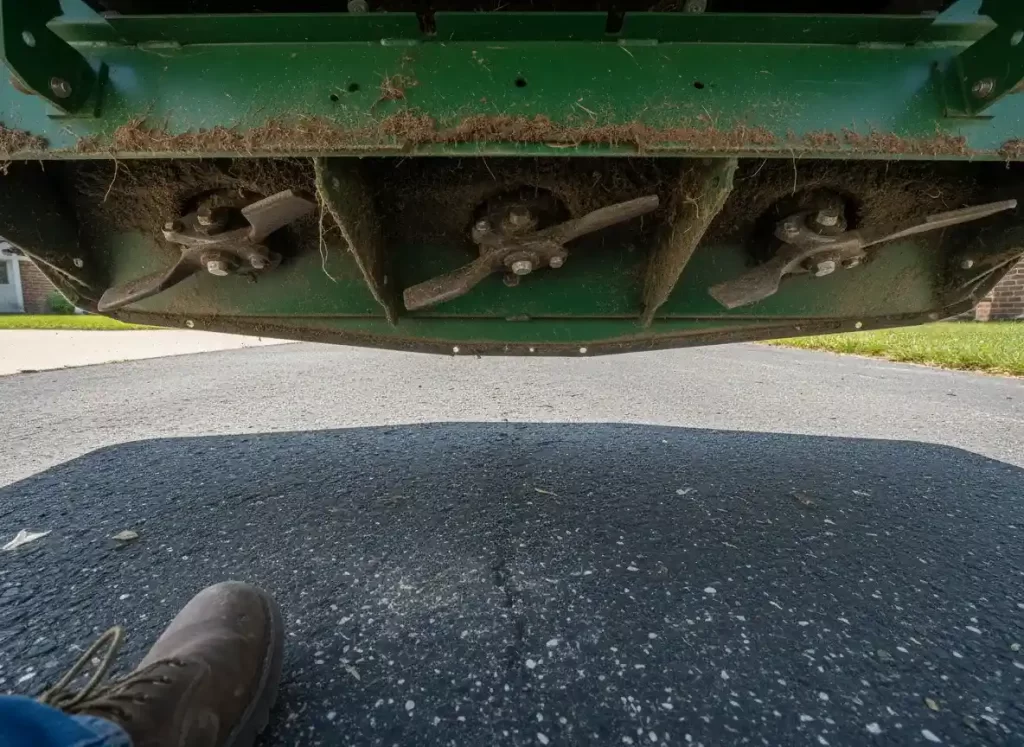
Commercial-grade zero-turn blade requirements differ from residential needs. You need a minimum 0.203″ thickness to resist flex at high RPMs, balanced within 0.5 grams to prevent deck vibration, heat-treated steel that handles 18,000+ blade tip speed, and compatibility with spindle assemblies rated for commercial use.
Best zero turn blades by category look like this:
For mulching, Oregon G6 Gator blades dominate commercial zero-turn mulching. The aggressive tooth design and thick construction handle the high blade speeds without warping. I’ve installed these on Exmark, Scag, and Toro Z-Masters with excellent results. They cost $22-30 per blade but deliver premium mulching even in challenging conditions. Customers report that grass clippings virtually disappear, even when cutting wet grass.
For bagging, Stens Hi-Lift blades engineered for zero-turns create the airflow needed to fill large bagger systems quickly. The extra-tall sail and precision balance prevent the deck vibration that plagues cheaper blades at high speeds. A lawn care company I service replaced their entire fleet’s blades with these and cut their bagging time by nearly 20%.
For general-purpose use, MaxPower Commercial blades offer excellent value for property maintenance companies. At $15-20 per blade, they provide reliable cutting and reasonable durability. They’re not as robust as premium options but work well for commercial crews on a budget.
Best commercial mower blades need proper maintenance. I’ve seen commercial operators run blades until they’re rounded nubs, then wonder why their cut quality stinks. Sharpen every 8-10 hours of cutting, or daily for full-time commercial use. Check the balance after sharpening because unbalanced blades destroy spindle bearings fast on zero-turns.
Best Blades for Cub Cadet, Toro & John Deere: Brand-Specific Guide
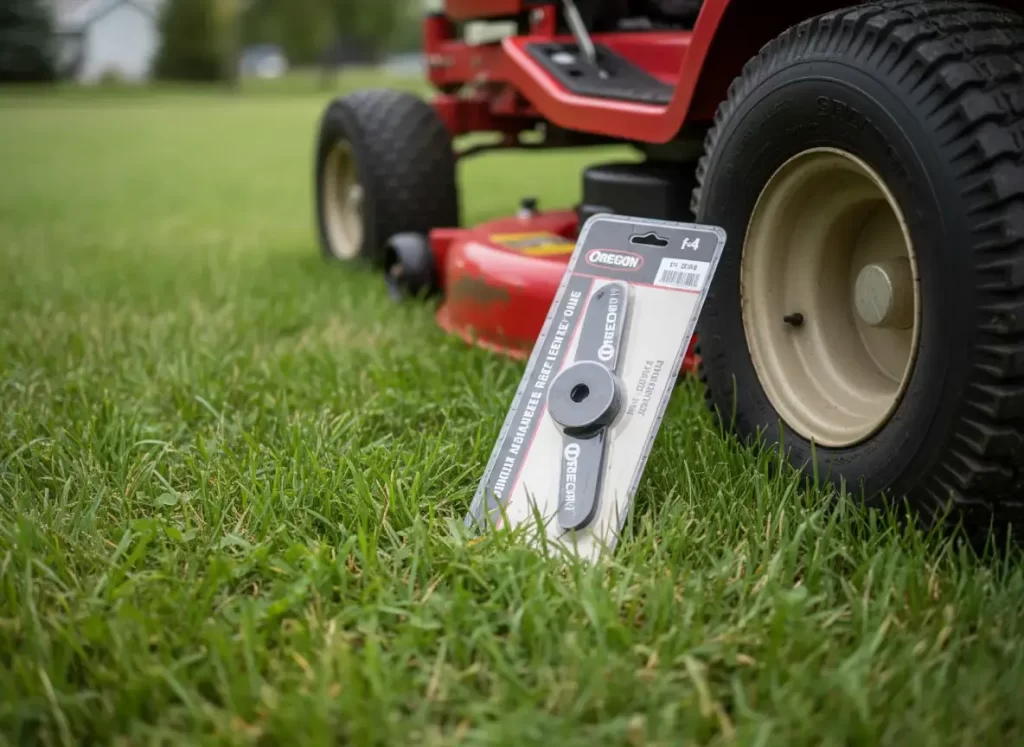
Brand-specific blade compatibility matters more than most people realize. Using incorrect blade dimensions or mounting holes causes vibration, poor cutting, and potential safety issues. Here’s what I’ve learned about outfitting various equipment brands.
Best blades for Cub Cadet zt1 50 require 50-inch deck compatibility with specific length blades (16-3/4″ on most zt1 50 models). The factory blades are adequate, but upgrading makes a noticeable difference. Oregon G5 Gator blades (part #596-354) fit perfectly and provide superior mulching. For bagging, Stens Hi-Lift blades (part #355-347) dramatically improve collection efficiency. I’ve swapped dozens of ZT1 50 blade sets, and customers consistently report better cut quality with aftermarket upgrades.
Best blades for Cub Cadet zt1 54 use the same principles but with 54-inch deck specifications (typically 18-inch blades). The wider deck creates different airflow dynamics, so blade choice matters even more. MaxPower Commercial blades (part #331740) offer excellent all-around performance at a reasonable cost. For dedicated mulching on zt1 54 models, Copperhead Mulching blades deliver the finest clippings I’ve seen.
Best blades for Toro timecutter 42 inch mowers benefit from Toro’s specific blade design with offset mounting holes. For comprehensive information on the TimeCutter series performance and specifications, read our Toro TimeCutter zero turn review. Don’t use universal blades here. The mounting geometry differs from standard center-hole designs. Oregon High-Lift blades (part #396-730) maintain Toro’s specifications while improving performance. For mulching, Toro Recycler blades (part #131-4547-03) outperform aftermarket options because they’re engineered for Toro’s deck geometry.
John Deere Zero-Turn Blades need special attention. John Deere’s ‘Twistlock’ blade system on newer models requires specific blade types. To learn more about John Deere’s various models and their unique features, check our John Deere riding lawn mower guide. Standard blades won’t fit, and forcing incompatible blades risks serious damage. For John Deere 42-inch decks, the OEM High-Lift blades (part #GY20850) work reliably. Aftermarket options like Stens John Deere compatible blades cost less, but verify they fit your specific model year.
Critical compatibility factors include blade length (must match deck size exactly, tolerance under 1/8″), center hole (diameter and shape like round, star, or curved must match spindle), thickness (too thin causes flex while too thick may not fit some decks), sail height (extremely tall sails can contact deck baffles), and overall width (wide blades may interfere with discharge chutes).
I’ve dealt with too many customers who bought “universal” blades that technically fit but caused problems. One guy installed bargain-bin blades on his John Deere that vibrated so badly they cracked his deck. Always verify exact compatibility before purchasing.
Brand-Specific Blade Compatibility Guide
Mower ModelDeck SizeBlade LengthRecommended UpgradePart NumberPriceCub Cadet zt1 5050"16-3/4"Oregon G5 Gator596-354$22Cub Cadet zt1 5454"18"MaxPower Commercial331740$19Toro Timecutter 4242"16-1/2"Oregon High-Lift396-730$18John Deere 42"42"15-3/4"OEM High-LiftGY20850$24
Best Push Mower Blades: Residential Quality Testing
Best push mower blade selection matters even on small walk-behind mowers. The right blade transforms a mediocre push mower into a precise cutting machine, while poor blades make even expensive mowers perform terribly.
Push mower blades face unique challenges. Lower blade tip speeds than riders (12,000-15,000 FPM versus 18,000+ FPM), more impacts from hitting obstacles at ground level, often operated by less experienced users who may hit harder objects, and typically cheaper mowers with less robust spindles.
Better lawn mower blades for push mowers should prioritize durability over extreme performance. Push mower engines lack the power for super-aggressive blades anyway. A well-built standard blade outperforms a flimsy high-lift blade every time.
Rotary MaxPower Universal Push Mower Blades are my go-to recommendation for most homeowners. At $8-12 per blade, they’re affordable and available for nearly every push mower brand. The 0.187″ thickness handles typical residential use well. I keep these in stock because they fit Honda, Toro, Craftsman, and most other push mowers with minor measurement verification. For help selecting the right push mower for your yard size and budget, our walk-behind lawn mower guide provides detailed reviews and recommendations.
Oregon Push Mower Blades cost slightly more ($12-16) but offer superior edge retention. The heat-treated edge stays sharp longer, which matters when you’re cutting grass weekly. A customer switched from cheap blades to Oregon and told me he went from sharpening monthly to sharpening 2-3 times per season.
For mulching, Arnold Universal Mulching Blades work surprisingly well on push mowers. They’re thicker (0.203″) to handle the extra cutting demands of mulching. At $15-18, they’re worth it if you mulch regularly. Just make sure your push mower has a mulching plug. Mulching blades without a plug just make a mess.
What to avoid are those ultra-cheap hardware store blades (under $7) that bend if you look at them wrong. I’ve replaced dozens of these for customers who thought they were saving money. They dull in hours and often have poor balance, causing vibration that damages engine bearings.
One of my early mistakes: I bought the cheapest push mower blade I could find for my own mower. Hit a buried brick on the second mow and bent it like a banana. Learned that lesson the hard way. Spend $12-15 on a decent blade and avoid the headache.
High Performance & Quality: Premium Blade Materials Explained
Understanding what makes high performance mower blades and high quality mower blades actually better requires looking past marketing claims at real metallurgy. After examining hundreds of failed blades under a microscope and working with blade manufacturers, I’ve learned what separates premium from garbage.
Steel types and their properties matter more than most people realize.
Standard Carbon Steel (1045/1050) is what most basic blades use. It’s cheap, cuts fine when sharp, but dulls quickly, and can’t handle abrasive conditions. Budget blades under $10 almost always use basic carbon steel with minimal heat treatment.
High-Carbon Steel (1065/1075) is where mid-grade blades step up to higher carbon content, which allows better heat treatment and edge retention. These blades hold sharpness 50-70% longer than basic carbon steel. Most quality blades in the $12-20 range use this material.
Boron Steel is what premium blades use for exceptional toughness and wear resistance. Boron steel resists bending and holds an edge even in sandy, abrasive conditions. Best mower blades in the professional category typically feature boron steel. Expect $25-40 per blade.
According to metallurgy standards, 1095 spring steel contains approximately 0.95% carbon content, which provides exceptional hardness when properly heat-treated. Used in high-end Japanese blades and premium American commercial blades. It combines extreme hardness with enough flexibility to resist breaking. Blades made from 1095 steel can cost $30-50 but will outlast standard blades by 3-5 times.
Heat treatment quality matters as much as steel type. Cheap blades receive minimal heat treatment, just enough to harden the cutting edge superficially. Impact a rock and the edge chips off because the underlying steel is soft.
Quality blades undergo through-hardening or differential hardening. Understanding blade metallurgy is just one aspect of proper maintenance. Our comprehensive lawn mower maintenance and troubleshooting guide covers all aspects of keeping your equipment running smoothly. Through-hardening means the entire blade is hardened uniformly, creating consistent strength. Differential hardening means the edge is extremely hard (HRC 58-62) while the body is tougher (HRC 42-48), combining edge retention with impact resistance.
Protective coatings add another performance layer. Tungsten carbide uses micro particles of tungsten carbide to create an incredibly hard surface that resists abrasion. Blades with carbide coating last 3-5 times longer between sharpenings. The coating adds $5-10 to blade cost but saves far more in maintenance time.
Titanium Nitride (TiN) is that gold-colored coating that reduces friction and prevents grass buildup on the blade surface. It also improves corrosion resistance. The slippery surface helps with mulching efficiency.
Powder coating is just basic paint protection that prevents rust but offers minimal performance benefit. Better than nothing, worse than proper metallurgical coatings.
I tested blade durability by running different blades for measured hours in identical conditions (same mower, same property, same grass). Standard carbon steel blades need to be sharpened every 8-10 hours. High-carbon blades went 15-18 hours. Boron steel blades with carbide coating lasted 35-40 hours before needing attention. The math is simple: premium blades cost 2-3 times more but last 4-5 times longer.
Blade Material Performance Comparison
Material TypeHardness (HRC)Edge RetentionImpact ResistanceTypical PriceBest ForBasic Carbon Steel45-50Poor (8-10 hrs)Low$7-$10Light residential onlyHigh-Carbon Steel52-56Good (15-18 hrs)Moderate$12-$20Regular homeownersBoron Steel56-60Excellent (30-35 hrs)High$25-$35Commercial, abrasive conditions1095 Spring Steel58-62Superior (35-45 hrs)Very High$30-$50Professional, demanding use
How to Sharpen Lawn Mower Blades: Best Methods & Tools
The best way to sharpen lawn mower blades combines proper technique with quality tools. I’ve sharpened thousands of blades over the years, and the difference between a properly sharpened blade and a poorly sharpened one shows immediately in cut quality.
The Consumer Product Safety Commission reports thousands of lawn mower injuries annually, with many occurring during maintenance. Always follow proper safety protocols. For comprehensive safety protocols when working on any mower, review our lawn mower safety guide covering proper handling, maintenance, safety, and operational best practices. Wear heavy gloves because even dull blades can cut you badly. Mark the blade’s orientation before removal so you reinstall it correctly (the sail should point upward toward the deck).
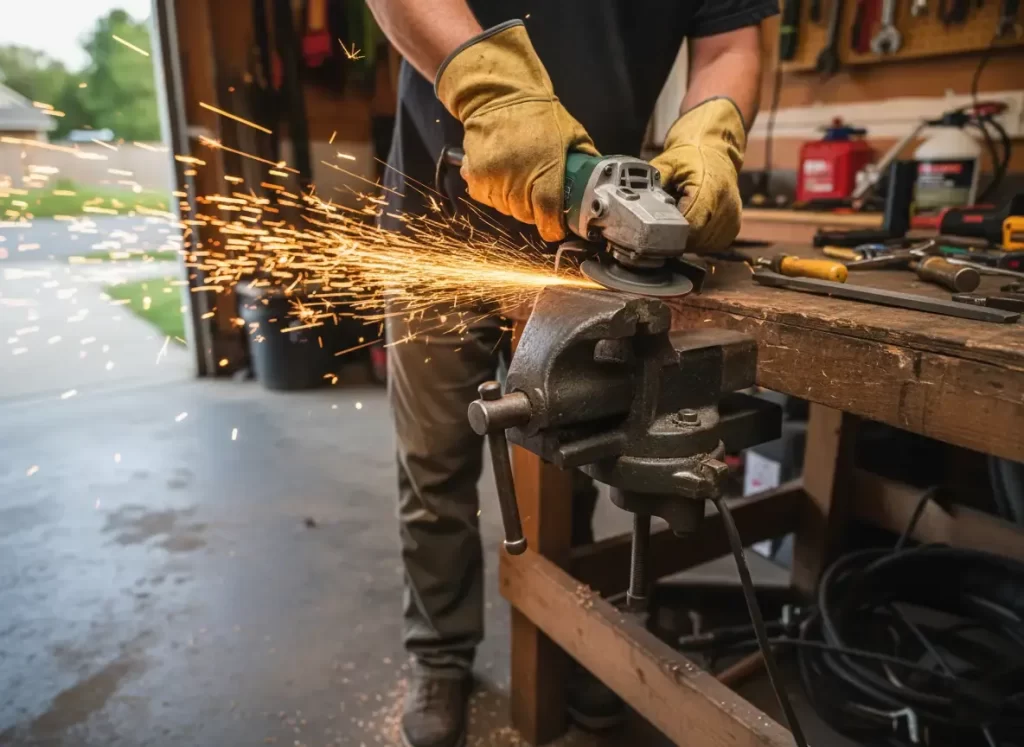
Best way to sharpen mower blades using my preferred method involves an angle grinder with a flap disc. This is how I sharpen blades in the shop. A 4.5″ angle grinder with 40-60 grit flap disc removes material quickly while maintaining the original blade angle (typically 30-35 degrees). Follow the existing bevel angle and make smooth passes along the cutting edge. Don’t overheat the blade. Keep it cool to the touch.
Pros are fast, professional results, and good edge geometry. Cons require a steady hand, and it’s easy to remove too much material for beginners.
Bench grinders work for many homeowners, and they work fine with proper technique. Use the side of the wheel, not the face, to maintain the correct angle. Keep the blade moving to prevent overheating. If you see blue discoloration, you’ve ruined the temper and weakened the steel.
Pros include a stable setup and can sharpen quickly once you get the technique. Cons include the risk of overheating and can be aggressive for beginners.
Best way to sharpen lawnmower blade for beginners involves hand filing. The safest method for learning. Use a 10-inch mill bastard file (about $12) and work in smooth, one-direction strokes following the blade’s angle. It takes 10-15 minutes per blade but gives excellent control. This is how I learned, and I still recommend it for folks without power tools. For a complete visual step-by-step process, check our detailed blade sharpening tutorial with photos and technique tips.
Pros are safe, impossible to overheat, and have good control. Cons are time-consuming and physically tiring.
Blade sharpening tools like specialized blade sharpeners (Oregon Blade Grinder at $35-50 or similar units) attach to drills. They work okay for occasional use, but don’t create as clean an edge as proper files or grinders. I’ve used them in a pinch, but they’re not my first choice.
Critical sharpening rules you need to follow:
First, maintain the original angle. Don’t try to make blades “sharper” by creating a thinner angle. The factory angle is engineered for durability and cutting efficiency.
Second, remove equal amounts. Sharpen both cutting edges the same amount to maintain balance. Unbalanced blades cause severe vibration.
Third, check the balance. After sharpening, balance the blade on a nail or blade balancer ($8-15 tool). The blade should sit level. If one side dips, remove material from the heavy side until balanced.
Fourth, smooth burrs. After sharpening, flip the blade over and lightly file the back edge to remove the burr created by sharpening. This burr will fold over during cutting and dull the blade quickly.
Fifth, don’t sharpen too much. If the blade’s cutting edge has worn back 1/2 inch or more from the original width, replace it. Over-sharpened blades are weak and dangerous.
How often to sharpen depends on use. Residential use needs sharpening every 20-25 hours of cutting (roughly monthly for most homeowners). Commercial use requires sharpening every 8-10 hours minimum. After hitting hard objects, check immediately and sharpen if damaged. When grass looks ragged after mowing, your blade’s dull.
I had a customer bring in a mower with cut quality so bad I thought the engine was dying. Turns out he’d never sharpened his blade in three years. One proper sharpening and his mower cut like new. Don’t let dull blades ruin your lawn.
Pro tip: keep two sets of blades. When one set gets dull, swap in the sharp set and sharpen the dull ones at your convenience. This approach saves time and keeps your mower ready to work. When your mower won’t start or runs poorly, it’s often not the blade. Check our complete troubleshooting guide to diagnose and fix common engine problems.
For thick grass, high-lift or gator-style blades work best. The increased suction pulls grass upright before cutting, handling dense growth better than standard blades. I’ve had great results with Oregon G6 Gator blades and Stens Hi-Lift blades on properties with thick fescue or St. Augustine. Make sure your mower has enough horsepower, though. Underpowered engines struggle with aggressive blades in thick grass. If your mower bogs down, you may need to stick with standard blades and make more frequent cuts.
Heavy-duty blades made from boron steel or 1095 spring steel with tungsten carbide coating last longest. USA Mower Blades Heavy Duty Series and Predator2 blades routinely last 150+ hours before needing replacement, versus 40-60 hours for standard blades. The thicker construction (0.250″ versus 0.187″) and superior heat treatment justify the higher cost if you mow frequently or deal with abrasive conditions like sandy soil.
It depends on what you’re doing. High-lift blades excel at bagging and discharging clippings, creating strong airflow that evacuates grass quickly. Mulching blades are better for returning nutrients to your lawn and eliminating bagging chores. I use mulching blades on my own lawn because I prefer the fertilizing benefit and hate emptying bags. Choose based on your preference: bagging equals high-lift, mulching equals mulching blades, and side discharge works with either.
For beginners, hand filing with a mill bastard file is safest and most foolproof. More experienced folks can use an angle grinder with a flap disc for faster results. The key is maintaining the original blade angle (30-35 degrees), keeping the blade cool to avoid damaging the temper, and balancing the blade after sharpening. I’ve seen too many people ruin blades by grinding them too thin or creating uneven edges. Take your time and check your work.
Oregon, USA, Mower Blades, and Stens consistently deliver the most durable blades in my experience. These manufacturers use quality steel, proper heat treatment, and strict quality control. For budget-conscious buyers, MaxPower Commercial blades offer decent durability at lower prices. Avoid generic hardware store blades under $8. They’re made from inferior steel and wear out incredibly fast.
Heavy-duty blades don’t necessarily cut better when new, but they maintain cutting performance far longer. The thicker steel resists bending and edge rolling that degrades cut quality on standard blades. After 30-40 hours of use, heavy-duty blades still cut well, while standard blades have lost their edge geometry and cut roughly. For commercial operations or serious homeowners, heavy-duty blades provide more consistent performance over their lifespan.
Zero-turn mowers need blades designed for high blade tip speeds and commercial-grade durability. Oregon G6 Gator blades work brilliantly for mulching, while Stens Hi-Lift blades excel at bagging. MaxPower Commercial blades offer good value for general-purpose cutting. Always verify compatibility with your specific zero-turn model. Deck size, mounting hole configuration, and blade length must match exactly to prevent vibration and poor cutting.
Replace blades when they’ve been sharpened so many times that the cutting edge has worn back 1/2 inch or more from the original width, or if you see cracks, severe bends, or chunks missing from the blade. For residential use, quality blades typically last 2-3 seasons before replacement. Commercial operators might replace blades several times per season, depending on hours and conditions. Don’t wait until blades are dangerously worn. Degraded blades become projectiles if they break during operation.
