
Best Commercial Lawn Mowers 2025: Professional Equipment Guide
Look, I’m going to level with you right from the start. Choosing a commercial lawn mower for your business isn’t like picking out a new pair of work boots. It’s more like… well, it’s like choosing a business partner who shows up every single day (whether you want them to or not) and either makes your life easier or becomes your biggest headache.
Table of Contents
▼- Why Commercial Lawn Mowers Are Essential for Professional Success
- The Ultimate Commercial Lawn Mower Buying Guide
- Best Commercial Zero Turn Mowers: Top Professional Picks
- Commercial Lawn Mower Comparison: Top 5 Zero-Turn Models
- The Complete Comparison Chart
- What These Numbers Actually Mean
- The Features That Actually Matter Daily
- My Honest Take on Each Machine
- How to Use This Comparison
- Essential Maintenance Schedule for Commercial Lawn Mowers
- Daily Commercial Lawn Mower Maintenance (5-10 Minutes)
- Weekly Maintenance (30 Minutes Friday Afternoon)
- Every 50 Hours (or Monthly During Season)
- Every 100 Hours (or End of Season)
- Annual Maintenance (Every Off-Season)
- The Real Cost of Maintenance
- Creating a Maintenance Log System
- Training Your Team
- The Bottom Line on Maintenance
- Commercial Walk Behind & Push Mowers: Versatile Options
- Brand Spotlight: Top Commercial Lawn Mower Manufacturers Compared
- Where to Find Commercial Mowers for Sale: Dealer Guide
- ROI Analysis: Justifying Your Commercial Lawn Mower Investment
- Conclusion: Choosing the Right Commercial Lawn Mower for Success
I’ve been around this industry long enough to watch businesses rise and fall based partly on their equipment choices. Sounds dramatic? Maybe. But I’ve also watched a promising startup lose three major contracts in one summer because their “commercial-grade” mowers kept breaking down. Their clients didn’t care about excuses – they just saw brown grass and moved on to someone more reliable.
The commercial lawn mower market right now is honestly a bit overwhelming. Every manufacturer claims their equipment is commercial-grade, built to last, engineered for professionals… and some of them are flat-out lying. Or at least stretching the truth so thin you can see right through it. We’re seeing legitimate innovations – battery technology that actually works, suspension systems that don’t just shake your fillings loose, cutting decks designed with actual physics instead of guesswork. But separating real advances from marketing hype? That takes experience.
This guide is going to walk you through everything I’ve learned about selecting commercial lawn mowers over 11+ years in this business. Some of it comes from textbooks and certifications (I’ve got the B.S. in Horticulture from Texas A&M to prove it). But most of what I’m sharing comes from real yards, real breakdowns, real conversations with crew leaders at 6 AM when their mower won’t start and they’ve got eight properties scheduled for seasonal lawn maintenance.
Whether you’re just starting – maybe you’ve been doing lawns on weekends and you’re ready to make it official – or you’re running an established operation looking to upgrade, we’re going to cover the machines that actually perform. Not the ones that look good in showrooms.
Why Commercial Lawn Mowers Are Essential for Professional Success
Okay, story time. And this one still makes me wince a little because I should have known better.
About seven years back, I was consulting with this guy – let’s call him Marcus – who was starting a landscaping company. Smart guy, good with people, understood lawns. But he wanted to bootstrap everything, keep costs minimal. I get it, right? Cash flow is real, especially at the start. So Marcus bought three residential zero-turn mowers at about $3,200 each. They looked decent. Had decent reviews from homeowners. And for the first month… actually worked pretty well.
Then June hit. Texas June, which means it’s basically surface-of-the-sun hot and grass grows like it’s on steroids. Marcus and his crew were doing 25-30 lawns a week. By mid-June, one mower’s transmission started slipping. By July, all three were having issues. By August? He’d replaced two mowers completely, and the third was limping along. Oh, and he lost four clients because of scheduling problems caused by equipment failures.
When we tallied up the damage – replacement costs, lost revenue, emergency repairs – Marcus had spent nearly $11,000. Almost three times what decent commercial lawn mowers would have cost initially.
The thing is, residential mowers aren’t built badly (usually). They’re just built for different use. It’s like expecting a sedan to do the job of a work truck. Sure, you can load construction materials in a Toyota Camry’s trunk… but should you? And how long before something breaks?
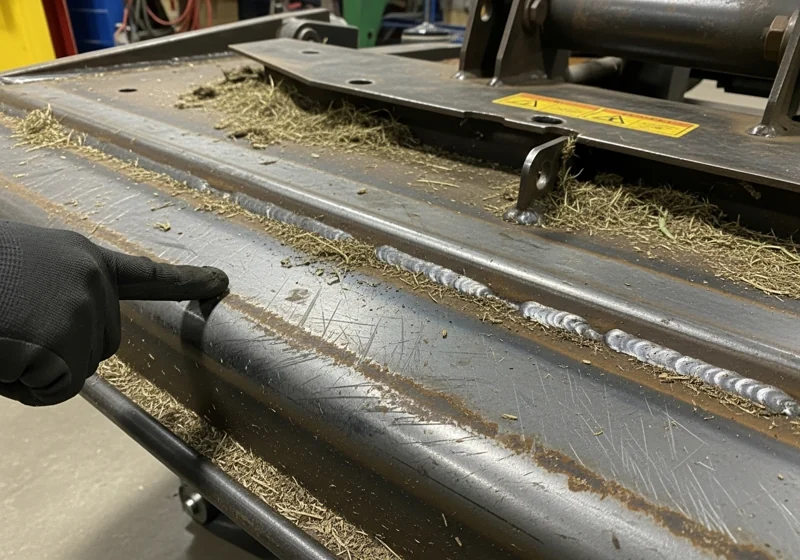
Commercial lawn mowers get built from the ground up for punishment. I’m talking 7-gauge steel decks versus the 12 or 14-gauge stuff on residential models. Thicker steel isn’t exciting, I know – but when you hit a rock or stump (and you will), that extra thickness means “minor scratch” instead of “cracked deck requiring $800 repair.”
The engines tell an even bigger story. Most homeowner mowers use engines rated for maybe 300-500 hours before they’re cooked. My residential mower at home? I put maybe 30 hours on it per year. It’ll probably outlive me. But run that same engine 30-40 hours per WEEK? You’re looking at catastrophic failure within months.
Professional lawn mowers typically run Kawasaki FX series, Kohler Command Pro, or Briggs Vanguard engines. These aren’t just bigger – though they are – they’re engineered differently. Different metallurgy in the cylinder walls. Better cooling systems. Actual oil filters (some residential engines just have screens, which honestly blows my mind every time I think about it). To understand more about lawn mower engines and their specifications, check out our comprehensive engine guide.
These small engine design principles create significantly longer service life under commercial conditions.
Here’s where it gets interesting for your wallet. A quality commercial lawn mower can handle 2,000-3,000 hours of operation with proper maintenance. Let’s do quick math – if you’re running 30 hours weekly for 8 months a year, that’s roughly 960 hours annually. So you’re looking at 2-3 years minimum before you even start thinking about major overhauls.
Compare that to residential equipment that might give you 500 hours total. You’re replacing equipment 4-6 times over the same period. Even at lower per-unit costs, the math doesn’t work. And that’s not even counting the downtime, the lost revenue, the stress of wondering if today’s the day something breaks.
The performance gap matters too, though honestly it didn’t click for me until I spent a full day on both types back-to-back. With a residential zero-turn, you’re cutting maybe 0.5-0.75 acres per hour if you’re pushing it. A proper commercial zero turn mower? We’re talking 1.5-2.5 acres per hour depending on conditions. That’s not just faster – that’s “complete 8 properties instead of 4-5” faster.
I remember this one crew I worked with, they upgraded from pieced-together residential equipment to matched commercial walk behind mowers and zero-turns. Their daily property count jumped from an average of 14 to 22. Same crew. Same hours. Just better equipment that didn’t force them to slow down or stop for mechanical issues.
Your warranty situation tells you everything you need to know about what manufacturers really think of their equipment. Residential warranties? Usually 2-3 years for homeowner use. And buried in the fine print – sometimes in print so small you need a magnifying glass – there’s language that voids everything if you use it commercially. I’ve seen it happen. Guy buys a mower, uses it for his business, has a failure three months in, and… nothing. Zero coverage. Because technically he violated terms.
Commercial lawn mowers come with actual commercial warranties. Three to five years typically, sometimes with hour limits (like 1,500 hours), but they EXPECT business use. They WANT you running it hard. That’s the whole point. And the dealer network – we’ll get into this more later – actually stocks commercial parts and employs techs who work on this stuff all day.
One more thing, and then I’ll move on (I could honestly talk about this all day). Your reputation lives and dies on consistency. Residential clients, commercial properties – doesn’t matter. They want their grass cut when scheduled, cut well, and cut the same every time. You can’t deliver that consistency with equipment that might work great or might leave streaks or might just quit on you mid-job.
Professional lawn mowers let you promise quality and actually deliver it. Week after week, property after property. That consistency builds trust, which builds referrals, which builds a business that actually lasts.
The Ultimate Commercial Lawn Mower Buying Guide
Buying a lawn mower for business use is weird because there’s no perfect answer that works for everyone. I wish there was! It would make my job easier. But your third customer’s needs might be completely different from your thirtieth, and what works in Florida doesn’t necessarily work in Colorado.
Start by really – and I mean REALLY – looking at your customer base. Not what you think it is or what you want it to be. What it actually is right now.
If you’re doing mostly residential yards in suburbs, you’re probably looking at properties between 0.25 and 0.5 acres. For that kind of work, a 48-52 inch commercial zero turn mower becomes your workhorse. It’s maneuverable enough to handle landscaping obstacles (and suburban yards are full of obstacles – trees, playsets, decorative boulders that serve no purpose except to damage equipment). But it’s also productive enough that you’re not spending 45 minutes per property.
Now, I also recommend getting at least one commercial walk behind mower in the 32-36 inch range. Why? Gates. So many gates. You’ll schedule a property, show up, and discover they’ve got a 36-inch gate. Your 52-inch zero-turn becomes very expensive yard art at that point. The walk-behind gets you into those backyards, and honestly, they’re great for slopes too. Safer than zero-turns on anything over 10-12 degrees.
For companies working larger commercial properties – we’re talking office parks, HOA common areas, sports complexes – the strategy shifts. You want BIGGER decks, like 60-72 inches. And you want multiple machines so crews can work simultaneously. I consulted with one company maintaining a 35-acre corporate campus. They ran three 72-inch Scag commercial mowers and could knock out the entire property in about 6 hours with three operators. Try that with 48-inch decks and you’re looking at multiple days.
Here’s something most buying guides won’t tell you – fleet consistency matters more than getting the “best” individual machine. If you’re running multiple mowers, having them all from the same manufacturer makes everything easier. Your mechanics (even if that’s just you in the beginning) learn one system. You stock one set of parts. Blades, belts, filters – it’s all the same. Training new employees becomes simpler because they’re not learning three different control systems.
I know a landscaping company running six identical 60-inch commercial zero turn mowers. All Scag Turf Tigers. Their head mechanic can basically repair any machine in his sleep at this point. They negotiate bulk pricing on parts. When one mower goes down, they don’t lose productivity because every operator knows every machine.
That’s the kind of operational efficiency that doesn’t show up in spec sheets but absolutely shows up in your profit margins.
Engine selection… okay, this gets technical but stay with me because it matters. You’ll see Kawasaki, Kohler, and Briggs & Stratton on most professional lawn mowers. All three make solid commercial engines. But there are differences.
Kawasaki FX series engines have this almost cult following among landscapers. And honestly? It’s deserved. These engines just run. And run. And run. I’ve personally seen FX engines with over 3,500 hours still going strong. They cost more upfront – usually adds $500-800 to the mower price – but the longevity is real. The fuel injection models (becoming more common now) start easier and run better in varying conditions.
Kawasaki FX series engines have this almost cult following among landscapers.
Kohler Command Pro engines offer a really nice middle ground. Solid performance, good dealer support, slightly less expensive than Kawasaki. The newer EFI (electronic fuel injection) models are impressive. I tested one last year and the difference in starting, especially in cold weather, is noticeable.
Briggs Vanguard engines catch some flak from equipment snobs, but that’s mostly outdated thinking. The newer Vanguard big-block engines (like the 810cc models) are legitimately good. Maybe not quite the legendary durability of Kawasaki, but at $300-500 less, they make sense for budget-conscious operations.
One thing, though – and I learned this the hard way – avoid single-cylinder engines in commercial applications. They’re fine for homeowners. For commercial use? The vibration alone will shake you apart over a full day, and they just don’t have the power reserve for thick or wet conditions.
Deck design is another rabbit hole. Fabricated decks (welded from flat steel) dominate commercial equipment for good reason. You can actually repair them if they get damaged. Stamped decks – where they take one piece of steel and press it into shape – are cheaper to manufacture but basically impossible to fix properly if they crack. Understanding blade configurations and deck types is essential for choosing the right setup for your properties.
Pay attention to deck configuration, too. Side discharge handles the widest range of conditions. Mulching works great in the right situations (dry grass, regular cutting schedules), but can struggle with thick or wet grass. Bagging systems add versatility but kill your productivity because you’re constantly stopping to empty.
The transmission system separates decent mowers from great ones. Hydrostatic transmissions are basically standard in commercial equipment now. They give you infinite speed control – like a gas pedal in a car – instead of fixed gears. Makes for smoother operation and better control on slopes.
Hydrostatic transmission technology provides infinitely variable speed control.
But not all hydrostatic systems are equal! The Hydro-Gear ZT-3400 series is kind of the entry level for true commercial work. Fine for lighter commercial use. The ZT-5400 series (what you’ll find on premium machines) handles heavier loads and higher speeds without overheating. Some top-end mowers use ZT-6200 or ZT-7000 series – those are serious pieces of machinery designed for constant commercial use.
Now let’s talk money because you can’t avoid it (believe me, I’ve tried). Budget for a lawn mower for business needs to include way more than the sticker price.
Initial purchase – you’re looking at $8,000-$15,000 for a solid commercial zero turn mower. Yeah, I know. That’s real money. But break it down over expected life (let’s say 2,500 hours) and you’re at $3.20-$6.00 per operating hour just for the equipment cost.
Then add:
- Financing costs if you don’t pay cash (though 0% dealer financing is common)
- Commercial equipment insurance, maybe $300-400 yearly
- Maintenance fund – budget $600-800 per year minimum
- Fuel at current prices (diesel or gas depending on engine)
- Replacement fund – sock away maybe 15% of original cost annually
Most businesses finance equipment because tying up $30,000-40,000 in mowers drains working capital you need for, you know, actually running the business. With 0% promotional financing (watch for these – they happen several times yearly), you’re basically getting a free loan. Why wouldn’t you take it?
Dealer relationships – and I cannot stress this enough – matter as much as equipment choice. Maybe more. The cheapest price from some random internet seller might look attractive until your mower needs warranty work and you’re searching for a service center that’ll actually work on it.
Find dealers with dedicated commercial programs. They should have:
- Service bays specifically for commercial equipment
- Mechanics who’ve actually worked on commercial machines (not just residential)
- Parts in stock for common items
- Loaner programs for when your equipment goes down
- Understanding of business scheduling needs
A good dealer becomes a business partner. A bad dealer becomes an excuse you’re making to angry clients about why their grass didn’t get cut.
Best Commercial Zero Turn Mowers: Top Professional Picks
Commercial zero turn mowers changed everything for landscaping businesses. Before these machines became reliable and affordable (relatively speaking), you were either walking behind mowers all day or riding tractors that turned like aircraft carriers. Zero-turns let you cover ground fast while actually maintaining precision. For our complete professional testing and rankings, check out our best commercial zero turn mowers guide.
But here’s the thing – not all zero-turns are created equal. You can buy a “zero-turn” mower for $2,500 at a big box store. You can also buy one for $18,000 from a commercial dealer. They both turn, they both cut grass… the difference is whether they’ll still be doing it next month, next year, or five years from now.
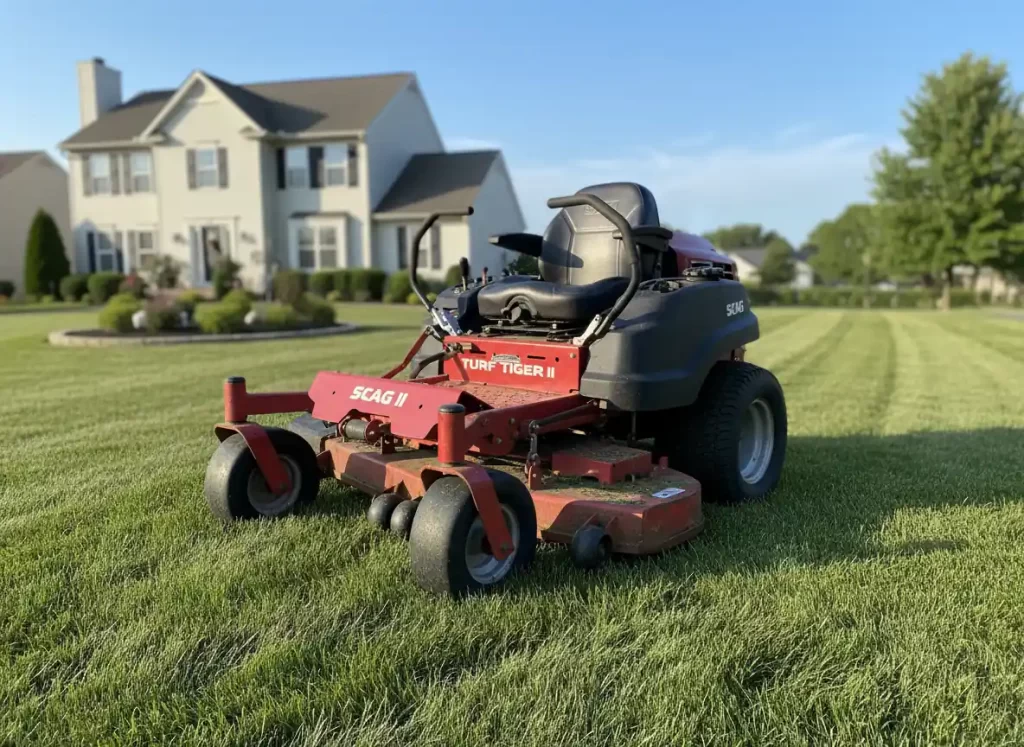
Scag Turf Tiger II is where I usually start conversations about premium commercial equipment. This machine has a reputation in the industry that’s almost unfair to competitors – it’s THE zero-turn that landscapers talk about when they’re talking about serious equipment.
I spent two weeks last summer running a Turf Tiger II on various properties (demo unit from a dealer I know). The build quality is immediately obvious. Everything feels solid – and I don’t mean “solid for a lawn mower,” I mean solid like commercial construction equipment. The controls are precise, the frame doesn’t flex, and when you’re navigating around obstacles, the mower goes exactly where you point it.
The Velocity Plus deck system Scag uses creates this incredibly powerful air
flow under the deck. What that means in practical terms – grass stands up before getting cut, resulting in cleaner cuts even at high speeds. I was running this thing at 10-11 mph on maintained turf and getting results that looked like I’d been going half that speed. For commercial work where productivity directly equals profit, that capability matters immensely.
Scag offers the Turf Tiger II with deck sizes from 52 inches up to 72. For most operations, the 61-inch hits that sweet spot. Wide enough to be seriously productive on larger properties but not so wide that you’re constantly worried about fitting through gates or between obstacles. Proper blade selection and maintenance are critical for maintaining cut quality across all deck sizes.
Engine options run from 27 HP Kohlers up to 37 HP Kawasaki FX models. Personally? If the budget allows, go for the Kawasaki. The extra $700-800 is worth it for the legendary reliability. These engines are known for running 3,000+ hours without major issues.
Price-wise, you’re looking at $13,000-$18,000 depending on engine and deck size. That’s serious money. But the Turf Tiger II isn’t designed to be cheap – it’s designed to still be running when cheaper machines are in landfills.
The warranty – 3 years or 1,500 hours on commercial use – tells you what Scag thinks about their construction quality. They’re confident this machine will hold up.
Exmark Lazer Z X-Series competes directly with the Turf Tiger II, and honestly, choosing between them often comes down to dealer preference or personal taste rather than clear superiority of one over the other.
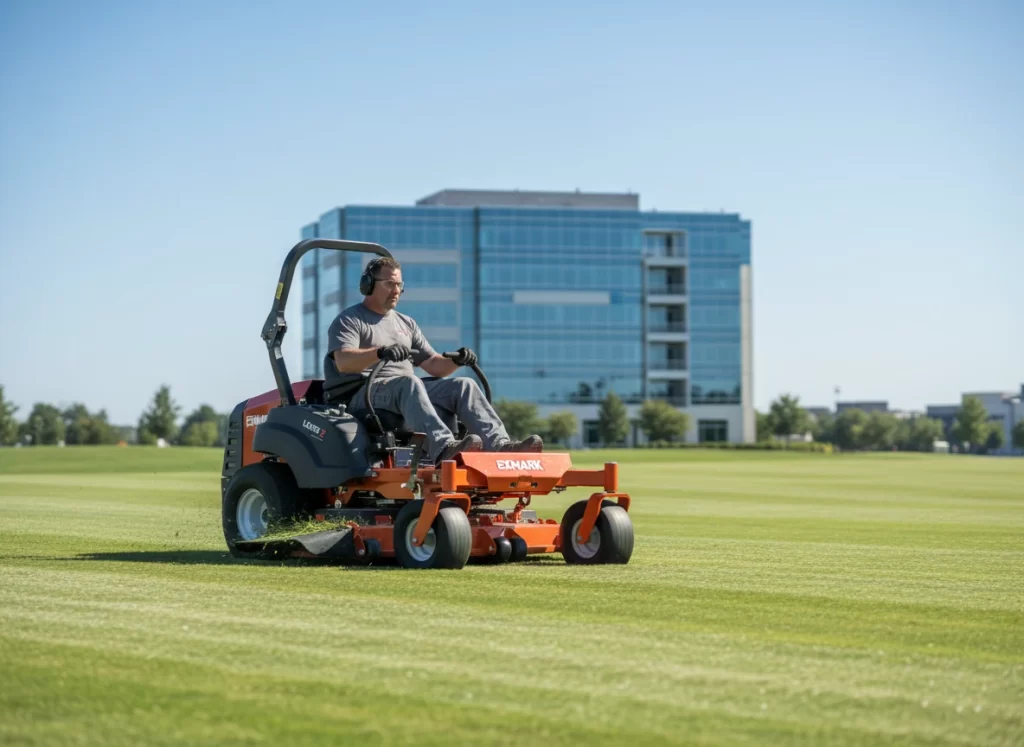
Exmark’s UltraCut deck technology is legitimately impressive. They’ve done extensive computational fluid dynamics testing (yeah, actual computer simulations of airflow) to optimize how grass moves under the deck. The result is incredibly even cuts with excellent discharge, even in wet conditions. I’ve run Exmark machines in morning dew conditions that would bog down lesser mowers, and the Lazer Z just kept cutting cleanly.
What sets Exmark apart technologically is its RED Technology system. It’s basically an intelligent control system that monitors engine load. If the engine starts to bog down in thick grass, RED automatically adjusts to prevent stalling while maintaining cut quality. First time I experienced it working, I honestly didn’t even notice – which is the point. The machine just handles varying conditions without operator intervention.
The X-Series includes full suspension on the operator platform. After eight hours on various zero-turns, the difference in suspension is massive. Your back, hands, arms – everything thanks you. This isn’t luxury, it’s fatigue management that affects productivity.
Exmark offers deck sizes from 48 to 72 inches. Engine options range from 25 HP up to 37 HP. Pricing runs $12,000-$19,000 depending on configuration. The warranty is impressive – up to 5 years/1,500 hours on the deck, showing Exmark’s confidence in their construction.
John Deere Z900 M Series brings the engineering you’d expect from John Deere to the commercial zero-turn market. The name recognition matters more than people want to admit – clients see John Deere equipment and there’s automatic credibility there.
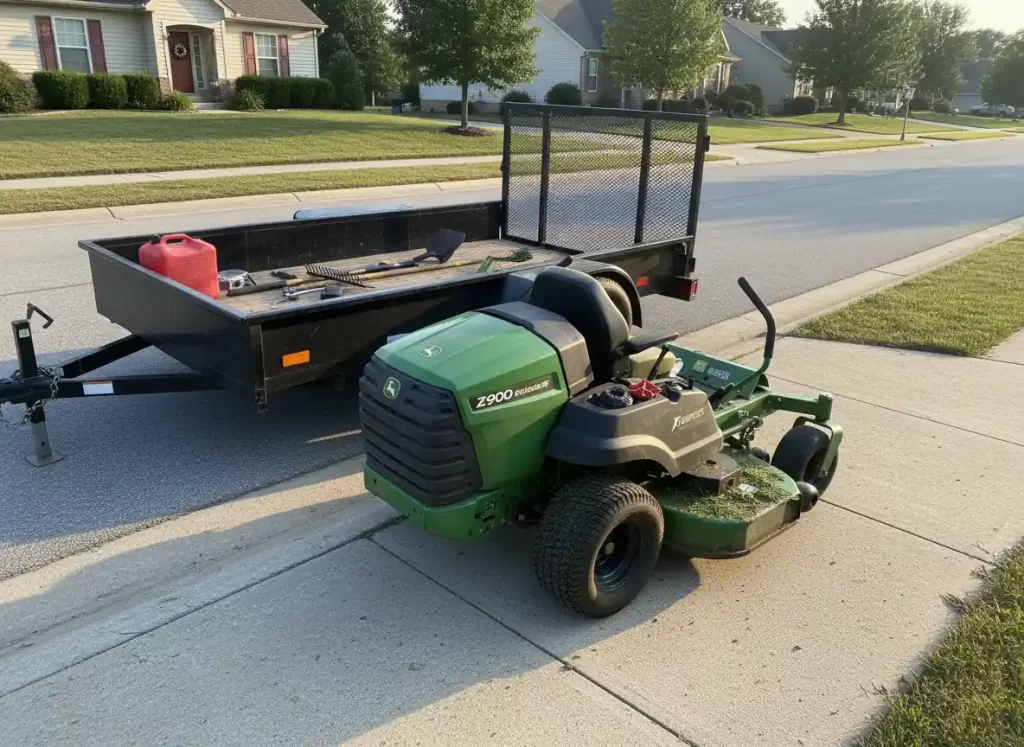
The MOD deck system is clever engineering. You can swap between 2-blade and 3-blade configurations depending on conditions. Most of the time, a 2-blade works great and is more efficient. But when conditions get tough or you need extra fine clippings for specific properties, switch to the 3-blade configuration. It’s like having two mowers in one.
The 7-Iron deck construction uses variable thickness steel – thicker where wear is highest, thinner where it’s not needed. Smart weight distribution that maintains durability without unnecessary bulk. And serviceability – John Deere clearly designed this machine expecting it to need maintenance. Oil changes, filter swaps, belt replacements – everything’s accessible without removing seventeen other components first.
John Deere’s dealer network is a huge advantage. You can be almost anywhere in the country and find a John Deere dealer within reasonable distance. Parts availability is excellent. If you’re running a mobile operation covering large territories, that dealer density matters.
Deck widths from 48 to 60 inches, engines from 23.5 to 29.5 HP. Pricing ranges $11,500-$16,000, positioning John Deere competitively. And resale values on John Deere equipment typically stay strong – something to consider for long-term economics.
Ferris IS 3200Z takes a completely different approach with suspension technology. Most zero-turns have zero suspension or maybe just seat suspension. Ferris suspends the entire operator platform.
I tested the IS 3200Z on this property that was… well, it wasn’t maintained well. Uneven ground, bumps, rough patches everywhere. On a conventional zero-turn, you’re constantly slowing down because impacts jar you around. On the Ferris, the suspension just soaks up the rough stuff. I was maintaining 7-8 mph on terrain where I’d normally be at 4-5 mph on rigid frames.
The productivity implications are real. Over a full day covering multiple properties, those speed advantages compound. You’re not just more comfortable (though you definitely are), you’re actually completing more work.
The iCD cutting system uses three independent cutting chambers that flex to follow ground contours. Conventional decks are rigid – high spots get scalped, low spots get missed. The Ferris system maintains consistent cutting height across uneven terrain. For properties with less-than-perfect grading, this tech actually solves a real problem.
Decks from 52 to 72 inches, engines up to 37 HP. Pricing runs $12,000-$17,000. The 5-year warranty on the suspension system shows Ferris believes in their engineering.
Hustler Super Z HyperDrive rounds out our top picks. Hustler holds multiple world records for zero-turn speed, which is honestly kind of ridiculous but also tells you something about their engineering capability. This machine is FAST when you want it to be.
The VX4 deck design creates a powerful vacuum that lifts grass aggressively before cutting. In thick conditions – and I tested this in overgrown areas deliberately – the Super Z just powered through stuff that would slow down other mowers. The sealed deck system reduces clumping and maintains even discharge.
Hustler’s HyperDrive system uses integrated pump/motor units that simplify the hydraulic system. Fewer connections mean fewer potential leak points. Maintenance is simpler – no scheduled trans fluid changes, just annual inspections and filter swaps.
Deck sizes 54-72 inches, engines 27-40 HP. Pricing $12,500-$18,000. The 3-year warranty covers commercial use, which is standard for the industry.
Choosing among these machines honestly comes down to local dealer quality, personal preference, and specific features that matter for your operations. All five represent legitimate commercial equipment that will serve professional businesses well for years. I’ve seen successful operations running fleets of each brand.
For riders looking for smaller residential options, the Toro TimeCutter line offers excellent performance in a more compact package, while our comprehensive mower reviews cover equipment across all categories and price points.
Commercial Lawn Mower Comparison: Top 5 Zero-Turn Models
Before we get into testing and dealer visits, here’s a side-by-side comparison that’ll help you understand what you’re actually comparing. I’ve pulled together the specs that matter most for commercial operations – not every little detail, just the stuff that actually impacts your daily work and long-term costs.
The Complete Comparison Chart
| Feature | Scag Turf Tiger II | Exmark Lazer Z X-Series | John Deere Z900 M | Ferris IS 3200Z | Hustler Super Z HyperDrive |
|---|---|---|---|---|---|
| Deck Sizes | 52″, 61″, 72″ | 48″, 60″, 72″ | 48″, 54″, 60″ | 52″, 61″, 72″ | 54″, 60″, 72″ |
| Engine Options | 27-37 HP Kawasaki/Kohler | 25-37 HP Kawasaki/Kohler | 23.5-29.5 HP Kawasaki | 27-37 HP Kawasaki/Vanguard | 27-40 HP Kawasaki/Kohler |
| Top Speed | 10-12 mph | 10-11 mph | 10 mph | 8-10 mph | 13-15 mph |
| Fuel Capacity | 12-15 gallons | 12.5-15 gallons | 10.5-12 gallons | 12 gallons | 12-16 gallons |
| Weight | 1,250-1,550 lbs | 1,100-1,400 lbs | 1,100-1,300 lbs | 1,200-1,500 lbs | 1,150-1,450 lbs |
| Deck Construction | 7-gauge fabricated steel | 10-gauge fabricated steel | Variable 7-10 gauge | 10-gauge fabricated | 10-gauge fabricated |
| Transmission | Hydro-Gear ZT-5400 | Hydro-Gear ZT-5400 | Hydro-Gear ZT-5400 | Hydro-Gear ZT-5400 | Integrated HyperDrive |
| Suspension System | Seat only | Full platform | Seat only | Full chassis | Seat only |
| Special Features | Velocity Plus deck | RED Technology, UltraCut deck | MOD deck, Michelin Tweels available | Independent cutting chambers | World’s fastest, VX4 deck |
| Warranty (Commercial) | 3 years/1,500 hours | 5 years/1,500 hours (deck) | 3 years/1,500 hours | 5 years (suspension) | 3 years/1,500 hours |
| Price Range (2025) | $13,000-$18,000 | $12,000-$19,000 | $11,500-$16,000 | $12,000-$17,000 | $12,500-$18,000 |
| Best For | Maximum durability, heavy commercial use | Cut quality obsessed operations | Dealer network, reliable performance | Rough terrain, operator comfort | Speed-focused large properties |
What These Numbers Actually Mean
Okay, so you’ve got a table full of specs. Great. But what does it mean for your actual business? Let me break down the factors that matter most:
Deck Size Selection – Here’s the rule I follow: 48-52″ for primarily residential with lots of obstacles, 60-61″ for mixed residential and small commercial, 72″ for large commercial properties only. The bigger deck isn’t always better – it’s only better when you’ve got the space to use it without constantly maneuvering around obstacles.
Engine Horsepower – Honestly, anything over 25 HP is adequate for most commercial applications. The jump to 30+ HP matters primarily for larger decks (72″) or if you’re frequently cutting thick, overgrown properties. Don’t overpay for horsepower you don’t need, but also don’t go cheap and struggle with thick grass.
Top Speed – The Hustler’s 13-15 mph capability is impressive on paper, but here’s reality: you’ll rarely run that fast except on wide-open commercial properties. On residential properties with landscaping, you’re mowing at 6-8 mph for quality and safety. Speed matters more for transport between cutting areas than actual mowing.
Fuel Capacity – Larger tanks mean fewer refueling stops. On a full day covering 15-20 properties, you’ll appreciate 15 gallons versus 10. It’s maybe 20 minutes saved daily, but that compounds to serious time over a season.
Weight – Heavier machines provide better traction and stability, but also compact soil more and are harder to load/unload from trailers. The 200-300 pound differences here aren’t huge, but if you’re constantly loading equipment or working on soft turf, lighter matters.
Deck Construction – Scag’s 7-gauge steel is measurably thicker than competitors’ 10-gauge. In practical terms? Scag decks resist damage better but weigh more. John Deere’s variable gauge approach is clever engineering – thick where it matters, lighter where it doesn’t.
Transmission – The fact that four of these five use the same Hydro-Gear ZT-5400 transmission tells you something – it’s basically the industry standard for commercial equipment. Reliable, proven, and parts are readily available. Hustler’s integrated system is different but also well-proven.
Suspension – Exmark and Ferris both offer platform suspension, which dramatically reduces operator fatigue on rough terrain. Is it worth the extra cost? Depends on your properties. Smooth, maintained lawns? Probably not essential. Rough, uneven terrain? Absolutely worth it.
The Features That Actually Matter Daily
Beyond raw specs, here’s what impacts your work every single day:
Cut Quality – Exmark’s UltraCut system consistently delivers the most pristine cuts, especially in challenging conditions. Scag’s Velocity Plus is a very close second. John Deere’s MOD deck flexibility is clever. Ferris and Hustler both deliver solid professional results. Truth? Most clients won’t notice the difference between any of these – they’re all excellent.
Reliability – Scag has the strongest reputation for just-keep-running durability. John Deere benefits from an extensive dealer network and parts availability. The others are all reliable when properly maintained. Failure rates are similar across quality commercial equipment – maintenance matters more than brand.
Comfort – Ferris wins operator comfort hands-down with full suspension. Exmark’s platform suspension is second. For 8-10-hour days, this matters more than you think. Reduced fatigue means better work quality and fewer operator complaints.
Serviceability – John Deere designed the Z900 M for easy maintenance access. Most routine services don’t require removing covers or components. The others range from pretty good to occasionally frustrating. Check this during test drives – pop hoods, look at oil filters, see how accessible routine maintenance points are.
Resale Value – Scag and John Deere consistently maintain the highest resale values, typically 45-50% of the original price after 4-5 years with reasonable hours. Exmark holds value well at 40-45%. Ferris and Hustler are solid at 35-40%. These percentages matter when planning equipment replacement cycles.
My Honest Take on Each Machine
Scag Turf Tiger II – This is the machine I’d choose if I could only own one commercial zero-turn for the rest of my career. It’s overbuilt, sometimes frustratingly heavy, and definitely expensive. But it’ll still be cutting grass when cheaper machines are in scrapyards. Best long-term value despite high initial cost.
Exmark Lazer Z X-Series – If cut quality is your absolute top priority – maybe you’re servicing high-end residential or commercial properties where appearance is critical – this is your machine. The RED Technology and UltraCut deck deliver consistently exceptional results. The 5-year deck warranty shows Exmark’s confidence.
John Deere Z900 M – The most balanced package. Good at everything, exceptional at dealer support. If you’re operating across wide geographic areas or in regions where dealer access matters, John Deere’s network is unmatched. The MOD deck’s versatility is genuinely useful.
Ferris IS 3200Z – Purpose-built for rough terrain and operator comfort. If your properties include uneven ground, rural acreage, or challenging conditions, the suspension technology solves real problems. You’ll cut faster on rough terrain than any competitor.
Hustler Super Z HyperDrive – The speed demon. For large commercial properties where you’re covering serious acreage, the high-speed capability matters. The simplified hydraulic system is clever engineering. Great machine for the right applications.
How to Use This Comparison
Don’t just pick the machine with the most impressive specs or the lowest price. Instead:
- Identify your primary use case – Mostly residential? Mixed? Large commercial?
- Determine your property conditions – Smooth, maintained lawns or rough terrain?
- Consider operator factors – How many hours daily? Operator comfort concerns?
- Evaluate local dealer support – Which brands have excellent dealers nearby?
- Calculate total cost of ownership – Initial price plus maintenance, resale value, and expected life
Then narrow to 2-3 machines that fit your situation and test drive them extensively. An hour on each machine tells you more than any spec sheet.
The “best” commercial zero-turn mower is the one that matches your specific needs, has excellent local dealer support, and fits your budget – not necessarily the one with the most impressive specifications or highest price tag.
Test drive whatever’s available locally. Spend real time on the machines, not just 5 minutes around a dealer’s lot. Different operators prefer different control feel, seat comfort, and visibility – factors that don’t show up in spec sheets but matter over 8-hour days.
Essential Maintenance Schedule for Commercial Lawn Mowers
Look, I’m going to be blunt here – maintenance schedules aren’t exciting. Nobody gets pumped about changing oil or cleaning air filters. But you know what’s even less exciting? Calling a client at 7 AM to explain why their property won’t get mowed today because your $15,000 machine just seized up.
I’ve watched businesses fail because they treated maintenance as optional. And I’ve watched businesses thrive because they treated it like the non-negotiable business requirement it actually is.
Daily Commercial Lawn Mower Maintenance (5-10 Minutes)
Every single day, before you fire up that engine:
Visual inspection – Walk around the machine. Look for loose bolts, damaged belts, fluid leaks underneath, or anything that just looks “off.” I once caught a cracked hydro line during a morning inspection that would’ve failed catastrophically mid-day, probably costing $2,000+ in repairs and a full day of lost revenue. For comprehensive maintenance and troubleshooting steps, refer to our complete guide.
Check engine oil – Pull the dipstick. Oil should be between the marks and look clean-ish (it’ll never be crystal clear on working equipment). If it’s low, add oil. If it’s black and gritty, you’re overdue for a change.
Inspect air filter – Pop the cover and look at the filter element. See daylight through it? Good. Looks like you vacuumed a dirt road? Time to clean or replace it. A $15 air filter prevents $3,000 engine rebuilds.
Tire pressure – Squeeze the tires. They should feel firm. Soft tires affect cut quality (scalping on one side, missing grass on the other) and put extra strain on the transmission. I keep a gauge in every truck – check weekly at minimum.
Blade condition – Look underneath (safely, with the engine OFF and spark plug disconnected). Blades should have clean, sharp edges. If they’re rounded over, nicked, or bent, sharpen or replace them. Dull blades don’t just cut poorly – they stress the engine and use more fuel.
Debris removal – Clear grass buildup from under the deck, around the engine, and near cooling fins. Packed grass holds moisture (causing rust) and blocks airflow (causing overheating). A leaf blower works great for this.
Safety systems – Test that the parking brake holds, the blade engagement disengages properly, and the seat safety switch works. These aren’t suggestions from paranoid lawyers – they’re systems that prevent injuries and deaths.
Weekly Maintenance (30 Minutes Friday Afternoon)
End of each week, give your equipment some actual attention:
Thorough cleaning – Power wash the entire machine. Get underneath the deck, around the engine, everywhere. This isn’t about making it pretty (though clients notice clean equipment). It’s about being able to SEE problems – leaks, cracks, loose components – that are invisible under layers of grass and dirt.
Grease all fittings – Commercial lawn mowers have grease zerks on wheel bearings, spindles, and pivot points. Hit every one with 2-3 pumps of grease. This takes maybe 10 minutes and prevents bearing failures that cost hundreds to repair.
Belt inspection – Look at all belts carefully. They should be smooth and flexible. Cracks, fraying, glazing (shiny, hard surface), or chunks missing mean replacement time. Belts are $30-$60. Belt failure mid-job that damages pulleys or spindles? $300-$600.
Hydraulic fluid level – Check the hydraulic reservoir. The level should be at the “full” mark with the machine on level ground. Low hydraulic fluid means you’ve got a leak somewhere – find it and fix it before the pumps run dry and destroy themselves.
Battery terminals – Clean any corrosion from battery terminals and ensure connections are tight. A $0.50 worth of baking soda and water prevents a $200 battery replacement and the frustration of a no-start situation.
Sharpen blades – I sharpen blades weekly during the growing season, more often if we’re hitting sandy soil or doing properties with sticks and debris. Sharp blades cut cleaner, use less fuel, and reduce engine stress. I can sharpen a set in 15 minutes with a bench grinder. Learn the proper technique with our guide on how to sharpen lawn mower blades.
Every 50 Hours (or Monthly During Season)
Oil and filter change – This is non-negotiable. Commercial engines specify 50-hour oil changes when working in dusty or dirty conditions (which describes mowing). Use the oil weight specified in your manual – typically 10W-30 or 15W-50 for air-cooled engines. Follow our detailed oil change guide for step-by-step instructions.
Quality oil matters. I run full synthetic in all our machines. Costs may be $15 more per change but provides better protection and longer engine life. When you’re talking about a $4,000 engine, spending an extra $15 every 50 hours is stupid-cheap insurance.
Air filter replacement – Clean foam pre-cleaners can often be washed and reused, but paper elements should be replaced every 50 hours in dusty conditions. Running a dirty air filter reduces power and increases fuel consumption, but worse, it allows fine dust into the engine where it becomes an abrasive grinding compound destroying cylinder walls.
Fuel filter replacement – Cheap insurance against fuel system problems. A $12 fuel filter prevents $400 carburetor rebuilds or $600 fuel injection cleaning. Takes 5 minutes to swap.
Inspect spindles – Jack up the deck and grab each blade, trying to move it up-down and side-to-side. There should be zero play. Any movement means bearing wear – address it before the spindle seizes or the blade assembly flies apart.
Check tire wear – Look for uneven wear patterns that indicate alignment issues or suspension problems. Worn tires affect traction on slopes and cut quality on uneven terrain.
Every 100 Hours (or End of Season)
Spark plug replacement – New plugs ensure reliable starting and optimal engine performance. They’re $3-$8 each. There’s no reason to run old plugs. I change them every 100 hours or at season start, whichever comes first.
Transmission fluid and filter – Some commercial transmissions are sealed units, but many require fluid changes every 100-200 hours. Check your manual. Transmission rebuilds cost $1,500-$3,000. Fluid changes cost maybe $60. Easy math.
Deck level and blade timing – Set the deck on level ground and measure blade height at front, back, and sides. Adjust until the deck is level side-to-side and has proper front-to-back pitch (usually 1/8″ to 1/4″ lower in front). This ensures even cutting across the full deck width.
For multi-blade decks, the blades should be timed so they don’t hit each other. This usually involves marking blade positions and adjusting belt tension or spindle timing.
Lubricate cables and linkages – Throttle cables, choke cables, brake linkages – hit everything that moves with lubricant. Prevents binding and ensures smooth operation.
Inspect caster wheels – These take tremendous abuse. Check for bearing play, bent forks, or worn bushings. Replace before failure causes control problems or deck damage.
Annual Maintenance (Every Off-Season)
Comprehensive inspection – This is when you go over EVERYTHING. Preferably with your dealer’s service department if they offer comprehensive service packages. They’ll catch things you might miss. Before winter storage, make sure to winterize your equipment properly to prevent costly spring repairs.
Valve adjustment – Air-cooled engines require periodic valve adjustment. Typically every 300-500 hours, but check your manual. Improper valve clearance affects power, fuel economy, and can cause starting problems.
Cooling system service – Clean all cooling fins thoroughly. Remove the blower housing if necessary to access areas around the cylinder. Blocked cooling fins are the #1 cause of engine overheating and premature failure.
Bearing repacks – Pull wheels and repack bearings with fresh grease. Inspect for wear, pitting, or damage. Bearing failure on a wheel can cause loss of control; on a spindle, it can destroy the deck.
Hydraulic system flush – Every 400-500 hours (typically 1-2 years for most operations), drain and replace all hydraulic fluid. Old fluid degrades, loses lubricity, and accumulates metal particles that accelerate pump and motor wear.
Battery maintenance – Clean terminals thoroughly, check electrolyte levels in serviceable batteries, and load test the battery. Batteries typically last 3-5 years in commercial applications – replace proactively rather than dealing with field failures.
The Real Cost of Maintenance
Here’s the actual math from my business records:
Annual maintenance for one commercial zero turn running 400 hours:
- Oil changes (8 @ $35): $280
- Air filters (8 @ $15): $120
- Fuel filters (4 @ $12): $48
- Spark plugs (annual): $20
- Blades (sharpening supplies/replacement): $80
- Grease and lubricants: $40
- Miscellaneous filters/belts: $60
- Annual service inspection: $150
Total: $798 annually
That’s almost exactly what I quoted earlier in this article. Now compare that to repair costs for LACK of maintenance:
- Engine rebuild from oil neglect: $3,500
- Hydro pump replacement from fluid failure: $2,200
- Spindle bearing failure (all three): $900
- Carburetor replacement from fuel system neglect: $450
One major failure from skipped maintenance costs more than 4-5 years of proper maintenance.
Creating a Maintenance Log System
And here’s something nobody talks about but absolutely matters – documentation.
Keep a maintenance log for each machine. Record:
- Date and hour meter reading for each service
- What was done
- Parts used
- Observations (anything unusual)
- Next service due
If you encounter issues like starting problems or need help with carburetor cleaning and repair, proper documentation helps track recurring issues.
I use a simple spreadsheet, but even a notebook works. This documentation serves multiple purposes:
Warranty claims – Manufacturers want proof of proper maintenance. No documentation? Good luck getting warranty coverage.
Resale value – Documented maintenance history dramatically increases resale value. I sold a 4-year-old mower with complete service records for $1,200 more than comparable machines without documentation.
Business management – You’ll know exactly when each machine needs service without guessing. You’ll catch patterns (this machine always needs belts after 300 hours, that one goes through blades faster).
Tax records – Maintenance is a deductible business expense. Documentation supports your deductions.
Training Your Team
If you’ve got employees operating equipment, they need maintenance training. Period.
Teach them:
- Daily inspection checklist
- How to identify problems early
- Basic maintenance they can perform (cleaning, greasing)
- When to report issues immediately
- Why maintenance matters (connect it to their paycheck – broken equipment means no work means no pay)
I’ve seen operations where operators treat equipment like rental cars – run it hard, ignore problems, let someone else worry about it. That attitude destroys machines and profitability.
Build a culture where operators take pride in maintaining equipment. When guys on my crews keep their assigned machines clean and well-maintained, they get first pick of equipment and recognition. Creates positive competition for who can keep equipment in best condition.
The Bottom Line on Maintenance
Proper maintenance isn’t optional or discretionary. It’s a fundamental business requirement that directly impacts profitability, reliability, and longevity of your most expensive business assets.
Yes, it takes time. Yes, it costs money. But every dollar and every minute invested in maintenance returns multiples through prevented breakdowns, extended equipment life, and maintained productivity.
The choice isn’t between maintaining equipment or not maintaining it. The choice is between scheduled maintenance on your terms or emergency repairs on the equipment’s terms – usually at the worst possible time, at the highest possible cost, with the maximum possible disruption to your business.
I’ll take scheduled maintenance every single time.
Commercial Walk Behind & Push Mowers: Versatile Options
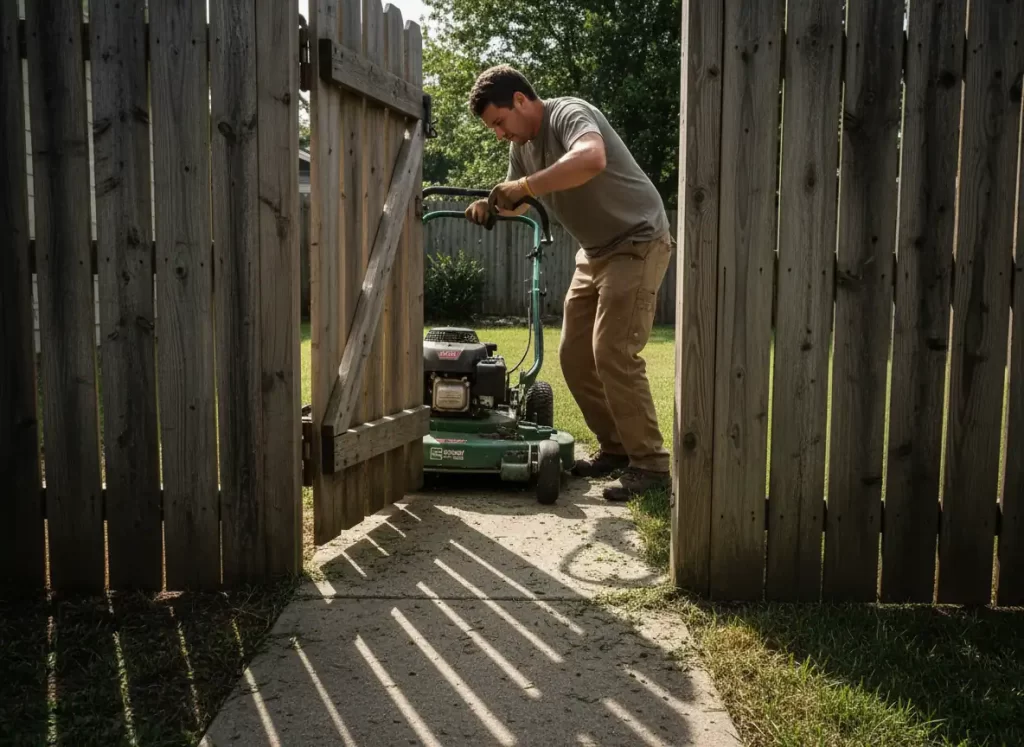
Zero-turns get all the attention and honestly dominate modern landscaping, but commercial walk behind mowers remain essential equipment. You’ll encounter situations – almost daily if you’re doing residential work – where zero-turns simply can’t go or aren’t appropriate.
Scag Hydro Walk Behind leads the category and for good reason. These machines bring Scag’s construction philosophy to a walk-behind format. Everything feels commercial-grade. The controls are positive and responsive, the deck stays level across uneven terrain, and the hydrostatic transmission provides smooth, infinite speed control.
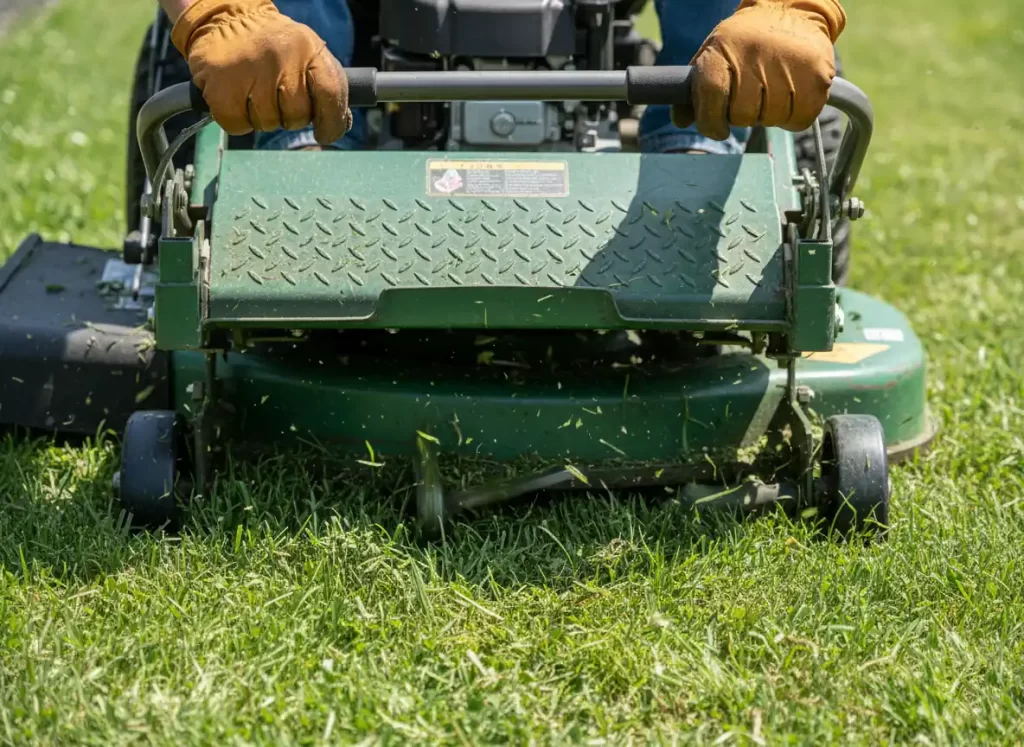
Available in 32, 36, 48, and 52-inch widths. For most businesses, the 36-inch model becomes the utility player. It navigates standard residential gates (which are usually 36-40 inches), handles reasonable slopes safely, and provides enough productivity that you’re not spending forever on medium-sized properties.
The Velocity Plus deck technology from Scag’s zero-turns translates beautifully to the walk-behind format. Cut quality is legitimately excellent, matching or exceeding most zero-turn results. For detailed work around landscaping beds or finishing areas where zero-turns can’t reach, the precision control of a walk-behind is superior.
Pricing runs $4,500-$7,500, depending on deck width and features. The hydrostatic transmission adds cost over belt-driven models, but the control improvement is worth every penny. After walking behind both types all day, the hydro’s smooth operation reduces fatigue significantly.
Exmark Metro Series offers commercial construction at more accessible pricing. These commercial walk behind mowers use belt-driven transmissions, which require more operator involvement (you’re shifting gears manually) but keep costs reasonable. For operations needing self-propelled features, check out our dedicated guide.
The UltraCut deck delivers excellent results. Bagging performance is particularly good on the Metro – if you service properties requiring grass collection, this machine handles it better than most walk-behinds. The fixed-deck design is simple, durable, and easy to maintain.
Starting at $2,800 for the 32-inch model, the Metro Series represents one of the most affordable entry points into true commercial equipment. You’re making tradeoffs versus premium hydrostatic models, but the core durability and cutting performance are solid.
For startup businesses or as secondary equipment in established fleets, the Metro makes a lot of sense. You get Exmark dealer support, commercial construction, and proven cutting technology without $6,000+ investment.
Ferris SRS Z2 Walk Behind brings suspension to the walk-behind category. The coil-over shock system isolates your hands and arms from ground vibration. Doesn’t sound like a big deal until you’ve spent 8 hours gripping vibrating handles.
I’ve run both suspended and unsuspended walk-behinds extensively. By afternoon, the difference in hand and arm fatigue is enormous. But beyond comfort, the suspension allows faster walking speeds on rough ground because you’re not being jarred constantly.
Available in 32, 36, 48, 52, and 61-inch widths. The suspension system adds $1,000-1,500 to the price versus comparable non-suspended models, but for operators spending significant time on walk-behinds, many consider it essential rather than luxury.
Pricing ranges $5,500-$9,000. Definitely premium pricing, but the suspension technology is real and provides genuine benefits.
Toro Grandstand Multi Force innovates by functioning as stand-on mower, walk-behind, and attachment platform. The versatility appeals to businesses looking to maximize equipment utility.
The standing platform concept reduces operator fatigue versus walking. You’re still covering ground quickly but you’re riding rather than walking. The compact footprint and excellent sight lines make the Grandstand ideal for obstacle-heavy properties.
The Multi Force attachment capability is where things get interesting. Add a dethatcher or aerator attachment and one machine handles multiple revenue-generating services. For smaller operations especially, this flexibility reduces equipment investment and storage requirements.
Cutting performance is good though maybe not quite at Scag or Exmark precision levels. The value proposition is versatility rather than being absolute best at any single function.
Decks 36-52 inches, pricing $6,000-$10,000. Multi Force attachments add $2,000-$3,000 depending on what you select. If you’re offering multiple services, the economics can work out well.
Commercial walk behind mowers excel in situations where zero-turns struggle:
Slopes are the big one. Walk-behinds safely handle inclines up to 15-20 degrees. Zero-turns? Maybe 10 degrees maximum before you’re risking tip-overs. And honestly, even on moderate slopes, walk-behinds feel safer because you’re beside the machine, not riding it.
Gated properties are daily occurrences in residential work. That beautiful 60-inch zero-turn becomes useless when faced with a 36-inch gate. The walk-behind gets you into the backyard.
Around landscaping beds, trees, gardens – anywhere requiring precise maneuvering – walk-behinds provide better control and visibility. You’re positioned alongside the deck, giving you sight lines that riding equipment can’t match.
One thing many people overlook – sulky compatibility. Most commercial walk behind mowers accept wheeled sulkies that convert them to stand-on or riding configurations. For larger properties where a full zero-turn isn’t justified but walking isn’t practical, sulkies provide a middle ground. You’re covering ground efficiently while maintaining the walk-behind’s ability to navigate tight spaces.
Brand Spotlight: Top Commercial Lawn Mower Manufacturers Compared
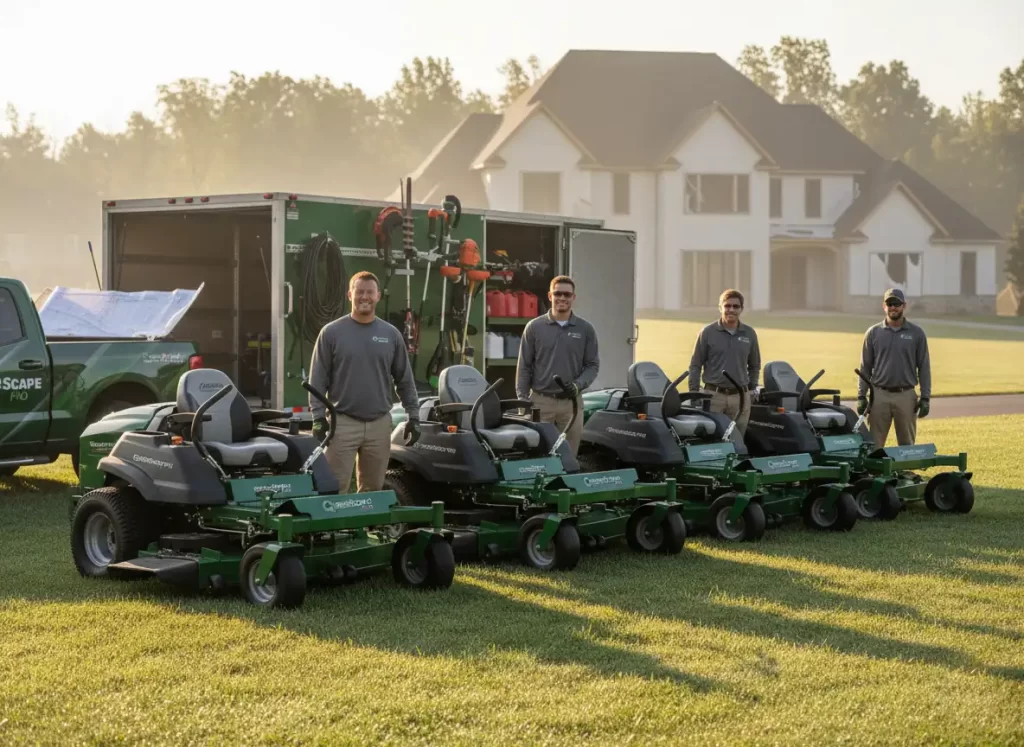
The commercial lawn mower market includes dozens of manufacturers claiming commercial quality. Maybe 8-10 of them actually deliver it. And really, three brands dominate professional landscaping fleets: Scag, John Deere, and Exmark.
Understanding these brands – their philosophies, strengths, and histories – helps you make informed decisions rather than just reading spec sheets that all kind of sound the same after a while.
Scag commercial mowers have this almost cult-like reputation among landscapers. People get legitimately passionate about Scag equipment in ways that seem excessive until you’ve actually run their machines extensively.
Visit Scag’s official site for complete specifications.
Founded in 1983 (which is relatively recent for industrial equipment companies), Scag focused exclusively on commercial equipment from day one. They’ve never made residential mowers, never diverted engineering resources to homeowner products. Everything they build targets professional users.
That focus shows in how Scag designs equipment. Where other manufacturers might use 10-gauge steel to save $50 in manufacturing costs, Scag uses 7-gauge because it’s more durable. Where others use plastic components that work fine for limited use, Scag machines use metal even when it costs more. This isn’t always rational economics – it’s almost obsessive overengineering.
I’ve encountered Scag commercial mowers with 3,500+ operating hours still working professionally. That’s not standard but it’s also not rare. With proper maintenance – and Scag equipment isn’t forgiving of neglect – these machines just keep running.
The Velocity Plus cutting system represents decades of refinement rather than trendy redesigns every few years. Scag found what works and incrementally improved it. The result is cutting performance that consistently ranks among the absolute best in professional applications.
Scag’s dealer network emphasizes commercial support. Most Scag dealers operate dedicated commercial divisions with experienced technicians, extensive parts inventory, and understanding of business needs. When you call at 6 AM because a mower won’t start and you’ve got properties scheduled, good dealers get you running again quickly.
Pricing positions Scag at the premium end. Entry-level zero-turns start around $13,000. Flagship models exceed $18,000. Walk-behinds run $4,500-$8,000. You’re absolutely paying premium prices.
But here’s the thing – Scag equipment tends to retain value exceptionally well. A 4-year-old Turf Tiger with reasonable hours might sell for 50-60% of original price. Lesser brands might get 30-40%. That residual value matters when you’re planning equipment replacement cycles.
John Deere commercial mowers bring the resources and engineering of the world’s largest agricultural equipment manufacturer to lawn care. That matters more than it might seem.
John Deere’s engineering expertise spans over 180 years.
John Deere has global R&D facilities, massive engineering budgets, and decades of experience building equipment that operates in brutal conditions worldwide. When they apply that expertise to commercial mowers, the results are sophisticated and well-engineered.
The ZTrak line showcases John Deere’s engineering approach. Features like the MOD deck system, Michelin tweel tire options (which eliminate flats completely), and integrated electronics reflect thoughtful problem-solving rather than just copying what competitors do.
The 7-Iron deck construction uses variable steel thickness optimized for different stress areas. High-wear zones get thicker material, other areas use lighter gauges. This engineering reduces weight without sacrificing durability – something that matters for traction and turf compaction.
John Deere’s dealer network is genuinely unmatched. With thousands of dealer locations including dedicated commercial divisions, you can be almost anywhere and find John Deere service. Parts availability is excellent. Many dealers offer fleet management programs, scheduled maintenance contracts, and priority service for commercial customers.
That dealer network becomes increasingly valuable as your business grows. When you’re running 6-8 mowers across multiple crews, having a dealer who stocks parts and can service multiple machines simultaneously matters enormously.
Pricing for John Deere commercial mowers positions competitively at $11,500-$16,000 for zero-turns and $3,500-$7,000 for walk-behinds. Not the absolute cheapest but reasonable given the feature set and dealer support.
Resale values on John Deere equipment stay strong, which improves overall ownership economics. The brand recognition helps – buyers trust John Deere equipment holds value.
Exmark commercial mowers emphasize cutting performance and engineering sophistication. Originally part of Toro but now operating with significant independence, Exmark has built reputation for obsessive attention to cutting quality.
Exmark Manufacturing specializes exclusively in commercial equipment.
The UltraCut deck system represents years of computational fluid dynamics testing. Exmark engineers used advanced computer simulations to optimize blade spacing, discharge openings, and internal deck geometry. It sounds excessive (and maybe it is), but the results speak for themselves. Exmark commercial mowers consistently deliver exceptional cut quality even in challenging conditions.
RED Technology intelligent operating system sets Exmark apart technologically. The system continuously monitors engine load and adjusts blade speed to maintain optimal cutting performance. In thick grass conditions that would bog down other mowers, RED compensates automatically. You don’t think about it – the machine just handles varying conditions smoothly.
Exmark offers exceptional product variety. From 32-inch walk-behinds to 72-inch zero-turns, they cover virtually every commercial application. The Lazer Z line targets premium market, Navigator line offers mid-tier options, Quest series provides entry-level commercial equipment.
Dealer support is generally excellent though the network isn’t quite as extensive as John Deere’s. In areas with substantial landscaping industries, Exmark dealers are well-established with experienced staff and comprehensive parts inventory.
Pricing for Exmark commercial mowers ranges $12,000-$19,000 for zero-turns and $2,800-$9,000 for walk-behinds. The warranty coverage (up to 5 years on some components) demonstrates confidence in their construction quality.
Comparing the three brands directly:
Construction quality – Scag probably edges competitors with the most robust build throughout their line. Both John Deere and Exmark build durable machines, but Scag’s overengineering approach appeals to contractors who push equipment extremely hard.
Cutting performance – Exmark’s UltraCut system delivers marginally better results in side-by-side testing, though differences are honestly subtle. Scag’s Velocity Plus and John Deere’s MOD systems both deliver excellent professional results. You’d be hard-pressed to identify which brand cut a lawn just by looking at the finished result.
Innovation – John Deere leads with features like Michelin tweels, advanced electronic controls, and sophisticated operator interfaces. They’ve got the R&D budget to experiment with technologies other manufacturers can’t justify developing. Exmark’s RED Technology showcases serious engineering sophistication, though.
Dealer support – John Deere’s massive dealer network provides unmatched parts availability and service access nationwide. Scag and Exmark dealers are typically excellent but less numerous. If you operate across multiple states or in rural areas, John Deere’s dealer density becomes a significant advantage.
Value proposition – John Deere offers probably the most balanced combination of features, performance, and dealer support at competitive prices. Scag commands premium pricing but delivers exceptional longevity that justifies the cost over time. Exmark positions itself between them with cutting-edge technology.
The honest answer? All three brands build excellent equipment that’ll serve professional landscaping businesses well. Your decision should factor in local dealer quality more than brand reputation, honestly. I’ve seen successful companies running fleets from each manufacturer. For a broader look at comparing lawn mower brands across residential and commercial categories, explore our comprehensive brand guide.
Visit dealers in person. Talk to their service departments. Ask how long parts typically take to arrive. Request references from other commercial customers. A mediocre brand with an excellent local dealer will outperform an excellent brand with a poor dealer.
And personal preference matters too. Different control systems feel different to operators. Seat comfort varies. Visibility, noise levels, how intuitive the controls are – these factors don’t show up in spec sheets but matter over 8-10-hour days. Test drive equipment before committing to large purchases.
Where to Find Commercial Mowers for Sale: Dealer Guide
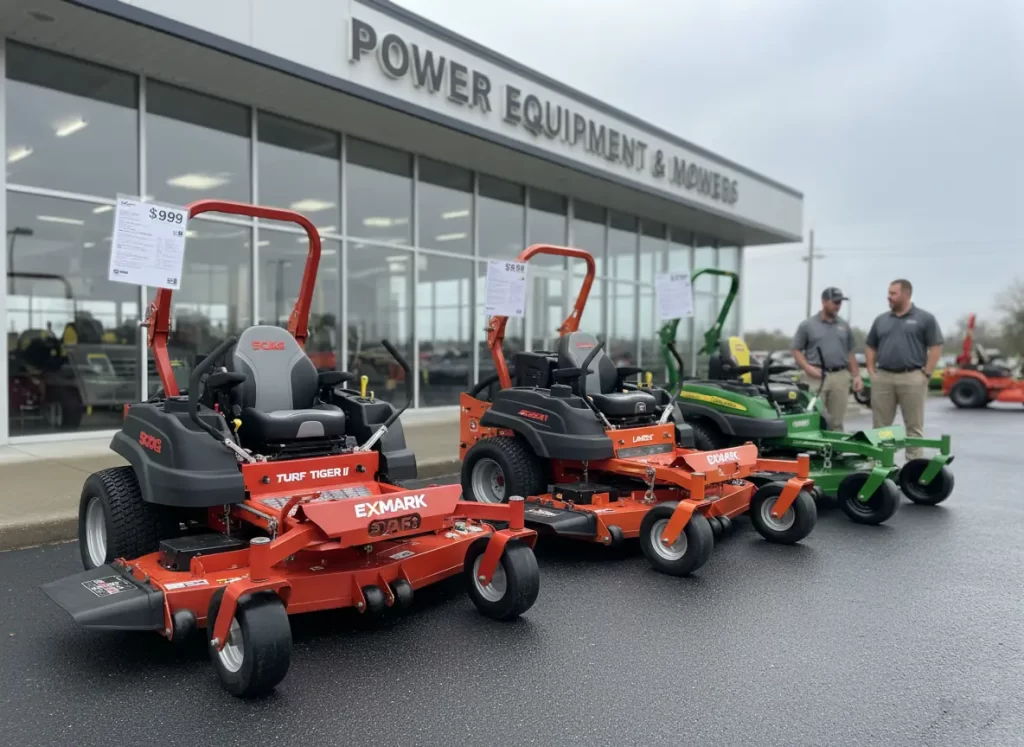
Finding quality commercial mowers for sale involves way more than just comparing prices online (though that’s where most people start, myself included). The dealer relationship profoundly impacts your long-term satisfaction and equipment performance in ways that aren’t obvious until something goes wrong.
Start by identifying authorized dealers for major commercial brands in your area. Most manufacturers maintain dealer locator tools on their websites. For Scag commercial mowers, visit scag.com and search by zip code. John Deere commercial mowers are available through the dealer network at deere.com. Exmark commercial mowers can be located through exmark.com’s dealer finder.
But here’s what those dealer locators won’t tell you – not all dealers are created remotely equal. Some “authorized dealers” primarily serve homeowners and carry maybe one or two commercial models. Others operate full commercial divisions with dedicated staff, service bays, and parts inventory.
Look for these characteristics:
Commercial specialization – Dealers with dedicated commercial divisions understand professional needs differently. They stock commercial parts, employ technicians experienced specifically with commercial equipment, and structure operations around business customers’ schedules. When you call at 6:30 AM because a mower won’t start, commercial-focused dealers get it. They understand you have properties scheduled and need solutions NOW.
Service capabilities – Visit the dealer’s service department in person. Multiple service bays? Experienced technicians or just one mechanic who works on everything from chainsaws to riding mowers? Diagnostic equipment? A well-equipped service department suggests they can actually handle your needs when problems arise.
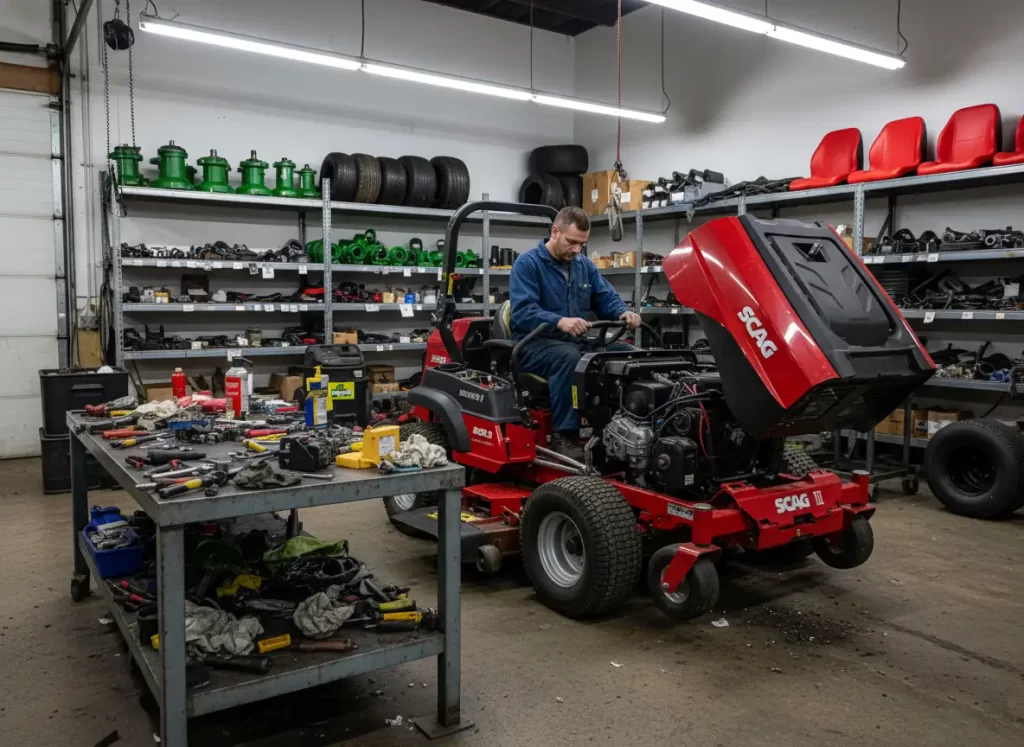
I remember visiting this one dealer where their “service department” was literally one guy working in a pole barn. Nice guy, seemed knowledgeable enough, but he was backlogged three weeks on repairs. That’s fine for homeowners who can wait. Completely unacceptable for commercial operations.
Parts inventory – Commercial dealers should stock common wear items – blades, belts, filters, spark plugs – for immediate availability. Ask about their parts ordering process and typical turnaround for special orders. Good dealers can get non-stock parts within 24-48 hours. Poor dealers might take a week or more. Understanding the difference between OEM and aftermarket parts helps you make informed purchasing decisions.
Loaner programs – This is huge. When your mower goes down during peak season (and it will eventually), having access to loaner equipment keeps you operational. Many commercial dealers offer loaner programs for customers with regular service relationships. Some charge nominal fees, others provide loaners free if you’re getting service work done.
I worked with one company that had a great relationship with its John Deere dealer. Any time equipment went down for service, the dealer provided comparable loaners at no charge. That kept the business running smoothly even during unexpected breakdowns.
Fleet programs – If you’re planning to run multiple machines, ask about fleet pricing, scheduled maintenance contracts, and priority service arrangements. Good dealers offer programs that improve equipment management and reduce your downtime.
Financing options – Most commercial dealers work with equipment financing companies and can arrange terms suited to business cash flow. Many manufacturers offer promotional financing (0% for 24-48 months) during certain periods. Having a dealer who understands business financing makes equipment purchases more manageable.
Beyond traditional dealers, several nationwide retailers carry commercial equipment:
Tractor Supply Company stocks commercial mowers from multiple manufacturers with competitive pricing. Their widespread locations provide convenience. However, service capabilities vary dramatically by location. Some stores have experienced staff and service departments, while others basically just sell equipment and refer you elsewhere for service.
They’re particularly useful for straightforward purchases where an ongoing dealer relationship isn’t as critical. But for your primary equipment? I’d generally recommend traditional dealers with dedicated commercial support.
Lowe’s Commercial Sales division serves business customers with competitive pricing and delivery options. Their commercial sales team can arrange fleet pricing and coordinate large equipment orders. Service happens through authorized service centers rather than in-store, which works fine if those service centers are competent and convenient.
Home Depot Pro offers commercial lawn equipment through its professional contractor program. Pricing can be competitive, and they can arrange special orders for equipment not normally stocked. Similar to Lowe’s, service happens through separate authorized centers.
Online retailers and manufacturer-authorized online dealers offer competitive pricing and nationwide shipping. However, local assembly, service, and warranty work must be arranged separately.
This works fine for experienced buyers who can handle their own maintenance and have backup equipment. For new businesses? Local dealer relationships provide more value than slightly lower online prices.
When evaluating commercial mowers for sale, consider the total cost of ownership rather than just the sticker price:
Purchase price – The obvious cost, but negotiate. Dealers have flexibility, particularly on multiple-unit orders or during slow seasons. I’ve seen people save $1,000-$2,000 just by asking. Worst case, the dealer says no. Best case, you save significant money.
Delivery and setup – Some dealers include delivery and setup in the price; others charge $200-$500 extra. Clarify these costs upfront. Also ask about initial service – some dealers do the first oil change and inspection as part of setup, others charge separately.
Initial service packages – Many dealers offer discounted packages covering the first oil change, blade sharpening, and early-season tune-up. These packages often provide good value compared to paying for services individually.
Extended warranties – Manufacturer warranties cover defects, but extended warranties can cover wear items and provide additional protection. Evaluate cost versus the likelihood of needing coverage. For equipment you’re planning to run hard, extended warranties sometimes make sense. For backup equipment? Probably not worth it.
Parts and service costs – Research parts pricing and service labor rates before committing to a dealer. Differences between dealers can be significant over equipment lifetime. Some dealers mark up parts aggressively, others keep margins reasonable. Labor rates can vary $20-$40 per hour between dealers.
Timing purchases strategically saves real money:
Late fall/early winter – Dealers want to clear inventory before year-end and will negotiate aggressively. You’ll have equipment ready for the spring season. I’ve seen dealers discount $1,500-$2,000 off the list price in December to move inventory.
Manufacturer promotion periods – Most manufacturers run promotional financing or rebate programs several times yearly. Watch for 0% financing offers or cash-back promotions. Sign up for dealer email lists to get notified about these.
Trade-in opportunities – Dealers value trade-ins more when their used inventory is low, typically spring when demand is highest. Might seem counterintuitive, but you can often get better trade values during peak buying season because dealers need used inventory to sell.
Multiple-unit purchases – Buying multiple machines? Negotiate fleet pricing. Dealers often discount 10-15% on orders of 3+ units. Even if you don’t need three machines immediately, buying them together saves money if you’re planning to expand within the next year anyway.
For startup businesses, consider certified pre-owned or quality used equipment. Many commercial dealers take well-maintained trade-ins and offer them with limited warranties. A 2-3 year old commercial machine with 500-800 hours can provide years of reliable service at 40-50% off new pricing. Our lawn mower comparison guide helps you evaluate different models and determine fair market value.
Inspect used equipment carefully, though:
- Check engine hours (but know that low hours alone don’t guarantee good condition)
- Look for fluid leaks anywhere – hydraulic, engine oil, fuel
- Test drive extensively to evaluate transmission smoothness and cutting performance
- Inspect the deck for cracks, damage, or excessive wear on spindles
- Verify all safety systems function properly
- Ask for maintenance records if available
I bought a used Scag a few years back – a 48-inch Turf Tiger with about 700 hours. The previous owner was meticulous about maintenance and had all service records. Paid $7,200 for a machine that listed at $14,500 new. Ran it for three more years without issues. Great investment.
Manufacturer fleet programs deserve consideration for growing businesses. Scag commercial mowers, John Deere commercial mowers, and other major brands offer fleet purchase programs with volume pricing, scheduled replacement plans, and preferential financing. These programs work well once you’re running 5+ machines and need systematic equipment management.
ROI Analysis: Justifying Your Commercial Lawn Mower Investment
Every dollar spent on equipment needs to generate returns, right? Understanding the actual economics of commercial lawn mower ownership helps you make smart investment decisions and justify expenditures to accountants, partners, or (in my case, early on) skeptical spouses.
Let’s work through realistic numbers for a typical scenario:
Initial investment: $14,000 for a quality 52-inch commercial zero turn mower
Financing: $14,000 financed at 0% for 36 months = $389/month payment
Productive life: 6 years (approximately 2,500 operating hours)
Cost per operating hour: $14,000 divided by 2,500 hours = $5.60/hour
Now add operating costs (and these are real numbers, not estimates):
- Fuel: 2.5 gallons per 8-hour day times $3.50/gallon = $8.75/day = $1.09/hour
- Maintenance: $600/year divided by 400 hours/year = $1.50/hour
- Insurance: $400/year divided by 400 hours/year = $1.00/hour
Total operating cost: $5.60 + $1.09 + $1.50 + $1.00 = $9.19/hour
Okay, so that’s what it COSTS to run the equipment. Now let’s look at what it GENERATES.
A commercial zero turn mower increases productivity significantly compared to walk-behinds or residential equipment. Let’s quantify:
Residential mower: 0.5 acres/hour cutting capacity Commercial zero turn: 2.0 acres/hour cutting capacity
At this rate, the commercial lawn mower completes in one hour what would take four hours with residential equipment. That’s not marketing hype – that’s real-world performance difference.
Now revenue generation (using typical suburban markets):
Average residential lawn service: $40-$60 per property Average property size: 0.25 acres Time to complete with commercial equipment: 15-20 minutes, including trimming, edging, and blowing
Realistic daily capacity:
- 8-hour workday
- 20-minute average per property
- 2 hours travel and logistics
- Total: 18 properties per day
Daily revenue: 18 properties times $50 average = $900 Weekly revenue (4 days mowing): $3,600 Monthly revenue (16 mowing days): $14,400
Your $389 monthly equipment payment represents just 2.7% of the revenue generated by that machine. Think about that. Less than 3% of revenue goes to equipment cost.
The productivity comparison versus lower-cost alternatives gets really interesting:
Scenario A: $14,000 commercial zero turn
- Daily capacity: 18 properties
- Monthly revenue: $14,400
- Equipment cost: $389/month
- Revenue per dollar of equipment: $37
Scenario B: $5,000 residential/homeowner-grade zero turn
- Daily capacity: 10-12 properties (slower cutting speed, more breakdowns, less efficient)
- Monthly revenue: $8,000
- Equipment cost: $150/month
- Revenue per dollar of equipment: $53
- However, the Machine likely needs replacement in 2-3 years instead of 6
The residential equipment initially appears more efficient. But factor in:
- Lost revenue from reduced capacity: $6,400/month
- Replacement costs: Additional $5,000 in years 2-3 (probably year 2, honestly)
- Downtime from breakdowns: Conservatively, 5 days/year = $2,250 lost revenue annually
- Repair costs: 2-3 times higher than commercial equipment
- Reputation damage from inconsistent service (can’t quantify, but it’s real)
Over 6 years:
Commercial equipment total cost: $14,000 + $3,600 maintenance = $17,600 Residential equipment total cost: $15,000 (three machines over 6 years) + $7,200 maintenance + significant lost revenue = well over $25,000
The commercial lawn mower saves approximately $7,000-$10,000 while delivering better results and way less stress.
For businesses focused on commercial properties rather than residential, the numbers become even more compelling. Large commercial properties – office parks, apartment complexes, HOA communities – demand efficient equipment and consistent quality.
Consider a commercial maintenance contract:
- 10-acre corporate campus
- Monthly maintenance: $3,500
- Time required with residential equipment: 16+ hours (probably 2 full days)
- Time required with commercial equipment: 6-8 hours (one day)
The commercial equipment allows you to service this contract with one crew in one day, leaving three days weekly for additional work. Residential equipment would require two full days, cutting your capacity nearly in half. You literally couldn’t grow the business without upgrading equipment.
Tax advantages improve equipment economics significantly:
Section 179 deduction – Current tax law allows businesses to deduct up to $1,160,000 in equipment purchases in the year purchased (for 2025, though this changes so verify current limits). This means your entire commercial lawn mower purchase can be deducted immediately rather than depreciated over several years.
So that $14,000 mower? Reduces your taxable income by $14,000 in year one. At a 25% effective tax rate, that’s $3,500 in tax savings. Your real out-of-pocket cost drops to $10,500.
Bonus depreciation – 100% first-year bonus depreciation has been applied to new equipment (check current tax law, as this fluctuates with legislation). Combined with Section 179, equipment purchases can provide substantial tax benefits.
Business expense deductions – All operating costs (fuel, maintenance, insurance) are fully deductible business expenses, reducing your taxable income.
Consult with your accountant about optimal timing for equipment purchases to maximize tax advantages. Sometimes it makes sense to accelerate purchases into the current year for tax purposes.
Financing versus cash purchase depends on your situation:
Cash purchase advantages:
- No interest charges
- Immediate full ownership
- Flexibility to sell if business needs change
- Satisfaction of owning equipment outright
Financing advantages:
- Preserves working capital for operations, marketing, and growth
- Matches payments to revenue generation
- 0% promotional financing costs nothing beyond the purchase price
- Potential to invest cash in higher-return opportunities
- Builds business credit
Most growing businesses finance equipment to preserve cash for operations, marketing, and growth opportunities. Cash is oxygen for small businesses – keeping it flowing through the business rather than tied up in assets usually makes more sense.
Resale value factors into the total cost of ownership significantly. Quality commercial lawn mowers retain 40-50% of their original value after 4-5 years with reasonable hours (under 2,000). Budget brands and residential equipment often have minimal resale value.
Example: Your $14,000 Scag commercial mower with 1,500 hours after 4 years might sell for $6,000-$7,000. A $5,000 residential machine with 600 hours might fetch $1,000-$1,500. The commercial equipment recovers more actual dollars despite a higher initial cost.
Fleet management strategies optimize returns:
Scheduled replacement – Replace equipment on predictable cycles (typically 5-7 years) to avoid unexpected failures during peak season. Planned replacement allows you to:
- Sell equipment while it still has meaningful value
- Budget replacement costs are predictable without emergencies
- Maintain modern equipment that attracts quality employees
- Avoid reputation damage from equipment failures
- Take advantage of tax deductions strategically
Preventive maintenance programs – Investing $600-$800 annually in scheduled maintenance prevents expensive repairs and extends equipment life dramatically. I’ve seen businesses cut total ownership costs by 20-30% simply by following manufacturer maintenance schedules religiously instead of running equipment until something breaks.
Operator training – Proper equipment operation dramatically impacts longevity. Trained operators cause less damage, identify problems early, and maintain productivity. The $500-$1,000 invested in comprehensive operator training returns multiples through reduced repair costs and improved efficiency.
Train operators on:
- Proper starting and shutdown procedures
- Correct mowing speeds for conditions
- How to recognize early warning signs of problems
- Basic daily maintenance (checking fluids, cleaning decks)
- Safe operation on slopes and around obstacles
The real ROI question isn’t whether you can afford quality commercial lawn mowers – it’s whether you can afford NOT to invest in them. The productivity gains, reliability advantages, and professional results they deliver form the foundation of successful landscaping businesses.
Compare two hypothetical businesses launched simultaneously:
Business A invests $40,000 in quality commercial equipment – two zero turns, two walk-behinds, and commercial trimming equipment.
Business B starts with $15,000 in residential-grade equipment, trying to conserve capital
Understanding different types of lawn mowers and their intended applications prevents costly equipment mismatches.
Year one, Business B appears smarter – more cash for marketing and operations. But by year three:
- Business A has grown to 150 regular clients with a reputation for reliability
- Business B struggles with 80 clients, equipment constantly breaking down, and can’t take on more work
- Business A’s equipment is approaching mid-life, with years of service remaining
- Business B has replaced equipment once already and is facing another replacement cycle
By year five, Business A generates $400,000+ in annual revenue with stable equipment costs. Business B either finally invested in better equipment (negating initial savings plus losing years of growth) or failed due to reliability issues and inability to scale.
Quality equipment isn’t an expense – it’s infrastructure that generates returns for years. It’s the foundation your entire business operates on.

Conclusion: Choosing the Right Commercial Lawn Mower for Success
Selecting the right commercial lawn mower equipment represents one of the most important business decisions you’ll make as a landscaping professional. These machines become the foundation of your entire operation – affecting productivity, reliability, cut quality, and ultimately your reputation and profitability.
Throughout this guide, we’ve covered the critical factors that separate excellent equipment investments from expensive mistakes. Commercial lawn mowers from established manufacturers like Scag, John Deere, and Exmark deliver the durability, performance, and support professional landscaping businesses genuinely require. These machines cost more initially (sometimes significantly more), but their productivity advantages, reliability, and longevity make them dramatically more economical than cheaper alternatives.
Commercial zero turn mowers should form the backbone of most lawn care operations, delivering the speed and efficiency necessary to maximize daily property counts while maintaining professional cut quality. Supplement them with commercial walk behind mowers for gated areas, slopes, and situations where zero turns can’t operate safely or efficiently.
The equipment isn’t just about cutting grass, though. It’s about building business infrastructure that supports growth, maintains quality standards, and generates consistent returns year after year. Quality commercial lawn mowers allow you to serve more clients, complete jobs faster, and build a reputation for professional results that creates referrals and repeat business.
Here’s what you should actually do next (not just read about):
Visit local dealers for Scag commercial mowers, John Deere commercial mowers, and Exmark commercial mowers. Actually test drive equipment – spend real time on machines, not just quick laps around parking lots. Evaluate dealer service departments and commercial support programs. The relationship you build with your equipment dealer ends up being almost as important as the equipment itself.
Create a realistic equipment budget that accounts for initial purchase, ongoing maintenance, and eventual replacement. Remember that financing options often make more sense for growing businesses than draining cash reserves – preserve working capital for marketing and operations while matching equipment payments to revenue generation.
Don’t let perfect become the enemy of good. You don’t need the most expensive equipment to start a successful landscaping business. You need reliable commercial-grade equipment from a supportive dealer, combined with solid business practices and commitment to quality service.
The landscaping industry continues to grow, with increasing demand for professional lawn maintenance services. Homeowners and commercial property managers increasingly recognize the value of hiring professionals with quality equipment and expertise. Your investment in proper commercial lawn mowers positions you to capture that growing market and build something lasting.
The professional landscaping industry continues to grow, with increasing demand for professional lawn maintenance services.
Whether you’re launching a new business or upgrading existing equipment, focus on the fundamentals – durability, dealer support, and equipment matched to your actual needs rather than what looks impressive. The lawn mower for business decisions you make today will impact your success for years to come.
Now get out there and build something great. Your community needs reliable, professional lawn care services, and with the right equipment backing your skills and work ethic, there’s honestly no limit to what you can achieve.
Over 11 years working with lawn care businesses, I’ve answered the same questions hundreds of times. Some from people just starting, some from established operators looking to upgrade, and honestly, some from folks who should’ve asked these questions BEFORE buying equipment. Let’s tackle the most important ones.
With proper maintenance, a quality commercial lawn mower should deliver 2,500-3,500 hours of productive service, with some exceeding 4,000 hours. That translates to 4-9 years depending on how hard you run them – light use (400 hours/year) gets you 6-9 years, while heavy use (1,000+ hours/year) means 2.5-3.5 years. Most operations plan replacement at 2,000-2,500 hours when machines still have decent resale value. I’ve seen well-maintained Scag Turf Tigers with 3,800+ hours still cutting professionally, but poorly maintained machines cooked at 1,200 hours – maintenance matters more than brand.
Commercial mowers use twice-as-thick steel decks (7-10 gauge vs 12-14 gauge), engines rated for 2,000-3,000+ hours instead of 300-500 hours, and heavy-duty transmissions built for continuous commercial use rather than weekend mowing. Commercial equipment costs $12,000-$15,000 versus $3,000-$5,000 for residential, but delivers professional cut quality at higher speeds (8-10 mph) and includes warranties that actually cover business use. The moment you accept money to cut grass with residential equipment, your warranty is void – commercial warranties expect and cover business use for 3-5 years or 1,500+ hours.
Current 2025 pricing ranges from $8,000-$11,000 for entry-level commercial zero-turns, $11,000-$15,000 for mid-range models (the sweet spot for most operations), and $15,000-$22,000 for premium flagship machines. With 0% promotional financing (common several times yearly), a $12,000 mower over 36 months runs $333/month, or $15,000 over 48 months is $312/month. Add ongoing costs of $275-$535 monthly for fuel, maintenance, insurance, and replacement fund. Most businesses finance to preserve working capital even when they could pay cash.
The top tier includes Scag, Exmark, John Deere, Ferris, Hustler, and Toro – all build legitimate commercial equipment that serves professionals well. The “best” brand depends more on your local dealer quality than the brand itself, because an excellent dealer selling a second-tier brand beats a poor dealer selling the best brand. If I had to rank: Tier 1 (Premium) is Scag, Exmark, and John Deere; Tier 2 (Excellent) is Ferris, Hustler, and Toro; Tier 3 (Good Commercial) includes Gravely and Spartan. Visit dealers, test drive extensively, and talk to other operators in your area – local reputation and dealer support matter most.
Absolutely yes – most commercial lawn care businesses primarily service residential properties using commercial equipment. Commercial mowers work excellently on residential properties because they’re designed for diverse conditions, deliver consistent professional quality, maneuver surprisingly well, and complete typical properties (0.25-0.5 acres) in 15-25 minutes. The key is using appropriate sizes – stick with 48-52-inch zero-turns and 36-inch walk-behinds rather than bringing 72-inch machines into suburban backyards. Well-maintained commercial equipment looks professional and builds credibility with residential clients.
Daily maintenance takes 5-10 minutes (visual inspection, check oil, clean debris), weekly requires 30 minutes (thorough cleaning, greasing, blade sharpening), every 50 hours needs oil/filter changes and air filter replacement, every 100 hours requires spark plugs and deck leveling, and annually demands comprehensive dealer service. Budget approximately $900-$1,300 per machine annually, including $600-$800 for DIY maintenance parts and $300-$500 for professional dealer service 2-3 times per season. That might seem expensive until you compare it to repair costs from neglect or lost revenue from unexpected breakdowns during peak season.
Yes, if you’re running an actual business, you absolutely need commercial equipment if you’re cutting 10+ properties weekly, lawn care is your primary income, you employ others, or you plan to grow. You might temporarily survive with residential equipment if you’re testing part-time with under 5-10 properties and upgrading within 6-12 months, but it’s not a long-term solution. Professional equipment signals credibility and seriousness, while residential equipment tells clients you’re just starting or cutting corners. The math doesn’t work either – residential equipment used commercially costs more long-term while delivering inferior results.
Quality commercial mowers include operator presence systems (seat switches that kill the engine when you leave the seat), blade engagement clutch, parking brake, ROPS (roll-over protection – and if equipped, use your seatbelt), throttle return spring, safety discharge chute, and interlocked starting system. Beyond equipment, ensure proper training, appropriate PPE (safety glasses, hearing protection, steel-toe boots, long pants), and operational practices like mowing across slopes (never up-and-down), keeping slopes under 10-15 degrees, disengaging blades before backing, and keeping bystanders 75+ feet away. Commercial mowing causes thousands of preventable injuries annually – invest in proper safety systems and enforce safe practices consistently.
