
Manual Push Reel Mowers: A Guide to Eco-Friendly Lawn Care
So here’s the thing about manual push reel mowers: I never thought I’d become “that guy” who gets excited about old-school lawn equipment. But here we are.
Table of Contents
▼- What We’re Talking About Here
- Why Go Manual? (The Environmental Stuff)
- When These Things Work (And When They Don’t)
- Picking One That Won’t Drive You Crazy
- What I Recommend
- Using the Thing
- The Stuff That Goes Wrong (And How to Fix It)
- What It’s Actually Like Long-Term
- Is This Right for Your Situation?
- The Reality Check: Manual vs. Everything Else
- My Honest Take
It started about three years ago when my gas mower died (again) on a scorching July morning in Austin. I was standing there, sweating through my shirt, yanking that stupid cord for the fifteenth time, when my neighbor walked over with this contraption that looked like it belonged in a museum. No engine, just blades and wheels.
“Want to try it?” he asked.
I figured, why not? It couldn’t be worse than my temperamental Craftsman that seemed to break down every other month. That first pass across his front lawn was… well, it was actually kind of nice. Quiet. No fumes. Just the satisfying snip-snip sound of grass getting cut clean.
Now, don’t get me wrong, I’m not about to tell you that manual push reel mowers are some miracle solution that’ll change your life. They’re not. But after using one regularly for the past few years (and helping a bunch of clients figure out if they’re right for them), I’ve got some thoughts worth sharing.
What We’re Talking About Here

A manual push reel mower is basically a cylinder of curved blades that spins against a fixed blade at the bottom. As you push it, the wheels make the cylinder turn, and you get this scissor-like cutting action. Pretty simple concept.
These things have been around forever, like reel mowers have been around since the 1830s. My grandfather probably used one growing up, back when nobody had heard of gas-powered anything for lawn care. They kind of disappeared when everyone went crazy for power equipment in the ’50s and ’60s, but now they’re making a comeback.
The big difference between these and regular rotary mowers is how they cut grass. Your typical gas or electric mower has a blade spinning fast that whacks the grass off. It works, but it’s rough on the grass tips—kind of like tearing paper instead of cutting it cleanly.
Push reel mowers make clean cuts that help your grass stay healthier. Less water loss, fewer disease problems. I’ve seen this in my yard, especially during our brutal Texas summers.
If you’re curious about how manual reel mowers fit into the broader landscape of types of lawn mowers available today, there are plenty of other options to consider.
Why Go Manual? (The Environmental Stuff)

Look, I’m not going to lecture you about saving the planet. But the numbers are pretty interesting when you dig into them.
That gas mower sitting in your garage? According to EPA emissions data, one hour of running it produces about as much pollution as driving your car 45 miles. I mean, think about that for a second. Most of us mow for maybe an hour a week during the growing season, which is like adding over 1,000 miles to your annual driving just for lawn care.
And don’t even get me started on the noise. My old mower was loud enough that I couldn’t hear my phone ring from twenty feet away. The reel mower? I can have a normal conversation while using it. My neighbors appreciate that at 7 AM on Saturday mornings.
Plus, there’s something satisfying about not needing gas, oil, spark plugs, or any of that maintenance headache. Just push and cut. Sometimes, simple is better.
When people ask me about the best eco-friendly lawn mower options, I always start with manual reels. They’re the ultimate zero-emission solution: no electricity from the grid, no gas, no batteries to dispose of.
When These Things Work (And When They Don’t)
Okay, real talk time. Reel mowers aren’t for everyone, and anyone telling you different is probably trying to sell you something.
They work great if you’ve got a smaller lawn, I’d say under half an acre, though I know some crazy folks who do more. Flat or gently rolling terrain is ideal. If your yard looks like a BMX course, you’re going to struggle.
The grass type matters too. Fine-bladed stuff like Bermuda, zoysia, and most cool-season grasses is perfect. Thick, coarse grass like St. Augustine? That’s going to be a workout, and not the fun kind.
Here’s the thing nobody tells you upfront: you have to keep up with it. These work best when you’re mowing regularly, never taking off more than about a third of the grass height. Let your lawn turn into a prairie, and you’re going to hate life trying to cut it with a reel mower.
I learned this the hard way my first summer. Went on vacation for two weeks, came back to grass that looked like it belonged in a nature preserve. Took me three passes with the reel mower, and I was questioning all my life choices by the end.
Also, they don’t handle sticks, leaves, and random yard debris like rotary mowers do. You need to do a quick cleanup walk before mowing. It’s not a huge deal once you get in the habit, but it’s an extra step.
Of course, if manual reel mowers don’t fit your situation, you might want to explore the gas vs electric mower comparison to find a powered alternative that works better for your needs.
Picking One That Won’t Drive You Crazy
When shopping for your first manual push reel mower, don’t get overwhelmed by all the options. The key is finding a push reel mower that matches your lawn size and grass type. I usually tell clients to think of it like buying a good hand tool. You want something that feels solid and well-made, because a quality manual reel lawn mower should last you decades with proper care.
The market’s got way more options now than when I started looking into these things. Here’s what I’ve figured out matters:
Blade count: More blades generally mean better cut quality, but they also mean more money. Five blades seem to hit the sweet spot for most people. Seven if you’re picky about your lawn appearance, four if you just want the grass shorter.
Width: Wider cuts fewer passes, but they’re heavier and harder to maneuver around flower beds and landscaping. I usually tell people 16 inches for smaller, obstacle-heavy yards, 18-20 inches for more open spaces.
Weight: This is where it gets tricky. Heavier mowers often cut better because the weight helps the blades bite into the grass. But obviously, they’re harder to push. You’ve got to find your balance point.
Build quality: Look for ball bearings instead of basic sleeve bearings; they roll smoother and last way longer. And please, avoid anything with lots of plastic parts. This is lawn equipment, not a toy.
What I Recommend
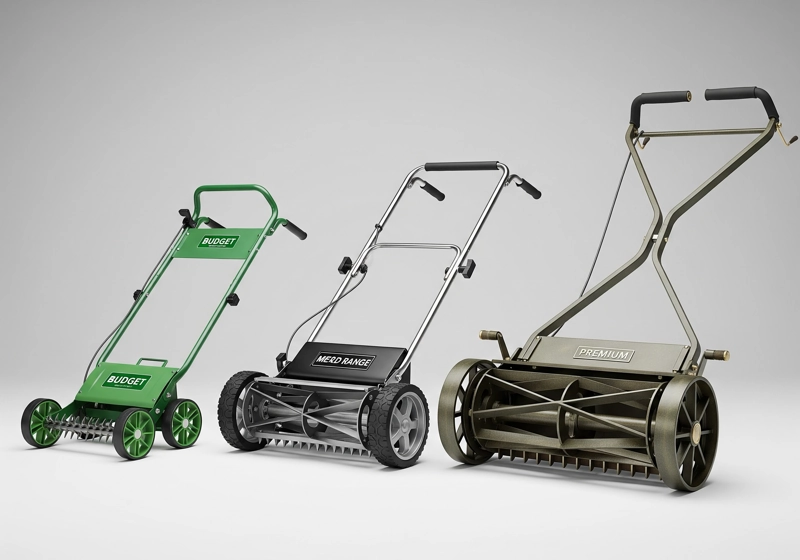
After trying a bunch of different manual push reel mowers (and having clients test even more), here are the ones that consistently don’t disappoint:
The Fiskars StaySharp Max is probably the best overall choice if you don’t mind spending around $200. It’s got this neat design where the blades don’t touch each other while cutting, which means less wear and tear. My neighbor (the one who got me into this whole thing) has had his for six years with zero maintenance beyond occasional cleaning.
For budget-minded folks, the Greenworks 16-inch does the job for under $100. It’s lighter, which makes it easier to push but not as effective on thick grass. Good starter option, though.
If you’ve got a bigger lawn, the Scott’s 20-inch Classic covers more ground per pass. It’s heavy (like, really heavy), but the extra width makes a noticeable difference when you’re covering more area.
While these manual options work great for many people, if you’re considering powered alternatives, check out our comprehensive lawn mower brand reviews to see what else is available.
Using the Thing
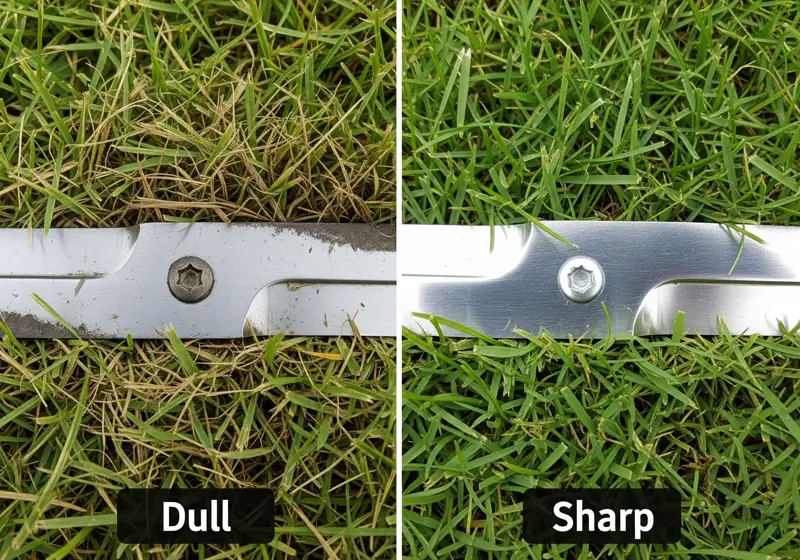
Here’s where I wish someone had given me a heads-up before I started.
Keep those blades sharp. This is huge. A sharp reel mower glides through grass like butter. A dull one feels like you’re trying to cut rope with a spoon. Most need sharpening every couple of years with regular use, costs about $25-30 to have it done professionally.
Speaking of blade care, if you’re interested in learning more about lawn mower blade maintenance across different mower types, the principles are surprisingly similar.
Find your pace and stick with it. I spent way too much time in my first few weeks trying to rush through it. Turns out there’s an optimal walking speed, too fast and you miss spots, too slow and you’re working harder than necessary for no reason.
Mow when it’s dry. Wet grass clumps up and jams everything. I usually mow in the evening after the dew’s dried but before it gets too hot. Works out better for me anyway, since I can enjoy being outside.
Overlap your passes slightly. Unlike gas mowers that create suction and pull grass up, reel mowers only cut what they directly contact. A little overlap prevents those annoying uncut strips.
The Stuff That Goes Wrong (And How to Fix It)
After three years and helping probably twenty neighbors and clients figure these things out, here are the most common complaints:
“This thing is impossible to push!”
Nine times out of ten, the grass is too tall or the blades are dull. Stick to cutting just the top third of the grass, and check if it’s time for sharpening.
“It’s leaving strips of uncut grass!”
Usually means the cutting bar needs adjustment; it should be almost touching the reel blades. Most mowers have an adjustment screw for this.
“Keeps jamming on every little twig!”
Yeah, that’s just how reel mowers work. You need to do a quick debris pickup before mowing. Honestly becomes second nature after a few weeks.
“The grass looks all chewed up after cutting!”
Dull blades, 100%. Time for sharpening or possibly blade replacement if the mower’s old.
While reel mowers have fewer issues than powered mowers, if you’re dealing with gas or electric equipment, our general lawn mower troubleshooting guide covers the most common problems you’ll encounter.
What It’s Actually Like Long-Term
I’m not going to sugarcoat this. The first few times using a reel mower, you might wonder what you’ve gotten yourself into. It’s different from what most of us grew up with. You have to develop a rhythm, and yeah, it’s more physical than pushing a self-propelled gas mower.
But here’s what I didn’t expect: after a month or so, I started looking forward to mowing. There’s something almost meditative about the rhythmic pushing and the clean snip-snip sound. No engine noise, no fumes, just you and the grass.
My kids even started helping with something that never happened with the gas mower (too loud, too scary for them). Now, Saturday morning lawn care is kind of a family activity. Weird how that worked out.
The reliability factor is huge, too. My old gas mower needed something every season: carburetor cleaning, spark plug replacement, oil changes, you name it. The reel mower just… works. Clean it off after use, oil the chain once a year, and sharpen when needed. That’s it.
Is This Right for Your Situation?
Look, I’m not going to pretend this works for everyone. If you’ve got two acres and a riding mower, don’t throw it away and buy a reel mower. That would be insane. For larger properties, check out our riding vs push mower comparison to understand your best options.
But if you’ve got a smaller lawn, you’re not afraid of a little physical activity, and the idea of quiet, emission-free mowing appeals to you, it might be worth considering.
I’ve seen it work great for people with quarter-acre suburban lots, especially folks who already keep up with their lawn maintenance pretty well. I’ve also seen people try it and go back to gas mowers after a season because it just didn’t fit their lifestyle or lawn conditions.
The money thing is interesting, too. Yeah, you’ll spend $100-300 upfront, but then… that’s it. No gas, no oil, no annual tune-ups. I probably saved $200 just in fuel costs last year, and that doesn’t count all the maintenance I’m not doing.
The Reality Check: Manual vs. Everything Else
Whether you call it a manual push reel mower, push reel mower, or just an old-fashioned grass cutter, the principle remains the same: sometimes the simplest solution is the best one. As more people search for eco-friendly lawn mower alternatives, manual reels are proving that innovation doesn’t always mean adding more technology.
I’ve had clients switch from $500 electric mowers back to $150 manual reels because they got tired of battery issues and charging schedules. There’s something liberating about a tool that’s always ready to work.
My Honest Take
Three years in, I’m still happy with the switch, though I’ll admit there are times I miss the brute-force efficiency of a gas mower. When I’ve been traveling and come home to tall grass, or when I’m trying to cut through a patch of particularly stubborn weeds, I sometimes think about that old Craftsman gathering dust in my garage.
But most of the time? I grab the reel mower without thinking twice. It’s reliable, quiet, and somehow makes the whole lawn care routine feel less like a chore and more like… I don’t know how to take care of something.
If you’re thinking about trying one, my advice is to borrow or rent one first if possible. You’ll know pretty quickly if it fits your situation and temperament. And if you do make the switch, be patient with yourself the first few uses. It takes a little time to find your groove.
The bottom line? Reel mowers aren’t going to revolutionize your life, but they might make your Saturday mornings a little quieter and more satisfying. And in a world full of complicated, high-maintenance stuff, something is refreshing about a tool that just does its job simply and well.
Plus, your great-grandfather would probably approve. Sometimes the old ways were better.
The main downsides include struggling with tall or thick grass, requiring pre-mowing cleanup to remove sticks and debris, and needing more frequent mowing schedules. They’re also more physically demanding than self-propelled mowers and don’t work well on steep terrain or coarse grasses like St. Augustine. However, for smaller, well-maintained lawns with fine-bladed grass, these limitations are manageable trade-offs for the environmental and cost benefits.
It requires more physical effort than self-propelled gas mowers, but with sharp blades and proper technique, it’s comparable to a brisk walk. The key is maintaining your grass at the proper height and finding your optimal walking pace. Most people adapt within 2-3 weeks and develop a comfortable rhythm. The effort becomes much easier when you’re cutting grass regularly rather than letting it grow too tall.
Manual push reel mowers work best on grass that’s 3-4 inches tall or shorter, following the rule of never cutting more than one-third of the grass height. Once grass exceeds 5-6 inches, especially thick varieties, you’ll struggle significantly and may need multiple passes. Fine-bladed grasses like Bermuda handle being slightly longer better than coarse types. Regular mowing during the growing season prevents this issue entirely.
For the right situation, absolutely. They eliminate ongoing fuel and maintenance costs, potentially saving $200+ annually, while lasting decades with minimal care. The quiet operation, superior cut quality, and environmental benefits add significant value. However, they’re best suited for smaller yards (under half-acre) with regular maintenance schedules. If you have large areas, steep terrain, or prefer minimal physical effort, gas or electric mowers might be better investments.
Quality manual push reel mowers range from $100-300, with most people finding the $150-200 range offers the best value. Budget options under $100 work for basic needs, while premium models around $250-300 provide superior build quality and features. Unlike gas mowers, there are no ongoing fuel, oil, or maintenance costs, making the upfront investment pay for itself within 2-3 years through savings alone.
During peak growing season, plan to mow weekly or even twice weekly after heavy rain periods. The key is never removing more than one-third of the grass height, so frequency depends on your desired lawn height and growth rate. In slower periods like late summer or fall, every 10-14 days works well. This frequent schedule makes each mowing session easier since you’re cutting less grass each time.
