
Battery Powered Electric Lawn Mowers: A Sustainable Mowing Solution
Picture this: It’s 7 AM on a Friday, and you’re ready to tackle your weekly lawn care routine. But instead of yanking a pull cord fifteen times while your neighbors shoot you dirty looks, you simply press a button and start mowing. No gas fumes, no engine noise that wakes the whole block, and no fighting with a temperamental carburetor.
Table of Contents
▼- The Electric Revolution Has Arrived (And It’s About Time)
- Why Battery Power Makes Sense for Most Homeowners
- Understanding Battery Technology: What Matters
- Voltage: The Power Behind the Performance
- Amp-Hours: Your Runtime Reality Check
- Charging Times: Planning Your Mowing Schedule
- Performance Where It Counts: Real-World Testing
- Mulching Performance: Better Than You’d Expect
- Top Battery Mower Categories: Finding Your Match
- Best Overall Value: The 56V Sweet Spot
- Budget-Conscious Choice: Proving Electric Can Be Affordable
- Premium Performance: When You Want the Best
- Runtime Reality: What to Expect
- Small Yards (Under 1/4 Acre)
- Medium Yards (1/4 to 1/2 Acre)
- Larger Properties (1/2 to 1 Acre)
- Charging Infrastructure: Setting Yourself Up for Success
- Standard vs. Rapid Charging
- Battery Storage and Care
- Maintenance: The Beautiful Simplicity
- What You Still Need to Do:
- What You Don’t Need to Do:
- Environmental Impact: More Than Just Marketing
- The Noise Factor: Your Neighbors Will Thank You
- Common Concerns and Honest Answers
- “What if the battery dies mid-mow?”
- “Are they powerful enough for thick grass?”
- “What about repairs and parts availability?”
- “Is the initial cost worth it?”
- Who Should (and Shouldn’t) Go Electric
- Perfect Candidates:
- Consider Alternatives If:
- The Future is Electric (and It’s Happening Now)
- Making the Switch: Your Next Steps
- Bottom Line: Why I Made the Switch (and Why You Should Too)
That’s the beauty of battery powered electric lawn mowers – and honestly, it’s about time more homeowners discovered what they’ve been missing. These cordless electric lawn mowers have finally reached the point where they’re not just alternatives to gas models. After eleven years of testing everything from push reels to zero-turn monsters, I can tell you that battery technology has finally reached the point where electric mowers aren’t just a compromise – they’re often the better choice.
The Electric Revolution Has Arrived (And It’s About Time)
Here’s what I’ve learned from switching to battery power in my own Austin yard: the technology has come so far that I genuinely forget I’m not using gas until I notice how quiet everything is. My Labrador Max used to hide inside whenever I fired up the old Briggs & Stratton – now he follows me around the yard, occasionally “helping” by chasing the grass clippings.
Whether you call them battery electric mowers, electric battery mowers, or cordless electric lawn mowers, the technology has matured dramatically. Today’s battery lawn mowers deliver the power and reliability that early models promised but couldn’t deliver.
The real game-changer happened around 2019 when major manufacturers started taking lithium-ion seriously. We went from mowers that could barely handle a postage stamp to machines that can tackle half-acre properties without breaking a sweat. And unlike those early models that took forever to charge and died halfway through the job, today’s batteries deliver on their promises.
Why Battery Power Makes Sense for Most Homeowners
Let me be straight with you – battery mowers aren’t perfect for everyone. But for the typical suburban homeowner with a quarter to half-acre lot, they solve more problems than they create. You don’t need fancy gear to grow a great lawn, and you don’t need a gas-guzzling beast that requires more maintenance than your car.
Think about it: when’s the last time you had to winterize your cordless drill or clean a carburetor on your phone charger? That’s the simplicity we’re talking about here.
While battery mowers excel for most suburban properties, homeowners with larger lots might want to consider gas lawn mowers for their superior power and performance.
Understanding Battery Technology: What Matters
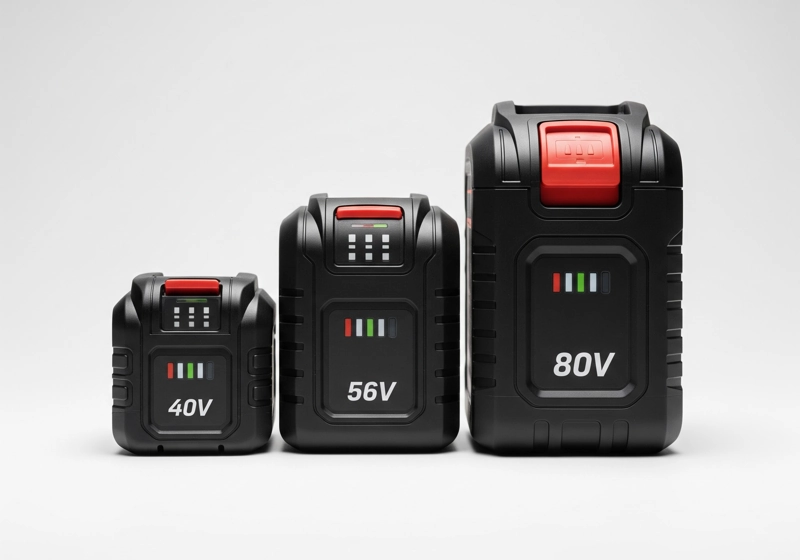
Before we dive into specific models and features of battery powered electric lawn mowers, let’s talk about what’s under the hood of these battery electric mowers. Not all batteries are created equal, and understanding the basics will save you from making an expensive mistake.
Voltage: The Power Behind the Performance
You’ll see everything from 40V to 120V systems, and here’s what that means for your mowing experience:
40V Systems: Perfect for smaller yards (under 1/3 acre) with relatively flat terrain. These are your entry-level workhorses – reliable, affordable, and sufficient for most suburban lots. I recommend these for first-time electric buyers who want to test the waters without a huge investment.
56V-80V Systems: The sweet spot for most homeowners. These handle thicker grass, slight inclines, and can power through a full mowing session without the power fade you sometimes get with smaller batteries. This is where I see the best balance of performance and value.
120V Systems: These are the heavy hitters, designed to replace gas mowers entirely. If you’ve got a larger property or particularly demanding conditions (thick St. Augustine grass, anyone?), this is your tier.
Amp-Hours: Your Runtime Reality Check
Here’s where marketing meets reality, and I’ve got some truth bombs for you. That “60-minute runtime” claim? It’s probably based on ideal conditions that don’t exist in your actual yard.
A typical 5.0 Ah battery will give you:
- 35-45 minutes in normal conditions (dry grass, moderate pace)
- 25-35 minutes in challenging conditions (thick grass, wet conditions)
- 45-60 minutes if you’re mowing frequently and keeping grass short
Pro tip from my own experience: buy the largest battery your budget allows, or better yet, get two smaller ones. There’s nothing more frustrating than running out of juice with just a strip left to mow.
Charging Times: Planning Your Mowing Schedule
Standard charging times range from 30 minutes (fast chargers) to 2 hours (standard chargers). Here’s what worked in my yard: I mow every Saturday morning, so I charge immediately for grass, and I’m ready for the next week. Simple.
But if you’re the type who puts off mowing until the grass looks like a prairie, you might want to invest in a rapid charger or a second battery. Trust me on this one – waiting two hours to finish your lawn because your battery died is not a fun way to spend a Saturday.
If you’re still deciding between power sources, our comprehensive gas vs. electric lawn mowers comparison breaks down the pros and cons of each option.
Performance Where It Counts: Real-World Testing
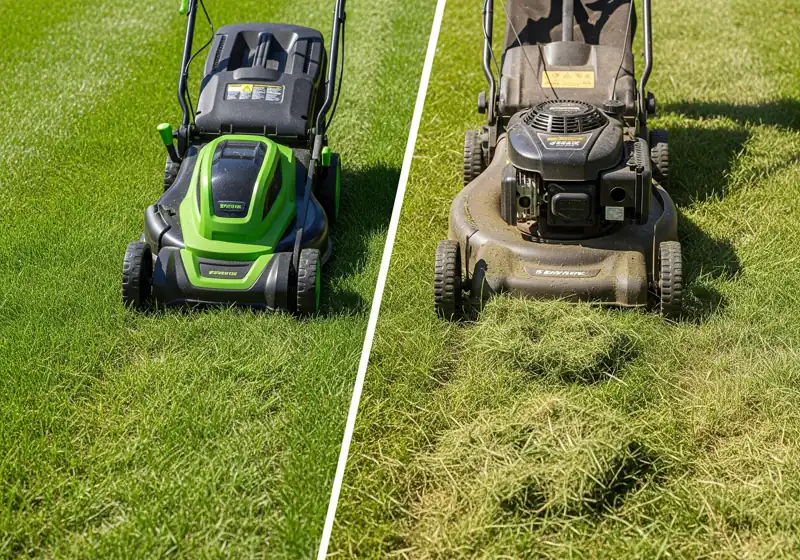
Let’s get into the nitty-gritty of how these mowers perform when you’re not reading manufacturer specs. I’ve put dozens of models through their paces in Texas heat, morning dew, and everything in between.
The short answer? Yes, but with some caveats. Modern cordless electric lawn mowers generate impressive torque, while battery lawn mowers maintain more consistent blade speed than gas engines that can bog down. However, they handle challenging conditions differently.
Gas mowers power through obstacles with brute force. Battery mowers are more like surgical instruments – they maintain consistent blade speed but may require a slower pace through particularly thick sections. In my St. Augustine grass (which can be brutal in summer), I’ve found that keeping up with weekly mowing makes battery mowers completely capable.
Where battery mowers excel:
- Consistent power delivery (no rpm fluctuation)
- Instant-on torque
- Quieter operation that lets you hear trouble spots
- No power loss due to dirty air filters or bad gas
Where they struggle:
- Extended periods in extremely thick, wet grass
- Large properties where runtime becomes an issue
- Very tall grass that hasn’t been cut in weeks
Mulching Performance: Better Than You’d Expect
Here’s something that surprised me: battery mowers often mulch better than their gas counterparts. The consistent blade speed creates more uniform clippings, and without engine vibration, the cutting deck does a better job of circulating grass for multiple cuts.
I’ve been using organic lawn care principles for years, and proper mulching is crucial for soil health. Battery mowers have made this easier, not harder.
Top Battery Mower Categories: Finding Your Match
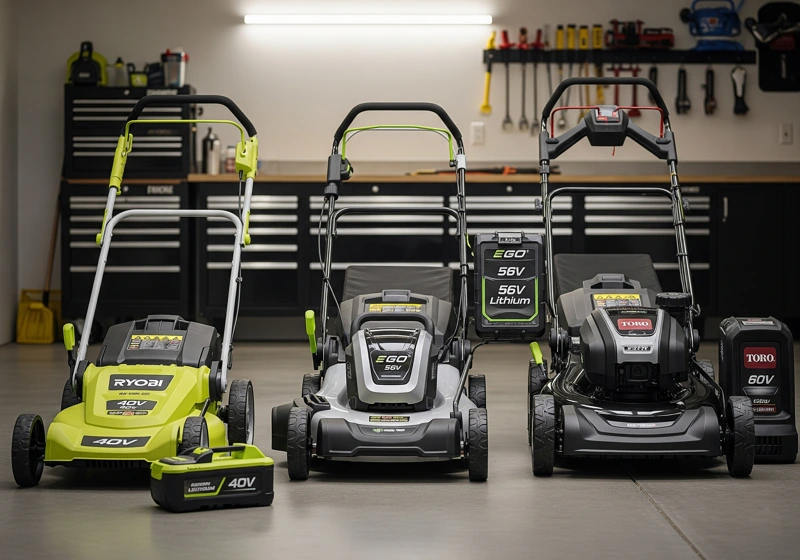
After testing electric battery mowers from budget models to premium battery powered electric lawn mowers, here’s how I break down the categories that matter:
Best Overall Value: The 56V Sweet Spot
EGO Power+ 21-Inch: This has been my go-to recommendation for three years running. The 56V system delivers gas-like power with genuinely impressive runtime. I’ve used this exact model on my half-acre property, and it handles everything from morning dew to summer growth spurts.
Greenworks Pro 60V: Another solid performer that often flies under the radar. Slightly less expensive than the EGO but with comparable performance. The self-propelled version is particularly good for anyone dealing with slopes or fatigue issues.
Budget-Conscious Choice: Proving Electric Can Be Affordable
Ryobi 40V: You don’t need to break the bank to go electric. The 40V Ryobi system is perfect for smaller yards and new homeowners. Yes, you’ll sacrifice some runtime and power, but for a typical suburban lot, it’s more than adequate.
The key with budget models is being realistic about your expectations. They’ll handle regular maintenance mowing beautifully – just don’t expect miracles if you let the grass get out of control.
Premium Performance: When You Want the Best
Toro 60V Recycler: Toro’s entry into battery power brings its decades of mower engineering expertise. The personal pace seitsopel system adapts to your walking speed, and the build quality is noticeably superior.
Milwaukee M18 Fuel: If you’re already invested in Milwaukee’s battery ecosystem, this is worth considering. The 18V system punches above its weight class, though you’ll want the high-output batteries for best performance.
For a complete breakdown of all available options, check out our comprehensive guide to lawn mower types to understand where battery models fit in the broader landscape.
Runtime Reality: What to Expect
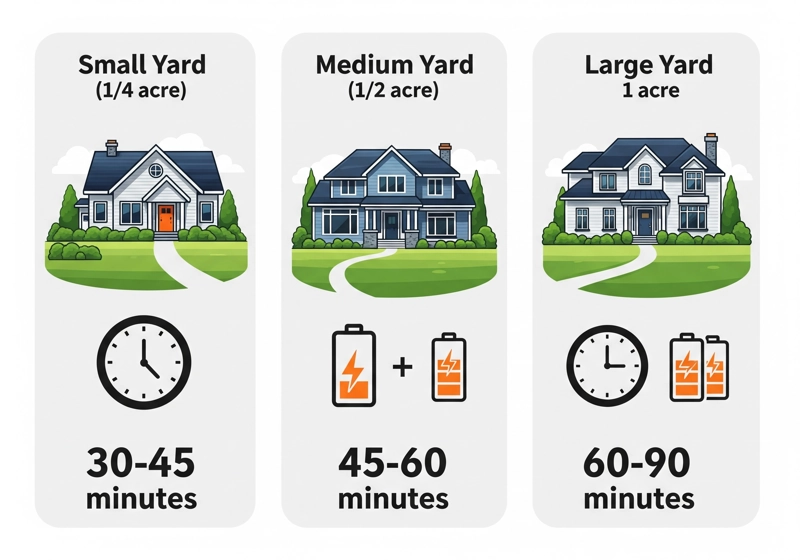
Let’s talk about the elephant in the room – battery life. Manufacturer claims are often optimistic, so here’s what you can realistically expect based on my testing:
Small Yards (Under 1/4 Acre)
- Single 4.0 Ah battery: Complete coverage with power to spare
- Mowing time: 20-25 minutes
- Charging between uses: Usually unnecessary
Medium Yards (1/4 to 1/2 Acre)
- Single 5.0-7.5 Ah battery: Usually sufficient
- Mowing time: 35-50 minutes
- Backup plan: Keep a second battery handy during peak growing season
Larger Properties (1/2 to 1 Acre)
- A dual battery system or 10+ Ah batteries are recommended
- Consider high-A dualage systems (80V+)
- Plan for 60-90 minutes total mowing time
Here’s a practical tip I learned the hard way: your mowing pattern affects battery life more than you’d think. Overlapping passes, constantly changing direction, and stopping/starting frequently all drain power faster. Develop an efficient pattern and stick to it.
Charging Infrastructure: Setting Yourself Up for Success
The charging game has improved dramatically, but you still need to think ahead. Here’s what I recommend based on real-world use:
Standard vs. Rapid Charging
Standard chargers (2-hour charge time) work fine if you’re organized. Charge immediately after mowing, and you’re set for next week. But rapid chargers (30-60 minutes) are game-changers if you:
- Sometimes forget to charge until mowing day
- Have a large property requiring multiple batteries
- Want the flexibility to mow whenever convenient
Battery Storage and Care
Lithium-ion batteries are pretty forgiving, but a few simple practices will extend their life significantly:
Temperature matters: Don’t leave batteries in extreme heat (like a car trunk in summer) or cold. Room temperature storage is ideal.
Partial charges are fine: Unlike old battery technology, you don’t need to fully drain before charging. Partial charges are better for long-term battery health.
Winter storage: If you’re storing for months, charge it to about 50% and check every few months. Completely dead batteries can become permanently damaged.
For optimal battery health, follow proper lithium-ion storage guidelines to maximize lifespan and performance.
Maintenance: The Beautiful Simplicity
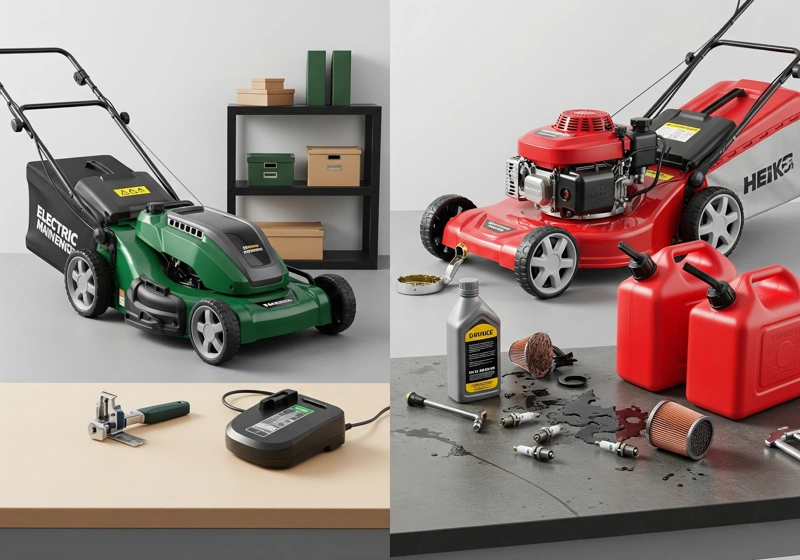
This is where battery mowers shine. Remember all those spring startup routines with gas mowers? Oil changes, spark plug checks, carburetor cleaning, fresh gas? Yeah, you can forget about all that.
What You Still Need to Do:
- Clean the deck after use (grass buildup affects performance)
- Sharpen blades annually
- Check for loose bolts occasionally
- Keep the battery charged
What You Don’t Need to Do:
- Oil changes
- Spark plug replacement
- Carburetor maintenance
- Fuel system treatments
- Winterization procedures
I spend maybe 20 minutes per year on maintenance beyond basic cleaning. Compare that to the gas mower maintenance schedule, and you’ll understand why I made the switch.
Unlike gas mowers that require regular oil changes and complex maintenance, battery mowers keep things refreshingly simple.
Environmental Impact: More Than Just Marketing
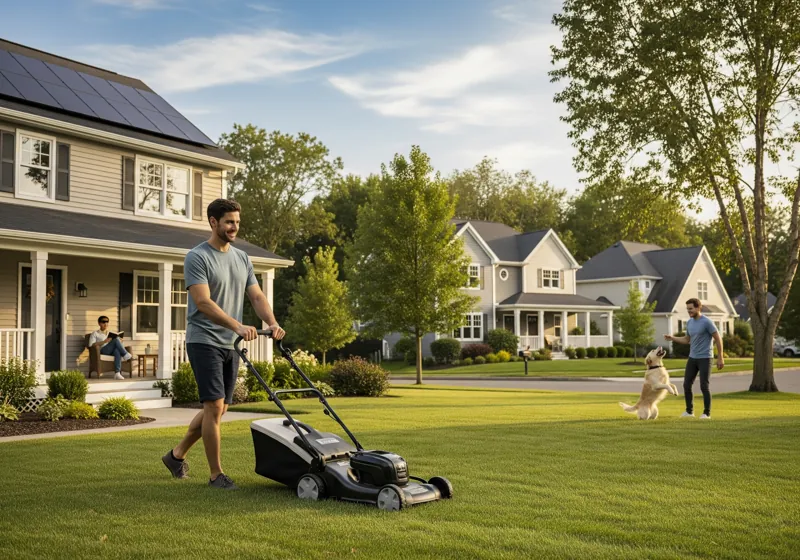
The environmental benefits are real, but let’s be honest about the complete picture. Battery mowers eliminate direct emissions – no burning gasoline in your backyard. They’re significantly quieter, reducing noise pollution. And they don’t require the transportation and storage of gasoline.
However, electricity generation and battery manufacturing do have environmental costs. The good news? Studies consistently show that electric mowers have a lower total environmental impact, especially as the electrical grid gets cleaner.
In my case, I’ve got solar panels on my roof, so my mowing is essentially carbon-neutral. Even without solar, the efficiency of the electrical grid means electric mowing typically produces fewer emissions than burning gas in a small engine.
The Noise Factor: Your Neighbors Will Thank You
Here’s something I didn’t anticipate: the social benefits. I can mow at 7 AM or 8 PM without feeling guilty. I can hear my phone ring, have a conversation, or notice when something doesn’t sound right. And Max isn’t traumatized every Saturday morning.
The noise reduction is so significant that several neighbors have asked what mower I’m using. It’s been a genuine conversation starter about sustainable lawn care practices.
Common Concerns and Honest Answers
Let me address the questions and concerns I hear most often from folks considering the switch:
“What if the battery dies mid-mow?”
This was my biggest worry initially. In practice, it’s rarely a problem if you buy appropriately for your yard size. Modern mowers have battery indicators, so you’re not caught off guard. And honestly? Taking a 30-minute break while the rapid charger tops off your battery isn’t the end of the world.
“Are they powerful enough for thick grass?”
For regular maintenance, mowing? Absolutely. For grass that’s gotten completely out of control? You might need to take it slow or make multiple passes. But here’s the thing – regular mowing is better for your lawn anyway.
“What about repairs and parts availability?”
Major brands like EGO, Ryobi, and Toro have excellent parts availability and service networks. The simpler design of electric mowers means fewer things can go wrong. No carburetor problems, no ignition issues, no fuel system troubles.
“Is the initial cost worth it?”
Premium battery mowers cost more upfront than comparable gas models. But factor in no oil changes, no gas purchases, no tune-ups, and significantly lower maintenance costs. In my experience, the total cost of ownership over five years favors electric.
Who Should (and Shouldn’t) Go Electric
After years of testing and using battery mowers, here’s my honest assessment of who they work best for:
Perfect Candidates:
- Homeowners with typical suburban lots (up to 1/2 acre)
- Anyone prioritizing low maintenance and ease of use
- Environmentally conscious homeowners
- People with noise concerns or restrictions
- Those who want a reliable start every time
Consider Alternatives If:
- You have more than an acre to maintain
- Budget is extremely tight (good used gas mowers are very affordable)
- You already own gas equipment and are comfortable with maintenance
- You frequently let grass grow very tall between mowings
The Future is Electric (and It’s Happening Now)
Battery technology continues to improve rapidly. The mowers I’m testing now are significantly better than models from just three years ago. Runtime is up, charging time is down, and prices are becoming more reasonable.
Here’s what I see coming: even faster charging, even longer runtime, and integration with smart home systems. Some manufacturers are already experimenting with robotic battery mowers that could eliminate the mowing chore.
But you don’t need to wait for the future. The technology available right now is mature, reliable, and ready to handle the vast majority of homeowners’ needs.
Speaking of the future, robotic lawn mowers represent the next evolution in automated, sustainable lawn care technology.
Making the Switch: Your Next Steps
If you’ve read this far, you’re probably ready to seriously consider battery power. Here’s my practical advice for making the transition:
- Measure your property accurately: Don’t guess at your lawn size. Walk it off or use a measuring app to get real numbers.
- Consider your mowing habits: Do you mow weekly like clockwork, or do you sometimes let things slide? This affects the power requirements significantly.
- Start with a quality mid-range model: Don’t cheap out on your first electric mower – a bad experience will sour you on the technology. But you don’t need the most expensive model either.
- Buy from a retailer with good return policies: Most people love their electric mowers, but if you’re not satisfied, you want an easy return process.
- Consider the ecosystem: If you’re likely to buy other battery tools, the compatibility factor. Having one battery system for multiple tools is incredibly convenient.
When evaluating different lawn mower brands and their reliability, consider factors beyond just the initial purchase price.
Bottom Line: Why I Made the Switch (and Why You Should Too)
After eleven years in lawn care and countless hours testing equipment, I can honestly say that battery powered electric lawn mowers have reached the point where they’re not just viable alternatives – they’re often superior to gas mowers for typical homeowners.
The convenience factor alone is worth the switch. No more gas cans in the garage, no more spring tune-ups, no more pull-cord frustration. Just press a button and mow. Practical beats perfect every time, and electric battery mowers are both practical and increasingly perfect for most situations.
Yes, you’ll pay more upfront for a quality battery mower. But you’ll save time, money, and aggravation over the long term. And honestly? Once you experience the quiet, clean, reliable operation of a good cordless electric lawn mower, going back to gas feels like driving a horse and buggy after experiencing a modern car.
Texas lawns need special care – trust me, I’ve lived it. But they don’t need complicated care. A good battery lawn mower, weekly mowing, proper watering, and some organic fertilizer? That’s a recipe for a lawn your neighbors will envy, achieved in a way that’s better for your family, your community, and the environment.
The electric revolution isn’t coming to lawn care – it’s here. And frankly, it’s about time we all got on board. The future of lawn care is electric, and battery powered electric lawn mowers are leading the charge. Whether you choose cordless electric lawn mowers or other battery electric mowers, you’re making a smart investment.
Ready to make the switch? Start by measuring your property, setting a realistic budget, and visiting a local dealer to see these mowers in action. You might be surprised at just how capable – and quiet – they are.
Based on my extensive testing, the EGO Power+ 21-Inch Select Cut consistently ranks as the best overall battery-powered lawn mower. It delivers 11.1 ft-lbs of torque (more than most 200cc gas engines), offers excellent runtime for half-acre properties, and features superior build quality. For budget-conscious buyers, the Ryobi 40V HP 21-inch provides excellent value, while the Toro 60V Max Super Recycler offers premium performance with gas-like handling.
Runtime varies significantly based on battery size and mowing conditions. A typical 5.0 Ah battery provides 35-45 minutes in normal conditions with dry grass and moderate pace, 25-35 minutes in challenging conditions with thick or wet grass, and 45-60 minutes with frequent mowing and short grass. Higher voltage systems (80V+) with larger batteries (7.5-10 Ah) can run 60-90 minutes. For properties over half an acre, I recommend having a backup battery or choosing a dual-battery system.
The voltage difference significantly impacts performance. 40V systems are best for small yards under 1/3 acre, offering lighter weight and more affordable pricing with adequate power for regular maintenance mowing, and typically 30-45 minute runtime. 80V systems handle larger properties up to 1 acre with more consistent power through thick grass, better self-propelled performance on slopes, and 60-90 minute runtime with larger batteries. While 80V systems have higher upfront costs, they provide better long-term value for bigger yards.
The primary disadvantage is limited runtime compared to gas mowers. While gas mowers can run indefinitely with fuel refills, battery mowers require 30-120 minutes to recharge when depleted. This can be problematic for large properties over 1 acre, infrequent mowing where grass gets very tall, and peak growing seasons requiring extended cutting time. However, this limitation is largely overcome with proper battery sizing, backup batteries, or rapid charging systems.
Yes, but with limitations. Battery mowers can handle light dew and slightly damp grass better than many people expect. However, you should avoid cutting soaking wet grass as it clogs the deck and creates clumps, very tall wet grass, which dramatically reduces runtime, and never mow during active rain due to safety and performance issues. The consistent blade speed of battery mowers handles damp conditions better than gas engines, which can bog down. For best results, wait for the grass to dry or use the highest cutting height setting.
No! This is one of the biggest advantages of battery-powered electric lawn mowers. Unlike gas mowers, electric mowers require no oil changes, no spark plug replacements, no air filter cleaning, no carburetor maintenance, and no fuel system treatments. Maintenance is limited to cleaning the deck after use, sharpening blades annually, checking for loose bolts, and keeping batteries charged. This saves approximately 2-3 hours and $50-100 annually in maintenance costs.
