
The Evolution of Robotic Lawn Mowers: A Historical Perspective
So there I was, standing in my neighbor Bob’s backyard last Thursday around 7:23 a.m., watching his brand-new Husqvarna Automower 315X cruise around his lawn as if it owned the place. Swear to God, I felt like I was watching the Jetsons come to life or something. The damn thing was cutting grass while Bob sipped coffee on his deck in his ratty old Cubs pajamas, completely hands-off.
Table of Contents
▼- Way Back When Nobody Had Time for Pretty Grass
- When People Started Dreaming About Robot Servants
- Those Crazy Swedes Changed Everything
- The Tech Revolution That Mattered
- Holy Crap, Look Where We Are Now
- Let’s Talk About Money (Because This Stuff Ain’t Cheap)
- Installation Horror Stories (Learn From Other People’s Mistakes)
- Crystal Ball Time: What’s Coming Next
- Bottom Line: Are These Things Worth It?
Made me think about how far we’ve come from my dad’s old Craftsman push mower. The thing weighed about 90 pounds, and you had to pull the cord seventeen times just to get it to wheeze to life. These days, the gas vs. electric debate has gotten a lot more interesting, but back then, gas was the only game in town. My back’s still screwed up from wrestling with that beast every Saturday morning for three summers when I was fifteen.
I mean, here I a someone who’s been elbow-deep in mower guts for over two decades, and I’m still blown away by these robotic contraptions.
How’d we go from manually pushing heavy steel death traps around our yards to having robots do the work while we’re inside binge-watching Netflix and eating cereal straight from the box? If you’re curious about all the different types of lawn mowers available today, you’ll be amazed at how far we’ve come.
Way Back When Nobody Had Time for Pretty Grass
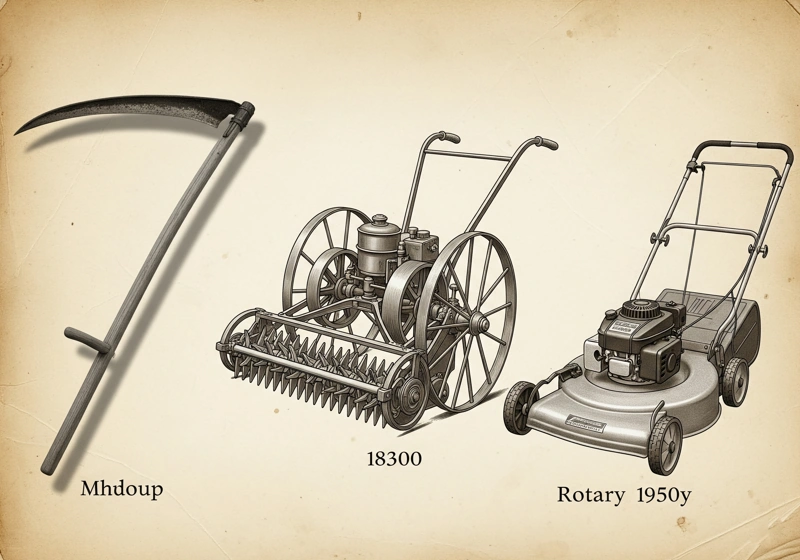
Okay, look, before I dive into the robot stuff, we gotta talk about where lawn care even started. I know, I know you probably didn’t sign up for some boring history lesson when you clicked on this. But trust me on this one, the backstory matters.
So back in medieval times, and I’m talking way, way back, like when people thought the earth was flat and taking a bath might kill you, only the super-rich had what we’d call “lawns.” Makes total sense when you think about it, right? If you’re some peasant farmer trying not to starve to death, you’re not gonna waste perfectly good farmland on grass that just sits there looking pretty. Every square inch better be growing something you can eat or sell.
But the wealthy folks? Man, they had so much land they could afford to keep huge chunks of it just for show. Talk about having money to burn. These people had actual servants whose only job was to keep the grass short using hand tools. Can you even imagine? “Hey Bob, your one job is to crawl around on your hands and knees with tiny scissors, making sure no blade of grass gets too tall.”
The first real lawn mowers showed up sometime in the 1830s. Some English dude named Edwin Budding, and yes, that was actually his real name, I looked it up, invented this contraption that was basically a spinning cylinder of sharp blades. Here’s the kicker, though: it took two people to operate the damn thing. One guy had to push from behind while another poor soul pulled from the front like some kind of human oxen situation.
I complain when my 21-inch Honda feels heavy after an hour, and these guys needed a buddy system just to cut grass. My lower back hurts just thinking about it.
Funny story. I’ve still got this 1962 Craftsman rotary mower sitting in the corner of my garage that belonged to my grandfather. The thing weighs about 80 pounds, sounds like a freight train having a nervous breakdown when it runs, and probably violates seventeen different EPA regulations. But I’ll be damned if it doesn’t still cut grass like nobody’s business. Started on the second pull last spring when I fired it up just to mess around.
When People Started Dreaming About Robot Servants

Here’s where things get interesting, and I mean really interesting. The whole idea of robotic lawn mowers didn’t just magically appear in the 2000s, like most people think. Engineers and inventors have been fantasizing about automated grass cutting since way back in the 1960s and ’70s. You know, back when everyone thought we’d have flying cars and robot maids by the year 2000.
The concept seemed simple enough: why should humans spend their precious weekends pushing mowers around in 90-degree heat when machines could do it automatically? But here’s the thing that nobody talks about: the technology just wasn’t there yet. We needed major advances in battery tech, sensors, computer processing power, and GPS before robotic mowers could become anything more than expensive science experiments.
It’s like wanting to build an iPhone in 1975. The dream was there, but all the pieces hadn’t been invented yet.
I remember digging through some old Popular Mechanics magazines from the ’80s and finding articles about early prototypes that were basically just remote-controlled mowers. Not exactly “robotic” since someone still had to stand there with a controller, but it was a step in the right direction. These things were clunky as hell, cost more than most people’s cars, and broke down if you looked at them sideways.
Wait, hold on. Let me back up here because I’m getting ahead of myself.
The real breakthrough that made modern robotic mowers possible was when some genius figured out the boundary wire system. This is such a brilliantly simple idea that I’m kinda mad I didn’t think of it first. You bury a thin wire around the edge of your lawn, send a tiny electrical signal through it, and boom, the mower knows exactly where it can and can’t go. Like an invisible fence for grass-cutting robots.
Pure genius, honestly.
Those Crazy Swedes Changed Everything
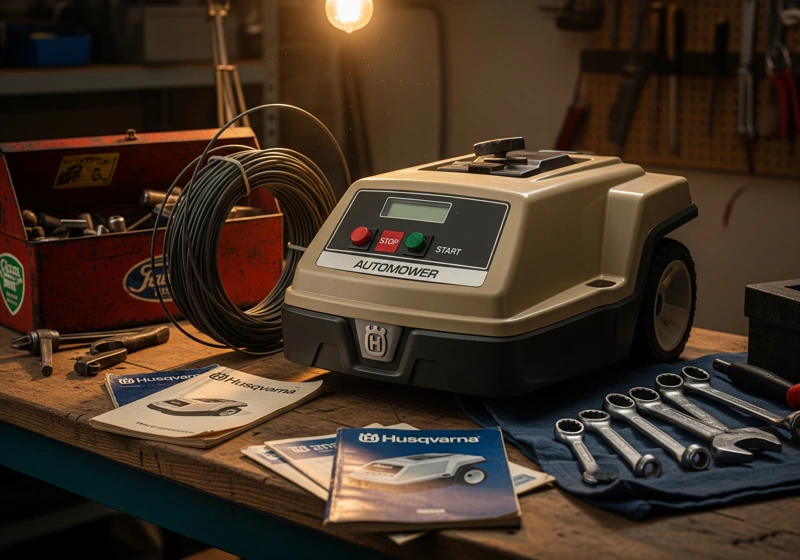
So who built the first successful robotic lawn mower that didn’t suck? If you guessed some fancy tech company in Silicon Valley with ping pong tables and free kombucha, you’d be dead wrong.
It was the Swedes.
I know, right? But when you think about it, it makes perfect sense. They’ve got those crazy long summers where the sun barely sets, they’re obsessed with clean, efficient design, and they already own the chainsaw and outdoor power equipment market with companies like Husqvarna and Electrolux. Speaking of the best lawn mower brands, Husqvarna has consistently ranked among the top manufacturers for decades.
Husqvarna launched its very first Automower way back in 1995. Nineteen ninety-five! While the rest of us were still trying to figure out this new thing called the “World Wide Web,” these Swedish engineers were building actual grass-cutting robots in their workshops.
The early models were… well, let’s just say they had some serious quirks. They moved around in completely random patterns (which works way better than you’d think), had these tiny little cutting decks that could barely handle a dandelion, and took forever to mow even a small yard. I’m talking like three days to cut a quarter-acre.
But here’s what blew my mind when I first dug into the research on this stuff: that random cutting pattern isn’t a design flaw. It’s intentional. Those clever Swedish bastards figured out that if a mower cuts in the same pattern every single time, you end up with ruts, compacted soil, and uneven wear on your grass. Random patterns? Your lawn ends up looking better and healthier than if you’d done it yourself with a traditional walk-behind mower.
Who knew?
I spent about six months last year trying to track down one of those original 1995 Automowers for my vintage mower collection. Found one on eBay that was supposedly “working condition” for $2,847.50. Turns out “working condition” meant “powers on but immediately drives into the nearest tree.” Didn’t buy it, but I was seriously tempted just for the historical value.
The Tech Revolution That Mattered
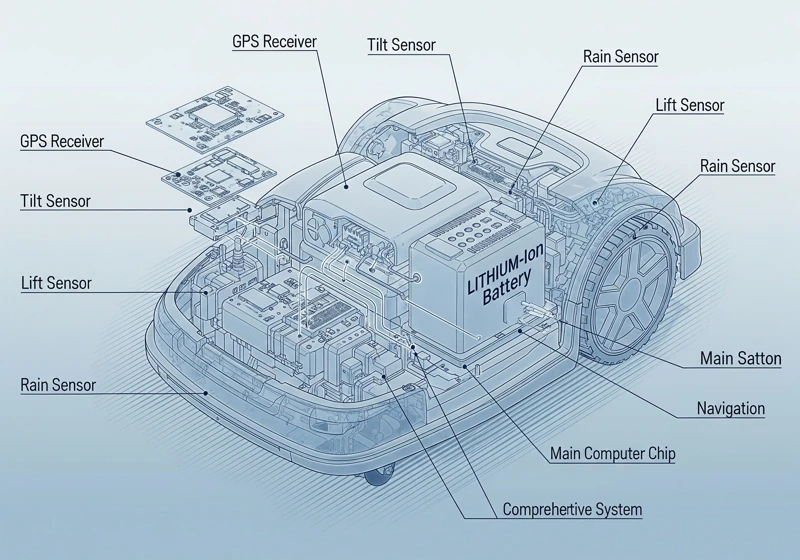
The real magic started happening when GPS became widely available to regular consumers in the early 2000s.
Suddenly, these robotic mowers could know exactly where they were at any given moment. No more getting lost in the corner of the yard like some confused metal turtle. Combined with way better lithium-ion batteries, improved sensors that could detect obstacles, and computer chips that didn’t cost more than a new car, we finally had all the right ingredients for truly autonomous lawn care.
But GPS alone wasn’t nearly enough to solve all the problems. These mowers still needed to navigate around obstacles without destroying your garden gnomes, detect when it was raining so they wouldn’t try to mow mud, avoid steep slopes where they might flip over and become very expensive paperweights, and somehow not get stolen by the neighborhood kids.
Each one of these challenges required its specific engineering solution. Lift sensors that would sound an alarm if someone tried to pick up the mower. Rain sensors sophisticated enough to send the thing back to its charging dock when the weather turned bad. Tilt sensors to prevent it from attempting to mow your retaining wall or falling into your koi pond.
I still remember the first time I saw a Worx Landroid in action. This was probably around 2012 or so. My buddy Mike had just dropped $1,200 on what honestly looked like someone had strapped knives to a Roomba and set it loose in his backyard. I thought he’d completely lost his mind.
“Just wait,” he kept saying while we stood there drinking beer and watching this weird little machine wander around his lawn like a drunk robot. “This thing’s gonna change everything.”
Turns out Mike was right. Sort of.
The early 2010s models were still pretty basic when you got down to it. They’d cruise around in those random patterns, automatically dock themselves when the battery got low, and mostly stay out of your flower beds thanks to that boundary wire system. But good Lord, they were slow as molasses in January. Mike’s Landroid would get completely confused by his kids’ swing set and spend twenty minutes bumping into the same support post trying to figure out how to navigate around it.
Holy Crap, Look Where We Are Now
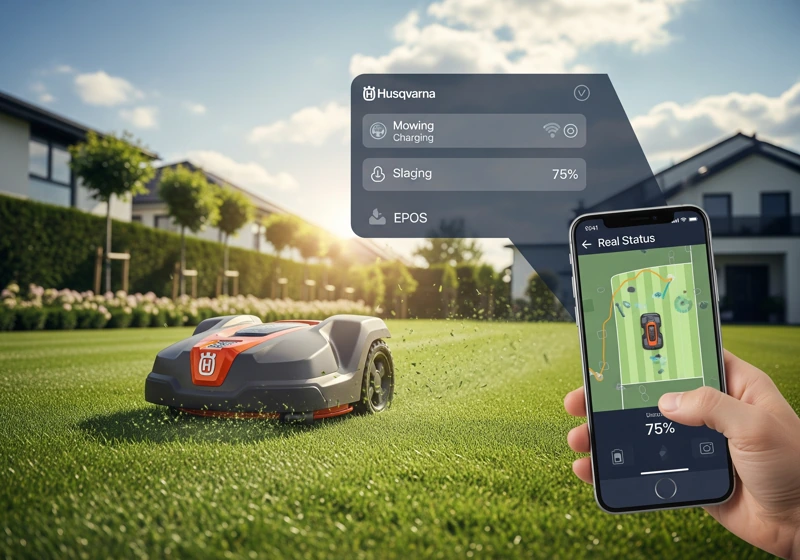
I just finished a three-week test of the latest Husqvarna 450X EPOS for a review I’m writing, and it’s honestly like comparing a Tesla to one of those old Model T Fords. If you’re trying to decide between brands, check out my complete comparison of top robotic lawn mower brands to see how they stack up.
But here’s what gets my motor running: the cutting technology has evolved like crazy, too. Modern robotic mowers use these razor-sharp little blades that slice grass cleanly instead of beating it to death like traditional rotary mowers do. The result? Way better-looking lawn with significantly less stress on the actual grass plants. It’s like the difference between cutting paper with sharp scissors versus just tearing it apart with your bare hands.
The newest models can handle slopes up to 45 degrees (which is basically mountain-climbing territory), navigate tight spaces between garden beds, and some can even detect the difference between grass and weeds. We’re talking about machines that use actual artificial intelligence to learn your lawn’s specific growth patterns and automatically adjust their mowing schedule based on the weather, season, and how fast your grass is growing.
I gotta be honest here, I was a total skeptic for years. How could some robot possibly do a better job than someone who’s been cutting grass professionally for over two decades? Turns out they don’t necessarily do a better job, they just do a completely different job. Instead of cutting once a week and bagging up all the clippings, these robots cut every day or two with tiny clippings that decompose almost immediately and feed the grass as they break down.
It’s a different approach than the traditional “mow and bag” routine that most homeowners follow.
Let’s Talk About Money (Because This Stuff Ain’t Cheap)
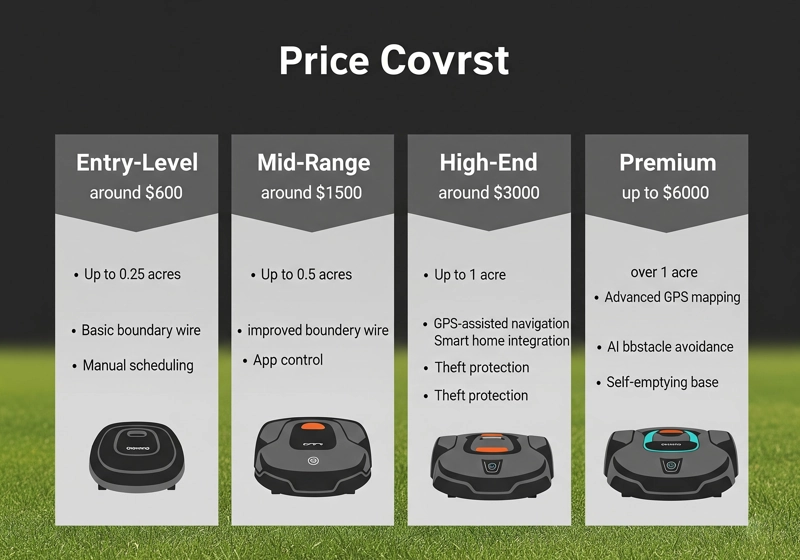
Alright, here’s the part where I have to be the bearer of bad news: these things cost serious money. Entry-level models that are decent enough to work start around $600-800, but those are only suitable for tiny postage-stamp yards. If you want something that can handle a quarter-acre or more without taking three days to finish the job, you’re looking at $1,500-3,000 minimum.
The high-end models with all the fancy GPS navigation, smart home integration, and theft protection? We’re talking $4,000-6,000. That’s new motorcycle money right there.
But is it worth it? Well, that depends on how much you value your free time and what your weekends are worth to you. If you spend three hours every Saturday morning fighting with your mower in the blazing sun, and you figure your time is worth about $20 an hour, you’re looking at roughly $3,120 worth of your labor per year. A decent robotic mower pays for itself in labor savings within two years.
But here’s what nobody tells you about the hidden costs that’ll bite you in the ass later. These machines need regular maintenance just like any other piece of complicated equipment. For a complete breakdown of what’s involved, my comprehensive lawn mower maintenance guide covers everything you need to know. Those sharp little blades wear out every few months and cost $30-50 per set to replace. The lithium batteries eventually die after a few years and cost $150-300 for a replacement. And if something goes seriously wrong with the main computer brain, which happened to my neighbor Janet last summer, you’re easily looking at a $400-600 repair bill.
Installation Horror Stories (Learn From Other People’s Mistakes)
Let me tell you a story that’ll hopefully save you some major headaches and possibly your marriage. Last spring, my neighbor Janet bought this fancy Robomow RS630 for her half-acre lot. Nice machine, lots of great features, but it costs her about $2,800. Then she figured she’d save a few bucks by installing the thing herself instead of paying the dealer’s $300 setup fee.
Big freaking mistake.
Took her three entire weekends to get the boundary wire installed, even halfway correctly. She accidentally nicked her underground sprinkler system twice with the wire burial tool (that’s $180 for the irrigation repair guy each time). She created this weird dead zone where the mower couldn’t reach the grass near her garden shed. And somehow, I still don’t understand how this happened. She managed to set up the charging station in the lowest spot of her yard, which turns into a lake every time it rains hard.
The installation process isn’t just about burying some wire around your property and calling it good. You need to carefully plan for obstacles, create proper passages between different lawn areas, position the charging station somewhere that’s accessible but protected from the weather, and configure all the software settings to match your specific yard layout and grass type.
Unless you’re pretty handy with this kind of technical stuff and have experience reading instruction manuals that were translated from Swedish by someone whose English isn’t great, it’s worth paying a professional to set everything up correctly the first time.
Trust me on this one.
Crystal Ball Time: What’s Coming Next
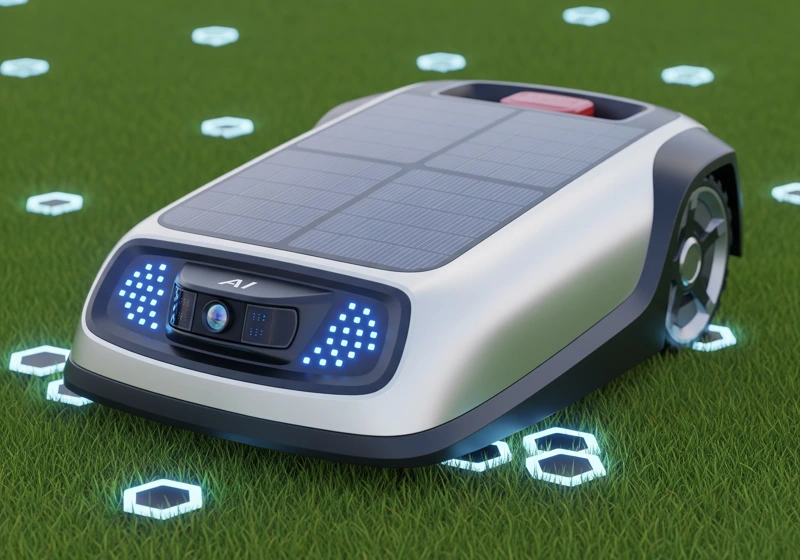
So where are robotic mowers headed in the next few years? If you’re wondering whether robotic lawn mowers are truly the future of lawn care, the developments I’m seeing suggest we’re just getting started. Based on what I’ve been seeing at industry trade shows and some beta testing I’ve been involved with, we’re about to see some pretty wild developments.
AI-powered models that can identify and navigate around dog poop without getting it stuck in the wheels (yes, that’s a real problem, and they’re working on it). Integrated solar panels built right into the mower body for extended runtime without needing to dock as often. Smart integration with automatic irrigation systems so your mower and sprinklers can coordinate their schedules and never conflict.
The crazy futuristic stuff is still probably five or ten years out, but it’s coming. Mowers that can automatically edge along sidewalks and driveways without any human intervention. Models designed to handle fall leaves without getting completely clogged up and dying. GPS mapping is so incredibly precise that the mower can follow specific striping patterns instead of just wandering around randomly like a drunk person.
But honestly? The technology we have available right now is already pretty damn amazing. I finally broke down and installed a Husqvarna 435X AWD at my own house about six weeks ago, and I’m kinda embarrassed to admit how much I enjoy just watching it work. It’s like having this dedicated, never-complaining employee who shows up every single day and does exactly what you programmed it to do without asking for raises or sick days.
Bottom Line: Are These Things Worth It?
Look, I’m not gonna sit here and tell you that robotic mowers are perfect. They’re expensive as hell, they need regular maintenance and attention, and they definitely can’t handle every weird situation that a human operator can deal with. If your yard is full of crazy obstacles, has steep slopes that would make a mountain goat nervous, or requires precision trimming around delicate plants and decorative features, you’re probably better off sticking with a traditional walk-behind or riding mower.
But for the average homeowner with a relatively open, straightforward lawn who values their weekends and doesn’t want to spend Saturday mornings sweating their ass off behind a mower? These things are absolute game-changers. The grass legitimately looks better because it’s getting cut more frequently with less stress. Plus, if you care about the environmental impact of your lawn care choices, robotic mowers are significantly more eco-friendly than gas-powered alternatives. You save multiple hours every single week during mowing season. And there’s something satisfying about having a perfectly maintained lawn without actually doing any of the grunt work yourself.
The evolution from those first basic boundary wire systems back in the ’90s to today’s GPS-guided, smartphone-controlled, artificially intelligent models has been incredible to witness firsthand. We’ve gone from expensive novelty gadgets that barely worked to legitimate, professional-quality lawn care tools in just about 25 years.
By the way, if you’re seriously thinking about getting one of these, do yourself a huge favor and buy from a local dealer who offers installation and ongoing service support. These aren’t simple plug-and-play devices like your vacuum cleaner or coffee maker. They’re sophisticated pieces of machinery that need a proper professional setup to work correctly and reliably.
Anyway, that’s my complete take on how we managed to get from those old-school push mowers to grass-cutting robots in just a few decades. Pretty wild journey when you stop and think about it, right?
Let me know in the comments if you’ve got any experience with robotic mowers, either good or bad, because I’d honestly love to hear what’s working (or what’s completely failing) for other folks out there dealing with these things.
The history of robotic lawn mowers begins in 1969 with the MowBot in the United States, which weighed 125 pounds and cost $800. However, the modern era started in 1995 when Husqvarna launched the world’s first commercial Automower in Sweden. This solar-powered machine marked the beginning of automated lawn care as we know it today. The early models used boundary wire systems and random cutting patterns, which proved more effective than systematic mowing. Major technological leaps came in the early 2000s with GPS integration, followed by smartphone apps, AI navigation, and today’s GPS-guided models that can operate without boundary wires.
The first robotic lawn mower concept was patented by S. Lawrence Bellinger in 1969 with the MowBot. However, the first successful commercial robotic mower was developed by Swedish engineers at Husqvarna in the early 1990s. André Collens patented the first fully solar-powered robotic mower in 1992, which Husqvarna purchased and brought to market in 1995 as the Solar Mower. This Swedish innovation established the foundation for all modern robotic lawn mowers, proving that Scandinavian engineering excellence extends far beyond furniture and automobiles.
The oldest robotic mower is the MowBot, introduced and patented by S. Lawrence Bellinger in 1969. It weighed 125 pounds, sold for $800 (equivalent to about $6,860 today), and could mow up to 3,000 square feet with 3 hours of battery life. However, the first commercially successful robotic mower was Husqvarna’s Solar Mower from 1995, which became the template for modern robotic mowers. These early Swedish models used solar panels for power and established the boundary wire system that dominated the industry for decades.
The first robotic lawn mower was made in 1969 with the introduction of the MowBot by S. Lawrence Bellinger. However, the first commercially viable robotic lawn mower was created by Husqvarna in 1995. This Swedish-engineered Solar Mower represented a quantum leap in lawn care technology, introducing concepts like automated charging, boundary recognition, and random cutting patterns that are still used today. The 1995 Husqvarna Automower established Sweden as the leader in robotic lawn care innovation, a position they maintain three decades later.
Robotic lawn mowers have several significant drawbacks. First, they’re expensive – quality models cost $1,500-6,000 upfront, plus ongoing maintenance costs like blade replacements ($30-50 every few months) and battery replacements ($150-300 after several years). Installation can be complex and costly, often requiring professional setup ($300+) to avoid damaging sprinkler systems or creating dead zones. They struggle with obstacles, steep slopes, and complex yard layouts. Weather limitations mean they can’t operate in rain or on wet grass. They’re also theft targets and require regular maintenance. Finally, they can’t handle precision trimming around delicate plants or decorative features.
