
Best Push Mower 2025: Walk Behind Lawn Mower Guide
You know what really grinds my gears? When someone drops $400 on a push mower and calls me two months later, complaining it won’t start. Nine times out of ten, they bought the wrong type for their yard or skipped the basic maintenance I always preach about.
Table of Contents
▼- Why Choose a Push Mower: Benefits of Walk Behind Lawn Care
- The Complete Push Mower Buying Guide: What to Consider
- Top Push Mower Brands: In-Depth Reviews & Comparisons
- Electric vs Gas Push Mowers: Which Power Type is Right for You?
- Self-Propelled vs Manual: Understanding Your Push Mower Options
- Where to Find the Best Push Mowers for Sale
I’m Emma Andersen, and I’ve been elbow-deep in mower repairs for a decade now. My little shop has seen everything from electric push mowers that sparked like the Fourth of July to gas push mowers so gunked up with old fuel they looked like science experiments. But here’s the thing: when you get the right walk behind mower and treat it right, it becomes your best friend every Saturday morning.
Last week, I had this guy come in, let’s call him Dave, who’d been wrestling with a massive riding mower on his tiny suburban lot. Poor guy looked exhausted just thinking about mowing. I set him up with a self propelled lawn mower, and he texted me a picture of his perfectly striped lawn with about ten smiley face emojis. That’s what happens when you match the right tool to the job.
So whether you’re eyeing those Honda push mowers everyone raves about, wondering if Toro push mowers live up to the hype, or just trying to figure out where the heck to find decent push mowers for sale, I’ve got you covered. Let’s dig into what actually matters, not the marketing fluff, but the real-world stuff I’ve learned from fixing these machines day in and day out.
Why Choose a Push Mower: Benefits of Walk Behind Lawn Care

Okay, let’s get one thing straight push mowers aren’t just for people who can’t afford riding mowers. I’ve got customers with quarter-million-dollar houses who swear by their walk behind mowers, and there are some pretty solid reasons why.
First off, you’re getting a workout without paying for a gym membership. I’m not talking about some gentle stroll either. Pushing a mower for an hour burns serious calories—somewhere around 300, depending on how fast you’re moving and how thick your grass is. My neighbor Jenny lost fifteen pounds her first summer with a push mower. She jokes that it’s the only exercise equipment she’s ever stuck with.
But here’s what really sold me on push mowers: the control you get is incredible. Ever tried to edge around a flower bed with a riding mower? It’s like trying to thread a needle while wearing oven mitts. With a walk behind mower, you can get right up close to fences, around trees, pretty much anywhere your feet can go.
The noise factor is huge too, especially if you’ve got close neighbors. Electric push mowers are whisper-quiet, you can literally have a conversation while mowing. Even gas push mowers are way quieter than riding mowers. I can’t tell you how many dirty looks I’ve seen people get for firing up their riding mowers at 7 AM on a Saturday.
And let’s talk money. A decent push mower runs you $200 to maybe $800 if you’re going all out. Compare that to riding mowers that start around $1,500 and go up from there. Plus, when something breaks on a push mower, the fix usually costs under $100. Try getting a riding mower transmission repaired for that.
Storage is another win. My workshop is pretty cramped, but I can fit three push mowers in the space one riding mower would take. Some of the newer models even fold up perfectly if you’re working with a tiny garage or shed.
The Complete Push Mower Buying Guide: What to Consider
Here’s where I see people mess up the most: they walk into a store, see a shiny push mower on sale, and buy it without thinking about their actual needs. Don’t be that person. I’ve had to break the bad news to too many folks that their impulse purchase won’t work for their yard.
Yard size is everything. If you’ve got less than a quarter acre, pretty much any push mower will do the job. Once you hit half an acre, you’d better think seriously about a self propelled lawn mower unless you’re training for a marathon. I had one customer, bless his heart, who insisted on a manual push for his three-quarter-acre lot. He lasted exactly two mowing sessions before coming back for an upgrade.
Terrain matters way more than most people realize. Flat, even grass? You’re golden with any walk behind mower. But if you’re dealing with slopes steeper than your driveway, you need that self-propelled feature. I’ve seen people slip and slide trying to push heavy mowers uphill. It’s not pretty, and it’s definitely not safe.
The power source decision usually comes down to convenience versus performance. Electric push mowers are fantastic for smaller yards, quiet, easy to start, and require barely any maintenance. But you’re tied to that cord, and if your yard’s bigger than what a 100-foot extension cord can reach, you’re out of luck. Gas push mowers go anywhere and cut through pretty much anything, but they’re louder and need regular tune-ups.
The power source decision usually comes down to convenience versus performance. Electric push mowers are fantastic for smaller yards, quiet, easy to start, and require barely any maintenance. But you’re tied to that cord, and if your yard’s bigger than what a 100-foot extension cord can reach, you’re out of luck. Gas push mowers go anywhere and cut through pretty much anything, but they’re louder and need regular tune-ups
Cutting deck width is one of those things that sounds boring but makes a huge difference. Wider decks mean fewer passes, but they’re murder to maneuver around tight spots. I usually recommend 20-21 inches for yards with lots of obstacles, 22-25 inches for more open areas. Anything bigger than that on a push mower gets unwieldy fast.
Here’s a pro tip from someone who’s replaced a lot of cheap parts: pay attention to build quality. Steel decks last forever but they’re heavy. Plastic decks are light but crack easily (especially in cold weather). Aluminum hits the sweet spot for most people. And for the love of all that’s holy, make sure it has single-lever height adjustment. You don’t want to be crawling around adjusting four separate wheels every time you need to change the cutting height.
For more detailed guidance on choosing the right mower for your specific yard conditions and requirements, this comprehensive guide covers everything from soil type to maintenance schedules that I couldn’t fit into this article.
Top Push Mower Brands: In-Depth Reviews & Comparisons
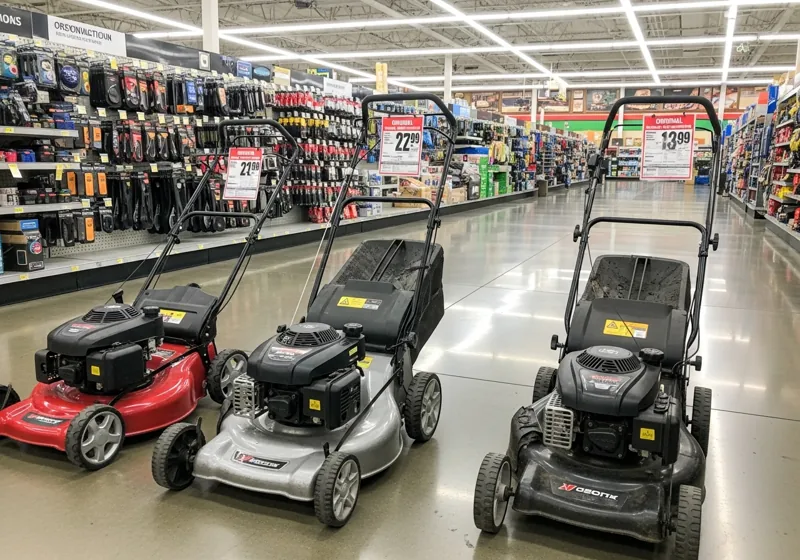
After ten years of fixing these things, I’ve got some strong opinions about which brands actually deliver and which ones leave you stranded with a dead mower in July.
Honda push mowers are like the Toyota Camry of lawn equipment; they just keep going. I’ve got customers still using Honda push mowers from 2010, and they start on the first pull every spring. The HRR216VKA is my go-to recommendation. Yeah, it costs around $450-500, but that Honda engine is bulletproof. The twin-blade system cuts better than single blades, and its Clip Director lets you switch between bagging and mulching without any tools.
The thing about Honda push mowers is they’re built right from the start. Good bearings, solid construction, engines that don’t quit. I probably see one Honda for every ten other brands that come in for repairs. When they do come in, it’s usually just for routine maintenance.
Toro push mowers bring some clever features to the table. Their Personal Pace system automatically matches your walking speed no more jerky acceleration when you speed up or slow down. The Recycler series mulches grass clippings so fine they disappear into your lawn like natural fertilizer.
I really like the Toro 22-inch Recycler for medium yards. It’s got all-wheel drive for slopes, and the engine starts reliably. Around $350-450 gets you a solid machine. I do see more engine issues with Toro compared to Honda, but their customer service is pretty good about warranty claims.
Husqvarna walk behind lawn mowers are the heavy-duty choice. These things are built like tanks, perfect for customers with rough terrain or really thick grass. The HU800AWDH model handles conditions that would bog down other mowers. It’s heavier than most, but sometimes you need that extra weight for traction.
The cutting quality on Husqvarna walk behind lawn mowers is excellent, and they handle wet grass better than most competitors. Expect to pay $450-600, but you’re getting commercial-grade durability.
For budget shoppers, Craftsman and Yard Machines offer decent push mowers in the $200-350 range. They’re not going to win any awards, but they’ll cut grass. Just temper your expectations; they don’t start as easily, they’re not as smooth to operate, and they typically need more repairs after a few years.
For a deeper dive into how these and other lawn mower brands compare across different categories and price points, including reliability data and long-term ownership costs, check out our comprehensive brand analysis.
Electric vs Gas Push Mowers: Which Power Type is Right for You?
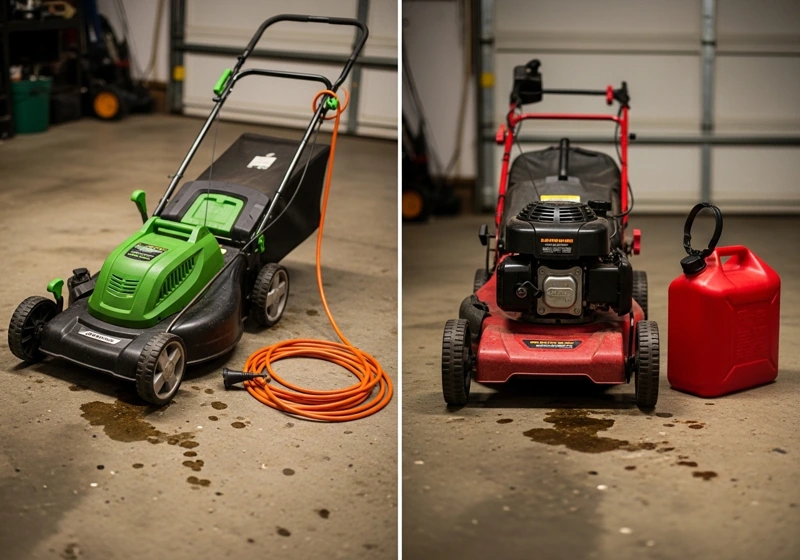
This question keeps me busy in the shop because there’s no one-size-fits-all answer. It really depends on your specific situation, and I’ve seen people make the wrong choice both ways.
Electric push mowers are incredibly convenient for the right yard. Push a button, and they start instantly, no yanking on pull cords or priming engines. They’re quiet enough that you can mow at 7 AM without the neighbors plotting your demise. Maintenance is basically just keeping the blade sharp and the deck clean.
The Greenworks 20-inch corded model is my top budget recommendation at around $150. It cuts cleanly and handles normal grass conditions just fine. But, and this is important, you’re limited by that extension cord. I’ve seen too many cords accidentally cut (always replace immediately for safety), and if your yard is bigger than about 100 feet from an outlet, you’re going to be moving the cord constantly.
For a complete breakdown of electric lawn mowers, including battery life comparisons, charging considerations, and cord management tips, our detailed buying guide covers everything you need to know beyond what I can share here.
Gas push mowers give you freedom and power. No cords to manage, no battery life to worry about. They’ll cut through thick, wet grass that would bog down electric models. A quality gas push mower like the Honda HRR216VKA will handle pretty much anything you throw at it.
The downsides? They’re louder, they need regular oil changes, and if you don’t maintain them properly, they can be absolute bears to start. I’ve spent more time than I’d like helping customers who let their gas sit all winter and then wonder why their mower won’t start in spring.
Here’s my honest take: for yards under a quarter-acre with easy power access, electric push mowers make a lot of sense. For anything bigger or if you’ve got thick grass, go with gas push mowers. The extra maintenance is worth it for the reliability and power.
Self-Propelled vs Manual: Understanding Your Push Mower Options
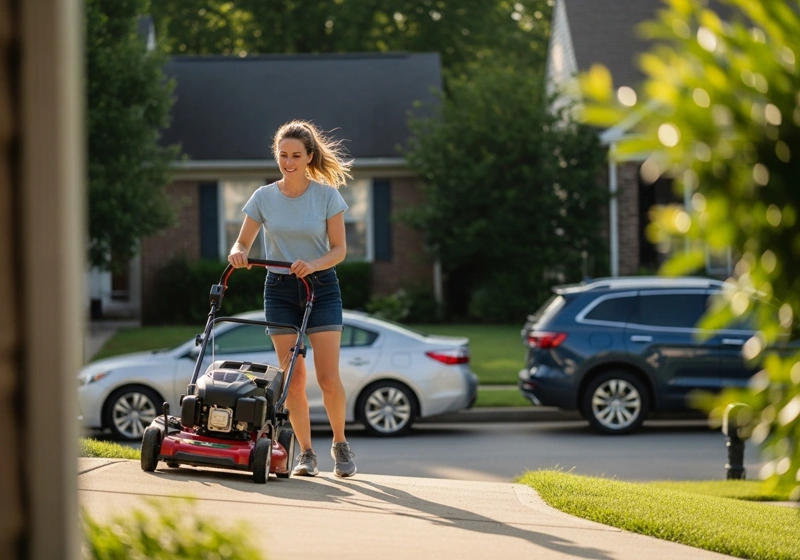
The self-propelled versus manual debate is where I see the most buyer’s remorse. People either love their choice or absolutely hate it, and it usually comes down to matching the mower to their specific needs.
Self propelled lawn mowers are lifesavers for certain situations. If your yard is bigger than about a third of an acre, has slopes, or if you’ve got any physical limitations, the drive system makes all the difference. I had a customer in her seventies who thought her mowing days were over until we got her set up with a self propelled lawn mower. Now she’s back out there every week, happy as can be.
The traction control on self propelled lawn mowers really shines on slopes. Even a 10-degree incline can be challenging to push a heavy mower up, especially when the grass bag gets full. With self-propulsion, the wheels do the work while you focus on steering.
But manual push mowers have their place, too. They’re lighter, simpler, and cheaper. For flat yards under a quarter-acre, the extra weight and complexity of self-propulsion just isn’t necessary. Plus, some people actually prefer the workout and the precise control you get with a manual push.
When you’re looking at self propelled lawn mowers, pay attention to the drive type. Front-wheel drive is fine for flat terrain but struggles on slopes when the front wheels lose contact. Rear-wheel drive gives better traction and control. All-wheel drive costs more but handles any terrain confidently.
Variable speed systems like Toro’s Personal Pace are slick; they automatically adjust to your walking speed. Single-speed systems work fine, but require you to adapt to the mower’s pace rather than the other way around.
Where to Find the Best Push Mowers for Sale
Shopping for push mowers for sale is an art form, and timing can save you serious money. I’ve watched customers pay full retail in April and then see the same models on clearance in October for 30% less.
Late fall is absolutely the best time to find push mowers for sale. Dealers need to clear inventory for snow blowers, and manufacturers often sweeten the deal with rebates. I’ve seen customers score Honda push mowers for $300 that normally retail for $450. Early spring can also yield deals, but selection is usually limited.
Home improvement stores like Home Depot and Lowe’s have a good selection and competitive pricing on push mowers for sale. They’ll often price-match, and their return policies are pretty generous. Plus, you can actually see and handle the mower before buying.
Local dealers cost more upfront but provide better service and support. For premium brands like Honda push mowers, that relationship matters when you need warranty work or parts down the road. I always tell customers that a slightly higher price is worth it if you’re getting genuine expertise and local support.
Online shopping can save money, but shipping costs add up fast on heavy gas push mowers. Plus, you can’t check the build quality or test the controls before buying. I’ve seen too many disappointed customers who bought online based solely on price.
When you’re shopping push mowers for sale, always check the model year. Last year’s models often offer great value with minimal changes from the current version. Just make sure parts and service will be available, and avoid discontinued models unless the discount is substantial.
Package deals can provide real value. If you need a spare blade, oil, or a maintenance kit anyway, bundled pricing often beats buying everything separately.
Look, buying a push mower doesn’t have to be complicated. Focus on matching the mower to your actual needs, yard size, terrain, and how much maintenance you’re willing to do. Whether you go with a tried-and-true Honda push mower, an innovative Toro, or a budget option, the key is taking care of it properly.
Don’t get caught up in all the marketing hype. A good push mower starts reliably, cuts cleanly, and fits your budget and yard. Take your time, do your research, and don’t be afraid to ask questions at the dealer. A quality walk behind mower will serve you well for years and make lawn care something you might actually enjoy.
Now stop overthinking it and go find the push mower that’ll make your yard the envy of the neighborhood!
Push mowers work great for yards up to about half an acre. Smaller yards under a quarter-acre are perfect for manual push mowers; you’ll get good exercise without wearing yourself out. Larger yards really benefit from self propelled lawn mowers to reduce fatigue. Once you hit an acre or more, you might want to consider a riding mower for efficiency.
In my experience, absolutely yes. Honda push mowers typically cost $100-200 more than comparable models, but they last significantly longer and start more reliably. I regularly see Honda push mowers still running strong after 15+ years with just basic maintenance, oil changes, sharp blades, and clean air filters. Cheaper brands often need major repairs or replacement after 5-7 years.
It depends on your yard and priorities. Electric push mowers are ideal for smaller yards under a quarter of an acre with nearby power outlets. They’re quiet, require minimal maintenance, and start instantly. Gas push mowers offer more power and unlimited runtime, making them better for larger yards, thick grass, or areas far from electrical outlets. If you have slopes or challenging grass conditions, gas usually performs better.
Self propelled lawn mowers have a drive system that moves the mower forward automatically; you just guide and steer. They’re beneficial for slopes, larger yards, or anyone with physical limitations. Regular push mowers require you to provide all the pushing power, but they’re lighter, simpler, and less expensive. For flat yards under a third of an acre, manual push is often sufficient.
Quality push mowers from brands like Honda and Toro typically last 10-15 years with proper care. Budget models might last 5-8 years. The key is regular maintenance, yearly oil changes, keeping blades sharp, cleaning air filters, and proper winter storage. Electric push mowers often last longer since they have fewer moving parts and no engine maintenance requirements.
