
Lawn Mower Engines 2025: Complete Guide to Types & Maintenance
So you want to know about the lawn mower engine, huh? Well, buckle up because I’m about to tell you everything I wish someone had told me when I first started working on these things back in 2009. And trust me, I learned most of this stuff the hard way.
Table of Contents
▼- Understanding Lawn Mower Engine Types: 2-Stroke vs 4-Stroke
- 4-Stroke Engines: Your Reliable Best Friend
- 2-Stroke Engines: Fast and Furious (But Needy)
- Electric Motors: The New Sheriff in Town
- Top Lawn Mower Engine Brands: Briggs & Stratton vs Honda vs Kawasaki
- Briggs & Stratton: The Workhorse
- Honda: The Perfectionist
- Kawasaki: The Dark Horse
- Engine Applications: Push, Riding, and Zero Turn Mowers
- Push Mower Engines: Small But Scrappy
- Riding Mower Engines: The Sweet Spot
- Zero Turn Engines: The Big Leagues
- Essential Lawn Mower Engine Parts: Components & Functions
- The Core Stuff
- Fuel and Air Stuff
- Ignition and Starting Stuff
- Lubrication and Cooling Stuff
- Lawn Mower Engine Maintenance Schedule: Keep Your Engine Happy
- Getting Ready for Spring
- Monthly Checkups During Mowing Season
- End-of-Season Service
- Once-a-Year Deep Dive
- Troubleshooting Common Lawn Mower Engine Problems
- Won’t Start (The Classic)
- Runs Like Crap
- Overheating Problems
- When to Give Up
My dad always said I had grease in my veins instead of blood. Maybe that’s why I ended up spending the last 15 years elbow-deep in small engines, fixing everything from beat-up push mowers to commercial zero-turns that cost more than my first car. Started just trying to fix my own mower, ended up making a career out of it.
Last Tuesday, Mrs. Henderson from down the street showed up at my shop with her ancient Craftsman, swearing up and down that it was “making funny noises.” Funny noises turned out to be a rod bearing that was basically screaming for mercy. It could’ve been prevented with a $3 oil change. That’s the thing about lawn mower engines – ignore them and they’ll break your heart (and your wallet).
Look, I’m not here to bore you with a bunch of technical mumbo-jumbo. You probably just want to know why your mower won’t start, or which engine won’t leave you stranded when your mother-in-law decides to drop by unannounced and your grass looks like a hay field. Been there.
Understanding Lawn Mower Engine Types: 2-Stroke vs 4-Stroke
Okay, first things first. Your lawn mower engine is either a 2-stroke or a 4-stroke, and knowing which one you’ve got makes all the difference in the world. It’s like the difference between a motorcycle and a Buick – they’ll both get you where you need to go, but the experience is gonna be totally different.
Best Lawn Mower Engines


Greenworks 40V 16\\\\\\\\\\\\\\\\\\\\\\\\\\\\\\\" Cordless Lawn Mower
4-Stroke Engines: Your Reliable Best Friend
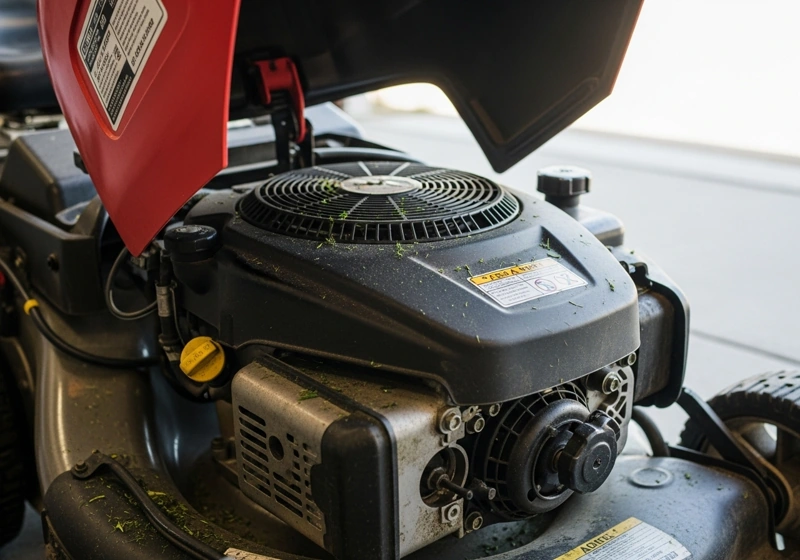
Most mowers nowadays run 4-stroke engines, and honestly, thank goodness for that. These things work in four steps – suck, squeeze, bang, blow. (Yeah, I know it sounds crude, but that’s actually how we remember it in the shop.) If you want to understand the technical details behind the four-stroke engine cycle, it’s fascinating how this century-old technology still powers most small engines today.
What I love about 4-stroke lawn mower engines is that they’re predictable. You treat them decently, they’ll run forever. My buddy Jim’s got a 1999 Briggs and Stratton lawn mower engine that still fires up on the second pull. The thing’s older than some of my tools, but it just keeps going.
They burn cleaner, too, which means your neighbors won’t think you’re running a diesel generator every Saturday morning. Plus, they sip gas like they’re paying for it themselves. My Honda uses maybe half the fuel of my old 2-stroke trimmer.
Downside? They’re heavier. And when something breaks, there’s more stuff to fix. But honestly, I’d rather deal with a heavy engine that works than a light one that doesn’t.
2-Stroke Engines: Fast and Furious (But Needy)
Now, 2-strokes are a whole different animal. They fire every time the piston comes up, which makes them crazy powerful for their size. The problem is, they’re also crazy finicky.
You gotta mix oil right into the gas – mess up that ratio and you’re either gonna seize the engine or foul the spark plug so bad it won’t run at all. I’ve seen grown men literally cry over this mistake. Usually happens right before their wife’s garden party.
Most lawn mowers don’t use 2-stroke anymore, and I say good riddance. They’re loud as hell, smell like a race track, and need constant attention. Save ’em for chainsaws and weed whackers where the weight savings actually matter.
Electric Motors: The New Sheriff in Town
Alright, so these aren’t technically engines, but they’re taking over the mowing world whether we old-timers like it or not. And you know what? Some of them are actually pretty impressive.
I was skeptical as hell when these first showed up. I mean, come on – a battery-powered mower? Sounded like something my nephew would come up with after too many energy drinks. However, I’ll admit that some of these things may surprise you.
No oil changes, no spark plugs, no yanking your arm out of its socket trying to start the damn thing. Just plug it in, charge it up, and go cut grass. For smaller yards, they’re actually nice. Instant torque, quiet as a church mouse, and you can mow at 6 AM without the whole neighborhood knowing about it.
Of course, there’s always a catch. Run out of juice halfway through, and you’re stuck. Plus, if you’ve got more than half an acre, you might need to take a coffee break while the battery charges. If you’re considering making the switch to electric, our comprehensive electric lawn mower buying guide covers everything you need to know about choosing the right electric option for your yard.
Top Lawn Mower Engine Brands: Briggs & Stratton vs Honda vs Kawasaki
Time for some real talk about brands. I’ve worked on just about everything with a pull cord over the years, and they definitely ain’t all the same.
Briggs & Stratton: The Workhorse
Briggs and Stratton lawn mower engines are like the pickup truck of the small engine world. They’re not fancy, they’re not the quietest, but they’ll work their butts off, and you can fix ’em with basic tools.
Been making engines in Wisconsin since before my grandfather was born, and it shows. Briggs & Stratton’s history goes back to 1908, and these things are designed to be serviced by regular people. When something breaks, you don’t need to send it back to the factory or find some specialist with a computer science degree.
Their new 725 Series EXi engines are pretty slick. No priming, no choking – just pull and pray, which is about all most people want to do anyway. I’ve put dozens of these in customer mowers, and the failure rate is stupid low.
For Briggs and Stratton push mower engines, you really can’t go wrong. Parts are cheap, they’re available everywhere (heck, I’ve seen gas stations that stock Briggs parts), and any halfway decent repair shop can work on them.
When you step up to the big stuff like Briggs and Stratton zero turn or Briggs and Stratton ride on mower engines, that’s where they really shine. Their commercial engines are absolute tanks. Seen ’em run thousands of hours and just keep asking for more.
Honda: The Perfectionist
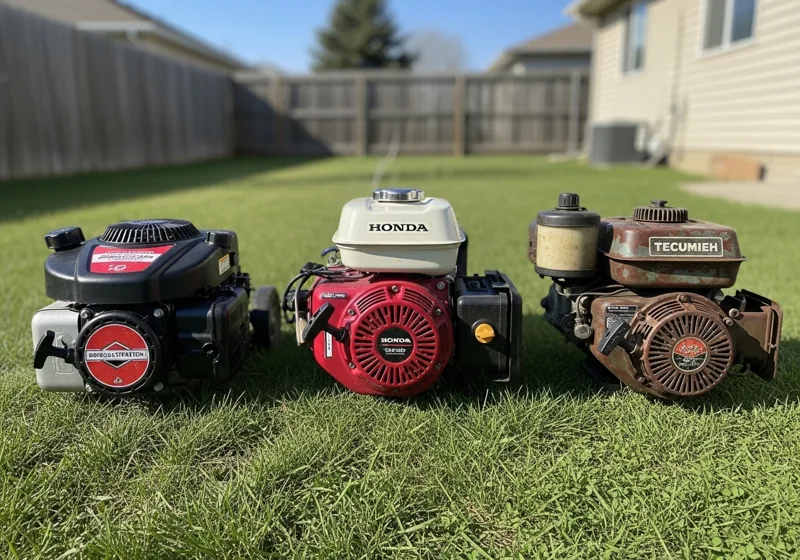
Honda lawn mower engines are like that overachieving kid from high school who made everyone else look bad. They do everything better – run quieter, start easier, last longer, use less gas. It’s almost annoying how good they are.
I’ve got a Honda GCV200 in my personal mower that’s eight years old now. Still starts on the first pull, even after sitting all winter with whatever gas was left over from last season. (Don’t tell my customers I do that – do as I say, not as I do.)
The build quality is just insane. Everything fits tighter, runs smoother, and feels more solid. It’s like comparing a Swiss watch to a wall clock – they both tell time, but one’s obviously built better. Honda’s reputation for engineering excellence extends from their automotive history into their small engine manufacturing.
Here’s the thing, though – Honda lawn mower engines cost more. Not just to buy, but to fix when something eventually goes wrong. Honda doesn’t mess around with cheap parts, and their dealers know they can charge accordingly.
But if you’re the type who keeps stuff forever and doesn’t mind paying extra for quality, Honda’s tough to beat. Their overhead cam design is more sophisticated than the engine in my 1995 pickup truck.
Kawasaki: The Dark Horse
Kawasaki doesn’t get nearly enough love in the lawn mower engine world, and that’s a damn shame because they make some seriously impressive stuff. Their FR and FX series engines are what I’d put in my own zero-turn if I were building one from scratch.
Where Kawasaki really kills it is in their bigger engines for commercial stuff. These things are built like bank vaults – cast iron everything, oversized bearings, cooling systems that could handle Death Valley in August.
The fuel injection on their bigger engines is something else. Smooth power delivery, great fuel economy, and they’ll run at any altitude without breaking a sweat. Took one of these up to Flagstaff once (about 7,000 feet) and it ran like it was at sea level.
They’re not cheap, but if you’re serious about performance and reliability, Kawasaki deserves a look.
Engine Applications: Push, Riding, and Zero Turn Mowers
The type of mower you’re running determines what kind of engine you need. Getting this wrong is like putting a motorcycle engine in a semi truck – it ain’t gonna end well.
Push Mower Engines: Small But Scrappy
Briggs and Stratton push mower engines usually run between 140cc and 190cc. Doesn’t sound like much, but it’s plenty for most suburban lawns. Bigger isn’t always better – I’ve seen well-tuned 150cc engines outwork neglected 200cc engines all day long.
Most push mowers use single-cylinder engines to keep weight down. You don’t need a V8 to cut grass, after all. The new overhead valve designs are way more efficient than the old side-valve engines from back in the day. If you’re shopping for a new push mower, our guide to the best push mowers for 2025 will help you find the perfect match for your lawn.
One thing people don’t think about is where they put the engine. Walk-behinds with rear-mounted engines balance better and are easier to push around. Front-mounted engines make the thing feel nose-heavy and harder to turn.
Riding Mower Engines: The Sweet Spot
Move up to Briggs and Stratton ride on mower territory, and you’re looking at 400cc to 700cc+. These need to balance power with efficiency because you’ll be sitting on the thing for an hour or more.
Twin-cylinder engines start making sense here. They run smoother, vibrate less, and deliver power more evenly. Spend a morning on a single-cylinder rider, then jump on a twin – your back will definitely notice the difference.
Electric start becomes pretty much mandatory, too. I don’t care how tough you think you are; after pulling starter cords all morning, being able to turn a key feel like winning the lottery. Ready to upgrade to a riding mower? Check out our comprehensive riding lawn mower guide for the best models and features to consider.
Zero Turn Engines: The Big Leagues
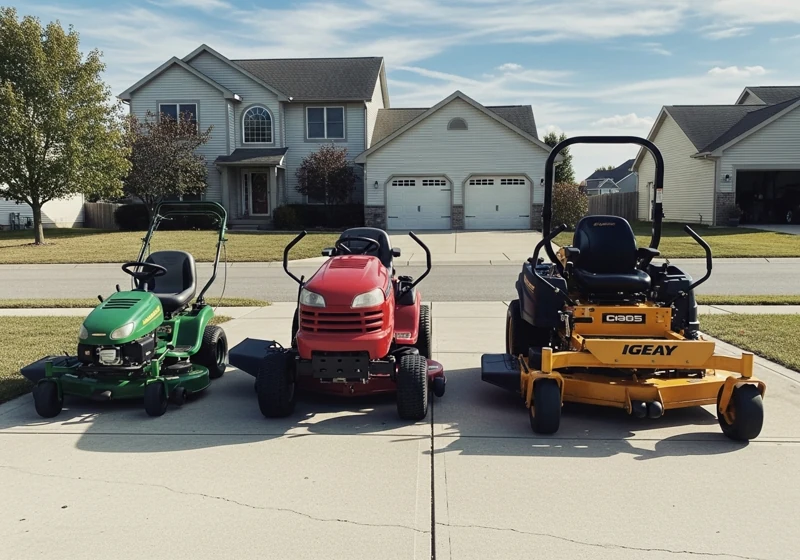
Briggs and Stratton zero turn mowers are where things get serious. We’re talking 650cc to 850cc twin-cylinder monsters that need to deliver consistent power while making crazy directional changes at speeds that would make a riding mower dizzy.
These engines live hard lives. High RPMs, heavy loads, constant direction changes, and they’re often doing semi-commercial work. Everything’s built to commercial standards – massive cooling systems, heavy-duty air filtration, the works.
The hour meters on these things are crucial because they rack up time fast. Knowing exactly how many hours are on your engine helps you stay ahead of maintenance before little problems become big, expensive ones. If you’re considering a zero-turn investment, our complete zero turn mower guide breaks down the best models and what to look for.
Essential Lawn Mower Engine Parts: Components & Functions
Let me walk you through what’s inside your lawn mower engine so you’re not completely lost when something goes wrong or when you’re talking to a repair guy.
The Core Stuff
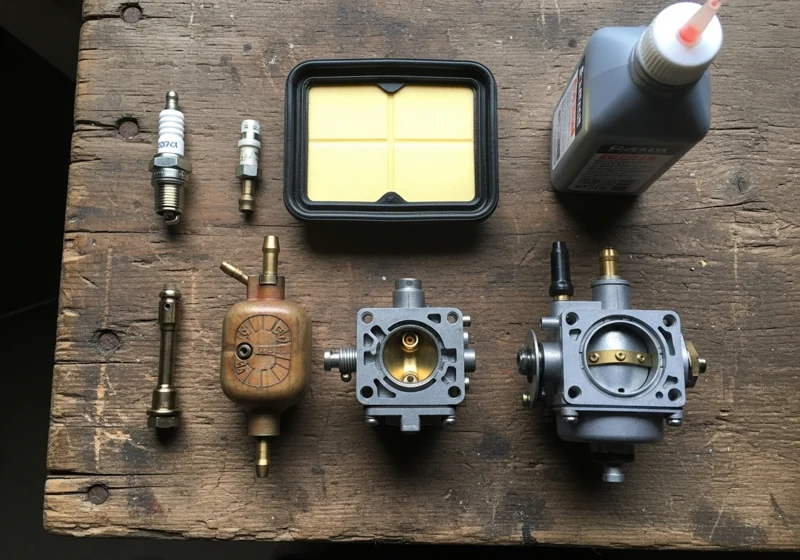
Your cylinder and piston are where all the action happens. Piston goes up and down, creates compression, spark plug fires, boom – power. Understanding the basic principles of internal combustion engines helps explain why most engines today use cast iron cylinder liners or aluminum with iron sleeves – straight aluminum just can’t take the beating.
The crankshaft turns all that up-and-down motion into spinning motion that turns your blade. It’s precision-balanced and runs in bearings that absolutely have to stay lubricated. When those bearings go bad, your engine sounds like it’s full of angry wasps.
Valves are like the lungs – the intake valve lets air and fuel in, the exhaust valve lets burnt stuff out. They open and close thousands of times per minute, take a serious beating, and when they fail, your engine loses compression and runs like garbage.
Fuel and Air Stuff
The carburetor is probably the most misunderstood part of any lawn mower engine. It’s basically a controlled fuel leak that mixes gas with air in just the right amounts. Modern ones have automatic chokes and primer systems, but they’re still fussy about clean fuel.
Your air filter is more important than most people realize. A dirty air filter will kill an engine faster than just about anything else. I’ve seen cylinders scored beyond repair just because someone ignored a five-dollar filter.
Fuel systems look simply, but they’re not. Modern gas has ethanol that absorbs water and turns into varnish that clogs everything up. The EPA’s ethanol fuel standards explain why ethanol is added to gasoline, but that’s why I’m always nagging people about fresh gas and fuel stabilizer.
Ignition and Starting Stuff
Spark plugs look simple, but there’s more to them than meets the eye. Different engines need different heat ranges, gaps have to be set just right, and using the wrong plug can cause all kinds of problems.
The ignition coil makes the high voltage that fires the spark plug. These solid-state units are pretty reliable, but when they start failing, you get intermittent misfiring that’ll drive you absolutely nuts trying to figure it out.
Starting systems range from basic recoil starters to fancy electric start setups. Recoil starters are bulletproof, but they’ll test your shoulder. An electric start is great until the battery dies or the starter craps out.
Lubrication and Cooling Stuff
Oil doesn’t just lubricate – it cools, seals, and cleans too. The science behind motor oil properties explains how lawn mower engine parts make a lot of heat, and oil carries that heat away from places where it could cause damage.
Most lawn mower engines are air-cooled, which means those fins all over the engine aren’t just decoration. The flywheel acts like a fan, pulling air across those fins to carry heat away. Keep ’em clean or your engine will cook itself.
Lawn Mower Engine Maintenance Schedule: Keep Your Engine Happy
This is where most people screw up. You can have the best lawn mower engine money can buy, but if you don’t take care of it, it’ll leave you high and dry when you need it most.
Getting Ready for Spring
Before you fire up that lawn mower engine for the first time each year, give it some attention. Fresh oil is absolutely mandatory – even if you changed it before storage. Oil breaks down over time, and starting with fresh oil is like giving your engine a clean start.
Check the spark plug. If it’s been more than 100 hours or two seasons, just replace it. They’re cheap, and a fresh plug can be the difference between easy starting and spending your Saturday morning cursing at a starter cord.
The air filter comes next. If it looks like it survived a sandstorm, toss it and get a new one. Trying to run an engine with a clogged filter is like trying to breathe through a drinking straw.
Fresh fuel with stabilizer is critical. If you’re not sure about the gas in your tank, dump it and start over. I’ve made more money on bad fuel problems than I care to admit. For a complete step-by-step process, check out our detailed lawn mower oil change guide that covers all the maintenance basics.
Monthly Checkups During Mowing Season
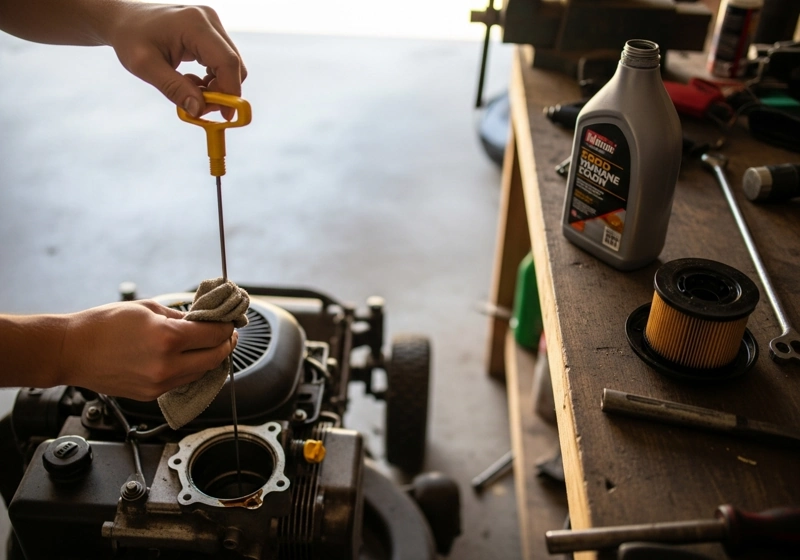
Check your oil level regularly. Lawn mower engines don’t have oil pressure gauges, so the dipstick is your lifeline. Check it every few uses and add oil as needed. Don’t overfill, though – too much oil causes its own problems.
Take a look at the air filter monthly, especially if you’re mowing in dusty conditions or dry grass. A slightly dirty filter can be cleaned, but don’t try to nurse a filter that’s seen better days.
Clean those cooling fins while you’re at it. Grass clippings love to pack in there and block airflow. I use a leaf blower to clean mine – it takes about two minutes and prevents overheating.
Keep an eye on your blade, too. A sharp blade makes the engine’s job easier and gives you a better cut. I sharpen mine at least twice a season, more if I’m unlucky with rocks or roots. Don’t know how to sharpen a blade yourself? Our guide on how to sharpen your lawn mower blade walks you through the entire process.
End-of-Season Service
This is when I do the heavy lifting. Oil change time – get all that dirty oil out before it sits all winter. Used oil has acids and crud that can eat away at internal parts during storage.
New spark plug if you didn’t do it in spring. Cheap insurance against starting problems next year.
Clean or replace the air filter one last time. Don’t want moisture and junk getting into your engine while it’s stored.
Here’s where I disagree with some people – I store my engines with a full tank of treated fuel instead of draining them. Add stabilizer, run it for 10-15 minutes to get treated fuel through the whole system, then park it. For complete winter preparation steps, our lawn mower winterization guide covers everything you need to protect your investment.
Once-a-Year Deep Dive
Once a year, usually late fall, I go deeper. New fuel filter if your engine has one, check all fuel lines for cracks, and look over all the nuts and bolts to make sure nothing’s worked loose.
If the engine’s been running rough or hard to start, this is when I’ll clean the carburetor. Not rocket science, but it takes patience and some basic mechanical ability.
Check all the safety stuff too. Dead man switches, blade engagement, parking brakes – all that stuff needs to work properly, or someone could get hurt.
Troubleshooting Common Lawn Mower Engine Problems
After 15 years of service calls, I can usually guess what’s wrong before I even see the mower. Here’s my approach to the most common problems.
Won’t Start (The Classic)
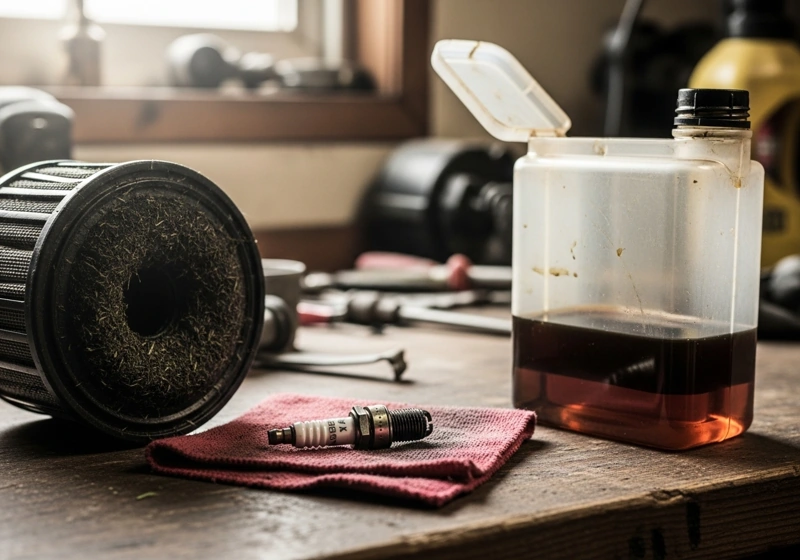
Nine out of ten times, it’s fuel-related. Bad gas, old gas, water in gas, empty tank – you’d be amazed how many “broken” mowers just need fresh fuel.
If fuel’s good, check for spark. Pull the spark plug and ground it against the engine while someone pulls the cord. No spark usually means a dead plug, loose wire, or a fried ignition module.
Air problems can kill, starting too. A completely clogged air filter can choke an engine, especially newer ones with emissions controls. It’s like trying to start a car with a plastic bag over the air intake.
Runs Like Crap
Rough running, surging, or inconsistent power almost always points to fuel system problems. A partially clogged carburetor or dirty air filter will make your lawn mower engine run like it’s having a seizure.
Surging – where the RPMs go up and down like a roller coaster – usually means lean mixture. It could be a dirty carb, a clogged filter, or an air leak in the intake.
Black smoke means rich mixture – too much fuel, not enough air. Usually dirty air filter or carburetor problems.
Blue smoke means oil’s burning. It could be worn rings, bad valve guides, or someone overfilled the crankcase. None of these are cheap fixes.
Overheating Problems
Lawn mower engines run hot normally, but they can definitely overheat. The most common cause is blocked cooling fins – grass clippings pack in there like insulation.
Low oil causes overheating, too. Oil doesn’t just lubricate; it carries heat away from hot spots. Let oil get low, and you’re asking for expensive trouble.
A dull blade makes the engine work harder and run hotter. Keep that blade sharp, and your engine will thank you.
When to Give Up
Some problems aren’t worth fixing. Internal noise, like knocking, usually means major damage. Cracked blocks, bent crankshafts, seized pistons – that’s when it’s time to start shopping.
If repair costs hit about 60% of replacement costs, it’s usually time to cut your losses. I hate telling customers this, but sometimes you gotta know when to fold. For more detailed troubleshooting steps and repair guidance, check out our comprehensive lawn mower maintenance and troubleshooting guide.
Your lawn mower engine will take care of you if you take care of it. Whether you’ve got a basic Briggs & Stratton lawn mower motor or a fancy Honda lawn mower engine, stick to a regular maintenance schedule and use decent fuel. When something does go wrong that’s over your head, don’t be too stubborn to call a pro. Sometimes it’s worth paying someone to fix it right the first time instead of making it worse by trying to save a few bucks.
Honda lawn mower engines are like luxury cars – incredibly well-built, smooth, reliable, but you pay for that quality. Briggs and Stratton lawn mower engines are more like work trucks – solid, dependable, cheaper to fix, and parts are everywhere. Honda’s got fancier technology, and Briggs focuses on stuff that works and can be fixed by regular people.
Every 25-50 hours or once a year, whichever comes first. New engines need more frequent changes – first oil change after 5 hours, then every 25 hours in the first season. Don’t overthink the oil type – SAE 30 works for most applications unless your manual says otherwise.
Hard starting is usually the first warning sign. Then watch for rough idling, smoke, weird noises, or power loss. Oil leaks, overheating, and excessive vibration are red flags. If your lawn mower engine needs choke to run when warm, something’s definitely wrong.
Basic stuff like spark plugs, air filters, and oil changes are pretty straightforward. Blade work and general cleaning are doable too. But when you get into carburetor rebuilds, internal engine work, or electrical problems, that’s when you should call someone who knows what they’re doing.
Well-maintained 4-stroke engines last longest, period. Honda lawn mower engines have the best reputation for longevity, but a properly cared for Briggs and Stratton lawn mower engine will serve you for decades. The secret isn’t really the brand – it’s regular maintenance and not beating the hell out of your equipment.
