
Best Riding Lawn Mower 2025: Complete Guide & Top Reviews
You know what drives me absolutely crazy? Last weekend, I was out front watering my tomatoes, and my neighbor Steve walked over looking like someone just told him his dog ran away. It turns out he’s been shopping for a riding lawn mower since May. It’s now August, and this poor guy is still wandering around dealer lots like a lost tourist.
Table of Contents
▼- Why Choose a Riding Lawn Mower Over Push Mowers
- The Ultimate Buying Guide: How to Choose the Best Riding Lawn Mower
- Top Riding Lawn Mower Brands: In-Depth Reviews
- Best Small Riding Lawn Mowers for Compact Yards
- Electric vs Gas: The Rise of Electric Riding Lawn Mowers
- Where to Find the Best Riding Lawn Mowers for Sale
- Conclusion: Finding Your Perfect Riding Lawn Mower
“I just can’t figure it out,” he says. “Every salesperson tells me something different. One guy says I need 25 horsepower, another says 18 is plenty. Then there’s this whole thing about decks and transmissions, and I honestly have no clue what any of it means.”
I totally get his frustration. Shopping for a riding lawn mower shouldn’t require an engineering degree, but somehow that’s exactly what it feels like when you’re standing there surrounded by all these machines that look basically the same but cost anywhere from fifteen hundred to five thousand dollars.
Here’s what I wish someone had told me when I bought my first riding mower back in 2015 (spoiler alert: it was a disaster that broke down three times in the first year). The right riding lawn mower will completely transform your weekends. Instead of spending three hours every Saturday pushing a mower around your yard while questioning your life choices, you’ll be done in an hour and actually have energy left for the fun stuff.
But here’s the catch. Get the wrong one and you’ll spend more time cursing at it than actually mowing. I’ve seen people drop four grand on machines that never worked right from day one. I’ve also seen people buy the cheapest option they could find and regret it before the first oil change.
Whether you’re considering those rock-solid John Deere riding lawn mowers that your grandfather probably swore by, or thinking about jumping into the future with an electric riding lawn mower (which are honestly incredible now), this guide will help you figure out what actually matters and what’s just marketing nonsense.
No sales pitches here. Just real talk from someone who’s made the mistakes so you don’t have to.
Why Choose a Riding Lawn Mower Over Push Mowers
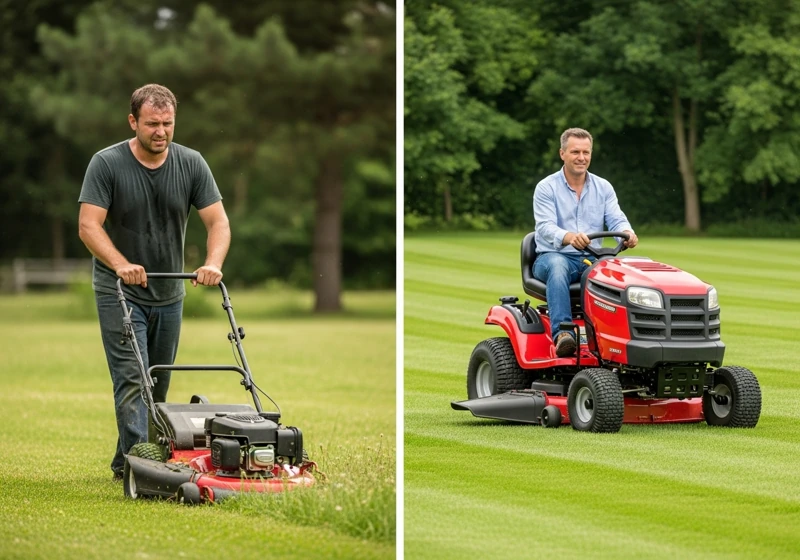
Picture this scenario, because I’m betting it sounds familiar: Saturday morning, 7:30 AM, you’re standing at your kitchen window with a cup of coffee in hand. The yard needs cutting, but it’s already getting warm outside. You know if you wait much longe,r it’ll be ninety degrees and miserable. But you also know that with your current push mower, you’re looking at two and a half hours of sweaty trudging around obstacles, fighting with that stupid cord that never wants to start properly, and probably throwing in some creative vocabulary when you hit that annoying slope by the mailbox.
By the time you’re finished, your back hurts, you’re completely soaked in sweat, and those plans you had for the afternoon? Well, now they involve a cold shower and maybe a nap instead of actually enjoying your weekend.
Riding lawn mowers flip this whole miserable script on its head.
Time savings are absolutely ridiculous. I actually started timing my mowing sessions because my wife thought I was exaggerating how much time I was saving. Turns out I wasn’t. A decent riding lawn mower cuts your mowing time by about two-thirds. My half-acre property used to take me the better part of three hours with a walk-behind mower. Now? I’m done in just over an hour, and I’m not exhausted when I finish.
But what really surprised me was how much better the actual cutting quality became. Sounds weird, right? Here’s the thing, though. When you’re getting progressively more tired and frustrated pushing a mower around a big yard, your attention to detail goes right out the window. You start rushing through the final sections, overlapping poorly, maybe missing some spots, because honestly, you just want to be done already.
With a riding lawn mower, you maintain that same level of focus and energy from start to finish. Plus, most decent riding mowers have way better cutting deck designs than your average walk-behind mower anyway.
The accessibility factor is huge and something I never really considered until I started working with older clients. There’s this woman named Margaret who lives about three streets over. She’s probably in her mid-seventies and thought her lawn care days were completely over after some hip problems made walking behind a mower too difficult. We got her set up with a basic residential riding mower, and now she’s back to maintaining her prize-winning flower gardens because she’s not completely wiped out from just cutting the grass.
The math is pretty straightforward here. If you’re dealing with more than about half an acre, or if your current mowing routine consistently takes longer than 45 minutes, a riding lawn mower stops being a luxury purchase and starts being a practical investment in your sanity and free time. To understand more about the key differences between riding and push mowers, this comparison guide breaks down all the factors you should consider.
The Ultimate Buying Guide: How to Choose the Best Riding Lawn Mower
Alright, so you’ve decided a riding lawn mower makes sense for your situation. Awesome! Now comes the part where you discover there are roughly seventeen thousand different options, each claiming to be the perfect solution while offering features you didn’t even know existed and probably don’t actually need.
I’ve watched way too many people get completely distracted by flashy bells and whistles that sound impressive when the salesperson is explaining them, but never get used in real life. Meanwhile, they’re completely overlooking the basic fundamentals that actually matter every single time they turn the key.
Start with your actual property, not the sales brochure
This seems like obvious advice, but you’d be absolutely shocked at how many people skip this step entirely. Don’t just glance out your kitchen window and guess. Actually, walk your property with a measuring tape if you have to. How much space are we really talking about? Half an acre? One acre? Two acres? Any hills or slopes that make you think “hmm, that could get interesting”?
For yards in the 0.5 to 1.5 acre range, a small riding lawn mower with a cutting deck of 30 to 38 inches is absolutely perfect. Costs less money upfront, way easier to maneuver around obstacles, and it’ll fit in your garage without requiring you to rearrange everything else you own. Once you start looking at properties in the 1.5 to 3-acre range, then you might want to consider those 42 to 46-inch cutting decks for efficiency. Anything bigger than that is talking serious riding lawn tractor territory, with all the size, complexity, and cost that comes along with it.
Hills and slopes matter way more than most people realize. I learned this lesson the hard way, helping a client who bought this absolutely gorgeous mower that was completely wrong for his sloped backyard. If you’ve got inclines steeper than about 10 degrees (and trust me, they always feel way steeper when you’re actually riding on them), you absolutely need a riding lawn mower with a lower center of gravity and serious traction control. This is definitely not the place to try saving a few hundred dollars.
Engine talk without the engineering degree
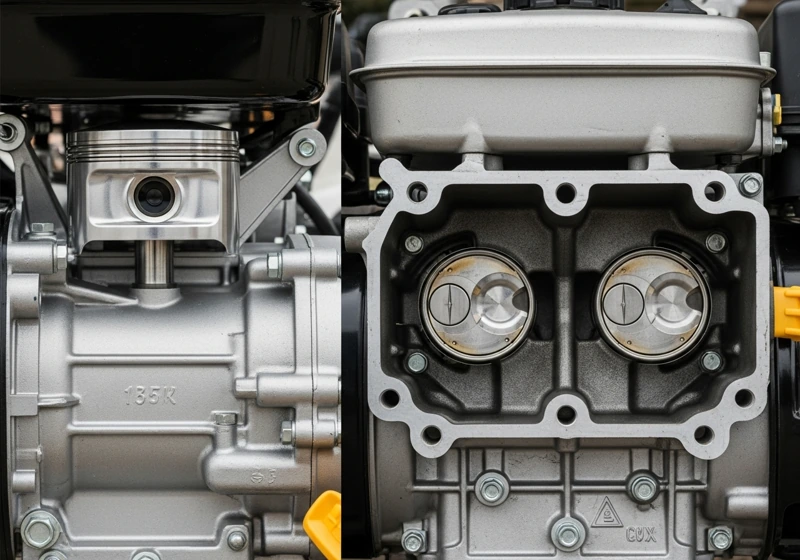
Forget about getting obsessed with horsepower numbers for a minute. I’ve seen perfectly good 19- to 22-hp engines from reputable brands like Briggs & Stratton, Kohler, or Kawasaki completely outperform much bigger engines from manufacturers that, well, let’s just say not all engine manufacturers are created equal.
What you really want to focus on is brand reputation and serviceability. Can your local small engine repair guy actually work on it when something eventually needs attention? Because something always eventually needs attention. That’s just the reality with any piece of mechanical equipment. For a deeper understanding of lawn mower engines and what makes them reliable, this guide covers everything from single-cylinder to twin-cylinder options.
Single-cylinder engines work totally fine for basic residential use. Twin cylinder engines run smoother and handle heavy-duty situations better. Think of it like the difference between a four-cylinder car engine and a V6. Both will get you where you need to go, but one handles challenging conditions with more confidence and less stress.
Cutting deck decisions (this is where the actual work happens)
Do not cheap out on the cutting deck. This is literally where your grass gets cut, so quality absolutely matters here. Stamped decks (which are basically just pressed metal) work okay for light residential use. Fabricated decks (welded together from thicker pieces of metal) last way longer and handle tough conditions without complaining or wearing out prematurely.
Look for features like deck wash ports. Being able to hook up a garden hose to clean your deck is an absolute game-changer that you don’t appreciate until you have it. Multiple cutting height adjustments are also important, especially if you’re the type of person who likes to experiment with different grass heights depending on the season.
Transmission types: manual versus automatic (more important than you might think)
Manual transmissions cost less money upfront, but they require more active attention while you’re mowing. It’s like driving a car with a manual transmission. It’s totally fine if you’re comfortable with that and don’t mind the extra involvement, but it can be potentially annoying if you’re constantly navigating around flower beds, trees, and kids’ toys scattered throughout the yard.
Hydrostatic transmissions are basically automatic transmissions for mowers. They offer smooth operation and precise speed control, eliminating the need for manual adjustments. After using both types extensively over the years, I’m definitely in the hydrostatic camp for most homeowners. The convenience factor is absolutely worth the extra money, especially when you’re mowing around obstacles or dealing with varying terrain conditions.
Comfort features are not just luxury items
You’re going to spend literally hours on this machine over the course of several years. Features like adjustable seats, easy-to-reach controls, and smooth, responsive steering are not nice-to-have luxuries. They’re practical necessities that affect your experience every single time you use the mower.
And yes, cup holders might seem completely silly and unnecessary until you’re two hours into a hot Saturday morning mowing session and desperately wishing you had somewhere safe and convenient to put your water bottle.
Maintenance accessibility (the question almost nobody thinks to ask)
This is huge and often overlooked. Can you easily access the air filter when it needs to be changed? What about the oil drain plug? Spark plugs? I’ve seen absolutely beautiful riding lawn mowers turn into expensive nightmares because basic routine maintenance required half disassembling the machine or using specialized tools that most people don’t own.
Ask about this information before making a purchase decision, not six months later when you’re trying to change the oil for the first time and starting to question every decision that led you to this moment. Speaking of maintenance, our comprehensive guide to lawn mower maintenance and troubleshooting covers everything you need to know about keeping your mower running smoothly for years.
Top Riding Lawn Mower Brands: In-Depth Reviews
After working with nearly every major brand over the past decade (and I mean really working with them, not just reading marketing brochures), I’ve developed some strong opinions about which companies consistently deliver quality and which ones leave you frustrated and reaching for your wallet too often. For a broader perspective on the best lawn mower brands across all categories, this comprehensive review covers everything from budget to premium options.
John Deere Riding Lawn Mowers: The expensive option that’s usually worth every penny
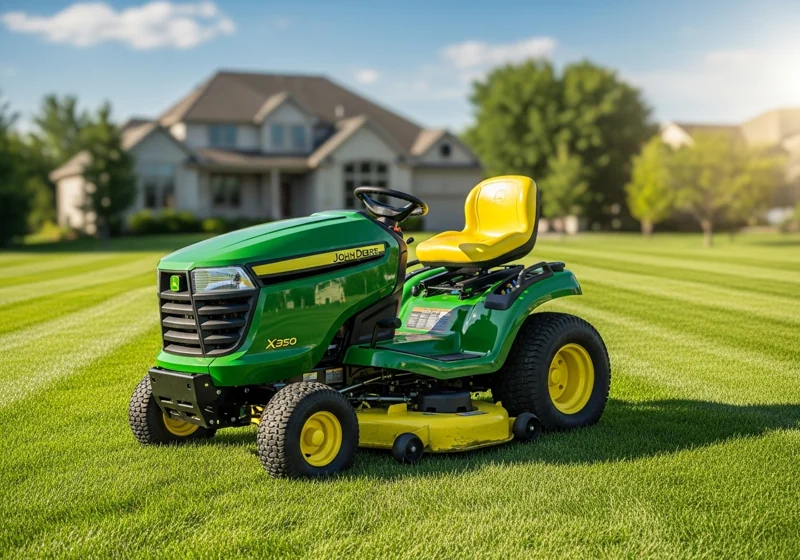
Let’s just get the obvious stuff out of the way first. Let’s just get the obvious stuff out of the way first. John Deere riding lawn mowers are expensive. You’re going to pay somewhere between 15 and 20 percent more for that distinctive green paint job and the little leaping deer logo.. However, here’s why I continue to recommend them despite the higher price tag: I regularly service John Deere models that are 15, 18, and even 20 years old, and they still run exactly as they’re supposed to.
The X300 and X500 series hit that perfect sweet spot between genuinely useful features and proven long-term reliability. What really sets John Deere riding mowers apart from the competition is their dealer network. You can obtain parts and professional service almost anywhere in the country, and this is crucial: their technicians actually know these machines inside and out, rather than just guessing.
I remember working on a 2008 X320 last spring that had been sitting forgotten in someone’s garage for almost four years. After about thirty minutes of basic maintenance and fresh fluids, it started right up like absolutely nothing had happened. That’s the kind of build quality and engineering reliability you’re paying extra for.
My current John Deere recommendations:
- X350 with 42-inch deck: The Goldilocks mower. Not too big, not too small, just right for most suburban situations
- X390 with 54-inch deck: Twin cylinder smoothness when you need the extra power, comfort features that actually work properly
- X590 with 48-inch deck: Basically, commercial-grade durability and features in a residential package
Cub Cadet Riding Mowers: The innovation leaders actually doing interesting stuff
Cub Cadet riding mowers have really impressed me over the past few years. They’re incorporating technology and user experience improvements that honestly make some of the more traditional brands look like they’re stuck in 1995. We’re talking LED headlights that actually work, smartphone connectivity that’s genuinely useful rather than just a gimmick, and comfort systems that feel like they were designed by people who actually spend time on lawn mowers.
Their XT1 and XT2 series pack features that you typically only find on machines costing significantly more money. Build quality has improved dramatically, too. I used to be pretty skeptical about Cub Cadet’s long-term reliability, but these newer models are completely changing my opinion.
The real standout feature is their cutting deck design. The AeroForce deck system does something genuinely impressive with grass discharge and mulching capabilities that make other brands’ efforts look primitive by comparison. If cutting quality is your main priority, Cub Cadet often outperforms mowers that cost way more money.
Current Cub Cadet favorites:
- XT1 LT42 with 42-inch deck: Exceptional value for the money that doesn’t feel cheap
- XT2 SLX50 with 50-inch deck: Premium features without the premium price tag
- Ultima ZT1: Zero turn efficiency without requiring an engineering degree to operate
Husqvarna Riding Mowers: Swedish engineering meets practical American needs
Husqvarna riding mowers bring that distinctive Scandinavian attention to detail, making everything feel thoughtfully designed rather than just thrown together. Their hydrostatic transmissions are incredibly smooth, honestly, some of the best in the entire industry. The YTH and TS series deliver consistently reliable performance with genuinely superior comfort compared to most competitors.
What I really appreciate about Husqvarna is its obvious focus on actual user experience rather than just technical specifications. Controls make intuitive sense, routine maintenance is straightforward, and everything feels like someone has actually used the mower extensively before finalizing the design. They’re particularly strong in the small riding lawn mower category, where precision and maneuverability matter more than raw horsepower.
Husqvarna highlights:
- YTH18542 with 42-inch deck: Solid entry-level option that doesn’t feel entry-level at all
- TS 348 with 48-inch deck: Premium features, excellent build quality, very reasonable pricing
- Z254F with 54-inch deck: Zero turn efficiency for people who genuinely value their weekend time
Troy-Bilt and Craftsman: Budget options that actually work (with some important caveats)
Both Troy-Bilt and Craftsman serve that “I definitely need a riding lawn mower, but I absolutely cannot justify spending four thousand dollars” market segment. They won’t match the longevity of premium brands, but they do provide adequate performance for basic residential use if you set your expectations accordingly.
Troy-Bilt’s Pony and Bronco series deliver essential functionality at genuinely attractive price points. Craftsman’s T-series offers a similar value proposition with slightly better overall build quality. Both work perfectly well for homeowners with smaller properties and lighter usage patterns. Just don’t expect them to last two decades like a John Deere might.
Best Small Riding Lawn Mowers for Compact Yards
Small riding lawn mowers solve a very specific problem that many homeowners face but don’t always consider clearly. You want the obvious comfort and efficiency benefits of riding instead of walking, but you absolutely don’t want some massive machine that turns maneuvering around your relatively compact property into a constant, frustrating struggle.
The considerations here are significantly different from those in larger models. Storage becomes absolutely crucial. Will it actually fit in your garage without requiring you to rearrange absolutely everything else you own? Maneuverability matters significantly since you’re likely to encounter proportionally more obstacles, such as trees, flower beds, and decorative features. And honestly, you probably don’t need all the premium bells and whistles that come standard on bigger, more expensive models.
John Deere D130 with a 42-inch deck remains my automatic go-to recommendation for compact properties. The 22 HP single cylinder engine provides plenty of power for residential use without unnecessary complexity, and the 42-inch Edge cutting deck handles most grass types effectively. At around $2,800, it sits perfectly in that sweet spot between budget models that will frustrate you with poor performance and premium options that are complete overkill for smaller yards.
Cub Cadet XT1 LT42E with a 42-inch deck offers genuinely exceptional value in this category. The 18 HP Kohler engine has proven reliable over years of real-world use (I’ve personally serviced dozens of them), and Cub Cadet’s comfort features legitimately outshine most competitors at this price point. Electric start, genuinely comfortable seating, controls that actually make sense. It’s exactly what a small riding lawn mower should be.
Husqvarna YTH18542 with a 42-inch deck brings European engineering precision to the compact category. The hydrostatic transmission provides impressively smooth operation, and the 18.5 HP engine offers sufficient power for challenging conditions, such as thick grass or moderate slopes. It’s particularly well-suited for yards with varying terrain that might bog down smaller, less powerful engines.
What you should absolutely avoid: Those bargain basement $1,200 riding lawn mowers you see advertised at big box stores. I’ve repaired way too many of them after single-season failures. The money you think you’re saving upfront gets completely consumed by repairs, replacement parts, and general frustration. Also, skip overpowered small mowers where you’re literally paying for engine capacity you’ll never actually use.
Electric vs Gas: The Rise of Electric Riding Lawn Mowers
I’m going to be completely honest here. When electric riding lawn mowers first started appearing in dealer showrooms a few years ago, I was pretty skeptical. Battery technology for handheld tools like string trimmers and leaf blowers was finally getting decent, but powering an entire riding mower for extended periods? That seemed overly optimistic at best.
Turns out I was wrong. Not completely wrong about everything, but wrong enough that I now regularly recommend electric options for the right situations. Sometimes being wrong can be quite satisfying, especially when it leads to better options for homeowners.
The advantages are real and immediately noticeable
Quiet operation is by far the most obvious benefit. You can mow at 7 AM on Sunday morning without feeling like you’re the neighborhood’s most hated person. I’ve had multiple clients switch to electric riding lawn mowers specifically for this reason. They wanted to get yard work done early so they could actually enjoy the rest of their weekend without guilt or angry neighbors.
Zero emissions and drastically reduced maintenance appeal to environmentally conscious homeowners who are completely tired of dealing with gas engine hassles. If you’re interested in the benefits of electric lawn mowers beyond just riding models, this comprehensive guide covers all the environmental and practical advantages. No more oil changes, spark plug replacements, winterization procedures, or dealing with stale fuel every spring when you try to start it for the first time. You still need to maintain the cutting deck and mechanical components, but all the engine-related headaches just completely disappear.
Instant start and consistent power delivery eliminate those absolutely infuriating gas engine quirks we’ve all experienced multiple times. No choking, priming, or standing there pulling the starter cord while muttering increasingly creative vocabulary. Electric motors provide consistent power from the very first minute to the very last.
Current electric options that actually work well
Ryobi RY48111 with a 75 Ah battery system offers the best overall value in electric riding lawn mowers right now. With a 38-inch cutting deck and approximately 2 to 2.5 hours of runtime, it handles most residential properties effectively. The modular battery system allows you to add extra capacity as your needs change or as battery technology continues to improve.
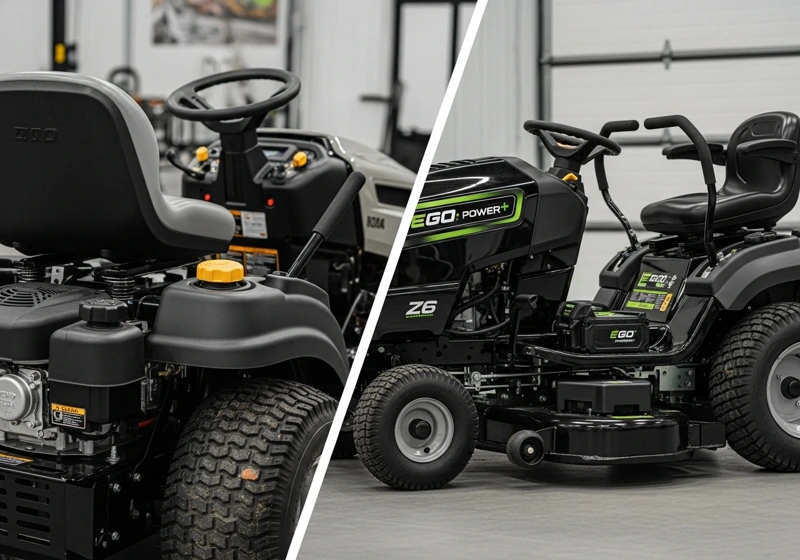
EGO Power+ Z6 with 42 42-inch deck represents the premium end of electric riding mowers. Dual battery configuration provides extended runtime, and the overall build quality genuinely rivals gas-powered alternatives. At around $4,500, it’s a significant investment, but it delivers genuine gas mower performance with all the benefits of electricity.
The limitations are also real (let’s be completely honest)
Runtime constraints remain the primary limitation. Most electric riding lawn mowers provide somewhere between 1.5 and 3 hours of continuous use, depending on grass conditions and terrain difficulty. That’s perfectly fine for properties up to about 2 acres, but potentially limiting for larger areas or if you’re the type of person who prefers to mow everything in one extended session.
Initial cost runs noticeably higher than comparable gas models. Plan on spending an extra $1,000 to $2,000 for electric versions of similar cutting capacity and features.
Cold weather performance drops noticeably in temperatures below about 40 degrees. This primarily affects shoulder season mowing in spring and fall, but it’s worth considering if you live somewhere where you might be mowing in cooler conditions.
My completely honest assessment? For properties under 2 acres with relatively flat terrain, electric riding lawn mowers are an excellent choice in 2025. For a detailed gas vs electric comparison across all mower types, this analysis helps you understand which power source works best for your specific situation. The technology has matured to the point where its performance legitimately matches that of gas alternatives for most residential applications. But if you’re mowing significantly more than 2.5 acres or dealing with consistently heavy-duty conditions, gas power still holds some practical advantages.
Where to Find the Best Riding Lawn Mowers for Sale
Finding riding lawn mowers for sale at reasonable prices requires some strategy and timing. Kind of like buying a car, but hopefully with less pressure and more honest salespeople. (Though admittedly that bar isn’t exactly set very high.)
Timing can save you serious money
The end of the mowing season (October through November) offers the deepest discounts as dealers desperately try to clear inventory to make room for winter equipment, such as snow blowers. You’ll find riding lawn mowers for sale at 15-25% off retail prices. The obvious downside? Really limited selection. Popular models and desirable features sell out early. But if you’re flexible about specific features or color preferences, this is absolutely prime hunting season.
Early spring (February through March) provides the best selection with moderate discounts. Dealers want to move winter inventory, but haven’t hit peak demand season yet. This timing works really well if you’re particular about getting exactly what you want rather than just finding any good deal.
Mid-summer sales (July through August) can yield surprisingly good deals when dealers need to move slow-selling models. Selection is obviously limited, but if a particular riding lawn mower fits your specific needs, savings can be pretty substantial. Plus, you can actually test drive it in real mowing conditions rather than just sitting on it in a showroom.
Where you shop matters more than you might expect
Authorized dealers offer the best overall value when you factor in ongoing service, warranty support, and parts availability. Yes, you’ll probably pay slightly more upfront, but the long-term support is absolutely worth it. I always recommend establishing a good relationship with a local dealer who actually services what they sell. It pays serious dividends when you need help down the road.
Big box stores work fine for budget-conscious buyers who plan to handle their own maintenance and repairs. Home Depot and Lowe’s carry riding lawn mowers for sale from major brands at competitive prices. However, service support is basically nonexistent, and you’re mostly on your own after purchase. Not necessarily a problem if you’re mechanically inclined, but definitely worth considering.
Online retailers like Amazon and direct manufacturer sales can offer significant savings, especially on previous year models. The main challenge is arranging delivery and assembly. A riding lawn mower doesn’t exactly arrive ready to use like most online purchases.
Used market considerations (buyer beware, but opportunities definitely exist)
The used market offers excellent value if you know what to look for or bring someone knowledgeable along. Key inspection points include engine compression, cutting deck condition, tire wear, steering components, and general maintenance history. Avoid anything that’s been obviously neglected or abused. You’re essentially buying someone else’s problems at that point.
Financing and trade in options
Many dealers offer zero percent financing during peak season, making it easier to justify a quality riding lawn mower without completely depleting your savings account. Make sure the monthly payments fit comfortably within your budget. A mortgage payment shouldn’t create financial stress.
Some manufacturers offer trade-in programs for old mowers, which can help offset the purchase price of a new riding lawn tractor. Even if your old mower isn’t currently running, it might have trade value for parts or scrap metal. Definitely worth asking about.
Conclusion: Finding Your Perfect Riding Lawn Mower
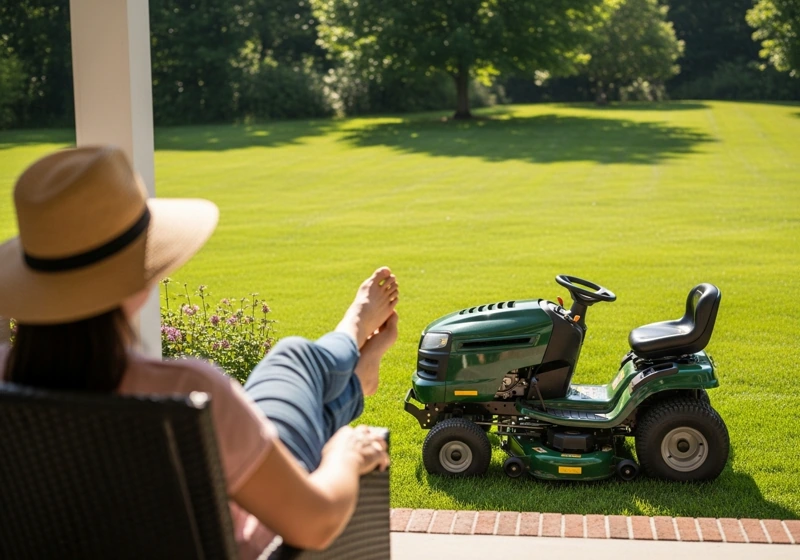
Here’s what I’ve figured out after years of helping homeowners navigate this decision, making my own expensive mistakes, and watching other people make theirs: the perfect riding lawn mower isn’t the one with the most impressive feature list or the flashiest marketing campaign. It’s the one that completely disappears into your weekend routine because it just works reliably, comfortably, and efficiently week after week without any drama.
Match the machine to your actual reality, not your lawn care fantasies. That gorgeous riding lawn tractor with all the attachments and accessories looks absolutely amazing in the showroom, but if you’re never going to use half those features, you’re essentially paying premium prices for garage decoration. A well-chosen small riding lawn mower perfectly suited to your specific property will serve you infinitely better than an oversized machine you constantly struggle to maneuver around your landscaping.
Invest in the fundamentals that truly matter: engine reliability, cutting deck quality, and transmission smoothness all impact your experience every time you turn the key. Comfort features like adjustable seats and convenient cup holders are genuinely nice. I’m absolutely not knocking them. But they shouldn’t come at the expense of basic mechanical reliability and fundamental functionality.
Think about long-term ownership, not just the initial purchase: parts availability, dealer support, and maintenance requirements matter just as much as initial performance specs. The best riding lawn mower for your specific situation is one that you can keep running efficiently for years without constant frustration or unexpected, expensive repairs.
Whether you decide on a proven John Deere riding lawn mower, embrace the innovation of a Cub Cadet riding mower, or jump into the electric future with an electric riding lawn mower, the key is a completely honest assessment of your actual needs, a realistic evaluation of your available budget, and clear priorities about what genuinely matters to you. If you’re also considering other types of mowers, our complete guide to different lawn mower types covers everything from push mowers to robotic options to help you make the best decision for your property.
Your lawn care routine should enhance your overall property ownership experience, not dominate your weekends or create ongoing financial stress. The right riding lawn mower transforms mowing from a dreaded weekend obligation into a satisfying part of home maintenance. Maybe even something you genuinely look forward to on quiet Saturday mornings when the light is just right and you have nowhere else you absolutely need to be.
Ready to start seriously shopping? Visit local dealers to get actual hands-on experience with different models, or browse riding lawn mowers for sale online to understand current pricing and available features. Take your time, ask lots of questions, and remember: your perfect riding lawn mower is definitely out there waiting for you. Now you have the knowledge and real-world perspective to find it with genuine confidence.
The sweet spot for most suburban homeowners is matching the deck size to the actual property size, not the aspirational property size. For yards between 0.5 and 1.5 acres, a small riding lawn mower with a 30- to 42-inch cutting deck works perfectly and costs significantly less than larger models. Properties between 1.5 and 3 acres benefit from 42- to 46-inch decks, which enhance efficiency without sacrificing maneuverability around obstacles like trees and flower beds. Anything larger calls for 48+ inch capacity, but at that point, you’re looking at riding lawn tractor territory with corresponding costs and storage requirements.
John Deere riding lawn mowers typically cost 15 to 20 percent more than comparable models from other manufacturers, but they usually justify the premium through superior build quality, extensive dealer support network, and excellent resale value. If you plan to keep the mower for many years and value having local service available when needed, a John Deere mower makes financial sense. For lighter-duty use or budget-conscious buyers, brands like Cub Cadet offer similar performance at lower prices without sacrificing basic reliability.
The terms get used interchangeably constantly, which confuses everyone, including salespeople sometimes. Riding lawn tractors typically feature more robust construction, larger engines, and the ability to handle various attachments, such as snow blades, carts, or even small tillers. Standard riding lawn mowers focus primarily on cutting grass efficiently. If you want year-round versatility and don’t mind paying extra for capabilities you might use seasonally, look for models specifically labeled as tractors.
With proper maintenance (and I mean actually following the maintenance schedule religiously, not just changing oil when you happen to remember), a quality riding lawn mower should provide 8 to 15 years of reliable service. I regularly work on 20+ year old John Deere and Cub Cadet models that still run beautifully. The key factors are consistent maintenance, proper storage (preferably in a covered area), and not exceeding the machine’s designed capacity. Budget models typically last 5 to 8 years under similar conditions, which isn’t necessarily bad if the price reflects that reality.
Electric riding lawn mowers work excellently for properties under 2 acres with moderate terrain. They’re much quieter, require significantly less maintenance, and provide consistent power delivery. Gas models still hold advantages for larger properties, heavy-duty conditions, or situations where you need maximum runtime flexibility. Consider your specific needs honestly. If you value quiet operation and environmental benefits, electric technology has matured enough to recommend confidently for most residential applications.
