
Top Rated Self Propelled Lawn Mowers for Easy Mowing
Look, I’ve been fixing lawn mowers for ten years now, and the top rated self propelled lawn mowers that people actually need to buy? They’re not the ones you’d expect from reading Amazon reviews or watching YouTube ads. Last Tuesday, a guy brought in his third mower in four years – all different brands, all broken in the same stupid way. Drive belt snapped, transmission seized up, same story every time. Meanwhile, Mrs. Chen down the street is still using the Honda I sold her in 2016, and she just comes in once a year for blade sharpening.
Table of Contents
▼- Why Self Propelled Lawn Mowers Are Worth the Investment
- How Self Propulsion Actually Works
- Front-Wheel Drive vs Rear-Wheel Drive
- The Investment Question
- Top Rated Self Propelled Lawn Mowers: Our 7 Best Picks
- 1. Honda HRX217VKA – The One That Never Dies
- 2. Toro Recycler 22in SmartStow – Best Value That’s Not Garbage
- 3. Ego Power+ LM2142SP – Battery Power That Actually Works
- 4. Toro TimeMaster 30in – For When You’re Sick of Spending All Day Mowing
- 5. Greenworks 25-Inch Self Propelled – Best Budget Battery Option That’s Not Junk
- 6. Cub Cadet SC 300 HW – Best Self Propelled Mower for Hills
- 7. Snapper XD 82V MAX – Most Powerful Battery Mower Available
- 3 Brands to Avoid – They Keep Breaking in My Shop
- Murray Self Propelled Mowers – Drive Systems That Die After a Year
- Troy-Bilt Self Propelled Mowers (Anything Made After 2018) – Consistent Drive Problems
- Craftsman V20 and V60 Battery Models – Batteries That Die Way Too Fast
- Consumer Reports Self Propelled Lawn Mowers – What the Data Shows
- Top Reliability Ratings
- Battery Mower Performance
- Problem Brands Confirmed
- Key Performance Insights
- Best Self Propelled Lawn Mower for Hills – What Actually Works on Slopes
- Understanding Drive Systems on Slopes
- My Top 3 Mowers for Hills
- Essential Features for Hill Mowing
- Safety Considerations Nobody Mentions
- Gas vs Battery: Top Rated Self Propelled Lawn Mowers by Power Type
- Top Rated Gas Self Propelled Lawn Mowers
- Why Gas Still Wins Sometimes
- Gas Mower Downsides
- Best Battery Self Propelled Lawn Mowers
- Battery Mower Advantages
- Battery Limitations
- Real-World Recommendations by Yard Size
- Self Propelled Lawn Mower Ratings – Understanding the Metrics
- Drive System Performance – The Critical Factor
- Engine and Motor Reliability
- Cut Quality Consistency
- Build Quality That Lasts
- Metrics That Don’t Matter Much
- How to Read Self Propelled Mower Comparison Reviews
- My Rating System Explained
- Best Self Propelled Lawn Mower for the Money – Real Value Analysis
- Best Overall Value: Toro Recycler 22in SmartStow
- Best Budget Value: Greenworks 25-Inch Self Propelled
- Hidden Value: Honda HRX217VKA
- Value Traps to Avoid
- Value Recommendations by Budget
- Brand Comparison: Honda vs Toro vs Craftsman Self Propelled
- Honda Self Propelled Lawn Mowers – Premium Reliability
- Toro Self Propelled Lawn Mowers – Best Value Leader
- Craftsman Self Propelled Lawn Mowers – Mixed Results
- The Final Verdict on Brands
- Buying Guide: Choosing Your Self Propelled Lawn Mower
- Step 1: Determine Your Power Source
- Step 2: Match Drive System to Terrain
- Step 3: Select Appropriate Cutting Width
- Step 4: Set Your Budget Realistically
- Step 5: Evaluate Essential Features
- Step 6: Calculate Long-Term Ownership Costs
- Step 7: Choose the Right Retailer
- Step 8: Extended Warranty Considerations
- Final Buying Checklist
- Final Thoughts on Top Rated Self Propelled Lawn Mowers
That’s the thing about running a lawn mower repair business – you see what really works and what’s complete garbage. I’m Emma Andersen, and after servicing over 1,000 mowers (yeah, I actually counted because my bookkeeper makes me track everything), I’ve learned which brands show up broken after 18 months and which ones run for a decade without drama.
This guide isn’t some generic “these are nice mowers” article. I’m telling you exactly which best self propelled lawn mowers I’d buy with my own money, which ones my customers love after years of use, and – maybe more important – which three brands keep breaking and costing people hundreds in repairs they can’t afford. Because honestly, knowing what NOT to buy matters just as much as knowing what to get.
Why Self Propelled Lawn Mowers Are Worth the Investment
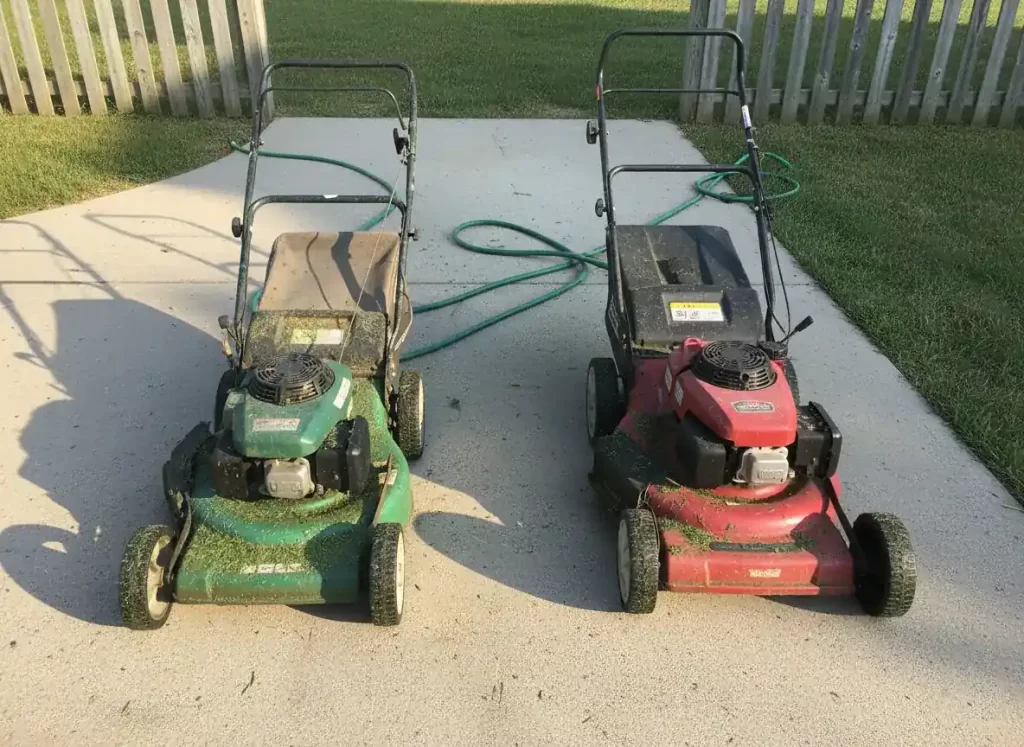
Mrs. Patterson started crying in my shop last spring. Not kidding – actual tears. She’s 68, has been pushing a regular mower around her third-acre lot for years because she didn’t want to spend the extra money on self propelled. Her daughter finally convinced her to upgrade, and after that first mow, she called me just to say, “Emma, I can’t believe I suffered for three years when this existed.”
How Self Propulsion Actually Works
Here’s what self propelled lawn mowers actually do: there’s a transmission that drives either the front or rear wheels, so instead of you shoving this heavy thing around, it pulls itself forward. You’re just steering and guiding. Sounds minor, right? It’s not.
Try pushing a 70-pound mower through thick spring grass on even a slight slope. Your shoulders burn, your back aches, and you’re exhausted halfway through. With self-propulsion, that same lawn feels almost easy. You’re walking at your normal pace, maybe even a bit faster, and you finish 20-30% quicker because you’re not stopping to rest.
Front-Wheel Drive vs Rear-Wheel Drive
The technology splits into front-wheel drive and rear-wheel drive. Front-wheel is easier to turn around trees and flower beds, works great on flat ground. Rear-wheel grabs better on hills and doesn’t lose traction when you’re pushing down on the handle. Some pricier models let you adjust the speed – crawl pace for tight spots, faster for open stretches.
The Investment Question
Now the money question: is the extra $150-$300 worth it? If your yard’s over 5,000 square feet or you’ve got any kind of hill, absolutely yes. Under that, on perfectly flat ground, maybe you can skip it. But I’ve watched so many people limp through mowing season with sore backs and then finally upgrade, and nobody – not one single person – has ever said “I wish I’d stuck with the push mower.”
Top Rated Self Propelled Lawn Mowers: Our 7 Best Picks
These aren’t random picks. Every mower here either runs in my own yard, belongs to customers I trust who’ve used them for years, or comes through my shop so rarely for repairs that I actually notice when one shows up. I’m organizing by type and use because there’s no such thing as one perfect mower for everyone.
Top Rated Self Propelled Lawn Mowers


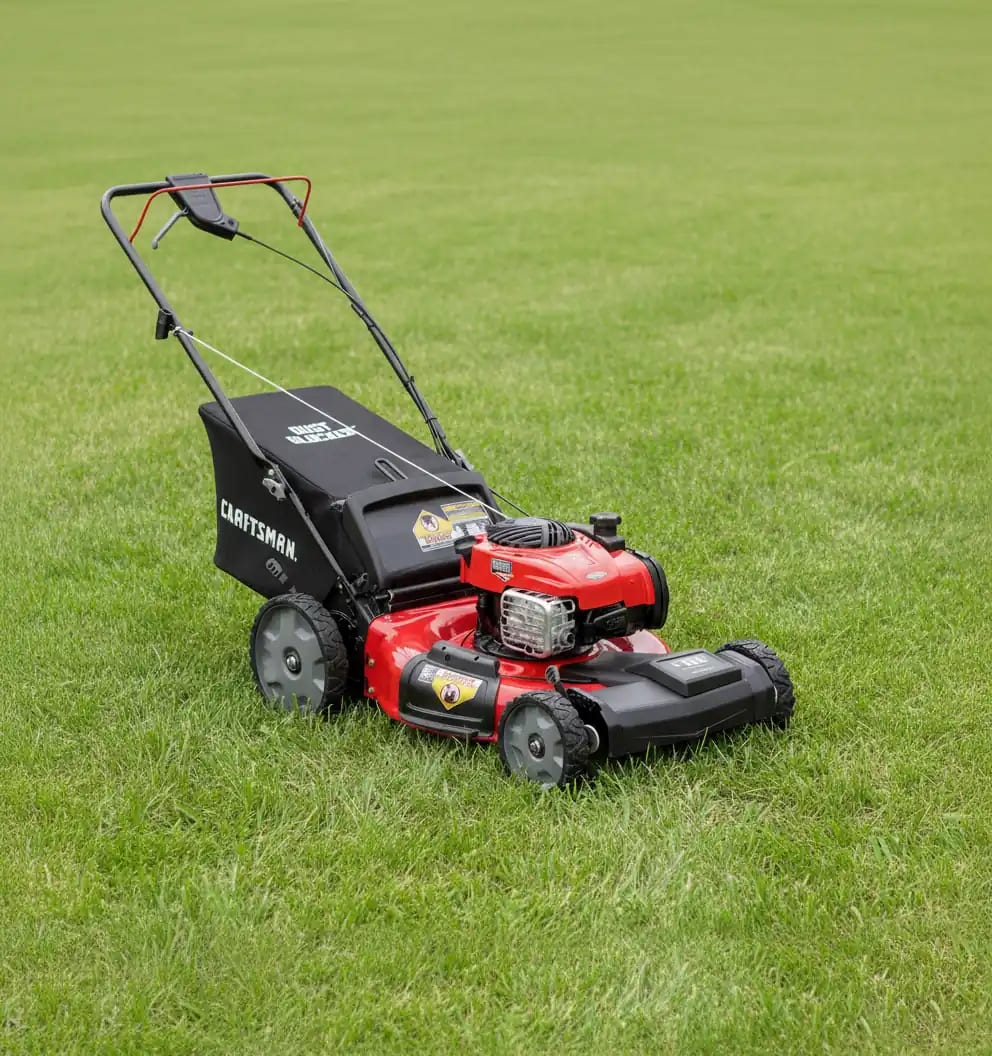


1. Honda HRX217VKA – The One That Never Dies
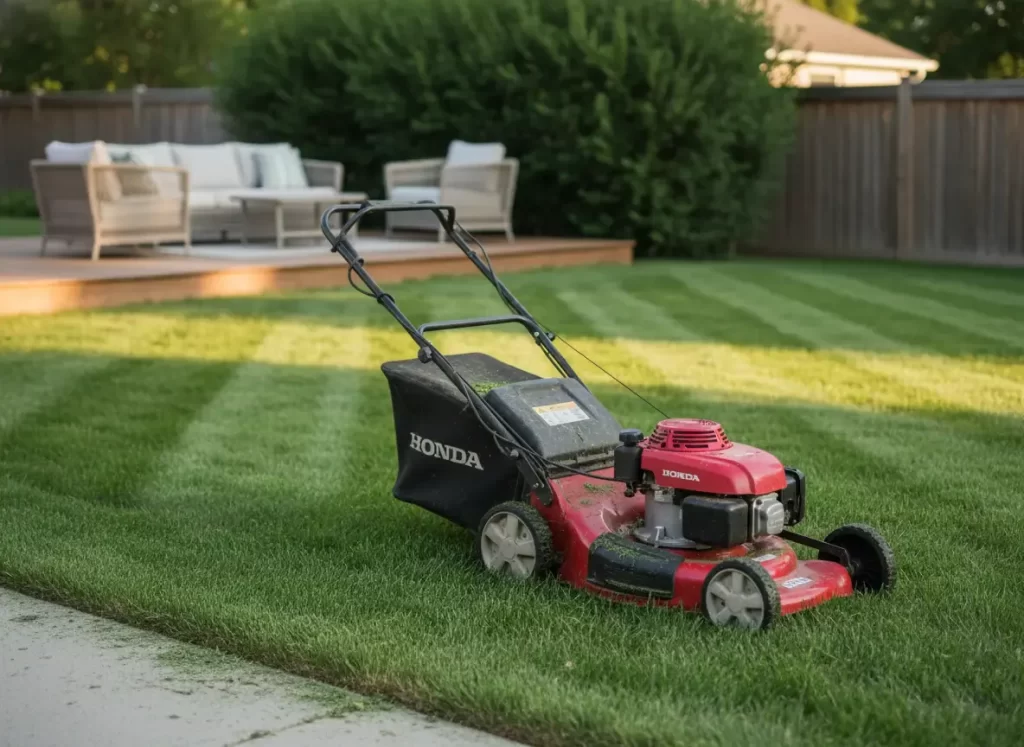
Price: $699-$799
Power: Gas, Honda’s GCV200 engine
Drive: Rear-wheel, variable speed
Deck Width: 21 inches
My Rating: 9.5/10
This is what I run at home. Not because Honda pays me (they don’t) or because it’s trendy (it’s not – it’s been basically the same design for years). I use it because after fixing hundreds of mowers, I wanted something that wouldn’t end up on my own repair bench.
Why the Honda Stands Out
The Select Drive system uses a paddle instead of that squeeze-bar thing most mowers have. Your hands don’t cramp up after 45 minutes of mowing. You squeeze the paddle to go, release it to stop – except unlike cheaper mowers where “stop” means the thing keeps rolling for three feet, this actually stops. Speed adjusts from barely moving to about 4 mph, which is honestly faster than you probably want to mow anyway.
Honda’s Versamow thing actually works, and I was skeptical about it at first. You’ve got a lever that lets you mulch, bag, or do both at once in different amounts. Sounds gimmicky, but when you’re trying to mulch most of your clippings and just bag the really thick spots, being able to adjust on the fly is genuinely useful.
Legendary Reliability
The GCV200 engine is stupid reliable. I’ve seen these hit 500+ hours with nothing but oil changes and air filter swaps. If you want to learn more about Honda’s reliability in smaller models, check out their HRN series. The transmission rarely breaks – I’ve replaced maybe four in ten years, and three of those were from people who hit major obstacles at full speed. Even the belts last five or six years if you keep the deck clean.
Problems? Yeah, a few. It’s heavy at 89 pounds – my 5’2″ neighbor struggles to lift the front end over her back step. It costs more than most people want to spend on a lawnmower. And if you’re someone who forgets to winterize equipment (drain the gas, seriously, drain it), you’ll end up with carburetor problems just like any gas engine.
But I’ve got customers still using HRX217s from 2013, 2014, 2015. One guy’s on year nine with his, comes in every spring for a tune-up, mows all summer, done. That’s what you’re paying for.
Get this if: You want to buy a mower once, use it until you’re sick of mowing, and hire a service, and you don’t mind paying extra for something that actually lasts.
2. Toro Recycler 22in SmartStow – Best Value That’s Not Garbage
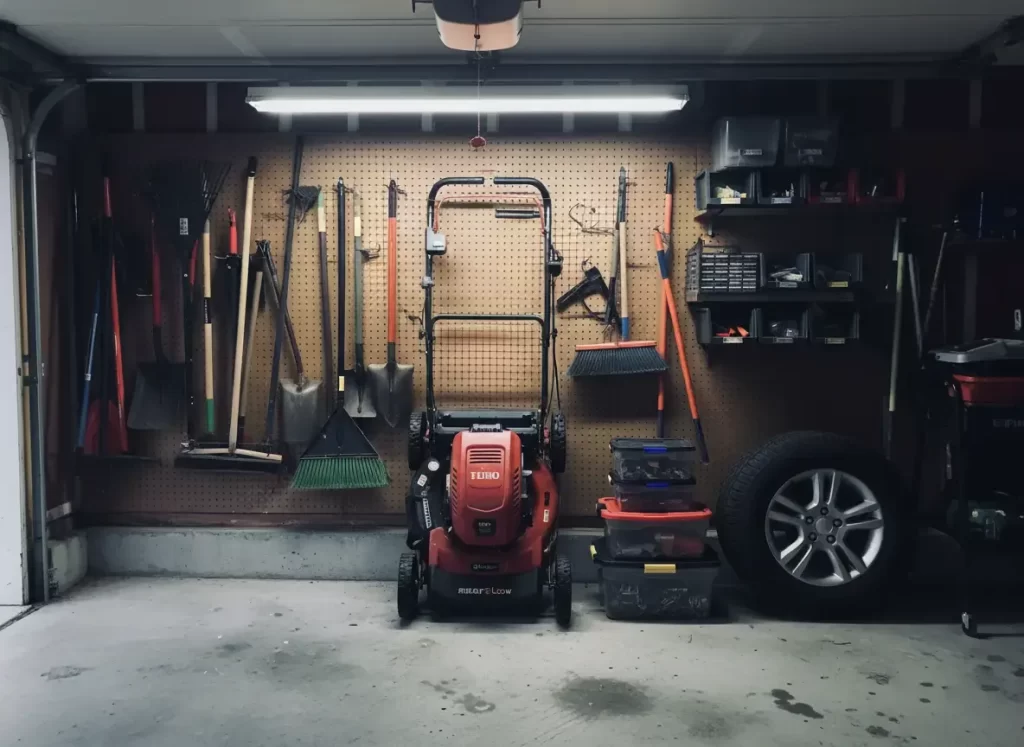
Price: $449-$549
Power: Gas, Toro 163cc
Drive: Personal Pace (super intuitive)
Deck Width: 22 inches
My Rating: 9/10
If everyone who came into my shop asking about best rated self propelled lawn mowers had $700 to spend, I’d tell them all to buy the Honda. Reality? Most people’s budget tops out around $500-ish, and that’s where the Toro Recycler lives.
The Personal Pace Advantage
Personal Pace is Toro’s system that matches your walking speed automatically. You push the handle forward a bit and the mower speeds up, ease off and it slows down. Takes maybe five minutes to feel natural, then you forget it’s even there because it just works. No speed settings to fiddle with, no trying to keep pace with some pre-set speed that’s either too fast or too slow.
Smart Storage Solution
The SmartStow design means you can flip it up on its back end for storage. If you’re trying to park this thing in a garage next to two cars, bikes, and all your other junk, storing it vertically saves a stupid amount of space. Just don’t store it with gas in the tank – learned that one the hard way when a customer’s garage smelled like a gas station for a week. Learn how to properly winterize your equipment to avoid these issues.
Toro’s engine isn’t as smooth or quiet as Honda’s. You’ll know the difference if you run them side by side. But it’s plenty powerful for normal grass, and reliability is solid. The 22-inch deck versus the standard 21-inch means fewer passes across your yard, which adds up to real-time savings over a season.
I see these come in for routine maintenance – belt replacement after four or five years, cables that need adjustment, and deck cleaning. Major failures are rare. The plastic deck won’t last as long as Honda’s steel, but we’re still talking 6-8 years instead of 10-12.
One quirk: it can bog down in really thick, wet grass if you’re trying to cut it too short in one pass. Just raise the deck height and make two passes, problem solved.
Get this if: You want the best self propelled lawn mower reliability you can get for under $600, and you’re tired of buying cheap mowers that break after two years.
3. Ego Power+ LM2142SP – Battery Power That Actually Works
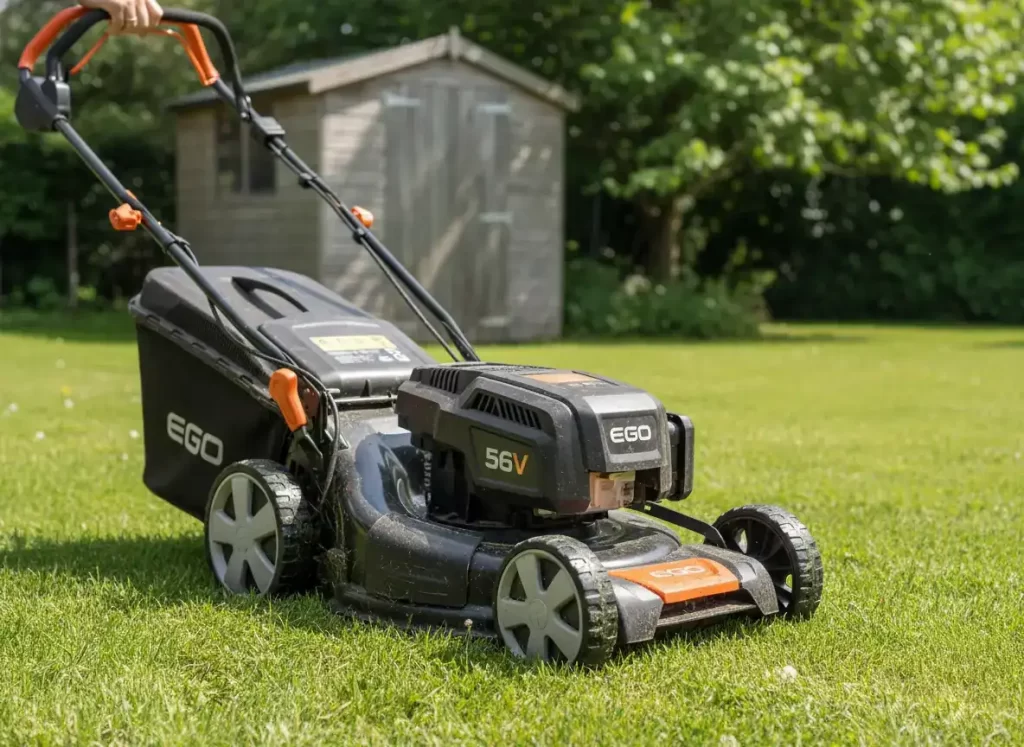
Price: $649-$749 (with battery and charger)
Power: 56-volt lithium battery
Drive: Variable speed self-propelled
Deck Width: 21 inches
My Rating: 9/10
I spent three years telling customers not to waste their money on battery mowers. The early ones were weak, the batteries died after two seasons, and they couldn’t handle anything beyond perfectly manicured golf course grass. Then I actually tested this Ego, and it completely changed my mind about best battery self propelled lawn mowers.
Real Power from Battery Technology
The 56-volt system puts out genuine power – not “pretty good for a battery mower” power, but actual gas-mower performance. I ran this through some nasty, thick spring grass in my test area, the kind that would make cheaper battery mowers wheeze and die, and it chewed through it fine. The self-propulsion maintains consistent power even when the battery drops below 50%, which was my biggest concern.
Runtime and Maintenance Benefits
Runtime is 45-60 minutes with the 7.5Ah battery, depending on grass thickness and whether you’re bagging or mulching. That’s enough for most yards up to half an acre. When the battery dies, swap in a fresh one if you have it, or wait 60-90 minutes for a recharge. Some people hate that limitation, but for me, mowing for an hour straight is plenty – I need a break anyway.
Zero maintenance is the huge win here. No oil, no spark plugs, no carburetor that gums up over winter, no pull cord that breaks. For more details on electric mower care, the requirements are minimal compared to gas mowers. Push the button, and it starts. Every single time. My neighbor’s had his for four years now, still starts every time; battery capacity is still good. Store the battery inside during winter, where it’s not cold, and it should last 6-8 years.
The steel deck holds up well – I’ve seen four-year-old Egos with barely any rust or dents. Brushless motor means there’s nothing to wear out besides the bearings, and those are lasting the life of the mower so far.
Downsides: the battery and charger add real cost upfront. Eventually (years 6-8), you’ll need a replacement battery at $250-$400. That stings, but you’re also saving money every year on gas and maintenance. And battery power isn’t unlimited – if you’ve got two acres to mow, this isn’t your mower.
Get this if: Your yard’s under half an acre, you’re sick of gas engine maintenance, and you want something quiet enough that you can mow at 7 am without the neighbors hating you.
4. Toro TimeMaster 30in – For When You’re Sick of Spending All Day Mowing
Price: $1,199-$1,399
Power: Gas, Briggs & Stratton 223cc
Drive: Personal Pace variable
Deck Width: 30 inches
My Rating: 8.5/10
I had a customer last year ready to drop three grand on a riding mower because his one-acre lot was taking 90 minutes to mow every week. Convinced him to try the TimeMaster first. Know what? He finished his whole yard in under an hour, returned the riding mower, and still uses this thing two years later.
Time Savings with Wider Deck
That 30-inch deck covers 40% more ground per pass than a standard 21-inch mower. Math says that should save you 30-40% of your time, and in practice, it actually does. A yard that took me 75 minutes with my Honda takes 50 minutes with the TimeMaster. Over a whole season, that adds up to literal hours of your life back.
Performance and Build Quality
The twin blade system – two 15-inch blades side by side – cuts clean and rarely clogs. I’ve run this through grass so thick it would choke a standard mower, and the TimeMaster just powers through. The Personal Pace drive handles the extra weight without struggle, though you definitely know you’re mowing something substantial. At full speed, it moves along pretty good.
The 223cc Briggs engine has plenty of power. The transmission is commercial-grade, the same stuff used on contractor mowers. Build quality overall is tank-like – this thing’s built to take abuse.
Problems start with the size. It’s big and heavy, which makes it less nimble around trees, flower beds, and tight corners. My back area has lots of obstacles, and using the TimeMaster there is honestly annoying – I switch to a 21-inch mower for those sections. Also, it takes up more storage space, so measure your shed before you buy.
Get this if: You’ve got three-quarters of an acre or more, mostly open areas to mow, and spending an extra $600-$800 to cut your mowing time by a third sounds worth it.
5. Greenworks 25-Inch Self Propelled – Best Budget Battery Option That’s Not Junk
Price: $399-$499 (with battery and charger)
Power: 60-volt lithium battery
Drive: Variable speed self-propulsion
Deck Width: 25 inches
My Rating: 8/10
When people want to try battery power without spending a Lot of money, this is where I point them. Greenworks figured out how to hit the $400-ish price point while still delivering self propelled functionality that actually works.
Performance at Budget Pricing
The 60-volt battery is adequate for normal residential grass. It’s not as powerful as Ego’s 56V system (a peculiar but true observation – the voltage numbers don’t tell the whole story), but it handles typical mowing tasks fine. Where it struggles is really thick or wet grass – you’ll need to slow down or make two passes. But honestly, how often are you mowing in terrible conditions anyway?
That 25-inch deck is a nice touch at this price. Fewer passes means faster mowing, and the extra four inches over standard 21-inch mowers is noticeable. Battery runtime is 40-50 minutes with the included 4Ah battery, enough for about a quarter acre comfortably.
The self-propulsion is basic compared to Honda or Toro’s fancy systems, but it moves the mower forward consistently. I’ve seen a few drive belts fail after 2-3 years, though replacements are cheap and honestly not that hard to swap yourself if you’re even slightly handy.
Build quality feels budget, because it is. The deck is plastic, the wheels are plastic, lots of plastic everywhere. But plastic doesn’t rust, and I’ve got customers three years in with these that are still cutting fine. They’re not as refined or smooth as pricier mowers, but they work.
Get this if: You want top rated affordable self propelled lawn mowers convenience without spending $700, and you’re okay with something that’ll last 5-6 years instead of 10-12.
6. Cub Cadet SC 300 HW – Best Self Propelled Mower for Hills
Price: $549-$649
Power: Gas, 159cc Cub Cadet engine
Drive: High rear wheels, variable speed
Deck Width: 21 inches
My Rating: 8.5/10
I’ve got three customers with properties that slope like ski runs – 15 to 20 degree angles, not exaggerating. They all run this same Cub Cadet because front-wheel drive is useless on hills, and standard rear-wheel mowers slip when it’s damp.
High Wheel Design for Slopes
The “HW” means High Wheel, and those bigger 11-inch rear wheels make a massive difference on slopes. Normal mowers have 8 or 9-inch wheels that lose traction and slip. These larger wheels bite into the turf better and maintain grip even when you’re pushing down on the handle going uphill.
Smart Power Management
IntelliPower automatically adds engine torque when it senses taller or thicker grass. This matters on slopes because you can’t always see what you’re mowing into – suddenly hitting thick grass on an uphill would normally bog down the engine, but IntelliPower compensates before you even notice.
The rear-wheel drive with variable speed (0 to 3.5 mph) keeps you in control on inclines. Coming back downhill, you can slow it down so you’re not fighting to hold the mower back. The 21-inch steel deck is tough enough to handle bumps and dips without flexing.
Complaints: it’s heavy, which makes sense given the bigger wheels and sturdy construction. The electric start option should be standard instead of extra – pull-starting on a slope is miserable. And rear-wheel drive makes it less maneuverable on flat ground compared to front-wheel models.
Get this if: You’ve got hills steep enough that you’re genuinely worried about losing control of your mower, and standard self propelled lawn mowers keep slipping on you.
7. Snapper XD 82V MAX – Most Powerful Battery Mower Available
Price: $599-$699 (with battery and charger)
Power: 82-volt lithium battery
Drive: Variable speed self-propulsion
Deck Width: 21 inches
My Rating: 8.5/10
Snapper jumped into the high-voltage battery game and built something legitimately powerful. That 82-volt system isn’t marketing nonsense – it provides a noticeable performance boost over standard 40V and 60V competitors.
Maximum Battery Power
The difference shows up in thick grass. Where my Greenworks slows down and struggles a bit, the Snapper maintains pace without bogging. The load-sensing technology automatically adjusts power based on grass thickness, so you don’t have to constantly mess with settings.
Variable speed self-propulsion ranges from 0.5 to 3.5 mph and feels smooth throughout. What impressed me most is consistent power delivery – even when the battery drops to 30%, you don’t notice major performance changes like you do with cheaper battery mowers. Runtime with the 5.0Ah battery is about 45 minutes, and the rapid charger fills it back up in roughly 60 minutes.
The steel deck is solid, height adjustment is easy to reach, and overall, it feels like a premium tool. I’ve got customers who’ve run these for 3-4 years with basically zero issues besides normal blade replacements.
Downside is that the battery system isn’t compatible with as many other tools as Ego’s platform. If you’re building a whole ecosystem of battery equipment, Ego’s probably smarter because one set of batteries works in everything. But if you just need a great battery self propelled lawn mower and don’t care about tool compatibility, the Snapper delivers.
Get this if: You want maximum battery power for thick grass conditions and you’re willing to pay a bit more for that extra performance.
3 Brands to Avoid – They Keep Breaking in My Shop
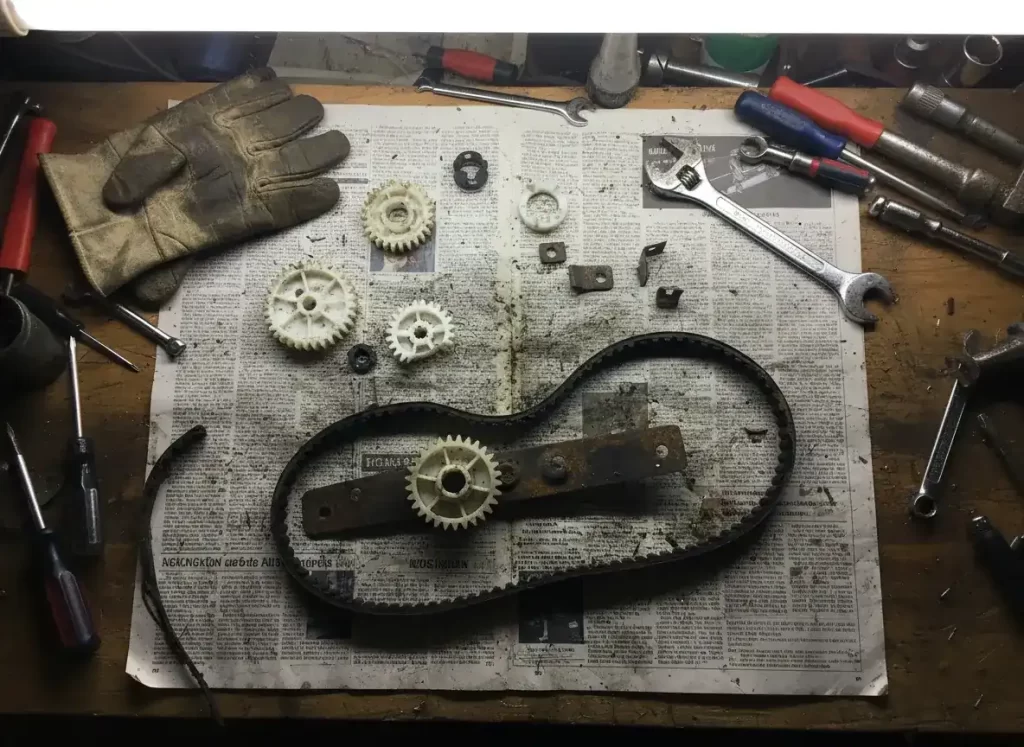
Alright, time to make some people angry. These three brands come into my shop broken so consistently that I’ve stopped recommending them entirely. I’m not talking about isolated problems – I mean pattern failures where I see the same issues over and over.
Murray Self Propelled Mowers – Drive Systems That Die After a Year
Every few weeks, someone brings me a Murray self propelled mower with a dead transmission. Not worn out, not needing adjustment – completely dead. Stripped gears, snapped drive belts, transmissions that seized up. These mowers are typically 12-24 months old with maybe 50 hours of use.
Pattern of Failures
Last month, a guy came in with a Murray he’d bought at Walmart for $299. Used it one season, stored it properly over winter, pulled it out this spring, and the self-propulsion was completely shot. The transmission was filled with metal shavings – the gears literally disintegrated. Repair would cost $180-$200. He just bought a Toro instead.
This keeps happening. The drive belts are undersized and wear out fast. The transmission gears are made from soft metal that strips if you encounter any resistance, like hitting thick grass or going over a bump with the drive engaged. The whole drive system is under-engineered for actual use.
Murray used to make decent equipment back in the 90s and early 2000s. Something changed, probably when they started chasing the absolute lowest price point at big box stores. Current models just can’t handle regular mowing.
Troy-Bilt Self Propelled Mowers (Anything Made After 2018) – Consistent Drive Problems
I now see current Troy-Bilt self propelled lawn mowers with failed transmissions, broken speed controls, and snapped drive cables after less than 50 hours of use.
Declining Quality Control
The drive systems – even though they’re supposedly copying Toro’s Personal Pace design – fail regularly. The speed control mechanisms break or stop responding. The cable that engages the drive snaps way too early. I’ve replaced more Troy-Bilt drive components in the past three years than in the previous seven combined.
Customer service is reportedly a nightmare, too. I’ve had multiple customers tell me they gave up trying to get warranty service because the process was so difficult. One woman spent three weeks trying to get authorization for a repair that should’ve been covered, and finally just paid for it herself because she was sick of the runaround.
If you’ve got an older Troy-Bilt from before 2018, it’s probably fine – those were built better. But current production models consistently disappoint, and I can’t recommend them.
Craftsman V20 and V60 Battery Models – Batteries That Die Way Too Fast
I’m being specific here – Craftsman’s gas self propelled mowers are okay, nothing special, but serviceable. But their V20 and V60 battery self propelled models have serious problems.
Battery System Failures
The batteries fail prematurely. I’ve seen numerous cases where batteries lost significant capacity after just one season – like going from 50 minutes of runtime down to 20 minutes. The battery management systems seem poorly designed, cells don’t balance right during charging, and the whole thing degrades way faster than it should.
The self-propulsion on these models also has issues. Drive belts wear out quickly – I’m talking 30-40 hours instead of 150-200 hours on better brands. The engagement mechanism sometimes sticks in the “on” position, which is genuinely dangerous because the mower keeps driving forward even when you release the control. Regular maintenance, like blade sharpening is critical for any mower’s longevity.
I had a customer whose Craftsman battery self propelled mower wouldn’t disengage – she had to turn it off completely every time she wanted to stop moving. That’s not just annoying, it’s unsafe.
Add in that Craftsman’s warranty support has been inconsistent since the brand changed hands, and you’ve got equipment I just won’t recommend. If you want battery self propelled lawn mowers, buy Ego or Greenworks.
Consumer Reports Self Propelled Lawn Mowers – What the Data Shows
Consumer Reports tests thousands of mowers and surveys tens of thousands of owners, and their reliability data mostly matches what I see in my shop. According to their most recent survey covering over 13,000 self propelled lawn mowers, here’s what actually matters:
Top Reliability Ratings
Honda gets an “Excellent” reliability rating (5/5). Less than 3% of Honda owners reported any problems in the first four years. That’s crazy low for lawn equipment. I see the same thing – Honda mowers just don’t break very often.
Toro scores “Very Good to Excellent” (4-5/5) with about 5% of owners reporting issues in four years. Most problems they track are minor stuff – height adjusters wearing out, grass bags ripping, wheel bearings needing replacement. Actual engine or transmission failures are rare, which aligns with my repair logs.
Battery Mower Performance
Ego earned a “Very Good” rating (4/5) for battery mowers, which is impressive given that battery-powered equipment is relatively new territory. The early fears about lithium battery longevity haven’t materialized – if you store them properly (indoors, moderate temps), they’re lasting 6-8 years, no problem.
Problem Brands Confirmed
On the problem brands, Consumer Reports gave Troy-Bilt a “Fair to Poor” rating (1-2/5), Murray got “Poor” (1/5), and Craftsman battery models scored “Fair” (2/5). These ratings confirm what I’m seeing – these brands break more often than they should.
Key Performance Insights
Where Consumer Reports data adds value is in performance metrics:
- Variable speed drive systems score way higher in owner satisfaction than single-speed
- Rear-wheel drive handles slopes over 15 degrees significantly better than front-wheel
- Steel decks show less damage over time than plastic decks
- Battery runtime claims from manufacturers are typically 15-20% optimistic (and I’d say that’s conservative)
One area where my experience adds to their data: they don’t always have enough long-term information past three years. I see what happens at year 5, 7, and 10. A mower that works fine for three years but catastrophically fails in year four isn’t good value, but Consumer Reports might not catch that yet.
Bottom line: Consumer Reports self propelled lawn mowers reliability data confirms Honda and Toro are the top self propelled lawn mowers for good reason, Ego leads battery mowers by a mile, and the brands I’m telling you to avoid have data backing up why they’re problematic.
Best Self Propelled Lawn Mower for Hills – What Actually Works on Slopes
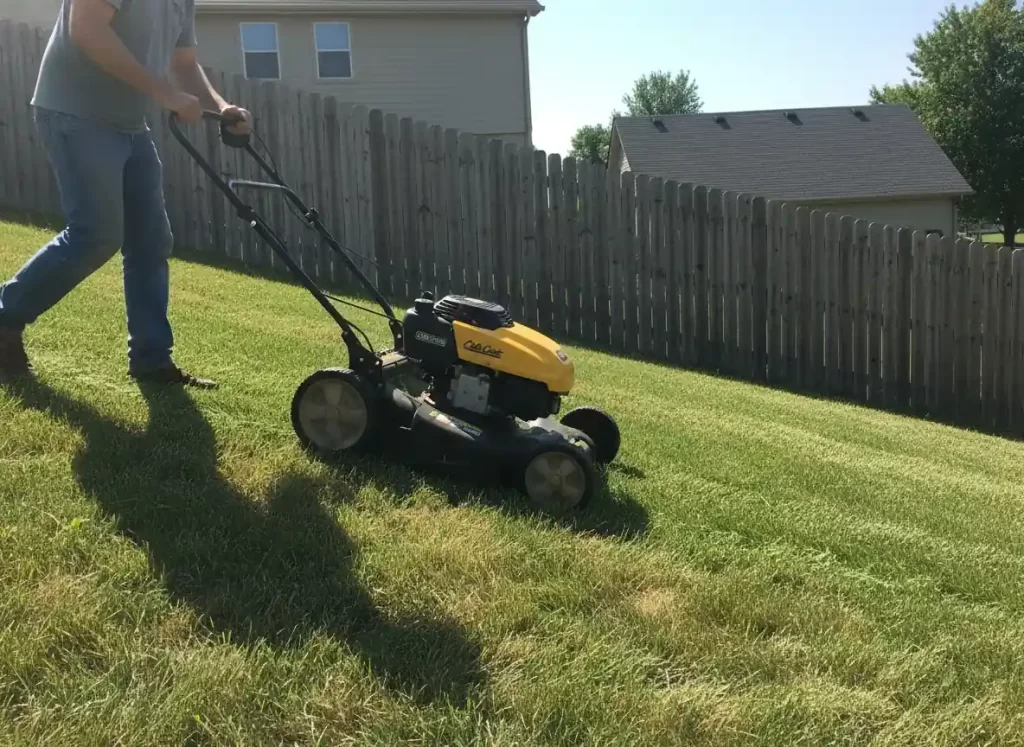
I covered the Cub Cadet SC 300 HW earlier as my top pick for the best self propelled mower for hills, but let me dig deeper into what makes a mower work on slopes and what your options really are.
Understanding Drive Systems on Slopes
First thing you need to understand: front-wheel drive self propelled mowers are basically worthless on hills. When you’re going uphill, your body weight and the mower’s weight shift backward onto the rear wheels. The front drive wheels lose contact with the ground and spin uselessly. You end up pushing the mower anyway, which defeats the point.
If you have any slope steeper than about 5 degrees – roughly one foot of rise over ten feet of distance – you need rear-wheel drive. Period. This isn’t negotiable if you want self-propulsion to actually help. This isn’t negotiable if you want self-propulsion to actually help instead of being a useless feature you paid extra for.
My Top 3 Mowers for Hills
Cub Cadet SC 300 HW ($549-$649) – Those 11-inch rear wheels provide killer traction. The high wheel design keeps them in solid contact with the turf even on steep angles. IntelliPower engine management prevents the motor from bogging when climbing. This is what I recommend most for consistent slopes.
Honda HRX217VKA ($699-$799) – Rear-wheel drive with variable speed lets you adjust pace for different slope sections. The hydrostatic cruise control maintains a steady speed even when the terrain changes. Larger rear wheels provide excellent traction. Costs more but handles challenging properties better than anything else.
Toro TimeMaster 30in ($1,199-$1,399) – The wider wheelbase gives exceptional stability on slopes. Personal Pace self-propulsion automatically adjusts to maintain traction without you having to do anything. Best for large properties with slopes, where the wider deck also saves time. Way overkill if your yard’s under three-quarters of an acre.
Essential Features for Hill Mowing
What You Actually Need for Hills:
- Rear-wheel drive (absolutely required)
- Variable speed control (so you can adjust for uphill vs downhill)
- Large rear wheels (11 inches or bigger for maximum traction)
- Low center of gravity (stability and control matter)
- Adequate power (at least 160cc gas or 60V battery minimum)
Safety Considerations Nobody Mentions
Never mow side to side across a slope. Always go straight up and straight down. This keeps you behind or in front of the mower at all times. If you’re beside it on a slope and it starts sliding, you’re in trouble.
If your slope is steeper than 15 degrees, seriously consider a riding mower with a low center of gravity or just hire somebody. I’ve heard too many stories about people losing control of walk-behind mowers on steep slopes. It’s not worth the risk.
For battery options on hills, the Ego Power+ LM2142SP works okay on moderate slopes up to maybe 10-12 degrees. Beyond that, gas power really becomes necessary. Battery mowers are improving, but they don’t quite have the torque of gas on steep climbs yet.
Gas vs Battery: Top Rated Self Propelled Lawn Mowers by Power Type
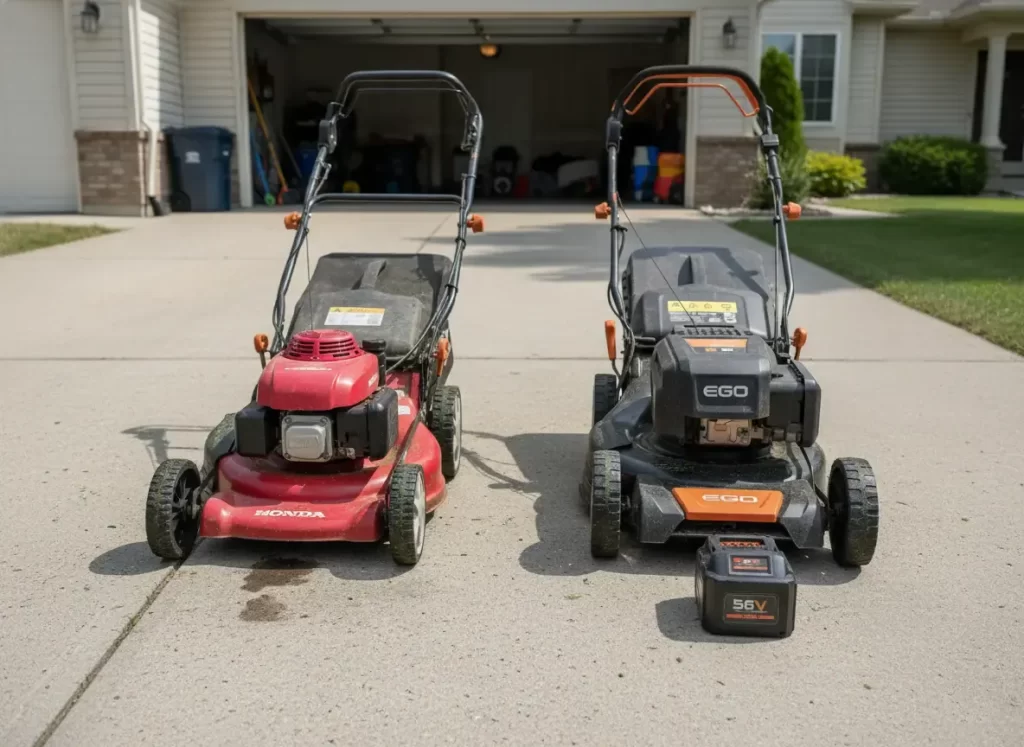
This is the question everyone asks, and my answer has changed over the past few years as battery technology has gotten way better. Five years ago, I’d tell almost everyone to buy gas. Now? It depends on your specific situation.
Top Rated Gas Self Propelled Lawn Mowers
Honda HRX217VKA ($699-$799) – Absolute best reliability, powerful for any conditions, variable speed drive, will last 10+ years. The GCV200 engine is legendary.
Toro Recycler 22in SmartStow ($449-$549) – Best price-to-performance ratio, Personal Pace is intuitive, proven reliability rivals mowers costing twice as much.
Toro TimeMaster 30in ($1,199-$1,399) – Massive time savings with 30-inch deck, commercial-grade build, Personal Pace handles the weight.
Why Gas Still Wins Sometimes
Advantages of Gas Self Propelled Mowers:
- You can mow as long as you want, just refuel and keep going
- More powerful in thick grass and tough conditions
- Better on steep slopes, gas torque is still superior
- Lower long-term cost since you’re not buying replacement batteries
- Proven technology that’s been refined for decades
- Parts are everywhere; any shop can fix them
Gas Mower Downsides
Why Gas Sucks:
- Oil changes every season, spark plugs every few years, air filters, and fuel stabilizer
- Loud – 90-95 decibels, your neighbors will hear you
- Emissions and environmental impact
- Fuel storage, carburetors that gum up, stale gas problems
- Pull starting when it’s cold is miserable
- Heavier than battery models
Best Battery Self Propelled Lawn Mowers
Ego Power+ LM2142SP ($649-$749) – 56V power rivals gas, variable speed works great, steel deck, runtime handles most residential properties.
Greenworks 25-Inch ($399-$499) – Impressive value, wider deck, adequate 60V power, enough runtime for typical suburban yards.
Snapper XD 82V MAX ($599-$699) – Most powerful battery system (82V), consistent performance as battery drains, rapid charging.
Battery Mower Advantages
Why Battery Is Winning People Over:
- Zero engine maintenance, push button starting, always starts (learn more about electric lawn mowers)
- Quiet – 60-75 decibels, you can mow early morning without complaints
- No emissions, better for the environment
- Easy winter storage, no fuel drainage needed
- Lighter weight, easier to maneuver
- Way less hassle overall
Battery Limitations
Why Battery Still Has Limits:
- Runtime capped at 40-60 minutes per battery
- Battery replacement every 5-7 years costs $250-$400
- Less power in thick wet grass compared to gas
- Performance drops as the battery drains below 50%
- Higher upfront cost, including battery and charger
- Cold weather tanks the runtime
Real-World Recommendations by Yard Size
Under 5,000 sq ft: Either works. I’d lean battery for convenience and quiet. Greenworks or Ego handles this easily.
5,000-10,000 sq ft: Battery works if your yard’s relatively open. Ego should finish this on one charge. Gas gives you more flexibility.
10,000-20,000 sq ft: Gas probably makes more sense unless you buy multiple batteries. Honda or Toro handles this without runtime worries.
Over 20,000 sq ft: Gas for sure. Look at the TimeMaster or start considering riding mowers.
My honest opinion: Battery tech has improved enough that for most suburban yards under 8,000 square feet, a quality battery self propelled lawn mower like Ego is completely practical. But gas still makes sense for larger properties, challenging conditions, or when you need guaranteed runtime regardless of charge levels.
Self Propelled Lawn Mower Ratings – Understanding the Metrics
When you’re looking at self propelled lawn mower ratings and reviews, most of them are useless. They test for a few hours, write up some specs, and never touch the mower again. Here’s what actually matters based on servicing hundreds of these things:
Drive System Performance – The Critical Factor
A good drive system should engage smoothly without jerking, maintain consistent speed on flat ground, not slip on wet grass or slopes, disengage completely when you release it, and offer variable speed that’s actually variable – not just three preset speeds pretending to be variable.
When you’re reading self propelled lawn mower reviews, watch for complaints about drive systems. If people say “hard to control,” “too fast,” “bogs down,” or “keeps slipping,” that’s a drive system problem.
Engine and Motor Reliability
For Gas Self Propelled Mowers: Look for proven engines – Honda, Kawasaki, Toro. Avoid generic engines from brands you’ve never heard of. Companies that make their own engines (Honda, Toro) have better parts availability than ones using third-party motors.
For Battery Models: Voltage matters, but isn’t everything. A well-designed 56V system beats a poorly-designed 60V system. Look for brands that specify lithium-ion cells and offer at least 3-year battery warranties. Take runtime claims and cut them by 20% for real-world expectations.
Cut Quality Consistency
Top self propelled lawn mowers should deliver even cuts across different grass heights and conditions. Read reviews mentioning consistent cutting, no uncut strips, effective bagging or mulching, and minimal clogging in damp grass.
Honda and Toro deliver the most uniform cuts in my testing. Cheaper brands often have blade timing issues or deck design flaws that leave strips of taller grass.
Build Quality That Lasts
Steel decks outlast plastic. Metal wheels outlast plastic. Ball-bearing wheels roll smoothly than bushings. Quality brands use more metal components, better fasteners, and thoughtful engineering. This shows up in self propelled lawn mower ratings over time – cheap mowers rate well initially, but satisfaction drops hard after 2-3 years.
Metrics That Don’t Matter Much
Horsepower or Voltage Alone: More power sounds better, but a well-designed 160cc engine outperforms a sloppy 190cc engine. For battery self propelled mowers, a 56V system with quality cells beats a 60V system with cheap components. Total system efficiency matters more than raw numbers.
Marketing Names: Every manufacturer creates fancy names for basic features. “TurboFlow Pro System” might just be a standard blade. “SmartDrive Technology” might be a basic belt drive. Focus on actual specs and real owner experiences, not marketing terminology.
Included Accessories: Extra blades, mulch plugs, whatever – nice bonuses, but don’t let them sway your decision. A mediocre mower with lots of accessories is still mediocre.
How to Read Self Propelled Mower Comparison Reviews
Look for:
- Testing duration – reviews after one use mean nothing. Look for full-season testing or multi-season reports
- Testing conditions – did they test on hills, wet grass, thick growth? Perfect golf course grass tests tell you nothing
- Repair and maintenance notes – best reviews mention what maintenance was needed and any repairs
- Follow-ups – sites that revisit products after 1-2 years provide actual durability data
Avoid reviews that:
- Only test for one mowing session
- Don’t mention any negatives (everything has tradeoffs)
- Use too much manufacturer marketing copy
- Don’t specify the reviewer’s experience level
My Rating System Explained
When I rate top rated self propelled lawn mowers, I weigh:
- 40% Long-term reliability (repair frequency matters most)
- 25% Drive system performance
- 15% Cut quality
- 10% Build quality and materials
- 10% Value for money
This puts heavy weight on reliability because a mower that works perfectly for 18 months then dies isn’t a good purchase, even if those 18 months were great.
Best Self Propelled Lawn Mower for the Money – Real Value Analysis
When I talk about best self propelled lawn mower for the money, I’m not just looking at purchase price. Real value includes purchase cost plus maintenance plus expected lifespan, plus repair costs, plus the hassle when things break. A $350 mower that dies after two seasons and costs $200 to repair is way more expensive than a $650 mower that runs eight years with minimal maintenance.
Best Overall Value: Toro Recycler 22in SmartStow
This hits the sweet spot of reasonable initial cost and excellent long-term reliability. Here’s the real math:
5-Year Ownership:
- Purchase: $499 average
- Annual maintenance (oil, spark plug, blade): $40/year = $200
- Likely repairs in 5 years: maybe $50 for a belt
- Total: $749 or $150 per year
Compare that to a cheap Murray at $299 that needs a $180 transmission after 18 months, and you’re spending more for worse performance.
The Personal Pace self-propulsion works flawlessly, the Recycler cutting system mulches well, SmartStow storage is genuinely useful. I see way more of these coming in for routine tune-ups than major repairs.
Best Budget Value: Greenworks 25-Inch Self Propelled
For top rated affordable self propelled lawn mowers in the battery category, the Greenworks 25-inch offers solid value. Yes, you’ll need a replacement battery eventually (years 5-7), but even accounting for that $150-$250 expense, the total cost competes with gas alternatives.
5-Year Ownership:
- Purchase: $449 average with battery and charger
- Annual maintenance: about $25/year for blade sharpening = $125
- Battery replacement (year 6-7, prorated): $200
- Repairs: minimal, maybe $30
- Total: $804 or $161 per year
The 25-inch deck is a legit feature at this price – saves time versus 21-inch models. Doesn’t match the Ego’s power, but handles typical lawns fine. For someone wanting to try battery and self propelled without premium pricing, this delivers.
Hidden Value: Honda HRX217VKA
Seems expensive upfront, but these routinely last 10-12 years with basic maintenance:
10-Year Ownership:
- Purchase: $749 average
- Annual maintenance: $45/year = $450
- Repairs over 10 years: about $150 for belts, cables, maybe carburetor cleaning
- Total: $1,349 or $135 per year
That’s actually cheaper per year than many “budget” options that need replacement after 3-4 years. The Versamow system, Select Drive transmission, and GCV200 engine all contribute to longevity. This is buy-it-for-life if you maintain it.
Value Traps to Avoid
The $299 Special: Big box stores offer self propelled lawn mowers for $249-$349 every spring. These are terrible values. Cheap plastic cracks, undersized belts fail, generic engines die. I see them constantly, and repair costs often exceed their value.
Top of the Line Everything: Some people think expensive automatically means better. A $1,400 commercial self propelled mower designed for professionals is overkill for a half-acre residential property. You’re paying for features you don’t need.
Proprietary Battery Systems: If a manufacturer’s batteries only work in their mowers and nothing else, you’re locked in. Brands like Ego and Greenworks that use the same batteries across multiple tools (trimmers, blowers) offer better value. Share batteries between tools and spread replacement costs.
Value Recommendations by Budget
Under $350: Skip self propelled and get a quality push mower. Self-propulsion at this price is too unreliable.
$350-$550: Toro Recycler 22in SmartStow. Best combination of features, reliability, and pricing in the gas category.
$550-$750: Either Honda HRX217VKA (maximum longevity) or Ego Power+ LM2142SP (battery convenience). Both are highest rated self propelled lawn mowers worth the investment.
Over $750: Toro TimeMaster 30in if you have a large property and want time savings. Otherwise, stick with $550-$750 range – going more expensive provides diminishing returns.
Brand Comparison: Honda vs Toro vs Craftsman Self Propelled
Let me cut through the marketing and give you the real story on three major brands. This reflects what I actually see in repair shop conditions and customer feedback over the years.
Honda Self Propelled Lawn Mowers – Premium Reliability
Overall Rating: 9/10
Honda builds self propelled lawn mowers like they build cars – over-engineered, incredibly reliable, excellent long-term parts availability. The HRX series represents peak walk-behind engineering.
Honda Strengths
Engine reliability is unmatched. GCV200 regularly exceeds 500 hours without major issues. Build quality uses premium materials – steel decks, quality fasteners, and durable wheels. Self-propulsion (especially Select Drive) is smooth, reliable, and lasts the mower’s life. Excellent dealer network. Strong resale value – used Hondas command premium prices.
Honda Weaknesses
Premium pricing, typically $200-$300 more than comparable Toro. Heavier than some competitors at 89 lbs. Some find Select Drive paddle controls less intuitive at first. Overkill for yards under 3,000 sq ft.
Get Honda if: You want to buy once, use for 10+ years, value reliability over initial savings, and have yards large enough to justify the investment.
Toro Self Propelled Lawn Mowers – Best Value Leader
Overall Rating: 8.5/10
Toro’s Personal Pace revolutionized self propelled lawn mower technology, and they’ve maintained quality leadership. Recycler series offers the best price-to-performance in the industry.
Toro Strengths
Personal Pace is intuitive and effective, and matches walking speed naturally. Excellent value – delivers 90% of Honda’s performance at 60-70% of the price. Strong reliability, particularly Recycler models with steel decks. SmartStow vertical storage saves space. Proven track record over decades.
Toro Weaknesses
The engine is not quite as refined as Honda’s. Plastic deck models (at lower prices) don’t last as long as steel. Some early Personal Pace models had spring failures, though recent models improved. Deck engagement cables occasionally need adjustment.
Get Toro if: You want top self propelled lawn mowers performance without premium pricing, especially if you have limited storage space.
Craftsman Self Propelled Lawn Mowers – Mixed Results
Overall Rating: 6/10 gas, 4/10 battery
Craftsman presents a complicated picture. Gas models (rebranded MTD products) can be decent values at lower prices, but quality is inconsistent. If you’re curious about their riding mower offerings, we’ve tested those, too. Battery models have significant problems.
Craftsman Gas Models – What Works
Affordable pricing, often $50-$100 less than Toro. Wide availability. Basic features work adequately for light residential use. Some models offer good warranty coverage.
Craftsman Gas Models – Limitations
Build quality feels cheaper – more plastic, lighter-gauge steel. Self-propulsion is less refined than Honda or Toro. MTD engines don’t have Honda or Toro longevity. Inconsistent quality control leads to hit-or-miss reliability.
Craftsman Battery Models – Avoid These
Premature battery failures after 12-18 months. Self-propulsion engagement issues. Inconsistent warranty support since the brand changed ownership. Performance doesn’t match Ego or Greenworks at similar prices.
Get Craftsman if: You’re on a tight budget, willing to accept a shorter lifespan (4-5 years vs 8-10) for lower costs. Only consider gas models; avoid battery Craftsman self propelled options completely.
The Final Verdict on Brands
Choose Honda: Maximum reliability, 10+ year lifespan, can afford premium, want the absolute best engineering.
Choose Toro: Excellent reliability at a better price, value practical features, prefer intuitive Personal Pace.
Choose Craftsman: Tight budget, need basic self propelled functionality, understand you’re trading longevity for cost, only gas models.
For most homeowners, Toro offers the best combination of price and performance. Honda is worth it if you can afford the upgrade. Craftsman is an acceptable budget option, but don’t expect it to compete with the top two in reliability or longevity.
Buying Guide: Choosing Your Self Propelled Lawn Mower
After covering best self propelled lawn mowers and what to avoid, here’s a practical framework for making your decision. I use this same process when customers come in confused about what to buy. Before diving into power sources, understanding the different types of mowers available helps narrow your options.
Step 1: Determine Your Power Source
Choose Gas Self Propelled Mowers If:
- Yard over 10,000 square feet
- Thick, challenging grass
- Slopes steeper than 12-15 degrees
- Want unlimited runtime
- Comfortable with basic maintenance
Choose Battery Self Propelled Mowers If:
- Yard under 8,000 square feet
- Value quiet operation
- Want minimal maintenance
- Have storage limitations
- Willing to pay slightly more upfront
Step 2: Match Drive System to Terrain
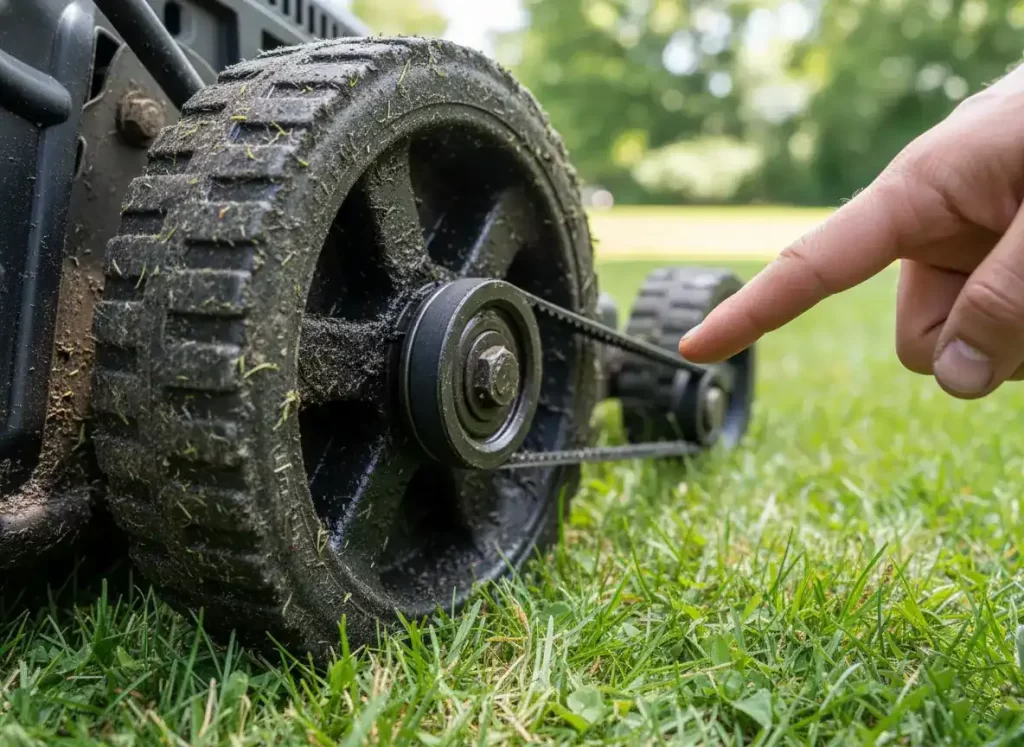
Front-Wheel Drive Systems: Best for flat terrain, more maneuverable, less expensive than RWD, good for yards under 5,000 sq ft that are flat.
Rear-Wheel Drive Systems: Essential for slopes over 5 degrees, better traction everywhere, handles thick grass better, necessary for terrain challenges.
Variable vs Single Speed: Spring for variable if budget allows. Makes a huge difference in usability. Single-speed forces you to walk at their pace or constantly release and re-engage, which is tiring.
Step 3: Select Appropriate Cutting Width
21-inch deck: Standard for most residential. Maneuverable, fits gates, adequate for yards up to 15,000 sq ft.
22-inch deck: Slight efficiency gain, still maneuverable. Good if available at a similar price.
25-inch deck: Uncommon but useful. Saves time without much loss in maneuverability.
30-inch deck: Only for large properties (15,000+ sq ft). TimeMaster is essentially the only quality option. Less maneuverable but massive time savings.
Step 4: Set Your Budget Realistically
$300-$400: You can find self propelled, but the quality is questionable. Consider spending more or dropping self-propulsion for a quality push mower.
$400-$600: Sweet spot. Toro Recycler, base Craftsman gas, Greenworks battery. Good balance.
$600-$800: Premium category. Honda HRX, Ego Power+, Toro Super Recycler. Better build quality and longevity justify costs.
$800+: Specialty like TimeMaster, or serious overkill for typical residential.
Step 5: Evaluate Essential Features
Must-Have Features:
- Self-propulsion that works (test if possible)
- Easy height adjustment
- Grass bag appropriate for yard size
- Drive control is comfortable for your hands
Nice-to-Have Features:
- Variable speed (really should be standard)
- Electric start (helpful for hand/arm issues)
- Mulching capability
- Quick-folding handle
Don’t Overpay For:
- Excessive grass bag capacity (gets heavy)
- “Professional grade” for residential use
- Manufacturer-specific accessories
Step 6: Calculate Long-Term Ownership Costs
Gas Self Propelled Mowers – Annual Expenses:
- Gasoline: $30-$50
- Oil and filters: $15-$25 (learn about engine maintenance)
- Spark plug: $5 every other year
- Air filter: $10 every year or two
- Blade sharpening: $15-$25
- Total: $75-$115/year
Battery Self Propelled Mowers – Annual Expenses:
- Electricity: $5-$10
- Blade sharpening: $15-$25
- Battery replacement (every 5-7 years, amortized): $35-$50
- Total: $55-$85/year
Battery has lower annual costs but higher one-time battery replacement costs. Over 10 years, total ownership costs are comparable.
Step 7: Choose the Right Retailer
Local Dealers: Offers better service and warranty support, with the option to test drive and set up included. Prices are typically higher.
Big Box Stores: Competitive pricing and sales, easy returns, limited staff knowledge, you assemble.
Online Retailers: Best prices, convenient delivery, can’t test first, assembly required, returns complicated.
Buy from wherever offers the best combination of price and support. Top rated self propelled lawn mowers I recommend are solid enough that dealer support matters less than with cheaper brands.
Step 8: Extended Warranty Considerations
Generally, skip them. For Honda and Toro self propelled lawn mowers, failure rates within standard warranty (2-3 years) are very low. After the warranty expires, these remain reliable with proper maintenance.
For battery self propelled mowers, extended warranties covering batteries can be worthwhile if reasonably priced ($50-$75). Battery failures are the main long-term concern.
For cheaper brands, extended warranties seem tempting, but they have so many exclusions that claims are difficult. If a brand needs an extended warranty to be good value, it’s probably not good value.
Final Buying Checklist
Before you purchase any self propelled lawn mower, confirm:
✓ Drive system type (FWD or RWD) matches your terrain
✓ Power source (gas or battery) suits your yard size and preferences
✓ Cutting width is appropriate for your property
✓ Weight is manageable (especially important for battery mowers)
✓ Height adjustment range includes your preferred cutting height
✓ Grass bag capacity is adequate for your mowing pattern
✓ Drive speed range works for your walking pace
✓ Handle adjusts to your height comfortably
✓ Storage dimensions fit your available space
✓ Brand has a good reliability record (Honda, Toro, Ego, Greenworks, Cub Cadet)
✓ Price fits your budget, including long-term maintenance costs
Final Thoughts on Top Rated Self Propelled Lawn Mowers
Look, here’s what I want you to remember from this whole thing: the top rated self propelled lawn mowers aren’t always the expensive ones or the ones with fancy marketing. They’re the machines that don’t show up broken in my shop, that customers still use happily after 5, 8, 10 years, that honor warranties without hassle, and that genuinely care about building something lasting.
After fixing over 1,000 mowers and testing dozens on my own property, my recommendations come down to this:
For ultimate reliability: Buy the Honda HRX217VKA. Yeah, it costs more. Yeah, you’ll still be using it when your neighbors have replaced cheaper mowers twice.
For excellent value: Get the Toro Recycler 22in SmartStow. It’s the best self propelled lawn mower for the money, delivering Honda-level reliability at a price most can afford.
For battery convenience: The Ego Power+ LM2142SP is the only battery self propelled lawn mower I recommend without hesitation. It actually works like the marketing promises.
For challenging hills: Cub Cadet SC 300 HW with high wheels and rear-drive won’t let you down on slopes.
For large properties: Toro TimeMaster 30in saves massive time and proves wider really is better.
And whatever you do, skip Murray, current Troy-Bilt models, and Craftsman battery self propelled mowers. I can’t repair your frustration when they break after 18 months, and replacement parts often cost more than buying quality from the start.
One last thing: the best self propelled lawn mower is the one you’ll maintain. Even Honda dies if you never change the oil or sharpen the blade. Whatever you buy, commit to basic upkeep – your mower will reward you with years of reliable service.
Now go find your perfect mower and get back to enjoying weekends instead of dreading mowing day.
Based on my 10 years of servicing over 1,000 mowers, the Honda HRX217VKA is the top rated self propelled lawn mower overall. It combines unmatched reliability, excellent cut quality, variable speed self-propulsion, and build quality that ensures 10+ years of service. The GCV200 engine is legendary for durability, and I rarely see these in my shop for anything beyond routine maintenance. For value-conscious buyers, the Toro Recycler 22in SmartStow delivers 90% of Honda’s performance at 60% of the price. For battery power, the Ego Power+ LM2142SP is the clear leader with genuine gas-mower power and reliable self-propulsion.
Honda is the most reliable self propelled lawn mower brand, period. In my repair shop, I see Honda mowers with 500+ hours and 8-10 years of use coming in for blade sharpening and oil changes, not major repairs. Failure rates are under 3% in the first four years according to Consumer Reports data, and my shop experience confirms this. Toro ranks second with excellent reliability, particularly their Recycler series with steel decks. Ego leads the battery category with solid long-term performance. Avoid Troy-Bilt, Murray, and Craftsman battery models – they consistently show reliability problems.
Consumer Reports self propelled lawn mowers ratings consistently place Honda at the top with “Excellent” predicted reliability (5/5), followed by Toro with “Very Good to Excellent” (4-5/5). Their testing of over 13,000 mowers shows Honda and Toro have failure rates under 5% in the first four years. They rate Troy-Bilt and Murray as “Fair to Poor” (1-2/5) for reliability. For battery models, Ego earns “Very Good” ratings (4/5). Consumer Reports data aligns closely with what I observe in my repair shop – Honda and Toro dominate reliability metrics while budget brands consistently disappoint.
Yes, self propelled lawn mowers are absolutely worth the extra $100-$300 for most homeowners. They reduce physical strain by 60-70%, cut mowing time by 20-30%, and make hills and thick grass manageable. I’ve had customers in their 60s and 70s continue mowing their own lawns thanks to self-propulsion when they couldn’t handle push mowers anymore. The investment pays for itself in reduced fatigue and faster completion. Skip self-propulsion only if your yard is under 3,000 square feet on flat terrain. For everyone else, the quality-of-life improvement justifies the cost, especially if you’re mowing weekly during the growing season.
The Cub Cadet SC 300 HW is the best self propelled mower for hills, thanks to its high-wheel design (11-inch rear wheels) and rear-wheel drive system that maintains traction on slopes. The IntelliPower engine management prevents bogging down when climbing. The Honda HRX217VKA is also excellent for hills with its rear-wheel drive and variable speed control. For larger sloped properties, the Toro TimeMaster 30in offers exceptional stability with its wider wheelbase. Never use front-wheel drive self propelled mowers on hills – they lose traction when climbing.
Quality self propelled lawn mowers from Honda or Toro typically last 8-12 years with proper maintenance. I regularly service Honda mowers from 2012-2015 that are still running strong. The GCV200 Honda engine often exceeds 500 hours of use. Budget brands like Murray or Troy-Bilt typically fail at 2-4 years, often with transmission or drive system problems that cost more to repair than replacement. Battery self propelled lawn mowers last 6-8 years, with battery replacement needed around year 5-7 at $250-$400. Proper maintenance dramatically extends lifespan: regular oil changes for gas models, keeping blades sharp, cleaning the deck, and proper winter storage all add years to your mower’s life.
Top rated gas self propelled lawn mowers are better for properties over 10,000 square feet, challenging terrain with slopes, thick grass conditions, and when you want unlimited runtime. They’re more powerful and better suited for demanding conditions. Best battery self propelled lawn mowers are better for yards under 8,000 square feet, when you value quiet operation and minimal maintenance, and for environmentally conscious homeowners. Modern high-voltage systems (56V and above) from Ego, Greenworks, and Snapper deliver legitimate gas-mower power. For most suburban yards under half an acre, quality battery self propelled lawn mowers like the Ego Power+ LM2142SP now match gas performance while offering convenience advantages. For larger or more challenging properties, gas remains the practical choice.
Avoid Murray self propelled lawn mowers – they have consistent transmission failures and cheap components that fail within 18-24 months. The drive systems are undersized and wear out prematurely. Avoid current Troy-Bilt self propelled models – quality has declined significantly in recent years, with common drive system failures and poor warranty support. Avoid Craftsman V20 and V60 battery self propelled mowers – they suffer from premature battery failures and self-propulsion engagement problems. Craftsman’s gas models are acceptable budget options, but skip their battery self propelled products entirely. Stick with proven, reliable brands: Honda, Toro, Ego, Greenworks, Cub Cadet, and Snapper.
