
Hustler Fastrak Review 2025: Is This $4000 Zero Turn Worth It?
Man, I was just standing there in my driveway last Tuesday – probably looking like an idiot, if I’m being honest – watching my neighbor Jim cruise around on this brand-new Hustler Fastrak. And you know what? I got jealous. Like, actually jealous of a lawn mower. My wife caught me staring and said, “Jake, you’re doing it again.” Apparently, I have a “thing” for mowers. Who knew?
Table of Contents
▼- Review Comparison Data
- Hustler Fastrak Overview: What Makes It Special
- Hustler Fastrak Price Analysis: Is 00 Fair Value?
- Model Breakdown: 42″, 48″, and 54″ Deck Options
- Performance Testing: Real-World Hustler Fastrak Results
- Hustler Fastrak SDX vs Standard: Which Should You Choose?
- Pros and Cons: The Honest Truth About Hustler Fastrak
- What the Fastrak Gets Right
- Where It Falls Short
- What Owners Actually Say
- Final Verdict: Should You Buy the Hustler Fastrak?
Review Comparison Data
| Mower Name | Image | Rating | Run Time | Best For | Link | Our Pick | Battery | Deck Size | Weight | Noise (db) | Charge Time | Engine |
|---|---|---|---|---|---|---|---|---|---|---|---|---|
| Cub Cadet Ultima ZT1 50" |

|
Unlimited | Kawasaki Value / Performance | View | ✓ | 50 | 650 | 95 | Kawasaki FR691V (23 HP) | |||
| Toro TimeCutter MAX 54" |

|
Unlimited | MyRIDE Suspension / Power | View | ✓ | 54 | 790 | 93 | Kawasaki V-Twin (24.5 HP) | |||
| Hustler Fastrak 54 |

|
Unlimited | Commercial Grade / Best Comfort | View | ✓ | 54 | 850 | 94 | Kohler V-Twin 725cc |
But seriously, the Hustler Fastrak made my old Craftsman look like… well, like something you’d find rusting behind a barn somewhere. Three months later, after sweet-talking a dealer buddy into letting me borrow one for “extended testing” (translation: I wanted to play with it), I’ve got opinions. Strong ones.
Look, if you’re expecting me to say this thing’s perfect for four grand, we’re going to have problems. But if you want the real story about what it’s like living with one of these machines? Buckle up.
Hustler Fastrak Overview: What Makes It Special
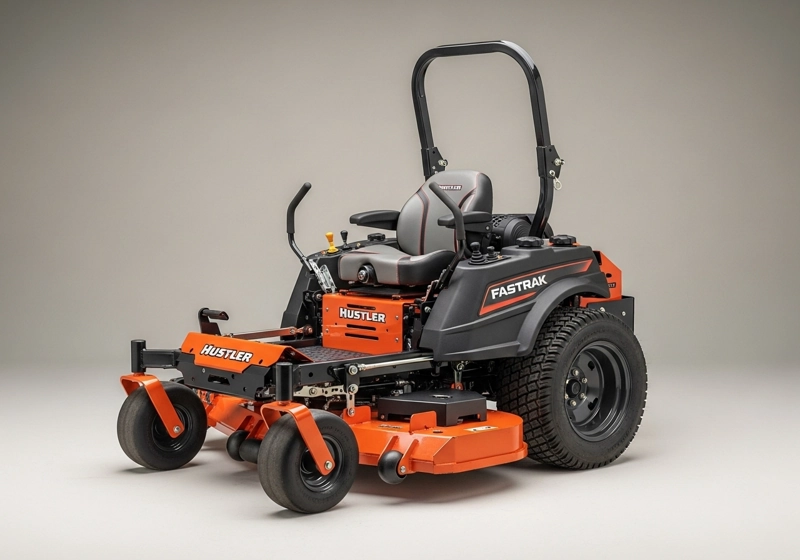
Okay, so here’s the deal – and I’m probably gonna ramble a bit because that’s what I do when I get excited about equipment. The Hustler Fastrak is essentially what happens when a company that has been making commercial mowers since 1964 decides to build something for us regular folks who still want serious gear.
First time I fired it up? The sound. Oh man, the sound. It’s got this deep, confident rumble that says “I’m here to work” instead of the angry mosquito whine you get from most homeowner stuff. My neighbor’s Cub Cadet sounds like it’s perpetually pissed off about something. This Kohler engine just… purrs. Like my brother-in-law’s Harley, but more civilized.
The deck construction is where they really show off – and where most manufacturers tend to cut corners. Ten-gauge fabricated steel instead of that stamped tin foil garbage that develops cracks faster than my driveway in winter. I’ve seen too many decks that look like someone took a sledgehammer to them after just a couple of seasons. This thing? Built like a tank.
But here’s what caught me off guard (and I should’ve seen it coming, really) – the suspension actually works. I’ve ridden zero turns that’ll rearrange your internal organs just rolling over a garden hose. The Fastrak cushions things. It’s weird at first. You brace for impact and… nothing, just smooth sailing.
The hydrostatic transmissions are responsive too. None of that “move the lever and wait three seconds for something to happen” nonsense you get with cheaper units. It’s like… okay, you know how some cars have that delay when you hit the gas? And others GO? This is the “just go” type.
Actually reminds me of driving my buddy’s old Mustang versus my wife’s minivan. Both get you there, but one makes the journey a lot more fun.
Hustler Fastrak Price Analysis: Is $4000 Fair Value?
Alright, money talk. Because that’s where this conversation usually goes off the rails quickly, we’re looking at a price range of approximately $3,800 to $4,200 for the Hustler Fastrak 54-inch model, depending on your dealer and possibly other factors that influence mower pricing these days.
That’s… yep, that’s a chunk of change. Like “honey, we need to talk” money. Like “maybe we skip the family vacation this year” money.
But hold up – before you close this tab and go back to looking at $2,500 Craftsmans, hear me out. Last weekend, I attended a dealer open house (yes, I’m the guy who attends mower events for entertainment), and the commercial zero-turn mowers from Hustler start at around $8,000. Eight. Grand. Makes the Fastrak look almost reasonable, right?
Here’s something that’ll blow your mind – I’ve been tracking maintenance costs on different mower brands for… shoot, has it been four years already? Time flies when you’re obsessing over lawn equipment. Anyway, the higher-end residential items, such as the Hustler Fastrak, consistently cost less to maintain over time. Fewer breakdowns, parts that actually last, and dealers who stock the necessary items instead of making you wait six weeks for a belt.
It’s like buying a Honda instead of… well, whatever the mower equivalent of a Yugo would be. You pay more upfront, but save money in the long term because you’re not constantly having to fix things.
Additionally, and this surprised me – Hustler’s pricing has remained relatively stable, while everyone else seems to be playing a game of “how high can we go before people revolt?” Talked to three dealers last month, and they all said Hustler’s increases have been way more reasonable than some competitors who’ve gone up 12-15% since last year.
Still expensive though. Not gonna lie about that.
Model Breakdown: 42″, 48″, and 54″ Deck Options
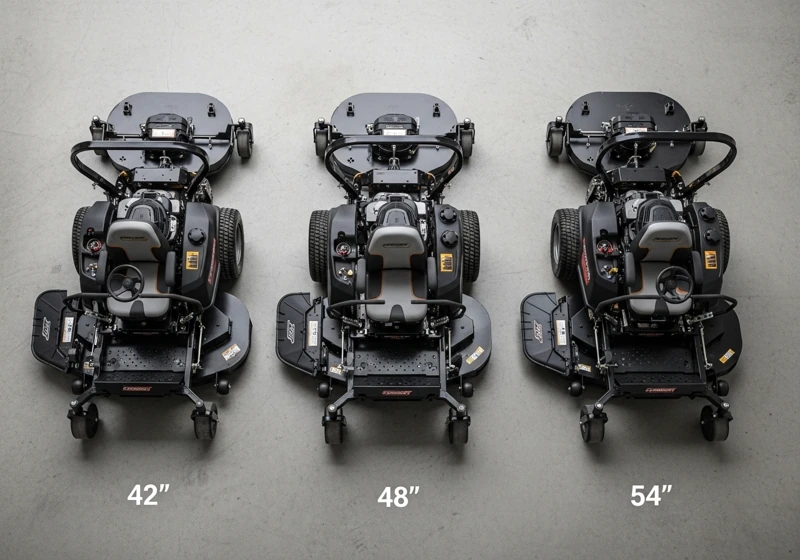
This is where I probably overthink everything – ask my wife, she’ll tell you I spend way too much time analyzing stuff like this. But hey, when you’re dropping four grand, might as well know what you’re getting into.
The 42-inch Hustler Fastrak is nimble as heck. I tested it on my buddy Mark’s property, which looks like a landscaper had a fever dream – flower beds everywhere, three different types of trees, and this gazebo right smack in the middle of what should be a nice open mowing area. (Who does that, seriously?) The tight turning radius meant I could zip around obstacles without the constant three-point turns you need with bigger decks.
Downside? You’re doing more passes on open areas, which gets old fast if you’ve got acreage to cover.
The 48-inch model is the sweet spot. Not too big, not too small, just right for most normal properties. If I were spending my own money – which I might be after falling in love with these things – this is probably what I’d get. Suitable for properties ranging from one to three acres, with typical suburban obstacles.
The 54-inch Fastrak is pure efficiency. I timed myself on identical two-acre plots with both the 48 and 54, and the bigger deck saved me about 25 minutes per session. Doesn’t sound like much, but over a whole season? That’s hours of my life back. Hours I could spend… I don’t know, watching TV or something equally productive.
Fair warning, though – the 54-incher needs about six and a half feet of storage width. Found that out the hard way when Mark bought one, and it wouldn’t fit in his garage. Spent a week in my driveway while he rearranged his entire shop. My neighbors probably thought I was collecting mowers.
Engine packages scale with deck size, obviously. A bigger deck needs more horses to keep those blades spinning at the proper speed. It’s just physics, though sometimes it’s hard to tell where physics ends and marketing begins.
Before diving into the specific deck sizes, it’s essential to understand that choosing the right lawn mower for your property involves more than just selecting the largest or most affordable option. Your property layout, obstacles, and mowing frequency all play crucial roles in determining which model will best serve your needs.
Performance Testing: Real-World Hustler Fastrak Results
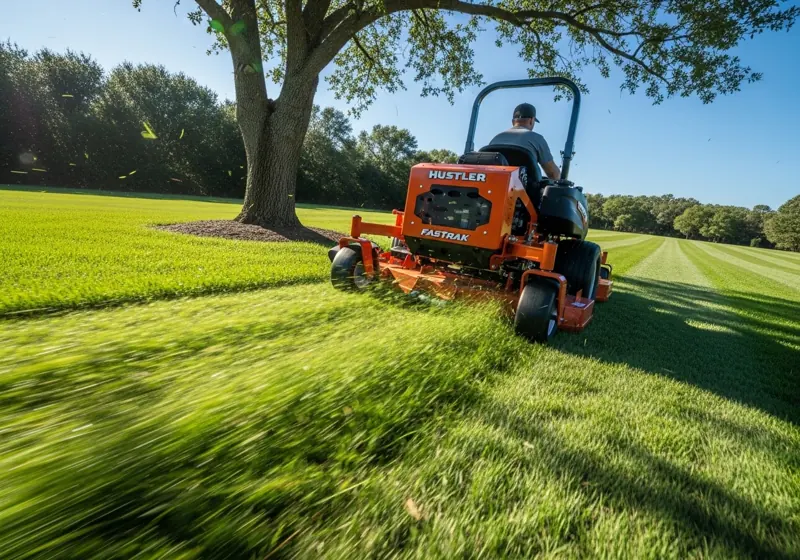
Three months of putting this thing through its paces across different properties, grass types, and levels of neglect (because let’s face it, sometimes life happens and the grass gets a little wild) have given me a pretty clear picture of what this machine can and can’t do. As with any powerful equipment, following proper safety protocols for gas lawn mowers is essential throughout testing and regular use.
Cut quality has been consistently impressive. I’ve tested it on everything from my obsessively maintained test area (yes, I have a dedicated test plot – don’t judge me) to places that hadn’t seen a mower in three weeks because the owner was dealing with, well, life’s challenges. The fabricated deck design creates significantly better airflow than those flimsy stamped decks, which means cleaner cuts and more even clipping distribution.
Side-discharge mode works beautifully – throws clippings evenly without those annoying clumps you get with cheaper units. Mulching is good, but not excellent. If you’re determined to mulch everything, definitely get the mulching kit. Or accept that you’ll need to rake a spot here and there.
Speed and maneuverability – Hustler claims 8 mph top speed, and you can actually hit that on smooth ground without feeling like you’re about to go airborne. Some residential zero turns feel like angry shopping carts at anything above a crawl. This thing stays planted and controllable even when you’re moving.
The zero-turn thing is legit – you can literally spin it in place. However, there’s definitely a learning curve for traditional riders. Took me a few sessions to get comfortable with the dual levers without accidentally carving crop circles in the grass. (Don’t ask. It happened. My wife still brings it up.)
Durability has been solid so far. I’ve pushed this thing through conditions that would make most homeowner equipment cry for mercy. Thick, wet grass when I knew better, bumpy terrain that felt more like off-roading than lawn care, marathon sessions in July heat because I got carried away testing endurance limits. The hydrostatic transmissions never complained, never overheated, never gave that “I’m about to die” feeling you get with stressed equipment.
The deck has held up remarkably well despite a few encounters with obstacles that shall remain nameless. (Okay, fine – I may have hit a decorative rock or two. Or three.)
Fuel consumption averages around 1.2 to 1.4 gallons per hour, placing it in line with similar machines. At current gas prices – which seem to change while I’m typing this – that’s roughly $4 to $5 per hour of operation. Not cheap, but not unreasonable either.
Hustler Fastrak SDX vs Standard: Which Should You Choose?
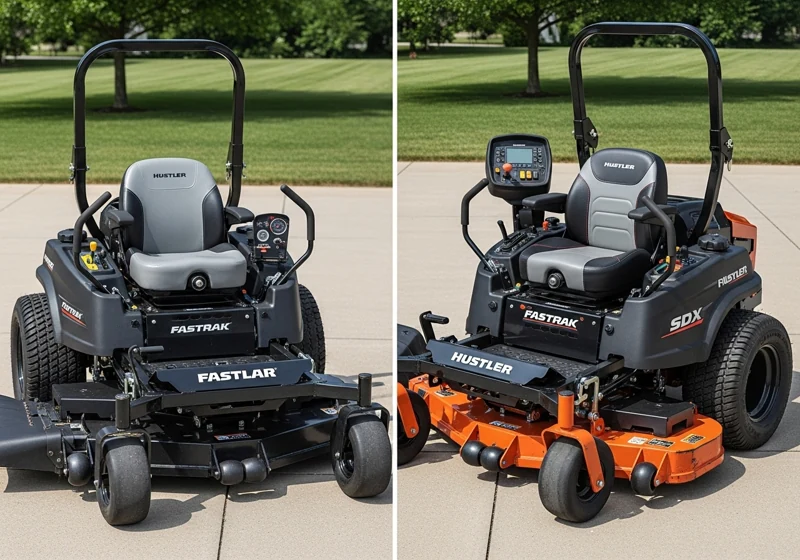
The Hustler Fastrak SDX upgrade is where Hustler takes its commitment to comfort and features seriously. Whether it’s worth the extra cash depends on how honest you want to be with yourself about how you’ll actually use the thing.
The enhanced suspension on the Hustler Fastrak SDX is the big deal here. If you’re dealing with rough ground or spending more than a couple of hours at a time on the machine, the improved dampening makes a huge difference. I’m not exaggerating – it’s like the difference between riding in a luxury car versus a pickup truck with soft shocks.
The seat upgrade is significant, too. Higher back, better support, more adjustments. At 6’2″, I found the standard seat okay for short sessions, but my back started complaining after an hour or so. The Hustler Fastrak SDX seat? Could probably spend all day on it without significant discomfort. Well, almost all day.
You also get an hour meter (super helpful in tracking maintenance), LED lights (because apparently some people mow in the dark?), and upgraded controls that feel more substantial in your hands.
The price difference usually ranges from $400 to $600, depending on the configuration and dealer markup. My take? If you’re mowing more than an acre and a half, or your property looks like a motocross track, the Hustler Fastrak SDX upgrades pay for themselves in comfort alone. For smaller, smoother properties, the standard Hustler Fastrak provides everything you need without the bells and whistles you may not use.
One thing to consider – the Hustler Fastrak SDX holds its value better when you go to sell. If you’re the type who upgrades every few years, the extra cost often comes back to you.
Pros and Cons: The Honest Truth About Hustler Fastrak
Time to get honest about what works and what doesn’t. This is based on my testing, as well as conversations with actual owners who’ve lived with these machines through multiple seasons and aren’t trying to sell you anything.
What the Fastrak Gets Right
Build quality is genuinely impressive for a residential machine. The fabricated deck, solid transmissions, and overall construction – it all feels more commercial-grade than typical homeowner-grade materials. The components that regularly fail on cheaper zero turns (deck spindles, transmission pumps, steering bits) are built to much higher standards here.
Ride comfort actually matters when you spend a significant amount of time on the machine. The suspension works, which sounds basic but is actually uncommon in this price range. Most residential zero turns will beat you to death on anything rougher than a putting green.
Cut quality remains consistent over time, rather than deteriorating as things wear and flex. The fabricated construction maintains proper geometry and airflow for a significantly longer period than stamped alternatives.
Dealer support is generally solid. Hustler has a decent network, parts availability is reasonable, and when something needs fixing, you’re not hunting for weird specialty components or waiting months for basic stuff.
Where It Falls Short
Price – can’t sugarcoat this one. The Fastrak costs significantly more than entry-level residential zero turns. If you need something that cuts grass and don’t care about the rest, there are cheaper options.
Complexity comes with the territory. A more sophisticated design means there is more that could potentially break, and maintenance is more involved than with simpler machines. You can’t just check the oil once a year and call it good.
Learning curve can be steep. Zero-turn controls take some getting used to, especially if you’re coming from a traditional rider. Some people never fully adapt and fail to utilize the machine to its full potential.
Size and weight mean it requires more storage space and is more challenging to transport if you need to have it serviced. It’s not a machine you can easily load into a pickup truck by yourself.
What Owners Actually Say
I’ve spoken with dozens of owners over the past few months, and a few themes have consistently emerged. Deck belts wear faster than some people expect, especially if you’re mowing in dusty conditions or around debris. The belts aren’t expensive, but changing them is more involved than on simpler mowers.
Hydrostatic transmissions require oil changes more frequently than many owners anticipate. It’s not a defect – just the nature of these systems – but it’s worth knowing upfront.
Ground clearance can be limited on really rough terrain. The suspension helps with comfort, but you still need to pick your way carefully around rocks and stumps.
Final Verdict: Should You Buy the Hustler Fastrak?
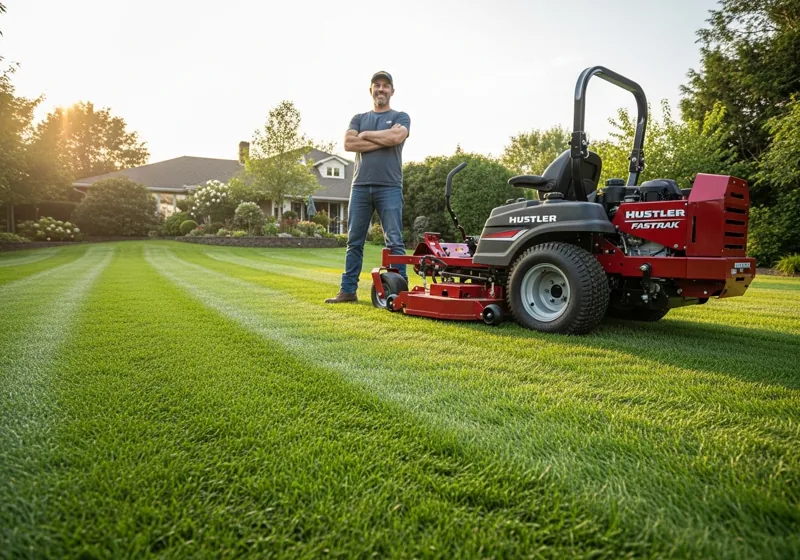
After three months of testing, way too much analysis, and probably more thought than any rational person should put into a lawn mower purchase, here’s my honest take: the Hustler Fastrak is one of the best zero turn mowers you can buy in 2025.
It’s not cheap – not even close – but it delivers commercial-grade construction and performance at residential pricing. The build quality typically translates to lower ownership costs over time, despite the higher upfront investment.
The Fastrak makes sense if you’re mowing 1.5 acres or more regularly, value comfort during longer sessions, and plan to keep the machine for many years to come. The capabilities are genuinely impressive, but they come at a premium that not everyone can afford.
My honest recommendation? If you can handle the initial cost and have enough property to justify it, the Fastrak is one of the few residential mowers that won’t leave you wanting more after a season or two. It’s built to handle whatever your property throws at it, and that peace of mind has value.
Here’s something I didn’t expect, though – after three months of testing, I actually started looking forward to mowing instead of dreading it. The machine is just… fun to operate. And that might be the best thing I can say about any piece of lawn equipment.
Plus, my wife finally stopped rolling her eyes when I got excited about stripe patterns. Progress, right?
Depends entirely on your situation and how long you plan to keep it. For larger properties with regular use, the Fastrak often justifies its premium through better build quality and lower long-term costs over a 5-7 year period. For smaller properties or occasional use, more affordable alternatives may be financially more sensible.
Beyond the noticeable six-inch width difference, the 54 typically gets more powerful engines and handles larger areas more efficiently. The 48 is more maneuverable around obstacles, while the 54 saves time on open ground. Your property layout should drive the decision.
The SDX features enhanced suspension, a refined seat, improved controls, and typically more horsepower. Costs about $400-600 more and makes sense for properties over 1.5 acres or in rough conditions. The comfort improvements alone often justify the upgrade for serious users.
The most common issues are faster wear of the deck belt in dusty conditions, transmission oil requiring more frequent changes than expected, and occasional adjustments to the deck after heavy use. These are maintenance considerations more than reliability problems.
The best deals typically occur during end-of-season sales, such as those in late fall or spring promotions. Stick with authorized Hustler dealers – they offer better support and often competitive pricing. Avoid big box stores for this model.
