
Troy Bilt Pony Review: Entry Level Riding Mower 2025
My neighbor, Dave, showed up at my door last Tuesday looking like someone had just told him his lottery ticket was one number off. Turns out he’d been researching the troy bilt pony riding mower for three weeks straight, reading every forum post and watching every YouTube video he could find, and he still couldn’t figure out if buying one was brilliant or stupid.
Table of Contents
▼- Troy Bilt Pony Riding Mower Overview: What You Need to Know
- Troy Bilt Pony 42 Models: Complete Lineup Breakdown
- Troy Bilt Pony 17.5 HP Performance Review: Real-World Testing
- Troy Bilt Pony 42X: Upgraded Model Features & Review
- Cutting Deck Performance: Troy Bilt Pony 42 Deck Review
- Troy Bilt Pony Parts & Maintenance Guide
- Belt Replacement: Deck & Drive Belt Guide
- Air Filter Maintenance & Replacement
- Grass Catcher & Attachment Options
- Troy Bilt Pony Pros & Cons: Honest Assessment
- Troy Bilt Pony vs Competitors: Entry-Level Riding Mower Comparison
- Who Should Buy the Troy Bilt Pony? Best Use Cases
- Troy Bilt Pony Pricing & Where to Buy
- Final Verdict: Is the Troy Bilt Pony Worth It in 2025?
“Everyone says something different,” he complained. “Half the reviews say it’s the best budget mower ever. The other half says it’ll break down in two years. One guy swears by it; his brother-in-law says it’s garbage. I’m losing my mind here.”
I completely understand his frustration because I’ve been exactly where he is. The troy bilt pony riding lawn mower sits in this weird middle ground where it’s cheap enough to be tempting but just expensive enough that you’ll be outraged if it turns into a money pit.
After working on dozens of these mowers over the years, speaking with owners who’ve had them for seasons, and actually spending time using them on various properties, I’ve determined exactly who should buy one and who should steer clear. No sales pitch here. Just the truth about what this mower actually delivers versus what the brochures promise. For a broader look at how the Pony stacks up against other riding mowers in its class, check out our complete guide to the best riding lawn mowers for 2025.
Troy Bilt Pony Riding Mower Overview: What You Need to Know
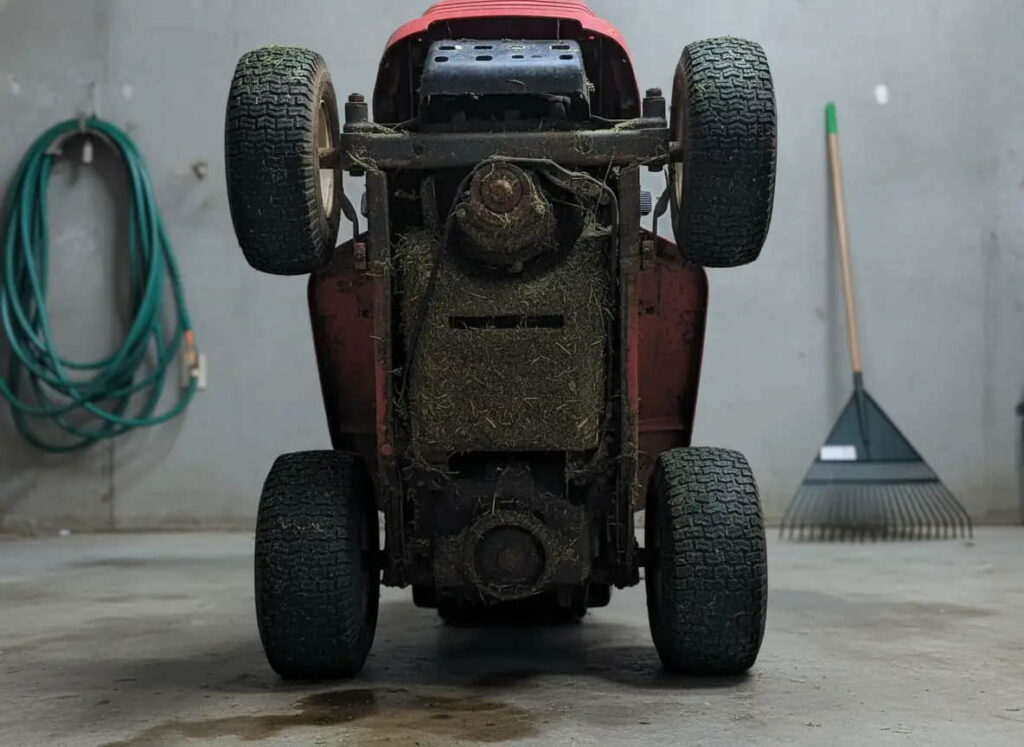
The troybilt pony exists because Troy-Bilt figured out there’s a huge market of people who desperately want a riding mower but absolutely cannot justify dropping three grand on one. So they stripped away everything expensive and built something that gets the basic job done without requiring a second mortgage.
Entry-level sounds like corporate speak for “cheap,” but sometimes, cheap is exactly what you need. Not everyone requires commercial-grade equipment to cut their suburban lawn.
This thing’s been around long enough that we’re past the experimental phase. It’s got a 42-inch cutting deck, runs on a 17.5 HP single-cylinder engine (usually Briggs & Stratton), and uses an automatic transmission, so you don’t need to mess with clutching. Pretty straightforward equipment.
Troy-Bilt is owned by MTD Products, which makes mowers for about half the brands you see at Home Depot. That’s actually good news because finding parts doesn’t require calling twelve different dealers. MTD is massive, and parts are everywhere.
Here’s what a typical troy bilt pony riding mower includes:
- 42-inch stamped steel deck (not the heavy-duty welded kind, just pressed metal)
- 17.5 HP single-cylinder engine
- Automatic transmission with 7 forward speeds, 1 reverse
- 18-inch turning radius (you’ll be backing up constantly)
- Side discharge, mulching, and bagging cost extra
That “entry-level” label means compromises everywhere. The deck won’t handle impacts like premium models. The seat feels like sitting on plywood after an hour. Power steering? Not happening. But for people with a half-acre to an acre who just want to stop push mowing every weekend, these compromises might beat spending another thousand bucks. If you’re still deciding whether a riding mower is right for your property size, our complete homeowner’s guide to choosing the right lawn mower breaks down all your options.
Troy Bilt Pony 42 Models: Complete Lineup Breakdown
Troy-Bilt makes this way more confusing than necessary. They’ve got model numbers scattered everywhere, and figuring out what’s actually different between them requires detective work.
The troy bilt pony 42 just refers to the 42-inch deck width. Inside that category, you’ll find several versions that are mostly similar but different enough to be annoying.
The standard Pony 42 is what most people end up buying. It’s got the 17.5 HP Briggs & Stratton, 7-speed automatic, basic side-discharge cutting. Prices bounce around between $1,400 and $1,700, depending on where you shop and whether anything’s on sale.
The Troy Bilt Pony 42X adds some upgrades, like a reinforced deck and a marginally better seat. Usually costs about $200 to $300 more. I’ll break this down more later, but the question is whether those upgrades justify the extra cash.
Here’s something that drives me crazy: different retailers get different model numbers even though the mower is basically identical. The troy bilt pony 42 riding lawn mower at Lowe’s might have a completely different model number than the one at Tractor Supply, but when you actually compare specifications, they’re twins. Always check actual specs instead of trusting model numbers to tell you anything useful.
Previous year models can be smart buys. The troy bilt 42 pony riding mower hasn’t changed dramatically year to year, so finding last season’s model on clearance doesn’t mean missing important updates. Just make sure it hasn’t been sitting outside getting rained on for six months.
What I actually appreciate about Troy-Bilt: they’re not redesigning this mower every year just to have something “new.” The basic platform stays consistent, which means when you’re hunting for solutions on YouTube late at night, advice from three years ago still works. That continuity matters more than you’d think when something breaks.
Troy Bilt Pony 17.5 HP Performance Review: Real-World Testing
Let’s talk about what it’s actually like using the troy bilt pony 17.5 hp 7 speed 42 in configuration, since that’s what most people buy.
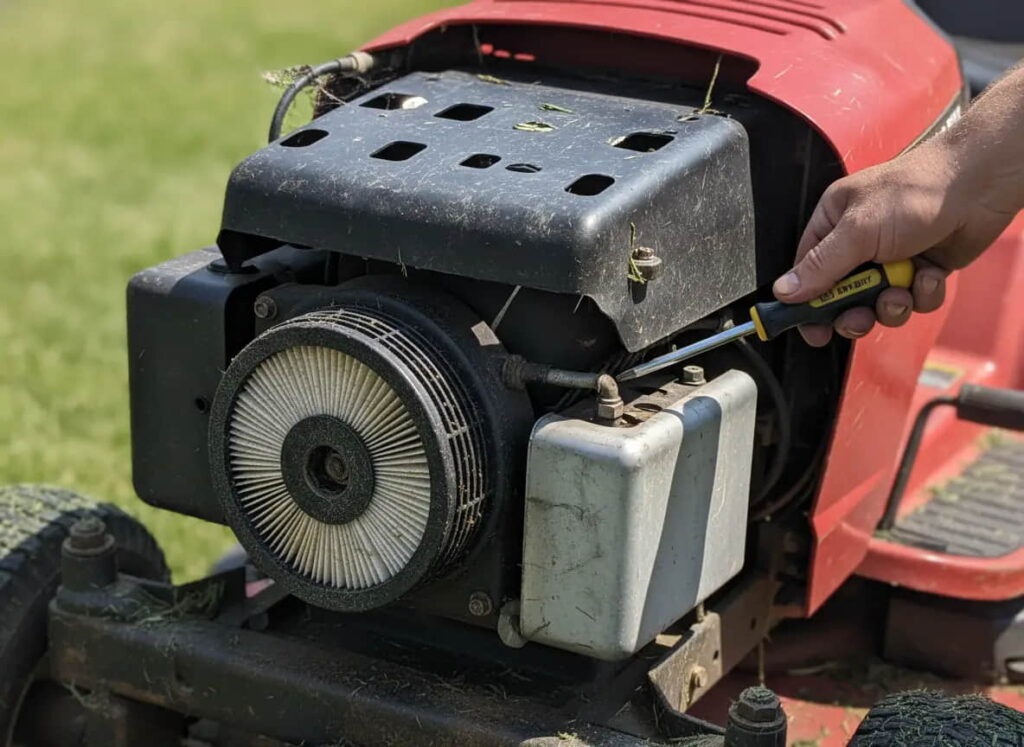
The 17.5 HP Briggs & Stratton engine is adequate. That’s not exciting to say, but it’s honest. This isn’t going to power through foot-tall grass like it’s nothing. It’s a basic workhorse that handles normal conditions if you keep your expectations reasonable. To understand more about Briggs & Stratton engines and what makes them reliable for residential use, our comprehensive Briggs and Stratton engine guide covers everything you need to know.
Starting up usually takes one or two pulls when it’s warm. Cold mornings might need a few extra tries and some patience. Once it’s running, it settles into a steady rhythm. Don’t expect sports car acceleration; this thing builds speed gradually like your grandpa pulling onto the highway.
The 7-speed transmission gives you decent options. I usually mow in 3rd or 4th gear for normal work, but bump up to 5th or 6th when cruising across already cut areas. Seventh gear feels optimistic unless your yard is pool-table flat with zero obstacles. The single reverse gear works fine, but you’ll spend considerable time doing three-point turns because the turning radius isn’t great.
How it actually cuts grass depends heavily on conditions. When everything’s right grass is slightly damp, you’re keeping up with weekly mowing, normal growth the Pony cuts fine. The 42-inch deck with two blades handles typical suburban grass without drama.
But here’s reality: Let your grass get out of control, or try cutting thick spring growth, or mow when there’s heavy dew covering everything? The engine bogs down noticeably. Single-cylinder engines don’t have the same grunt as twin-cylinder setups, so they complain loudly when you ask too much. Single-cylinder engines like the one in the Pony must meet EPA small engine regulations for emissions, which is why newer models run cleaner than older designs. For a deeper dive into single-cylinder versus twin-cylinder engine performance, check out our complete guide to lawn mower engines and how they affect cutting power.
What works best in my experience:
- Run it at full throttle (yeah, it’s louder, but the engine needs those RPMs)
- Keep a regular schedule because letting grass get over six inches is asking for trouble.
- Skip mowing when the grass is soaking wet if you possibly can
- Make two passes if you absolutely have to tackle overgrown sections
Hills are where reality bites hard. Gentle slopes? No problem whatsoever. Moderate hills? Doable, though the engine works noticeably harder and you’ll hear it protesting. Anything genuinely steep? You’re pushing your luck and the mower’s capabilities. The automatic transmission doesn’t have a true low gear for holding hills, so on steeper sections, you might slip slightly or struggle maintaining momentum. Always follow CPSC riding mower safety guidelines, especially on sloped terrain where accidents are most common. If your property has serious elevation changes, you need something with more muscle.
Gas mileage is decent because the single-cylinder engine doesn’t consume fuel excessively. Most people I’ve talked to get through an acre on less than a gallon. The 1.3-gallon tank gives you roughly 90 to 120 minutes of runtime, depending on conditions and how hard you’re working it.
Troy Bilt Pony 42X: Upgraded Model Features & Review
The troy bilt pony 42x is Troy-Bilt’s attempt at fixing some weak spots without jumping into a completely different price bracket.
What actually changes? The improvements are modest but might matter depending on your situation.
The reinforced deck means slightly thicker stamped steel with extra reinforcement in key areas. Is it dramatically more durable? Probably not life-changing, but it should handle impacts better and resist warping over time. If you’ve got hidden stumps, rocks, or tree roots lurking in your lawn, the extra beef helps protect your investment.
The better seat includes more padding and lumbar support. We’re still not talking luxury car seats, but after 90 minutes your back will notice the difference. The standard Pony seat is genuinely uncomfortable for longer sessions, I’m talking genuinely sore the next day if you push it.
Improved transmission cooling on some configurations supposedly helps components last longer. In practice, this means less heat buildup during marathon mowing sessions and potentially fewer transmission problems down the road. The transmission is the Pony’s biggest weakness long-term, so any improvement here matters.
Lighting comes on certain 42X models, either pre-wired or actually installed. Whether you need to mow at dawn or dusk depends on your schedule and desperation level.
Is the 42X worth extra cash?
My honest take: If the price difference is $150-$200, absolutely yes. The upgraded seat alone justifies it because being uncomfortable defeats the entire point of having a riding mower instead of push mowing. You’ll dread what should be easier.
If you’re looking at a $300-$400 jump, think harder. At that price gap, you’re approaching better mowers from other manufacturers that might deliver more overall value.
The troy bilt pony 42x makes most sense if you:
- Plan to keep this mower for at least five years
- Have properties closer to 1.5 acres where seat time matters more
- Hit rocks or obstacles regularly, where the reinforced deck earns its keep
- Want a slightly nicer experience without dropping $2,500+
Cutting Deck Performance: Troy Bilt Pony 42 Deck Review

The troy bilt pony 42 deck is stamped steel with two blades spinning underneath. “Stamped” means they pressed it from one sheet of metal instead of welding multiple pieces together. Keeps costs down, but you don’t get the beefy construction of fabricated decks on premium mowers.
Cut quality when everything’s going right is decent. Not Instagram-worthy lawn stripes that make your neighbors jealous, but presentable suburban lawn quality that won’t embarrass you. The two-blade setup with overlapping coverage handles standard grasses reasonably well.
Where you’ll notice it struggling:
- Bumpy ground makes the stamped deck flex slightly, causing scalping or leaving patches
- Thick grass exposes power limitations when the deck is working hard
- Side discharge chute clogs in damp conditions or really heavy growth
- Mulching with the optional kit works okay, but it isn’t magical. You still need regular mowing.
Understanding the difference between mulching, bagging, and side discharge can help you get better results from your Pony. Our guide to lawn mower blade types explains which cutting method works best for different grass conditions.
Adjusting deck height uses a manual lever with six positions from 1.5 to 4 inches. Simple and reliable, but you have to stop and physically move it. Not a huge deal, just worth knowing if you’re used to foot-pedal adjustments on fancier mowers.
I typically keep mine at 3 inches during the growing season and bump it to 3.5 or 4 inches during summer heat stress. The lowest settings are really only useful if you’re scalping for overseeding projects.
Maintenance access is one area where the Pony actually doesn’t suck. Getting underneath for cleaning, sharpening blades, or replacing belts isn’t terrible compared to some mowers I’ve worked on. Removing the deck completely for deep cleaning involves pulling a few pins and disconnecting linkages. Not fun exactly, but manageable if you’re even slightly handy with basic tools.
Durability reality check: The stamped deck will show wear eventually. Common issues include thin spots from repeated impacts, cracks around spindle mounts after years of vibration, and rust if you don’t keep it clean, especially if you live somewhere humid.
Spend five minutes hosing it off and scraping stuck grass after each use. Keep the deck properly leveled. Regular blade sharpening also makes a huge difference in cut quality. If you’ve never sharpened mower blades before, our step-by-step blade sharpening guide walks you through the entire process. These simple steps make a real difference in how long it lasts before needing replacement.
Troy Bilt Pony Parts & Maintenance Guide
Here’s something people don’t think about until they actually own the mower: how easy is it to keep this thing running when something inevitably breaks or wears out?
Belt Replacement: Deck & Drive Belt Guide
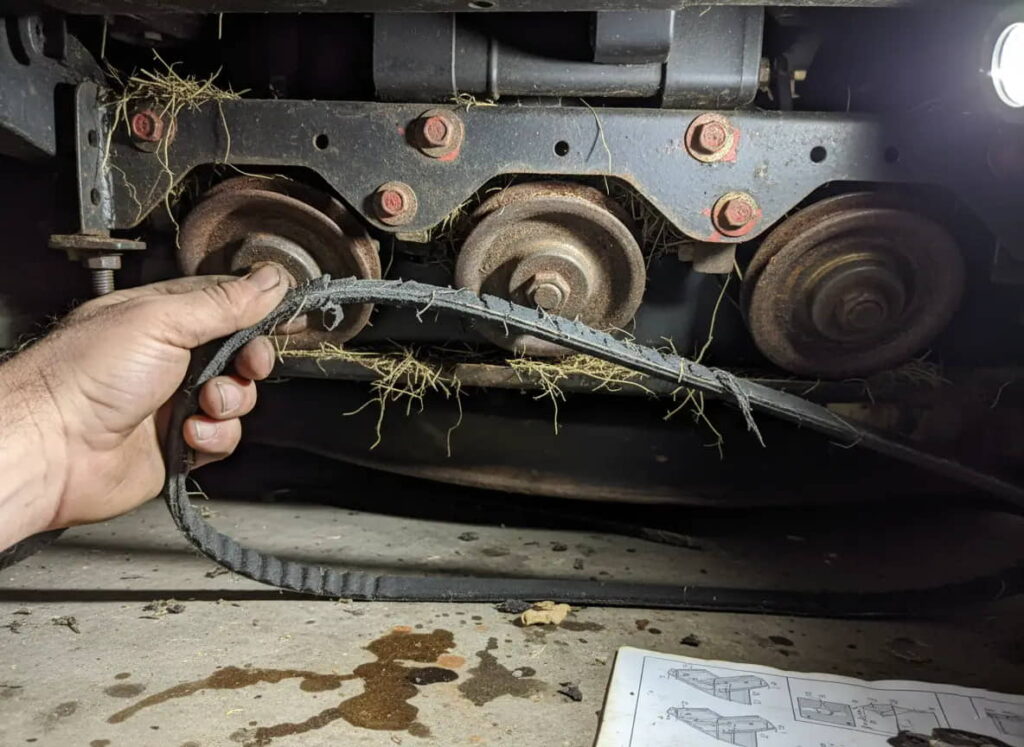
The troy bilt pony deck belt and drive belt are your most common maintenance items beyond oil changes and blade sharpening. Both will eventually need replacement, and knowing what’s involved saves panic when something starts slipping mid-mow.
The deck belt (part numbers vary by year but usually something like 954-04219) connects the engine pulley to the deck spindles. Signs it needs replacing include squealing when you engage blades, slipping under load, or visible cracks and fraying when you inspect it.
Replacing the troy bilt pony lawn mower belt on the deck involves:
- Taking the deck off the mower (sounds worse than it actually is)
- Releasing tension from the idler pulley
- Working the old belt off and routing the new one, following the diagram stamped on the deck
- Putting everything back together and checking the tension
Budget $25-$40 for quality replacement. Don’t cheap out with that $12 Amazon special that’ll leave you stranded mid-summer when it snaps. Stick with OEM or good aftermarket brands with Kevlar reinforcement. If you want more detailed instructions with photos for replacing mower belts, our complete DIY belt replacement guide covers the process for various mower types.
The drive belt (the troy bilt pony mower drive belt) connects the engine to the transmission and handles all movement. This belt typically lasts longer, but it works way harder. Symptoms of failure include losing power to the wheels, slipping on hills, or a complete loss of movement, not even though the engine runs fine.
Replacing the troy bilt pony mower belt on the drive system is more involved than deck belt replacement. You’re removing covers, dealing with multiple pulleys and tensioners, and following specific routing patterns. It’s doable if you’re mechanically inclined with basic tools, but plenty of people take it to a shop for this one. Labor usually runs $75-$125 plus parts.
Parts availability for troy bilt riding mower deck belt components is generally solid, thanks to MTD’s distribution network. Most hardware stores and home centers stock common sizes. Just keep your model number handy; it’s on a sticker near the seat or frame. Wondering whether to buy OEM or aftermarket belts? Our lawn mower parts guide helps you understand the quality differences and where to find the best deals.
Pro tip from years of experience: Take photos with your phone before taking anything apart. Belt routing diagrams in manuals help theoretically, but nothing beats having pictures of your specific setup from multiple angles when you’re trying to remember how everything goes back together.
Air Filter Maintenance & Replacement
The troy bilt pony air filter uses a foam pre-cleaner wrapped around a paper element filter. This two-stage setup does a decent job keeping junk out of your engine, but it needs regular attention or you’ll pay for neglect later.
When to maintain it:
- Check the pre-cleaner every 8-10 hours of operation (basically every 2-3 mows for most people)
- Wash the foam pre-cleaner in soapy water, let it dry completely, then apply a thin coat of clean engine oil
- Replace the paper element every year or every 100 hours, whichever comes first
- Replace more often if you’re mowing in dusty conditions
Air filter maintenance is just one part of keeping your mower running smoothly. Our seasonal lawn care guide provides a complete year-round maintenance schedule for all mower types.
Replacing the air filter takes about two minutes once you know where it is:
- Pop off the cover (usually two clips or one wing nut)
- Pull out the old filter assembly
- Put in the new filter and make sure it seats properly against the housing
- Snap the cover back on
Filters cost $8-$15, depending on OEM versus aftermarket. Don’t skip this maintenance because a clogged air filter causes hard starting, kills power, and can lead to expensive engine damage from running too rich. For a comprehensive approach to preventing engine problems through proper maintenance, our complete lawn mower maintenance and troubleshooting guide is essential reading for all mower owners.
Grass Catcher & Attachment Options
The standard Pony comes with side discharge, but lots of people want bagging capability. The troy bilt pony grass catcher is available as an add-on, though I’ll be straight with you, bagging on an entry-level mower has real limitations that might disappoint you.
The factory bagging system uses two bins that mount to the rear. Total capacity is about 6.5 bushels, which sounds generous until you actually start bagging a thick lawn. You’ll stop constantly to empty, turning a 45-minute mow into 75 minutes once you factor in walking back and forth dumping clippings.
Reality of bagging performance:
- Works okay in dry, moderate grass conditions
- Struggles badly with damp clippings, where everything clumps and clogs
- Slows you down because of the added resistance on the engine
- You’ll stop regularly to clear chute blockages that form unexpectedly
- The engine really feels the extra load, especially in thick growth
Honestly? Get comfortable with mulching or side discharge for regular maintenance. Save bagging for specific situations like final fall cleanups or when you’re trying to make the lawn look perfect before hosting an event. Spring cleanups are one of the few times bagging really makes sense. Our spring lawn care checklist helps you prepare your lawn and mower for the growing season.
Mulching kits ($40-$60) are more practical for everyday use. A mulching kit includes special blades and a plate blocking the discharge chute, forcing clippings to recirculate for finer cutting. Results depend on conditions, but it beats constantly emptying bags every ten minutes.
Troy Bilt Pony Pros & Cons: Honest Assessment
Let me give you the real story about living with a troy bilt pony riding lawn mower based on experience, not marketing brochures.
What Actually Works Well:
The price is the Pony’s main selling point and reason most people consider it. You’re getting into a riding mower for $1,400-$1,700, which is substantially less than most competitors with similar specs. For people watching their budget carefully, this price difference matters enormously.
Finding parts isn’t a nightmare thanks to MTD’s huge distribution network. Your local hardware store probably stocks common items, and ordering online gets everything else to your door within days. I’ve never had trouble sourcing Pony parts, which can’t be said for every budget brand.
It’s simple with not much to break because there’s not much there. No complicated electronics or fancy systems that fail mysteriously. A reasonably handy homeowner can tackle most maintenance and repairs without calling for professional help or watching twelve YouTube videos.
It works fine for typical yards. If you’ve got half an acre to an acre of relatively flat ground with normal grass, the Pony gets the job done week after week. It won’t blow your mind with performance, but it won’t let you down either under normal conditions.
The dealer network is solid since Troy-Bilt products sell through major retailers everywhere. Getting warranty service or support is easier than with niche brands; you can only buy online from obscure websites.
The Real Problems:
Build quality reflects the price point in ways that become obvious over time. Stamped deck, plastic components in places that take abuse, and thin metal in some panels. You’re not getting the beefy construction of commercial-grade or premium residential equipment. Everything feels adequate, but nothing feels overbuilt.
Power is genuinely limited with that single-cylinder engine. It handles normal conditions but chokes on anything demanding. Thick spring growth, damp grass, or hills expose its weaknesses quickly and loudly. You’ll hear the engine protesting, and sometimes it just can’t power through without slowing way down or making multiple passes.
Comfort is rough, especially on longer mowing sessions. The standard seat is genuinely uncomfortable after an hour of bouncing around. Your back and butt will complain vocally. Even the upgraded 42X seat is just “better,” not actually “good” compared to premium mowers.
The transmission represents the biggest question mark for long-term durability based on owner reports I’ve heard. Lots of people report problems after 3-5 years, with repairs often costing $300-$500. This is where buying entry-level catches up with you financially. That initial savings gets consumed by eventual repairs.
Cut quality is inconsistent depending on conditions. You’ll get decent results most of the time, but the Pony occasionally leaves stragglers or creates uneven patches needing double-passing. This drives detail-oriented people absolutely crazy when they’re trying to maintain a nice-looking lawn.
The turning radius at 18 inches means you’re doing lots of three-point turns around trees, gardens, and obstacles. If your property has complex landscaping with lots of flower beds and decorative features, you’ll feel this limitation constantly, and it’ll add time to every mowing session.
Who should still consider it despite these limitations?
The Pony makes sense for:
- First-time riding mower buyers are dipping their toes in without a huge financial commitment
- Properties under an acre where limitations matter less
- Budget-conscious families needing function over fancy features
- People are comfortable doing basic maintenance themselves with simple tools
- Properties with relatively simple, flat layouts without complex obstacles
Troy Bilt Pony vs Competitors: Entry-Level Riding Mower Comparison
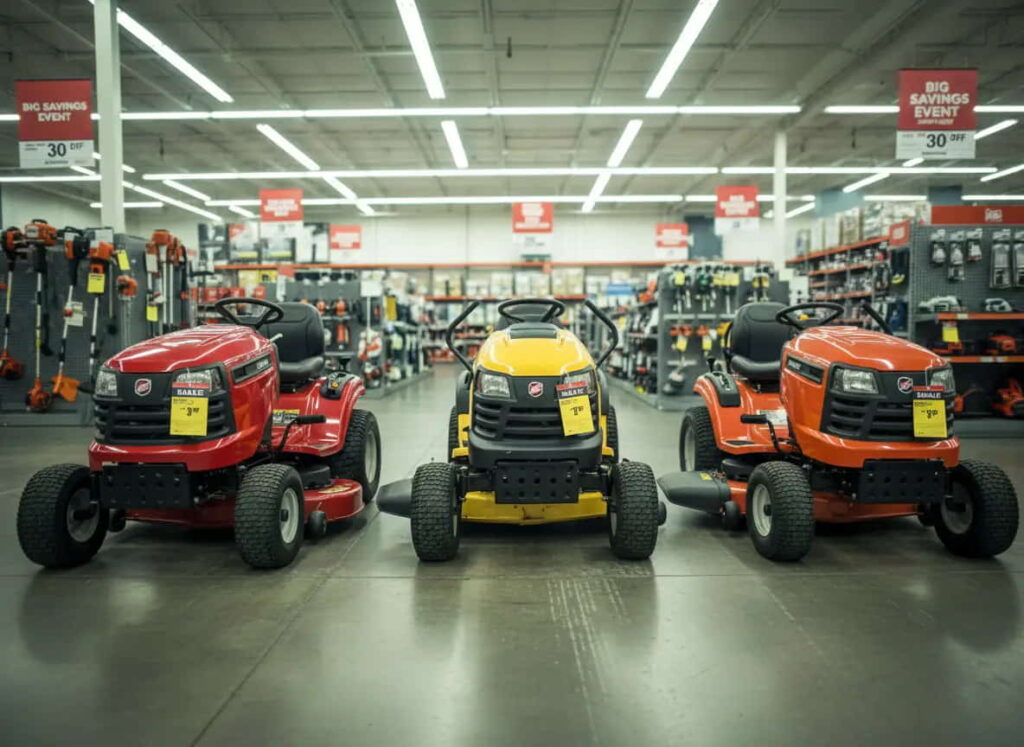
The troy bilt riding lawn mower isn’t competing in a vacuum. Several other brands are fighting hard for your money in the $1,400-$1,800 entry-level range, and some offer genuinely better value depending on your priorities.
Troy Bilt Pony vs Craftsman T110: The Craftsman T110 is basically the same mower wearing different paint. Both use similar Briggs & Stratton engines, stamped 42-inch decks, and automatic transmissions. They’re so similar because MTD manufactures both.
Key differences worth noting:
- Craftsman usually has a slightly more comfortable seat from the factory
- Troy-Bilt often costs $50-$100 less, depending on current promotions
- Parts are marginally easier to find for Craftsman through Lowe’s extensive network
- Build quality is genuinely comparable since the same company makes both
My honest take: Buy whichever is on sale when you’re shopping. These are so similar that a $100 price difference matters way more than tiny feature variations you’ll barely notice. If you’re considering Craftsman alternatives, our detailed Craftsman YT3000 review covers another budget-friendly option worth comparing to the Pony.
Troy Bilt Pony vs Cub Cadet XT1 LT42: The XT1 LT42 usually costs $200-$300 more than the Pony but delivers some meaningful improvements:
- Slightly better build quality overall, with more attention to detail
- More comfortable seat right out of the box without upgrades
- Marginally better cut quality in challenging conditions
- More robust deck construction that should last longer
The XT1 represents a half-step up from true entry-level territory. If your budget can stretch without causing financial stress, it’s worth considering seriously. But if you’re shopping mainly on price because money’s tight, the Pony’s lower cost might matter more than incremental improvements you might not even notice, depending on your property.
Troy Bilt Pony vs Husqvarna YTH18542: Husqvarna’s entry offering usually matches the Pony’s price while bringing some advantages:
- Better brand reputation for lasting longer based on owner surveys
- Slightly better transmission longevity, according to what owners report
- Comparable power and cutting performance in similar conditions
- Similar comfort limitations with basic seat design
Husqvarna edges ahead slightly in owner satisfaction surveys I’ve seen, though parts are marginally easier to find for Troy-Bilt in rural areas where Husqvarna dealers are scarce or nonexistent.
Troy Bilt Pony vs John Deere E110: Now we’re leaving the entry-level category entirely. The E110 costs $400-$600 more than the Pony but delivers genuinely better quality across the board:
- Superior build quality throughout with better materials
- Better dealer support network and stronger resale value
- Smoother, more refined operation that feels more premium
- Noticeably better long-term reliability based on years of data
But here’s the thing: many Pony buyers simply cannot justify an extra $500 for improvements that, while real and measurable, aren’t necessary for basic lawn cutting on typical suburban properties. The E110 is objectively better, but the Pony is adequately functional for many homeowners. Interested in exploring the full John Deere lineup? Our complete John Deere riding lawn mower guide reviews all current models and helps you find the right fit for your budget.
For side-by-side comparisons of even more riding mower brands and models, our expert lawn mower comparison guide breaks down specs, pricing, and performance across all major manufacturers.
For additional perspectives beyond owner reviews, independent consumer testing organizations provide unbiased performance data on riding mowers across all price ranges.
Who Should Buy the Troy Bilt Pony? Best Use Cases
After all this analysis, who actually benefits from choosing the troy bilt 42 riding mower over other options?
The ideal Pony buyer looks like this:
- First-time riding mower owner moving up from years of push mowing
- Properties between half an acre and 1.25 acres maximum
- Relatively flat terrain without serious hills or steep slopes
- Standard residential grasses, nothing exotic or particularly challenging
- Budget-conscious mindset where riding convenience matters, but not at any cost
- Comfortable with basic wrench turning and routine maintenance
- Realistic expectations about what entry-level equipment can actually deliver
When the Pony actually makes perfect sense:
The young family scenario: You’ve got a half-acre suburban lot, two kids demanding attention, and money’s genuinely tight. The Pony gets you out of the sun faster, so weekends include actual family time beyond endless yard work. Spending $1,500 instead of $2,500 means you’re not sacrificing family vacation funds just to cut grass.
The downsizing retiree: You sold the big property and moved to a manageable suburban home after decades in a larger house. Your old zero-turn from the farm is complete overkill for this modest lot. The Pony handles your new half-acre property without draining retirement savings you’d rather use for travel or grandkids.
The first-time homeowner: You’ve rented or lived in apartments your entire adult life. Now you’ve got property to maintain for the first time, and push-mowing your 0.75-acre lot every single week sounds absolutely miserable in summer heat. The Pony represents an affordable entry into riding mower ownership without risking thousands if you discover you hate homeownership or lawn care. If your property is under half an acre, a quality push mower might actually serve you better and cost significantly less. Our best push mower guide reviews top-rated walk-behind options for smaller yards.
Who should definitely look elsewhere?
Several buyer profiles should skip the Pony entirely and save up for something better:
More than 1.5 acres of property: You’ll spend way too much time mowing, and the Pony’s limitations become genuinely frustrating when you’re logging serious seat time every single week during growing season. For properties exceeding 1.5 acres where the Pony becomes impractical, consider zero-turn mowers that dramatically reduce mowing time.
Hilly property with significant slopes: The transmission and limited power struggle noticeably with sustained hill climbing. You need something with beefier gearing and substantially more torque to handle challenging terrain safely.
Commercial or heavy residential use: The Pony absolutely won’t survive commercial demands, period. Even heavy residential use, like mowing 2-3 times weekly, accelerates wear beyond reasonable levels. It’s designed for once-weekly residential use, not constant operation.
Zero-compromise buyers who demand perfection: If you demand premium cut quality, genuinely comfortable operation, and rock-solid reliability regardless of cost, save longer and buy something better from the start. You’ll be dramatically happier long-term rather than constantly wishing you’d spent more initially.
Troy Bilt Pony Pricing & Where to Buy

Current pricing for the pony riding mower runs approximately:
- Standard Pony 42: $1,399-$1,699 depending on retailer and timing
- Pony 42X: $1,599-$1,899 for the upgraded model
Prices fluctuate seasonally, with best deals typically appearing:
- Late fall (November): Dealers are desperately clearing inventory before winter equipment arrives
- Mid-winter (January-February): Off-season pricing to move stock sitting around, taking up floor space
- Early spring (March): Pre-season sales to capture eager buyers before peak demand hits
Where to actually buy and what to expect:
Big box stores like Lowe’s and Home Depot carry Troy-Bilt with competitive pricing and frequent promotions. Easy to access, occasional installation deals, and generous return policies (though returning a mower is complicated anywhere, regardless). Assembly quality varies wildly depending on which store employee puts it together. I’ve seen some arrive barely functional and others perfectly assembled.
Tractor Supply often matches or beats big box pricing while usually having staff who actually know something useful about the products they’re selling. Assembly quality tends to be more consistent in my experience across multiple locations.
Independent dealers might charge slightly more upfront, but typically provide way better assembly, thorough pre-delivery inspection, and ongoing service support that matters when something breaks. If you’re not mechanically inclined, that extra $100-$150 for dealer service could save massive headaches down the road when you need help.
Online retailers like Amazon sometimes have competitive pricing but require self-assembly oan r expensive third-party setup. Warranty support gets complicated without a local dealer relationship. Shipping a riding mower for warranty repairs isn’t exactly simple or cheap.
Financing options worth considering:
Most retailers offer financing plans, typically 12-24 months interest-free if you pay within the promotional period. Read the fine print incredibly carefully. These plans include brutal interest rates (often 25-30%) if you don’t pay off the balance exactly on time. Make sure monthly payments fit comfortably within your budget without causing stress.
Budget for essential extras beyond base price:
Don’t forget you’ll probably want:
- Mulching kit: $40-$60
- Bagger system: $200-$250 (though I’d skip this honestly)
- Spare blades for quick changes: $20-$30
- Basic maintenance supplies, including oil and filters: $50
Figure an extra $300-$400 minimum for getting properly set up beyond the base mower price advertised.
Final Verdict: Is the Troy Bilt Pony Worth It in 2025?
Decision time on the pony lawnmower. After everything we’ve covered, should you actually buy this thing or keep looking?
The Troy-Bilt Pony succeeds at being exactly what it claims to be: an affordable entry point into riding mower ownership for budget-conscious homeowners. It’s not pretending to be premium equipment or built for demanding professional work. Understanding these fundamental parameters determines whether you’ll be satisfied or bitterly disappointed.
Buy the Troy Bilt Pony if:
- Your property genuinely falls within half an acre to 1.25 acres maximum
- Terrain is mostly flat with gentle slopes at worst
- Budget constraints make $1,500 the ceiling, not $2,000 or $2,500
- You maintain realistic expectations about entry-level performance
- Basic mechanical ability means routine maintenance doesn’t intimidate you
The Pony won’t impress your neighbors or win any lawn-of-the-month awards, but it’ll reliably cut your grass for several years with proper care and maintenance. For many first-time riding mower buyers, that’s exactly enough to dramatically improve their weekend experience.
Skip the Troy Bilt Pony if:
- Properties approach or exceed 1.5 acres, where you’ll spend way too long mowing
- Significant hills demand substantially more power and better transmission
- Premium cut quality and genuine comfort matter enough to justify spending considerably more
- Long-term reliability concerns outweigh initial savings in your priorities
- Mechanical maintenance genuinely intimidates you since repairs will eventually be needed
My honest recommendation after years of experience? The Pony represents reasonable value for buyers, matching its ideal profile described above. But if you can stretch your budget $300-$500 without causing financial stress, competitors like the Cub Cadet XT1 deliver meaningfully better long-term satisfaction and fewer headaches. And if you absolutely cannot exceed $1,500 no matter what, shop aggressively for end-of-season deals from better manufacturers rather than buying the Pony at full retail price in peak season.
The troy bilt pony riding mower isn’t the best riding mower you can buy, but it might be the best riding mower you can reasonably afford right now. That distinction matters way more than internet reviewers often acknowledge when they’re comparing everything to $4,000 premium models. Just go in with clear expectations, commit to proper maintenance routines, and you’ll likely get 4-6 years of adequate service before major components need attention or replacement.
Yeah, the Pony makes a solid first riding mower for typical suburban properties under an acre. The straightforward operation, genuinely affordable price, and simple maintenance requirements work well for homeowners completely new to riding mowers and don’t know what they’re doing yet. Just understand going in that you’re getting entry-level performance adequate and functional, but not impressive or refined. The automatic transmission eliminates clutching complexity that intimidates beginners, and controls are intuitive enough to learn quickly without extensive instruction. The reasonable price means you’re not risking massive money if riding mowers don’t work out for your situation or property.
Expect 6-10 years with genuinely proper maintenance, though major components like the transmission may need replacement after 4-6 years based on what I’ve seen. The engine typically outlasts the transmission by a considerable margin, which is the most common failure point that ends up totaling these mowers economically. Deck life depends heavily on your specific property conditions and how diligently you maintain it. Owners who religiously do oil changes, keep blades properly sharpened, clean the deck consistently after every use, and store the mower in a covered area see dramatically longer service lives than people who neglect basic care and leave it sitting outside year-round.
The Pony handles half an acre to 1.25 acres comfortably without excessive mowing time, with 1.5 acres being the absolute practical maximum before it becomes tedious. Beyond 1.25 acres, mowing time gets genuinely excessive (approaching two hours or more per session), and you’ll push the mower’s durability limits with extended sessions that stress components. Properties under half an acre might honestly find a quality self-propelled push mower more practical and way cheaper, unless specific mobility issues make riding mowers necessary for accessibility reasons.
Current base pricing ranges from $1,399-$1,699 for standard models and $1,599-$1,899 for the upgraded 42X version. Expect seasonal fluctuations with the best deals during the late fall and winter months when dealers are desperate. Add $300-$400 minimum for essential accessories and initial setup costs, including mulching kit, spare blades, and basic maintenance supplies. Used Ponies typically sell for $600-$1,000 depending on age, condition, and how desperately the seller wants it gone, though buying used comes with increased mechanical risk since you don’t know how the previous owner maintained it.
Most Pony models feature a 17.5 HP Briggs & Stratton Intek single-cylinder engine that’s been around forever. Some configurations include 18.5 HP or 19 HP variants, though the 17.5 HP version absolutely dominates the market. These are reliable, thoroughly proven engines with adequate power for entry-level residential use. They’re not powerful or particularly refined compared to premium engines, but parts are super easy to find anywhere, and mechanics are completely familiar with repair procedures since these engines are everywhere.
Deck belt replacement involves removing the mower deck from underneath (not as terrible as it sounds), releasing the idler pulley tension, routing off the old belt, installing the new belt while following the routing diagram stamped on the deck housing, and reassembling everything while checking proper tension. The process takes 30-45 minutes for first-timers with basic hand tools. Critical steps include properly threading the belt around all pulleys in the correct order and making absolutely sure tension is correct afterward. Take detailed photos with your phone before you start taking anything apart. Belt routing diagrams in manuals can be confusing and unclear, but pictures from your specific mower eliminate all the guesswork when reassembling.
The Pony and comparable Craftsman models (like the T110) are extremely similar; MTD Products manufactures both with nearly identical specifications and components. Craftsman typically offers marginally better comfort features from the factory, while Troy-Bilt often costs $50-$100 less, depending on current promotions and sales. Performance and long-term reliability are genuinely comparable since they’re basically the same machine. Shop whichever brand offers better pricing or dealer support conveniently located in your area, rather than assuming one is categorically superior to the other based on brand loyalty.
Troy-Bilt mowers are manufactured by MTD Products with production facilities in the United States (primarily Tennessee and Ohio) and various international locations depending on components. Specific components often come from different suppliers located globally, which is completely standard for modern equipment manufacturing across all industries. Final assembly location varies by specific model and production year, but quality control theoretically follows consistent MTD standards regardless of which particular facility produces it. In practice, quality can vary somewhat between production runs, which is unfortunately normal for equipment at this price point.
