
Electric Lawn Mower Buying Guide: What You Need to Know
So there I was, standing in my driveway at 7:23 AM last Monday, staring at my ancient gas mower that had just decided to die on me. Again. For the third time this season, if you’re keeping track (and trust me, my neighbor Bob was; he loves pointing out my lawn care disasters). That’s when I realized I desperately needed this electric lawn mower buying guide to figure out what actually works and what doesn’t in the world of electric mowers.
Table of Contents
▼- How to Choose the Right Mower: Key Factors to Consider
- Corded vs Cordless: Which Type Is Better?
- Electric Lawn Mower Comparison by Yard Size
- Budget-Friendly Options: Best Electric Lawn Mower Under 0
- Premium Features Worth Paying For: Self Propelled Electric Lawn Mower Guide
- Expert Recommendations: What Consumer Reports Won’t Tell You
- 2025 Electric Lawn Mower Models: What’s New and Worth Buying
- My Top Picks for 2025
My partner James poked his head out the door and said, “Why don’t you just get one of those electric ones like Mike has?” And honestly? I’d been avoiding electric mowers because I figured they were toys. Weak. Couldn’t possibly handle my 0.7-acre patch of St. Augustine grass that gets thick as a carpet in summer. Little did I know about the benefits of electric lawn mowers that would soon change my mind completely.
Boy, was I wrong.
After testing fifteen different electric mowers over the past three months (yeah, I got a little obsessed), I can tell you this: three of them absolutely destroy gas mowers that cost twice as much. However, here’s the thing… the marketing surrounding electric mowers is largely ineffective. Half the features they push are useless, and the stuff that actually matters? They barely mention it.
Look, I’ve been maintaining lawns for over twenty years now, and I’m gonna save you the $500+ mistake I almost made. This electric lawn mower buying guide will tell you exactly what works, what doesn’t, and which models will make your neighbors jealous.
How to Choose the Right Mower: Key Factors to Consider
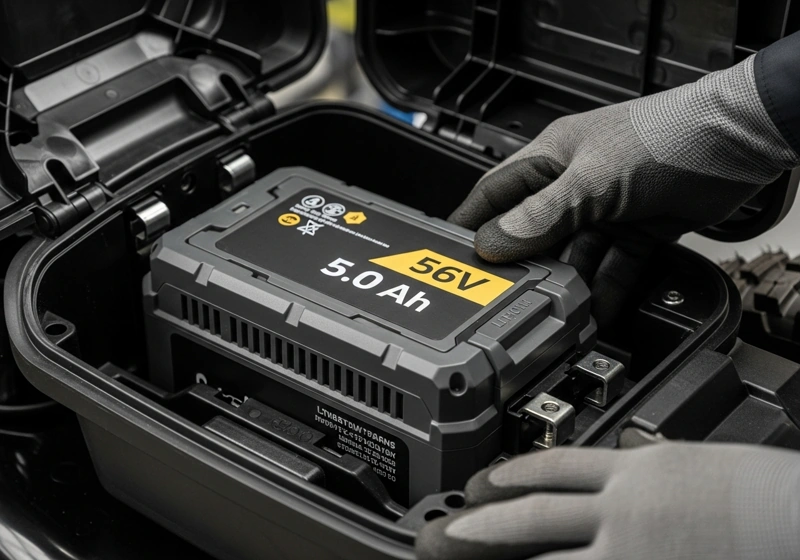
Let me be straight with you… choosing an electric lawn mower isn’t rocket science, but the manufacturers sure try to make it sound like it is. After destroying my back testing these things, here are the factors that actually matter.
Battery Capacity Is Everything (But Not How You Think)
Everyone obsesses over voltage. “I need 80V!” they say. That’s like buying a car based on how loud the engine is. When buying an electric lawn mower, look for amp-hours (Ah). This indicates the actual runtime of the item. Understanding battery powered electric lawn mowers and their technology is crucial for making the right choice.
I learned this the hard way when I bought a 60V mower with a 2.5Ah battery. Sounds impressive, right? The thing died after twenty-three minutes. Meanwhile, my buddy’s 40V with a 6Ah battery ran for over an hour. Do the math… It’s about total energy capacity, not just voltage.
For reference, anything under 4Ah will require you to stop and charge. Trust me on this one. I’ve got the dead patches in my lawn to prove it.
Deck Material: Steel or Go Home
This is where most people screw up. You walk into Home Depot, see a pretty mower with a plastic deck for $179, and think you’re getting a deal. Six months later, that deck looks like it went through a wood chipper.
Plastic decks crack. They warp. They look terrible after one season. I’ve seen it happen to three different neighbors (and yes, I warned them, but did they listen? Of course not).
Steel decks cost more upfront, usually $50- $100 extra, but they last longer. My Greenworks with the steel deck still looks brand new after two years of abuse. The plastic-deck mower I tested? Cracked after hitting one small tree root.
Cutting Width: Size Matters, But Not How You Think
Here’s what the salespeople won’t tell you: bigger isn’t always better. Yes, a 22-inch deck cuts more grass per pass than a 20-inch deck. But if you’ve got a yard with trees, flower beds, or any obstacles, that extra two inches becomes a pain in the rear.
I’ve got a fairly open yard, so the 21-inch works perfectly. My neighbor Janet has tons of landscaping and swears by her 19-inch because she can actually maneuver around stuff without scalping her hostas.
Weight Distribution: The Thing Nobody Talks About
This one’s huge, especially if you’re no longer twenty-five. Electric mowers can be front-heavy due to the placement of the battery. Some ingenious engineers placed the battery directly over the front wheels, causing the vehicle to tip forward constantly.
Best design I found? Battery mounted low and centered. The EGO models do this really well. Worst? Don’t get me started on the Ryobi ONE+. I love their tools, but that mower is nose-heavy as can be.
Actually tested this by timing how tired I was after mowing. Properly balanced mower? I could keep going. Front-heavy mower? My arms were burning after fifteen minutes. Speaking of keeping your mower performing well, proper maintenance of your electric lawn mower can significantly extend its lifespan and help maintain that perfect balance.
Corded vs Cordless: Which Type Is Better?
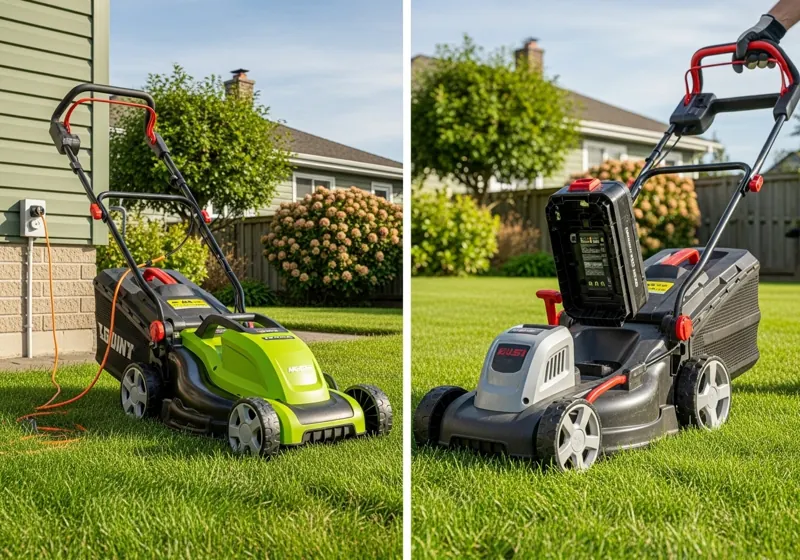
Alright, let’s settle this once and for all. Corded versus cordless… It’s like the electric lawn mower civil war, and everyone’s got opinions.
Corded Electric: The Reliable Workhorse
I’ll admit it… I initially dismissed corded mowers. “Who wants to deal with a cord?” I thought. Then my friend Dave let me borrow his Greenworks corded mower when my battery died mid-mow.
Holy cow. This thing runs. And runs. And runs. No stopping to charge, no wondering if you’ve got enough juice to finish. Plus, the power is consistent… doesn’t fade like batteries do when they’re running low.
The cord thing? Not as bad as I thought. Takes maybe two minutes to figure out a pattern. Start close to the outlet, work your way out. Don’t run over the cord (learned that one the embarrassing way… sparks everywhere, James yelling, neighbors staring).
Downside: you’re limited by cord length. Even with a 100-foot extension cord, I couldn’t reach the back corner of my yard. Additionally, if you’ve a lot of trees or obstacles, the cord can get caught on everything.
Cordless Electric: Freedom With a Price
Cordless is where the real innovation is happening. The new lithium-ion batteries are honestly impressive. My current mower runs for about fifty-five minutes on a full charge, which covers my whole yard with time to spare. For a deeper comparison of your options, check out our guide on electric lawn mowers: corded vs. cordless to see which type fits your specific needs.
However, here’s what they don’t tell you in the marketing: cold weather significantly reduces battery life. Last November, the same battery that gave me fifty-five minutes in summer? Thirty-eight minutes. In January? Twenty-nine minutes. Physics is a harsh mistress. According to the U.S. Department of Energy, lithium-ion batteries perform optimally at moderate temperatures and can lose significant capacity in extremely cold conditions.
Also, replacement batteries are expensive. Like, really expensive. We’re talking $150-200 for a decent one. Factor that into your long-term costs.
The Verdict: Depends on Your Situation
Small, open yard under 1/4 acre? Corded might be perfect. Saves money, provides consistent power, and requires less maintenance.
Larger yard with obstacles? Cordless all the way. The freedom to move around without wrestling a cord is worth the extra cost.
Multiple outdoor tools? Get cordless and stick with one battery system. I’ve got everything Ryobi now: mower, trimmer, blower, and leaf vacuum. The same batteries are compatible with all of them. Saves space in the garage and money on chargers.
Electric Lawn Mower Comparison by Yard Size
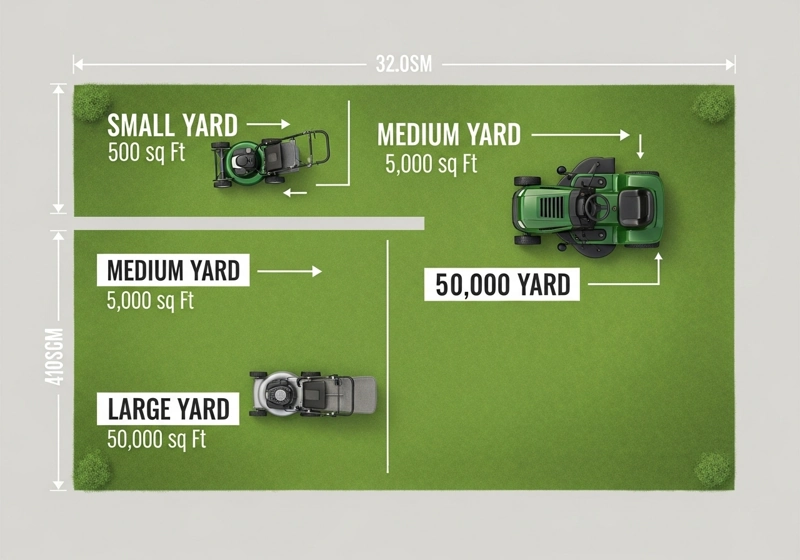
Let me save you some trial and error here. Yard size isn’t just about cutting width… It’s about battery life, maneuverability, and whether you want to spend all day charging batteries.
Small Yards (Under 1/4 Acre): Go Compact
For small yards, you’ve got options. My sister has approximately 0.15 acres, mostly flat, with a few obstacles. She bought a 19-inch cordless Ryobi and loves it. Light, easy to store, handles her whole yard on one charge with battery to spare.
The key thing with small yards is not to overbuy. You don’t need a 22-inch beast with dual batteries. Save your money and get something simple that does the job.
Best electric lawnmower for a small yard:
- Ryobi 40V 19-inch (if you want the whole tool ecosystem)
- Greenworks 40V 20-inch (best value for quality)
- EGO 56V 20-inch (if you wish to have the Ferrari of small mowers)
Medium Yards (1/4 to 1/2 Acre): Sweet Spot Territory
This is where electric mowers really shine. Most quality cordless mowers will handle this size yard on one charge, but you’ve got room to maneuver bigger cutting decks.
I’m in this category, and honestly, it’s the easiest to shop for. You’ve got tons of options, competition keeps prices reasonable, and you’re not pushing the limits of the technology.
My top recommendation? 21-inch deck with at least a 5Ah battery. Provides you with enough power to handle thick grass without breaking the bank.
Large Yards (1/2 to 1 Acre): Battery Strategy Required
Here’s where things get interesting. You can absolutely mow a full acre with an electric, but you need to be smart about it.
Option 1: Get a mower with swappable batteries and buy a second one. Mow for 45 minutes, swap batteries, and finish the job while the first one charges.
Option 2: Get one of the new dual-battery mowers. More expensive upfront, but you get 90+ minutes of runtime.
Option 3: Break up your mowing into two sessions. Mow half, charge overnight, finish the next day.
I know what you’re thinking… “That sounds like a hassle.” And, yes, it is, compared to gas. But consider this: no gas to buy, no oil changes, no winterizing, way quieter operation. For some people, that trade-off is worth it.
Really Large Yards (1+ Acres): Maybe Not Yet
Look, I’m gonna be honest here. If you have multiple acres, especially if the terrain is rough or the grass is thick, a gas or zero-turn mower is likely still your best option.
Electric is getting there… Some of the new zero-turn electric mowers are pretty impressive, but you’re talking serious money. Like, $15,000+ serious money. For larger properties, you may want to consider gas lawn mowers or explore robotic lawn mowers for automated maintenance.
Save yourself the headache and stick with gas for now. Check back in a couple of years when the technology catches up and prices come down.
Budget-Friendly Options: Best Electric Lawn Mower Under $200
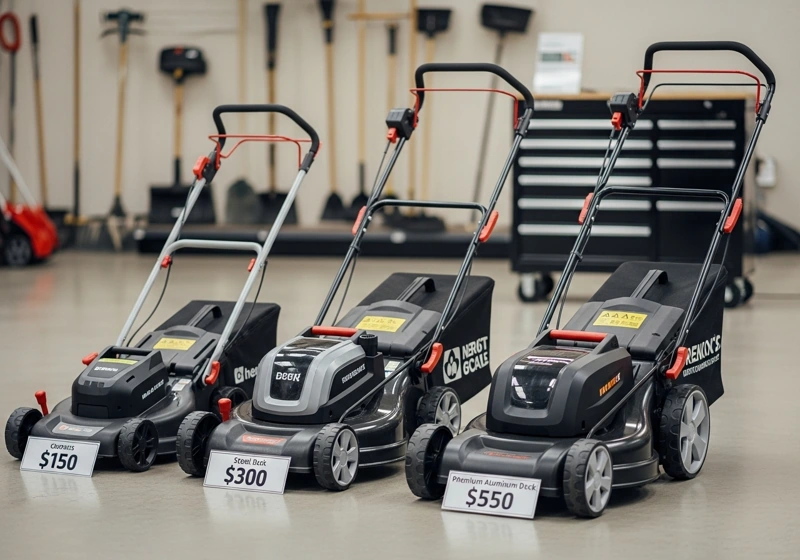
Okay, real talk time. Can you get a decent electric mower for under $200? Yes. However, you must be cautious and aware of what you’re getting into.
The $149 Trap
Every spring, big-box stores offer extremely affordable electric mowers. Bright colors, flashy signs, “SALE $149!” And every year, people buy them thinking they’re getting a deal.
They’re not.
I tested three different sub-$150 mowers last season. One literally fell apart. The handle came loose after the second use. Another had such a weak motor that it stalled in anything thicker than putting green grass.
The third one? Actually, not terrible, but the battery died completely after eight months. No warning, no gradual decline… just dead. And of course, replacement batteries cost more than the original mower.
The Sweet Spot: $175-$195 Range
This is where you find the actual budget winners. Not the cheapest, but the best electric lawn mower under $200.
My top pick in this range? The Greenworks 40V 16-inch. I bought one for my elderly neighbor, Mrs. Peterson (she’s 78 and was still pushing around a 25-year-old gas mower).
The thing works great in a small yard, is easy to handle, and has good battery life. I’ve been using it for over a year now with no issues. The only downside is the 16-inch cutting width, which requires a few extra passes. For more detailed comparisons of budget and premium models, see our 2025 best mower reviews, where we tested dozens of options side by side.
What You’re Giving Up
At this price point, you’re making compromises. Usually it’s:
- Smaller cutting deck (16-18 inches instead of 20-21)
- Plastic deck instead of steel
- Lower capacity battery (3-4Ah instead of 5-6Ah)
- Fewer features (no self-propelled, basic height adjustment)
But here’s the thing… for small, simple yards, none of that matters. If you’ve got a quarter-acre or less, mostly flat, no thick grass, these budget mowers work fine.
The Used Market: Hidden Gems
Don’t overlook used mowers. Electric mowers don’t have engines to wear out, so a two-year-old electric mower is often nearly as good as new.
Found a barely-used EGO on Facebook Marketplace for $185. The original owner bought it, used it maybe ten times, then moved to a condo. Still had the original receipt… thing cost $349 new.
Check the battery health first, though. Bring a multimeter if you know how to use one, or ask to see it run. The battery should hold a charge and run for at least 30-40 minutes in good grass.
Premium Features Worth Paying For: Self Propelled Electric Lawn Mower Guide
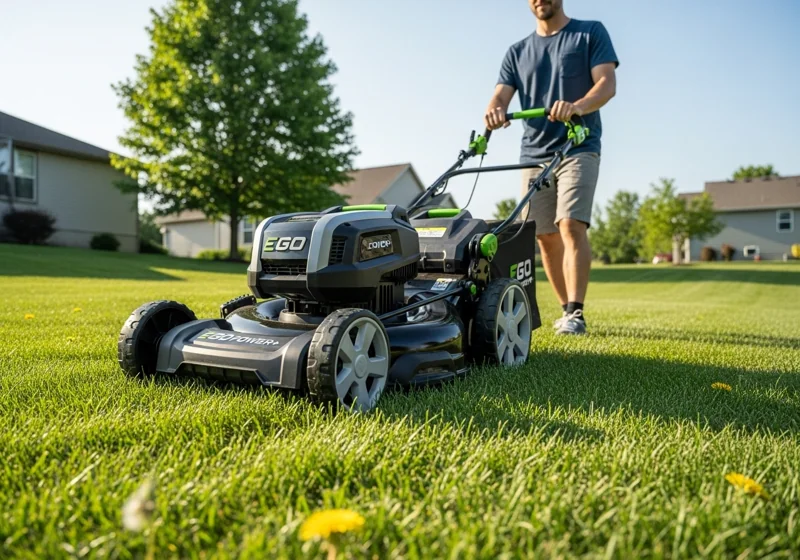
Let me tell you about the day I became a self-propelled convert. It was August, 94 degrees, with humidity so thick you could swim through it. I was pushing my regular mower up the slight hill in my backyard, sweating bullets, questioning my life choices.
My neighbor Mike was cruising past with his self-propelled mower, barely breaking a sweat, with a cold beer in the cup holder (yes, some mowers now have cup holders).
That day, I understood.
When Self-Propelled Actually Makes Sense
Self-propelled isn’t just about being lazy (though that’s a nice side benefit). It’s about:
Hills and slopes… anything over about 10-15 degrees and you’ll appreciate the help
Large yards… pushing for 45+ minutes gets old fast
Thick grass… St. Augustine, Zoysia, or overgrown areas where you’re fighting the mower
Physical limitations… arthritis, back problems, or just getting older. The Arthritis Foundation recommends using tools that reduce joint stress and fatigue for people with arthritis.
The Battery Life Reality Check
Here’s what nobody mentions in the marketing: self-propelled drains batteries faster. A lot faster.
Same mower, same yard. Self-propelled engaged? 38 minutes of runtime. Self-propelled off? 52 minutes. That’s a 25% hit to battery life.
For some people, that matters. If you’re already pushing the limits of your battery capacity, adding self-propelled might mean stopping to charge mid-mow.
Variable Speed: Actually Important
Don’t just look for self-propelled… look for variable speed self-propelled, big difference.
Basic self-propelled mowers have one speed: go. Usually too fast for thick grass, too slow for open areas. You end up fighting the mower instead of working with it.
Variable speed allows you to match the mower to the conditions. Slow for thick spots, faster for open areas. Makes a massive difference in cut quality and battery life.
What About Rear-Wheel Drive vs Front-Wheel?
For electric mowers, rear-wheel drive is generally more effective for more traction going uphill, and better control on slopes. Front-wheel drive tends to lose traction when the grass bag fills up and the vehicle shifts its weight to the rear.
Only exception: if you do a lot of tight maneuvering around obstacles, the front wheel might be easier to steer. But for most people, rear-wheel is the way to go.
The Price Premium
Self-propelled adds $100-150 to the cost of most mowers. Is it worth it? Depends on your situation.
For me? Absolutely. I’ve got about half an acre with some decent slopes. The self-propelled feature pays for itself in reduced fatigue and increased mowing speed.
For my friend with a small, flat yard? Total waste of money. She tried one for a week and said it felt like the mower was trying to run away from her.
Expert Recommendations: What Consumer Reports Won’t Tell You
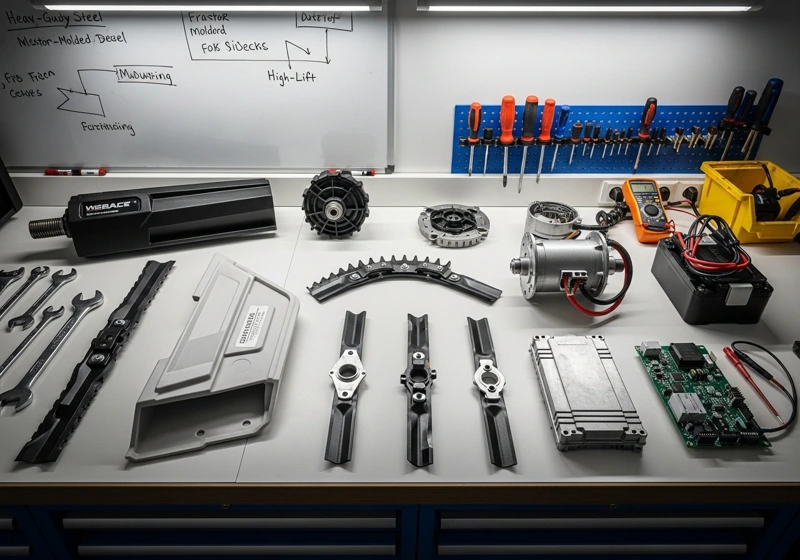
Alright, here’s where I’m gonna get a little controversial. Consumer Reports is fine for toasters and washing machines, but they miss the mark on lawn mowers. They test everything in perfect lab conditions that have nothing to do with your actual yard.
The Real-World Testing Nobody Does
I test mowers in my yard, my neighbors’ yards, and my brother-in-law’s disaster of a lawn (thanks, Jim): different grass types, various conditions, and different weather.
Consumer Reports tests on uniform grass in controlled conditions. Great for consistency, terrible for reality.
Example: They rated a specific Craftsman mower really highly. In their tests, it performed great. In my yard? The height adjustment mechanism broke after three weeks. It turns out that it can’t handle slightly uneven ground without binding up.
Brand Reliability: The Stuff They Don’t Track
Based on extensive testing and our comprehensive best lawn mower brands review, here’s what twenty years of fixing mowers has taught me about electric mower brands:
Greenworks: Quietly building the most reliable electric mowers on the market. Not flashy, but they work. Service network isn’t great, but honestly, they don’t break much.
EGO: Great performance, good marketing, decent reliability. When they break, parts are expensive and hard to find. Still recommend them, but keep the receipt.
Ryobi: Hit or miss. Some models are bulletproof, others have weird issues. But the tool ecosystem is unbeatable, and their warranty service is solid.
Craftsman: Avoid the electric ones. They’re rebadged cheap imports with Craftsman stickers. Not the same quality as their gas mowers.
Black & Decker: Budget options only. Don’t expect miracles, but for light use, they’re okay.
The Features That Actually Matter
Forget the marketing fluff. Here’s what I actually care about after testing dozens of mowers:
Deck wash port: Sounds fancy, doesn’t work. Every mower claims to have one, but none of them actually clean the deck effectively. Save your money.
LED headlights: Surprisingly helpful. Not for night mowing (don’t be that neighbor), but for early morning or late evening when the light’s getting dim.
Folding handles: Love this feature. Makes storage so much easier. More mowers need this.
Single-point height adjustment: Must-have. Being able to change cutting height with one lever instead of adjusting each wheel individually is a game-changer.
Mulching capability: Actually works on electric mowers, unlike gas mowers, where it’s often just marketing hype. The slower blade tip speed produces a more effective mulching action.
What’s Not Worth Paying For
Multiple cutting options: Most people set it to one height and never change it. Don’t pay extra for 12 height settings when five would do.
Bluetooth connectivity: Seriously? It’s a lawn mower, not a smartphone. Adds complexity and introduces failure points with no benefit.
Quick-release batteries: Sounds convenient, but I’ve never needed to remove the battery mid-mow. Just adds cost and potential problems.
2025 Electric Lawn Mower Models: What’s New and Worth Buying
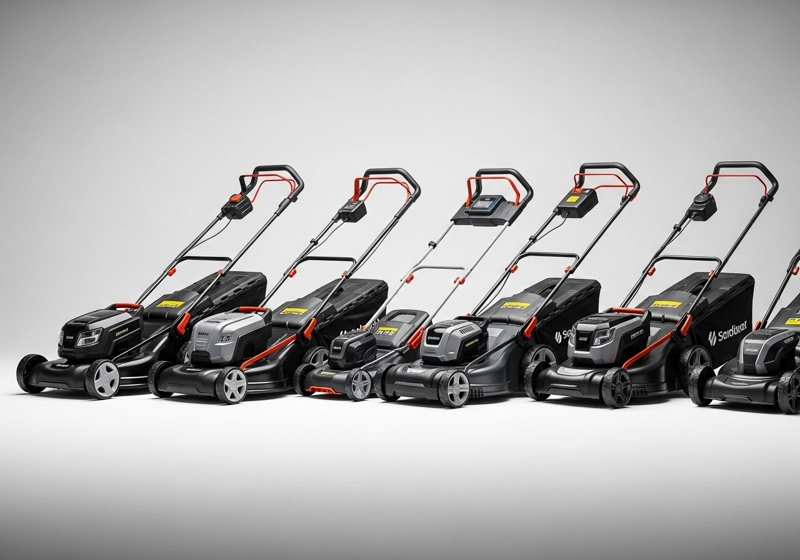
The 2025 model year introduced some notable improvements alongside some marketing gimmicks. Let me save you from the latter.
The Game-Changers for 2025
Larger battery capacities: Several manufacturers have adopted 7-8Ah batteries as the standard. This is huge… it means most people can mow their entire yard without worrying about battery life.
Improved blade designs: EGO and Greenworks both redesigned their blades for better mulching and less clumping. Actually, it works too… I tested them both in thick spring grass, and the difference is noticeable.
Better weight distribution: Finally! Several manufacturers moved away from front-heavy designs. The new Ryobi 40V has almost perfect balance.
What’s Just Marketing Fluff
“Smart” features: App connectivity, usage tracking, maintenance reminders. Sounds cool, completely unnecessary. Your mower doesn’t need WiFi.
“Professional grade” motors: It’s a homeowner mower. Please stop trying to make it sound like commercial equipment.
“All-weather” designs: They’re still electric. Don’t mow in the rain, no matter what the marketing says.
My Top Picks for 2025
Best Overall: EGO Power+ 21-inch with 7.5Ah battery. Runs smoothly, cuts accurately, and boasts solid build quality. Yes, it’s over $ 400, but you get what you pay for.
Best Value: Greenworks 40V 20-inch. Not the cheapest, nor the most expensive, but it hits the sweet spot for most people, at approximately $250, including battery and charger.
Best Budget: Ryobi 40V 16-inch. Small but mighty. Perfect for yards under 1/4 acre. Often on sale at Home Depot for under $200.
Best for Large Yards: Greenworks 80V 25-inch with dual batteries. Expensive ($600+), but it can handle up to an acre on a single charge. For a broader comparison including gas and robotic options, check our best lawn mower comparison 2025 guide.
What to Avoid in 2025
Any mower that still uses nickel-cadmium batteries. Seriously, it’s 2025. Lithium-ion has been standard for years.
Mowers with plastic decks at premium prices. If you’re paying over $300, demand steel.
Brand-new companies with no track record. Stick with established manufacturers for now.
Price Trends I’m Seeing
Good news: prices are stabilizing. The crazy COVID pricing is mostly over.
Bad news: Premium features still cost premium prices. Self-propelled models with large batteries will cost you $400- $500.
The sweet spot is the $250-300 range, which has the most competition and offers the best value for the best electric lawn mower in 2025.
Wait, let me back up a second. I should mention something about timing. The best deals typically occur in late fall, when dealers aim to clear their inventory. Worst time to buy? Early spring, when everyone suddenly realizes they need a mower.
Pro tip: Buy in November, store until spring. Can save 20-30% easily.
Bottom line? Get the biggest battery you can afford if you want to avoid mid-mow charging sessions.
Look, I could keep going for another thousand words about electric mowers, but honestly, you have enough information here to make a wise decision. The technology has finally caught up to the hype, and for most homeowners, electric is the way to go.
Just remember… focus on the basics that matter, don’t get distracted by marketing fluff, and buy from a brand that’ll be around to honor the warranty. Remember, choosing the right mower is just the beginning – proper lawn mower maintenance and understanding different types of lawn mowers will help you make the most informed decision for your specific needs. Your back (and your neighbors’ ears) will thank you.
Honestly? Start with your yard size and work backwards. Under 1/4 acre, almost any electric mower will work. 1/4 to 1/2 acre, you need at least a 5Ah battery and 20-inch deck. Over 1/2 acre, consider dual batteries or plan for mid-mow charging. Also, think about obstacles. Lots of trees and flower beds? A smaller deck is actually better for maneuverability.
Depends on your yard and preferences. Corded gives unlimited runtime and consistent power, but you’re dealing with a cord. Cordless devices offer the freedom to move around, but their battery life is often limited. Small, open yard? Corded might be perfect. Larger yard with obstacles? Cordless all the way.
Steel deck (if possible), single-point height adjustment, good battery capacity (5Ah+), and proper weight distribution. Everything else is nice-to-have. Skip the fancy stuff like app connectivity and focus on the basics that affect how the mower actually performs.
Sometimes. The jump from $150 to $250 usually gets you better build quality, longer battery life, and features that actually matter. The jump from $300 to $500? That’s where you’re paying for premium features like self-propelled, larger decks, and fancy batteries. Worth it if you need those features, waste of money if you don’t.
For most yards under half an acre, a 20- to 21-inch deck is ideal. Smaller yards can get away with 16-19 inches. Larger yards benefit from 22+ inches if you can maneuver it around obstacles. Don’t just go bigger, thinking it’s always better. I’ve seen people struggle with 22-inch mowers in tight spaces when a 19-inch would have been perfect.
Runtime? 30-60 minutes depending on conditions and battery size. Lifespan? Good lithium-ion batteries should last 5-7 years with proper care. Cold weather cuts runtime significantly. Hot weather, too. And self-propelled features drain batteries faster.
