
Eco-Friendly Lawn Mowers: Go Green & Cut Smarter
You want to know what changed my mind about electric mowers? It wasn’t some environmental awakening or anything noble like that. It was pure laziness.
Table of Contents
▼- The Dirty Truth About Gas Mowers Nobody Talks About
- Electric Mowers That Don’t Suck
- Corded Electric: Better Than You Think
- Battery Mowers: The Real Deal Now
- Gas vs Electric: Real Numbers, Not Marketing BS
- Push Reel Mowers: Old School Cool or Just Old?
- Robotic Mowers: Weird but Weirdly Effective
- What I Tell Real Customers
- Maintenance: Less Work, Not No Work
- Why I Actually Recommend Going Electric
My old Craftsman gas mower decided to crap out on me last spring, right in the middle of dandelion season. I’m standing there in my shop at 6 AM, trying to get it running before work, and the damn thing just wouldn’t start. Pull cord after pull cord, checking the spark plug, messing with the choke. Nothing. My grass was getting taller by the minute, and I had customers coming in all day.
So I grabbed this battery mower I’d been trying to sell for months, honestly, just to get the job done quickly. Hit the button, started pushing. Done in fifteen minutes. No warm-up, no fumes, no neighbors giving me dirty looks for firing up power equipment before sunrise. I actually finished before my coffee got cold.
That was it for me. Sometimes, the best eco friendly lawn mowers win you over for completely selfish reasons.
The Dirty Truth About Gas Mowers Nobody Talks About
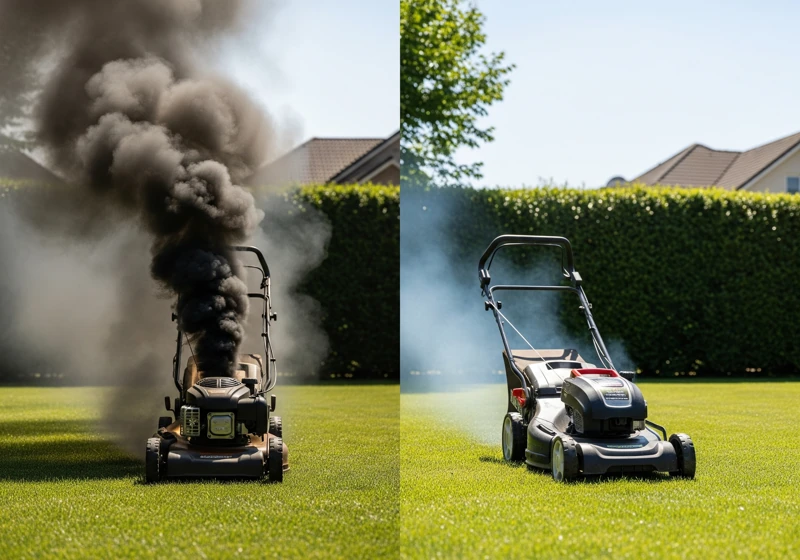
Look, I’ve been elbow-deep in small engines for a decade. Gas mowers are environmental disasters with wheels. One hour of mowing equals 300 miles of car driving in terms of pollution, and that’s from the EPA studies on small engine emissions, not some tree-hugger website. The [environmental impact of lawn mowers](link-to: The Environmental Impact of Lawn Mowers: Why Eco-Friendly Options Matter) is more significant than most homeowners realize.
But here’s what really bugs me: people treat their mowers like garbage and wonder why they run like garbage. When’s the last time you changed your mower’s air filter? Or used fresh gas instead of that stale stuff that’s been sitting in your garage since Memorial Day? These engines run dirty even when they’re properly maintained, which most of them aren’t.
I had this customer, a nice guy, who drives a hybrid to save gas money. Then he fires up this ancient Briggs & Stratton that smokes like a freight train and sounds like it’s dying. Took him three years to finally admit maybe it was time for something different.
The math is pretty ugly when you add it up. Gas, oil, filters, spark plugs, and inevitable repairs when things go wrong. I’ve seen people spend $200 in maintenance on a $300 mower. Makes zero sense.
Electric Mowers That Don’t Suck
Corded Electric: Better Than You Think
Everyone freaks out about the cord. “What if I run over it?” “What if I get tangled up?” “What about extension cords?”
Here’s the thing you learned to vacuum without destroying your house, right? Same deal. Start from the outlet and work your way out. Takes maybe two mowing sessions to figure out the pattern.
Mrs. Johnson bought one from me three years ago for her little ranch house lot. She’s probably in her 70s, not exactly tech-savvy, and she figured it out just fine. Now she mows at dawn without waking up her husband or the whole neighborhood. Says it’s the best purchase she’s made in years.
Corded mowers have unlimited run time, decent power, and they’re usually the cheapest way to go electric. For yards under a quarter acre, they’re perfect. If you’re weighing the pros and cons of corded vs. cordless electric mowers, both offer excellent eco-friendly benefits.
Battery Mowers: The Real Deal Now
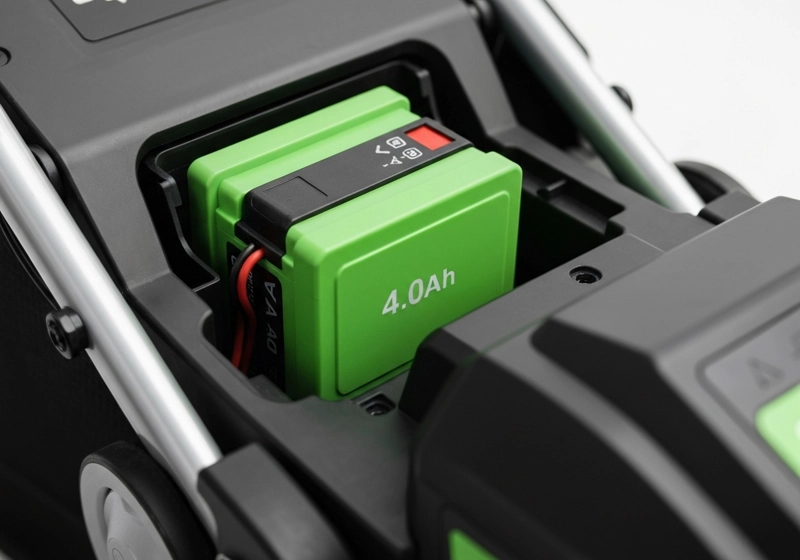
I’ll be straight with you, the early battery mowers were pretty awful. Weak motors, batteries that died halfway through small yards, cutting performance that made me embarrassed to sell them. I probably talked more people out of battery mowers than I sold back in the day.
But these new ones? Completely different animals. I’ve got customers cutting through thick Kentucky bluegrass with battery mowers that have more torque than their old gas models. The batteries last longer, charge faster, and some of these mowers actually cut better than gas because the motor speed stays consistent.
The key is getting enough battery for your yard. I see people buy 2.0Ah batteries for half-acre lots, then complain when they run out of juice. Do your homework. Measure your yard, be honest about how thick your grass gets, and buy accordingly. For more details on why battery-powered electric mowers are the ultimate sustainable mowing solution, check out our comprehensive guide.
Gas vs Electric: Real Numbers, Not Marketing BS
I’m a fix-it guy, not a salesman, so let me give you actual numbers. Average suburban lawn, maybe a third of an acre, takes 45 minutes to mow. Do that 30 times a year during the growing season, that’s about where most people end up.
Your gas mower burns roughly a gallon every 3-4 hours. So you’re using 7-8 gallons per season just for mowing. At $4 a gallon, that’s 30 bucks in fuel, plus oil, plus air filter, plus spark plug, plus the inevitable spring tune-up when it won’t start.
Electric mower uses maybe 2-3 kilowatt hours per mowing session. Even with expensive electricity, you’re looking at maybe $10-15 per season in power costs. No oil, no filters, no tune-ups.
And that’s before you factor in emissions. Even if your electricity comes from coal plants, you’re still way ahead environmentally when you calculate the carbon footprint properly. If you’ve got solar or live somewhere with clean power? It’s not even close.
Push Reel Mowers: Old School Cool or Just Old?
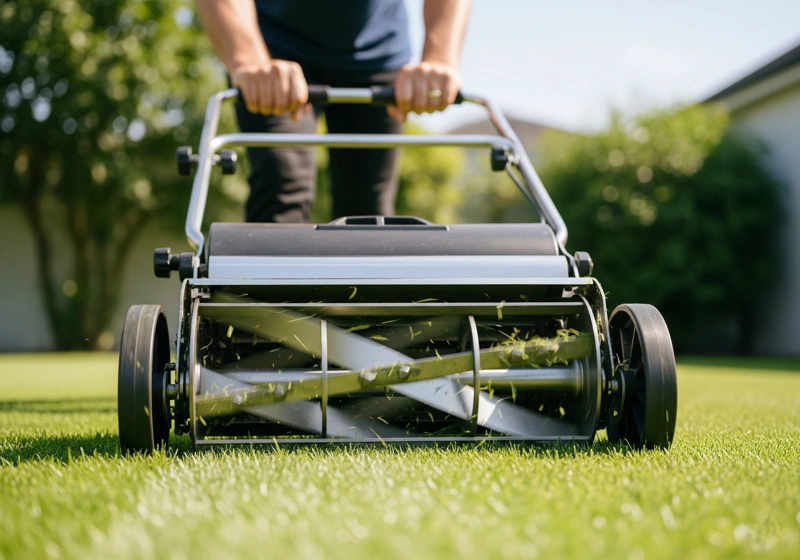
I keep an old Craftsman reel mower in my shop, partly for nostalgia but mostly because people are curious. “Do those things actually work?” they ask.
Short answer: depends on your lawn and your expectations.
Long answer: reel mowers give you the nicest cut possible. It’s like using scissors instead of a machete. Your grass stays healthier, looks better, and you get a workout. No emissions, no noise, no fuel costs.
But, and this is important, they only work well on well-maintained lawns. If you’re the type who lets grass grow into a jungle between cuts, forget it. You’ll be fighting that reel mower like wrestling a shopping cart with a busted wheel.
I usually recommend them to people with small, flat yards who mow regularly. One customer told me using his reel mower was his favorite part of the week, better than the gym, quieter than meditation. His lawn looks like a putting green. For everything you need to know about manual push reel mowers and eco-friendly lawn care, we’ve got you covered.
Robotic Mowers: Weird but Weirdly Effective
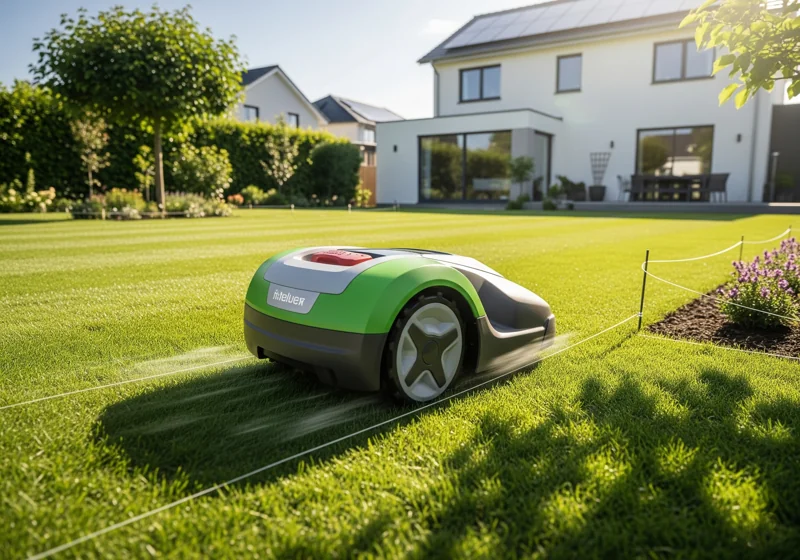
Robotic mowers still feel like something from The Jetsons to me, but I’ve installed enough of them now to appreciate what they do.
Instead of the weekly grass massacre most of us call mowing, these little robots nibble away constantly. They use minimal electricity and mulch everything so fine it just disappears back into the lawn. No grass clippings to deal with, no weekly time commitment, no noise complaints.
My brother got talked into one by his wife, and I thought he was nuts spending that kind of money. But his lawn has never looked better, and his electric bill barely changed. The thing uses less power than his garage door opener.
Downsides? They’re expensive, setup is a pain with all those boundary wires, and you need a fairly simple yard layout. But once they’re running, they’re pretty much maintenance-free. If you’re curious whether robotic lawn mowers truly represent the future of lawn care, the technology keeps getting better every year.
What I Tell Real Customers
When someone walks into my shop asking about eco-friendly mowers, I don’t start with environmental lectures. I ask practical questions.
How big is your yard? How thick does your grass get? What drives you crazy about your current mower? How much do you want to spend? Do you have decent storage?
For postage-stamp yards, reel mowers make sense if you don’t mind the exercise. For typical suburban lots, battery mowers are the sweet spot: 40 volts minimum, 4.0Ah battery or bigger. Brands like EGO and Ryobi make solid stuff that won’t break your budget. My complete guide on choosing the right lawn mower for your yard covers all the factors you should consider.
Bigger yards get trickier. You’re looking at larger batteries or maybe buying a spare to swap out. Some manufacturers claim their mowers handle an acre on one charge, but I’d want to test that claim before betting my Saturday afternoon on it.
Maintenance: Less Work, Not No Work
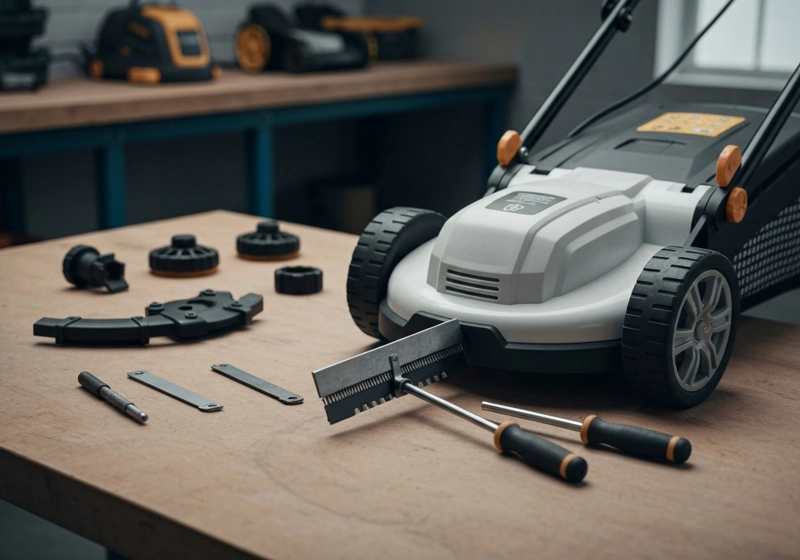
Here’s the beautiful thing about electric mowers: they’re boring to maintain. No oil changes, no air filters, no fuel system problems, no carburetor cleanings. Most of my electric customers come in once a year for blade sharpening, and that’s it.
Battery care matters, though. Don’t let them sit completely dead, don’t leave them in freezing garages all winter, don’t overcharge them. Treat the battery right, and it’ll last 4-5 years easily.
Blades still need attention. Sharp blades cut cleaner, use less power, and make your lawn look better. I sharpen them once per season, same as any mower.
Keep grass buildup cleaned off the deck. Unlike gas mowers, electrics don’t have hot exhaust to burn off the crud, so it builds up faster if you’re not paying attention. For comprehensive tips on lawn mower maintenance and troubleshooting, I’ve put together everything you need to keep any mower running smoothly.
Why I Actually Recommend Going Electric
After ten years of fixing mowers, here’s what I’ve learned: electric mowers aren’t just better for the environment. They’re genuinely better for most homeowners.
Less maintenance means fewer repair bills and less time screwing around with small engines. Quieter operation means you can mow early or late without annoying everyone in the neighborhood. Push-button starting means no more yanking pull cords until your shoulder hurts.
I’ve got customers who switched to battery mowers four years ago and haven’t been back for anything except blade sharpening. Compare that to my gas mower customers who show up every spring needing tune-ups and every fall needing winterization.
Last week, this guy brought in his battery mower for a blade sharpening first service in three years of ownership. While I worked, he calculated what he’d saved: no gas, no oil, no spring tune-ups, no carburetor cleanings. The mower had already paid for itself just in avoided maintenance costs.
That’s how you know a technology has really arrived when people stick with it because it works better, not just because it feels good to be green.
Whether you go with a simple reel mower, a solid battery model, or splurge on a robotic mower, switching to eco-friendly lawn care is one of those rare win-win decisions. Better for your wallet, easier on your weekends, and yeah, better for the planet too.
Try one next time you’re shopping for a mower. I’m betting you’ll be as surprised as I was by how much better these green machines have gotten.
An eco mower is any lawn mower designed to minimize environmental impact while cutting grass. This includes electric mowers (both corded and battery-powered), manual reel mowers, and robotic mowers. These machines produce zero direct emissions, use less energy than gas mowers, and often require less maintenance. In my shop, I’ve seen eco mowers evolve from basic electric models to powerful battery-operated machines that rival gas mowers in performance while keeping your carbon footprint light.
Absolutely! Electric mowers are significantly more eco-friendly than gas models. They produce zero direct emissions, use energy more efficiently, and even when powered by electricity from fossil fuel plants, they create about 80% less pollution than gas mowers. Plus, there’s no oil changes, fuel spills, or air filter waste. I’ve calculated the environmental impact for customers, and switching to electric typically cuts their mowing-related emissions by three-quarters or more.
The main downsides I see with robotic mowers are the high upfront cost (often $1,000+), complex installation with boundary wires, and they work best on simpler yard layouts. They can struggle with steep slopes, thick grass, and obstacles like toys or sticks. Security can be an issue too—they’re basically expensive robots sitting in your yard. That said, once properly set up, they’re incredibly low-maintenance and keep lawns looking fantastic.
For most homeowners, yes. Electric mowers start instantly (no pull cords!), run quieter, need minimal maintenance, and cost less to operate. Battery models give you cordless freedom, while corded electrics provide unlimited runtime. The main limitation is power—while modern electrics handle most residential lawns beautifully, they might struggle with extremely thick or tall grass that a gas mower would power through. But for typical suburban lawns, I recommend electric nine times out of ten.
Non-electric mowers include gas-powered mowers (the most common type) and manual reel mowers (also called push reel or cylinder mowers). Gas mowers use small engines burning gasoline, while reel mowers are completely human-powered with rotating blades that cut grass like scissors. In my experience, reel mowers are the most eco-friendly option for small, well-maintained lawns, though they require more physical effort.
Not at all! Robot mowers are incredibly energy-efficient. Most use about the same electricity as a coffee maker—maybe 15-20 kWh per month during peak season. My brother’s robotic mower barely registers on his electric bill, using less power than his garage door opener. Since they mow frequently in small increments rather than doing heavy cutting weekly, they actually use less total energy than traditional electric mowers while keeping lawns in better condition.
