
Lawn Mower Safety: Essential Tips for Safe Operation
Listen, I’ve been fixing lawn mowers for 10 years, and the stories I could tell you about preventable accidents would make your hair curl. Just last month, I had a customer come in with a mower that looked like it had been through a blender because they hadn’t followed basic safety steps. But honestly? Most of these accidents never should’ve happened in the first place.
Table of Contents
▼- The Wake-Up Call That Changed Everything
- My Pre-Mow Ritual (Yeah, I Have One)
- Check That Safety Switch First
- Safety Bar Clamp Inspection
- Walk the Yard Like Your Life Depends on It
- How I Actually Mow (The Stuff Nobody Talks About)
- Starting Smart
- The Slope Problem
- What I Wear Every Single Time
- When Things Go Sideways
- Dealing With Clogs
- Wet Grass Is a Hard No
- Problem Areas Every Yard Has
- Keeping Your Safety Systems Working
- Monthly Safety Tests
- Spotting Trouble Before It Happens
- The Stupid Mistakes That Keep Me Busy
- Teaching the Next Generation
- Emergency Preparedness
- Making This Stuff Automatic
I’m gonna share some lawn mower safety tips that’ll keep you from becoming another cautionary tale in my workshop.
The Wake-Up Call That Changed Everything
Three years ago, my buddy Mike nearly lost two fingers while trying to clear grass from his deck with the engine still running. Guy’s been mowing for twenty years, thought he knew what he was doing. That incident? It shook me. Started realizing how many people treat their mowers like overgrown toys instead of the spinning death machines they actually are.
Your typical walk-behind mower spins its blade at about 3,000 RPM. That’s fifty times per second. Add rocks, sticks, or metal objects to the mix, and you’ve basically got a cannon sitting in your garage. Respect it, or it’ll bite you. Simple as that.
Had another customer last summer, a sweet old lady named Dorothy. She’d been mowing her small yard for decades without incident. Then one afternoon, she decided to mow in her garden slippers because her regular shoes were muddy. Ended up with twelve stitches in her foot when a piece of broken glass shot out from under the deck.
These aren’t freak accidents. They’re completely preventable if you know what you’re looking for.
My Pre-Mow Ritual (Yeah, I Have One)
Check That Safety Switch First
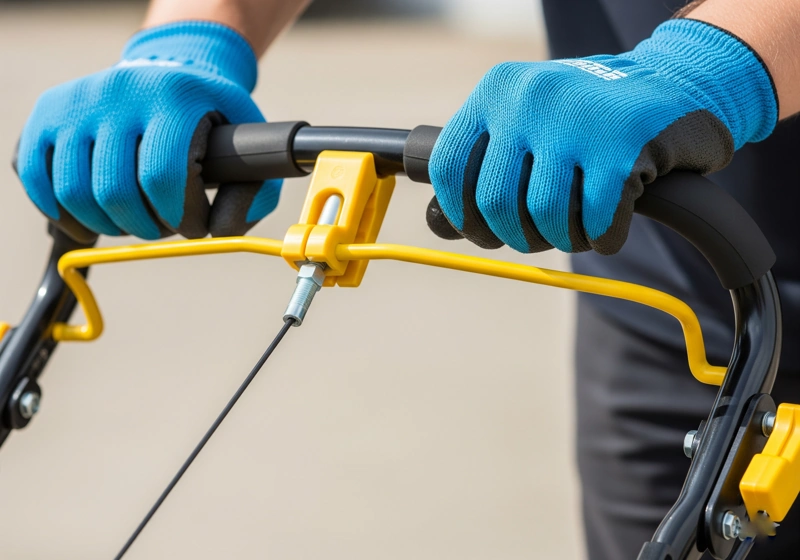
Every single time I fire up a mower in my shop, the first thing I do is test the safety bar. You hold it down, mower runs. Let go, it stops. Period. No exceptions, no delays, no “well, it usually works.”
I’ve had customers bring in mowers where someone bypassed this system with wire ties or clamps. Makes my blood boil. That safety bar isn’t there to annoy you on Saturday mornings. It’s there because someone, somewhere, got hurt badly enough that engineers said “never again.”
Is the safety cable running from your handle to the engine? Check it every few uses. Look for frays, kinks, or rust. If it’s damaged, don’t even think about starting that machine. I keep spare cables in stock because they wear out, and when they do, your safety system becomes worthless.
Sarah from down the block learned this one the hard way. Her safety cable snapped mid-mow when she hit a bump. When she stumbled, the mower kept going. Thankfully, she was smart enough to jump out of the way, but she could’ve easily been hurt.
Safety Bar Clamp Inspection
This little piece of hardware holds your safety bar in place. Sounds boring, but it’s critical. I’ve seen safety bar clamps work loose over time, especially on mowers that get a lot of use. When that happens, your safety bar gets wobbly and might not trigger the shut-off properly.
Takes thirty seconds to check. Give it a visual inspection and make sure everything’s tight. If something looks off, tighten it before you mow. This kind of regular lawn mower maintenance prevents most safety issues I see in my shop.
Walk the Yard Like Your Life Depends on It
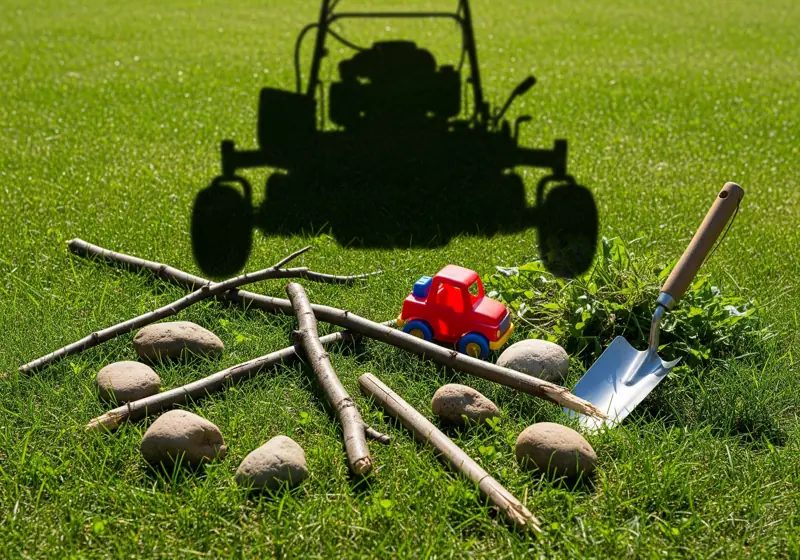
Before I test any mower on grass, I walk the area and pick up everything. Everything. Rocks, sticks, toys, dog bones, sprinkler heads that stick up, garden hoses, extension cords, you name it.
Why? Because I’ve seen what happens when a mower blade hits a rock at 3,000 RPM. That rock becomes a bullet. I’ve had customers tell me about rocks shooting through windows, denting cars, and, once, incredibly, embedding itself in a tree trunk.
My neighbor’s kid left a metal toy truck in the grass last year. When dad hit it with the mower, it shot out so hard it cracked their concrete patio. Could’ve killed someone if they’d been standing there.
How I Actually Mow (The Stuff Nobody Talks About)
Starting Smart
I never start a mower on the grass I’m about to cut. Find level ground, make sure you’ve got room to maneuver, and take your time. Rushing the startup is where people get sloppy.
For gas mowers, I let them warm up for about a minute before I start cutting. Gives me time to look over the area one more time and double-check my cutting height. Also gives the engine time to settle into a steady rhythm.
Electric and battery mowers don’t need warm-up time, but I still take that minute to scan the area. Amazing what you notice when you’re not rushing.
Electric Lawn Mowers


The Slope Problem
Here’s something most people get wrong: slopes. I see folks trying to mow steep hills with walk-behind mowers all the time. It’s dangerous, plain and simple.
If you’re slipping when you walk normally, don’t mow. If the slope makes you lean to keep your balance, don’t mow. If you have any doubt about your footing, don’t mow.
When you absolutely must mow a slope, go sideways across it, never straight up or down. Think about physics: if you lose your footing going across, you fall to the side. Going up or down? You and that spinning blade are headed in the same direction.
Tommy, one of my regular customers, ignored this advice and ended up chasing his mower down his backyard hill. Mower got banged up pretty good when it hit the fence, but at least Tommy had the sense to let it go instead of trying to grab it. Speaking of slopes, this is why choosing the right mower for your specific yard conditions matters so much.
What I Wear Every Single Time
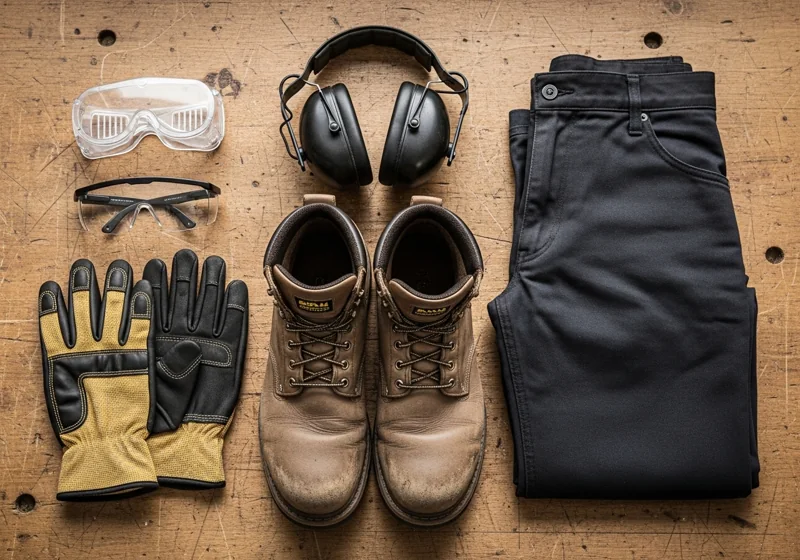
Work boots. Always. Non-slip soles, preferably steel-toed if you’ve got them. I’ve seen too many foot injuries to mess around with sneakers or sandals.
Long pants save your legs from flying debris and scratches. Don’t need anything fancy, just something thicker than shorts. I usually wear old jeans that I don’t mind getting grass-stained.
Safety glasses aren’t overkill, especially if you’re mowing dry grass or leaves. Dust and small debris can really mess up your eyes, and squinting while you’re trying to control a mower is asking for trouble.
Work gloves give you a better grip on the handle, especially if your hands get sweaty. Plus, they protect your palms from blisters on longer jobs.
When Things Go Sideways
Dealing With Clogs
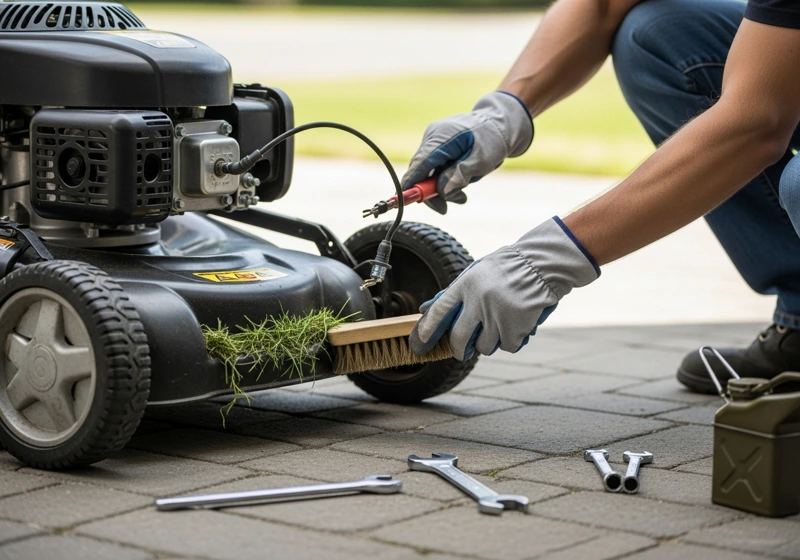
Your mower will get clogged. Wet grass, leaves, thick growth, whatever. Here’s what you do NOT do: reach under that deck while the engine’s running.
I don’t care if it seems like overkill. Turn off the engine, disconnect the spark plug wire, and wait for everything to stop moving. That blade doesn’t stop instantly when you shut off the engine. Give it at least ten seconds.
Had a guy in my shop a couple of years ago who thought he could quickly clear some grass while the engine was idling. Blade caught his work glove and nearly took off his index finger. He was lucky to keep it, but he’s got permanent nerve damage.
Wet Grass Is a Hard No
I get it. You’ve got one day off; it rained yesterday, but the grass is getting long. Doesn’t matter. Wet grass makes everything more dangerous.
First, you’re more likely to slip. Wet grass is slippery, and trying to control a mower when you can’t keep your footing is a recipe for disaster.
Second, wet grass clumps up and clogs your mower constantly. Every time you stop to clear a clog, you’re creating another opportunity for something to go wrong if you don’t follow proper shutdown procedures. This is exactly why properly cleaning your mower after each use is so important.
Third, wet conditions can affect electrical systems on electric mowers. Water and electricity don’t mix, even with supposedly waterproof systems. Different electric mower options have varying levels of water resistance.
Problem Areas Every Yard Has
You know those spots: where tree roots make the ground uneven, where the sprinkler system creates soggy patches, where decorative rocks like to hide in the grass. Slow way down in these areas.
I tell customers to treat these spots like they’re walking on ice. Deliberate steps, maintain your balance, don’t rush through them. Your lawn doesn’t care if it takes an extra fifteen minutes to finish the job safely.
Keeping Your Safety Systems Working
Monthly Safety Tests
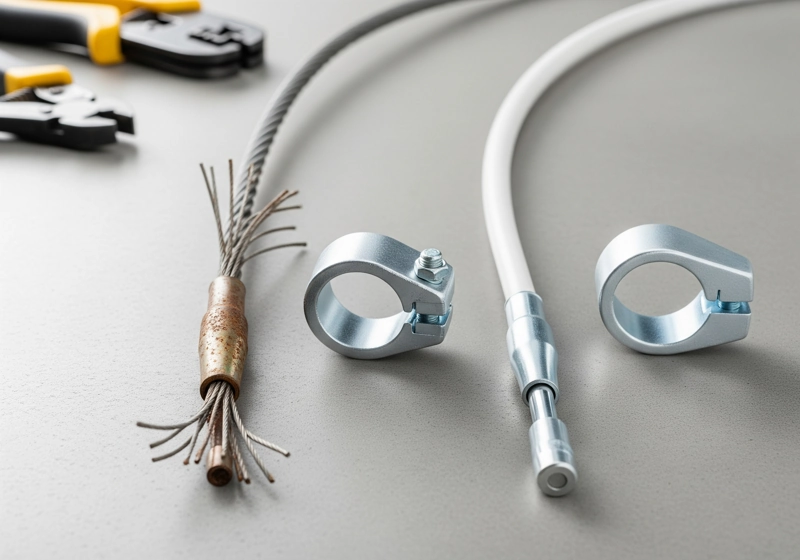
Once a month, I go through every safety system on my demo mowers. You should do the same. Start the mower and immediately test the safety bar. It should shut down within two or three seconds of releasing the handle.
If there’s any delay or if the engine keeps running, stop using that mower until you figure out what’s wrong. Usually, it’s something simple like dirt buildup or a stretched cable, but sometimes you need professional help.
The safety cable should move smoothly when you operate the handle. If it’s binding or catching, clean around the attachment points and apply a light coat of spray lubricant.
Spotting Trouble Before It Happens
Every few months, give your mower a thorough inspection. Look for cracks in the deck, especially around mounting points for the safety bar. Check for loose bolts, worn cables, and damaged guards.
I’ve seen safety bar clamps crack over time, usually from repeated stress and vibration. When that happens, your safety system becomes unreliable. Better to catch it during a routine check than find out the hard way.
Your blade guard might seem like it gets in the way sometimes, but don’t remove it. It’s there to deflect debris and keep your feet away from the blade. I’ve seen people take them off because they think they’re unnecessary. They’re not.
The Stupid Mistakes That Keep Me Busy
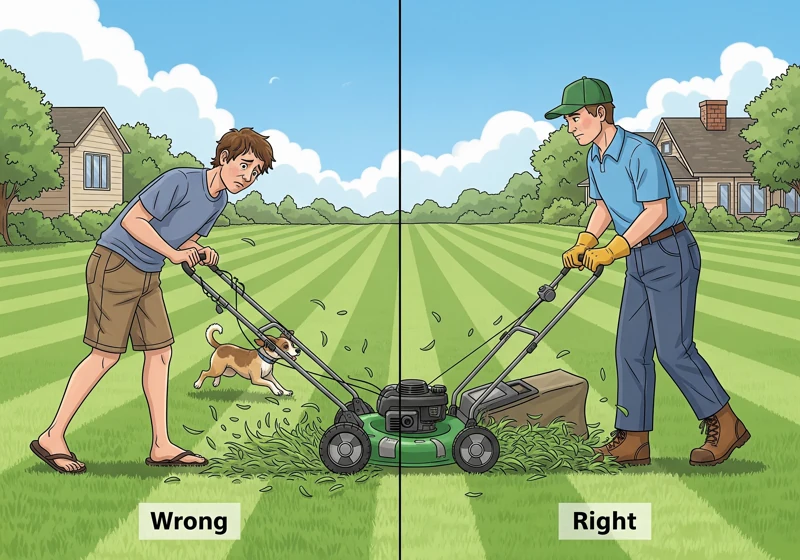
Real stories from my shop that’ll make you shake your head:
The customer wanted me to “fix” his mower so the safety bar stayed down by itself. Told him I’d rather fix his mower than his injuries, so that wasn’t happening.
The lady asked if her eight-year-old could sit on her lap while she used the riding mower. That’s a hard no. Mowers aren’t built for passengers, especially kids.
Guy thought he could mow in the dark using a headlamp. Couldn’t see obstacles, hit a metal stake, and ended up with a bent crankshaft and a repair bill bigger than the mower was worth.
Another regular customer rigged up a bungee cord system to hold down his safety bar so he didn’t have to grip it constantly. Brought the mower in after he tripped and couldn’t shut it off quickly enough. The mower kept running and tore up his flower bed before it finally stalled out.
These aren’t just poor decisions. They’re dangerous ones that put people at risk unnecessarily.
Teaching the Next Generation
When kids in the neighborhood start mowing lawns for summer money, their parents often ask me to give them some pointers. Smart move. Don’t just hand a teenager your mower and hope they figure it out.
I spend time showing them how to check safety systems, proper starting procedures, what to watch for, and how to handle different situations. Then I watch them mow a small section before they’re on their own.
It’s not just about protecting them. A runaway mower doesn’t care whose property it ends up on or who gets hurt. Teaching someone to mow safely protects the whole neighborhood.
Emergency Preparedness
Keep your phone charged and with you when you mow. Know where your nearest urgent care center is located. Don’t try to tough out injuries that need medical attention.
For anything serious, call 911 immediately. Don’t waste time trying to drive yourself to the hospital or waiting to see if it gets better.
I keep a basic first aid kit in my workshop: bandages, antiseptic, gauze, and tape. Nothing fancy, but enough to handle minor cuts and scrapes until you can get proper medical care.
Making This Stuff Automatic
After ten years of fixing mowers and hearing accident stories, the safest operators I know are the ones who make good habits automatic. They don’t think about their pre-mow safety check anymore; they just do it.
It’s like checking your mirrors before backing out of the driveway. You probably don’t consciously decide to do it; it’s just part of driving. That’s where you want to be with your mower safety routine.
Do the same safety check before every single mowing session. Walk the yard, test the safety systems, and check your equipment. Do it enough times and you’ll feel weird starting up without going through the routine.
Your grass will be there tomorrow if conditions aren’t right for safe mowing. Your family won’t be there to help you recover from a preventable injury. Take the time to do it right, and you’ll keep all your parts intact for years to come. That’s the only way this story should end.
The basic lawn mower safety instructions start with testing your safety bar every time before you mow. Make sure it stops the engine immediately when released. Always wear closed-toe shoes, long pants, and eye protection. Clear your yard of debris like rocks, sticks, and toys before starting. Never bypass safety features or reach under the deck while the engine’s running. Turn off the engine and disconnect the spark plug wire before clearing any clogs. These simple steps prevent most mower accidents I see in my shop.
From my 10 years of fixing mowers, the most common accidents happen when people try to clear grass clogs or debris while the engine’s still running. I’ve seen too many hand and finger injuries from folks reaching under the deck without shutting down properly. The second most common? Getting hit by flying debris because they didn’t clear the yard first or weren’t wearing proper safety gear. Both are completely preventable if you follow basic safety procedures.
The biggest hazards are the spinning blade (3,000 RPM), flying debris from rocks or sticks, hot engine surfaces that can cause burns, and fuel-related fire risks on gas mowers. Slopes create tipping and loss-of-control hazards, while wet conditions increase slip risks. Faulty or bypassed safety systems turn a manageable tool into a dangerous one. Each of these hazards can be managed with proper precautions and respect for the machine.
I’ve seen cuts and lacerations from blades or flying debris, burns from hot engine parts, eye injuries from dust and particles, hearing damage from prolonged noise exposure, and foot injuries from debris or blade contact. Slips and falls are common, especially on slopes or wet grass. The worst injuries usually involve people bypassing safety features or not following shutdown procedures. Most of these injuries are preventable with proper safety equipment and procedures.
Before starting any mower, test your safety bar to ensure it stops the engine when released. Check your safety cable for frays or damage. Walk your entire yard and remove all debris – rocks, sticks, toys, anything that could become a projectile. Inspect your mower for loose parts, damaged guards, or worn components. Make sure you’re wearing proper safety gear: closed-toe shoes, long pants, and eye protection. Only start on level ground with good footing.
No, don’t mow wet grass. It’s dangerous because wet surfaces are slippery, increasing your risk of losing control or falling. Wet grass also clumps up and clogs your mower constantly, forcing you to stop repeatedly to clear blockages. Each time you stop to unclog, there’s another opportunity for accidents if you don’t follow proper shutdown procedures. Plus, you’ll get a poor cut quality and potentially damage your lawn. Wait for dry conditions – your safety is worth more than getting the job done on schedule.
