
Lawn Mower Oil Change: A Comprehensive Guide
So your mower’s been running a little rough lately, or maybe you just can’t remember the last time you changed the oil? I get it – oil changes aren’t exactly the most exciting part of lawn care, but they’re critical if you want your mower to last more than a few seasons. After 15 years in the lawn care business and countless engine rebuilds that could’ve been avoided, I’ve learned that a simple oil change is the difference between a mower that runs for decades and one that becomes expensive yard art.
Table of Contents
▼- Why Lawn Mower Oil Changes Matter
- How Often Should You Change Lawn Mower Oil?
- What Type of Oil Does Your Lawn Mower Need?
- Four-Stroke Engines (Most Common)
- Two-Stroke Engines (Less Common)
- Step-by-Step Oil Change Process
- What You’ll Need
- The Process
- Common Oil Change Mistakes to Avoid
- Seasonal Oil Change Strategy
- Signs Your Mower Needs an Oil Change NOW
- The Real Cost of Skipping Oil Changes
- Conclusion
Let me walk you through everything you need to know about changing your lawn mower’s oil, from choosing the right type to getting the timing just right.
Why Lawn Mower Oil Changes Matter
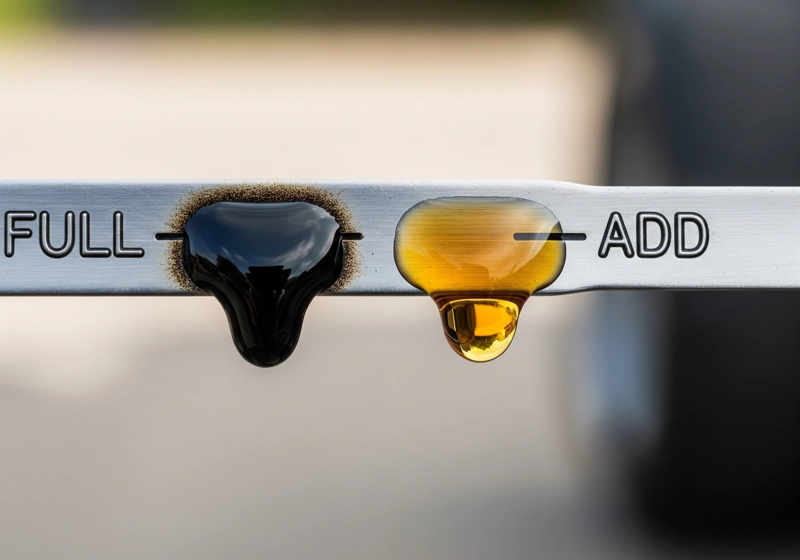
Here’s the thing nobody tells you when you buy that shiny new mower: the oil change schedule in your manual isn’t just a suggestion. I’ve seen more engines destroyed by neglected oil than by any other single factor. That black, gritty sludge that accumulates over time? It’s not just dirty oil – it’s abrasive particles that’ll wear down your engine internals faster than you can say “warranty void.”
Your mower’s engine works harder than most people realize. Think about it: you’re asking it to spin a heavy blade at 3,000+ RPM while dealing with dust, grass clippings, and temperature swings that would make your car’s engine cry. Fresh oil keeps everything lubricated, reduces friction, and helps dissipate heat. Skip it, and you’re looking at a $400+ engine replacement instead of a $15 oil change.
How Often Should You Change Lawn Mower Oil?
The frequency depends on your mower type and usage, but here’s my real-world breakdown:
New Mowers (First 5 Hours): Change the oil after your first 5 hours of operation. This isn’t negotiable – new engines shed metal particles during break-in, and you want that contamination out of there as quickly as possible.
Regular Maintenance Schedule:
- Light use (under 25 hours per season): Change oil at the beginning of each mowing season
- Moderate use (25-50 hours per season): Change oil twice per year – spring and mid-summer
- Heavy use (50+ hours per season): Change every 25-30 operating hours
Now, you might be thinking, “Jake, how am I supposed to track operating hours?” Fair point. If your mower doesn’t have an hour meter, here’s my practical rule: change the oil every 20-25 mowing sessions for average suburban lawns. For reference, I mow my half-acre lot weekly from April through October – that’s about 28 sessions per year.
What Type of Oil Does Your Lawn Mower Need?
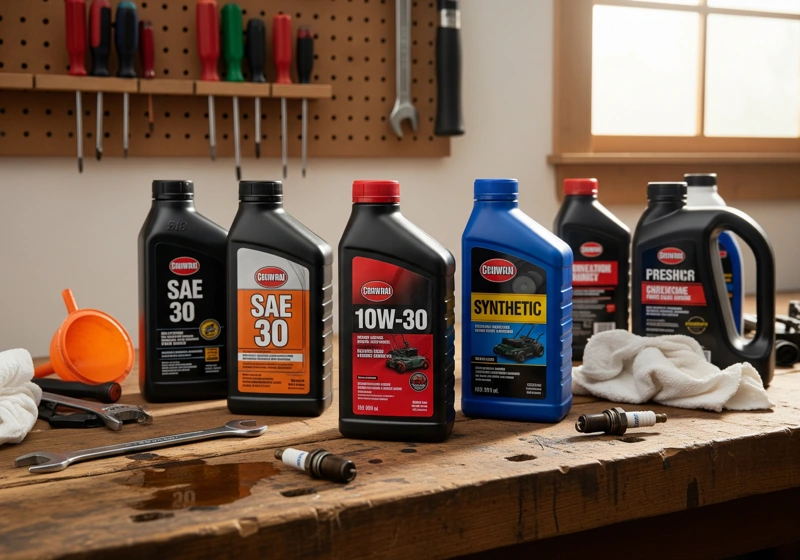
This is where things get interesting, because not all mower engines are created equal. The oil type depends on your engine design and operating conditions.
Four-Stroke Engines (Most Common)
SAE 30: This is your standard warm-weather oil. If you’re mowing in temperatures above 40°F consistently, SAE 30 works great. It’s what I use in most of my commercial equipment during peak season.
10W-30: This multi-viscosity oil is more versatile. The “10W” means it flows well in cooler temperatures (the W stands for “winter”), while the “30” indicates its thickness at operating temperature. Perfect if you’re starting your mower in cool spring mornings or live somewhere with temperature swings.
5W-30: Even better cold-weather performance. I recommend this if you’re doing early spring or late fall mowing when temperatures drop below 40°F.
Synthetic vs. Conventional: Here’s where I might surprise you – synthetic oil is worth the extra cost for most homeowners. It handles temperature extremes better, lasts longer, and provides superior protection. The Mobil 1 10W-30 synthetic runs about $6 per quart versus $3 for conventional, but considering you only need 1-2 quarts per change, we’re talking about a $6 annual difference for significantly better protection.
Two-Stroke Engines (Less Common)
If you’ve got an older two-stroke mower, you’ll need to mix oil with gas rather than adding it separately. Use a high-quality two-stroke oil at the manufacturer’s specified ratio – usually 50:1 or 40:1. Don’t guess on this ratio; too much oil and you’ll foul the spark plug, too little and you’ll seize the engine.
Step-by-Step Oil Change Process
Alright, let’s get our hands dirty. This process takes about 15 minutes once you’ve done it a few times.
What You’ll Need

- New oil (check your manual for capacity – usually 1.5-2 quarts)
- Oil drain pan or container (at least 2-quart capacity)
- Socket wrench or box-end wrench for the drain plug
- Funnel
- Shop rags or paper towels
- New oil filter (if your mower has one)
- Disposable gloves (trust me on this one)
The Process
1. Warm Up the Engine Run your mower for 2-3 minutes to warm the oil. Warm oil flows out faster and carries more contaminants with it. Don’t run it too long – you want it warm, not scalding hot.
2. Position for Drainage Park on level ground and engage the parking brake. For walk-behind mowers, you might need to tip the mower to access the drain plug. Always tip it so the carburetor side is up to prevent gas from leaking into the cylinder.
3. Remove the Drain Plug. Locate the drain plug (usually on the underside of the engine deck) and slowly remove it with your wrench. Have your drain pan positioned and ready – the oil comes out faster than you’d expect. I learned this lesson the hard way in my driveway, and my wife still reminds me about the oil stain.
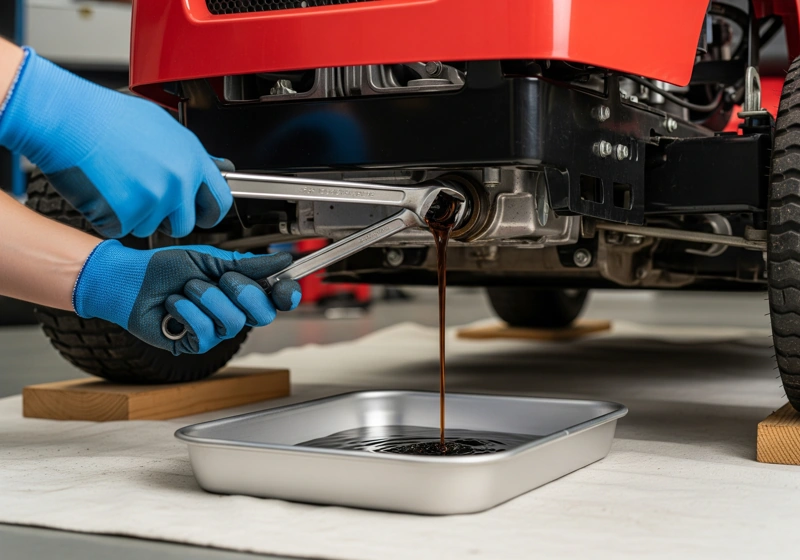
4. Letitt Drain Completely. Give it 10-15 minutes to drain thoroughly. This is a good time to clean the drain plug and inspect the drain hole for any metal particles or debris.
5. Replace the Oil Filter (If Equipped) Some mowers have oil filters that should be changed with every oil change. Remove the old filter (more oil will come out), apply a thin layer of new oil to the new filter’s rubber gasket, and install hand-tight plus another 3/4 turn.
6. Reinstall the Drain Plug. Thread it back in by hand first to avoid cross-threading, then tighten with your wrench. Snug but not over-tight – you’re threading into aluminum, and it’s easy to strip.
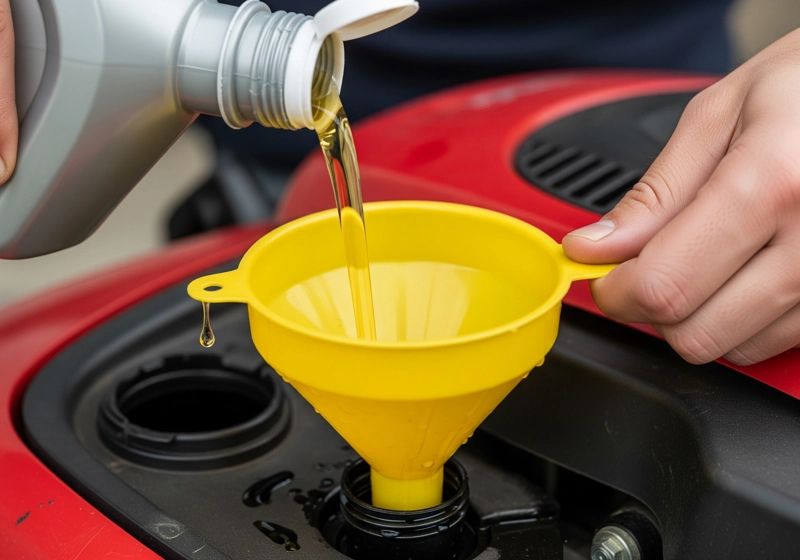
7. Add New Oil: Using your funnel, add the new oil slowly. Most mowers take 1.5-2 quarts, but check your manual. Add about 75% of the recommended amount first, then check the dipstick and add gradually until you reach the “full” mark.
Common Oil Change Mistakes to Avoid
After seeing hundreds of DIY oil changes go wrong, here are the mistakes that’ll cost you:
Overfilling the Oil: More isn’t better. Overfilled oil can cause pressure buildup, seal damage, and poor performance. The oil will find a way out – usually through seals you’d rather keep intact.
Using the Wrong Oil Type: That 20W-50 motorcycle oil might seem like a good idea, but it’s too thick for most mower engines. Stick to the manufacturer’s specifications.
Forgetting to Replace the Drain Plug: Sounds obvious, but I’ve seen it happen. That first pull of the starter cord becomes very memorable when there’s no oil in the engine.
Not Disposing of Old Oil Properly: Used motor oil is highly toxic and illegal to dump. Most auto parts stores, quick-lube shops, and municipal recycling centers accept used oil for free. I keep a 5-gallon container in my shop for collecting used oil from customer equipment.
Seasonal Oil Change Strategy
Here’s my recommended schedule that’s served me well across hundreds of mowers:
Early Spring (March-April): Fresh oil for the start of mowing season. If you stored your mower properly with fuel stabilizer, the oil might still look decent, but change it anyway. Winter storage can cause condensation and contamination that isn’t always visible.
Mid-Summer (July-August): If you’re a heavy user or live in a hot climate, a mid-season change keeps your engine happy during peak stress periods. This is especially important if you’re mowing in dusty conditions or bagging clippings frequently.
End of Season (October-November): Some folks skip this one, thinking they’ll change it in spring anyway. But here’s why I don’t: fresh oil during storage prevents corrosion and makes spring startup easier. Used oil contains acids and contaminants that can cause problems during months of sitting.
Signs Your Mower Needs an Oil Change NOW
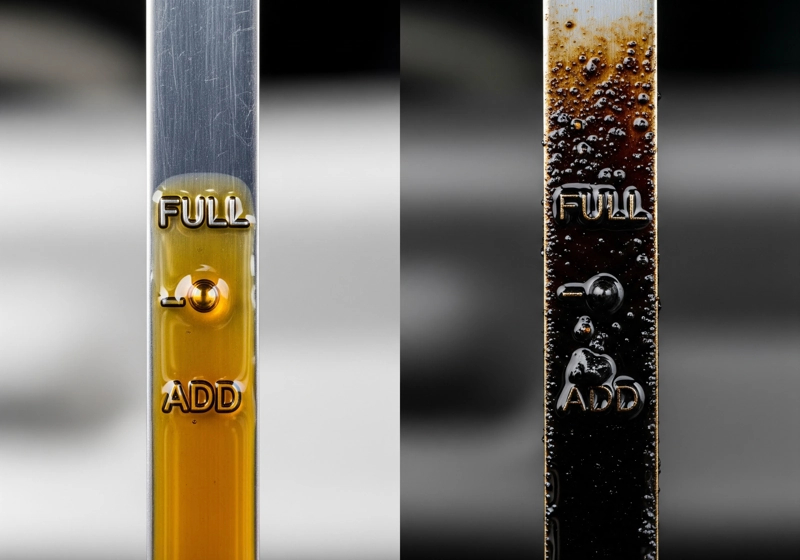
Sometimes you can’t wait for your scheduled maintenance. Watch for these warning signs:
- Oil color: Fresh oil is amber or honey-colored. If it’s black, thick, or has a burnt smell, change it immediately.
- Metal particles: Check your dipstick for metallic flakes or a gritty texture. This indicates internal wear that requires immediate attention.
- Low oil level: If you’re constantly adding oil, you’ve got a leak or burning oil – both problems that fresh oil won’t fix, but that dirty oil will make worse.
- Performance issues: Hard starting, rough running, or unusual noises can all indicate oil-related problems.
The Real Cost of Skipping Oil Changes
Let me put this in perspective with some real numbers from my repair shop experience. A complete oil change with synthetic oil costs about $25 in materials. An engine rebuild or replacement? You’re looking at $400-800, depending on your mower.
I’ve rebuilt engines with less than 100 hours on them because owners skipped oil changes. On the flip side, I’ve serviced Honda and Kawasaki engines with 500+ hours that still run like new because their owners stayed on top of basic maintenance.
And honestly? There’s something satisfying about pulling that dipstick and seeing clean, amber oil. It’s a small thing, but it means you’re taking care of your equipment, and your equipment will take care of you.
Conclusion
Changing your lawn mower’s oil isn’t glamorous, but it’s the single most important thing you can do to extend your mower’s life. Stick to the schedule, use the right oil type, and don’t overthink it. Your mower will reward you with years of reliable starts and consistent performance.
Next time you’re tempted to skip that oil change because the mower “seems fine,” remember this: engines don’t gradually get worse – they run fine until they don’t run at all. A little preventive maintenance now saves you from explaining to your spouse why you need to buy a new mower three years early.
Now get out there and change that oil. Your lawn (and your wallet) will thank you.
Change your lawn mower oil after the first 5 hours of use on new mowers, then follow this schedule: light use (under 25 hours per season) – once per year in spring; moderate use (25-50 hours) – twice per year in spring and mid-summer; heavy use (50+ hours) – every 25-30 operating hours. If you don’t track hours, change it every 20-25 mowing sessions for average suburban lawns.
Warm up the engine for 2-3 minutes, then park on level ground. Remove the drain plug with a wrench and let the oil drain into a pan for 10-15 minutes. Replace the oil filter if equipped, reinstall the drain plug snugly, then add fresh oil through the fill tube using a funnel. Check the dipstick and add oil gradually until you reach the “full” mark. Most mowers need 1.5-2 quarts total.
Skipping oil changes leads to expensive engine damage. Old oil becomes contaminated with metal particles and debris that act like sandpaper on engine parts. You’ll experience hard starting, rough running, and eventually complete engine failure. I’ve seen engines with less than 100 hours destroyed by neglected oil changes – a $25 oil change becomes a $400-800 engine replacement.
For most four-stroke mowers, use SAE 30 for warm weather (above 40°F) or 10W-30 for variable temperatures. I recommend synthetic 10W-30 like Mobil 1 – it costs about $3 more per change but provides superior protection and handles temperature extremes better. Always check your owner’s manual for the manufacturer’s specific recommendation, as some newer mowers require 5W-30.
Yes, overfilling causes serious problems. Excess oil creates pressure buildup that can damage seals, cause oil leaks, reduce performance, and even prevent the engine from starting. The oil will find its way out through seals you’d rather keep intact. Always check the dipstick and fill gradually – more isn’t better when it comes to engine oil.
Check the dipstick regularly. Change the oil immediately if it’s black or thick, has a burnt smell, contains metal particles, or feels gritty. Also watch for performance issues like hard starting, rough running, or unusual noises. Fresh oil should be amber or honey-colored. If you’re constantly adding oil due to low levels, you leak, or the engine is burning oil.
