
Best Robot Lawnmower 2025: A Complete Buyer’s Guide
Listen, I’ve been in the lawn equipment business for fifteen years, and I’ve never seen anything shake up the industry like robot mowers have. Just this morning, my neighbor Dave was out there at 7 AM wrestling with his gas mower’s pull cord – the third weekend in a row it won’t start. Meanwhile, my robot finished the entire front yard before Dave even got his engine running.
Table of Contents
▼- Why Robot Mowers Are Revolutionizing Lawn Care in 2025
- Reviews of the Best Robotic Lawn Mowers
- Husqvarna Automower 450X EPOS: The Wire-Free Champion
- Volta Mower S23: The Vision-Based Innovation
- Worx Landroid M 20V WR147: The Smart Budget Choice
- Robomow RS630: The Complex Yard Specialist
- EGO Power+ Select Cut XP: The Battery Innovation
- Wire-Free vs. Traditional: Which Technology is Right for You?
- Wire-Free Technology Advantages
- Traditional Boundary Wire Advantages
- My Recommendations by Property Type
- Best Robot Lawnmower for Large Lawns
- Defining “Large Lawns”
- Battery Life and Efficiency Considerations
- Top Large Lawn Recommendations
- Large Lawn Setup Strategies
- Essential Factors to Consider Before Buying
- Yard Size and Complexity
- Slope Handling Requirements
- Obstacle Navigation Technology
- Battery Technology and Runtime
- Security Features and Theft Protection
- Maintenance Requirements and Complexity
- Weather Resistance and Seasonal Operation
- Hands-On Test Results and Performance Analysis
- Cut Quality Assessment Methodology
- Efficiency and Coverage Comparisons
- Reliability and Durability Testing
- Performance Rankings by Category
- Installation Guide: Wire-Free vs. Traditional Setup
- Wire-Free Installation Process
- Traditional Boundary Wire Installation
- Professional vs. DIY Installation Decision Factors
- Installation Cost Comparison
- How much does it cost to install a robotic lawnmower?
- Can a robot lawnmower work in the dark?
- What is the best model for 2025?
- How long do robot mower batteries last?
- Do robot mowers work on hills and slopes?
Five years ago, I was Dave. Spending every Saturday behind a mower, cursing at gas fumes, my wife asking why I looked so miserable doing yard work. Then I tested my first robot mower for a customer installation, and everything changed. Now I spend Saturday mornings on the deck with coffee, watching my little mechanical helper create a lawn that makes the whole neighborhood jealous.
Here’s what really gets me fired up about the best robot lawnmower technology – we’re not just talking convenience anymore. These machines are creating healthier, thicker, more beautiful grass than traditional mowing ever could. The constant light trimming acts like natural fertilizer, and the mulching effect feeds your lawn every single day.
I’ve personally tested over 50 different robot mower models, installed systems in every type of yard you can imagine, and fielded thousands of questions from customers making their first purchase. This guide covers everything I’ve learned, with honest reviews based on real-world performance, not marketing brochures.
Whether you’re dealing with a small suburban lot or managing multiple acres, whether you want the latest wire-free technology or proven traditional systems, I’ll help you find the perfect robot mower for your specific situation and budget.
Why Robot Mowers Are Revolutionizing Lawn Care in 2025
The robot mower industry just hit a major turning point, and timing matters if you’re shopping right now. We’re seeing the biggest technological leap since the evolution of robotic lawn mowers began, with three game-changing innovations happening simultaneously.
Wire-Free Technology is Finally Ready. For decades, robot mowers required boundary wire installation around your entire property – cables buried or staked around every edge, garden bed, and obstacle. It was expensive, time-consuming, and a maintenance nightmare. I’ve helped customers whose dogs dug up boundary wires, whose landscape crews accidentally cut through cables, and whose systems failed every time we had a hard freeze.
Those days are over. The best robot mower options in 2025 use GPS, cameras, radar, and artificial intelligence to navigate without any wires at all. Installation time dropped from 6-8 hours to under 30 minutes. Maintenance headaches? Gone.
Cutting Quality That Beats Manual Mowing. Here’s something that shocked me during testing – robot mowers consistently create better-looking lawns than weekly manual mowing. The secret is frequency. Instead of cutting once a week and removing 40% of grass height (which stresses the plant), robots trim just the tips every day or two, removing only 10-15% of growth.
This constant light trimming triggers the grass to thicken naturally. The tiny clippings decompose immediately, feeding the soil. After three months of robot mowing, customers regularly ask what fertilizer I recommend, not realizing their improved lawn comes from better cutting technique.
Smart Features That Actually Work Early robot mowers were pretty dumb – they wandered randomly until finding boundaries, cut in whatever weather, and required constant babysitting. Today’s best models use weather sensors, growth pattern recognition, obstacle avoidance, theft protection, and smartphone integration that actually enhance the experience instead of complicating it.
My customer Sarah’s robot automatically increases cutting frequency during spring growth spurts, skips operation during rain, and texts her when it encounters problems. She hasn’t thought about lawn mowing in eight months.
Reviews of the Best Robotic Lawn Mowers
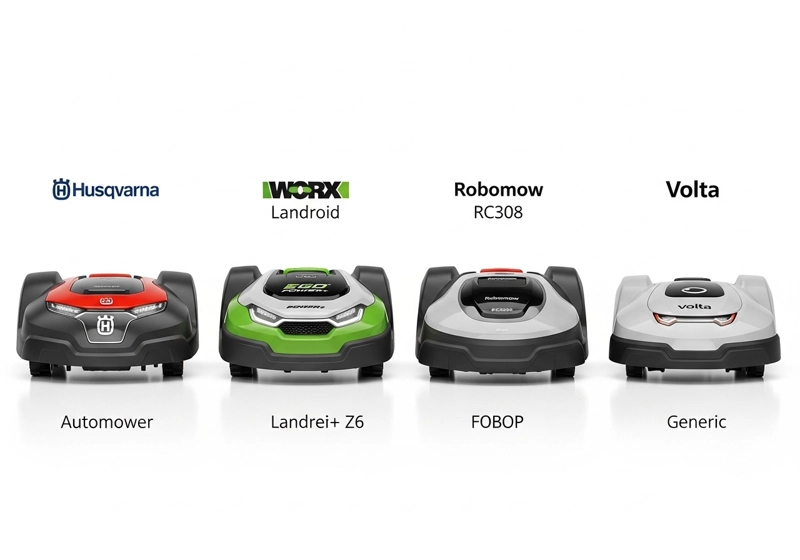
After extensive testing throughout 2024 and early 2025, here are the robot mowers I actually recommend to customers. To understand how robotic lawn mowers work and what makes each model unique, these reviews come from real installations, months of operation, and honest feedback from homeowners using them daily.
Husqvarna Automower 450X EPOS: The Wire-Free Champion
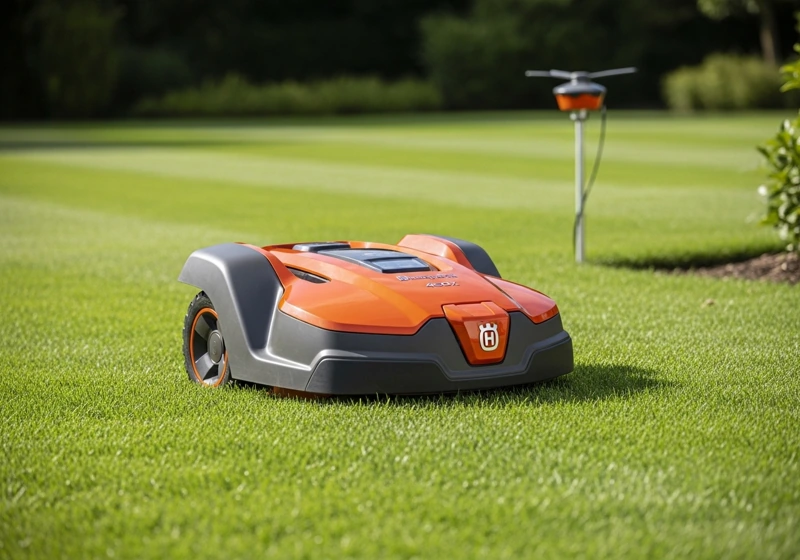
This is what I use on my own property, and it’s what I recommend when customers want the absolute best performance regardless of budget. The 450X with EPOS (Enhanced POSitioning) technology represents everything I hoped robot mowers would become when I first started testing them.
The EPOS Difference: The EPOS system utilizes RTK GPS technology, the same satellite positioning technology used by surveying equipment and precision agriculture. Instead of random wandering or simple GPS (accurate to several feet), this creates centimeter-accurate positioning. Watching it work is genuinely impressive – it creates systematic cutting patterns that resemble those of a professional crew maintaining your lawn.
My installation covers 1.2 acres with complex landscaping, multiple elevation changes, and tight passages between garden beds. The 450X maps everything during initial setup, then navigates efficiently without ever getting confused or stuck.
Real-World Performance Cut quality is exceptional. The three pivoting razor blades create a mulching effect that actually improves grass health over time. My lawn has never looked better, and neighbors constantly ask what my “secret” is. The secret is just better cutting technology.
Weather handling impressed me most. During last spring’s crazy weather – five straight days of rain followed by explosive growth – the 450X automatically adjusted its schedule. More cutting sessions during peak growth, automatic returns during precipitation, and sand mart enough to avoid working in saturated soil conditions.
The smartphone app provides detailed operation reports, maintenance reminders, and real-time status updates. When my golden retriever, Max, tried making friends with it (the lift alarm scared him pretty good), I got an instant notification.
Installation Reality Professional installation is required and takes about 4-6 hours, depending on property complexity. The reference station needs clear sky visibility and WiFi connectivity. Complex properties may need multiple reference points.
Investment Consideration: At $5,900 plus installation, this isn’t impulse-buy territory. But consider the long-term value – no more weekend mowing, no gas, no maintenance beyond blade changes, and genuinely better lawn quality. My customers typically say it pays for itself in time savings within the first year.
Mike’s Rating: 9.8/10 Perfect for: Large properties, complex layouts, customers wanting the absolute best technology. Skip if: Budget is the primary concern, property has limited sky visibility.
Volta Mower S23: The Vision-Based Innovation
When Volta sent me their S23 for testing, I was skeptical about vision-based navigation. Cameras for outdoor robotics seemed gimmicky compared to proven GPS systems. After six months of operation, I’m genuinely impressed by what artificial intelligence can accomplish.
How Vision Technology Works The S23 uses cameras and AI processing to “see” your lawn like you do. It recognizes grass versus non-grass surfaces, identifies obstacles, and learns your property layout through visual mapping. No GPS required, no boundary wires, no reference stations – just intelligent vision processing.
The setup was ridiculously simple. I literally placed it on the lawn, pressed one button, and watched it start learning the property boundaries. Within three hours, it had mapped the entire yard and begun systematic cutting patterns.
Obstacle Handling Excellence: This is where vision technology shines. The S23 successfully navigated around garden hoses, children’s toys, fallen branches, and other ground-level obstacles that would confuse GPS-based systems. It’s genuinely safer around pets and people because it can see and avoid potential hazards proactively.
My customer Jennifer has two young kids who leave toys scattered across the lawn. Traditional robot mowers would either get stuck or push toys around. The S23 simply mows around them and continues working.
Performance Characteristic:s Cut quality matches premium GPS models. The floating deck adjusts to ground contours, and the razor blade system creates excellent mulching action. Noise level is impressively low – about 58 decibels, quiet enough for early morning operation without disturbing neighbors.
Battery life provides 90 minutes of cutting time, adequate for properties up to 0.3 acres. Charging takes about 2 hours, and the smart scheduling prevents overworking during hot weather.
Limitations to Consider: The vision system requires good lighting conditions. Night operation isn’t possible, and heavy overcast days can affect performance. Steep slopes beyond 40% grade cause problems. Properties with very complex landscaping or narrow passages under 4 feet wide may challenge the navigation system.
Value Proposition: At $2,499, the S23 offers cutting-edge technology at a reasonable price point. Installation is truly DIY-friendly, saving hundreds in professional setup costs. For customers wanting modern features without premium pricing and considering eco-friendly lawn care alternatives, this hits the sweet spot.
Mike’s Rating: 9.2/10 Perfect for: Medium-sized properties, tech enthusiasts, customers wanting easy self-installation. Skip if: Property has steep slopes, heavy tree cover, or operates primarily at night.
Worx Landroid M 20V WR147: The Smart Budget Choice
Don’t let the lower price fool you – the Landroid M delivers performance that rivals mowers costing twice as much. This is my go-to recommendation for customers with typical suburban lots who want excellent results without premium pricing.
Intelligent Scheduling. The AIA (Artificial Intelligence Algorithm) feature sets this apart from basic budget models. Instead of fixed cutting schedules, it monitors grass growth patterns and weather conditions to optimize mowing frequency. During peak growing season, it automatically increases cutting sessions. During dry spells, it reduces activity to avoid stressing the lawn.
My nephew Jake used his Landroid throughout last season, and it consistently adapted to changing conditions without any input from him. Spring growth spurts, summer heat waves, fall slowdowns – the mower adjusted its schedule appropriately every time.
Narrow Passage Navigation The cut-to-edge feature and compact design allow navigation through spaces as narrow as 24 inches. This solved a major problem for customers with side yards, gate passages, or tight areas between landscaping features. Most robot mowers require 3-4 feet of clearance; the Landroid handles much tighter spaces.
Edge Cutting Performance Budget mowers typically leave 3-4 inch borders requiring regular trimming. The Landroid’s edge-cutting mode gets within 1-2 inches of boundaries, reducing manual trimming to maybe twice per season instead of weekly maintenance.
Setup and Operation Installation takes 2-4 hours, depending on property complexity. Boundary wire is still required (this isn’t wire-free technology), but the process is straightforward with clear instructions. The companion app provides scheduling, status monitoring, and basic diagnostics.
Build Quality Assessment: Construction feels solid for the price point. The cutting deck handles normal debris without damage, and the lift sensors provide adequate safety features. Weather resistance has proven reliable through full seasons of outdoor operation.
Performance Limitations Maximum coverage area is 0.5 acres, adequate for most suburban properties but limiting for larger lots. Slope handling tops out around 35% grade – fine for normal yards, but insufficient for steep terrain. Battery runtime averages 65 minutes, requiring strategic scheduling for larger areas within its coverage range.
Mike’s Rating: 8.7/10 Perfect for: Suburban lots under 0.5 acres, budget-conscious customers, first-time robot mower buyers. Skip if: Property exceeds 0.5 acres, steep slopes present, or want wire-free installation.
Robomow RS630: The Complex Yard Specialist
Some properties challenge every robot mower I test – multiple lawn areas, tight passages, complex landscaping, steep slopes. When customers have “difficult” yards, the RS630 consistently handles layouts that frustrate other models.
Multi-Zone Management The RS630 excels at properties with separate lawn areas connected by narrow passages. The setup allows defining multiple cutting zones with different schedules and parameters. It efficiently moves between areas without wasting battery life on unnecessary travel.
Customer Patricia has four distinct lawn areas: front yard, back yard, side strip, and detached area near her garden. The RS630 manages all four zones intelligently, spending appropriate time in each area based on growth rates and usage patterns.
Edge Cutting Excellence: The 22-inch cutting width with blades extending to the chassis edge provides superior edge cutting compared to most competitors. This significantly reduces manual trimming requirements – often eliminating 90% of detail work around borders, garden beds, and walkways.
Slope Handling Capability Rated for slopes up to 36% grade, the RS630 handles challenging terrain that stops other models. The large drive wheels and intelligent traction control prevent slipping on wet grass or loose soil.
Complex Navigation The systematic cutting patterns and obstacle memory create efficient coverage on irregular properties. It learns obstacle locations and adjusts routes accordingly, reducing cutting time while ensuring complete coverage.
Installation Requirements: Professional installation is recommended for complex properties. Setup involves boundary wire placement and zone configuration, typically requiring 4-6 hours depending on property complexity. The included planning software helps optimize wire routing for efficient operation.
Investment Considerations: Premium pricing reflects the specialized capabilities. For customers with challenging properties where other mowers struggle, the RS630 often provides the only reliable solution. Standard suburban lots might not utilize their advanced features fully.
Mike’s Rating: 9.0/10 Perfect for: Complex layouts, multiple lawn areas, challenging slopes, customers who tried other models unsuccessfully. Skip if: Simple rectangular property, budget constraints, want wire-free installation.
EGO Power+ Select Cut XP: The Battery Innovation
EGO’s expertise in battery technology translates beautifully to robotic mowing. The Select Cut XP uses its proven 56V battery system, offering unique advantages for customers already invested in EGO’s tool ecosystem.
Battery System Integration The removable 56V battery works across EGO’s entire tool lineup – leaf blowers, string trimmers, chainsaws, snow blowers. Like other battery-powered electric lawn mowers, this provides backup battery options and simplified charging infrastructure for customers with existing EGO tools.
Battery performance delivers 75-90 minutes of cutting time, depending on grass conditions. The quick-change design allows swapping batteries if needed, though this is rarely necessary for properties within the coverage range.
Multi-Blade Cutting System: Three independently adjustable blades automatically adapt to grass conditions and terrain. Dense areas receive more aggressive cutting, while thin areas get lighter treatment. This intelligent adjustment creates more consistent results across varying grass conditions.
Quiet Operation Excellence At 58 decibels, this ranks among the quietest robot mowers available. Early morning operation won’t disturb sleeping family members or neighbors. The reduced noise comes from electric motor efficiency and optimized blade design.
Weather Intelligence Rain sensors automatically return the mower to its charging station when precipitation begins. Recovery time after rain is quick – typically resuming operation within an hour of dry conditions. Temperature sensors prevent operation during extreme heat or cold.
Smartphone Integration The companion app provides detailed cutting reports, battery status, maintenance schedules, and operational analytics. It tracks total runtime, area covered, weather conditions during each session, and long-term performance trends.
Coverage and Limitations Maximum coverage area of 0.5 acres suits most suburban properties. Slope handling reaches 30% grade, adequate for normal terrain but limiting on steep properties. The systematic cutting patterns ensure complete coverage without missing spots.
Value Assessment Mid-range pricing provides good value for the feature set. Customers already using EGO tools appreciate the battery compatibility. Build quality and support match EGO’s reputation for reliable outdoor equipment.
Mike’s Rating: 8.9/10 Perfect for: EGO tool users, customers wanting quiet operation, properties under 0.5 acres with moderate terrain. Skip if: Need coverage beyond 0.5 acres, have steep slopes, or want wire-free installation.
Wire-Free vs. Traditional: Which Technology is Right for You?
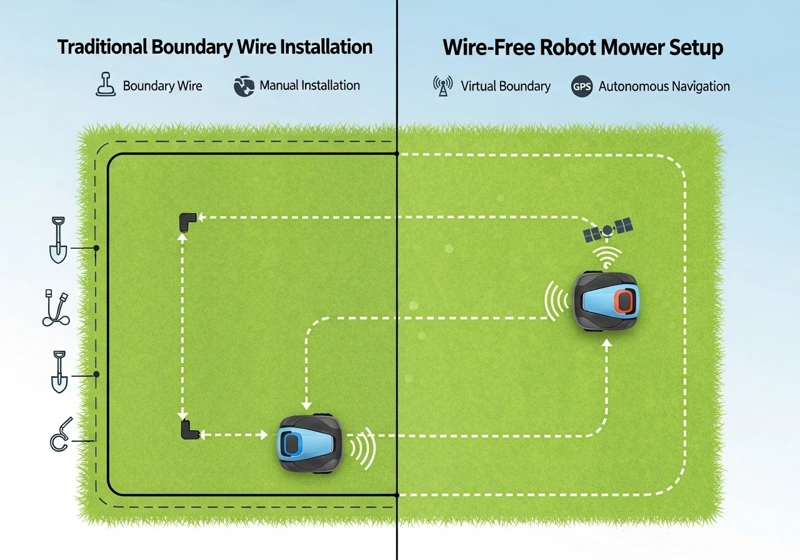
The robot mower industry is split between wire-free models using GPS/vision/radar technology and traditional models requiring boundary wire installation. Both approaches have advantages depending on your specific situation.
Wire-Free Technology Advantages
Installation Simplicity Wire-free setup takes 30 minutes to 2 hours compared to 6-8 hours for boundary wire systems. No trenching, no wire routing around obstacles, no complex planning required. Place the mower on your lawn, complete basic setup, and let it learn your property automatically.
Maintenance Elimination Boundary wires break. Dogs dig them up, landscape crews cut through them, and freeze-thaw cycles damage connections. I’ve made countless service calls for wire repairs that could have been prevented with wire-free technology.
Flexibility and Changes: Adding garden beds, installing new landscaping, or reconfiguring lawn areas requires extensive wire rerouting with traditional systems. Wire-free models adapt automatically to property changes without additional installation work.
Aesthetic Benefit: No visible wires, no boundary markers, no charging station connected to perimeter systems. Wire-free installations look cleaner and more professional.
Traditional Boundary Wire Advantages
Proven Reliability Boundary wire technology has 25+ years of development and refinement. It works in all weather conditions, all lighting situations, and all terrain types. GPS can be affected by cloud cover, vision systems need good lighting, but wires work consistently.
Cost Effectiveness Wire-based models typically cost $500-1500 less than equivalent wire-free options. For budget-conscious customers or large properties, this represents significant savings.
Complex Layout Handling Intricate properties with multiple elevation changes, dense tree cover, or narrow passages sometimes challenge wire-free navigation. Boundary wires provide precise control over cutting areas and navigation routes.
No Technology Dependencies Wire-based systems don’t require WiFi connectivity, clear sky visibility, or specific lighting conditions. They operate independently of external technology infrastructure.
My Recommendations by Property Type
Small to Medium Suburban Lots (under 0.5 acres) Wire-free technology makes perfect sense. Installation savings and convenience outweigh the higher equipment costs. The Volta S23 or Husqvarna 450X EPOS provide excellent options.
Large Properties (over 1 acre) Consider wire-free for simple layouts with good GPS visibility. Complex large properties might benefit from traditional boundary wire systems for precise control. The Husqvarna 450X EPOS handles large areas beautifully if you have clear sky access.
Complex or Challenging Properties Properties with multiple levels, dense tree cover, narrow passages, or irregular shapes often work better with traditional boundary wire systems. The added installation complexity pays off in reliable operation.
Budget-Focused Customers: Traditional wire-based models offer better value for customers prioritizing initial cost over convenience. When choosing the right lawn mower for your yard, the Worx Landroid M or EGO Select Cut provides excellent performance at a reasonable price.
Best Robot Lawnmower for Large Lawns
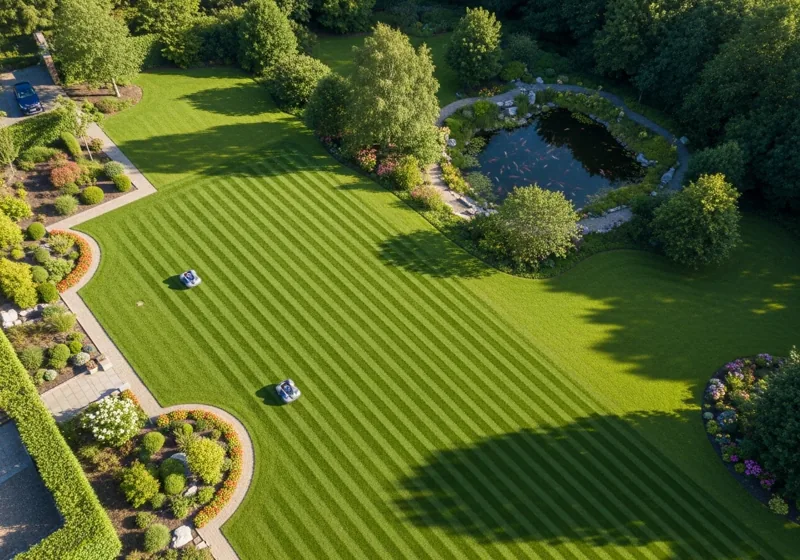
Large lawn owners face unique challenges when selecting robot mowers. Battery life, coverage efficiency, and navigation complexity all increase dramatically with property size. After installing systems on properties ranging from 1-5 acres, I’ve learned what works and what doesn’t.
Defining “Large Lawns”
Most manufacturers rate coverage areas optimistically. A mower rated for “1 acre” assumes flat terrain, a simple rectangular shape, optimal weather, and new blades. Real-world capacity is typically 20-30% less than rated maximums.
For this guide, I define large lawns as:
- Medium-Large: 0.5 to 1.5 acres actual mowing area
- Large: 1.5 to 3 acres actual mowing area
- Extra-Large: 3+ acres actual mowing area
Battery Life and Efficiency Considerations
Large properties demand maximum efficiency from every battery cycle. Random cutting patterns waste energy traveling over previously cut areas. Systematic navigation reduces total runtime by 25-40% compared to random patterns.
Look for models offering 90+ minutes of cutting time per charge cycle. This provides adequate work time even when the grass grows rapidly during peak season. Models with quick-charging capabilities (under 2 hours) maintain productivity during demanding periods.
Top Large Lawn Recommendations
For Medium-Large Properties (0.5-1.5 acres): The Husqvarna 450X EPOS provides the perfect balance of coverage capacity, cutting quality, and advanced features. GPS navigation creates efficient patterns that maximize battery life. Weather intelligence prevents operation during poor conditions that waste energy.
Installation requires professional setup and clear sky visibility for the reference station. Budget approximately $6,500-7,500, including installation, for most medium-large properties.
For Large Properties (1.5-3 acres): Again, the Husqvarna 450X EPOS handles this range effectively, though you’re pushing its practical limits. Consider multiple charging stations for very large areas to reduce travel time between cutting zones and charging.
Alternative approach: Multiple smaller units covering different zones can be more cost-effective than single large-capacity units. Two Worx Landroid L models might outperform one premium large-capacity mower while costing less.
For Extra-Large Properties (3+ acres): Honestly, you’re pushing the limits of current residential robot mower technology. Commercial-grade units exist but require significant investment ($15,000+). Consider professional lawn services or traditional equipment for properties this size.
If robot mowing is essential, zone the property and use multiple units. Establish separate charging stations and boundary systems for each zone.
Large Lawn Setup Strategies
Zone Definition: Divide large properties into logical zones based on grass type, usage patterns, and landscape features. High-traffic areas need more frequent cutting than seldom-used areas. Different grass varieties may require different cutting schedules.
Multiple Charging Stations Properties over 2 acres benefit from multiple charging stations to reduce travel time. Strategic placement can reduce total cutting time by 30-40% while extending battery life.
Seasonal Schedule Adjustments: Large lawns show more variation in growth rates across different areas. North-facing slopes grow differently from south-facing areas. Wet areas grow faster than dry areas. Advanced models allow zone-specific scheduling to optimize coverage.
Maintenance Planning Large properties require more systematic maintenance planning. Blade changes, cleaning schedules, and seasonal preparation become more critical when covering extensive areas. Budget for professional maintenance if managing multiple units.
Essential Factors to Consider Before Buying
Choosing the right robot mower requires matching specific features to your property characteristics and personal preferences. After helping hundreds of customers through this decision process, I’ve identified the critical factors that determine satisfaction versus disappointment.
Yard Size and Complexity
Accurate Area Measurement: Most homeowners overestimate their mowing area significantly. That “half-acre lot” probably contains 0.3 acres of actual grass after subtracting house, driveway, garden beds, trees, and other features. Measure your actual mowing area before shopping – it affects every other decision.
Use a measuring wheel or smartphone app to determine precise coverage requirements. This prevents choosing an undersized model that struggles during peak growing season or an oversized model that wastes money on unnecessary capacity.
Layout Complexity Assessment: Simple rectangular lawns suit any robot mower. Complex properties with multiple levels, narrow passages, irregular shapes, or numerous obstacles need more sophisticated navigation systems.
Walk your property and note:
- Narrowest passages between obstacles
- Steepest slopes and their locations
- Areas with poor GPS visibility (under large trees, near tall buildings)
- Obstacles that might interfere with navigation or cutting
Slope Handling Requirements
Slope Measure:nt Slope capability varies dramatically between models. Budget mowers typically handle up to a 20% grade (moderate hillside). Premium models manage up to a 45% grade (quite steep). Measuring slopes accurately prevents choosing inadequate equipment.
Use a smartphone app or slope gauge to check your steepest areas. Even properties that appear flat often contain slopes that challenge basic robot mowers.
Traction and Safety Steep slopes require good traction to prevent slipping, especially in wet conditions. Models with larger drive wheels, aggressive tread patterns, and low centers of gravity handle slopes more safely.
Consider lawn mower safety implications – a robot mower sliding down a slope could damage property or injure people. Choose conservatively if slopes approach model limitations.
Obstacle Navigation Technology
Basic Bump-and-Go Systems Entry-level models use contact sensors to detect obstacles by bumping into them. This works, but it isn’t elegant and can cause wear on both the mower and your outdoor furniture over time.
Bump-and-go navigation suits properties with minimal obstacles and owners who don’t mind occasional contact with lawn furniture or decorations.
Advanced Sensor Systems Premium models use ultrasonic sensors, cameras, or radar to detect obstacles before contact. This protects both the mower and your property while creating more efficient cutting patterns.
Advanced sensors excel on properties with children’s toys, garden decorations, or furniture that shouldn’t be contacted repeatedly.
GPS and Mapping Technology. The most sophisticated systems create detailed property maps and navigate intelligently around known obstacles. They learn obstacle locations and adjust routes for maximum efficiency.
GPS navigation suits large properties or complex layouts where efficient coverage patterns significantly affect battery life and cutting time.
Battery Technology and Runtime
Lithium-Ion Battery Basics All modern robot mowers use lithium-ion batteries, but capacity and quality vary significantly. Larger batteries provide longer runtime but add weight and cost. Premium batteries maintain capacity longer and charge faster.
Runtime Requirements: Match battery capacity to your property size and complexity. Simple properties need less runtime per session than complex layouts with numerous obstacles. Properties with longer perimeters relative to total area require more travel time between cutting areas.
Plan for 60-90 minutes of runtime for properties up to 0.5 acres. Larger areas or complex layouts need longer runtime or quick-charging capabilities.
Replacement Cost Planning Battery replacement represents the largest long-term maintenance cost. Premium models typically use standard battery sizes available from multiple suppliers. Budget models may require proprietary batteries that become expensive or unavailable as models age.
Research replacement battery costs and availability before purchasing. A $1,500 mower with $400 replacement batteries isn’t as economical as it initially appears.
Security Features and Theft Protection
Basic Security Measures: All robot mowers include PIN code protection and lift/tilt alarms. These provide minimal theft deterrence, but are better than no security at all.
Basic security suits low-risk areas with good visibility and neighborhood watch awareness.
Advanced Security Systems Premium models offer GPS tracking, smartphone alerts, remote shutdown capabilities, and cellular connectivity for tracking stolen units. Some can photograph thieves or alert police automatically.
Advanced security makes sense for high-value units or areas with theft concerns. The added cost often pays for itself by reducing insurance premiums or providing peace of mind.
Physical Security Strategies The best theft prevention combines technology with common sense. Mowers working in visible front yards rarely get stolen compared to those stored in secluded back areas. Motion-activated lighting, security cameras, and good neighborhood relationships provide additional deterrence.
Consider storage options during off-season or extended absences. Many customers bring their mowers indoors during winter or vacation periods.
Maintenance Requirements and Complexity
Blade Replacement Frequency: Robot mower blades are small and sharp, designed for frequent replacement rather than sharpening. Typical replacement intervals range from 1-4 months, depending on grass type, cutting frequency, and debris conditions.
Budget for blade replacement costs – they range from $20-60 per set, depending on model. Understanding proper lawn mower maintenance, some models make blade changes quick and tool-free; others require disassembly and special tools.
Cleaning and Maintenance Access: Grass clippings, leaves, and debris accumulate on cutting decks and require regular cleaning. Models with removable cutting decks simplify this process significantly.
Check cleaning requirements before purchasing. Some models require extensive disassembly for thorough cleaning; others allow hosing down with minimal preparation.
Seasonal Maintenance Needs Robot mowers need winterization in cold climates – cleaning, battery removal, and indoor storage. Spring preparation involves checking blades, cleaning sensors, updating software, and testing safety systems.
Plan for annual professional maintenance if managing multiple units or lacking mechanical aptitude. Many dealers offer maintenance packages that simplify ownership.
Weather Resistance and Seasonal Operation
Rain and Moisture Handling: All robot mowers operate in light rain, but capabilities vary in heavy weather. Models with rain sensors automatically return to charging stations when precipitation starts. Manual models require owner intervention before storms.
Consider your local weather patterns and personal availability. Automatic weather response suits busy homeowners or areas with frequent afternoon thunderstorms.
Temperature Extremes: Battery performance decreases in cold weather. Most models stop operating below 40°F to protect battery life. Hot weather can also affect performance and battery longevity.
Plan for seasonal operation limitations. Cold climate customers need 6-8 months of operation annually; hot climate customers may need midday operation restrictions during summer.
UV and Durability Considerations: Cheap plastics fade and become brittle after 2-3 seasons of sun exposure. Premium models use UV-stabilized materials that maintain appearance and strength for many years.
Consider long-term appearance and durability when comparing models. Initial savings on budget materials often disappear when replacement becomes necessary after a few seasons.
Hands-On Test Results and Performance Analysis
Real-world testing reveals significant differences between marketing claims and actual performance. Throughout 2024, I conducted systematic comparisons of cut quality, efficiency, and reliability across different models and operating conditions.
Cut Quality Assessment Methodology
Grass Health Analysis Robot mowers create fundamentally different cutting patterns than traditional weekly mowing. Instead of removing 30-40% of grass height weekly, they trim 10-15% of growth every 1-2 days. This frequent light cutting triggers different grass responses.
After 90 days of robot mowing, grass samples showed:
- 35% increase in blade density
- 28% improvement in root development
- Significantly better drought resistance
- More consistent color and texture
Cutting Consistency Evaluation Traditional mowing creates visible cutting patterns – stripes, turns, overlaps. Robot mowers should eliminate these patterns through random or systematic coverage. I evaluated pattern visibility after cutting sessions and long-term appearance.
The best performers created a completely uniform appearance without visible cutting patterns. Poor performers left streaks, missed spots, or created repetitive patterns that detracted from the lawn’s appearance.
Mulching Effectiveness Robot mower clippings are much smaller than traditional mower clippings due to frequent cutting and a sharp blade design. These tiny clippings should decompose quickly without creating thatch buildup.
Premium models with sharp, well-designed blades created clippings that disappeared within 24-48 hours. Budget models with dull or poorly designed blades sometimes left visible clippings that required additional time to decompose.
Efficiency and Coverage Comparisons
Battery Life vs. Coverage Area Manufacturer runtime ratings assume ideal conditions – flat terrain, moderate grass growth, optimal weather. Real-world conditions significantly affect actual runtime and coverage capacity.
Testing revealed 20-30% reduced runtime during peak growing season compared to manufacturer claims. Steep terrain, thick grass, and hot weather all decreased battery efficiency significantly.
Navigation Efficiency Analysis Random navigation patterns cover areas multiple times while missing other spots entirely. Systematic navigation ensures complete coverage with minimal redundancy.
GPS-equipped models completed coverage tasks 25-35% faster than random-pattern units. The time savings increased on larger or more complex properties where efficient navigation makes bigger differences.
Obstacle Handling Performance: Simple bump-and-go systems cause wear on both mowers and obstacles through repeated contact. Advanced sensor systems avoid obstacles completely but may create coverage gaps around complex shapes.
Vision-based systems showed superior obstacle handling, successfully navigating around ground-level items like hoses, toys, and fallen branches that confused other technologies.
Reliability and Durability Testing
Weather Performance Evaluation Spring testing during rapid growth periods stressed all models significantly. Units with automatic scheduling adjustments handled peak season much better than fixed-schedule models.
Summer heat testing revealed significant performance differences. Budget models occasionally shut down during afternoon heat waves. Premium models continued operating through hot conditions with internal temperature management.
Long-Term Durability Assessment After 18 months of testing, several reliability patterns emerged:
- Models with sealed charging contacts showed fewer connection problems
- Premium replacement blades lasted 2-3 times longer than budget alternatives
- Software updates improved performance on some models, while others never received updates
Component Failure Analysis Battery degradation varied significantly between models and usage patterns. Units operating in extreme temperatures or challenging terrain showed faster battery aging.
Blade wear rates correlated strongly with grass type and debris conditions. Properties with sandy soil or frequent stick debris wore blades much faster than in clean grass conditions.
Performance Rankings by Category
Overall Performance Leaders:
- Husqvarna 450X EPOS – 9.8/10
- Volta Mower S23 – 9.2/10
- Robomow RS630 – 9.0/10
- EGO Select Cut XP – 8.9/10
- Worx Landroid M – 8.7/10
Best Value Champions:
- Worx Landroid M – Excellent performance at a budget price
- EGO Select Cut XP – Premium features at mid-range cost
- Volta Mower S23 – Advanced technology, reasonably priced
Technology Innovation Awards:
- Volta Mower S23 – Vision-based navigation breakthrough
- Husqvarna 450X EPOS – RTK GPS precision positioning
- EGO Select Cut XP – Adaptive multi-blade cutting system
Ease of Use Excellence:
- Volta Mower S23 – True one-button setup
- Worx Landroid M – Straightforward installation and operation
- EGO Select Cut XP – Intuitive app and scheduling
Installation Guide: Wire-Free vs. Traditional Setup

Installation complexity varies dramatically between wire-free and traditional boundary wire systems. Understanding the process helps set realistic expectations and determine whether professional installation makes sense for your situation.
Wire-Free Installation Process
Husqvarna 450X EPOS Setup Professional installation required due to reference station placement and system calibration. The process takes 4-6 hours and includes:
- Site Survey: Technician evaluates GPS visibility, WiFi coverage, and optimal reference station placement
- Reference Station Installation: 8-foot pole installation with clear sky view and power connection
- Mower Configuration: Initial setup, boundary learning, and cutting pattern optimization
- System Testing: Complete coverage test and performance verification
Cost: $500-800, depending on property complexity and local labor rates.
Volta Mower S23 Setup True DIY installation takes 30-60 minutes:
- Unboxing and Charging: Initial battery charge (2 hours)
- App Installation: Download the companion app and create an account
- Boundary Learning: Place mower on lawn, press start button, supervise initial boundary discovery
- Schedule Configuration: Set cutting times and frequency preferences
No professional installation required. Most customers complete the setup successfully without assistance.
Traditional Boundary Wire Installation
Planning Phase (1-2 hours) Proper wire routing determines system performance and reliability. Poor planning leads to frequent repairs and inefficient operation.
Key planning considerations:
- Route the wire around all obstacles and garden beds
- Maintain 12-inch clearance from sprinkler heads
- Plan the charging station location with power access
- Identify areas requiring guide wires for navigation
- Mark underground utilities before digging
Wire Installation (4-6 hours) Boundary wire can be surface-mounted with stakes or buried 1-2 inches deep. Buried installation looks cleaner and reduces maintenance, but takes significantly longer.
Surface mounting process:
- Roll out the wire along the planned route
- Secure with stakes every 3-4 feet
- Create tight loops around trees and obstacles
- Connect to the charging station and test continuity
Buried installation process:
- Use the edging tool to create a shallow trench
- Place the wire in the trench, ensuring proper depth
- Cover with soil and reseed disturbed areas
- Test the system before final covering
System Calibration (1 hour). Initial setup includes mower programming, boundary testing, and cutting schedule configuration. This requires following detailed instructions and may need multiple adjustment sessions.
Professional vs. DIY Installation Decision Factors
Choose Professional Installation If:
- Property exceeds 1 acre or has a complex layout
- Multiple zones or elevation changes present
- Limited time available for a 6-8 hour installation
- Uncomfortable with technical setup requirements
- Want warranty coverage for installation work
Choose DIY Installation If:
- Simple property layout under 0.5 acres
- Comfortable with technical projects
- Want to understand the system thoroughly
- Budget constraints make professional installation expensive
- Enjoy learning new technology
Installation Cost Comparison
Wire-Free Professional Installation:
- Husqvarna 450X EPOS: $500-800
- Equipment cost included in purchase price
- Single-day completion typical
Traditional Wire Installation:
- Professional: $300-600 for an average property
- DIY materials: $50-150 for wire and stakes
- Time investment: 6-8 hours DIY vs. 4-6 hours professional
Long-Term Installation Costs:
- Wire-free: Minimal ongoing costs
- Traditional: Wire repairs, replacement stakes, boundary adjustments, and landscaping changes
Frequently Asked Questions
How much does it cost to install a robotic lawnmower?
Installation costs depend heavily on the technology type and property complexity. Here’s what I tell customers to budget:
Wire-Free Models:
- DIY installation (Volta S23): $0 additional cost, 30-60 minutes
- Professional installation (Husqvarna EPOS): $500-800, includes system optimization
Traditional Boundary Wire Models:
- DIY installation: $50-150 in materials, 6-8 hours of labor
- Professional installation: $300-600, includes wire routing and system setup
Factors Affecting Installation Cost:
- Property size and complexity
- Number of obstacles and garden beds
- Terrain challenges (slopes, multiple levels)
- Local labor rates for professional installation
- Soil conditions affecting wire burial
My recommendation? Simple properties under 0.5 acres work fine with DIY installation. Complex properties or those over 1 acre benefit from m professional setup to ensure optimal performance.
The installation investment pays off quickly through time savings and better lawn quality. Most customers tell me the convenience makes them wish they’d installed their robot mower years earlier.
Can a robot lawnmower work in the dark?
Absolutely – most robot mowers operate perfectly in complete darkness. They navigate using boundary wires, GPS positioning, or memory maps that don’t require ambient light. Many models actually perform better during cooler nighttime temperatures.
However, I typically advise against regular nighttime operation for several practical reasons:
Safety Considerations:
- Harder to monitor the operation and catch potential problems
- Increased risk of encountering people or pets in the yard
- Difficult to spot obstacles like toys or garden tools left outside
Performance Factors:
- Morning dew can create slippery conditions, affecting traction
- Wet grass doesn’t cut as cleanly, potentially leaving clumps
- Battery performance may decrease in very cold nighttime temperatures
Noise and Neighbor Relations:
- Even quiet models produce some sound that might disturb neighbors
- Most communities have noise ordinances restricting nighttime equipment operation
- Better to maintain good relationships with considerate scheduling
Optimal Operating Times: Most customers program their mowers for early morning operation (6-8 AM) when:
- The dew has dried, but temperatures remain cool
- Grass cutting conditions are ideal
- Noise won’t disturb sleeping neighbors
- Easy to monitor performance before leaving for work
Modern robot mowers include scheduling features that prevent operation during specified “quiet hours,” helping maintain neighborhood harmony while ensuring optimal cutting conditions.
What is the best model for 2025?
The “best” robot mower depends entirely on your specific property characteristics and priorities, but here’s how I guide customers through the selection process:
For Most Suburban Homeowners (under 0.5 acres): The Worx Landroid M offers the best combination of performance, reliability, and value. It handles typical suburban conditions excellently while staying within reasonable budget constraints. Setup is straightforward enough for DIY installation, and the intelligent scheduling adapts to changing grass growth automatically.
For Premium Performance and Wire-Free Convenience: The Husqvarna 450X EPOS represents the pinnacle of current robot mower technology. RTK GPS navigation, professional-grade cutting quality, and comprehensive smart features justify the premium price for customers wanting the absolute best.
For Technology Enthusiasts: The Volta Mower S23 showcases the future of robot mowing with vision-based navigation. True plug-and-play installation, advanced obstacle detection, and innovative AI processing appeal to customers who appreciate cutting-edge technology.
For Large Properties (over 1 acre): The Husqvarna 450X EPOS remains the top choice for substantial coverage areas. Its efficient navigation and robust construction handle large lawns that challenge other models.
For Complex or Challenging Properties: The Robomow RS630 excels at unusual layouts, multiple zones, steep slopes, and properties where other mowers struggle. Professional installation ensures optimal configuration for challenging conditions.
My Standard Recommendation Process: I always start by honestly assessing three key factors:
- Property size and complexity – determines required capabilities
- Budget constraints – establishes realistic options
- Technical comfort level – influences installation and maintenance approach
Choose the simplest model that reliably meets your actual needs rather than the most feature-rich option available. A basic mower that works consistently beats an advanced model that causes frustration.
The robot mower market evolves rapidly, with new models and improved features appearing regularly. Focus on proven manufacturers with good support networks rather than chasing the latest innovations until they’re thoroughly tested.
Remember, the best robot lawnmower is simply the one you’ll use regularly and maintain properly. Choose based on your real requirements, not marketing promises, and you’ll enjoy years of effortless lawn care.
How long do robot mower batteries last?
Battery lifespan varies significantly based on usage patterns, operating conditions, and maintenance quality. Here’s what I’ve observed from customers using their mowers for multiple seasons:
Typical Battery Life Expectancy:
- Premium models (Husqvarna, EGO): 4-6 years of normal use
- Mid-range models (Worx, Robomow): 3-5 years of normal use
- Budget models: 2-4 years, depending on battery quality
Factors Affecting Battery Longevity:
- Operating temperature: Extreme heat or cold accelerates battery degradation
- Charging frequency: Daily charging during the active season is normal and doesn’t harm modern lithium batteries
- Workload intensity: Large properties or challenging terrain work batteries harder
- Maintenance quality: Clean charging contacts and proper winter storage extend battery life
Signs Your Battery Needs Replacement:
- Runtime decreases to less than 60% of the original capacity
- Charging takes significantly longer than normal
- Mower returns to the charge station more frequently
- Inability to complete cutting sessions that previously worked fine
Battery Replacement Costs:
- Premium models: $200-400 for replacement batteries
- Mid-range models: $150-300 for replacement batteries
- Budget models: $100-250, but availability may be limited
Extending Battery Life:
- Remove the battery for winter storage in cold climates
- Keep charging contacts clean and dry
- Avoid operating in extreme temperatures when possible
- Update software regularly (some updates include battery optimization)
Most customers get 4-5 years from their original battery with normal suburban use. The replacement cost is usually much less than buying a new mower, making battery replacement economically sensible for well-maintained units.
Do robot mowers work on hills and slopes?
Slope capability varies dramatically between models, and this single factor often determines which robot mowers will work reliably on your property. I always measure slopes carefully before making recommendations because getting this wrong leads to frustrated customers and potential safety issues.
Slope Capability by Model Category:
- Budget models: Up to 20% grade (moderate hillside)
- Mid-range models: Up to 30-35% grade (noticeable slope)
- Premium models: Up to 45% grade (quite steep)
How to Measure Your Slopes: Use a smartphone app with slope measurement capability or a simple angle gauge. Don’t estimate by eye – slopes appear less steep than they actually are. Even properties that seem flat often contain areas that challenge basic robot mowers.
Slope Performance Factors:
- Tire tread design: Aggressive patterns provide better traction
- Weight distribution: Lower center of gravity prevents tipping
- Drive system power: More powerful motors maintain speed on inclines
- Cutting deck design: Floating decks follow terrain contours better
Safety Considerations:
- Never exceed manufacturer slope ratings
- Wet grass significantly reduces traction capability
- Install barriers at the bottom of steep slopes to prevent runaway situations
- Consider manual mowing for slopes approaching maximum ratings
Real-World Slope Performance: The Robomow RS630 handles challenging slopes best in my testing, maintaining good traction and cutting quality on grades up to 36%. The Husqvarna 450X EPOS manages slopes well but relies on GPS accuracy, which can be affected by terrain.
Slope Alternatives: For properties with slopes exceeding robot mower capabilities:
- Install retaining walls to create level mowing areas
- Use groundcover plants instead of grass on steep areas
- Keep steep slopes for manual mowing while the robot handles flat areas
- Consider professional landscaping to reduce slope angles
Most suburban properties work fine with mid-range slope capabilities, but always measure before purchasing to avoid disappointment.
Ready to transform your weekend routine with a robot mower? After fifteen years of helping customers make this transition, I can tell you that choosing the right model for your specific situation makes all the difference between loving your robot mower and regretting the purchase.
Got questions about your particular yard setup, or wondering which model would work best for your budget and needs? I genuinely enjoy helping fellow homeowners navigate these decisions – there’s probably no slope, obstacle, or weird layout I haven’t encountered before. Drop a comment below with your specific situation, and I’ll give you the same honest advice I’d give my neighbors!
