
How Robotic Lawn Mowers Work: Understanding the Technology
So there I was last weekend, and my buddy Dave called me up, completely frustrated. “Mike, I just spent 200 bucks on a string trimmer, my back’s killing me, and my lawn still looks like garbage. How do robot lawn mowers work anyway? Are they worth the hype?”
Table of Contents
▼- How Robot Lawn Mowers Navigate Your Yard
- Key Components and Technology Behind Robotic Mowers
- All Those Sensors Actually Do Something
- The Cutting System That Actually Makes Sense
- Power Systems That Finally Work Right
- How Well Do Robot Lawn Mowers Work in Real-World Conditions
- Real Performance on Real Lawns
- The Edge Cutting Truth Nobody Mentions
- Seasonal Challenges I’ve Observed
- Different Types: Robot vs Automatic vs Auto Mowers
- The Name Game Makes No Sense
- Entry-Level vs Premium: What You Get for Your Money
- Popular Brands and Models: What I Actually Sell
- Husqvarna Automower: Still the Standard
- Worx Landroid: Best Bang for Your Buck
- Other Options Worth Considering
- Installation and Maintenance: What You’re Actually Getting Into
- Boundary Wire Installation Reality Check
- Actual Maintenance Requirements
- Making the Right Choice for Your Situation
Dave’s not alone. I get this call maybe twice a week now. Everyone’s curious about robotic mowers, but nobody really gets how they work. And honestly? I was skeptical, too, when they first appeared in my shop about eight years ago seemed like overpriced gadgets for lazy homeowners.
Boy, was I wrong.
After testing probably 50 different models and watching my customers’ reactions, I can tell you these things have completely changed how I think about lawn care. The technology has evolved so much that robotic lawn mowers are genuinely competing with traditional options now. But here’s what nobody talks about – understanding how robot lawn mowers work isn’t just about the cool technology. It’s about figuring out if this whole approach makes sense for your specific situation.
How Robot Lawn Mowers Navigate Your Yard

Okay, so picture this. You’re watching your new robot mower for the first time, and it looks completely random. Just bouncing around your yard like a drunk bee. That’s exactly what I thought when I set up my first demo unit.
Then my neighbor Bob (who’s an engineer) explained what was really happening. These machines aren’t wandering – they’re following invisible highways you create with boundary wire.
That wire? It’s basically like those underground dog fences, except instead of shocking your pet, it guides your mower. You lay it around everything – your lawn edges, around trees, flower beds, that stupid decorative rock your spouse insisted on placing right in the middle of the yard.
The mower’s sensors pick up the electromagnetic signal from this wire. Stay inside the wire, keep cutting. Cross the wire, turn around, and go the other way. Simple concept, but it works. The electromagnetic induction principle behind this technology is the same concept used in many electronic devices.
Now here’s where it gets interesting. The newer models have GPS built right in. My Husqvarna Automower test unit started learning my yard after about two weeks. Instead of that random bouncing pattern, it began cutting in actual lines, like I would if I were pushing a regular mower.
I watched this thing map out my entire three-quarter-acre lot. It remembered where the big oak tree is, where my wife’s rose garden sits, and even where I usually park the riding mower. After a month, it was cutting more efficiently than I ever did manually.
But here’s what really blew my mind – these automatic lawn mowers can handle obstacles I never expected. My golden retriever, Max, treats our yard like his personal toy box. Tennis balls, rope toys, and random sticks he drags in from the woods. The mower just navigates around all of it.
Key Components and Technology Behind Robotic Mowers
Let me tell you what’s actually inside these things, because the technology is way more sophisticated than most people realize.
All Those Sensors Actually Do Something
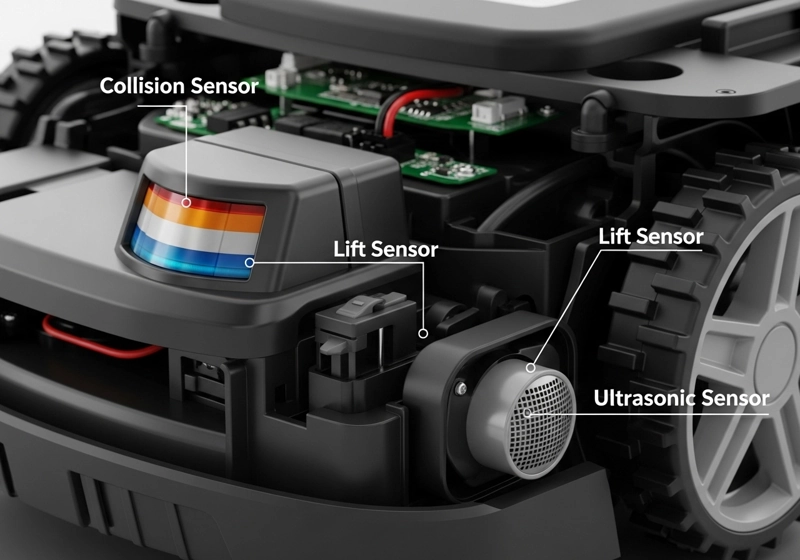
The first time I opened up a robotic mower to see what was inside, I counted more sensors than my pickup truck has. And every single one serves a purpose.
The collision sensors keep it from smashing into stuff. Seems obvious, right? But early models I tested would just ram into everything until they broke something. These newer ones detect obstacles and change direction before impact.
Then there’s the lift sensor. Pick up the mower while it’s running, and the blades stop instantly. I learned to appreciate this feature after nearly losing a finger during a demonstration. The customer was asking questions, I bent down to show him something, and grabbed the mower without thinking. Blades stopped the second it left the ground. This is exactly why understanding proper lawn mower safety protocols is so crucial, whether you’re using robotic or traditional mowers.
Rain sensors are brilliant. Nobody should cut wet grass – it’s bad for the lawn and dangerous for the equipment. These smart mowers know to head home when they detect moisture. I’ve watched them race back to their charging stations as storm clouds rolled in.
The premium models have ultrasonic sensors too. Works like bat sonar, detecting objects before physical contact. During one demo, the mower “saw” a garden hose coiled under a bush and navigated around it. The customer was impressed. So was I. This ultrasonic technology operates on the same principles that bats use for echolocation in nature.
The Cutting System That Actually Makes Sense
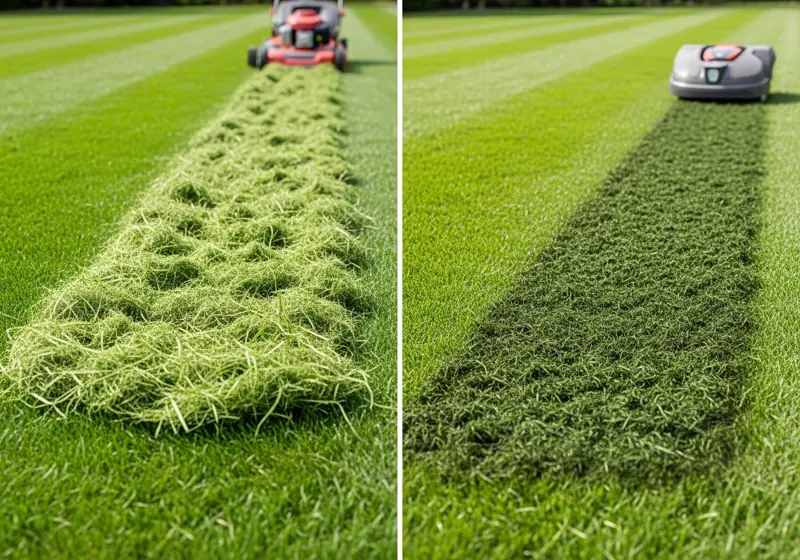
Traditional mowers cut grass once a week and leave you dealing with clippings. Bag them, mulch them, rake them – always something to do with the debris.
Robot mowers flip this completely. They cut just the tips, maybe half an inch at most, every single day. Those tiny clippings fall right back into the lawn and decompose in hours, not days. It’s like giving your grass a daily trim instead of a weekly buzz cut.
My own lawn improved dramatically after switching to robotic cutting. Thicker, greener, fewer bare spots. The constant, small cuts stress the grass less, and the decomposing clippings act like natural fertilizer. This mulching approach works similarly to what you get with a gas lawn mower mulching, but without the weekly effort.
The cutting deck floats over the ground contour, too. No more scalped high spots or tall grass in the low areas. I used to spend extra time trying to get an even cut on my sloped backyard. The robot mower handles it perfectly every single time.
Power Systems That Finally Work Right
Battery technology took forever to catch up to the concept. Early models I tested ran for maybe 30 minutes before needing a two-hour charge. Completely impractical for anything bigger than a postage stamp.
Today’s lithium-ion batteries changed everything. The advancement in battery technology has made battery-powered electric mowers a viable alternative to gas for many homeowners.
Today’s lithium-ion batteries changed everything. My current test unit runs for three hours straight on a single charge. When it needs juice, it follows the boundary wire back to the charging station like a homing pigeon.
The charging is completely automatic. Mower docks itself, charges up, then heads back out to continue where it left off. I’ve watched customers forget they even own a mower because the whole process is so seamless.
How Well Do Robot Lawn Mowers Work in Real-World Conditions
This is the million-dollar question, right? Do these things actually deliver, or are they just expensive toys for people with more money than sense?
After selling these for five years now, I can give you the straight answer: they work incredibly well, but only if you set them up correctly and have realistic expectations.
Real Performance on Real Lawns
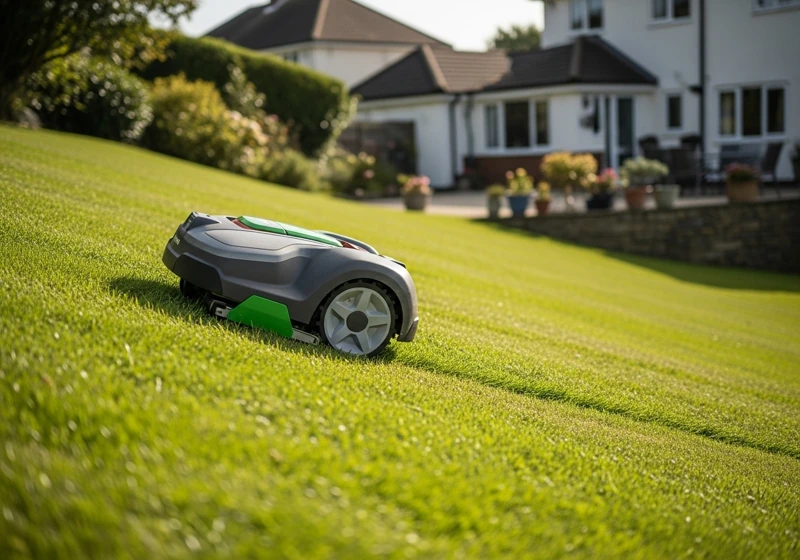
Flat, well-established lawns are where these mowers shine. I’ve got customers whose grass looks like golf course fairways now. The daily cutting creates this perfect, uniform appearance that’s almost impossible to achieve with weekly mowing.
But slopes are tricky. Most models handle inclines up to about 15-20 degrees, though some premium units can tackle steeper terrain. I always walk customers’ properties before recommending a model. Steep backyard? You need a specific type of mower, not just any robot unit.
Complex yard layouts used to be deal-breakers. Narrow passages between buildings, lots of tight corners, multiple levels – early models just couldn’t handle the complexity. Now? The GPS mapping and improved navigation make most of these challenges manageable.
The Edge Cutting Truth Nobody Mentions
Marketing materials show robot mowers cutting right up to fence lines and sidewalk edges. Reality is a bit different.
Most models get within 2-3 inches of boundaries. Better than the old days when you’d have 6-inch grass strips along every edge, but you’ll still need periodic touch-ups with a string trimmer.
I tell customers to budget maybe 20 minutes of trimming every other week instead of three hours of mowing every weekend. That’s still a massive time savings, and the trade-off is worth it for most people.
Seasonal Challenges I’ve Observed
Spring growth can overwhelm some models. May and June in Ohio mean grass grows fast, and I’ve seen robot mowers struggle to keep up during growth spurts. The solution is usually increasing the cutting frequency, but it’s something to consider.
Fall leaf coverage confuses sensors on some units. Light leaf fall is fine, but thick coverage from mature trees might require raking before the mower can work effectively.
Winter storage is simple – bring it inside when temperatures consistently drop below freezing. Batteries and electronics don’t like extreme cold.
Different Types: Robot vs Automatic vs Auto Mowers
This naming confusion drives me absolutely crazy because customers think they’re shopping for different machines.
The Name Game Makes No Sense
Robot lawn mowers, automatic lawn mowers, auto mowers – they’re all the same thing. Marketing departments just use different terms to sound unique. “Robotic” sounds high-tech, “automatic” sounds reliable, “auto” sounds simple. Pick your favorite term – you’re buying the same basic technology.
Real differences are in features, not names.
Entry-Level vs Premium: What You Get for Your Money
Basic models work fine for smaller, simpler yards. They’ll cut your grass without fancy navigation or smartphone apps. Perfect if you’ve got under a quarter-acre and don’t need remote monitoring.
Premium units justify their cost with GPS mapping, weather integration, app connectivity, and anti-theft features. I’ve got customers who adjust their mowing schedules from Florida vacation homes. These models handle larger, more complex properties and offer convenience features that busy professionals appreciate.
The jump in price is significant, but so is the jump in capability and convenience.
Popular Brands and Models: What I Actually Sell
Five years of selling these things teaches you which brands deliver and which ones cause headaches.
Husqvarna Automower: Still the Standard
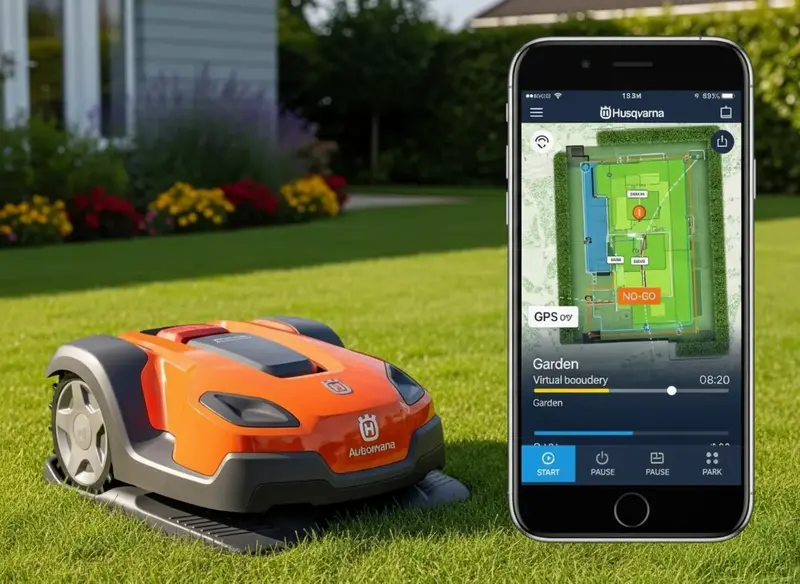
Husqvarna invented robotic mowing, and their Automower line remains my go-to recommendation. I’ve probably sold 200 Husqvarna units, and customer satisfaction stays consistently high.
The 415X handles slopes up to 22 degrees and includes GPS tracking for theft protection. Build quality is solid, navigation is reliable, and their dealer support network actually helps when problems arise.
What I like most? These mowers learn and improve over time. After a few weeks, they’re cutting more efficiently than when first installed. Want a detailed comparison of how Husqvarna stacks up against other robotic brands?
Husqvarna Lawn Mowers


Worx Landroid: Best Bang for Your Buck
Worx offers impressive features at lower prices. Their Landroid series includes AI navigation that learns your yard characteristics. The cut-to-edge feature gets closer to boundaries than most competitors.
I recommend Worx to budget-conscious customers who still want smart features like app connectivity and weather integration. Build quality is decent, though not quite Husqvarna level.
Other Options Worth Considering
Robomow makes installation easier with some models that don’t require boundary wire in simple yard configurations. Significant advantage if you want minimal setup complexity.
Greenworks and EGO entered the market recently with models that integrate with their existing battery tool systems. If you already own their equipment, compatibility might influence your decision.
Installation and Maintenance: What You’re Actually Getting Into
Time for some honesty about what owning one of these machines actually involves.
Boundary Wire Installation Reality Check
Installing boundary wire is the biggest pain point for most customers. You can bury it underground or stake it to the surface. Surface installation is easier initially, but underground looks better long-term.
Plan on spending most of a Saturday getting this right. The wire needs to go around your entire cutting area while avoiding obstacles. Sounds simple, but there are tricks to getting corners right and managing slopes.
I offer installation service because half my customers don’t want to tackle this themselves. Professional installation costs extra but eliminates frustration and ensures proper operation.
Actual Maintenance Requirements
Maintenance is lighter than traditional mowers, but not zero. Weekly cleaning is important, especially removing grass buildup from underneath. Blade replacement happens once or twice per season, depending on usage. Regular maintenance extends the life of any mower, just like with traditional models.
Battery care involves proper charging cycles and indoor storage during winter. Most lithium-ion batteries last 3-4 years before needing replacement.
Small stuff breaks occasionally – sensors get dirty, wire connections loosen, software glitches happen. Nothing major, but robot mowers aren’t completely maintenance-free like some marketing suggests.
Making the Right Choice for Your Situation
After helping probably 500 customers make this decision, I’ve learned that robotic mowing works great for some people and terribly for others.
Success depends on matching the technology to your specific needs and expectations. Got a relatively flat yard under an acre with established grass? Value your weekend time over hands-on control? A robot mower could be perfect. If you’re still weighing all your options, check out our complete guide to choosing the right mower for different yard types and needs.
Steep slopes, complex obstacles, or do you actually enjoy the physical activity of mowing? Stick with traditional methods. Nothing wrong with preferring hands-on lawn care.
The biggest shift is mental. Instead of weekend mowing sessions, you get consistent daily maintenance. Your lawn looks professionally maintained, but you lose the immediate satisfaction of completing a weekend project.
Understanding how robot lawn mowers work means recognizing they represent a completely different approach to lawn care. When you match the right model to your property and expectations, results can be genuinely impressive. When you don’t, you end up frustrated and disappointed.
Whether you choose basic functionality or premium features with GPS and smartphone control, you’re joining thousands of homeowners who’ve discovered that sometimes the best way to maintain a beautiful lawn is letting smart technology handle the routine work while you enjoy better results. To learn more about how robotic mowers evolved into today’s sophisticated machines, explore the fascinating history behind this technology.
Robot mowers use small, razor-sharp blades that make frequent, tiny cuts – typically removing just the grass tips each time they pass over an area. Unlike traditional mowers that cut once weekly, these machines trim daily, leaving microscopic clippings that decompose quickly and naturally fertilize your lawn. The cutting deck floats over ground contours to maintain consistent height across uneven terrain.
Modern robot mowers use a combination of boundary wire and GPS navigation. The boundary wire creates an electromagnetic field that guides the mower and defines cutting areas, while built-in sensors detect the wire’s signal to stay within designated zones. Premium models include GPS mapping that learns your yard’s layout over time, creating efficient cutting patterns and remembering obstacle locations like trees and flower beds.
Yes, most modern robotic mowers incorporate GPS technology alongside traditional boundary wire systems. The GPS creates detailed maps of your property, optimizes cutting patterns, and enables features like theft tracking and smartphone app connectivity. However, entry-level models may rely solely on boundary wire navigation, while premium units combine both GPS and wire guidance for maximum efficiency.
Robot mowers automatically return to their charging stations when battery levels drop low. Using the boundary wire as a guide, they navigate back to the docking station, connect themselves to charge, and then resume mowing where they left off. The entire process is completely autonomous – most lithium-ion batteries charge fully in 1-3 hours depending on the model.
Yes, quality robot mowers handle moderately uneven terrain well thanks to floating cutting decks that adjust to ground contours. Most models navigate slopes up to 15-20 degrees, with premium units handling inclines up to 22 degrees. However, extremely steep slopes, deep holes, or severe terrain irregularities can pose challenges and may require specific high-performance models.
Modern robotic mowers include multiple safety features: lift sensors that immediately stop blades when the mower is picked up, collision sensors that detect obstacles, rain sensors that send the unit home during wet conditions, and PIN code security to prevent unauthorized use. The small, recessed blades are much safer than traditional mower blades, and most units automatically shut down if tilted or flipped over.
