
Lawn Mower Maintenance and Troubleshooting: The Complete Guide
Last Thursday, my neighbor Bob showed up at my door with that familiar look of defeat. His mower had been sitting in the garage for three weeks because it wouldn’t start. “Mike,” he said, “this thing’s driving me crazy.” Twenty minutes later, we had it purring like a kitten. The culprit? Stale gas and a dirty spark plug.
Table of Contents
▼- Getting to Know Your Mower (The Stuff That Matters)
- The Engine – Your Mower’s Heartbeat
- That Spinning Blade Down There
- Everything Else That Moves
- My Maintenance Schedule (The One That Works)
- Before You Fire It Up (Takes 2 Minutes, Saves Your Sanity)
- After You’re Done (10 Minutes That’ll Add Years to Your Mower’s Life)
- Monthly Check-Ups During Mowing Season
- Big Maintenance Twice a Year
- Blade Maintenance (The Thing Everyone Gets Wrong)
- When Your Blade Is Trying to Tell You Something
- Getting That Blade Off (Without Losing Fingers)
- Sharp vs. Trash
- Engine Care (It’s Not as Scary as It Sounds)
- Oil Changes (Cheap Insurance)
- Air Filter TLC
- Spark Plug Replacement
- Fuel System Headaches (And How to Avoid Them)
- The Right Gas Matters
- The Big Mistake Everyone Makes
- Carburetor Care
- Troubleshooting the Usual Suspects
- Won’t Start (The Classic Saturday Morning Nightmare)
- Starts Then Dies Immediately
- Cuts Like Garbage
- Shakes Like It’s Falling Apart
- Self-Propelled Drive Issues
- Seasonal Storage and Startup
- Putting It to Bed for Winter
- Spring Wake-Up Call
- Safety Stuff (The Not-Fun But Really Important Part)
- Gear Up
- Work Smart
- When to Wave the White Flag
- Major Engine Problems
- Warranty Worries
- The Math Doesn’t Work
- Wrapping This Up
This happens more than you’d think. I’ve been fixing mowers for over 15 years now, and I’d say about 80% of the “broken” mowers that come into my shop just need some basic TLC. The funny thing is, most of these problems never would’ve happened if folks knew a few simple maintenance tricks.
Here’s the deal – your mower wants to work. It does. But like any piece of equipment, it needs a little love to keep running strong. Whether your mower is acting up right now or you just want to avoid future headaches, I’m gonna walk you through everything I’ve learned about keeping these machines happy.
Getting to Know Your Mower (The Stuff That Matters)
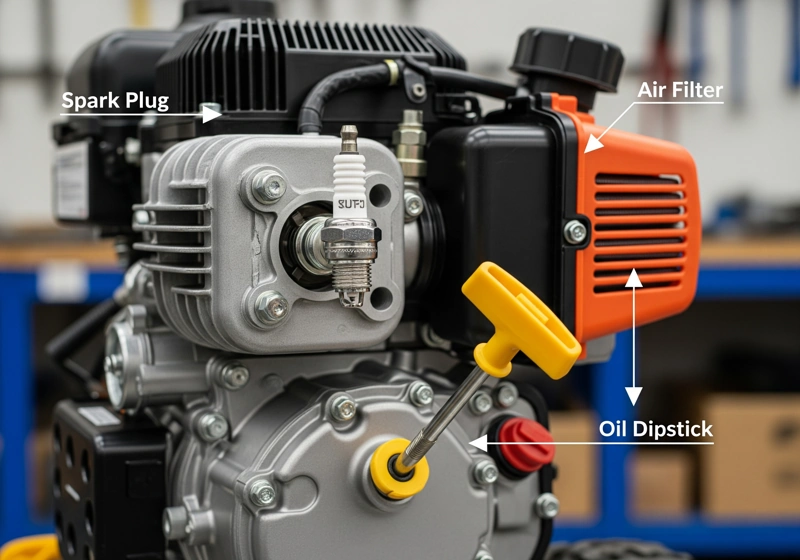
Look, I could bore you with technical diagrams and part numbers, but let’s keep this real. You’ve got an engine that makes things spin, a blade that cuts grass, and some wheels that move the whole contraption around. Everything else is just details.
The Engine – Your Mower’s Heartbeat
Gas mowers have a few key parts that’ll make or break your day. There’s the spark plug (think of it as the mower’s ignition key), the air filter (basically the mower’s nose), and the fuel system (its stomach). When one of these gets cranky, your whole Saturday goes sideways.
Battery and electric mowers are way simpler – fewer things to break, which is honestly refreshing. But they’ve still got their quirks, mainly around keeping connections clean and batteries healthy.
That Spinning Blade Down There
This is where the magic happens. Your blade needs to be sharp enough to slice through grass cleanly, not tear it like a dull kitchen knife ripping through a tomato. A lot of people think any spinning piece of metal will do the job. Trust me, your grass knows the difference, and so will your neighbors.
The blade connects to the engine through a shaft, and the whole setup needs to be balanced. Imagine trying to drive with a wobbly tire – that’s what happens when your blade is out of whack.
Everything Else That Moves
Self-propelled mowers have belts, gears, and drive systems. Push mowers have height adjustments and safety handles. Here’s what I’ve learned after fixing thousands of these things: when one part starts acting up, it usually drags other parts down with it. It’s like dominoes, but more expensive.
My Maintenance Schedule (The One That Works)
I used to wing it with maintenance. Big mistake. I learned the hard way that a few minutes of prevention beats hours of weekend frustration. Here’s the routine I follow now, and it’s saved me countless headaches.
Before You Fire It Up (Takes 2 Minutes, Saves Your Sanity)
Every single time you’re about to mow, just give things a quick look. Check your oil – pull that little dipstick and make sure you’ve got enough in there. If it looks black as coffee, you’re overdue for a change.
Peek at the air filter. If it looks like it’s been through a dust storm, clean it or swap it out. Give the blade a visual inspection for obvious damage. I’ve seen guys try to mow with blades that look like they went through a blender.
For battery mowers, make sure everything’s charged and connected properly. With corded electrics, check the cord for cuts or damage. Nobody wants to accidentally mow over their cord en there, done that, bought the replacement.
After You’re Done (10 Minutes That’ll Add Years to Your Mower’s Life)
This is where most people mess up. They park the mower and forget about it until next weekend. Don’t be that person.
First, disconnect the spark plug wire – safety first, always. Then flip that mower up (air filter side up, never down) and scrape all the grass gunk off the bottom. I use an old putty knife, but anything sturdy works. That buildup isn’t just ugly – it holds moisture and breeds rust.
Wipe down the outside while you’re at it. Grass stains look terrible, and they’re harder to remove if you let them sit.
Monthly Check-Ups During Mowing Season
Once a month, spend a little extra time with your mower. Grab a wrench and check that all the bolts are snug. Things vibrate loose over time – it’s just physics.
Look at that drive belt if you’ve got a self-propelled model. If it’s frayed, cracked, or stretched out like old elastic, it’s time for a new one. Check your wheels too. I’ve seen mowers that wobble worse than shopping carts because someone ignored a loose wheel.
Give that air filter a proper cleaning. Paper filters get a gentle tap to knock debris loose. Foam filters need a bath in soapy water, followed by a thorough rinse and air dry. Once it’s dry, put a light coat of clean oil on it before you reinstall it.
Big Maintenance Twice a Year
Beginning and end of season, that’s when you do the heavy lifting. Oil change, new spark plug, blade sharpening or replacement, and a thorough inspection of everything. This is when you catch the little problems before they become big, expensive problems.
Blade Maintenance (The Thing Everyone Gets Wrong)
I can’t tell you how many times I’ve walked past a house and thought, “That person needs to sharpen their blade.” You can tell just by looking at the grass. Those brown, ragged edges on the grass tips? Dead giveaway of a dull blade.
When Your Blade Is Trying to Tell You Something
Your lawn will show you when the blade needs help. After mowing, take a look at the grass tips. If they’re brown and frayed instead of clean and green, your blade is ripping instead of cutting. Also, if you’re having to go over the same spots multiple times or you’re seeing uncut strips, that blade is done.
I usually tell people to expect 2-3 sharpenings per season, but it depends on how much you mow and what you’re cutting through. Hit a few rocks or tree roots, and you might need more frequent touch-ups.
Getting That Blade Off (Without Losing Fingers)
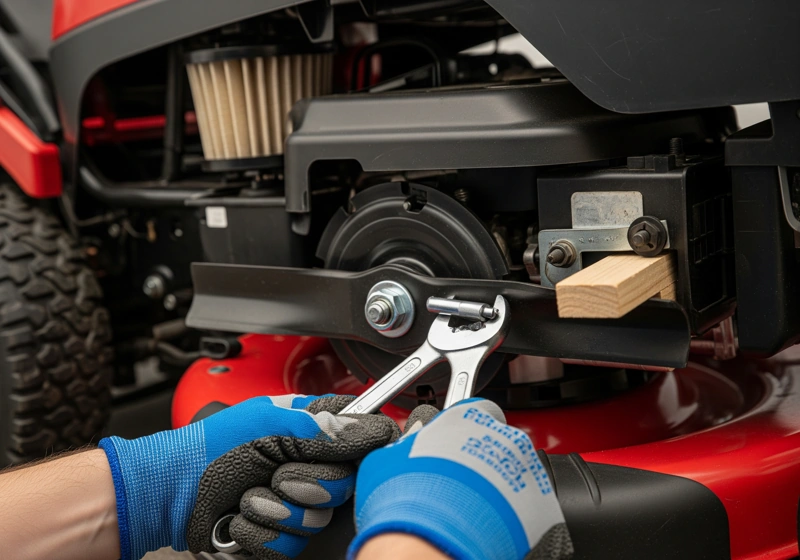
Safety first – disconnect that spark plug wire. I mean it. I’ve seen too many accidents from people who skipped this step.
Tip the mower with the air filter pointing up. This is crucial – tip it the wrong way and you’ll flood the engine with oil. Use a block of wood to jam against the blade so it doesn’t spin while you’re loosening the bolt. And here’s a pro tip: before you remove that blade, make a mark showing which way it was facing. It needs to go back the same way.
Sharp vs. Trash
Minor nicks and general dullness? That’s fixable with sharpening. But if you’ve got cracks, major chips, or the blade looks like it lost a fight with a rock, just buy a new one. Don’t mess around with damaged blades – they can break apart and hurt someone.
When you sharpen, keep the original angle (usually around 30-45 degrees) and make sure both ends weigh the same. An unbalanced blade will shake your mower apart over time. If you’re not confident doing this yourself, any mower shop can handle it for about $20-30.
Here’s something I always recommend: keep a spare blade. During peak season, you can swap the dull one for the spare and sharpen the dull one when you have time. No more missing mowing days because of blade issues.
Engine Care (It’s Not as Scary as It Sounds)
The engine might seem intimidating, but honestly, most maintenance is pretty straightforward. I’ve taught plenty of people who’d never touched a small engine before.
Oil Changes (Cheap Insurance)

Change your oil once per season, minimum, or every 25 hours if you mow a lot. I usually tell people to think of it this way – oil changes cost about $10, while engine replacements start around $300. Easy math.
Use whatever oil your manual recommends – usually SAE 30 for most conditions or 10W-30 if you’ve got temperature swings. Change it when the engine’s warm (not hot) so it flows out easier, and don’t overfill. Too much oil causes just as many problems as too little.
Air Filter TLC
Your air filter keeps dirt out of the engine. When it gets clogged, your mower starts running like it’s got a bad cold. Paper filters are cheap – just replace them when they’re dirty. Foam filters can be washed and reused several times.
To wash a foam filter, use warm soapy water, rinse it really well, and let it air dry completely. Before you put it back, spread a thin layer of clean oil on it. This helps it catch particles better.
Spark Plug Replacement
The spark plug fires the gas mixture in your engine. When it’s worn out, you get hard starting, rough running, or poor performance. Replace it annually or every 100 hours – they’re only a few bucks, so don’t be cheap here.
New plugs need to be gapped correctly – usually 0.028 to 0.031 inches. Your local parts store can check this for you if you’re not sure. When installing, hand-tighten first, then use a wrench to snug it down. Don’t overtighten or you’ll strip the threads.
Fuel System Headaches (And How to Avoid Them)
If I had a dollar for every fuel-related problem I’ve fixed, I could probably retire. The good news? Almost all of these are preventable.
The Right Gas Matters
Use fresh gasoline with no more than 10% ethanol. Avoid E15 or higher – it’ll eat up your fuel system over time. I never use gas that’s more than 30 days old, and I always add stabilizer if I’m storing fuel for any length of time.
The Big Mistake Everyone Makes
Leaving old gas in the tank over winter is mower suicide. Gas goes bad, turns to varnish, and clogs everything up. Either run your mower dry at the end of the season or add stabilizer and run the engine for a few minutes to get it throughout the system.
I learned this lesson the hard way about 20 years ago. Left a mower sit all winter with a full tank. Come spring, I spent three hours cleaning out a gummed-up carburetor. Never again.
Carburetor Care
The carburetor mixes fuel and air in the right proportions. When it gets gunked up from old fuel, you get starting problems, rough idling, or no power. Some basic cleaning is doable at home, but complicated carburetor work usually needs a professional.
Troubleshooting the Usual Suspects
Let me walk you through the problems I see most often. Nine times out of ten, it’s one of these issues.
Won’t Start (The Classic Saturday Morning Nightmare)

Start with the obvious stuff. Got gas? Spark plug wire connected? Safety bail engaged? You’d be surprised how often it’s something simple like this.
Check the oil level next. Lots of newer mowers have low-oil shutoffs – they won’t start if the oil’s low. For pull-start mowers, make sure you’re following the right procedure: prime (if equipped), choke, then pull with steady strokes. Don’t yank on it like you’re starting a chainsaw.
Starts Then Dies Immediately
This screams fuel delivery problem. Check that the fuel cap vent isn’t plugged (try loosening the cap slightly and see if it runs better). Make sure you’re using fresh gas. Also, check the air filter – if it’s completely clogged, the engine can’t breathe.
Cuts Like Garbage
Usually means blade problems. Is it sharp? Properly installed? Cutting height set right on all wheels? Also, slow down – I see people racing across their yards like they’re in the Indy 500. Let the blade do its work.
Shakes Like It’s Falling Apart
Something’s out of balance or loose. Check the blade first – is it damaged or improperly installed? Look for loose bolts everywhere, especially engine mounting bolts. A bent or damaged blade will shake the whole mower to pieces.
Self-Propelled Drive Issues
Check the drive belt first – it might be worn, broken, or slipped off. Make sure the drive control is adjusted properly. Sometimes the drive wheels just need cleaning – grass and dirt can build up and cause slipping.
Seasonal Storage and Startup
Proper seasonal care is probably the most important thing you can do for your mower’s longevity.
Putting It to Bed for Winter

Before winter storage, change the oil and spark plug. Clean everything thoroughly – grass left on the mower holds moisture and promotes rust. Either drain all the fuel or add stabilizer and run the engine to distribute it.
If you’ve got a battery mower, remove the battery and store it somewhere cool and dry. Clean all metal surfaces and hit them with a light coat of oil to prevent rust. Store the mower somewhere dry, preferably off the concrete floor.
Spring Wake-Up Call
Before your first mow, inspect everything for winter damage. Check fluid levels, clean or replace the air filter, and make sure the blade is sharp. If you stored it with stabilized fuel, you should be fine, but if there’s any doubt, drain and refill.
Test all the safety features and controls. Walk your property and clear any debris that might have accumulated over winter. Nobody wants to mow over a stick or rock on the first cut of the season.
Safety Stuff (The Not-Fun But Really Important Part)
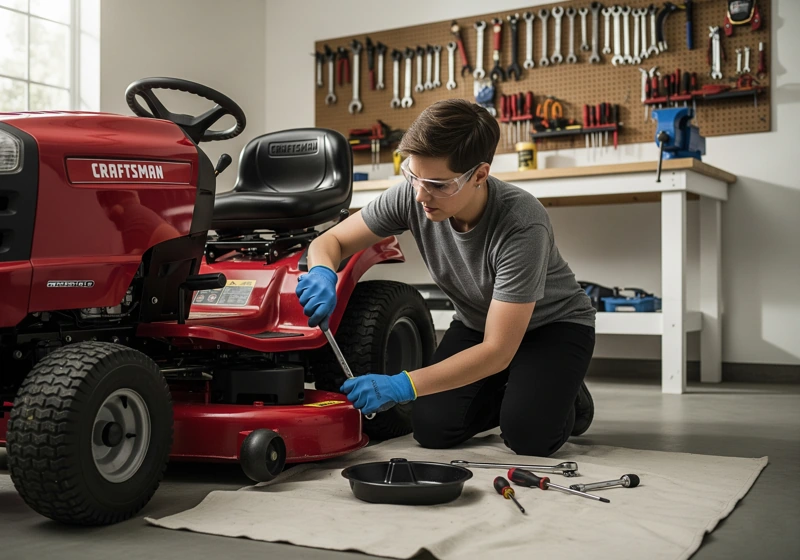
I’ve seen too many accidents that could’ve been prevented with basic safety practices. Don’t be a statistic.
Gear Up
Always wear safety glasses when working on your mower. Sturdy shoes are a must – flip-flops and mowers don’t mix. Work gloves protect your hands from sharp edges and hot surfaces.
When mowing, wear long pants and closed-toe shoes. If you’ve got a loud gas mower, consider ear protection for longer sessions.
Work Smart
Never, ever work on a running mower. Always disconnect the spark plug wire on gas models, and remove the battery on electric ones. When tipping for maintenance, always tip with the air filter up to prevent oil flooding.
Keep a fire extinguisher handy when dealing with gas. Store fuel in proper containers away from heat sources. And for the love of all that’s holy, don’t smoke while handling gas.
When to Wave the White Flag
I’m all for DIY maintenance, but sometimes you need professional help. Here’s when to call in the cavalry.
Major Engine Problems
Internal engine issues like compression problems, timing issues, or major fuel system damage usually need professional diagnosis and repair. These require specialized tools and knowledge that most homeowners don’t have.
Warranty Worries
If your mower’s still under warranty, check what maintenance you can do yourself before diving in. Some warranties get voided by improper maintenance or unauthorized repairs.
The Math Doesn’t Work
Sometimes repair costs exceed the mower’s value. As a general rule, if fixes cost more than half the replacement price, it’s time to shop for a new mower. But well-maintained quality mowers can often justify professional repair even after many years.
Wrapping This Up
Look, mower maintenance isn’t rocket science. It’s just about being consistent with the basics. Keep the blade sharp, change the oil regularly, use fresh fuel, and clean things up after each use. Do that, and you’ll avoid 90% of the problems I see in my shop.
Your mower is an investment in your property and your weekend sanity. Take care of it, and it’ll take care of you for years to come. I’ve got customers still running mowers they bought 15-20 years ago because they followed these simple practices.
The next time you’re tempted to skip the post-mow cleanup or put off that oil change, remember my neighbor Bob standing at my door with that defeated look. A little maintenance now beats a lot of frustration later. And there’s nothing quite like a mower that starts on the first pull and cuts like butter, season after season. Trust me – your future self will thank you.
Essential lawn mower maintenance includes checking and changing the oil regularly, keeping the blade sharp, cleaning or replacing the air filter, and cleaning grass clippings from the deck after each use. You’ll also need to replace the spark plug annually, check fuel quality, and inspect belts and moving parts for wear. I always tell my customers that these basic tasks prevent 90% of the problems I see in my shop. The key is staying consistent with a simple routine rather than waiting until something breaks.
Most mowers need professional servicing once a year, preferably in early spring before the mowing season starts. However, if you’re comfortable doing basic maintenance yourself, you can handle monthly check-ups during mowing season and seasonal deep maintenance in spring and fall. I recommend professional service if you’re dealing with engine problems, complex carburetor issues, or if your mower is still under warranty. For basic maintenance like oil changes and blade sharpening, many homeowners can handle these tasks themselves.
Change your mower’s oil at least once per mowing season or every 25 hours of operation, whichever comes first. For heavy users who mow large properties frequently, you might need oil changes twice per season. Here’s what I’ve learned after 15 years: fresh oil is cheap insurance against expensive engine repairs. Always check the oil level before each use with the dipstick – it should reach the “full” mark but not exceed it. If the oil looks black as coffee or has metal particles in it, change it immediately.
Absolutely! I can’t stress this enough – cleaning your mower after each use is one of the most important maintenance habits you can develop. Grass clippings left on the deck hold moisture and cause rust, while buildup under the deck affects cutting performance. It only takes 10 minutes to scrape off the clippings with a putty knife and wipe down the exterior. Always disconnect the spark plug wire first for safety. This simple habit will add years to your mower’s life and keep it running efficiently.
Check the oil level using the dipstick before each use – it’s a 30-second task that can save you hundreds in engine repairs. The oil should reach the “full” mark on the dipstick. Also pay attention to the oil’s appearance: fresh oil is golden or amber colored, while old oil turns black and thick. If you see metal particles in the oil or it smells burnt, change it immediately. Many newer mowers have low-oil shutoff switches, so if your mower won’t start and you’ve got fresh gas, check the oil level first.
A well-maintained lawn mower typically lasts 8-10 years for regular homeowner use, though I’ve seen quality mowers like Honda and Toro models run strong for 15-20 years with proper care. The key factors are maintenance consistency, usage hours, and storage conditions. Mowers that get regular oil changes, blade maintenance, and proper seasonal care far outlast neglected ones. I always tell customers that spending $50-100 per year on maintenance can triple your mower’s lifespan compared to running it into the ground and replacing it every few years.
