
The Environmental Impact of Lawn Mowers: Why Eco-Friendly Options Matter
You know that Saturday morning ritual – you’re getting ready to tackle your lawn when you fire up your gas mower, and suddenly the whole neighborhood knows you’re about to get to work. But here’s something that might surprise you: that familiar roar isn’t just announcing your lawn care session. It’s contributing to environmental problems that extend far beyond your property line.
Table of Contents
▼- The Hidden Environmental Cost of Traditional Gas Mowers
- Air Quality: More Than Just Exhaust Fumes
- Noise Pollution: The Overlooked Environmental Impact
- Fuel Consumption and Spill Concerns
- The Broader Petroleum Picture
- Why Electric and Battery-Powered Options Make a Difference
- Immediate Environmental Benefits
- The Grid Electricity Factor
- Battery Technology Improvements
- Manual and Push Reel Mowers: The Ultimate Eco-Friendly Option
- Environmental Benefits of Manual Mowers
- Practical Considerations
- Maintenance and Longevity: The Long-Term Environmental Picture
- Gas Mower Maintenance Environmental Costs
- Electric Mower Maintenance Advantages
- Smart Mowing Practices That Amplify Environmental Benefits
- Grass Cycling and Mulching
- Optimal Mowing Height
- Timing and Frequency
- The Broader Impact: Community and Industry Change
- Market Response
- Community Programs
- Professional Services Adapting
- Economic Considerations: The Financial Environmental Connection
- Operating Cost Comparison (Annual)
- Initial Investment Recovery
- Addressing Common Concerns About Eco-Friendly Mowers
- “Electric Mowers Don’t Have Enough Power”
- “Battery Life Isn’t Sufficient”
- “Electric Mowers Are Too Expensive”
- Making the Transition: Practical Steps
- Assess Your Current Situation
- Research Your Options
- Time Your Purchase
- Proper Disposal of Old Equipment
- The Future of Eco-Friendly Lawn Care
- Technology Developments
- Integration with Smart Home Technology
- Community-Wide Programs
- Beyond Mowers: Holistic Eco-Friendly Lawn Care
- Organic Fertilization
- Native Plant Integration
- Integrated Pest Management
- Water Conservation
- Measuring Your Environmental Impact
- Annual Emissions Savings
- Cumulative Community Impact
- Conclusion: Your Lawn, Your Choice, Our Shared Environment
After spending over a decade in the lawn care industry and witnessing firsthand how much our equipment choices affect both our immediate surroundings and the broader environment, I’ve become passionate about helping homeowners understand the real environmental impact of their mowing decisions. And trust me, the numbers might shock you.
The Hidden Environmental Cost of Traditional Gas Mowers
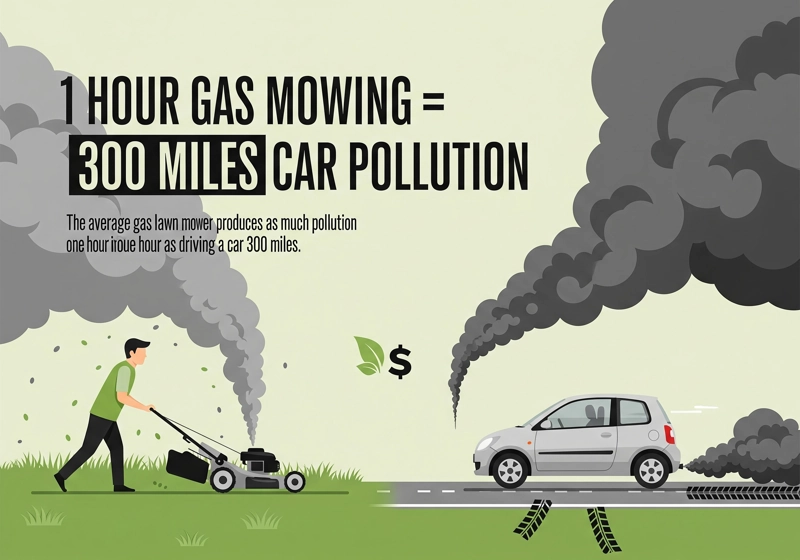
Let’s begin with some eye-opening facts that put things into perspective. According to the EPA, running a gas-powered lawn mower for just one hour produces the same amount of pollution as driving a car for 300 miles. Yes, you read that right – 300 miles.
Here in Texas, where I maintain my half-acre plot, I used to run through about 30 gallons of gas per season with my old Craftsman mower. That seemed pretty normal until I started calculating what that meant for the environment. Those 30 gallons were responsible for releasing approximately 600 pounds of CO2 into the atmosphere – and that was just from my yard alone.
Air Quality: More Than Just Exhaust Fumes
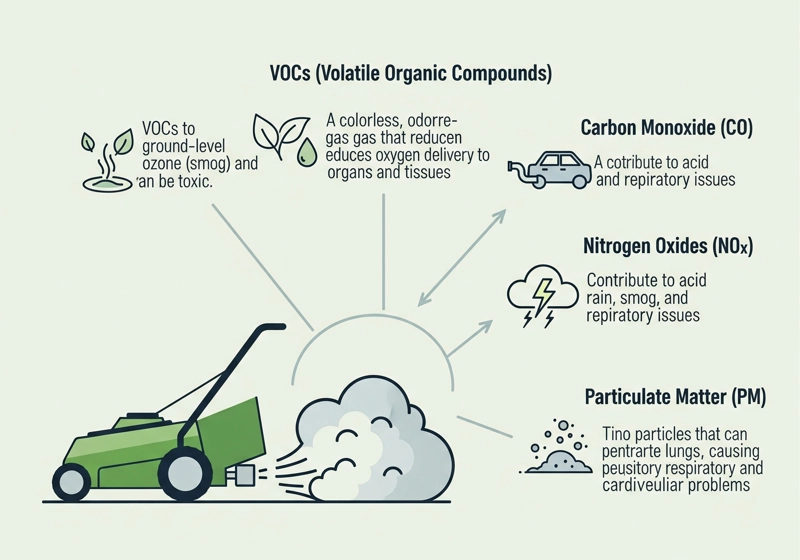
The air quality impact goes beyond carbon emissions. Gas mowers produce significant amounts of:
Volatile Organic Compounds (VOCs): These contribute to ground-level ozone formation and smog. On hot Texas days, this becomes particularly problematic as the heat accelerates these chemical reactions.
Carbon Monoxide: This colorless, odorless gas is especially concerning in residential areas where people are often working in their yards with windows open.
Nitrogen Oxides: These compounds contribute to acid rain and respiratory problems, particularly affecting children and elderly residents in our communities.
Particulate Matter: The fine particles released can travel significant distances and penetrate deep into lung tissue.
I started noticing this impact more acutely when my neighbor’s young daughter began having more frequent asthma attacks during peak mowing season. It drove home how our individual choices affect our entire community’s health.
Noise Pollution: The Overlooked Environmental Impact
Now, you might not immediately think of noise as an environmental issue, but it is. Gas mowers typically operate at 85-90 decibels – that’s loud enough to cause hearing damage with prolonged exposure and significantly disrupt local wildlife.
Birds, for instance, rely heavily on audio communication for mating calls, territory establishment, and warning signals. When we’re running loud equipment regularly across suburban neighborhoods, we’re essentially jamming their communication systems. I’ve noticed that bird activity in my yard drops dramatically on mowing days and doesn’t fully return until the next day.
The constant noise also affects beneficial insects like bees and butterflies, which use vibrations and sound frequencies for navigation and communication. Given the current pollinator crisis, this is something we really can’t afford to ignore.
Fuel Consumption and Spill Concerns
Here’s something most homeowners don’t think about: fuel handling and storage. The average gas mower holds about half a gallon of fuel, and most of us keep extra gasoline stored in our garages or sheds. Every time you fill up that mower, there’s potential for spills – and even small spills add up across millions of households.
I learned this lesson the hard way when I accidentally overfilled my old mower and spilled about a cup of gasoline on my driveway. That small amount of gas can contaminate up to 150 gallons of groundwater. Multiply that by the occasional spills happening in driveways and garages across America, and you’re looking at a significant cumulative impact on our water systems.
The Broader Petroleum Picture
Beyond individual spills, every gallon of gas we use in our mowers contributes to the demand for petroleum extraction, refining, and transportation. The lawn care industry as a whole consumes approximately 800 million gallons of gasoline annually – that’s roughly equivalent to the annual fuel consumption of a city the size of Austin, Texas.
This demand contributes to:
- Increased offshore drilling and associated environmental risks
- Pipeline infrastructure expansion and potential leak points
- Refinery emissions and industrial waste
- Transportation-related emissions from fuel distribution
Why Electric and Battery-Powered Options Make a Difference
After researching these environmental impacts extensively, I made the switch to electric equipment about five years ago. The difference has been remarkable, both for my family’s immediate environment and for my peace of mind regarding our environmental footprint.
Immediate Environmental Benefits
Zero Direct Emissions: Electric mowers produce no exhaust at the point of use. This means cleaner air in your yard and neighborhood, which is especially important if you have children playing outside or family members with respiratory sensitivities.
Dramatically Reduced Noise: Most electric mowers operate at 65-75 decibels – quiet enough that you can mow early morning or evening without disturbing neighbors, and wildlife activity in my yard has noticeably increased since making the switch.
No Fuel Spills: Eliminating gasoline handling removes the risk of soil and groundwater contamination from spills during filling, storage, or transportation.
The Grid Electricity Factor
Now, I know what you’re thinking – electric mowers still use electricity, and that electricity has to come from somewhere. You’re right, and it’s important to consider the full picture. However, even when factoring in electricity generation, electric mowers typically have a 75% lower carbon footprint than gas alternatives.
This advantage continues to improve as our electrical grid incorporates more renewable energy sources. Here in Texas, we’re seeing significant expansion in wind and solar generation, which means my mower is increasingly powered by clean energy. Plus, power plants are much more efficient at converting fuel to energy than small gas engines, so even grid electricity from fossil fuels produces fewer emissions per unit of energy delivered.
Battery Technology Improvements
The battery technology improvements over the past five years have been game-changing. My current EGO mower uses a 56V lithium-ion battery that provides 45 minutes of runtime – more than enough for my half-acre lot. The battery charges in about 40 minutes using the rapid charger, and I’ve been using the same battery for three seasons with minimal capacity loss.
Modern lithium-ion batteries are also much more recyclable than people realize. Most major retailers and manufacturers now offer battery recycling programs, ensuring that the materials can be reclaimed and reused rather than ending up in landfills.
Manual and Push Reel Mowers: The Ultimate Eco-Friendly Option
For smaller lawns or those looking to minimize environmental impact entirely, push reel mowers deserve serious consideration. I use one for my front yard, which is about a quarter-acre, and it’s incredibly satisfying.
Environmental Benefits of Manual Mowers
Zero Emissions: No electricity, no gas, no emissions whatsoever.
Zero Noise Pollution: The gentle whirring sound allows you to hear birds and enjoy the outdoor experience.
No Resource Consumption: Beyond the initial manufacturing, these mowers require no ongoing energy input.
Excellent Cut Quality: The scissoring action of reel mowers provides a cleaner cut than rotary mowers, which can improve grass health and reduce water needs.
Practical Considerations
Manual mowers do require more physical effort, and they work best on relatively flat terrain with grass that’s kept at moderate heights. They’re not practical for everyone, but for the right situations, they’re unbeatable from an environmental standpoint.
I find that using the reel mower provides excellent exercise and allows me to observe what’s happening in my lawn – I notice pest issues, dry spots, and weed problems much earlier than I did when I was focused on operating power equipment.
Maintenance and Longevity: The Long-Term Environmental Picture
One often-overlooked aspect of environmental impact is equipment longevity and maintenance requirements. Gas mowers require regular oil changes, air filter replacements, spark plug replacements, and fuel system maintenance – all of which have environmental implications.
Gas Mower Maintenance Environmental Costs
Over a typical 10-year lifespan, a gas mower requires:
- 20-30 oil changes (approximately 15-20 quarts of oil that must be disposed of properly)
- 10-15 air filter replacements
- 15-20 spark plugs
- Regular fuel system cleaning chemicals
- Periodic carburetor rebuilding or replacement
Each of these maintenance items requires manufacturing resources and creates waste that must be managed properly. Unfortunately, not all homeowners dispose of used oil and filters correctly, leading to additional environmental contamination.
Electric Mower Maintenance Advantages
Electric mowers require minimal maintenance:
- No oil changes
- No air filters
- No spark plugs
- Minimal moving parts to wear out
- Battery replacement every 5-7 years (with proper recycling available)
The reduced maintenance requirements mean less resource consumption and waste generation over the mower’s lifetime.
Smart Mowing Practices That Amplify Environmental Benefits
Regardless of what type of mower you choose, your mowing practices can significantly impact the environmental benefits you achieve. Here are strategies I’ve developed over the years that work whether you’re using gas, electric, or manual equipment:
Grass Cycling and Mulching
Leave grass clippings on the lawn whenever possible. This practice, called grass cycling, reduces the organic waste going to landfills while providing natural fertilizer for your lawn. Grass clippings can provide up to 25% of your lawn’s nitrogen needs, reducing or eliminating the need for synthetic fertilizers.
I’ve been grass cycling for eight years now, and my soil quality has improved dramatically. The organic matter from decomposing clippings has increased water retention and reduced my irrigation needs by about 30%.
Optimal Mowing Height
Maintaining proper grass height (typically 2.5-3 inches for most grass types) creates deeper root systems that are more drought-tolerant and naturally crowd out weeds. This reduces the need for supplemental watering and chemical weed control.
Higher grass also provides better habitat for beneficial insects and helps prevent soil erosion during heavy rains – something we deal with regularly here in Texas.
Timing and Frequency
Mowing when the grass is dry reduces the spread of fungal diseases and allows for better grass cycling. I typically mow in the early evening, which is less stressful on the grass and allows any disturbed wildlife to resettle overnight.
Following the “one-third rule” (never cutting more than one-third of the grass height at once) keeps grass healthy and reduces the volume of clippings produced, making grass cycling more effective.
The Broader Impact: Community and Industry Change
Individual choices matter, but they’re most powerful when they contribute to broader community and industry changes. As more homeowners choose environmentally friendly mowing options, we’re seeing significant shifts in the marketplace.
Market Response
Major manufacturers like Toro, Honda, and Craftsman are all investing heavily in electric mower technology. This increased competition is driving rapid improvements in battery life, cutting performance, and affordability. Five years ago, a decent electric mower cost significantly more than a comparable gas model. Today, the price gap has nearly disappeared, and electric mowers often offer better value when you factor in reduced operating costs.
Community Programs
Many communities are implementing programs to encourage eco-friendly lawn care. Some municipalities offer rebates for electric mower purchases, organize gas mower trade-in events, or provide battery recycling programs. Check with your local environmental department – you might be surprised at what programs are available.
Professional Services Adapting
Even professional lawn care services are beginning to offer electric equipment options. While the initial investment is higher for commercial operators, the reduced maintenance costs and improved working conditions for crew members are driving adoption.
Economic Considerations: The Financial Environmental Connection
Let’s talk numbers, because environmental choices often make the most sense when they also make financial sense. Over the past three years of using electric equipment, I’ve tracked my costs carefully compared to my previous gas mower expenses.
Operating Cost Comparison (Annual)
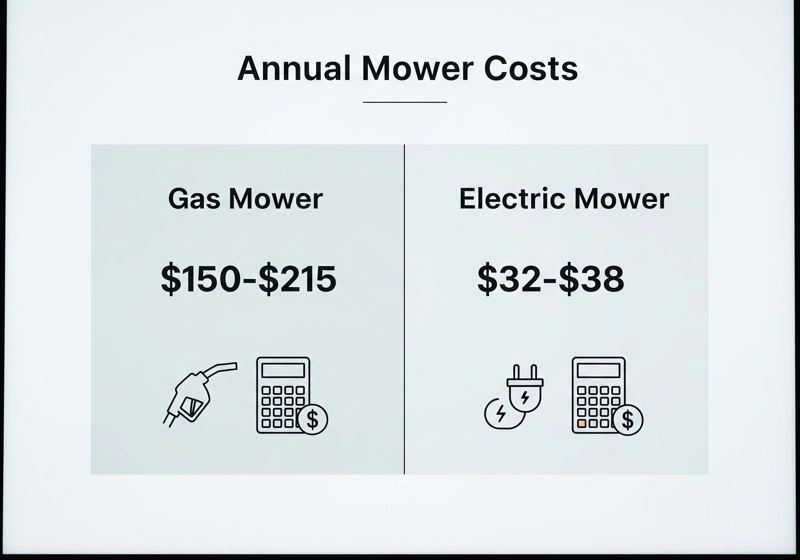
Gas Mower Costs:
- Fuel: $85-120 (depending on gas prices)
- Oil and filters: $25-35
- Spark plugs and maintenance: $40-60
- Total: $150-215
Electric Mower Costs:
- Electricity for charging: $12-18
- Occasional blade sharpening: $20
- Total: $32-38
The annual savings of $100-180 add up significantly over time, and that’s before considering the reduced maintenance hassles and improved reliability of electric equipment.
Initial Investment Recovery
While electric mowers may cost slightly more upfront, the operating cost savings typically recover the price difference within 2-3 seasons. After that, you’re saving money while reducing environmental impact – a true win-win situation.
Addressing Common Concerns About Eco-Friendly Mowers
Over the years, I’ve heard numerous concerns from homeowners considering the switch to eco-friendly mowing options. Let me address the most common ones based on my real-world experience:
“Electric Mowers Don’t Have Enough Power”
This was true a decade ago, but modern electric mowers have comparable cutting power to gas models. My EGO mower handles thick Texas grass, small branches, and even slightly overgrown areas without bogging down. The key is choosing the right voltage and battery capacity for your lawn size and conditions.
“Battery Life Isn’t Sufficient”
For most residential lawns (up to an acre), current battery technology is more than adequate. My 56V battery easily handles my half-acre lot with power to spare. For larger properties, you can either purchase a second battery for extended runtime or consider the new generation of electric mowers that accept multiple batteries simultaneously.
“Electric Mowers Are Too Expensive”
While the upfront cost may be slightly higher, the total cost of ownership is typically lower. When you factor in fuel savings, reduced maintenance costs, and longer equipment life, electric mowers often represent better value over time.
Making the Transition: Practical Steps
If you’re convinced that eco-friendly mowing makes sense for your situation, here’s how to make the transition smoothly:
Assess Your Current Situation
Consider your lawn size, terrain, and grass type. For lawns under half an acre with relatively flat terrain, almost any electric mower will work well. Larger or more challenging properties may require higher-voltage systems or different approaches.
Research Your Options
Battery-Powered: Best for most residential applications, offering good power and runtime without cords to manage.
Corded Electric: Lower cost option for smaller, regularly-shaped lawns where cord management isn’t problematic.
Manual Reel: Excellent for small lawns and those wanting the ultimate eco-friendly option.
Time Your Purchase
Late fall and early spring often offer the best deals on mowers as retailers clear inventory or promote new models. Black Friday and end-of-season sales can provide significant savings.
Proper Disposal of Old Equipment
If you’re replacing a gas mower, dispose of it responsibly. Many retailers offer trade-in programs, and some municipalities have special collection days for small engines. Always drain fuel and oil completely before disposal.
The Future of Eco-Friendly Lawn Care
The trend toward environmentally conscious lawn care is accelerating, driven by both consumer demand and regulatory pressure. Several states are already implementing or considering restrictions on gas-powered lawn equipment, particularly for commercial use.
Technology Developments
Battery technology continues to improve rapidly. Solid-state batteries, expected within the next 3-5 years, promise even longer runtime and faster charging. Solar charging systems are becoming more practical for homeowners with appropriate roof space or yard setup.
Integration with Smart Home Technology
Newer electric mowers often integrate with smartphone apps, allowing you to monitor battery life, schedule maintenance, and track your environmental impact. Some models can even provide data on how much emissions and fuel you’re saving compared to gas alternatives.
Community-Wide Programs
More communities are implementing comprehensive programs that address lawn care environmental impact holistically – combining mower incentives with native plant programs, rain garden initiatives, and integrated pest management education.
Beyond Mowers: Holistic Eco-Friendly Lawn Care
While mower choice is important, it’s just one component of environmentally responsible lawn care. Here are other practices that amplify the environmental benefits of your equipment choices:
Organic Fertilization
I’ve been using compost-based fertilization exclusively for six years now. Not only does it eliminate synthetic chemical runoff concerns, but it’s actually improved my soil quality and reduced my watering needs. The initial transition took about two seasons, but the results have been worth it.
Native Plant Integration
Incorporating native Texas grasses and plants into my lawn has reduced maintenance requirements while providing better habitat for local wildlife. Native plants are naturally adapted to local rainfall patterns and soil conditions, reducing the need for supplemental watering and soil amendments.
Integrated Pest Management
Rather than relying on chemical pesticides, I use beneficial insects, companion planting, and targeted natural treatments to manage pest issues. This approach takes more knowledge and observation but creates a more balanced ecosystem in your yard.
Water Conservation
Proper irrigation timing, drought-tolerant grass varieties, and soil improvement through organic matter addition can dramatically reduce water consumption. My water usage for lawn irrigation has dropped by nearly 40% since implementing these practices.
Measuring Your Environmental Impact
One of the most rewarding aspects of switching to eco-friendly lawn care is being able to quantify your environmental impact reduction. Here are some simple calculations you can use:
Annual Emissions Savings
If you switch from a gas mower using 20 gallons per season to an electric mower:
- CO2 reduction: Approximately 400 pounds annually
- VOC reduction: Equivalent to taking a car off the road for 2,000 miles
- Noise reduction: 85% decrease in sound pollution during mowing
Cumulative Community Impact
If just 100 households in a typical neighborhood made this switch:
- Combined CO2 reduction: 20 tons annually
- Gasoline consumption reduction: 2,000 gallons annually
- Significant improvement in local air quality and noise levels
These numbers might seem small individually, but they represent meaningful progress when multiplied across communities and regions.
Conclusion: Your Lawn, Your Choice, Our Shared Environment
Making the switch to eco-friendly lawn care isn’t just about having a nicer yard – though that’s certainly a benefit I’ve enjoyed. It’s about recognizing that our individual choices collectively shape the environment we all share. Every Saturday morning when you fire up your mower, you’re making a statement about what kind of community and world you want to live in.
The environmental impact of traditional gas-powered lawn mowers is significant and largely avoidable with today’s technology. Whether you choose battery-powered, electric, or manual alternatives, you’ll be contributing to cleaner air, quieter neighborhoods, and a more sustainable future for your children and community.
The transition doesn’t have to happen overnight, and it doesn’t have to be perfect. Start with what makes sense for your situation, and build from there. Every step toward more environmentally conscious lawn care makes a difference, and as I’ve discovered over the past several years, these choices often come with unexpected benefits – cost savings, improved lawn health, better wildlife habitat, and the satisfaction of knowing you’re part of the solution.
Your lawn is a reflection of your values. Make it reflect your commitment to the environment we all share.
Lawn mowers impact the environment through air pollution, noise pollution, and fuel consumption. Gas-powered mowers produce significant emissions, including carbon dioxide, volatile organic compounds (VOCs), and particulate matter. According to EPA data, one hour of gas mowing generates the same pollution as driving a car 300 miles. They also create noise pollution at 85-90 decibels, disrupting wildlife communication and causing hearing damage risks. Additionally, gas mowers consume approximately 800 million gallons of gasoline annually across the U.S., contributing to petroleum demand and potential fuel spills that can contaminate soil and groundwater.
A typical gas lawn mower produces approximately 20 pounds of CO2 per gallon of gasoline consumed. For an average homeowner using 30 gallons per season, this equals about 600 pounds of CO2 annually from lawn mowing alone. This is equivalent to burning 300 pounds of coal or driving approximately 1,500 miles in an average car. In contrast, electric mowers produce zero direct emissions and have a 75% lower carbon footprint even when accounting for electricity generation from the power grid.
Yes, battery lawn mowers are significantly better for the environment. They produce zero direct emissions, operate 75% quieter than gas mowers (reducing noise pollution), and eliminate fuel spills and storage concerns. Battery mowers have a 75% lower overall carbon footprint compared to gas alternatives, even accounting for electricity used for charging. Modern lithium-ion batteries are recyclable through manufacturer and retailer programs, and as the electrical grid incorporates more renewable energy, the environmental benefits continue to improve.
Push reel mowers are the most environmentally friendly option available. They produce zero emissions, create no noise pollution, require no fuel or electricity, and have minimal environmental impact beyond initial manufacturing. They provide a clean scissoring cut that’s healthier for grass than rotary mowers, potentially reducing water and fertilizer needs. However, they’re practical only for smaller, relatively flat lawns with grass kept at moderate heights, and require more physical effort than powered alternatives.
The average residential gas mower burns 0.5-1 gallon of gasoline per hour of operation, depending on engine size and cutting conditions. Most homeowners use 20-30 gallons per mowing season. A typical half-acre lot requires about 30-45 minutes of mowing time, consuming roughly 0.5 gallons per session. Over a 25-week mowing season, this totals approximately 12-15 gallons annually for smaller properties, while larger lots may require 25-40 gallons per season.
Electric mowers are significantly more eco-friendly than gas alternatives. They eliminate direct emissions, reduce noise pollution by 85%, and have no fuel spill risks. Even accounting for electricity generation, electric mowers typically produce 75% fewer emissions than gas mowers. As renewable energy adoption increases in the electrical grid, this advantage continues growing. Electric mowers also require minimal maintenance compared to gas models, reducing waste from oil changes, air filters, and spark plug replacements over their lifetime.
