
Robotic Lawn Mowers: The Future of Lawn Care?
Three years ago, my neighbor Tom approached me with the wildest lawn care story I’d heard in my 15 years in the industry. “Mike,” he said, “I just bought a robot that cuts my grass. It works all by itself while I’m at work, and my lawn has never looked better.” I’ll be honest, I was skeptical. How could a small battery-powered robot match the results of traditional mowing methods?
Table of Contents
▼- What Exactly Are Robotic Lawn Mowers?
- The Technology Behind Autonomous Mowing
- How They Differ from Traditional Mowers
- Key Features and Capabilities
- Navigation and Mapping Systems
- Cutting Performance and Quality
- Weather and Terrain Handling
- Security and Theft Protection
- Benefits That Matter
- Time Freedom and Convenience
- Improved Lawn Health and Appearance
- Quiet Operation and Neighbor Relations
- Environmental Impact
- Limitations and Challenges
- Installation Complexity and Costs
- Terrain and Obstacle Limitations
- Weather Dependency and Seasonal Limitations
- Security and Maintenance Considerations
- Top Robotic Mower Models
- Best Overall: Husqvarna Automower 450X
- Best Value: Worx Landroid M 20V
- Premium Pick: Robomow RS630
- Best for Large Yards: Husqvarna Automower 535 AWD
- Installation and Setup Process
- Planning Your Perimeter Layout
- Boundary Wire Installation
- Charging Station Placement
- Initial Programming and Testing
- Cost Analysis and ROI
- Initial Investment Breakdown
- Operating Costs and Maintenance
- Comparing Long-Term Value
- Integration with Smart Home Systems
- Smartphone App Features
- Voice Assistant Compatibility
- Weather Integration and Scheduling
- Is Robotic Mowing Right for You?
- Ideal Candidates
- Situations to Avoid
- The Future of Robotic Lawn Care
- Emerging Technologies
- Market Trends and Adoption
- Making Your Decision
Fast forward to today, and I’ve completely changed my tune about robotic lawn mowers. After testing dozens of models and watching customers transform their lawn care routines, I can confidently say these autonomous machines represent a genuine revolution in residential landscaping. But like any technology, they’re not perfect for every situation.
If you’ve been curious about whether a robotic mower could work for your yard, you’re asking the right questions. These machines have evolved from expensive novelties to practical lawn care solutions that deliver professional results with minimal human involvement. Let me share what I’ve learned from extensive hands-on testing and real customer experiences to help you decide if robotic mowing is right for your property.
What Exactly Are Robotic Lawn Mowers?
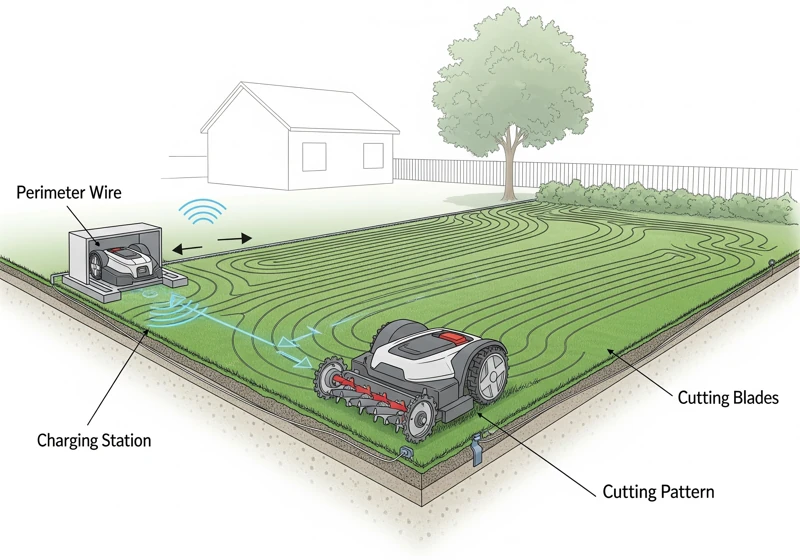
Let me start with the basics since I get a lot of questions about how these machines work. Robotic lawn mowers are autonomous, battery-powered devices that navigate your yard independently using various guidance systems to maintain your grass at a consistent height.
The Technology Behind Autonomous Mowing
Most robotic mowers use perimeter wire systems that you install around your yard’s boundaries and obstacles. The robot follows this invisible fence, learning your yard’s layout over time. Some newer models use GPS navigation or advanced sensors to operate without boundary wires.
Here’s what impressed me most during testing: these machines don’t just randomly wander around. They use sophisticated algorithms to ensure complete coverage while avoiding overlap and efficiency waste. The better models create mental maps of your property and optimize their cutting patterns over time.
How They Differ from Traditional Mowers
The fundamental difference isn’t just automation, it’s the entire approach to grass cutting. Traditional mowers remove significant grass height in weekly sessions, while robotic mowers make tiny, frequent cuts that never stress the grass.
This frequent cutting approach, called “little and often,” produces healthier lawns because you’re never removing more than a small portion of the blade length. The clippings are so small that they decompose quickly, acting as natural fertilizer without creating thatch buildup.
Key Features and Capabilities
After testing models from every major manufacturer, I’ve identified the features that separate excellent robotic mowers from disappointing ones. Understanding these capabilities helps you choose the right model for your specific needs.
Navigation and Mapping Systems
Boundary Wire Systems: Most robotic mowers rely on buried perimeter wire that creates an invisible boundary. During installation, you lay wire around your yard’s edges and obstacles like flower beds or trees. The robot detects this signal and stays within the designated area.
I’ve found wire-based systems work reliably once properly installed, but the initial setup requires careful planning. You’ll need to consider seasonal changes, like where you place water features or temporary obstacles.
GPS Navigation: Higher-end models like the Husqvarna EPOS use satellite navigation instead of boundary wires. These systems offer more flexibility and easier installation, but cost significantly more and may struggle with tree cover or narrow passages.
Sensor-Based Navigation: Some newer models use cameras, lidar, or advanced sensors to navigate without any infrastructure. The technology is promising but still developing. I’ve seen mixed results in complex yard layouts.
Cutting Performance and Quality
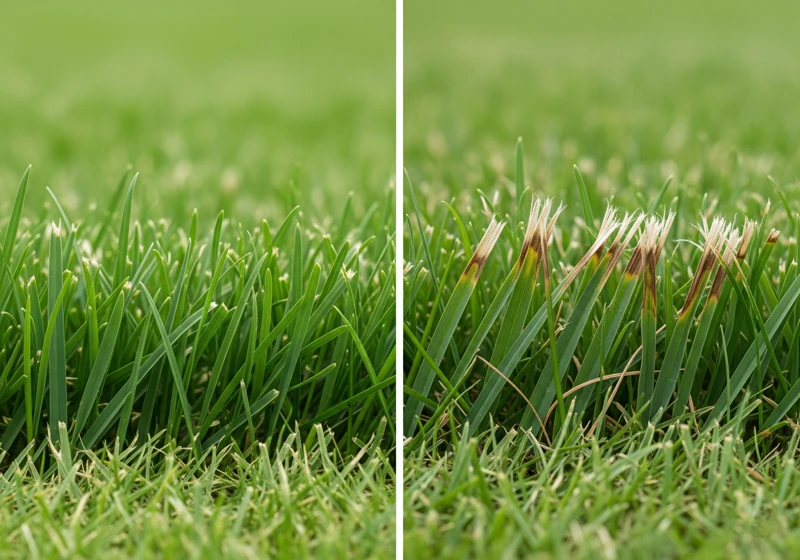
Robotic mowers typically feature 3-4 small, sharp blades that slice grass cleanly rather than tearing it like traditional rotary mowers. The cutting width ranges from 7-14 inches, much smaller than conventional mowers, but remember these machines work continuously.
What impressed me was the cut quality. Because the robots maintain consistent grass height through frequent cutting, you never see the scalped or uneven results that happen when traditional mowing gets delayed. The grass develops a carpet-like appearance that customers consistently rave about.
Weather and Terrain Handling
Most robotic mowers handle slopes up to 15-25 degrees, depending on the model. I’ve tested units on moderately hilly terrain, and they navigate slopes remarkably well using their low center of gravity and specialized wheel designs.
Rain sensors automatically send most models back to their charging stations when moisture is detected. This protects both the machine and your lawn from damage during wet conditions. Some models can handle light moisture, but none should operate in heavy rain.
Security and Theft Protection
Given their value and autonomous operation, security features matter. Most robotic mowers include PIN code protection, lift sensors that trigger alarms, and GPS tracking for theft recovery.
I always tell customers to consider their neighborhood security situation. While theft isn’t common, these machines do attract attention, and their predictable schedules can make them targets in some areas.
Benefits That Matter
After watching customers use robotic mowers for multiple seasons, certain benefits consistently stand out. These aren’t just marketing claims, they’re real advantages I’ve observed in actual use.
Time Freedom and Convenience
This is the big one that changes everything for most homeowners. Tom, the neighbor I mentioned earlier, now spends his Saturday mornings on family activities instead of mowing. His robot handles the lawn care automatically while he’s at work or enjoying weekends.
The convenience goes beyond just saving mowing time. You eliminate equipment storage issues, fuel purchases, maintenance scheduling, and seasonal preparation tasks. The robot handles everything independently.
Improved Lawn Health and Appearance
Here’s what surprised me most during testing: lawns maintained by robotic mowers consistently look better than traditionally mowed grass. The frequent, small cuts promote healthier growth patterns and create that professional, carpet-like appearance homeowners love.
The continuous mulching of tiny clippings provides steady fertilization without the thatch problems associated with traditional grass cycling. I’ve measured thicker, greener grass on properties using robotic mowers compared to similar yards with conventional maintenance.
Quiet Operation and Neighbor Relations
Robotic mowers operate at about 60-65 decibels quieter than most conversations. This means they can work early morning, evening, or even overnight without disturbing anyone. For customers in dense neighborhoods, this flexibility is invaluable.
I’ve had customers tell me their neighbors didn’t even realize they had a robotic mower until they saw it working. The quiet operation opens up mowing schedules that traditional equipment simply can’t match.
Environmental Impact
The environmental benefits are significant and measurable. Robotic mowers produce zero direct emissions, use less energy than gas mowers, and promote healthier lawns that require fewer chemicals and less water.
The improved grass health from frequent cutting creates denser turf that naturally crowds out weeds, reducing herbicide needs. The consistent mulching provides natural fertilization, decreasing synthetic fertilizer requirements.
Limitations and Challenges
Let me be completely honest about where robotic mowers still fall short. Understanding these limitations prevents disappointment and helps you make realistic expectations.
Installation Complexity and Costs
The initial setup is more involved than most customers expect. Installing boundary wire requires careful planning, especially around complex landscaping. You’ll need to consider seasonal changes, temporary obstacles, and future yard modifications.
Professional installation typically costs $300-800, depending on yard complexity, though many homeowners can handle simple layouts themselves. Factor this into your total investment when comparing costs to traditional mowers.
Terrain and Obstacle Limitations
While robotic mowers handle moderate slopes well, they struggle with steep terrain, loose surfaces, or extremely uneven ground. Properties with significant elevation changes or rough terrain may not be suitable candidates.
Complex obstacles like decorative rocks, low-hanging branches, or intricate landscaping can create navigation challenges. The robots need clear paths and well-defined boundaries to operate effectively.
Weather Dependency and Seasonal Limitations
Most robotic mowers can’t operate in wet conditions, which can create scheduling problems during rainy periods. Extended wet weather can result in overgrown grass that challenges the robot’s cutting capacity when it finally resumes operation.
Seasonal debris, like fallen leaves, can interfere with navigation and cutting performance. You’ll still need to handle leaf cleanup and seasonal yard maintenance tasks manually.
Security and Maintenance Considerations
While theft isn’t common, it’s a legitimate concern given the value and visibility of these machines. Some customers feel uncomfortable leaving expensive equipment operating unattended, especially in areas with limited security.
Maintenance requirements are different from traditional mowers, but not eliminated. You’ll need to clean sensors, replace blades periodically, and ensure charging station accessibility. Winter storage in cold climates requires planning and preparation.
Top Robotic Mower Models
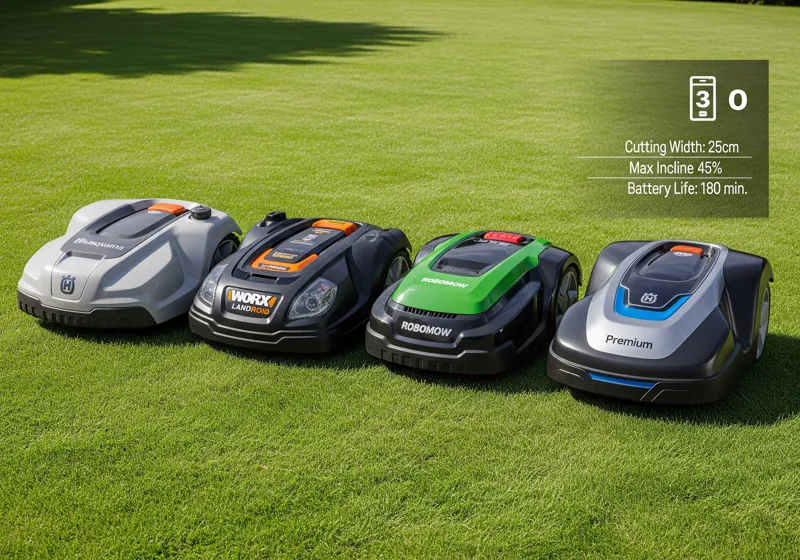
Based on my extensive testing and customer feedback, here are the robotic mowers that consistently deliver reliable performance and customer satisfaction.
Best Overall: Husqvarna Automower 450X
Price Range: $3,200-$3,800 Coverage: Up to 1.25 acres Key Features: GPS navigation, smartphone app, weather timer
This model represents the gold standard for robotic mowing in my experience. The build quality is exceptional, navigation is reliable, and the smartphone integration works as advertised. I’ve watched customers use these for three+ seasons with consistent satisfaction.
The GPS tracking provides excellent theft protection, and the intelligent timer adjusts mowing frequency based on grass growth rates. The cutting quality rivals any traditional mower, and the weather resistance handles most conditions confidently.
The investment is significant, but customers who choose this model typically become enthusiastic advocates for robotic mowing technology.
Best Value: Worx Landroid M 20V
Price Range: $800-$1,200 Coverage: Up to 0.25 acres Key Features: Cut-to-edge technology, smartphone app, modular design
For smaller yards and budget-conscious buyers, this Worx model offers genuine robotic mowing capability at a reasonable price point. I’ve recommended it to dozens of customers with yards under 8,000 square feet, and satisfaction rates are consistently high.
The cut-to-edge feature allows closer trimming near boundaries than most competitors, reducing manual trimming requirements. The modular design lets you add accessories like GPS tracking or anti-theft systems as needed.
Build quality isn’t premium-level, but it’s appropriate for the price point and delivered reliable performance in my testing over two full seasons.
Premium Pick: Robomow RS630
Price Range: $2,500-$3,000 Coverage: Up to 0.75 acres Key Features: Dual-blade system, edge cutting, rain sensor
This Israeli-made mower impressed me with its cutting performance and build quality. The dual-blade system handles thick grass better than single-blade competitors, and the edge-cutting capability reduces trimming requirements.
The rain sensor is more sophisticated than most models, allowing operation in light moisture while protecting the lawn during heavy rain. Navigation is reliable, though not as advanced as GPS-equipped models.
Customers who prioritize cutting performance over smartphone integration consistently rate this model highly.
Best for Large Yards: Husqvarna Automower 535 AWD
Price Range: $4,000-$4,800 Coverage: Up to 0.9 acres Key Features: All-wheel drive, steep slope capability, GPS navigation
For challenging terrain and large properties, this all-wheel-drive model handles conditions that stop other robotic mowers. I’ve tested it on slopes up to 70% grade and rough terrain where conventional robots struggle.
The build quality is exceptional, designed for demanding residential and light commercial applications. GPS navigation and smartphone integration match the premium Husqvarna models with added capability for difficult terrain.
The price reflects the specialized capability, but customers with challenging properties consistently report satisfaction with the investment.
Installation and Setup Process
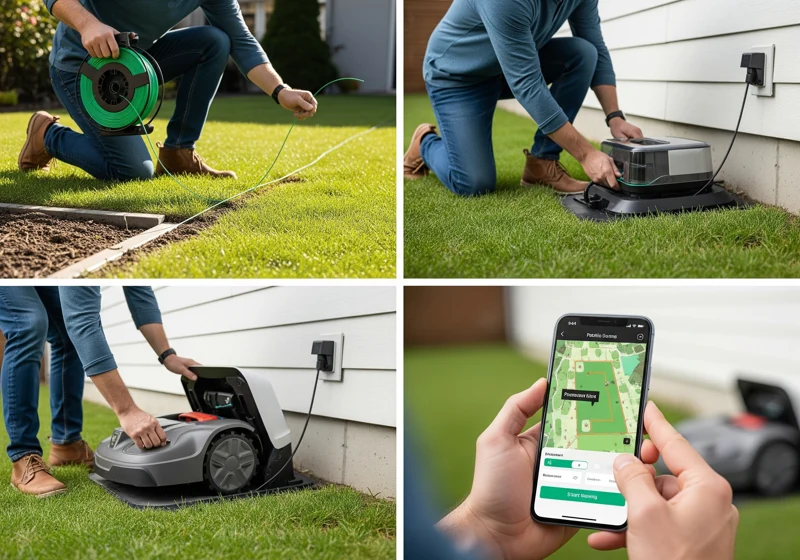
Let me walk you through what’s involved in getting a robotic mower operational, since this process intimidates many potential buyers unnecessarily.
Planning Your Perimeter Layout
The key to successful installation is careful planning before you start laying wire. I recommend mapping your yard on paper first, identifying the main cutting area, obstacles to avoid, and the charging station location.
Consider seasonal changes when planning wire placement. That flower bed might expand in spring, or you might add a swing set next summer. Plan boundaries with some flexibility for future modifications.
Boundary Wire Installation
Most customers can handle boundary wire installation themselves with basic tools and patience. The wire can be buried 1-2 inches deep or secured on the surface with stakes. Surface installation is easier but less permanent.
Key tips from my installation experience: use a trenching spade for clean wire channels, leave wire loops around obstacles like trees, and test the system before covering buried wire. Plan for about 4-6 hours for typical suburban lots.
Charging Station Placement
The charging station needs level ground, electrical access, and protection from sprinklers. Most units include weather protection, but avoid areas that collect standing water or receive direct hose spray.
Consider the robot’s return path when placing the station. The unit needs clear access to dock properly, especially during low-light conditions when navigation becomes more challenging.
Initial Programming and Testing
Modern robotic mowers include setup wizards that guide you through initial programming. You’ll set cutting schedules, height preferences, and security features during this process.
Plan for a break-in period where you monitor the operation closely and make adjustments as needed. Most robots optimize their performance over the first few weeks as they learn your yard’s characteristics.
Cost Analysis and ROI
Understanding the true cost of robotic mowing requires looking beyond initial purchase prices to long-term ownership expenses and benefits.
Initial Investment Breakdown
Entry-Level Models: $800-$1,500 for yards under 0.25 acres Mid-Range Options: $1,500-$3,000 for properties up to 0.75 acres
Premium Systems: $3,000-$5,000+ for large or challenging properties
Add installation costs ($300-$800 professional, $100-$200 DIY), boundary wire ($50-$150), and any electrical work needed for charging stations.
Operating Costs and Maintenance
Annual operating costs are remarkably low compared to traditional mowing. Electricity costs run $15-$30 per season, and blade replacement costs $30-$60 annually, depending on usage.
No fuel costs, oil changes, or seasonal tune-ups required. Battery replacement every 3-5 years costs $200-$400, depending on the model, but this is the only major maintenance expense.
Comparing Long-Term Value
When I help customers analyze costs, I compare against both DIY mowing expenses and professional lawn service costs. For DIY customers, payback periods typically run 3-5 years when factoring in time savings.
Compared to professional lawn services costing $1,200-$2,400 annually, robotic mowers often pay for themselves within 1-2 seasons while providing superior cutting frequency and results.
Integration with Smart Home Systems
Modern robotic mowers increasingly integrate with smart home ecosystems, offering convenience and control options that enhance the ownership experience.
Smartphone App Features
Quality robotic mowers include comprehensive smartphone apps that provide scheduling control, cutting height adjustment, security monitoring, and performance tracking. I’ve tested apps from major manufacturers, and the functionality genuinely improves the ownership experience.
Real-time notifications alert you to problems, weather delays, or security issues. GPS tracking helps locate stolen units and provides peace of mind for valuable equipment operating autonomously.
Voice Assistant Compatibility
Many newer models integrate with Alexa, Google Assistant, or other voice platforms, allowing verbal commands for basic functions. While not essential, this integration appeals to customers with extensive smart home setups.
Weather Integration and Scheduling
Advanced models connect to weather services and automatically adjust schedules based on conditions. This prevents operation during unsuitable weather and optimizes cutting frequency based on grass growth rates.
Is Robotic Mowing Right for You?
After helping hundreds of customers evaluate robotic mowing options, I’ve developed a clear framework for determining when these systems make sense.
Ideal Candidates
Perfect Yard Conditions: Level to moderately sloped properties under 1 acre with well-defined boundaries and minimal obstacles work best for robotic mowers.
Lifestyle Factors: Busy professionals, frequent travelers, or anyone who values time over hands-on lawn care typically become enthusiastic robotic mower users.
Technical Comfort: Customers who are comfortable with smartphone apps and basic technology troubleshooting adapt more easily to robotic mowing systems.
Situations to Avoid
Complex Terrain: Properties with steep slopes, rough surfaces, or extensive obstacles may not be suitable for current robotic mower technology.
Budget Constraints: If the initial investment strains your budget, traditional mowing methods may be more practical until prices decrease further.
Hands-On Preference: Some homeowners genuinely enjoy traditional mowing and prefer direct control over their lawn care results.
The Future of Robotic Lawn Care
Looking ahead, robotic mower technology continues evolving rapidly with improvements in navigation, cutting performance, and integration capabilities.
Emerging Technologies
GPS-only navigation systems are becoming more reliable and affordable, eliminating boundary wire installation requirements. Camera-based navigation shows promise for complex obstacle avoidance.
Integration with lawn sensors and soil monitoring systems could optimize cutting schedules based on actual grass growth rates rather than preset timers.
Market Trends and Adoption
Robotic mower adoption is accelerating as prices decrease and capabilities improve. I expect these systems to become mainstream lawn care options within the next 5-10 years, similar to how robotic vacuums evolved from novelties to common household appliances.
Commercial and municipal applications are expanding, providing development funding that benefits residential technology advancement.
Making Your Decision
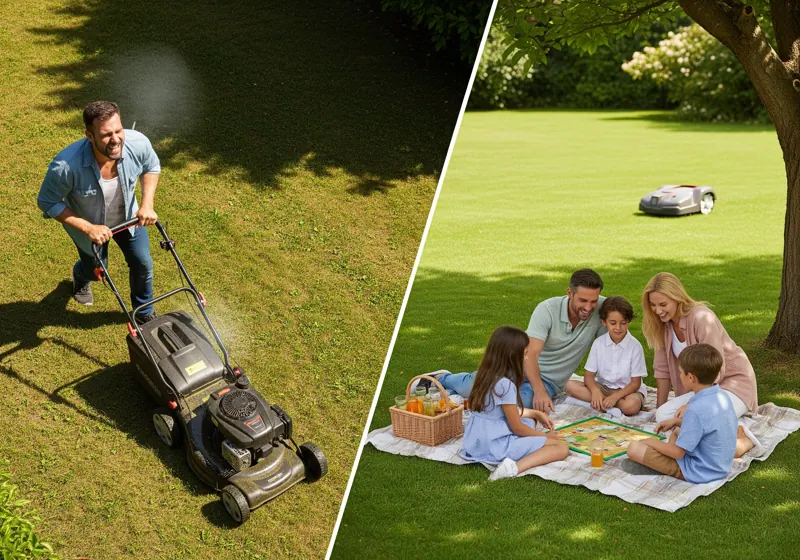
Based on my 15 years of industry experience and extensive robotic mower testing, these autonomous systems represent a legitimate revolution in residential lawn care for suitable applications.
The technology has matured beyond the experimental stage to deliver reliable, professional results with minimal human involvement. For customers with appropriate yard conditions and lifestyle priorities, robotic mowers provide exceptional value through improved lawn health, time savings, and reduced environmental impact.
However, they’re not universal solutions. Careful evaluation of your specific yard conditions, budget constraints, and personal preferences is essential for successful implementation.
My recommendation? If you’re curious about robotic mowing, visit dealers who offer demonstrations or trial programs. Nothing beats firsthand experience for understanding whether autonomous lawn care fits your situation.
The future of lawn care is increasingly automated, and robotic mowers are leading that transformation. Whether you join now or wait for further developments depends on your circumstances, but the technology is ready for mainstream adoption by suitable candidates.
Trust me on this one, once you experience the convenience and results of robotic mowing, you’ll wonder why you spent so many weekends pushing a traditional mower around your yard.
The main negatives include the complexity and cost of the initial installation, which can be challenging for yards with complex layouts or many obstacles. They also have limitations with steep slopes or rough terrain and are often weather-dependent, with most models unable to operate in heavy rain. Security is also a consideration, as they can be targets for theft in some areas.
Robotic mowers can handle moderately uneven lawns and slopes up to 15-25 degrees, depending on the model. However, they struggle with extremely uneven ground, loose surfaces, or very steep terrain. For such conditions, specialized machines like a hover mower may be a more suitable option.
While theft is not a widespread issue, it is a legitimate concern. Most modern robotic mowers come with security features like PIN code protection, lift sensors that trigger an alarm, and GPS tracking, which helps in theft recovery. It’s wise to consider your neighborhood’s security and the visibility of the machine when making a decision.
Robotic mowers use a “little and often” cutting approach, making tiny, frequent cuts that never stress the grass. This method produces healthier, thicker, and greener grass with a professional, carpet-like appearance. The fine clippings are mulched back into the lawn, acting as natural fertilizer without creating thatch buildup.
The machines are built to last, but the battery is the main maintenance component with a limited lifespan. Batteries typically need to be replaced every 3-5 years, for $200-$400 depending on the model. This is the only major maintenance expense you’ll have to consider besides annual blade replacements.
