
The Benefits of Electric Lawn Mowers: Are They Worth It?
So there I was, sweating my butt off at 9 AM last Saturday, watching my neighbor Jim wrestle with his stupid gas mower. Again. Pull the cord, nothing. Check the primer, pull again. Cuss a little (okay, a lot). Fiddle with the choke. More pulling. More cussing.
Table of Contents
▼- Are Electric Lawn Mowers Worth It? 7 Key Advantages
- Environmental Benefits: Why Eco Electric Lawn Mowers Are Game-Changers
- Cost Benefits: How Electric Mowers Save Money Long-Term
- Quiet Electric Lawn Mower Benefits for Your Neighborhood
- Performance Benefits: Are Electric Mowers Powerful Enough?
- Low-Maintenance Electric Mower Advantages
- Most Powerful Electric Lawn Mower Options That Actually Work
- Good Electric Lawn Mower Features That Matter
- Electric Lawn Mower Pros and Cons: The Complete Picture
- Cheap Electric Lawn Mower Options That Don’t Suck
- What I Wish Someone Had Told Me Before Switching
- The Bottom Line on Electric Mower Benefits
Meanwhile, I’m already halfway done with my lawn. One button push, and boom – I’m mowing.
Jim finally got his beast started after what felt like forever, and the first thing that hits you? The NOISE. Holy cow, it’s like a freight train parked in suburbia. My poor dog Max bolted for the house.
That’s when it hit me – I used to be Jim. Three years ago, that was me every weekend, fighting with a machine that seemed designed to make my life harder.
Not anymore, though.
Look, I’m Oliver. Been doing lawn care here in Austin for over eleven years, and I’ve probably fought with more mowers than a small engine repair shop. Gas was all I knew. Figured that’s just how it worked – loud, smelly, and temperamental as my teenage daughter.
Boy, was I wrong.
Are Electric Lawn Mowers Worth It? 7 Key Advantages
Best Electric Lawn Mowers


After three years of using electric mowers both at home and for clients, plus testing more models than my wife appreciates (the garage situation got… crowded), these seven benefits keep smacking me in the face. Some of them floored me, honestly.
Environmental Benefits: Why Eco Electric Lawn Mowers Are Game-Changers
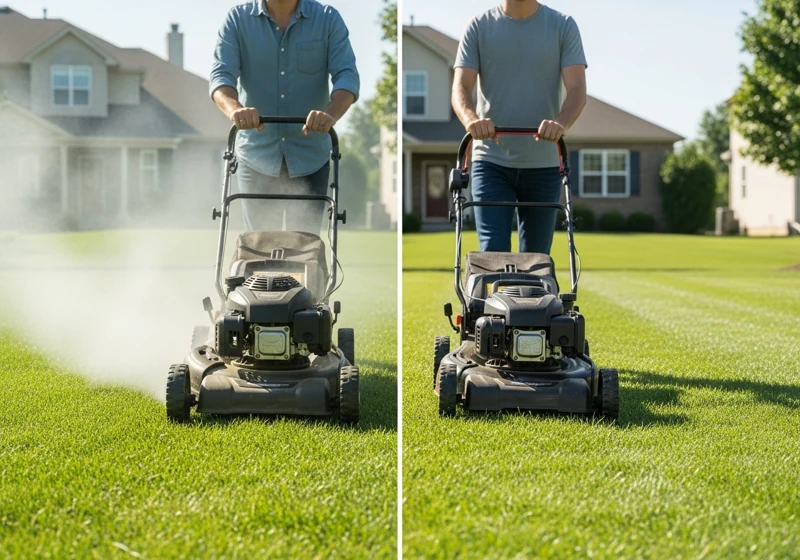
Here’s something that made me do a double-take when I first heard it: running your gas mower for an hour dumps the same crap into the air as driving your car 300 miles.
Three. Hundred. Miles.
I thought somebody was pulling my leg until I looked it up myself. Turns out these little engines are dirty as hell. Way dirtier than cars, which have all sorts of emission controls that lawn mowers… don’t.
My wife, Sarah, pointed this out after we switched. “The garage doesn’t smell like a gas station anymore,” she said. And you know what? She was right. I’d gotten so used to that smell, I didn’t even notice it. But once it was gone? Yeah, huge difference.
Then there’s my kids. Before, I’d shoo them away when I was mowing. All those fumes can’t be good for little lungs. Now they actually hang around while I’m working. My youngest even “helps” by pushing her toy mower alongside me. Try that with a gas mower belching exhaust everywhere.
The EPA says that if we swapped out half of the gas mowers in America with electric ones, it’d be like taking two million cars off the road. That’s not hippie math – that’s real environmental impact you can actually measure.
Cost Benefits: How Electric Mowers Save Money Long-Term
Alright, money talk. And I’m talking real dollars here, not some theoretical savings that never show up.
My wife handles our finances (thankfully), and she made me track every penny I spent on lawn care after I started complaining about wanting a new mower. Embarrassing? Yes. Eye-opening? Hell yes.
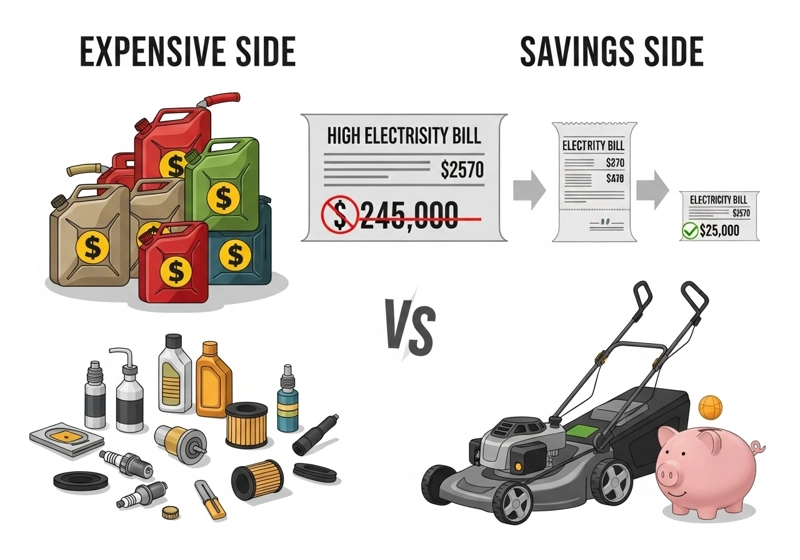
It turns out I was spending about $180 a year just on gas for my old Craftsman. Plus oil changes, spark plugs, air filters, and all that maintenance jazz. Another $65-70 annually.
With electric? My power bill went up maybe twenty-five bucks for the whole season. That’s it.
But here’s the kicker – no more Saturday mornings at the small engine repair shop. You know the drill: won’t start after winter, carburetor’s gummed up, needs this, needs that. Last spring, Jim (same neighbor) dropped $140 getting his Honda serviced. “Fuel went bad over winter,” he said. “Whole system needed cleaning.”
Meanwhile, my electric mower sat in the garage for four months, and guess what? Pushed the button, started right up.
I did the math (okay, my wife did the math), and I’m saving roughly $220 every year. That adds up fast. Additionally, my mower costs $549, compared to $350 for a decent gas model. However, I broke even in under two years. Everything after that? Pure savings.
Quiet Electric Lawn Mower Benefits for Your Neighborhood
This one changed everything about when and how I mow.
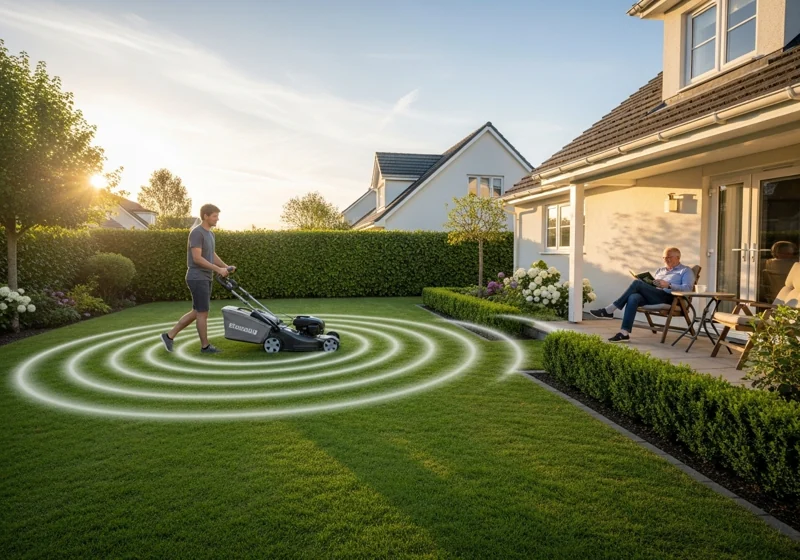
Gas mowers hit 95 decibels. That’s literally motorcycle loud. For perspective on noise-related health risks and other safety considerations, our comprehensive mower safety guide covers everything you need to know. I measured it myself with one of those phone apps because I’m a nerd like that. Electric mowers? About 75 decibels. According to the CDC, prolonged exposure to sounds over 85 decibels can cause hearing damage. Think of a washing machine, not a Harley Davidson.
Now I can start mowing at 7 AM without feeling like the neighborhood asshole. And in Texas summer heat, getting done before 9 AM is the difference between sweating and straight-up suffering.
Mrs. Henderson across the street actually thanked me for switching. “I can’t even tell when you’re mowing now,” she said. “It’s so much more peaceful.”
And here’s something weird – I can actually think while I’m mowing now. With the gas mower, it was just NOISE. Couldn’t hear myself think, let alone enjoy the work. Now it’s almost meditative. Sometimes I even take work calls while mowing. Try that with a gas engine screaming in your ear.
Performance Benefits: Are Electric Mowers Powerful Enough?
This was my biggest hangup. Could a battery-powered gadget really handle thick Texas grass in the July heat?
In short, it handles it better than any gas mower I’ve owned.
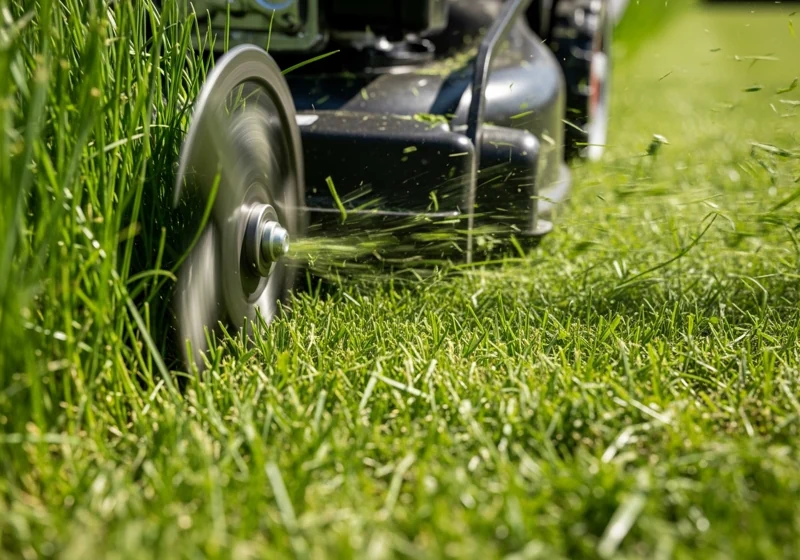
Here’s the thing nobody tells you about electric motors – they deliver full power instantly. Gas engines need to rev up and build RPMs. So when you hit thick grass, the electric powers through while gas engines bog down and struggle.
I tested this theory last spring after three weeks of rain. My St. Augustine was thick, wet, and probably six inches tall in spots. Looked like a jungle out there. My old gas mower would’ve choked and died. The electric? Cut through it like butter. No bogging down, no slowing, just steady power from start to finish.
The cut quality is better, too. Gas engines shake and vibrate as they run. Electric motors are smooth, which means cleaner cuts. My grass actually looks healthier now. I think that’s part of why.
Low-Maintenance Electric Mower Advantages
Remember spring mower prep? Oil changes, spark plug gaps, cleaning air filters, checking fuel lines, and hoping it starts.
Yeah, all that crap is gone now.
My maintenance routine: Sharpen the blade once, maybe twice a season. Sometimes I’ll hose off grass clippings if they’re really caked on. That’s literally it. Want the complete maintenance breakdown for electric mowers? Our electric lawn mower maintenance guide provides comprehensive information on maintaining your electric lawn mower.
Last weekend, I watched Jim spend his entire Saturday morning servicing his Toro. Oil change, new spark plug, air filter, fuel filter, and checking belts. Four hours of work before he could even think about cutting grass.
I sharpened my blade in fifteen minutes (here’s our step-by-step blade sharpening guide, if you need help with that), plugged in my battery overnight, and was done. We both got our lawns mowed, but I also took my kids to the pool afterward.
Three years in, my electric mower has started every single time I’ve pushed the button. Every. Single. Time. Can’t say that about any gas mower I’ve ever owned. They always find a way to let you down when you need them most.
Most Powerful Electric Lawn Mower Options That Actually Work
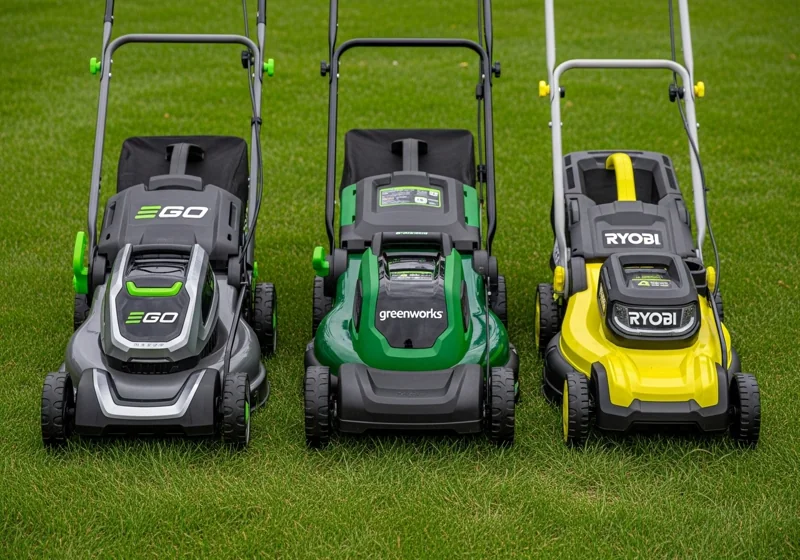
When people ask about power, I tell them to forget everything they think they know about electric lawn equipment. We’re not talking about those wimpy corded things from twenty years ago.
My EGO Power+ feels stronger than my old 6.5 HP Briggs & Stratton. The Greenworks Pro I tested last year was even beefier. These things are legit lawn care tools, not toys.
The secret is how electric power works. Gas engines deliver power in pulses as the pistons fire. Electric motors offer smooth, constant power. It’s like comparing a sledgehammer to a hydraulic press – both powerful, but in entirely different ways.
I’ve thrown everything at my electric mower. Fine fescue, thick Bermuda, overgrown patches that hadn’t been cut in weeks. It eats through all of it, usually better than gas mowers costing twice as much.
Hit a thick patch with a gas mower, and you hear that engine bog down. With electric, the blade speed stays rock steady. The power’s just there whenever you need it.
Good Electric Lawn Mower Features That Matter
After testing way too many electric mowers (my garage looked like a dealer showroom for a while), here’s what actually matters. If you want to see which specific models came out on top in our comprehensive testing, check out our best mower reviews for 2025
Battery life is essential, but not in the way you think. My current setup provides me with 45-50 minutes, which covers my entire property and some additional areas. Most suburban lots require approximately 30-40 minutes at most.
Cut width makes a greater difference than you might expect. Going from 20 inches to 21 inches doesn’t sound like much, but it cuts mowing time by about 10% when the outside temperature is 95 degrees; every minute counts.
A Self-propelled drive is worth every penny if you have hills or want life easier. My self-propelled EGO makes mowing feel almost effortless, even on the slopes behind my house.
Mulching works better on electric mowers because the blade speed stays consistent. Gas engines slow down under load, but electric keeps chopping clippings fine and spreading them evenly.
Electric Lawn Mower Pros and Cons: The Complete Picture
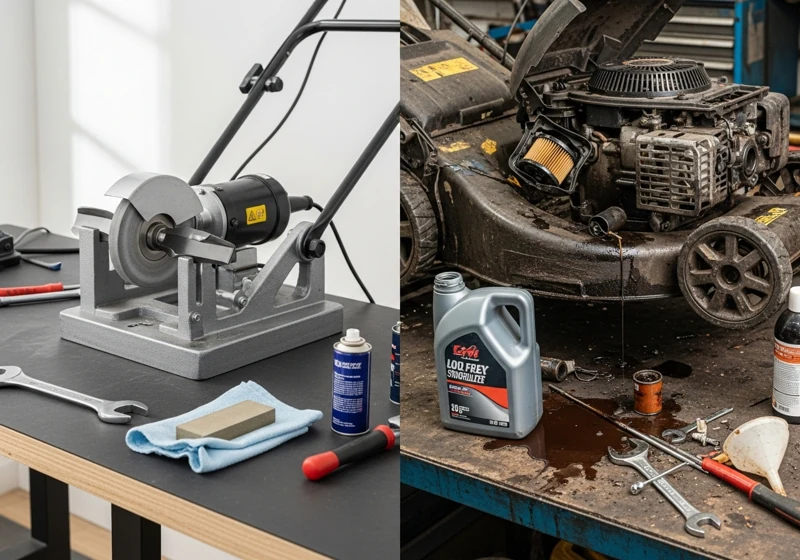
Let me be straight about where electric mowers excel and where they still fall short.
The Good Stuff:
- Push-button starting (seriously, this alone is worth the switch)
- Way quieter operation
- Zero emissions at your house
- Much cheaper to run
- Almost no maintenance
- Better, more consistent cuts
- Lighter and easier to handle
- No fuel storage headaches
The Not-So-Good:
- Higher upfront cost for decent models
- Runtime limits on battery versions
- Dealing with cords on plug-in models
- Eventually, need new batteries
- Not great for huge properties
- Cold weather can hurt battery life
Who Should Switch: Got a typical suburban lot? Tired of gas mower bullshit? Want something that works every time? Electric is a no-brainer.
Who Should Stick with Gas: Big property owners, commercial guys, or folks who genuinely enjoy the smell of two-stroke exhaust. (Hey, no judgment here.)
Cheap Electric Lawn Mower Options That Don’t Suck
You don’t need to drop $600 to get something decent. Here are budget options that actually work:
Greenworks 20-inch corded ($130-$ 150): No battery headaches, runs continuously as long as you can handle the cord. Recommended this to three neighbors already.
Sun Joe MJ401E ($90-110): Super light, perfect for small yards. Mrs. Peterson next door loves hers because it’s so easy to push around.
BLACK+DECKER CM2040 ($160-190): Good middle ground. The 40V battery gives decent runtime for the money. Learn more about what makes battery-powered mowers tick in our detailed guide.
Just remember – cheap can bite you in the ass. I’ve seen people buy $80 electric mowers that crapped out after one season. It’s better to spend a little more on something reliable than to replace it every year.
What I Wish Someone Had Told Me Before Switching
Actually measure your mowing area. I thought I had half an acre to cut, but it’s actually about a third once you subtract the house, driveway, garden beds, and other areas.
Buy extra batteries if you can swing it. Even if you don’t need them now, having backup gives you options. Batteries go on sale, and flexibility is a nice perk.
Don’t get hung up on voltage numbers. Focus on real-world performance. A 56V system might sound beefier than 40V, but there’s more to power than just numbers.
Plan your storage setup. Electric mowers require less space than gas-powered mowers (no fuel cans, oil jugs, etc.), but they still need a place to charge their batteries.
The Bottom Line on Electric Mower Benefits
Three years ago, I thought electric mowers were for people who didn’t take lawn care seriously. Today, I suppose gas mowers are for people who enjoy making their lives more difficult than necessary.
The convenience factor alone is worth the switch. No more fighting with pull cords, no more stinky garage, no more wondering if it’ll start when you need it. Add in the cost savings, environmental benefits, and better performance? It’s not even close.
Look, electric mowers aren’t perfect for everyone. Got multiple acres? Running a landscaping business? Gas might still make sense. But for regular homeowners? The benefits crush any limitations.
The entire lawn care industry is undergoing a shift. Battery technology continues to improve, prices are dropping, and more companies are investing heavily in electric platforms. You can join now and start enjoying the benefits, or wait until everyone else catches up.
Based on helping dozens of homeowners make this switch, waiting means missing out on years of easier, quieter, cleaner mowing. The tech is proven, the performance is there, and the benefits are real.
Stop making your life harder than it needs to be.
Making the switch to electric isn’t about being trendy – it’s about making yard work suck less. After eleven years in this business, that’s advice I’m happy to give.
Hell yes. Small yards are perfect for electric because you get all the benefits without worrying about runtime. Plus, who wants to store gas for a ten-minute mowing job?
Generally, yeah. No hot engine, no fuel vapors, instant stop when you let go. Still gotta watch that blade, obviously.
The mowers work fine, but the batteries lose their charge in cold weather. Here in Texas, it’s not an issue, but you may notice shorter runtime when it’s really cold in the north.
EGO, Greenworks, and Ryobi consistently receive the best reviews. I use EGO personally and haven’t had any complaints. For detailed comparisons of these and other top manufacturers, refer to our comprehensive brand review guide.
They handle light moisture fine, but I wouldn’t mow soaking wet grass anyway. Clogs any mower and cuts like shit.
Good batteries last 5-7 years with regular use. Replacements cost $100-200, which is still cheaper than the cost of gas and maintenance over that time.
