
Reel vs. Rotary Lawn Mowers: Which is Best?
I’ll be honest with you – when my neighbor Frank showed up with his grandfather’s 1960s reel mower last spring, I laughed. Here I was with my shiny new rotary mower, and Frank’s out there pushing this antique around like he’s harvesting wheat. Fast forward six months, and his lawn looked better than mine. That got my attention real quick.
Table of Contents
▼- The Mechanics Behind the Magic (Or Frustration)
- Reel Mowers: The Scissors Approach
- Rotary Mowers: The Chopping Block Method
- Cut Quality: Where the Rubber Meets the Road
- Why Reel Mowers Win the Beauty Contest
- Rotary Reality: Good Enough Is Often Perfect
- The Real Talk on Maintenance
- Reel Mower Reality Check
- Rotary Maintenance: Simpler but Not Simple
- Lawn Size Math That Actually Matters
- The Reel Mower Sweet Spot
- When Size Demands Power
- Grass Type Reality: What Actually Works
- Fine Grasses Love Reel Cutting
- Thick Grasses Challenge Reel Systems
- Environmental Impact: Beyond the Obvious
- The Zero-Emission Champion
- Electric Rotary: The Compromise Solution
- Budget Breakdown: What You’ll Really Spend
- Reel Mower Economics
- Rotary Investment Reality
- Performance Quirks You Should Know
- Reel Mower Limitations
- Rotary Flexibility Advantages
- My Personal Recommendation Process
- The Bottom Line
After spending the better part of a year testing both systems on my Austin property (and convincing several clients to let me experiment on their yards), I’ve got some strong opinions about when each type makes sense. Spoiler alert: Frank was onto something, but he’s also got the perfect setup for reel mowing success.
Look, there’s no universal “best” lawn mower. What works in Frank’s quarter-acre paradise might be a disaster on your sloped half-acre with St. Augustine grass. Let me break down what I’ve learned so you can figure out which approach actually fits your situation.
The Mechanics Behind the Magic (Or Frustration)

You’ve probably never thought much about how your mower actually cuts grass. I hadn’t either until I started geeking out on this stuff. But understanding the difference between these cutting systems explains pretty much everything else about their performance.
Reel Mowers: The Scissors Approach
Picture a really sharp pair of scissors. Now imagine those scissors spinning in a cylinder, cutting every single blade of grass individually. That’s essentially what a manual push reel mower does. The curved blades on the rotating cylinder trap each grass blade against a fixed cutting bar and slice it clean.
I’ve gotten way too excited watching this action in slow motion (yes, I’m that guy now). Every blade gets cut precisely, leaving a clean edge that heals quickly and looks fantastic. It’s like giving your lawn a professional haircut instead of attacking it with hedge clippers.
The downside? Those blades need to stay sharp and properly adjusted. When they’re off, you’re just bending grass instead of cutting it. Trust me, nothing’s more frustrating than spending 20 minutes pushing a mower around only to have your grass spring back up behind you.
Rotary Mowers: The Chopping Block Method
Rotary mowers work completely differently. They’ve got a horizontal blade spinning crazy fast underneath the deck – we’re talking 3,000+ RPM here. This creates a chopping action that’s more like a tiny helicopter blade hitting your grass.
Before you think this sounds barbaric, modern rotary mowers have gotten really good at this approach. The high-speed spin creates suction that lifts grass before cutting, and the blade design ensures reasonably clean cuts. Plus, that same airflow manages clippings efficiently.
The beauty of rotary cutting is its forgiveness. Blade a little dull? Still cuts. Grass a bit too long? Powers through. Hit a stick? Keeps going. This resilience makes rotary mowers incredibly practical for real-world conditions.
Cut Quality: Where the Rubber Meets the Road
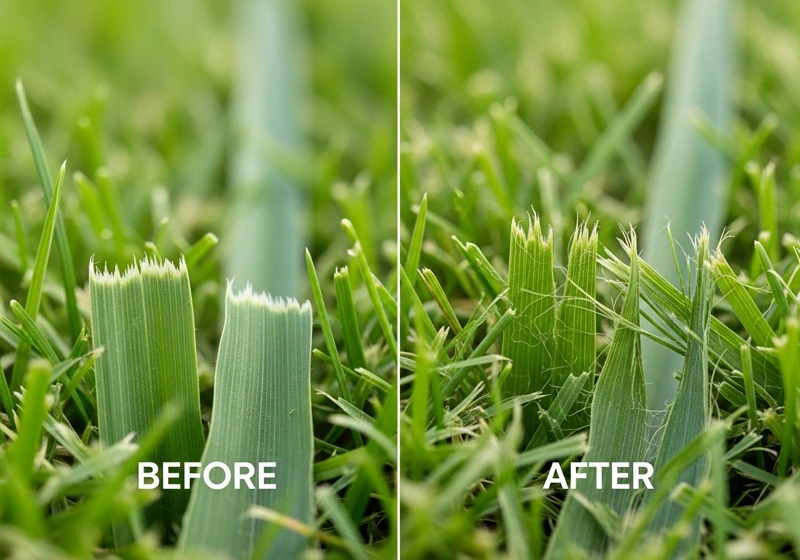
Why Reel Mowers Win the Beauty Contest
When people talk about reel mowers producing superior cut quality, they’re not exaggerating. The difference is genuinely visible, especially on fine grasses like Bermuda or Zoysia. I’ve got before-and-after photos from my own lawn that look like completely different yards.
The clean scissor cut seals the grass blade tip, which keeps moisture in and disease out. Your lawn stays greener longer, especially during stress periods like our brutal Texas summers. Plus, that uniform cut height creates the striped patterns you see on professional sports fields.
But here’s the catch – this only works when conditions are right. Try to cut grass that’s too long, too wet, or with dull blades, and you’ll get bent-over grass that looks worse than if you hadn’t mowed at all.
Rotary Reality: Good Enough Is Often Perfect
Rotary mowers might not create golf course perfection, but they deliver consistent, acceptable results across a much wider range of conditions. When I’m mowing client properties on tight schedules, rotary mowers let me maintain quality without worrying about perfect timing or ideal grass height.
The mulching capability of modern rotary mowers also adds practical value. Those chopped clippings break down quickly, feeding your lawn while eliminating the need for bagging or raking. It’s not just about the cut – it’s about the complete maintenance ecosystem.
The Real Talk on Maintenance
Reel Mower Reality Check
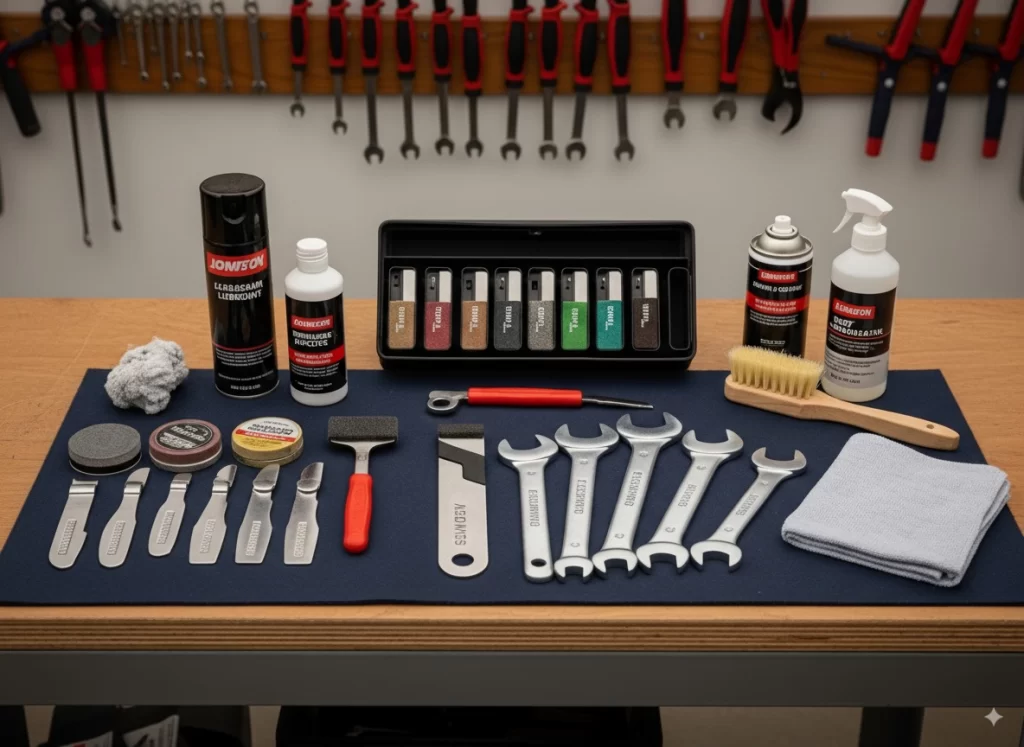
Let’s be straight about reel mower maintenance – it’s more involved than most people expect. I spend about an hour each spring adjusting blade contact and checking cutting bar alignment. During peak growing season, I’m tweaking adjustments every few weeks.
Blade sharpening costs me about $75 annually when I take it to the shop, or I can do it myself with a sharpening kit and some patience. Either way, it’s non-negotiable. Dull reel mower blades turn lawn care into lawn torture.
For comprehensive maintenance guidance across all mower types, our complete guide covers everything from seasonal tune-ups to troubleshooting common problems.
Rotary Maintenance: Simpler but Not Simple
Rotary mowers need attention too, just different kinds. Gas models require the full small engine maintenance routine – oil changes, air filter cleaning, spark plug replacement. It adds up to maybe 2-3 hours of maintenance per year, plus the ongoing cost of fuel and oil.
Electric rotary mowers simplify this considerably. Beyond keeping the blade sharp and the deck clean, they’re pretty hands-off. Battery models add the consideration of battery health, but that’s mostly about proper charging habits rather than active maintenance.
Lawn Size Math That Actually Matters

The Reel Mower Sweet Spot
Through trial and error (mostly error, if I’m being honest), I’ve figured out that reel mowers work best on lawns under about 8,000 square feet. Beyond that, the physical effort becomes a real consideration, especially if you’re mowing weekly during peak growing season.
I know folks who happily reel mow larger areas, but they’re either in better shape than me or they’re gluttons for punishment. For most people, quarter to half-acre represents the practical upper limit.
When Size Demands Power
Once you’re dealing with substantial acreage, the math changes completely. Self-propelled rotary mowers can handle an acre in 45 minutes that would take me 2+ hours with a reel mower. Riding mowers expand this capability even further.
But it’s not just about time efficiency. Larger lawns often have more varied conditions – different grass types, varied sun exposure, occasional wet spots. Rotary mowers handle this diversity much better than reel alternatives.
Grass Type Reality: What Actually Works
Fine Grasses Love Reel Cutting
Bermuda grass responds incredibly well to reel mowing. The fine blade structure cuts cleanly, and the frequent cutting schedule (necessary with reel mowers) actually encourages the dense, carpet-like growth that makes Bermuda so attractive.
Zoysia is another natural fit. The slower growth rate means less frequent mowing, and the fine texture cuts beautifully with sharp reel blades. I’ve seen Zoysia lawns maintained with reel mowers that look absolutely stunning.
Thick Grasses Challenge Reel Systems
Texas A&M lawn care research confirms that St. Augustine’s thick, coarse blades require extremely sharp cutting equipment and frequent maintenance. The thick, coarse blades require extremely sharp cutting equipment and frequent maintenance. It’s doable, but it’s definitely more work than fine grasses.
If you’ve got thick-bladed grass or a mix of different grass types (which describes most suburban lawns), rotary mowers provide much more consistent results with less fussing over equipment adjustments.
Environmental Impact: Beyond the Obvious
The Zero-Emission Champion
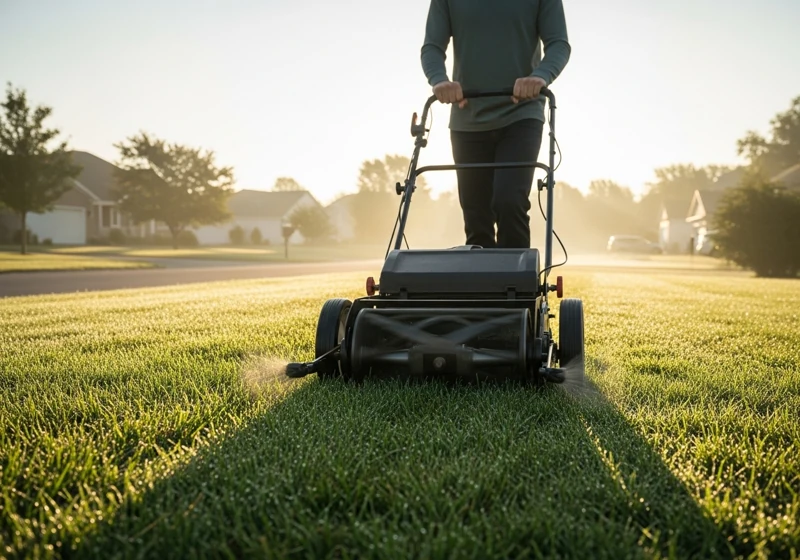
Reel mowers win the environmental comparison hands down. According to EPA emissions data, gas-powered lawn equipment contributes significantly to air pollution, making reel mowers an attractive zero-emission alternative. Plus, the exercise benefits mean you might drive to the gym less often.
To explore all your eco-friendly lawn care options beyond reel mowers, our comprehensive guide compares every sustainable mowing solution available.
Electric Rotary: The Compromise Solution
Battery-powered rotary mowers represent a reasonable middle ground for environmentally conscious homeowners who need rotary versatility. They’re significantly quieter than gas alternatives and produce zero direct emissions.
The battery manufacturing and electricity usage do create some environmental impact, but it’s typically much lower than gas mower operation over the equipment’s lifetime. Plus, as the electrical grid gets cleaner, electric mowers automatically become more environmentally friendly.
Budget Breakdown: What You’ll Really Spend
Reel Mower Economics
Based on my years of testing and client recommendations, here are the reel mowers that consistently deliver the best value and performance. I’ve personally used or extensively researched each of these models, and they represent the sweet spot between quality and affordability for most homeowners.
Reel Lawn Mowers


Decent reel mowers start around $200, with excellent models in the $300-500 range. After that initial investment, costs drop dramatically. I spend maybe $75 per year on professional sharpening, or about $30 if I do it myself with a sharpening kit.
Over five years, total cost of ownership for my reel mower is roughly $650 including purchase and maintenance. Compare that to gas rotary alternatives, and the savings add up quickly.
Rotary Investment Reality
If you’ve decided that electric rotary power makes sense for your situation, these are the models I recommend to clients. I’ve tested several of these on my own property and Austin client yards, and they consistently deliver reliable performance without the maintenance headaches of gas engines. Each offers that sweet spot of convenience, power, and environmental responsibility that makes electric rotary mowing practical for real-world conditions.
Electric Rotary Mowers


Gas rotary mowers require ongoing fuel and maintenance costs that reel mowers avoid entirely. Between gas, oil, filters, and tune-ups, I estimate about $150-200 annually for typical residential use.
Electric rotary mowers reduce these ongoing costs significantly, but battery replacement every 3-5 years can cost $150-300 depending on your model. Still, total cost of ownership often beats gas alternatives over the equipment’s lifetime.
Performance Quirks You Should Know
Reel Mower Limitations
Reel mowers hate wet grass. I learned this the hard way during a particularly rainy April when I kept trying to maintain my usual mowing schedule. Wet grass clumps, clogs the cutting mechanism, and creates a mess instead of a clean cut.
They’re also picky about grass height. Let your lawn get more than about 4 inches tall, and you’re looking at multiple passes or switching to a rotary mower for catch-up cutting. Consistency becomes crucial with reel mowing.
Rotary Flexibility Advantages
Rotary mowers handle imperfect conditions much more gracefully. Slightly damp grass? Not a problem. Missed a week because of vacation? They’ll power through. Occasional stick or leaf? Barely notice it.
This flexibility makes rotary mowers much more forgiving for busy homeowners or those dealing with unpredictable weather patterns. You can maintain decent results without perfect timing or ideal conditions.
My Personal Recommendation Process
When clients ask me about reel mower vs rotary mower choices, I start with three questions:
First, how big is your lawn really? Walk it off and get actual measurements. People consistently underestimate their lawn size, and this matters enormously for reel mower practicality.
Second, what’s your grass situation? Uniform, fine grass favors reel mowing. Mixed varieties, thick blades, or transitional areas point toward rotary solutions.
Beyond the reel vs rotary decision, choosing the right mower involves many other factors like lawn size, terrain, and budget considerations we cover in our complete homeowner’s guide.
The Bottom Line
Both reel mowers and rotary mowers can produce excellent lawns when matched properly to the situation. Reel mowers offer superior cut quality and environmental benefits for smaller, uniform lawns with committed owners. Rotary mowers provide versatile, consistent performance for diverse conditions and varying maintenance schedules.
Don’t get caught up in perfectionist thinking here. A well-maintained lawn with either system beats a neglected lawn with premium equipment every time. Choose the approach you’ll actually use consistently, and focus on developing good mowing habits regardless of which cutting system you select.
The lawn care industry often complicates simple decisions, but this one ultimately comes down to matching your equipment to your specific lawn conditions and personal preferences. While reel and rotary represent the two main cutting systems, there are many different types of mowers within each category to consider. Both approaches work – just ensure you choose the one that suits your particular situation.
It depends on your specific lawn conditions. Reel mowers are better for smaller lawns (under half an acre) with fine grasses like Bermuda or Zoysia, where you want superior cut quality and environmental benefits. Rotary mowers are better for larger properties, mixed grass types, or when you need to handle varying conditions like longer grass or wet weather. Neither is universally “better” – they excel in different situations.
The main difference is how they cut grass. Reel mowers use a scissor-like action with cylindrical blades that rotate against a cutting bar, creating precise, clean cuts. Rotary mowers use a horizontal blade spinning at high speed underneath the deck, creating a chopping action. This cutting difference affects everything from maintenance requirements to the quality of cut and suitable lawn conditions.
Reel mowers produce cleaner cuts because they slice each grass blade individually with a scissor-like action, rather than chopping it. This clean cut seals the grass blade tip, helping it retain moisture and resist disease better than the slightly frayed ends left by rotary mowers. The result is healthier grass that stays greener longer and has a more uniform, professional appearance.
The main disadvantages include requiring more physical effort to push, needing frequent blade adjustments and sharpening, struggling with grass taller than 4 inches, not working well on wet grass, and being limited to smaller, relatively flat lawns. They also require more consistent mowing schedules and don’t handle debris like sticks or leaves as well as rotary mowers.
Reel mowers struggle with grass longer than about 4 inches. They work best when grass is cut regularly and never exceeds one-third more than your desired cutting height. If your grass gets too long, you’ll need to make multiple passes or use a rotary mower first to bring it down to a manageable height before switching to reel mowing.
With reel mowers, you typically need to mow more frequently – usually every 4-7 days during peak growing season. This frequent cutting schedule is actually beneficial because it maintains the ideal grass height for clean cutting and promotes healthier, denser grass growth. The “little and often” approach works much better than trying to cut longer grass less frequently.
