
Robotic Lawn Mower Comparison: Top Brands and Models Reviewed
Okay, so picture this. It’s 7 AM on a Saturday, I’m standing in my kitchen making coffee, still in my pajamas, and I hear this weird humming sound outside. For a split second, I panic – did I leave something running? Then I remember: oh right, that’s just my robotic mower doing its thing.
Table of Contents
▼- How These Little Guys Actually Work (Without Getting Too Technical)
- The Brands That Actually Don’t Suck
- My Real-World Comparison Chart
- Real Stories from Real Yards
- Features That Actually Matter (And Marketing BS to Ignore)
- Installation: What Nobody Tells You
- The Real Performance Story
- Let’s Talk Money (The Real Numbers)
- Mistakes I See People Make All the Time
- What’s Coming Next (And What’s Just Hype)
- My Final Recommendations (No BS Version)
- Should You Actually Buy One?
My neighbor Dave is out there already, yanking on his mower’s pull cord like he’s trying to start a chainsaw. Third pull, fourth pull… I can practically hear him cursing from here. Meanwhile, my little robot is just cruising around, minding its own business, cutting grass like it’s no big deal.
Robotic Lawn Mowers


Dave finally gets his mower started (took him about eight pulls – I was counting), looks over at my yard, and gives me this look. You know the one. It’s half “I hate you” and half “okay fine, tell me about that thing.”
Look, I’ve been in the lawn care business for 15 years now. I’ve seen every gimmick, every “revolutionary” product, every piece of junk with fancy marketing. Most of it? Complete garbage. But robotic mowers? Man, when you get the right one, they’re absolute game-changers.
Here’s the thing, though – and this is where most people mess up – not every robotic mower is going to work for every yard. I’ve seen people spend three grand on a machine that’s completely wrong for their situation, then blame the technology when it doesn’t work. That’s like buying a Ferrari for off-road camping, you know?
So I’m gonna walk you through exactly which ones actually work, which ones are overpriced junk, and how to figure out what’ll work best for your specific situation. No BS, no fancy marketing speak – just straight talk from someone who’s installed about 300 of these things and had to deal with all the phone calls afterward.
How These Little Guys Actually Work (Without Getting Too Technical)
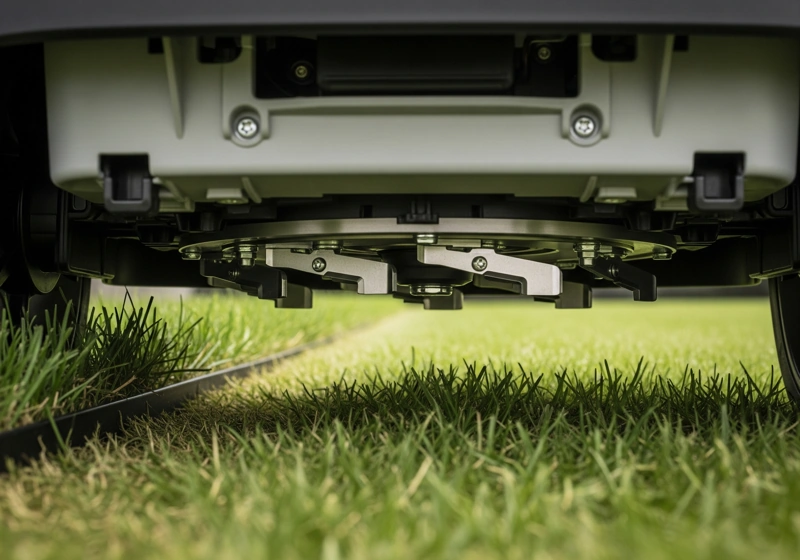
Alright, before I start throwing around model numbers and prices, you gotta understand what you’re dealing with here. I can’t tell you how many times I’ve had customers call me confused because they thought their robotic mower was broken when really they just didn’t understand how it was supposed to work.
Most of these machines work like this: you install a thin wire around the edge of your lawn – kind of like an invisible fence for dogs, except instead of keeping Fido in the yard, it keeps your mower from wandering off into your neighbor’s flower bed. The mower gets a signal from this wire and knows to stay inside the boundaries.
Now here’s where it gets interesting. The older models (we’re talking like 5-6 years ago) just bounced around randomly like a drunk person trying to find their car keys. Worked okay, but took forever and missed spots. The newer ones I’ve been testing? They’re actually mapping your yard, remembering where they’ve been, and some even use GPS satellites like your car’s navigation system.
But here’s what nobody tells you: all this fancy tech means there’s more stuff that can break. I’ve got customers with simple models from 2019 that are still chugging along perfectly, and other customers with brand new “smart” models that need constant troubleshooting. Technology is great when it works, but when it doesn’t… well, let’s just say I’ve gotten some pretty angry phone calls.
The cutting part is totally different, too. Instead of one big blade spinning fast enough to slice your toe off (don’t ask me how I know), these things use tiny little razor blades that just nibble at the grass constantly. Think about getting a haircut every day instead of waiting a month and chopping off three inches. Your grass loves it, stays healthier, and you never get those brown tips from dull blades.
The Brands That Actually Don’t Suck
I’m gonna be straight with you here. After installing hundreds of these things, dealing with warranty claims, angry customers, and middle-of-the-night “my mower is stuck in a tree” phone calls, I’ve got some pretty strong opinions about which brands are worth your money.
Husqvarna: Yeah, They’re Expensive, But Here’s Why
Okay, full disclosure – I probably sound like a Husqvarna salesman at this point. But here’s the deal: I’ve installed maybe 200 of their Automowers over the years, and the number of callbacks I get? Almost zero. That means a lot to a guy who doesn’t want to spend his Sundays unsticking robots from rose bushes.
Their 415X model is now my bread and butter recommendation for most homeowners, and for good reason. It costs about $2,500, which I know sounds like a lot, but listen to this: Mrs. Patterson down the street bought one four years ago. Still runs perfectly. The only time she’s called me was to ask how to change the cutting schedule because her grass was growing more slowly in the fall.
The 430XH is for people with yards that look like ski slopes. I tested one at my buddy Rick’s place – he’s got this crazy steep hill going down to his pond, probably 40 degrees or so. I was sure the thing would slide right into the water. Nope. Climbed that sucker like a mountain goat.
One thing that drives me nuts about some brands is their apps crash every other week. Husqvarna actually works. Revolutionary concept, right?
Worx: The Best Deal You’ll Find
Now, if you’re not ready to drop two and a half grand on a lawn mower, Worx makes some solid machines that won’t break the bank. Their Landroid Vision WR230 is their no-wire option, while the Landroid M WR147 does pretty much everything most people need.
Here’s what I love about Worx: when you call their customer service, they don’t make you feel like an idiot. Try calling some other companies with a simple question and see what happens. You’ll be on hold for 45 minutes talking to someone who’s clearly reading from a script and has never seen a lawn mower in person.
Here’s what I love about Worx: when you call their customer service, they don’t make you feel like an idiot. Try calling some other companies with a simple question and see what happens. You’ll be on hold for 45 minutes talking to someone who’s clearly reading from a script and has never seen a lawn mower in person.
Mammotion: Ditching The Wires
Mammotion is a newcomer to the market, but they’re worth paying attention to. Their LUBA 2 AWD model is your go-to if you don’t want to deal with boundary wires at all. It uses GPS and satellite navigation to map out your lawn.
The units are all-wheel drive, allowing them to handle serious slopes better than any other robot mower I’ve ever seen. If your yard is complex or steep, this thing is a beast on the terrain.
Kress: Cool Technology, Real-World Problems
Okay, so the Kress Mission KR161 uses satellite navigation instead of buried wires, which sounds amazing in theory. No wire installation, no worrying about cutting the wire with your edger, just set it down and let it go.
But, and this is a big but – it sometimes loses satellite signal and gets completely lost. When it works, it’s honestly impressive, but it still feels like paying a premium to be a beta tester.
Plus, if you’re already in the Worx tool ecosystem (their drills, saws, whatever), the batteries are interchangeable. Smart move on their part.
Robomow: Built Like Tanks, Sound Like Them Too
Robomow makes tough machines. Really tough. I’ve got customers with St. Augustine grass so thick it’s like mowing carpet, and their RS630 just powers right through it. Most other mowers would choke and die.
The cutting deck is almost twice as wide as most competitors, so it gets done faster. Great if you’re impatient like me.
But man, they’re loud. Not gas-mower loud, but definitely louder than the others. If you’ve got neighbors close by or you like peaceful Saturday mornings, maybe look elsewhere. I learned this the hard way when Mrs. Chen called me at 6:30 A.M., asking why her “quiet robot mower” woke up the whole neighborhood.
KRESS: Cool Technology, Real-World Problems
Okay, so KRESS uses satellite navigation instead of buried wires, which sounds amazing in theory. No wire installation, no worrying about cutting the wire with your edger, just set it down and let it go.
I tested their Mission RTKn for three months. When it worked, it was honestly impressive. Super precise, mapped the yard perfectly, cut better patterns than wire-guided models.
But – and this is a big but – twice it lost satellite signal and got completely. The first time, I found it trying to mow my neighbor’s driveway. The second time, it was stuck against the fence, just spinning in circles like a confused robot in a sci-fi movie.
For $4,000, that’s not acceptable. Maybe in a few years, when the technology matures, but right now it feels like paying premium prices to be a beta tester.
My Real-World Comparison Chart
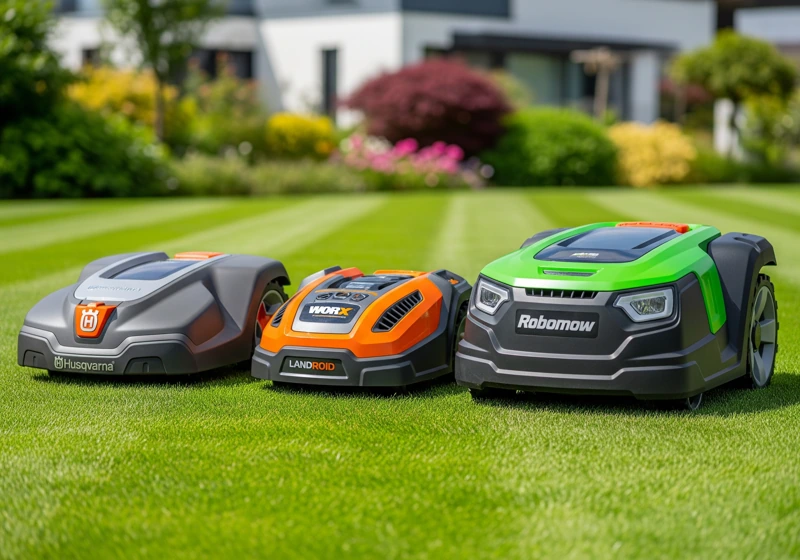
Look, I could give you all the fancy specs and marketing numbers, but what you really want to know is: which one should I actually buy? Here’s my honest breakdown based on real experience, not brochure claims:
| Model | Street Price | Area It Can Handle | Hills It Can Handle | Run Time | Who Should Buy It | My Honest Rating |
|---|---|---|---|---|---|---|
| Husqvarna Automower 415X | $2,400-2,800 | 0.4 acres | Most residential slopes | 70 minutes | Most suburban homeowners, proven reliability | Excellent (5/5) |
| Husqvarna Automower 430XH | $3,200-3,600 | 0.75 acres | Crazy steep hills (45°) | 135 minutes | Challenging yards, larger properties | Excellent (5/5) |
| Worx Landroid Vision WR230 | $1,800-2,200 | Three-quarters acre | Medium to steep hills | 90 minutes | Best no-wire option, tech-forward homeowners | Excellent (5/5) |
| Worx Landroid M WR147 | $800-1,100 | Quarter acre | Medium hills fine | 60 minutes | Best bang for buck, small yards | Really good (4.5/5) |
| Mammotion LUBA 2 AWD | $2,500-3,000 | Half acre | Steep slopes (45%) | 120 minutes | Large yards, steep hills, no-wire setup | Excellent (5/5) |
| Kress Mission KR161 | $1,600-1,900 | Quarter acre | Steep slopes | 60 minutes | Tech enthusiasts, need precise boundary control | Tech enthusiasts need precise boundary control |
These are real prices I’ve seen, not made-up MSRP numbers that nobody actually pays
Real Stories from Real Yards
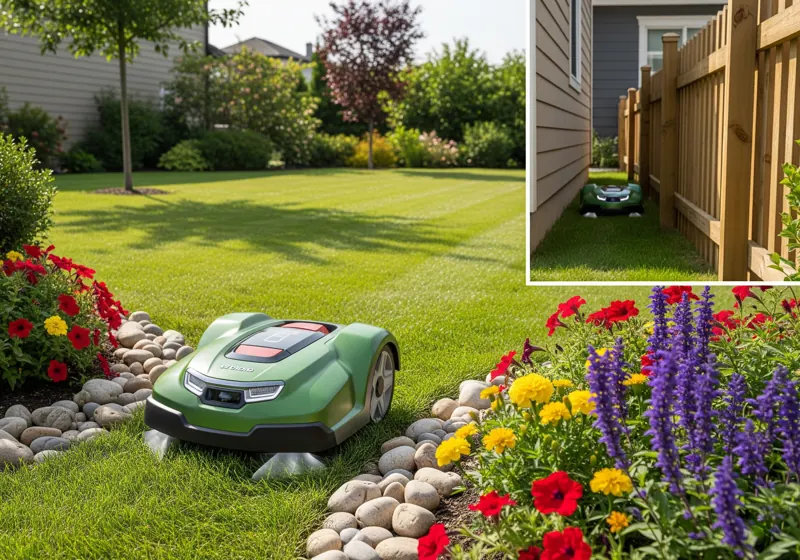
Let me tell you about some actual customers, because that’s way more useful than me just listing specs all day.
Jenny’s Tiny Front Yard Disaster
Jenny lives downtown and has maybe 2,000 square feet of grass total. Comes to me wanting “the best robotic mower money can buy.” I’m thinking, okay, she wants the Husqvarna 450XH, right? Wrong move.
See, Jenny’s yard isn’t just small – it’s complicated. She’s got this narrow path between her house and the neighbor’s fence, maybe three feet wide. Garden gnomes everywhere (don’t ask me why). Decorative rocks are scattered around like obstacles in a video game.
So I talk her into the little Worx Landroid M WR147 instead. She’s skeptical because it’s “just” $900 compared to the $3,000 models. Six months later, she sends me a thank-you card. The smaller mower navigates all her tight spaces perfectly. A bigger machine would’ve been stuck constantly.
Lesson learned: Bigger isn’t always better, especially if your yard looks like a miniature golf course.
Tom’s Half-Acre Nightmare
Tom’s got what looks like a perfect setup for robotic mowing. Half an acre, mostly flat, a couple of oak trees, but nothing too crazy. He goes online, finds an off-brand mower for $600, and figures he’ll save some money.
Three weeks later, he’s calling me because the thing won’t hold a charge, keeps getting lost, and the cutting blades are duller than a butter knife. We end up installing a Husqvarna Automower 415X, and suddenly, all his problems disappear.
Sometimes you really do get what you pay for. That cheap mower is probably sitting in his garage right now, a $600 reminder that bargain hunting doesn’t always work out.
Carol’s Slope From Hell
Carol’s backyard slopes down toward a creek, with some spots at a 35-40 degree angle. Most mowers would slide right down into the water like kids on a slip-and-slide. She needs something that can handle serious terrain.
We went with the Husqvarna Automower 430XH, and let me tell you, that machine is a beast. Climbs slopes that make me nervous just walking on them. Two years later, still going strong, never slid into the creek even once. The price tag made her wince initially – about $3,200 installed – but she tells me it’s the best money she’s ever spent on yard equipment.
The price tag made her wince initially – about $3,200 installed – but she tells me it’s the best money she’s ever spent on yard equipment.
Features That Actually Matter (And Marketing BS to Ignore)
Every manufacturer loads up their brochures with fancy features that sound impressive but don’t really make your life any better. After years of dealing with these machines, here’s what actually matters:
Rain Sensors: Absolutely Non-Negotiable
Any robotic mower worth buying better head home when it starts sprinkling. Cutting wet grass is terrible for your lawn -it creates ruts, spreads diseases, and makes a muddy mess. Plus, it’s hard on the machine.
The good systems let you adjust sensitivity. Some customers want their mower to quit at the first hint of moisture, while others don’t mind if it works through light mist. Having options is nice.
I’ve seen budget models that keep mowing in steady rain because their sensors are garbage. Don’t be that guy with muddy tire tracks all over your yard.
Smartphone Apps: When They Actually Work
Husqvarna’s app is genuinely useful. I can check on my mower from anywhere, adjust cutting schedules, even track it down if someone steals it (hasn’t happened yet, knock on wood). The interface makes sense, doesn’t crash every five minutes.
But some of these apps are straight-up terrible. Constant crashes, lose connection for no reason, and menus that were designed by someone who’s never used a smartphone. Check app store reviews before buying – if people are complaining about the app, trust them.
GPS Tracking: More Important Than You Think
Sad reality: people steal robotic mowers. A lot. They’re expensive, small enough to throw in a truck, and if they don’t have good security features, easy to resell.
GPS tracking helps, but PIN codes are even better. If some genius steals your mower but can’t operate it because they don’t have the unlock code, it’s just expensive scrap metal.
Multi-Zone Programming: Only If Your Yard Is Weird
This sounds really cool in the brochures – program your mower to spend different amounts of time in different areas of your yard. Most people don’t need it, though.
If your yard is basically one big connected area, save your money. But if you’ve got a front yard and back yard connected by a narrow side gate, or separate grass areas with different sun exposure, then zone management becomes really valuable.
I installed one for a customer who had a shady backyard that barely grew and a sunny front yard that grew like crazy. Being able to program different cutting schedules for each area was perfect.
Installation: What Nobody Tells You
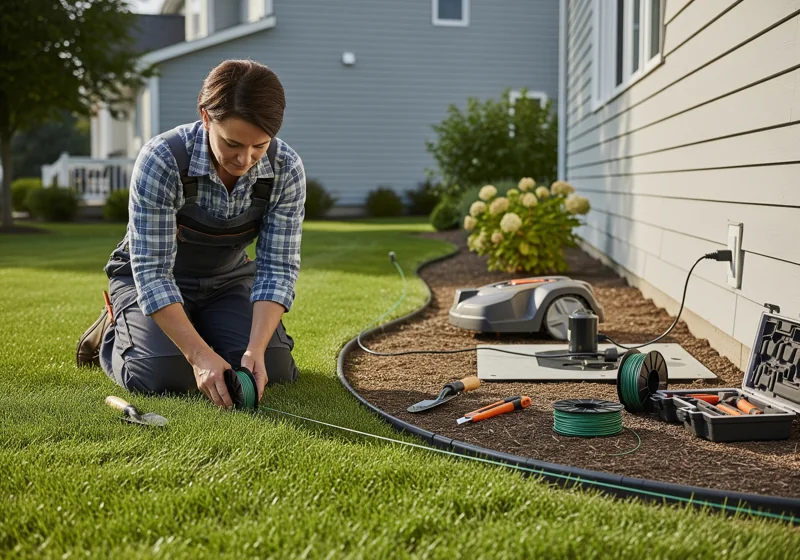
Okay, real talk time. Installing a robotic mower isn’t nearly as simple as the YouTube videos make it look. It’s not impossibly hard, but it’s definitely a weekend project, and if you mess it up, you’ll be frustrated for months.
The Wire Installation Nobody Warns You About
You’ve got to install this boundary wire around your entire lawn perimeter. Sounds simple, right? Just follow the edge of the grass and you’re done.
Wrong. You’ve got to stay about a foot away from hard edges like sidewalks and driveways, but only six inches from flower beds, unless there’s a slope, in which case the distance changes depending on the angle, and don’t even get me started on how to handle sprinkler heads and decorative rocks.
I always tell people to start simple. Don’t try to create some complex pattern around every garden feature on your first try. Get the basic perimeter working, then you can always add complexity later.
The wire itself is pretty thin – about like speaker wire – and it breaks easier than you’d think. Dog digging, aggressive edging, or even just frost heave can snap it. When it breaks, your mower stops working until you find and fix the break.
Charging Station Location: Critical Decision
This seems like a no-brainer, but I’ve seen people mess it up constantly. The charging station needs level ground, protection from rain, access to electricity, and enough clearance for the mower to approach straight-on.
Can’t tell you how many times I’ve been called to move a charging station because someone stuck it behind a bush where the mower couldn’t find it, or in a low spot that floods every time it rains.
The Learning Curve Is Real
Don’t expect your new robotic mower to work perfectly on day one. There’s definitely a break-in period where you’ll need to tweak settings, adjust the cutting schedule, maybe even move some boundary wire.
I had one customer call me three days after installation, furious because his mower seemed “stupid” and kept getting stuck in the same corner. Turns out the boundary wire was too close to his deck stairs, confusing the navigation system. Quick five-minute fix, but if you don’t know what to look for, it’s really frustrating.
Most navigation systems get better over time as they learn your yard’s layout. Give it at least a week or two before you start making major changes.
The Real Performance Story
Marketing brochures show perfect lawns with perfect mowers creating perfect cutting patterns. Real life? Not so much. Here’s what actually happens after you’ve owned one of these things for a while.
Cutting Quality: Better Than I Expected
The constant light trimming approach actually produces healthier grass than weekly chopping. The tiny clippings decompose quickly and feed your lawn naturally. After a full season, most customers notice their grass is thicker and greener than it’s ever been.
But here’s the catch nobody mentions: robotic mowers hate tall grass. If you’re coming from the “mow once a month, whether it needs it or not” school of lawn care, you’ll need to get your grass down to a reasonable height first. These machines work best when the grass is already well-maintained.
I learned this lesson with my own yard. First spring with my robotic mower, I let the grass get pretty tall before starting it up. Poor little robot struggled like crazy, kept clogging up, and barely made any progress. Had to break out the old push mower and knock it down first.
Weather Reality Check
Despite what the brochures claim, these machines struggle in extreme conditions. Heavy rain, obviously, but also thick morning dew, temperatures over 95 degrees, and weirdly, really dry conditions where grass gets super hard.
It’s not that the machines are broken – they’re just not designed for extreme anything. Think of them like outdoor workers. They do great in normal conditions but need breaks when the weather gets crazy.
The Problems Nobody Talks About
Blade dulling happens faster than you expect, especially if you’ve got sandy soil. I’ve got customers who need new blades every month during the growing season. Not expensive, but more frequent than advertised.
Wire breaks are probably the most common service call I get. Usually, it’s someone who forgot about the boundary wire and hit it with an edger, but sometimes it’s just normal wear and tear. Dogs digging, freeze-thaw cycles, aggressive landscaping – lots of ways for that wire to get damaged.
Navigation problems around complex landscaping are real, too. If your yard looks like a botanical garden with obstacles everywhere, expect some learning curve issues.
Let’s Talk Money (The Real Numbers)
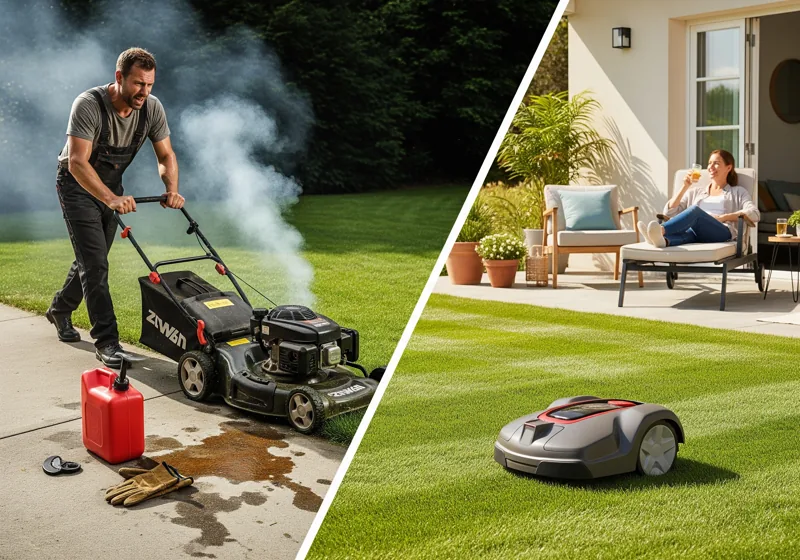
Time for the awkward conversation about what this stuff actually costs, because sticker shock is real with robotic mowers.
What You’ll Actually Pay
A decent robotic mower for a typical suburban yard runs $1,500-2,500. That’s just for the machine. Add professional installation (which I recommend for most people) at around $400-500, plus boundary wire supplies, stakes, and miscellaneous stuff, and you’re looking at $2,000-3,500 total.
I know that sounds like a lot. It is a lot. But before you have a heart attack, consider that a decent riding mower costs $3,000-5,000, needs annual tune-ups, oil changes, blade sharpening, and still requires you to spend every Saturday morning driving it around your yard.
The Ongoing Costs They Don’t Advertise
Replacement blades are about $25-30 per set, and you’ll need 3-4 sets per growing season, depending on your soil and how much you run the mower. So figure $100-120 per year just for blades.
Electricity usage is actually pretty minimal – maybe $15-20 per year, even if you run it daily. These things are way more efficient than you’d expect.
The big hit comes after 3-4 years when the battery starts losing capacity. Replacement batteries run $150-30,0, depending on your model. Not terrible, but not exactly pocket change either.
Time Value: The Hidden Benefit
Here’s the math that convinced me personally: I was spending about 3 hours every weekend mowing, edging, and cleaning up. That’s roughly 75 hours per growing season. Even if I value my time at just $20 per hour (which is pretty conservative), that’s $1,500 worth of my time every year.
Robotic mower pays for itself in time savings within 2-3 years, and that’s before you consider that I actually enjoy my weekends now instead of spending them doing yard work.
Mistakes I See People Make All the Time
After installing hundreds of these things, I’ve seen every possible mistake. Learn from other people’s expensive errors:
Buying Too Much Mower
The biggest mistake is assuming bigger/more expensive is always better. A guy with a quarter-acre flat yard doesn’t need a $4,000 slope-climbing GPS-enabled monster machine. You’re paying for features you’ll never use.
Buying Too Little Mower
The flip side is trying to save money with a machine that’s not up to the job. A small mower on a big yard means it runs constantly and still can’t keep up. An underpowered mower on thick grass burns out the motor.
Ignoring Terrain
People look at their yard and think, “It’s not that steep.” Trust me, slopes that seem manageable on foot can be impossible for a robotic mower. If you’re slipping when you walk up your hill, your mower will too.
Expecting Perfection Day One
These machines need time to learn your yard and for you to learn how to use them properly. Don’t judge performance based on the first week.
Skipping Professional Installation
I get it, nobody wants to spend an extra $400-500 for something that “looks simple.” But boundary wire installation has a lot of nuances, and if you get it wrong, you’ll be dealing with problems for years.
What’s Coming Next (And What’s Just Hype)
The technology keeps evolving, and some of the new stuff looks genuinely promising. Other developments are solutions looking for problems.
Camera Navigation: The Future or Gimmick?
Several companies are working on systems that use cameras instead of boundary wires. Sounds amazing – no more wire installation, no more worrying about wire breaks.
I’ve tested a couple of early versions, and honestly, they’re not ready for prime time yet. Works okay in perfect conditions, but struggles with shadows, changing light, and seasonal landscape changes. Maybe in a few more years.
AI Learning Systems: Actually Useful
The newer models are getting better at learning optimal patterns for your specific yard. They track which areas grow faster, adjust cutting frequency automatically, and even coordinate with weather forecasts to optimize scheduling.
This stuff actually works and makes a real difference. Not just marketing fluff.
Smart Home Integration: Hit or Miss
Voice control through Alexa or Google sounds cool, and sometimes it’s actually useful. “Hey Google, send the mower home” works great when it’s about to rain.
But a lot of the smart home integration feels gimmicky. Do I really need my mower to text me updates every hour? Probably not.
My Final Recommendations (No BS Version)
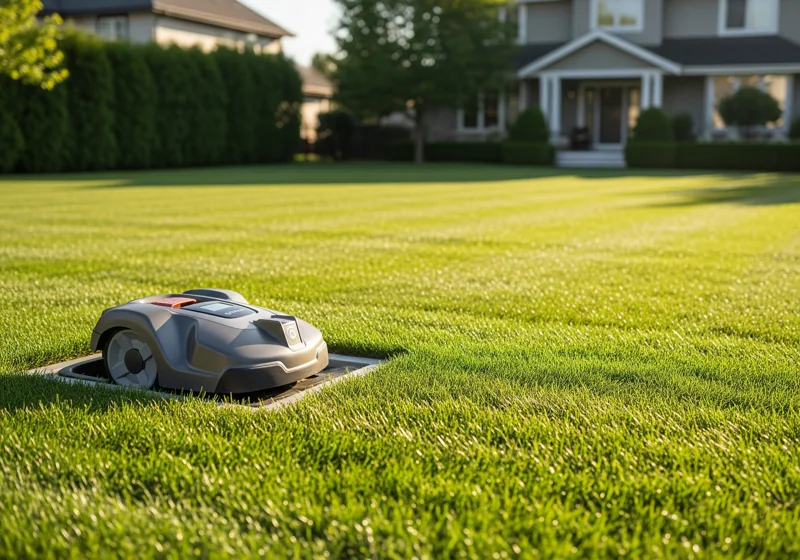
Alright, after all that, here’s what I actually recommend for different situations:
Best Overall Choice: Husqvarna Automower 415X
For most people with typical suburban yards, this is the sweet spot. Reliable, good customer service, app that works, handles most terrain without issues. Yes, it’s expensive at around $2,400, but it’ll probably last 7-8 years with minimal problems.
Best Value: Worx Landroid M WR147
If the Husqvarna price makes you queasy, this is a solid alternative. About half the price, it does 90% of what the premium models do. Not quite as refined, but it gets the job done without breaking the bank.
Best for Big Yards: Husqvarna Automower 430XH
If you’ve got more than half an acre, especially with challenging terrain, bite the bullet and get this one. The bigger battery and more robust construction make a real difference on large properties.
Best No-Wire Option: Mammotion LUBA 2 AWD
For those who want to avoid the hassle of boundary wires, this is your best bet. It uses GPS to navigate and is a powerhouse on tough terrain and slopes.
Small yard, tight budget, just want to try robotic mowing without a huge commitment? This will get you started for under a grand. Don’t expect miracles, but it’s a legitimate introduction to the technology.
Skip These: KRESS Mission RTKn
Cool technology, but too expensive for what you get, and the satellite navigation isn’t reliable enough yet. Maybe in a few years, when they work out the bugs.
Should You Actually Buy One?
Here’s the real question: Is robotic mowing right for your situation?
Buy one if: you’ve got a reasonably normal yard under an acre, you don’t enjoy mowing, you can afford the upfront cost without eating ramen for six months, and you’re okay with a short learning curve.
Don’t buy one if: you actually enjoy mowing as exercise or meditation time, your yard is super complex with tons of obstacles, you’re expecting golf-course perfection, or you’re not comfortable with basic technology troubleshooting.
The technology is definitely mature enough now that these are practical tools rather than expensive toys. I’ve installed probably 300 of them over the last few years, and I’d say 85-90% of customers are genuinely happy with the results.
But it’s not magic. You still need to maintain your lawn properly, the machine needs regular maintenance, and occasionally, things go wrong that require troubleshooting.
My suggestion? If you’re curious but unsure, find a local dealer who’ll let you see one in person. Watching a robotic mower navigate a real yard will give you a much better sense of whether it’s right for your situation than reading reviews online (even really good ones like this).
And hey, if you decide to take the plunge, just remember: those Saturday mornings you used to spend fighting with pull-start engines? They’re about to become a lot more relaxing. Trust me on this one.
Absolutely, but it depends on your situation. After installing hundreds of these machines, I can tell you that about 90% of my customers are genuinely happy with their investment. If you’ve got a relatively normal yard under an acre, don’t enjoy weekend mowing, and can handle the upfront cost, then yes – robotic mowers are totally worth it. The time savings alone pay for themselves within 2-3 years, plus you get healthier grass from the constant light trimming. Just don’t expect it to work miracles if you’ve got a super complex yard with tons of obstacles.
Let me be straight with you – there are definitely downsides. The upfront cost is brutal (expect $2,000-3,500 total with installation). They struggle with tall grass, so you can’t just ignore your lawn for weeks. Wire breaks happen and are annoying to fix. They’re also theft targets, and some models are louder than advertised. Plus, there’s a real learning curve – don’t expect perfection on day one. If you’re a perfectionist who wants golf-course stripes, you’ll probably be frustrated with the more natural cutting pattern.
Quality models from brands like Husqvarna typically last 7-8 years with proper maintenance. I’ve got customers with 2018 Automowers still running strong. The main wear items are blades (replace 3-4 times per season) and batteries (need replacement after 3-4 years). Cheaper models might only last 4-5 years before major components start failing. The key is buying from established brands with good parts support and not skimping on maintenance.
For most suburban homeowners, I recommend the Husqvarna Automower 415X. It’s my go-to suggestion because it handles typical yard challenges reliably and has excellent customer support. If the budget’s tight, the Worx Landroid M WR147 offers great value at about half the price. For larger properties over half an acre, step up to the Husqvarna Automower 430XH.
Not necessarily. Most robotic mowers work best running 3-4 times per week during peak growing season. Running daily can actually stress the grass in hot weather and wear out your blades faster than needed. I tell customers to start with the manufacturer’s recommended schedule, then adjust based on how fast their grass grows. Spring and fall might need daily runs, but mid-summer, you can often cut back to every other day.
Nope, they’re surprisingly efficient. Most robotic mowers add less than $20 per year to your electric bill, even running daily during the growing season. They use way less power than you’d expect – about the same as leaving a couple of LED light bulbs on. Compare that to gas mowers, where you’re buying fuel all season, and the electric cost is basically negligible. It’s one of the few areas where these machines actually save money compared to traditional mowing.
