
Lawn Mower Engines: A Guide to Understanding Engine Types
So you’re standing in the mower aisle at Home Depot, staring at a wall of machines that all look the same except for the price tags. The salesperson just rattled off something about “159cc overhead valve engines,” and you nodded like you knew what that meant. Don’t worry – I did the same thing when I bought my first mower back in ’98.
Table of Contents
▼- Gas Engines: The Classics That Still Rule
- 2-Cycle Engines: Love ‘Em or Hate ‘Em
- 4-Cycle Engines: The Workhorses
- Gas vs Electric Lawn Mower Engines: The Big Decision
- Understanding Engine Displacement: Choosing the Best Lawn Mower Engine Type for Your Yard
- The Electric Revolution (And Why I’m Impressed)
- Battery Power: Getting Seriously Good
- Electric vs Gas Mower Engines: Performance Comparison
- Corded Electric: Still Around, Still Weird
- Riding Mower Engines: When You Need Serious Power
- Single-Cylinder Engines (15-25 HP)
- Twin-Cylinder Engines (18-30+ HP)
- Features That Matter (And Marketing Fluff That Doesn’t)
- Overhead Valve vs. Side Valve
- Electric Start vs. Pull Cord
- Automatic vs. Manual Choke
- Real-World Maintenance (What It Costs and Takes)
- Common Problems and What They Mean
- Best Lawn Mower Engine Type for Your Specific Situation
- Common Questions About Types of Lawn Mower Engines
- The Real Bottom Line
Here’s what I wish someone had told me then: the engine isn’t just some boring technical detail buried in the fine print. It’s everything. It’s the difference between a mower that starts on the first pull every Saturday for ten years versus one that leaves you sweating and cursing in your driveway every weekend.
I’ve been cutting grass professionally for fifteen years now, and I’ve probably worked on more broken mowers than most repair shops see in a year. Trust me when I say this – spend five minutes understanding the different types of lawn mower engines now, save yourself hours of frustration later. This lawn mower engine guide will break down everything you need to know.
Gas Engines: The Classics That Still Rule
Most mowers you’ll see run on good old-fashioned gasoline, but there are two completely different ways they burn that fuel.
2-Cycle Engines: Love ‘Em or Hate ‘Em
These are the engines you’ll find on string trimmers, leaf blowers, and some smaller mowers. They’re called 2-cycle because they fire every time the piston goes up and down – which sounds great until you realize what that means.
The big thing with 2-cycle engines? You’ve gotta mix oil right into the gas. Not just pour oil somewhere – mix it, like you’re making a cocktail. Most require a 50:1 ratio, which means 2.6 ounces of 2-cycle oil per gallon of gas.
I learned this the expensive way when I seized up a brand-new Stihl trimmer because I thought “2-cycle oil” was just marketing speak. Turns out a $400 trimmer makes a costly paperweight when you run straight gas through it.
The good stuff about 2-cycles:
- Lightweight (your trimmer would weigh twice as much otherwise)
- A simple design means fewer things can break
- Tons of power for their size
The annoying stuff:
- That oil mixing I mentioned
- They’re loud as hell
- Burn through fuel pretty quickly
- Smells like a chainsaw convention
You’ll mainly see 2-cycle engines on handheld tools these days. Most walk-behind mowers have moved away from them, and frankly, good riddance.
4-Cycle Engines: The Workhorses
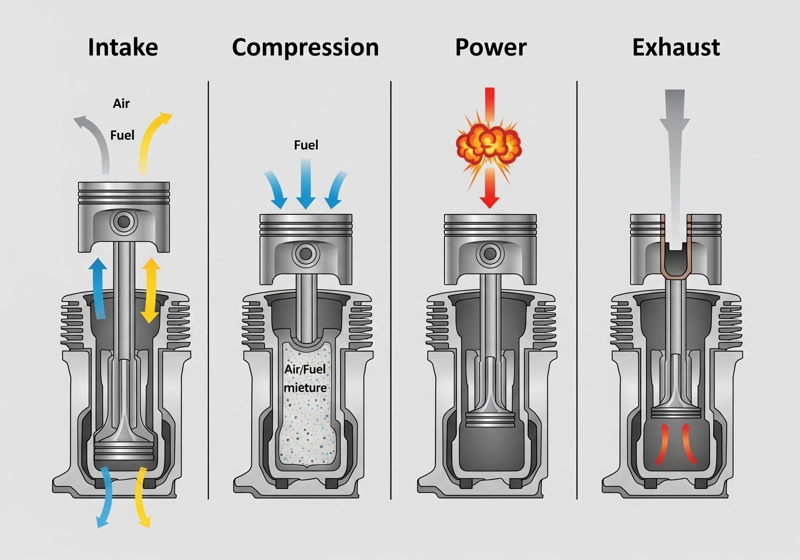
This is what’s probably going to be under the hood of whatever mower you buy. Four-cycle engines work more like your car – they’ve got separate oil and gas, they run cleaner, and they don’t sound like you’re operating heavy machinery at 7 AM.
The “four cycles” are intake (sucks in fuel and air), compression (squishes it all together), power (ignites it), and exhaust (blows out the burnt stuff). Happens so fast you can’t tell, but that’s the dance going on under there.
What I love about 4-cycle engines:
- Just pour in regular gas and go
- Way quieter than 2-cycles
- Better fuel economy
- Last longer with basic maintenance
The downside? They’re heavier and a bit more complex. More parts mean more things that can eventually need attention. But honestly, I’d rather deal with an occasional carburetor cleaning than mixing fuel every time I need to trim the hedges.
Gas vs Electric Lawn Mower Engines: The Big Decision
Before we dive deeper into specific engine types, let’s address the elephant in the room – should you go gas or electric? This gas vs electric lawn mower engines debate has gotten a lot more interesting in recent years.
The short answer? It depends on your yard and your priorities. Electric vs gas mower engines each have their place, and I’ve seen both work brilliantly in the right situations.
When gas engines make sense: Properties over half an acre, thick overgrown grass situations, hills, and challenging terrain, you don’t mind basic maintenance.
When electric engines shine: Smaller suburban lots, noise restrictions in your neighborhood, you want zero maintenance hassle, and environmental concerns matter to you.
Understanding Engine Displacement: Choosing the Best Lawn Mower Engine Type for Your Yard
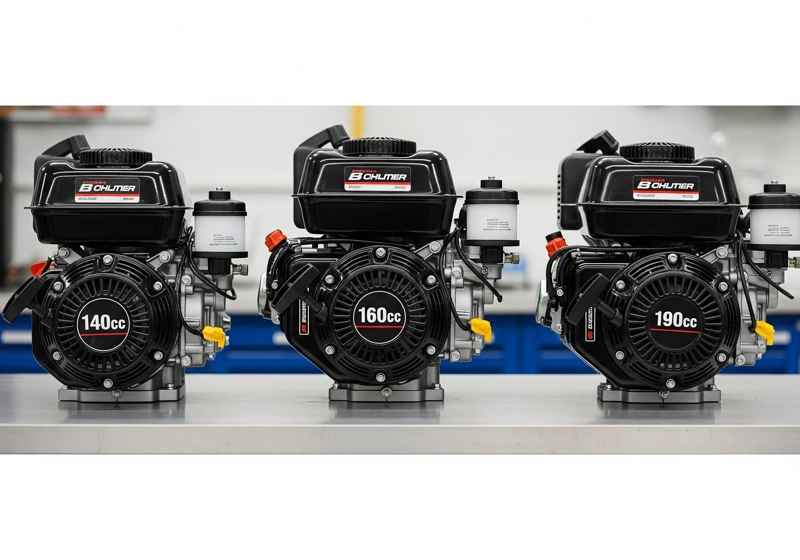
When you see “160cc” or “190cc” on a mower spec sheet, that’s telling you the size of the engine’s combustion chamber. More cc’s generally means more power, but it’s not quite that simple.
Think of it like this – a bigger engine can suck in more fuel and air, which means bigger explosions, which means more power. But a well-designed small engine can sometimes outperform a poorly designed big one.
Small engines (140-160cc): Perfect for flat yards under half an acre. I’ve got customers running 140cc Briggs & Stratton engines on their push mowers for eight years straight. Just oil changes and spark plugs, that’s it.
Medium engines (160-190cc): The sweet spot for most suburban yards. Enough power for self-propelled drive systems and thick grass, but not overkill for normal weekly cutting.
Large engines (190cc+): For when you’ve got hills, really thick grass, or you’re bagging instead of mulching. The extra power means the engine isn’t working as hard, which usually translates to longer life.
Here’s something the sales guys won’t tell you: buy more engine than you think you need. That extra power headroom is like insurance. When you hit a patch of tall, wet grass (and you will), you’ll be glad you’ve got the extra grunt.
The Electric Revolution (And Why I’m Impressed)
I’ll be honest – I was skeptical about electric mowers for years. The old corded ones from the ’90s were pretty terrible, and early battery mowers couldn’t cut wet grass to save their lives. But man, have things changed.
Battery Power: Getting Seriously Good
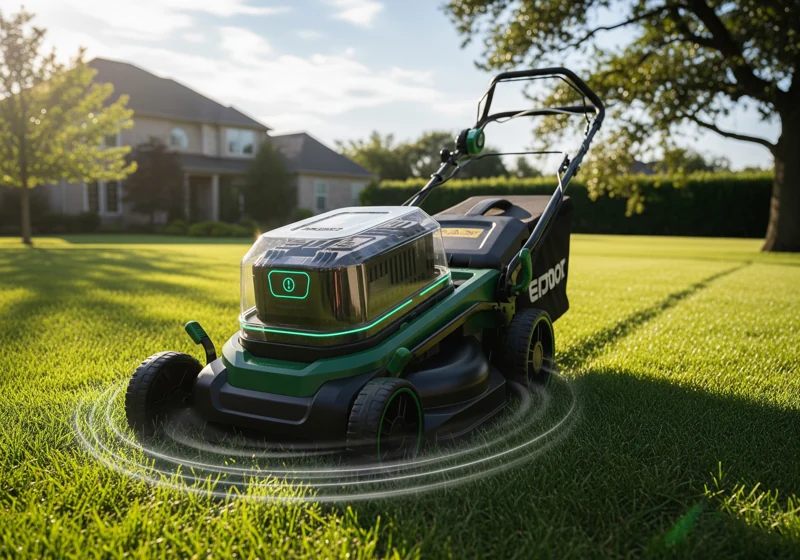
Modern battery mowers are legitimately impressive. The torque is instant – none of this revving up and hoping for the best. You push the lever, boom, full cutting power immediately.
My neighbor picked up an Ego Power+ 21″ last spring, and I have to admit, I was jealous watching him mow. Quiet enough that his wife could talk on the phone ten feet away, no fussing with pull cords, and the cut quality was honestly better than his old gas Craftsman.
The battery advantages:
- Zero maintenance (seriously, none)
- Starts every single time
- Quiet operation
- No gas or oil to deal with
- Better for the environment if you care about that stuff
The reality check:
- Runtime is usually 45-60 minutes max
- Struggles with really thick or wet grass
- Good ones are expensive (think $400-800)
- Battery replacement down the road gets pricey
I tell customers this: if you’ve got a typical suburban lot and you cut weekly, a battery makes a lot of sense. If you let the grass get tall or you’ve got a big property, stick with gas for now.
Electric vs Gas Mower Engines: Performance Comparison
If you’re still comparing electric vs gas mowers and want brand-specific recommendations, here’s what I’ve observed after testing both extensively:
- Power delivery: Electric engines give instant torque while gas engines need to rev up. For regular weekly cutting, electric wins. For thick, overgrown grass, gas still has the edge.
- Runtime: Gas engines run as long as you have fuel. Battery engines give you 45-60 minutes max. Corded electric runs forever, but you’re fighting that cord.
- Maintenance: Electric engines require zero maintenance. Gas engines need oil changes, spark plugs, and annual tune-ups.
- Noise: Electric engines are whisper-quiet. Gas engines sound like, well, gas engines.
- Cost: Good battery mowers cost $400-800. Decent gas mowers start around $300 but you’ll spend $50+ yearly on maintenance.
Corded Electric: Still Around, Still Weird
Yeah, they still make corded mowers. My mother-in-law swears by hers for her tiny front yard. Takes her exactly 12 minutes to cut, no batteries to maintain, starts instantly.
But that cord, man. You spend half your time wrestling with 100 feet of extension cord, and eventually – trust me on this – you’re going to run over it. I’ve seen it happen to three different customers. Makes a distinctive sound when the blade hits that cord.
For a detailed breakdown of corded vs cordless electric mowers, my mother-in-law swears by her corded mower for her tiny front yard.
Riding Mower Engines: When You Need Serious Power
Once you get into riding mower territory, we’re talking about real engines. If you’re debating riding vs push mowers, these aren’t the little 4-cycle engines on push mowers – these are legitimate powerplants.
Single-Cylinder Engines (15-25 HP)
Most entry-level and mid-range riding mowers use single-cylinder engines. One big piston going up and down, usually displacing anywhere from 400cc to 700cc. They work fine for most residential applications.
The Briggs & Stratton Intek series is probably what you’ll see most often. They’re reliable enough, reasonably priced to maintain, and parts are available everywhere. Not fancy, but they get the job done.
Single-cylinder pros:
- Simple design
- Cheaper to buy and maintain
- Parts are available at any mower shop
Single-cylinder cons:
- More vibration
- Not as smooth a power delivery
- Can bog down in thick grass
Twin-Cylinder Engines (18-30+ HP)
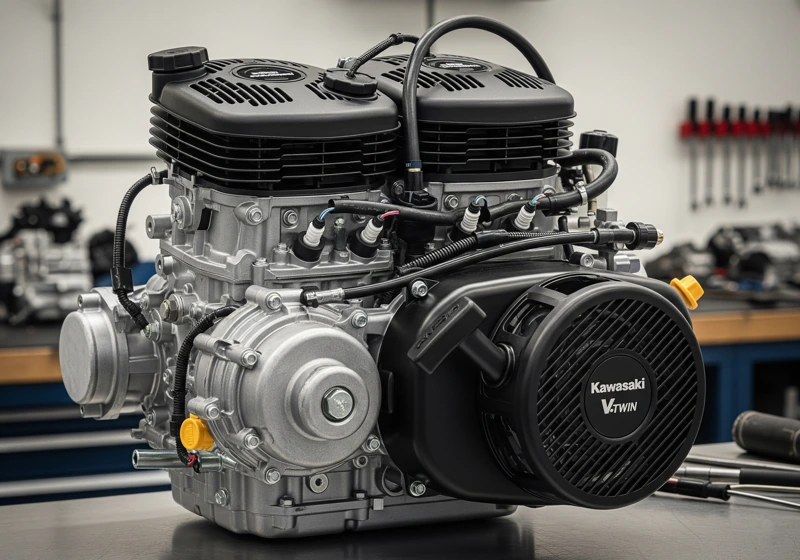
Now we’re getting into the good stuff. Two cylinders means the engine fires twice as often, which translates to smoother operation and more consistent power. It’s like the difference between a motorcycle and a car engine.
My personal favorite? Kawasaki FR series engines. They’re commercial-grade engines that you can get on higher-end residential mowers. A Cub Cadet or Husqvarna with a Kawasaki twin will probably outlast two single-cylinder mowers.
Twin-cylinder advantages:
- Smoother operation
- More power
- Better for hills and thick grass
- Generally last longer
Twin-cylinder disadvantages:
- Costs more upfront
- More complex (twice as many spark plugs, etc.)
- Use slightly more fuel
Features That Matter (And Marketing Fluff That Doesn’t)
Let me cut through some of the sales brochure nonsense and talk about features that make a real difference.
Overhead Valve vs. Side Valve
This sounds super technical, but it’s pretty simple. Overhead valve (OHV) engines have the valves up top, in the cylinder head. Side valve engines have them off to the side.
OHV engines are better. Period. They’re more fuel efficient, make more power, and last longer. You’ll pay a bit more for them, but it’s worth it. Most quality mowers use OHV designs now anyway.
Electric Start vs. Pull Cord
Electric start is exactly what it sounds like – push a button, and the engine starts. Usually adds about $100-150 to the price of a mower.
Is it worth it? Depends. If you’ve got shoulder problems or just hate the whole pull-cord dance. If you’re young and healthy and trying to save money, a good pull-start system works fine. Just make sure it’s an easy-pull design – some cheaper mowers will about dislocate your shoulder.
Automatic vs. Manual Choke
The choke controls how much air gets mixed with the fuel when you start the engine. Cold engines need more fuel (less air), warm engines need the normal mixture.
Automatic choke systems handle this for you. Manual systems make you flip a lever. Automatic is more convenient and, honestly, more reliable in most cases. One less thing to think about and potentially screw up.
Real-World Maintenance (What It Costs and Takes)
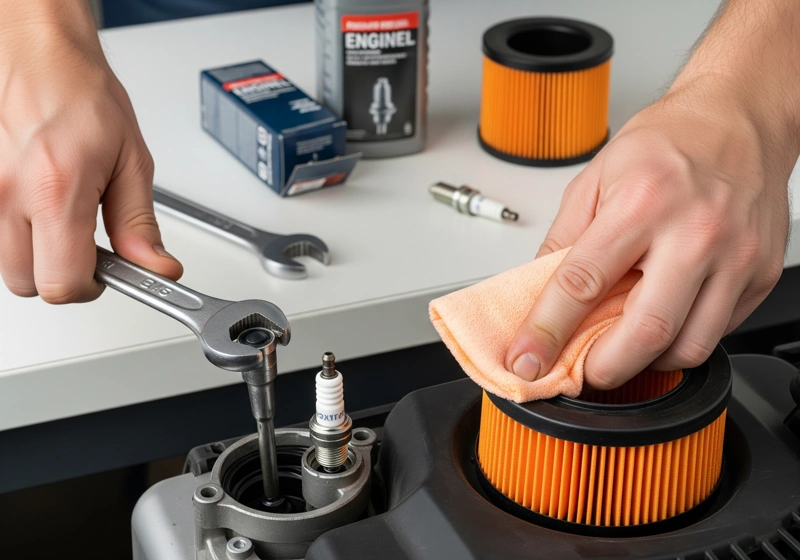
Let’s talk about what engine maintenance looks like when you’re not reading a manual or watching YouTube videos, but standing in your garage with a greasy mower.
Every spring (takes about an hour, costs ~$25):
- Change the oil (usually takes 18-20 ounces)
- New spark plug
- Clean or replace the air filter
- Maybe sharpen the blade while you’re at it
Every other year:
- New fuel filter if your mower has one
- Check the belts for cracks or stretching
Every 3-4 years:
- Professional tune-up, including carburetor cleaning
- Valve adjustment if needed
- Expect to pay $80-120, but it’s worth it
I always tell customers: your mower engine works harder in one cutting season than most car engines do in 10,000 miles. A little maintenance goes a long way.
For our complete maintenance guide, your mower engine works harder in one cutting season than most car engines do in 10,000 miles.
Common Problems and What They Mean
After fifteen years of fixing mowers, I can usually diagnose problems just by the sound they make. Here are the biggies:
Won’t start or hard starting: 90% of the time, it’s old gas, a dirty air filter, or a fouled spark plug. All cheap, easy fixes.
Starts but runs rough: Usually a carburetor issue. Sometimes you can fix it with a can of carb cleaner, sometimes it needs professional attention.
Starts fine but bogs down when cutting: Either the blade is dull (surprisingly common), the deck is clogged with grass, or the engine isn’t getting enough air.
Excessive smoke: Blue smoke indicates oil burning (usually bad news), while white smoke is just moisture (normal on cold mornings). Black smoke means it’s running too rich with fuel.
Best Lawn Mower Engine Type for Your Specific Situation
Here’s my honest recommendation for choosing the right lawn mower based on what I see working in the real world:
Small, flat yard (under 1/4 acre): Battery mower or small gas engine (140-160cc). The Ego Power+ battery mowers are legitimately good, and Honda makes bulletproof small gas engines.
Typical suburban lot (1/4 to 1/2 acre): 160-190cc gas engine with self-propel. Honda HRX series is expensive but worth it. Toro Recycler is a good middle ground.
Large flat property (1/2 to 2 acres): Riding mower with single-cylinder engine, or a commercial walk-behind if you want the exercise.
Big property with hills: Twin-cylinder rider, no question. The extra power and smoother operation are worth the cost.
Don’t get sucked into buying the cheapest thing at the big box store. I’ve seen too many customers come back after one season with engines that are basically junk. Buy from a brand that’ll still be around in five years, and buy from a dealer who can service what they sell.
Common Questions About Types of Lawn Mower Engines
What’s the most reliable lawn mower engine type? In my experience, 4-cycle gas engines from Honda and Kawasaki are the most reliable, but modern battery engines from Ego and Greenworks are catching up fast.
Are electric engines as powerful as gas? For most residential cutting, yes. Electric engines provide instant torque, but gas engines still have the edge for challenging conditions like tall, wet grass.
Which engine type requires less maintenance? Electric engines win hands down – literally zero maintenance versus annual oil changes and tune-ups for gas engines.
The Real Bottom Line
Understanding mower engines isn’t about becoming a mechanic – it’s about not getting screwed when you’re shopping and not getting stuck with a machine that’ll drive you crazy.
The engine is the heart of your mower. Buy a good one, maintain it properly, and it’ll start on the first pull every Saturday for years. Buy a cheap one or ignore maintenance, and you’ll spend more time fixing it than cutting grass.
My philosophy? Buy slightly more engine than you think you need, from a brand you’ve heard of, from a dealer who seems like they know what they’re talking about. And for the love of all that’s holy, change the oil every spring. It’s 20 minutes and $8 worth of oil that’ll add years to your engine’s life.
Trust me on this stuff. I’ve fixed enough broken mowers to know what works and what doesn’t.
And don’t forget to winterize your mower properly at the end of the season to keep that engine in top shape.
Most lawn mowers today use one of three main engine types. Walk-behind mowers typically have small 4-cycle gas engines (140-190cc), while riding mowers use larger single or twin-cylinder engines (15-30+ HP). Electric mowers are becoming more popular too – either battery-powered or corded. You’ll also find 2-cycle engines on some handheld equipment like trimmers, but they’re rare on actual mowers these days. In my experience, 4-cycle gas engines are still the workhorses for most residential cutting jobs.
Almost all modern walk-behind and riding mowers use 4-stroke engines. You might find 2-stroke engines on some older or very cheap push mowers, but they’re extinct on quality machines. The only place you’ll regularly see 2-stroke engines is on string trimmers and leaf blowers. Trust me, this is a good thing – 4-stroke engines are quieter, cleaner, and you don’t have to mess with mixing oil into your gas.
The main difference is how they complete their power cycle. A 2-stroke fires every time the piston goes up and down, while a 4-stroke has four distinct steps: intake, compression, power, and exhaust. Here’s what matters to you: 2-strokes need oil mixed into the gas (pain in the neck), are lighter but louder, and burn more fuel. 4-strokes have separate oil and gas, run quieter and cleaner, and last longer with basic maintenance. For mowers, 4-stroke is the way to go.
For lawn mowers, 4-stroke wins hands down. They’re more reliable, quieter, more fuel-efficient, and easier to maintain. The only advantage 2-strokes have is being lighter, but that doesn’t matter much on a mower. I’ve seen customers struggle with 2-stroke mowers that are hard to start, loud as heck, and always seem to have fuel mixing issues. Save yourself the headache and go with a 4-stroke engine from a reputable brand like Honda, Briggs & Stratton, or Kawasaki.
The “cc” stands for cubic centimeters, which tells you the size of the engine’s combustion chamber. Think of it as the engine’s lung capacity – more cc’s generally means more power. A 150cc engine is in the sweet spot for most suburban yards. It’s enough power for a self-propelled mower and can handle normal weekly cutting, but it’s not overkill for smaller properties. I’d say 150cc engines are perfect for yards between 1/4 and 1/2 acre. Go smaller for tiny yards, bigger if you’ve got hills or thick grass to deal with.
