
Electric Lawn Mowers: Corded vs. Cordless – Which is Right for You?
Three years ago, I was that guy you know, the one wrestling with a temperamental gas mower every Saturday morning, yanking the pull cord until my shoulder ached, and filling up the garage with fumes that made my wife cringe. Living here in Austin with a half-acre of St. Augustine grass, I thought I was stuck with gas forever. Then I made the switch to electric, and honestly? It changed everything about how I approach lawn care.
Table of Contents
▼- Key Takeaways: What You’ll Learn
- Understanding Electric Mowers in the Broader Mower Landscape
- The Great Electric Divide: Corded vs. Cordless Reality
- Corded Electric: The Reliable Workhorse
- Cordless Electric: The Game Changer
- Power Performance: What Matters on Your Lawn
- Corded Power: Consistent and Unlimited
- Cordless Power: Impressive but Variable
- Yard Size Reality: Finding Your Sweet Spot
- Small Yards (Under 1/4 Acre): Corded Often Wins
- Medium Yards (1/4 to 1/2 Acre): Cordless Territory
- Large Yards (1/2+ Acre): Strategy Required
- The Real Cost Analysis: Beyond the Price Tag
- Corded Mowers: Low Entry, Steady Operation
- Cordless Mowers: Higher Entry, Battery Economics
- How Electric Mowers Compare to Other Mower Types
- My Top Recommendations: Texas-Tested Favorites
- Best Overall Cordless: EGO Power+ 21-Inch Select Cut XP
- Best Value Cordless: Ryobi 40V HP 21-Inch
- Best Corded: Craftsman V20 (Corded Version)
- Best for Small Yards: Worx 40V 14-Inch
- Making the Decision: Your Mower Matching Guide
- Choose Corded If:
- Choose Cordless If:
- Maintenance Reality: What You Need to Do
- Both Types Need:
- Cordless-Specific Care:
- The Bottom Line: Electric is the Future, But Choose Wisely
Electric mowers have become one of the most popular lawn mower types for good reason. They’re quieter than gas mowers, require less maintenance than traditional mowers, and offer environmental benefits that appeal to eco-conscious homeowners. But within the electric category, you face a crucial decision: corded or cordless?
Here’s what I’ve learned from over 11 years in the lawn care business and testing dozens of electric mowers on Texas lawns: the biggest question isn’t whether to go electric, it’s whether to choose a corded or cordless model. And trust me, getting this decision right makes all the difference between loving your mower and regretting your purchase.
Key Takeaways: What You’ll Learn
- Power Reality Check: How corded and cordless mowers perform in real-world conditions
- Cost Breakdown: The true long-term investment for each type
- Yard Size Sweet Spots: Which works best for small, medium, and large properties
- Maintenance Truth: What you’ll spend time (and money) maintaining
- Texas-Tested Recommendations: My top picks after years of real-world testing
Understanding Electric Mowers in the Broader Mower Landscape
Before we dive into corded versus cordless, let’s put electric mowers in context. Among all the different types of lawn mowers available today, from traditional reel mowers to powerful riding mowers, electric models occupy a unique sweet spot. They offer more convenience than manual push mowers while being cleaner and quieter than gas-powered alternatives.
Electric mowers have evolved dramatically over the past decade. Where they once struggled with power and reliability compared to gas mowers, today’s electric models often outperform their gas counterparts in key areas like consistent power delivery and ease of use. But like any mower type, they work best when matched to the right application.
The Great Electric Divide: Corded vs. Cordless Reality
Let’s get one thing straight: both corded and cordless electric mowers will save you from the headaches of gas engines. No more oil changes, no more winterizing, no more hoping your mower starts on the third pull. But that’s where the similarities end.
After testing both types extensively on my property and consulting with hundreds of Austin-area homeowners, I’ve seen which scenarios make each type shine and where they fall flat.
Corded Electric: The Reliable Workhorse
Think of corded mowers as the pickup truck of electric lawn care. They’re not flashy, but they get the job done consistently. I’ve watched homeowners use the same corded mower for 15+ years with nothing more than blade sharpening and the occasional new extension cord.
Here’s what worked in my experience: When I tested a basic corded model on a quarter-acre section of my yard, it powered through thick summer grass without hesitation. No battery anxiety, no power fade just steady cutting from start to finish. The cord was annoying at first, but after a few sessions, I developed a rhythm that made it second nature.
Cordless Electric: The Game Changer
Cordless mowers represent everything exciting about modern lawn care. I’ll never forget the first time I used an EGO Power+ on a client’s property. The freedom to mow anywhere without planning your path around an electrical outlet felt revolutionary.
But here’s the reality check: that freedom comes with trade-offs. Battery technology has improved dramatically (my current cordless setup delivers about 45 minutes of real-world runtime), but you’re still working within limits that don’t exist with corded models.
Power Performance: What Matters on Your Lawn
Forget the marketing specs for a minute. After years of testing mowers in everything from perfectly manicured suburbia to overgrown lots, here’s what power means in practice:
Corded Power: Consistent and Unlimited
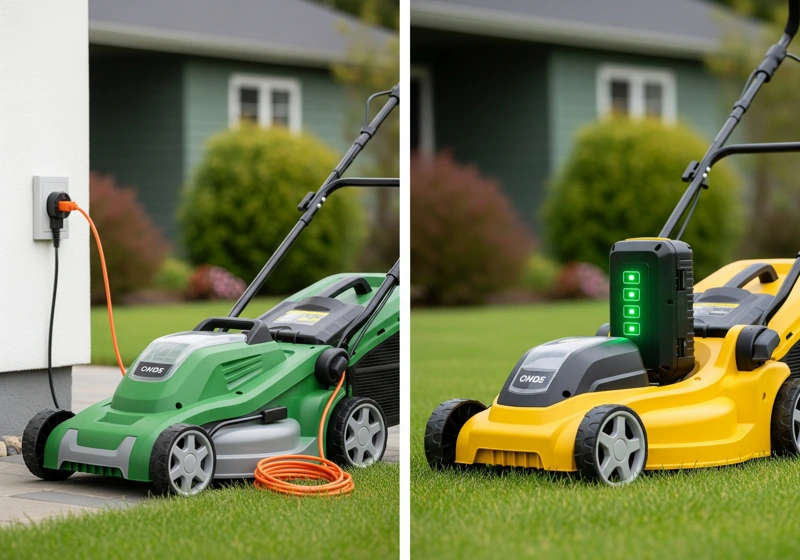
Corded mowers deliver steady power as long as you’re plugged in. I’ve used them to tackle grass that was borderline too tall (yes, I know never cut more than a third, but life happens), and they powered through without bogging down. The motor doesn’t fade, doesn’t overheat, and doesn’t care if you’re on your first pass or your fiftieth.
Real-world example: Last spring, I helped a neighbor who’d let his front yard go for three weeks while he was traveling. His corded mower handled the thick growth just fine, though we had to go slow and make multiple passes in the worst spots.
Cordless Power: Impressive but Variable
Modern cordless mowers pack a surprising punch. The best ones, like the EGO Select Cut XP, I recommend deliver power that rivals many gas mowers. But here’s what the spec sheets don’t tell you: power delivery changes as the battery drains.
In my testing, most cordless mowers maintain full power for about 60-70% of their runtime, then gradually taper off. It’s not dramatic, but you’ll notice it in thick grass or when tackling slopes. The key is understanding this pattern and planning accordingly.
Yard Size Reality: Finding Your Sweet Spot
This is where a lot of homeowners make expensive mistakes. The “perfect” mower for a quarter-acre isn’t necessarily right for an acre, and vice versa. Here’s what I’ve learned works best:
Small Yards (Under 1/4 Acre): Corded Often Wins
I know this surprises people, but for truly small yards, corded mowers make a lot of sense. You’re not dealing with complex mowing patterns, the cord management is minimal, and you get unlimited runtime for a fraction of the cost.
What I’ve seen work: Neighbors with small front and back yards love their corded setups. Total mowing time is usually 15-20 minutes, well within the comfort zone for cord management.
Medium Yards (1/4 to 1/2 Acre): Cordless Territory
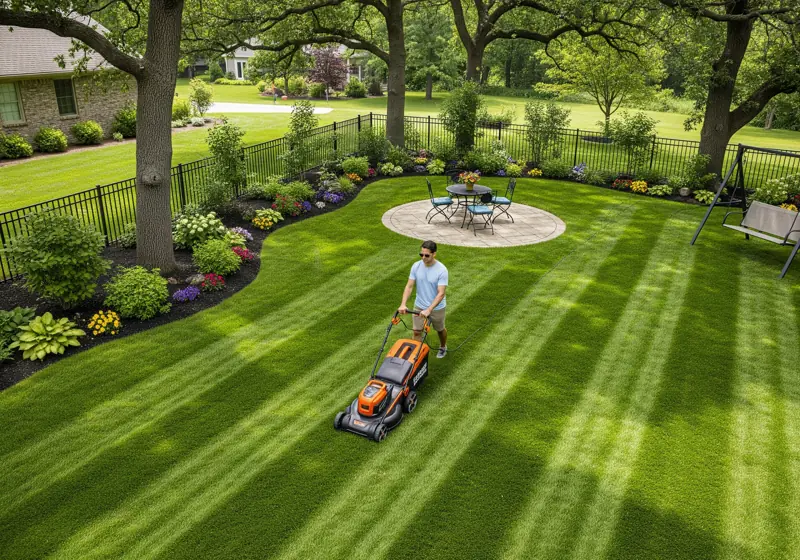
This is where cordless mowers shine. You have enough lawn area that cord management becomes genuinely annoying, but not so much that battery life becomes a limiting factor. My half-acre falls squarely in this sweet spot.
With a quality cordless mower and proper technique, I can typically finish my entire property on a single charge with about 10-15% battery to spare. The freedom to tackle different areas in whatever order makes sense for the conditions is worth the extra investment.
Large Yards (1/2+ Acre): Strategy Required
For larger properties, your choice depends more on your mowing style than raw yard size. If you’re the type who mows weekly and keeps up with maintenance, a high-capacity cordless system can work well. But if you tend to let things go or have thick grass varieties (hello, Texas St. Augustine), you might need multiple batteries or consider other mower types like self-propelled gas models for the toughest conditions.
The Real Cost Analysis: Beyond the Price Tag
Here’s where I see homeowners get surprised. The upfront cost tells only part of the story, and the long-term economics can be counterintuitive.
Corded Mowers: Low Entry, Steady Operation
A decent corded mower runs $150-400, and your ongoing costs are minimal electricity and blade maintenance. Over 10 years, you’re looking at maybe $50-100 in total operating costs beyond the initial purchase.
Hidden costs to consider: Extension cords (get a good one, trust me), potential outlet installation if your current setup doesn’t reach, and the occasional cord replacement when you inevitably run over it (we’ve all been there).
Cordless Mowers: Higher Entry, Battery Economics
Quality cordless mowers start around $400 and can easily run $800+ for premium models. But the real cost consideration is battery replacement. Most lithium-ion batteries last 3-5 years with regular use before showing significant degradation.
Here’s what I tell clients: budget for battery replacement every 4-5 years. A replacement battery for a quality mower runs $150-300, depending on capacity. It’s not devastating, but it’s worth factoring into your decision.
How Electric Mowers Compare to Other Mower Types
When evaluating electric mowers, it helps to understand how they stack up against other popular mower types:
Versus Gas Mowers: Electric models are quieter, require less maintenance, and start instantly. However, gas mowers typically offer more raw power for thick grass and unlimited runtime.
Versus Reel Mowers: Electric mowers require less physical effort and handle varied grass heights better, but reel mowers offer the ultimate in eco-friendliness and exercise.
Versus Riding Mowers: For properties where a riding mower might be overkill, a quality walk-behind electric mower often provides the perfect middle ground of power and maneuverability.
The key is matching the mower type to your specific needs, property size, and personal preferences.
My Top Recommendations: Texas-Tested Favorites
After years of testing and real-world use, here are the mowers I recommend to friends and family:
Best Overall Cordless: EGO Power+ 21-Inch Select Cut XP
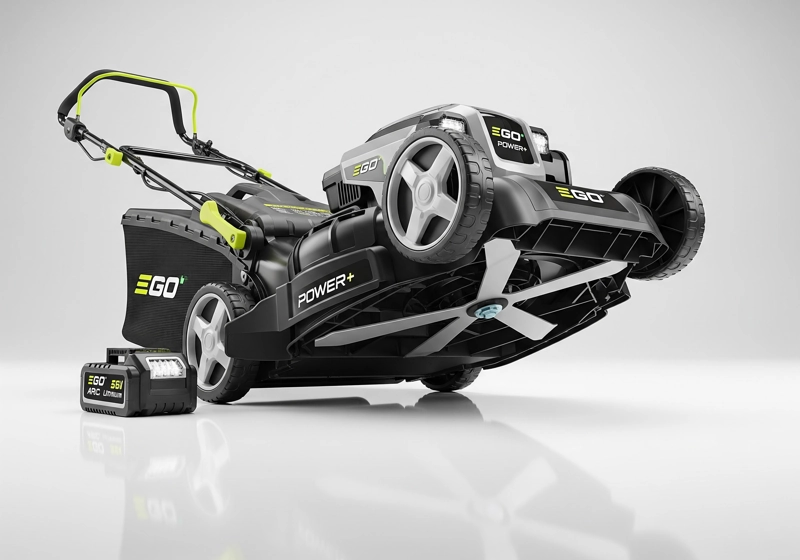
This is the mower I use on my property, and it’s earned every bit of praise. The X-shaped blade design delivers the smoothest cut I’ve seen from any electric mower, and the power feels endless even in thick summer grass. At around $700 with battery included, it’s not cheap, but the performance justifies the cost.
Why it works in Texas: The robust motor handles our thick St. Augustine without bogging down, and the excellent bagging performance helps manage the heavy growth we get during spring and fall.
Best Value Cordless: Ryobi 40V HP 21-Inch
For homeowners who want cordless convenience without the premium price, the Ryobi delivers impressive performance for around $650. It comes with two batteries (huge value), and the automatic power boost feature adapts to varying grass conditions better than most mowers twice the price.
Real-world insight: I’ve recommended this to dozens of clients, and the feedback is consistently positive. The dual-battery setup means you’re rarely caught with a dead mower mid-job.
Best Corded: Craftsman V20 (Corded Version)
While most attention goes to cordless models, Craftsman still makes excellent corded mowers that deliver reliable performance for small to medium yards. Simple, effective, and built to last.
Best for Small Yards: Worx 40V 14-Inch
At just 29 pounds and $229, this little mower is perfect for compact yards or precision work around garden beds. I keep one for detailed work on my property, and it’s surprisingly capable for its size.
Making the Decision: Your Mower Matching Guide
Here’s how I help clients choose between corded and cordless based on their specific situation:
Choose Corded If:
- Your yard is under 1/4 acre with a relatively simple layout
- You have convenient electrical access
- Budget is a primary concern
- You prefer minimal maintenance and maximum reliability
- Unlimited runtime matters more than mobility
Choose Cordless If:
- Your yard is 1/4 acre or larger
- You have complex landscaping or obstacles
- Electrical access is limited or inconvenient
- You value convenience and flexibility over cost
- You’re building an electric tool ecosystem
Maintenance Reality: What You Need to Do
One of the biggest advantages of electric mowers is simplified maintenance, but there are still some basics worth understanding:
Both Types Need:
- Blade sharpening/replacement: Once or twice per season, depending on use
- Deck cleaning: Regular removal of grass buildup (easier than gas mowers)
- Storage considerations: Protected from moisture, though less critical than gas
Cordless-Specific Care:
- Battery maintenance: Proper charging habits extend battery life significantly
- Off-season storage: Store batteries at partial charge in moderate temperatures
- Connection cleaning: Keep battery contacts clean and dry
Pro tip from my experience: The single best thing you can do for any electric mower is keep the deck clean. Grass buildup not only affects performance but can cause premature wear on both corded and cordless models.
The Bottom Line: Electric is the Future, But Choose Wisely
After three years of electric mowing and helping hundreds of homeowners make this transition, I’m convinced that electric is the right choice for most people. Among all the different types of lawn mowers available, electric models offer the best balance of performance, convenience, and environmental responsibility for typical suburban lawns.
The question isn’t whether to go electric, it’s which type of electric fits your specific situation. If you have a smaller, manageable yard and want rock-solid reliability at a great price, corded mowers deliver unbeatable value. If you want the freedom to mow anywhere, anytime, without thinking about power sources, cordless is worth the extra investment.
But here’s what matters most: whatever you choose, buy quality. A good electric mower, whether corded or cordless, should give you years of reliable service with minimal fuss. That’s something no temperamental gas engine can promise, and it’s why electric mowers continue to gain ground in the competitive landscape of lawn care equipment.
Still exploring your options? Electric mowers are just one category in the diverse world of lawn care equipment. Consider your yard size, terrain, and personal preferences when evaluating different mower types. What works for your neighbor might not be the perfect fit for your specific situation.
Ready to make the switch? Start by honestly assessing your yard size and mowing patterns. If you’re still unsure, consider borrowing or renting different types to get hands-on experience. There’s no substitute for actually pushing a mower around your property.
What questions do you have about electric mowers? Have you already made the switch from gas? I’d love to hear about your experience in the comments below. Real-world feedback from fellow homeowners always helps others make better decisions.
Electric mowers are often the better choice for typical suburban lawns. They are quieter, require less maintenance, and offer a cleaner, more environmentally friendly operation than petrol mowers. While petrol mowers may offer more raw power and unlimited runtime for large or challenging properties, electric models provide a better balance of performance, convenience, and eco-friendliness for most homeowners.
The main drawbacks depend on the type. Corded mowers are limited by the length of their extension cord, which can be an inconvenience for larger or complex yards. Battery-powered mowers have a limited runtime before needing to be recharged, and the batteries themselves are a significant long-term cost, as they may need to be replaced every 3-5 years.
The article explains that the choice depends on your yard size and needs. Corded mowers are recommended for small yards (under 1/4 acre) with simple layouts, as they offer unlimited runtime at a lower upfront cost. Cordless (battery) mowers are the better choice for medium to large yards (1/4 to 1/2 acre or more) because they offer the freedom of mobility without the hassle of a cord, justifying the higher cost for convenience.
Yes, but they require significantly less maintenance than petrol mowers. Both corded and cordless electric mowers require regular blade sharpening, and you should keep the cutting deck clean of grass buildup. For cordless models specifically, you must also practice proper battery maintenance, such as storing the battery at a partial charge in moderate temperatures during the off-season to extend its lifespan.
With proper care, a quality electric mower can last for many years. The article notes that corded mowers, with their simple design, can last for 15 years or more. For cordless models, the main factor is the lifespan of the battery, which typically lasts 3-5 years before showing significant degradation, at which point it needs to be replaced.
